Diwali Essay for Students 2026: 10 Lines, 100, 200, 300 and 500 Word Essays and a School Speech
Ready-to-use Diwali essays for classes 1 to 12: 10 lines, 100, 200, 300 and 500 word essays and a short assembly speech, with the correct 2026 dates (Diwali Sunday 8 November) and tips for writing your own.
Quick answer: Diwali, or Deepavali, is the Hindu festival of lights. In 2026 it falls on Sunday 8 November (Drik Panchang). The five days run from Friday 6 November to Wednesday 11 November in India. Below are a 10-line essay, 100, 200, 300 and 500 word essays and a two-minute school speech in simple English, plus tips for writing your own.
Part of Diwali 2026: dates and muhurat for all five days are in our Diwali 2026 guide. See also: Diwali 2026 date and Lakshmi Puja muhurat and the 5 days of Diwali 2026.
Last updated: 25 October 2026.
Diwali 2026 facts for your essay
| Fact | Detail |
|---|---|
| Diwali / Lakshmi Puja 2026 | Sunday 8 November 2026 (India, USA, Canada, UK) |
| Five days in India | Dhanteras Fri 6 Nov, Naraka Chaturdashi and Diwali Sun 8 Nov, Govardhan Puja Tue 10 Nov, Bhai Dooj Wed 11 Nov |
| Hindu month | Amavasya (new moon) of Kartika, also called Ashvin Amavasya in the amanta calendar |
| Meaning of Deepavali | "A row of lamps" (Sanskrit deepa = lamp, avali = row) |
| Main stories | Rama's return to Ayodhya; Krishna and Satyabhama defeating Narakasura; Goddess Lakshmi |
| Also celebrated by | Jains (Mahavira's Nirvana) and Sikhs (Bandi Chhor Divas) |
10 lines on Diwali (दिवाली पर 10 लाइन)
- Diwali is the festival of lights and one of the most important festivals of India.
- In 2026, Diwali falls on Sunday 8 November.
- The word Deepavali means "a row of lamps".
- People believe Lord Rama returned to Ayodhya on this day after defeating Ravana.
- The people of Ayodhya lit lamps to welcome him, and we still light diyas today.
- Before Diwali, families clean and decorate their homes.
- We draw colourful rangoli at the door and wear new clothes.
- In the evening we pray to Goddess Lakshmi and Lord Ganesha.
- We share sweets and gifts with family, friends and neighbours.
- Diwali teaches us that light always wins over darkness and good over evil.
Diwali essay in 100 words
Diwali is the festival of lights. It is one of the most loved festivals of India and is celebrated by Hindus, Jains and Sikhs all over the world. In 2026, Diwali is on Sunday 8 November. People believe that Lord Rama returned to Ayodhya on this day after defeating Ravana, and the people lit lamps to welcome him. Before Diwali, we clean and decorate our homes. On the day, we wear new clothes, make rangoli, light diyas and pray to Goddess Lakshmi and Lord Ganesha. We share sweets with everyone. Diwali teaches us that good always wins over evil.
Diwali essay in 200 words
Diwali, also called Deepavali, is the festival of lights. The word Deepavali means "a row of lamps". It is celebrated every year in October or November on the new moon night of the Hindu month of Kartika. In 2026, Diwali falls on Sunday 8 November.
There are many stories behind Diwali. The most popular one is that Lord Rama, with Sita and Lakshmana, returned to Ayodhya after fourteen years in the forest and his victory over Ravana. The happy people of Ayodhya lit rows of lamps to welcome them. In South India, many people remember how Lord Krishna and Satyabhama defeated the demon Narakasura. On Diwali night, families also worship Goddess Lakshmi, the goddess of wealth and good fortune.
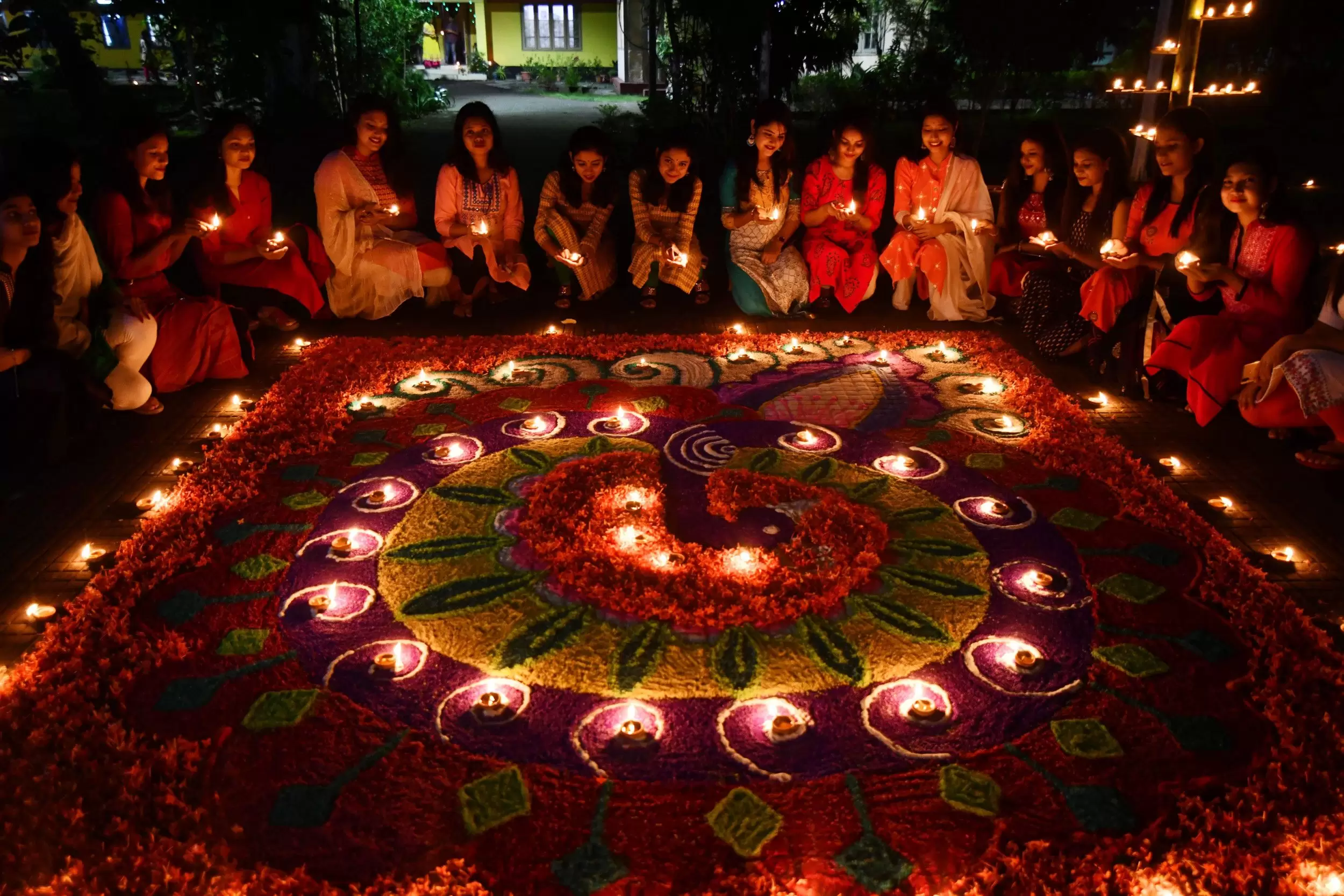
Preparations begin weeks in advance. Homes are cleaned, painted and decorated with lights, flowers and torans. On Diwali, we wake up early, wear new clothes and draw rangoli at the door. In the evening we perform Lakshmi Puja, light diyas all around the house and share sweets with neighbours and friends.
Diwali spreads joy, love and unity. It reminds us to remove the darkness of anger and jealousy from our hearts and fill them with kindness.
Diwali essay in 300 words
Introduction: Diwali is one of the most important festivals of India and of Indian families around the world. Known as the festival of lights, it is celebrated on the Amavasya, the darkest night of the Hindu month of Kartika. In 2026, Diwali is on Sunday 8 November.
Why we celebrate Diwali: According to the Ramayana tradition, Lord Rama returned to Ayodhya on this day after fourteen years of exile and his victory over the demon king Ravana. The people of Ayodhya lit lamps everywhere to welcome him home. In many parts of South India, Diwali celebrates Lord Krishna's victory, with Satyabhama, over the demon Narakasura. For Jains, it marks the day Lord Mahavira attained Nirvana, and for Sikhs it is Bandi Chhor Divas, remembering the release of Guru Hargobind Sahib.
The five days: Diwali is a five-day festival. It begins with Dhanteras, when people buy something new, often utensils or gold. The second day is Naraka Chaturdashi, or Choti Diwali. The third is the main day of Lakshmi Puja. The fourth day is Govardhan Puja, and the fifth is Bhai Dooj, when sisters pray for their brothers.
How we celebrate: Families clean and decorate their homes, make rangoli, wear new clothes and light diyas. In the evening they worship Goddess Lakshmi and Lord Ganesha and pray for health and happiness. Friends and relatives visit each other and exchange sweets and gifts.
A safe and green Diwali: Crackers cause air and noise pollution and can hurt people and animals. We should celebrate with lamps, rangoli and sweets, and if we use crackers, only with adults and following local rules.
Conclusion: Diwali brings families together and fills our hearts with hope. It teaches us that, just as a small lamp can remove darkness, a small good deed can make the world brighter.
Diwali essay in 500 words (दिवाली पर निबंध)
Introduction
Diwali, or Deepavali, is the festival of lights and one of the oldest and best-loved festivals of India. The name comes from two Sanskrit words, deepa (lamp) and avali (row), so Deepavali means "a row of lamps". Diwali falls on the Amavasya, or new moon night, of the Hindu month of Kartika, usually in October or November. In 2026, Diwali is celebrated on Sunday 8 November, and the five days of the festival run from Friday 6 November to Wednesday 11 November in India.
The stories of Diwali
Diwali is linked with many stories. The best known comes from the Ramayana. Lord Rama, Prince of Ayodhya, spent fourteen years in exile in the forest. During this time the demon king Ravana kidnapped Sita, and Rama defeated him with the help of Hanuman and his army. When Rama, Sita and Lakshmana came back to Ayodhya on the new moon night, the people lit thousands of clay lamps to welcome them. Since then, people light diyas on Diwali.
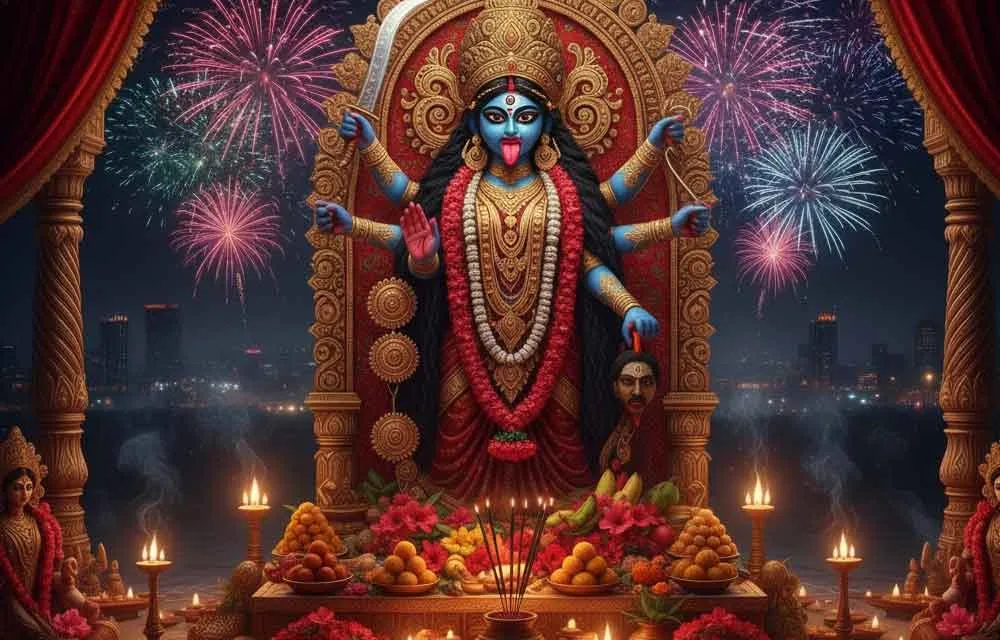
In South India, Diwali morning is linked with Lord Krishna. As the story is told, Krishna and his wife Satyabhama defeated the cruel demon Narakasura and freed the people he had imprisoned. Families take an early oil bath and celebrate this victory. Diwali night is also the night of Goddess Lakshmi, the goddess of wealth and good fortune, who is worshipped with Lord Ganesha. In West Bengal and Assam, people worship Goddess Kali on the same night.
Diwali is special for other communities too. Jains remember the Nirvana of Lord Mahavira, and Sikhs celebrate Bandi Chhor Divas, the day Guru Hargobind Sahib was released from prison and returned to Amritsar.
The five days of Diwali
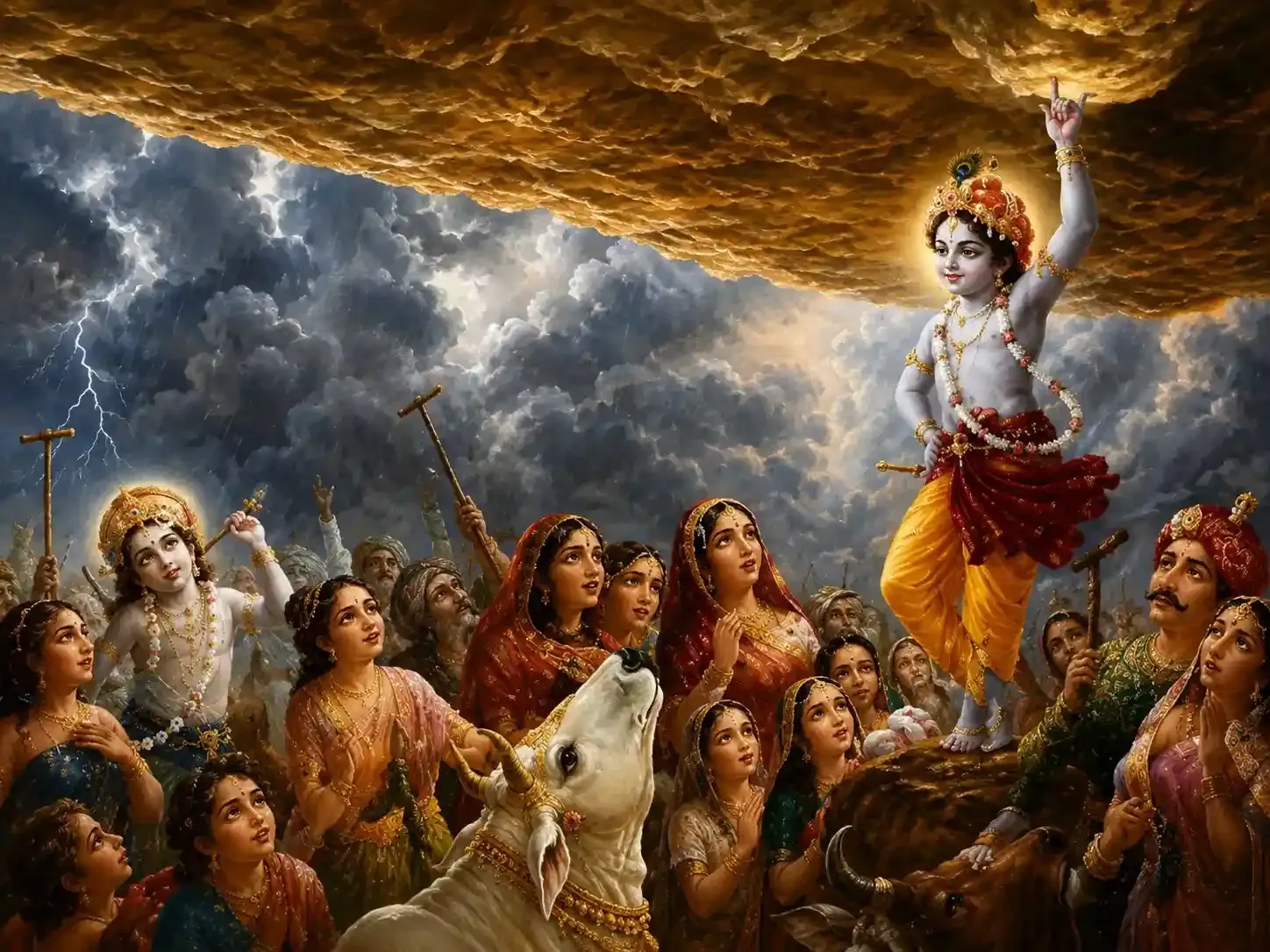
The festival begins with Dhanteras, when people buy new utensils or gold and pray for good health. The second day is Naraka Chaturdashi, also called Choti Diwali. The third day is the main Diwali, with Lakshmi Puja in the evening. The fourth day is Govardhan Puja, which remembers how Lord Krishna lifted the Govardhan hill to protect the people of Gokul, and in Gujarat it is also the New Year. The fifth day is Bhai Dooj, when sisters put a tilak on their brothers' foreheads and pray for their long life.
How Diwali is celebrated
Preparations start weeks before the festival. Homes and shops are cleaned, repaired and decorated with lights, flowers, torans and lanterns. Women and children draw beautiful rangoli at the entrance. On the day, everyone wears new clothes. Families make or buy sweets such as laddoos, barfi and kaju katli and share them with neighbours and friends. In the evening, after the puja, rows of diyas are lit on doorsteps, windows and balconies, and the whole town shines. Today Diwali is celebrated in many countries, and it is a public holiday in places such as Singapore, Fiji, Mauritius, Trinidad and Tobago, Guyana and Nepal.
A safe and eco-friendly Diwali
Bursting crackers is a part of Diwali for many families, but crackers cause air and noise pollution and can lead to burns and injuries. Pets, birds and elderly people are also disturbed by loud noise. A safe and eco-friendly Diwali, with clay diyas, flower rangoli, homemade sweets and fewer or no crackers, is the best way to celebrate.
Conclusion
Diwali is more than lights and sweets. It reminds us that good wins over evil and knowledge wins over ignorance. It brings families together, teaches us to share and asks us to light a lamp of kindness in our hearts. That is why Diwali is my favourite festival.
Short speech on Diwali for school assembly (2 minutes)
Good morning to our respected principal, teachers and my dear friends. Today I am going to say a few words about Diwali, the festival of lights.
This year, Diwali falls on Sunday 8 November. The word Deepavali means "a row of lamps". On this day, people believe Lord Rama returned to Ayodhya after defeating Ravana, and the people lit lamps to welcome him. In many homes Diwali also celebrates Lord Krishna's victory over Narakasura, and families worship Goddess Lakshmi and Lord Ganesha in the evening.
We clean our homes, make rangoli, wear new clothes, light diyas and share sweets with our neighbours. For me, the best part of Diwali is being together with my family.
Friends, let us celebrate a safe and green Diwali. Let us light lamps instead of loud crackers, think of animals and elderly people, and share our happiness with those who have less. Let us also light a lamp of kindness in our hearts.
Thank you, and I wish you all a very happy Diwali!
Tips for writing your own Diwali essay
- Begin with a clear first line that says what Diwali is.
- Use correct dates. For 2026, write Sunday 8 November. Do not copy an old year's date.
- Give one or two stories, not all of them. Rama's return is the easiest to explain.
- Add a personal paragraph: how your family celebrates, your favourite sweet or a memory.
- Mention safety and the environment. Teachers often like this.
- End with what Diwali means to you. Read your essay aloud to check it flows.
- If you live outside India, write how Diwali is celebrated in your city or school.
Frequently asked questions
When is Diwali in 2026?
Diwali (Lakshmi Puja) is on Sunday 8 November 2026 in India, and also in the USA, Canada and the UK, per Drik Panchang. In India the five days run from Dhanteras on Friday 6 November to Bhai Dooj on Wednesday 11 November.
How do I start a Diwali essay?
Start with one clear sentence that says what Diwali is, for example: "Diwali, the festival of lights, is one of the most important festivals of India." Then add when it is celebrated and why, and finish with what the festival means to you.
Why is Diwali called the festival of lights?
Because people light rows of clay lamps (diyas) and candles at their homes, temples and streets. The word Deepavali comes from Sanskrit and means "a row of lamps". The lamps stand for the victory of light over darkness and good over evil.
What are 5 lines on Diwali for class 1?
Diwali is the festival of lights. We celebrate it in October or November. We light diyas and make rangoli. We pray to Goddess Lakshmi and Lord Ganesha. We share sweets with family and friends.
Can I write about crackers in my Diwali essay?
Yes, but it is good to mention safety and pollution. Many schools encourage children to write about a safe, green Diwali with lamps, rangoli and sweets, and fewer or no crackers.
Also read
- Diwali 2026: complete 5-day guide
- Diwali 2026 date and Lakshmi Puja muhurat
- Dhanteras 2026
- Naraka Chaturdashi 2026
- Govardhan Puja and Annakut 2026
- Bhai Dooj 2026
- Diwali activities for kids: crafts and quiz
- Diwali stories for kids: 5 nights, 5 stories
- Diwali 2026 wishes in Hindi, Telugu and English
- Eco-friendly, cracker-free Diwali ideas
- Dussehra essay for students
Editor's note (25 October 2026): These essays were written for HinduTone in simple English for school students, who may use and adapt them. Dates follow Drik Panchang for India. Stories are given as traditionally told; families and regions tell them in different ways.
Share this with family and friends
Send it on WhatsApp, post it, or copy the link.
More from Diwali 2026
- Diwali 2026 in Noida and Greater Noida: Lakshmi Puja Muhurat, NCR Green Cracker Rules, Sale Sites, Govardhan Puja and Bhai Dooj
- Diwali 2026 in Ghaziabad: Lakshmi Puja Muhurat, NCR Green Cracker Rules, Sale Sites, Traffic and Parking
- Diwali 2026 in Meerut: Lakshmi Puja Muhurat, NCR Green Cracker Rules, Market Traffic Diversions and Temples
- Diwali 2026 in Prayagraj: Lakshmi Puja Muhurat, Kartik Amavasya Snan and Deepdaan at the Sangam, 79 Cracker Markets and Temples
- Diwali 2026 in Mathura and Vrindavan: Lakshmi Puja Muhurat, Govardhan Puja Parikrama, Yam Dwitiya at Vishram Ghat and Traffic Rules
You might also like
Hindu Rituals to Perform After Diwali 2026: Complete Guide to Govardhan Puja, Annakut, Bali Pratipada, Bhai Dooj and Karthika Masam for Hindus in USA, UK & Canada
Diwali in Kashmir 2026: Famous Hindu Temples, Srinagar Celebrations, Tourist Attractions and Cultural Heritage
Diwali 2026 in Ranchi: Lakshmi Puja Muhurat, Kali Puja Pandals, Temples, Cracker Rules and Chhath