Wat Rong Khun (The White Temple), Thailand: A Surreal and Haunting Vision in Chiang Rai
When Heaven Becomes Tangible Pure white structures shimmer in the tropical sun like crystallized enlightenment, while hundreds of hands reach desperately from…
When Heaven Becomes Tangible Pure white structures shimmer in the tropical sun like crystallized enlightenment, while hundreds of hands reach desperately from…
When Heaven Becomes Tangible
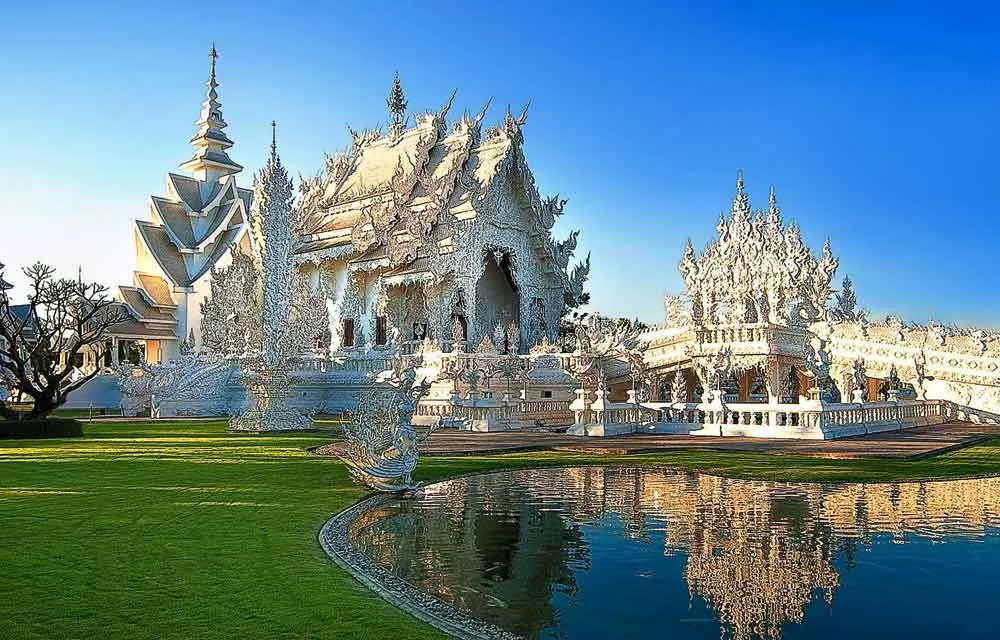
Pure white structures shimmer in the tropical sun like crystallized enlightenment, while hundreds of hands reach desperately from a bridge over hell. Inside, murals depict Neo fighting Agent Smith alongside the Buddha's teachings. This is not an ancient temple—it's a 21st-century vision that fuses Buddhist cosmology with pop culture, traditional iconography with contemporary warning, creating something that feels simultaneously sacred and subversive.
Did you know this "temple" was never meant to be a traditional place of worship? Artist Chalermchai Kositpipat began building Wat Rong Khun in 1997 as a living artwork, a personal offering to the Buddha, and a commentary on modern humanity's spiritual crisis. When completed (estimated 2070), it will be one of the most unusual religious structures ever conceived—if temple, museum, and art installation could merge into one impossible form.
This guide takes you deep into the White Temple's surreal symbolism, explains what every haunting detail means, and reveals why this controversial masterpiece has become Thailand's most photographed temple despite being rejected by Buddhist authorities as "not a real temple." You'll learn how to experience it properly, what you're allowed to photograph, and why this matters to anyone interested in how ancient traditions meet radical contemporary art.
A Brief History & Mythology: The Artist Who Built Heaven
The Origins—From Ruins to Radical Vision:
Wat Rong Khun is not ancient—it's younger than most of its visitors. The original temple on this site was a small, dilapidated structure in Chiang Rai dating back centuries. By the 1990s, it had fallen into complete disrepair.
The Visionary Artist:
Chalermchai Kositpipat (born 1955) is Thailand's most famous living visual artist, known for his hyper-detailed, surrealist Buddhist paintings. In 1997, at age 42, he returned to his hometown of Chiang Rai and was heartbroken by the ruined temple. He made an extraordinary decision: he would rebuild it entirely at his own expense as his gift to the Buddha, to his hometown, and to Thailand.
The Personal Investment:
Chalermchai has invested over 1 billion baht ($40+ million USD) of his personal fortune and 25+ years of his life into this project. He refuses government funding, corporate sponsorship, and donations from anyone with "impure intentions." Every building, sculpture, and detail reflects his singular artistic vision.
The Timeline:
- 1997: Construction begins on the main temple (ubosot)
- 2011: Opened to public, still incomplete
- 2014: Major earthquake damages structures—Chalermchai considers abandoning the project, then commits to restoration
- 2029: Projected completion of the main nine buildings
- 2070: Full completion of all planned structures (Chalermchai will be 115 years old—he acknowledges others must continue his work)
The Controversy:
Traditional Buddhist monks initially criticized the temple for being "too commercial" and "not spiritually pure." The Sangha (Thai monastic community) doesn't officially recognize it as a functioning temple. Yet paradoxically, the site has become profoundly meaningful to millions of visitors who find spiritual resonance in its contemporary symbolism.
The Mythology of the Design:
Unlike ancient temples built on established iconographic traditions, Wat Rong Khun represents Chalermchai's personal interpretation of Buddhist cosmology filtered through 21st-century consciousness:
The White Color: Represents the purity of the Buddha's teachings and the path to enlightenment. Traditional Thai temples are gold (representing worldly riches)—Chalermchai deliberately inverted this, suggesting spiritual wealth over material wealth.
The Mirrors: Thousands of mirrored glass pieces embedded in the white plaster symbolize:
- The Buddha's wisdom reflecting throughout the universe
- Self-reflection and seeing yourself in the dharma
- The fragmented nature of modern consciousness seeking wholeness
The Artist's Philosophy:
Chalermchai believes Buddhism must evolve to remain relevant. His temple incorporates:
- Traditional Buddhist symbolism (nagas, lotus flowers, the Buddha)
- Contemporary warnings (pop culture villains representing modern evils)
- Universal spirituality (images from multiple traditions)
- Environmental messages (climate change, nuclear weapons)
He says: "I use contemporary images because young people understand them. If the temple only shows old stories, they cannot connect. Buddhism is timeless—it must speak to every generation."
The Spiritual & Cultural Significance: A Temple for the Modern Age
Not Quite a Temple, Not Quite a Museum:
Official Status: Wat Rong Khun is technically a "privately owned art exhibit with Buddhist themes" rather than a consecrated temple under Thai Buddhist authority.
However:
- Monks occasionally perform ceremonies here
- Visitors treat it as sacred space (removing shoes, speaking quietly)
- The main hall contains a Buddha image that people pray before
- Chalermchai insists it's his offering to the Buddha—a form of merit-making
The Three Realms of Buddhist Cosmology:
The temple's layout follows the traditional Buddhist conception of existence:
- The Bridge of Rebirth (Crossing Hell): Represents the cycle of desire, suffering, and attachment in the human realm
- The Gate of Heaven: The transition from samsara (cycle of rebirth) to liberation
- The Ubosot (Main Hall): Enlightenment, the Buddha realm, ultimate peace
Contemporary Buddhism:
Wat Rong Khun represents a controversial movement: Socially Engaged Buddhism—the belief that Buddhism must address contemporary issues like:
- Consumerism and materialism
- Environmental destruction
- Violence and war
- Technology's impact on consciousness
- Global interconnection and responsibility
For Thai Culture:
The White Temple has become:
- A source of national pride (Thailand's most Instagrammed location)
- A debate about tradition vs innovation in Buddhism
- Evidence that Thai contemporary art can compete globally
- A pilgrimage site for young Thais seeking meaningful spirituality
Cultural Controversies:
- The Pop Culture Imagery: Traditional Buddhists argue Neo from "The Matrix" and other secular images desecrate sacred space
- The "Selfie Temple" Critique: Some monks claim it encourages vanity rather than contemplation
- The Artist's Control: Chalermchai maintains complete artistic authority, rejecting Buddhist council oversight
Yet these controversies themselves generate dialogue about Buddhism's role in modern life—perhaps exactly Chalermchai's intention.
Planning Your Visit: Essential Practical Information
How to Get There
Location: 15 km south of Chiang Rai city center, Pa O Don Chai Road, A. Muang, Chiang Rai 57000
From Chiang Rai City:
By Taxi/Grab:
- Cost: 200-300 baht ($6-9 USD) one way
- Duration: 20-25 minutes
- Easiest option—driver waits or arrange pickup time
By Tuk-Tuk:
- Negotiate price: 150-250 baht one way
- Shared tuk-tuks from Chiang Rai Old Bus Station: 40-50 baht per person
- More adventurous, local experience
By Local Bus:
- Orange bus from Chiang Rai Old Bus Station
- Cost: 20 baht ($0.60 USD)
- Frequency: Every 30 minutes, 6:00 AM - 5:00 PM
- Tell driver "Wat Rong Khun"—they'll drop you at the entrance
By Rental Scooter/Motorcycle:
- Rent in Chiang Rai: 150-250 baht/day
- Easy ride on Highway 1 south
- Parking available at temple (20 baht)
- Recommended for photography flexibility
By Organized Tour:
- Many Chiang Rai operators offer half-day tours (800-1,500 baht)
- Often combined with Blue Temple (Wat Rong Suea Ten) and Black House (Baan Dam)
- Convenient but rushed—allows only 45-60 minutes at White Temple
From Other Cities:
- Chiang Mai: 3-hour drive (180 km), tours available ($30-50)
- Bangkok: 9-hour drive or 1.5-hour flight to Chiang Rai
- Mae Sai (Myanmar border): 1-hour drive (60 km)
Best Time to Visit
Season:
Cool Season (November-February): IDEAL
- Temperatures: 15-25°C (59-77°F)
- Clear blue skies (white temple photographs beautifully)
- Least humidity
- Peak tourist season but manageable
Hot Season (March-May): CHALLENGING
- Temperatures: 30-40°C (86-104°F)
- Haze from burning season (March-April) reduces photo quality
- Fewer crowds but uncomfortable
- White structures reflect intense heat
Rainy Season (June-October): BEAUTIFUL BUT UNPREDICTABLE
- Dramatic clouds create moody photography
- Fewer tourists (40% less than peak)
- Afternoon thunderstorms (temple closes during lightning)
- Everything is lush and green
- Morning visits usually dry
Time of Day:
Early Morning (9:00-10:30 AM):
- Gates open at 9:00 AM—arrive at 8:45 AM
- Soft morning light perfect for white structures
- Fewest tourists (mostly domestic visitors)
- Cooler temperatures
- Best for photography
Midday (11:00 AM-2:00 PM): AVOID
- Tour bus groups arrive en masse
- Harsh overhead light washes out details
- Extreme heat reflecting off white surfaces
- Wait times for the bridge photo spot
Late Afternoon (3:00-5:00 PM):
- Golden hour light (4:00-5:30 PM) creates magical warm tones
- Crowds thin after 4:00 PM
- Beautiful sunset colors on white structures
- Temple closes at 6:00 PM (last entry 5:30 PM)
Night Visits:
- Special illumination 7:00-9:00 PM on weekends and holidays
- Completely different atmosphere—mystical and haunting
- Fewer restrictions on photography
- Check schedule—not every day
Pro Tip: Visit on a weekday morning in November-December for the absolute best experience—minimal crowds, perfect weather, ideal light.
Opening Hours and Entrance Fees
Operating Hours:
- Daily: 8:00 AM - 6:00 PM (last entry 5:30 PM)
- Main Hall (Ubosot): 9:00 AM - 12:00 PM, 1:00 PM - 4:30 PM (closes for lunch and monk prayers)
- Night illumination: 7:00-9:00 PM (weekends/holidays only)
Closed:
- No regular closing days
- Temporary closures during severe weather
- Occasionally closed for private ceremonies (rare)
Important Notes:
- Cash only—no credit cards
- Ticket booth at entrance
- Keep ticket—may be checked inside
- Refunds not available for weather closures
What to Wear (Dress Code)
STRICT DRESS CODE ENFORCED—You Will Be Denied Entry:
Mandatory Requirements:
- Shoulders covered: No tank tops, spaghetti straps, sleeveless shirts (men and women)
- Knees covered: No shorts, short skirts, or ripped jeans showing knees
- No see-through clothing: Even with undergarments
- No tight or revealing clothing: Modest fit required
- Clean, respectful attire: No beach wear, no offensive graphics
They WILL Turn You Away—No Exceptions:
Unlike some temples that rent cover-ups, Wat Rong Khun enforces strictly. Guards at the entrance inspect everyone. If inappropriately dressed, you must leave and return properly clothed. No rental sarongs available.
Recommended Clothing:
For Hot Weather:
- Lightweight linen pants or maxi skirt
- Loose cotton shirt with sleeves
- Comfortable walking sandals (you'll remove shoes repeatedly)
- Wide-brimmed hat (for outside areas)
Practical Considerations:
- White reflects light intensely: Wear sunglasses
- Bring a light scarf: Useful for extra shoulder coverage if needed
- Comfortable shoes you can slip on/off: You'll remove them 5-10 times
- Light colors recommended: Reflects heat better than dark
What to Bring:
- Sunscreen (reapply every 90 minutes)
- Water bottle (refill stations available)
- Small bag (large backpacks must be left at entrance storage—free)
- Phone/camera (photography allowed in most areas)
Photography Dress Code:
- Avoid overly stylized fashion shoots
- No provocative poses (guards will ask you to stop)
- Be respectful—this is still considered sacred space
Exploring Wat Rong Khun: A Journey Through Symbolism
The Entrance: Passing Judgment
The Parking Area Art:
Before entering the temple grounds proper, notice the sculptures:
- Giant demon heads representing greed and anger
- Demons in modern clothing (businessmen, soldiers)—Chalermchai's commentary that evil wears suits today
The Ticket Area:
Behind the ticket booth, murals depict:
- The burning of the original temple
- Chalermchai's vision coming to him
- The construction process as spiritual practice
The Bridge of Rebirth: Crossing Through Hell
This is the Temple's Most Powerful Element:
The bridge represents the transition from the cycle of rebirth (samsara) to enlightenment. To reach the Buddha, you must first acknowledge suffering.
The Reaching Hands:
Hundreds of white arms thrust from below the bridge, hands grasping desperately upward. These represent:
- Uncontrolled desire (tanha in Buddhism)
- The souls in hell crying out for liberation
- Human suffering caused by attachment
- Temptation trying to pull you back into samsara
Many are holding objects:
- Money (greed)
- Weapons (violence)
- Bottles (addiction)
- Phones (modern distraction)
The Symbolism:
To reach enlightenment, you must:
- Acknowledge suffering exists
- Walk through (not around) the realm of desire
- Resist being pulled back by attachments
- Move forward with determination
Photography Rules Here:
- Photos allowed FROM the bridge
- No stopping on the bridge—keep moving
- Walk across only once—cannot turn back (symbolically, you cannot return to ignorance once moving toward enlightenment)
- No posing with the hands—considered disrespectful
The Walkway Experience:
As you cross, you'll feel:
- Unease (intentional—hell should feel uncomfortable)
- Surrounded by reaching desperation
- The pull to look down (resist—focus forward on the gate)
This is performance art as spiritual teaching.
The Gate of Heaven: Threshold of Transformation
The Ivory Portal:
Two giant creatures guard the entrance:
- Death (represented by demon figures)
- Rahu (the deity who devours time)
Above them, the face of Phaya Tarn, the Death King, watches all who enter.
The Symbolism:
To enter heaven (enlightenment), you must:
- Accept mortality
- Leave behind ego and earthly attachments
- Surrender to the dharma
The Details:
Look closely at the gate's decorative elements:
- Naga serpents (guardians of Buddhist teachings)
- Lotus flowers emerging from mud (enlightenment emerging from suffering)
- Mirrored glass pieces (reflecting your true nature back to you)
Architectural Note:
The gate uses traditional Thai Lanna architectural styles but executed in pure white—tradition reimagined for contemporary understanding.
The Ubosot: The Main Hall of Enlightenment
Exterior Beauty:
Before entering, walk the perimeter. The building is an explosion of white and mirrored detail:
- Seven-tiered roof representing the seven stages of enlightenment
- Chofa (roof finials) shaped like nagas reaching toward heaven
- Intricate white plaster work depicting celestial beings, flowers, flames
- Mirrored mosaics creating a shimmering, otherworldly effect
The Detail:
Every inch is hand-carved, hand-painted by Chalermchai and his team. Estimates suggest over 100,000 hours of artisan work on this building alone.
Interior: Where Tradition Meets Pop Culture:
IMPORTANT:
- Photography strictly prohibited inside
- Guards enforce this rigorously
- Phones must be put away
- This forces you to actually observe rather than document
What You'll See:
The interior murals are where Chalermchai's vision becomes most controversial and fascinating:
The Back Wall—Traditional:
- Golden Buddha image in meditation posture
- Traditional Thai religious iconography
- Celestial beings and sacred geometry
The Side Walls—Contemporary Chaos:
This is where it gets wild. The murals depict modern world's evils destroying humanity:
You'll See:
- The Twin Towers burning (September 11 attacks)
- Nuclear mushroom clouds
- Oil wells on fire (environmental destruction)
- Spiderman, Superman, Neo from The Matrix (heroes trying to save humanity)
- Michael Jackson (Chalermchai's hero, representing creative genius)
- Pokemon characters (innocence corrupted by consumerism)
- Aliens (unknown threats)
- Gundam robots (technology without wisdom)
- Hello Kitty (even cute culture is consumption)
- Angry Birds (modern anger and violence)
The Meaning:
Chalermchai explains: "These are the demons of our time. Ancient murals showed demons that scared people 500 years ago. Today's demons wear different faces—they are war, pollution, greed, distraction. Young people must see that the Buddha's teachings apply to their world."
The Front Wall—The Path Forward:
Above the entrance (viewed from inside) depicts:
- The path of meditation and mindfulness
- Escaping the chaos of modernity through dharma practice
- Return to simplicity and compassion
The Experience:
Sit quietly (chairs and floor cushions provided). Most visitors experience:
- Initial shock at the pop culture imagery
- Gradual recognition of the artistic statement
- Contemplation of how ancient wisdom applies to modern life
- Either profound appreciation or complete rejection (rarely ambivalence)
Time Recommendation: Spend at least 15-20 minutes inside. Let your eyes adjust, read the explanatory signs, absorb the layers of meaning.
The Wishing Well: Merit and Materialism
The Golden Building:
After the pure white ubosot, you'll encounter a shockingly gold structure. This is intentional contrast.
The Symbolism:
Gold represents materialism and worldly desires. Visitors throw coins into the well, making wishes—but Chalermchai questions: "Are you seeking enlightenment or just more earthly things?"
The Twist:
All coins collected go to funding the temple's construction and community programs. Your material offering becomes a spiritual investment—desire transmuted into merit.
The Gallery and Art Center
Chalermchai Kositpipat Art Gallery:
Adjacent to the main temple (separate building):
- Admission: 50 baht (included in some tickets)
- Content: Original paintings and sketches by Chalermchai
- Style: Hyper-detailed surrealist Buddhist art
- Photography allowed: Yes
Worth Visiting Because:
- Understand the artist's broader vision
- See preparatory sketches for temple elements
- Purchase official prints (proceeds fund construction)
- Air-conditioned respite from heat
The Unfinished Sections
The Ongoing Construction:
Only about 30% of Chalermchai's vision is complete. You'll see:
- The reliquary (under construction)—will house sacred objects
- The meditation hall (planned)—for serious Buddhist practice
- The crematorium (controversial)—Chalermchai wants it pure white, not traditional
- Additional structures representing different Buddha realms
The Scaffolding:
Don't view this as a negative—seeing the work in progress adds to the experience. You're witnessing art being born.
The Restrooms: Yes, Really
The Golden Toilets:
Wat Rong Khun has the most photographed restrooms in Thailand (possibly the world). These aren't just bathrooms—they're artistic statements.
Features:
- Elaborate golden exterior and interior
- Intricate decorative details rivaling the main temple
- Spotlessly clean (maintained like an art gallery)
- Air conditioned (luxury in hot Thailand)
The Symbolism:
Even the most mundane human functions happen in beautiful space—finding the sacred in the everyday.
Photography: Allowed of exteriors, but be respectful (it's still a functioning restroom).
Tips for a Better Experience: Insider Strategies
How to Experience Wat Rong Khun Without the Crowds
The 9 AM Strategy:
- Arrive at 8:45 AM, before gates open
- Be first in line (locals arrive later)
- You'll have 20-30 minutes of relative solitude
- Best for bridge photos without people
The Weekday Advantage:
- Tuesday-Thursday see 50% fewer visitors than weekends
- Monday has moderate crowds (weekend spillover)
- Friday gets busy with domestic tourists starting weekends early
The Weather Gambit:
- Cloudy days have dramatically fewer visitors
- Light rain clears the grounds (temple remains open unless lightning)
- Overcast skies can create beautiful, moody photographs
The Midweek Afternoon Secret:
- Most tours arrive 10 AM-1 PM
- After 3 PM on weekdays, crowds thin significantly
- Combine with golden hour light for double benefit
The Waiting Game for Bridge Photos:
- During peak times, 30+ people may wait for clear bridge shots
- Be patient, take turns
- Early morning or late afternoon avoids the worst
The Best Photo Spots Most Tourists Miss
Classic Shots Everyone Gets:
- The bridge from the front entrance (iconic but crowded)
- The main ubosot reflection in the pond (beautiful but requires perfect timing)
Lesser-Known Angles:
- Behind the ubosot looking back:
- Trees frame the white building
- Fewer tourists in frame
- Afternoon light creates depth
- The side angles of the ubosot:
- Shows the architectural complexity
- Mirror details catch light beautifully
- Almost no one shoots from here
- Details, details, details:
- Close-ups of the intricate white carvings
- The hands from directly above the bridge
- Individual mirror mosaic patterns
- Naga heads and decorative elements
- The golden toilet building:
- Unexpectedly photogenic
- Great contrast shot (gold vs white theme)
- Usually empty for photos
- From the wishing well area:
- Elevated view back toward the main temple
- Shows the complex's layout
- Unique perspective
Night Photography (weekends/holidays):
- Long exposure creates ethereal glow
- Dramatically different mood
- Tripod recommended (but check if allowed)
Photography Tips:
Technical:
- Shoot in shade when possible—white is extremely bright
- Expose for highlights—white blows out easily in harsh sun
- Use polarizing filter—cuts glare from mirrors and white surfaces
- HDR mode—helps balance bright whites and shadow details
Composition:
- Include scale—people show the temple's size
- Look for leading lines—bridge, pathways, architectural elements
- Symmetry—the temple design uses it; emphasize in photos
- Details over wide shots—the artistry is in the minutiae
Respect Rules:
- No photos inside main hall—enjoy the experience, not the documentation
- No provocative poses—keep it respectful
- Don't block others—share the space
- No drones—strictly prohibited without special permission
A Local's Secret: What to See Nearby
The "Temple Triangle" of Chiang Rai:
Combine three unique temples in one day:
1. Wat Rong Khun (White Temple)—The Pure:
- Morning visit (9:00 AM-11:00 AM)
- 1.5-2 hours recommended
2. Wat Rong Suea Ten (Blue Temple)—The Mystical:
- 10 minutes from White Temple
- Stunning blue and gold interior
- FREE admission
- Less crowded, deeply beautiful
- 1 hour visit
3. Baan Dam (Black House)—The Dark:
- 15 minutes north of White Temple
- Not a temple—artist Thawan Duchanee's dark, philosophical art compound
- Explores death, darkness, human nature
- 100 baht admission
- 1-1.5 hours
The Contrast: White (purity), Blue (mysticism), Black (darkness)—a complete philosophical journey.
Where to Eat Nearby:
At the White Temple Complex:
- Temple café: Basic Thai food, overpriced but convenient (80-150 baht)
- Food stalls in parking area: Cheaper, more authentic (40-80 baht)
Better Options (5-10 minutes away):
Chivit Thamma Da Coffee House:
- 3 km from temple, on Kok River
- Beautiful riverside setting
- Western and Thai fusion
- Instagram-worthy (150-300 baht per dish)
Melt In Your Mouth:
- 5 km toward Chiang Rai city
- Excellent Thai comfort food
- Locals' favorite (60-120 baht)
Lunlao Restaurant:
- Northern Thai specialties (Lanna cuisine)
- Try: sai oua (northern sausage), khao soi (curry noodles)
- Authentic, family-run (80-150 baht)
Street Food Recommendation:
On the drive back to Chiang Rai, stop at roadside stalls:
- Fresh fruit smoothies (30-40 baht)
- Grilled sticky rice (20-30 baht)
- Som tam (papaya salad) carts (40-60 baht)
Cultural Etiquette & Respectful Visiting
This is Sacred Space (Even if Unconventional):
Do:
- Remove shoes before entering buildings
- Dress modestly (strictly enforced)
- Speak in low voices
- Follow the flow—don't walk backward on the bridge
- Ask permission before photographing monks or worshippers
- Place donations in proper receptacles (if you choose to donate)
Don't:
- Touch the white plaster (oils from hands cause damage)
- Climb on any structures or sculptures
- Point your feet at Buddha images
- Turn your back to Buddha images for selfies (considered very disrespectful)
- Eat or drink in sacred areas
- Smoke anywhere on grounds (strictly prohibited)
- Bring durian fruit (strong smell, prohibited in most Thai temples)
Understanding the Artist's Sensitivities:
Chalermchai has been known to:
- Personally remove disrespectful visitors
- Cover up his work if disrespected
- Close the temple temporarily after vandalism or inappropriate behavior
2016 Incident: After the Pokemon Go craze led to players trespassing and being disrespectful, Chalermchai temporarily closed the temple and considered stopping construction. He reopened only after assurances of better visitor management.
Your behavior matters—treat this as you would any sacred space, regardless of its contemporary elements.
Interacting with Monks:
If monks are present:
- Women: Do not touch monks or hand them objects directly (place on a cloth for them to pick up)
- Men: Respectful wai (prayer gesture) is appropriate
- Everyone: Don't interrupt prayers or meditation
- Photography: Always ask permission first
Thai Cultural Notes:
- The head is sacred (don't touch anyone's head, even children)
- The feet are low (don't point them at people or Buddha images)
- Shoes come off frequently (wear slip-on shoes for convenience)
- The royal family is deeply revered (no critical comments about monarchy)
Practical Survival Tips
The Heat Factor:
Northern Thailand gets HOT (especially March-May):
- Bring 2+ liters of water per person
- Sunscreen reapplication every 90 minutes
- Seek shade between buildings (limited, plan strategically)
- Take breaks in the air-conditioned gallery
Symptoms of Heat Exhaustion:
- Dizziness, nausea, rapid heartbeat, confusion
- Temple staff can help—don't be embarrassed to ask
- Café has cold drinks and shaded seating
The Walking:
You'll walk 2-3 km exploring the full grounds:
- Wear comfortable shoes (that you can slip on/off easily)
- Uneven surfaces in some areas
- Elderly visitors: Wheelchair access available but limited (some areas inaccessible)
Safety:
- Pickpockets: Rare but possible in crowded areas—watch belongings
- Scams: Unofficial "guides" may approach—temple has official guides if needed (not required)
- Monkeys: Occasionally present near outer areas—don't feed, keep food in bags
Facilities:
- Restrooms: Beautiful and clean (seriously, don't skip them)
- Drinking water: Bring your own or buy at entrance (20-40 baht)
- ATM: Available in parking area
- Bag storage: Free, at entrance for large items
- Wheelchair rental: Available at entrance (free, limited quantity)
Weather Preparedness:
Rainy Season (June-October):
- Temple closes temporarily during lightning storms
- Bring compact umbrella
- Paths become slippery—watch your step
- Monsoons usually afternoon—morning visits safest
Time Allocation:
- Rushed visit: 1 hour (see main buildings only)
- Standard visit: 1.5-2 hours (recommended minimum)
- Thorough exploration: 2.5-3 hours (includes gallery, all structures)
- Photographer's visit: 3-4 hours (multiple lighting conditions, all angles)
Beyond the White Temple: Understanding the Deeper Meaning
Why This Temple Matters:
Wat Rong Khun represents something unprecedented in Buddhist architecture: a contemporary artist using traditional religious forms to comment on modern existence.
The Questions It Raises:
- Can pop culture be sacred? If Neo from "The Matrix" represents liberation from illusion (exactly Buddhism's goal), is he less valid than traditional iconography?
- Does art dilute spirituality or enhance it? Critics say it's a theme park. Supporters say it makes dharma accessible to millions who'd never enter a traditional temple.
- Who owns religious imagery? Chalermchai asserts an artist's right to reinterpret Buddhist symbolism. Traditional authorities disagree.
- Is controversy spiritual? The debates Wat Rong Khun generates—about authenticity, tradition, modernity—are themselves a form of dharma discussion.
Chalermchai's Defense:
"Buddhism is not a museum religion. The Buddha himself said 'test everything.' I test what Buddhist teachings mean in our world. Young people see my temple and ask questions—questions lead to understanding. Traditional temples are beautiful but silent to modern youth. My temple speaks their language."
For Visitors:
You don't have to agree with Chalermchai's approach to appreciate what he's attempting:
- Rescuing a ruined temple with personal fortune (merit-making on an extraordinary scale)
- Creating beauty for its own sake
- Forcing dialogue about Buddhism's relevance
- Building something that will outlive him by centuries
The Hindu-Buddhist Connection:
For Hindu visitors, Wat Rong Khun offers fascinating resonance:
- Naga symbolism appears in both traditions
- Lotus imagery as spiritual purity from worldly mud
- Cosmic cycles represented in the bridge/gate/hall progression (samsara to moksha)
- Contemporary temple evolution—just as modern Hindu temples incorporate contemporary elements, Chalermchai asks how Buddhism stays vital
Both traditions face the same question: How do ancient truths remain meaningful in rapidly changing worlds?
Frequently Asked Questions
Where is Wat Rong Khun (The White Temple), Thailand located?
When Heaven Becomes Tangible Pure white structures shimmer in the tropical sun like crystallized enlightenment, while hundreds of hands reach desperately from a bridge over hell. Inside, murals depict Neo fighting Agent Smith alongside the Buddha's teachings.
Who is the presiding deity of Wat Rong Khun (The White Temple), Thailand?
The temple's presiding deity and its significance are described in the guide above.
What are the timings and how do I reach Wat Rong Khun (The White Temple), Thailand?
Temples typically open early morning and evening; confirm current darshan timings before visiting. The nearest airport, railway station and road routes are covered in the guide above.
What is the best time to visit Wat Rong Khun (The White Temple), Thailand?
Major festival days and the cooler months are popular, though weekday mornings offer a calmer darshan. Plan around the temple's key festivals for the most vibrant experience.
You might also like
Shani Deva Temples Worldwide & Must-Performed Rituals — Complete Devotee's Guide
Sacred Hindu Festivals & Temple News: Divine Week — May 2026
Shani Jayanti 2026: Date, Significance, Rituals & Powerful Mantras