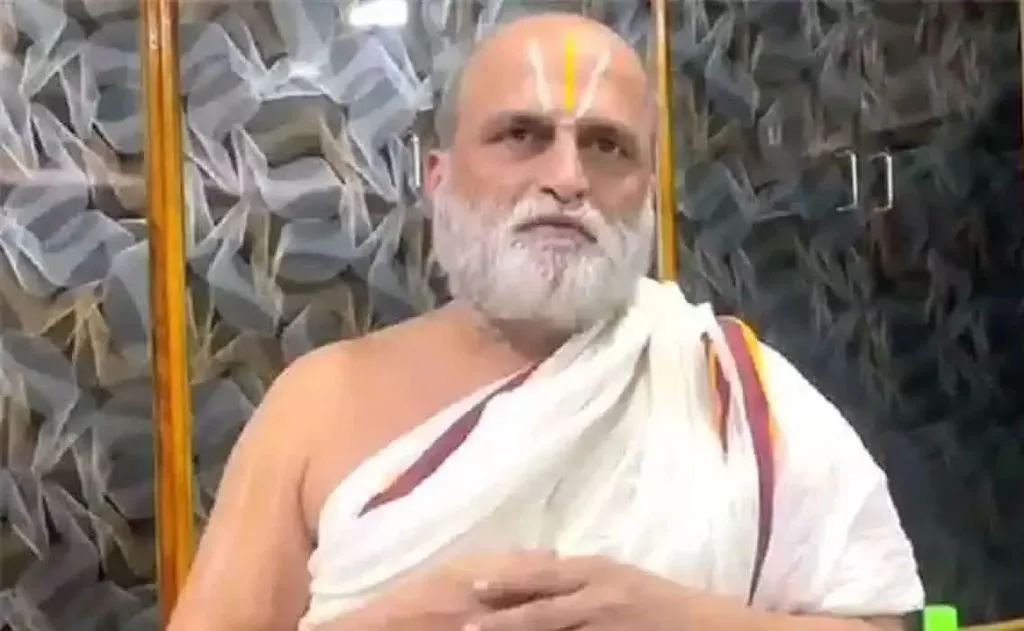
From Bollywood Star to Spiritual Leader: Mamta Kulkarni Becomes Maha Mandaleshwar of Kinnar Akhada"
The transformation of Mamta Kulkarni from a Bollywood star to a spiritual leader is indeed a surprising and thought-provoking journey.
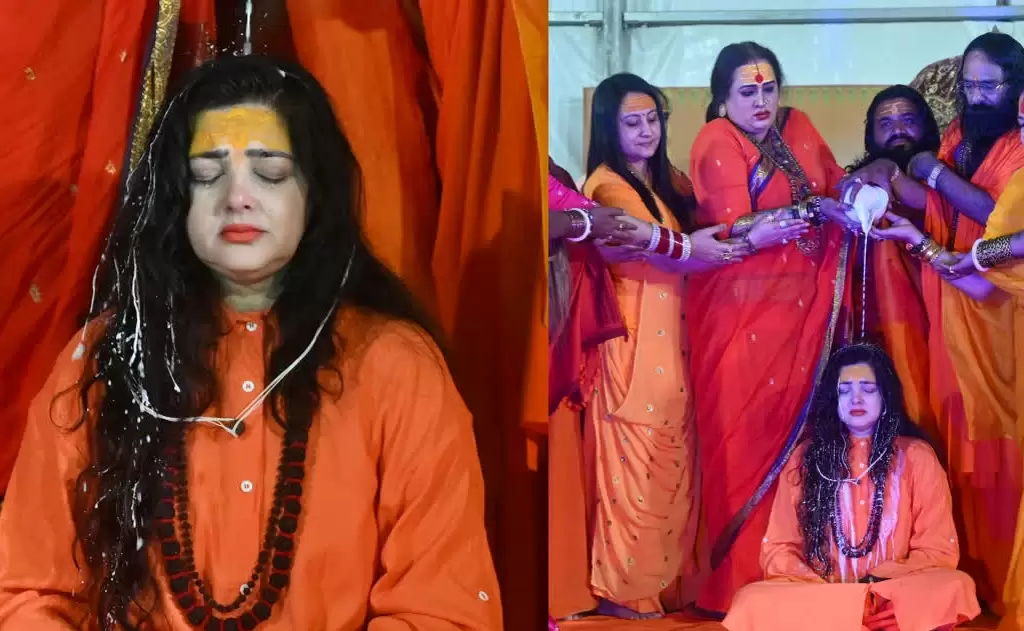
The transformation of Mamta Kulkarni from a Bollywood star to a spiritual leader is indeed a surprising and thought-provoking journey.
The transformation of Mamta Kulkarni from a Bollywood star to a spiritual leader is indeed a surprising and thought-provoking journey. Known for her bold and glamorous roles in the 1990s, Mamta Kulkarni was once a household name in Indian cinema. Her decision to embrace spirituality and become the Maha Mandaleshwar of the Kinnar Akhada reflects a profound shift in her life.
Key Highlights:
Transition to Spirituality:
Mamta Kulkarni revealed that her spiritual journey began in 2000. Over two decades of intense tapasya (penance) and self-discovery have led her to renounce worldly life and embrace the path of a sanyasi.
Pind Daan Ritual:
As part of her spiritual initiation, she performed the Pind Daan—a ritual in Hindu tradition believed to offer liberation (moksha) to one's ancestors and future generations. This act symbolizes her complete detachment from her past life and worldly ties.
Association with Kinnar Akhada:
The Kinnar Akhada, a unique spiritual group primarily composed of the transgender community, is known for challenging societal norms and advocating for inclusivity in spirituality. As a Maha Mandaleshwar, Mamta Kulkarni has taken on a revered leadership role within this organization.
Life of Renunciation:
In her statement, Mamta said, "Today, after so many years, I have finally embraced the life of a sanyasi." This reflects her deep commitment to spiritual ideals, signaling her departure from the materialistic and glamorous life of Bollywood.
A Remarkable Journey:
Mamta Kulkarni's transformation from a celebrated actress to a spiritual figure is a reminder of life's unpredictable nature. Her decision to lead a life of renunciation and serve as a spiritual guide represents a journey of self-realization and profound faith.
This story highlights the coexistence of contrasting identities—celebrity and sanyasi—and the power of spirituality to transcend societal expectations.
What is a Maha Mandaleshwar, and why does the title carry such weight?
The title Maha Mandaleshwar is one of the most senior ecclesiastical ranks within the Akhada system of Sanatana Dharma. An Akhada is a monastic wrestling-and-spiritual congregation formally recognised under the Akhil Bharatiya Akhada Parishad. The Maha Mandaleshwar is appointed to oversee a specific mandal, or spiritual jurisdiction, and is expected to guide initiates, preside over religious discourse, and represent the Akhada at major gatherings such as the Kumbh Mela.
The conferral of the title involves a formal diksha ceremony in which the candidate takes Sanyasa — complete renunciation — before senior saints and the Akhada's governing body. The initiate receives a new name, a specific lineage of mantra initiation (deeksha parampara), and the ochre or specific robes of that Akhada. The responsibility is not honorary; the Maha Mandaleshwar is expected to live by the Yama and Niyama disciplines outlined in the Patanjala Yoga Sutras and to conduct themselves as a living embodiment of the Akhada's sampradaya.
The Kinnar Akhada — its founding, purpose, and place in the broader Akhada tradition
The Kinnar Akhada was formally established in 2015 under the leadership of Acharya Mahamandaleshwar Laxmi Narayan Tripathi, with the express purpose of bringing the transgender (kinnar) community into the mainstream of Hindu religious life. Historically, kinnars have occupied a liminal but deeply sacred space in Hindu cosmology — the Ramayana references the kinnar community receiving a special blessing from Rama when they waited faithfully at the forest's edge for his return from exile, and the Mahabharata acknowledges the divine status of androgynous beings.
The Akhada gained significant visibility when it participated in the Ardha Kumbh Mela at Prayagraj in 2019, where its members took the sacred Amrit Snan (holy dip) as a recognised Akhada for the first time. This participation marked a watershed moment in the social and religious inclusion of the kinnar community. By accepting Mamta Kulkarni as Maha Mandaleshwar, the Kinnar Akhada continues its mission of expanding the boundaries of who can hold spiritual authority in contemporary Hinduism.
The significance of Pind Daan as a rite of complete renunciation
Pind Daan is a Shraddha ritual described in detail in texts such as the Garuda Purana and the Vishnu Smriti. Ordinarily performed by family members after a person's death to ensure the peaceful transit of the soul through the pitru loka, it becomes, in the context of Sanyasa diksha, a living person's own death rite. The renunciant symbolically performs their own Pind Daan to sever all karmic and familial bonds, declaring themselves 'dead' to householder life and reborn as a monk.
This act is not mere symbolism; according to Dharmashastra, once a person takes Sanyasa and performs their own Pind Daan, they are legally and ritually considered beyond the jurisdiction of family inheritance, caste duties, and social obligations. The Shankaracharya tradition codified in the Dashanami Sampradaya formalised this practice, and it is observed across virtually all major monastic orders in India. For Mamta Kulkarni, performing Pind Daan is therefore the most emphatic possible statement that her identity as a film actor, a householder, and a public celebrity has been ritually dissolved.
Tapasya and the inner journey — what two decades of spiritual practice entails
Mamta Kulkarni has stated that her spiritual journey began around the year 2000, implying roughly twenty-five years of tapasya before her formal initiation as Maha Mandaleshwar. In the Bhagavata Purana (Skanda XI), tapasya is described not merely as physical austerity but as the sustained alignment of body, speech, and mind toward the divine — kayika, vachika, and manasika tapas respectively. Practitioners in the Nath and Shaiva traditions, with which several Akhadas are affiliated, employ specific pranayama sequences, dhyana on the Shiva linga, and repetition of bija mantras as core disciplines.
The Shaivite framework that informs many Akhada traditions speaks of the gradual purification of the six enemies (shadripu) — kama, krodha, lobha, moha, mada, and matsarya — through sustained sadhana. A public figure's withdrawal from precisely the environment most saturated with these forces — the entertainment industry — and decades of quiet practice before any public claim to spiritual authority is itself regarded in these traditions as evidence of genuine vairagya (dispassion), rather than spiritual ambition.
Historical precedents — when public figures embraced Sanyasa in the Hindu tradition
Mamta Kulkarni's transition, while striking to modern observers, follows a pattern with deep historical roots. Adi Shankaracharya himself renounced householder life at an exceptionally young age in the 8th century CE, going on to establish the four dhams and the Dashanami monastic order. Closer to the modern era, the Maratha saint Tukaram and the Tamil saint Andal each underwent radical personal transformation before being recognised as spiritual authorities, their earlier social identities becoming irrelevant to their ultimate legacy.
In the 20th century, figures such as Ma Anandamayi — who moved from village householder life in Bengal to become one of India's most revered saints — demonstrated that the path of renunciation is not limited by gender, social background, or prior life choices. The Hindu tradition's flexibility on this point is grounded in the Bhagavad Gita's teaching (Chapter IV, verse 36) that even the most sinful can cross the ocean of sin by the raft of jnana. The Kinnar Akhada's acceptance of Mamta Kulkarni reflects this same theological openness.
What responsibilities now fall upon Mamta Kulkarni as Maha Mandaleshwar?
As Maha Mandaleshwar, Mamta Kulkarni is expected to conduct satsang and pravachan (spiritual discourses), initiate seekers into the Akhada's sampradaya, and represent the Kinnar Akhada at Kumbh Mela, Ardha Kumbh, and regional Simhastha gatherings. The Kumbh Mela — held on a rotating basis at Prayagraj, Haridwar, Nashik, and Ujjain — is the largest religious congregation on earth and the primary arena in which an Akhada's spiritual standing is demonstrated through participation in the Shahi Snan processions.
Beyond ceremonial duties, a Maha Mandaleshwar is traditionally expected to engage in seva — selfless service — toward the marginalised communities associated with their Akhada. For the Kinnar Akhada, this means continued advocacy for the dignity, legal rights, and spiritual inclusion of transgender persons within Hindu religious spaces. Mamta Kulkarni's national recognition and communication skills — whatever their original context — may in this role serve as effective tools for amplifying that mission to a broader audience.
Frequently Asked Questions
What is From Bollywood Star to Spiritual Leader?
The transformation of Mamta Kulkarni from a Bollywood star to a spiritual leader is indeed a surprising and thought-provoking journey. Known for her bold and glamorous roles in the 1990s, Mamta Kulkarni was once a household name in Indian cinema.
What are the key points about From Bollywood Star to Spiritual Leader?
Her decision to embrace spirituality and become the Maha Mandaleshwar of the Kinnar Akhada reflects a profound shift in her life. Key Highlights: Transition to Spirituality: Mamta Kulkarni revealed that her spiritual journey began in 2000.
Why does From Bollywood Star to Spiritual Leader matter in Hinduism?
It reflects core values of Sanatana Dharma and offers practical and spiritual guidance that remains relevant across generations.
How can devotees apply From Bollywood Star to Spiritual Leader in daily life?
By reflecting on its teaching, incorporating the related practices or observances into daily routine, and approaching it with sincere devotion and understanding.
You might also like
Purushottam Maas 2026: Lord Vishnu's Sacred Gift of Spiritual Multiplication & Divine Grace
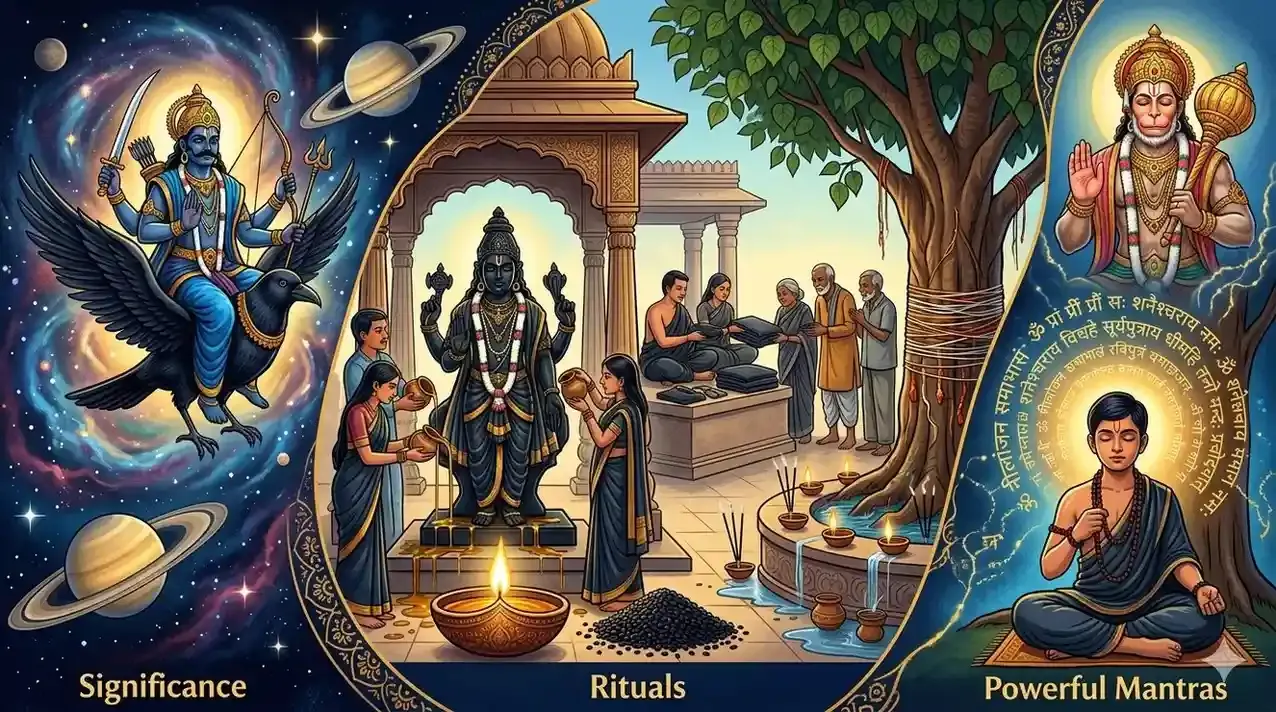
Shani Jayanti 2026: Date, Significance, Rituals & Powerful Mantras
Hindu Priest Jobs New Zealand 2026 — Auckland, Wellington, Christchurch Vacancies & NZ Religious Worker Visa Guide