Hinduism: The Father of All Religions — A Sacred Comparison with Buddhism, Jainism, Islam & Christianity
Introduction: Is Hinduism the Mother — and Father — of All Religions?
Introduction: Is Hinduism the Mother — and Father — of All Religions?
Introduction: Is Hinduism the Mother — and Father — of All Religions?
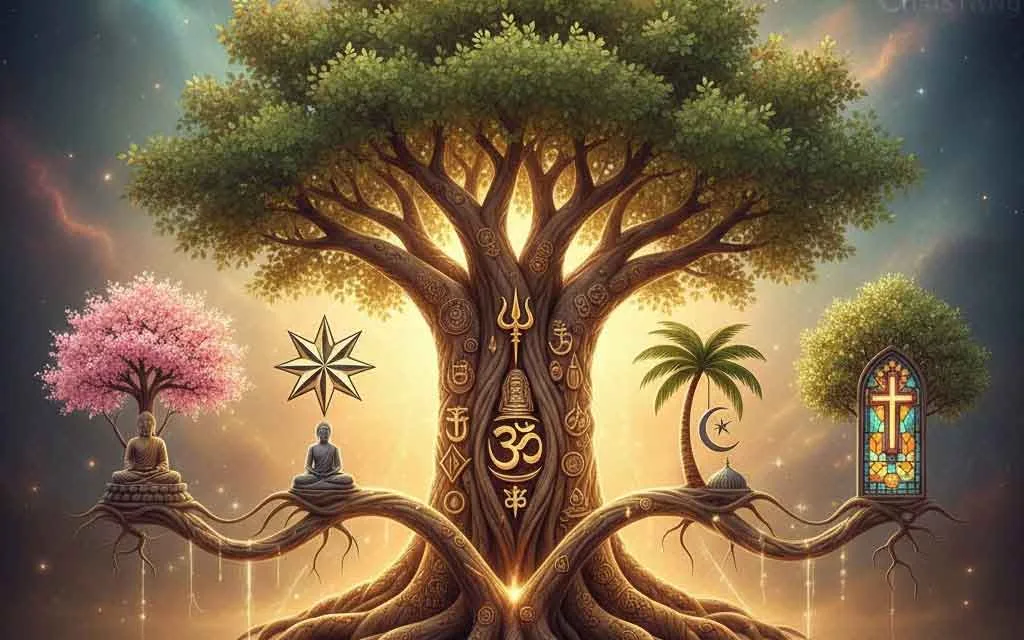
Among all the world's great spiritual traditions, Hinduism stands alone in its antiquity, depth, and scope. Known by its original name Sanatana Dharma — "the Eternal Way" — Hinduism is not merely the oldest living religion on Earth. Many scholars, spiritual teachers, and Hindu philosophers consider it the primordial source from which many of the world's great spiritual and philosophical traditions either emerged, borrowed, or were independently shaped by similar divine truths.
The Vedas — Hinduism's foundational scriptures — are the oldest religious texts in human history, dating back more than 5,000 years, with oral traditions stretching far earlier. The spiritual concepts Hinduism gave birth to — karma, dharma, yoga, meditation, reincarnation, non-violence (ahimsa), and the pursuit of liberation (moksha) — echo through virtually every major religion on Earth.
In this article, we explore why Hinduism is considered the father of all religions and offer a thoughtful, respectful comparison of Hinduism with Buddhism, Jainism, Islam, and Christianity — examining shared roots, parallel teachings, and meaningful differences.
Why Hinduism Is Considered the Father of All Religions
1. The Oldest Living Spiritual Tradition
Hinduism is widely recognized by historians and scholars as the world's oldest living religion. The Rigveda, Hinduism's oldest scripture, is estimated to be at least 3,500–5,000 years old, with its oral composition dating even further back. No other major world religion can claim such ancient and unbroken continuity.
While religions like Christianity (2,000 years), Islam (1,400 years), and Buddhism (2,500 years) are historically significant, all emerged well after the Vedic tradition had already established a comprehensive and sophisticated understanding of God, cosmos, ethics, and the soul.
2. The Universality of Vedic Thought
The Vedas do not belong to a single people, prophet, or historical moment. Their opening declaration — "Ekam Sat Vipra Bahudha Vadanti" (Truth is One; the wise call it by many names) — enshrines a radical spiritual universalism that no other ancient text comes close to matching. This foundational Vedic principle underpins the Hindu recognition that all genuine spiritual paths are valid expressions of the one divine truth.
3. Origin of Universal Spiritual Concepts
Many of the most universal spiritual concepts explored by world religions were first articulated — or most systematically developed — within Hinduism:
- Karma and reincarnation — later absorbed into Buddhism and Jainism directly from the Vedic-Hindu tradition
- Non-violence (Ahimsa) — a cornerstone of Jainism and Buddhism, deeply rooted in Vedic ethics
- Meditation and yoga — the inner science of consciousness first mapped by Hindu rishis (sages), now practiced globally
- Monotheism and the Oneness of God — fully articulated in the Upanishads centuries before the Abrahamic traditions
- The concept of the soul (Atman) — the immortal individual self, parallel to the soul in Christianity and Islam
- The Golden Rule — "Do not do unto others what is painful to you" (Mahabharata, Anushasana Parva) — predates its appearance in virtually every later tradition
4. The Guru-Disciple Lineage
The guru-shishya parampara (teacher-student lineage) — the sacred transmission of spiritual knowledge from enlightened master to devoted student — is a uniquely Vedic-Hindu institution that has shaped spiritual education in Buddhism, Jainism, Sikhism, and Sufi Islam alike.
Hinduism and Buddhism: Shared Roots, Divergent Paths
Origins and Historical Connection
Buddhism was founded by Siddhartha Gautama (the Buddha) in the 5th century BCE in northern India — the heartland of Hindu civilization. Gautama himself was born a Hindu, raised in a Hindu household, and trained under Hindu teachers before his enlightenment. The language of the Buddha's early teachings was Pali, directly derived from Sanskrit — the sacred language of the Vedas.
It would be accurate to say that Buddhism emerged from the womb of Hinduism — refining, debating, and in many ways continuing the deep spiritual inquiry the Upanishads had already initiated.
Shared Beliefs
Both Hinduism and Buddhism share a remarkable number of foundational beliefs:
- Karma — the law of cause and effect governing all existence
- Samsara — the cycle of birth, death, and rebirth
- Dharma — righteous conduct as the foundation of spiritual life
- Nirvana/Moksha — liberation from suffering and the cycle of rebirth as the ultimate spiritual goal
- Meditation — the primary inner technology for spiritual transformation
- Ahimsa — non-violence as a moral imperative
- Impermanence — the teaching that all conditioned phenomena are transient
Key Differences
Despite their shared origins, Hinduism and Buddhism diverge on several important points:
The Soul: Hinduism affirms the eternal individual soul (Atman) and its ultimate identity with Brahman (universal consciousness). Buddhism teaches Anatman (no-self) — denying the existence of a permanent, unchanging self.
God: Hinduism is richly theistic, with a vast pantheon of deities understood as manifestations of the one Supreme Reality. Traditional Buddhism is non-theistic — the Buddha himself declined to answer metaphysical questions about God.
The Vedas: Hinduism regards the Vedas as the supreme revealed authority. Buddhism explicitly rejected Vedic authority and the caste system of its time.
Salvation: In Hinduism, liberation (moksha) is achieved through a variety of paths — knowledge (jnana), devotion (bhakti), selfless action (karma yoga), or meditation (raja yoga). In Buddhism, the Noble Eightfold Path is the primary prescribed route to nirvana.
Verdict: Buddhism is Hinduism's most direct philosophical offspring — a reforming, questioning child that took the mother's deepest questions and answered them in its own profoundly original way.
Hinduism and Jainism: Ancient Siblings on the Path of Liberation
Origins and Historical Connection
Jainism is one of the oldest religious traditions in India, with roots that may rival Hinduism itself. Its 24th and most recent Tirthankara (spiritual teacher), Lord Mahavira, was a contemporary of the Buddha in the 6th century BCE. Like Buddhism, Jainism arose within the Vedic cultural ecosystem — sharing much of its vocabulary, spiritual framework, and ethical orientation with Hinduism while developing its own distinct metaphysics.
Shared Beliefs
Hinduism and Jainism share some of the most profound spiritual commitments found in any tradition:
- Karma — both traditions have highly sophisticated and detailed understandings of how karma binds and liberates the soul
- Samsara and Moksha — the cycle of rebirth and the goal of liberation are central to both
- Ahimsa — non-violence is the supreme ethical principle in Jainism (Ahimsa Paramo Dharma), a teaching that resonates deeply with Hindu values
- Vegetarianism — both traditions have strong traditions of vegetarian diet as an expression of ahimsa and spiritual purity
- Asceticism and Tapas — spiritual austerity as a means of purifying karma
- The Eternal Soul (Jiva) — Jainism, like Hinduism, affirms the existence of an eternal individual soul
Key Differences
God: Hinduism is theistic, recognizing a Supreme Divine Reality (whether personal as Ishvara or impersonal as Brahman). Jainism is non-theistic — it does not believe in a creator God. Instead, the Tirthankaras are perfected souls who serve as models of liberation.
Karma: Both traditions believe in karma, but in different ways. Hinduism views karma as a moral-metaphysical force. Jainism goes further, describing karma as a subtle physical substance that literally clings to the soul based on one's actions, thoughts, and emotions.
Ahimsa: While ahimsa is important in Hinduism, it is the absolute supreme value in Jainism — taken to extraordinary lengths, including avoiding harm to microorganisms, wearing face masks to prevent inhalation of insects, and sweeping the ground before walking.
The Vedas: Jainism, like Buddhism, does not accept Vedic authority.
Verdict: Jainism is Hinduism's closest spiritual sibling — deeply Indian, profoundly ancient, sharing the same ethical and metaphysical landscape while standing firm in its own courageous and radical vision of non-violence and soul liberation.
Hinduism and Islam: A Dialogue Between Two Great Civilizations
Historical Context
Islam arrived in India in the 7th–8th centuries CE, and the encounter between Hindu and Islamic civilizations produced one of history's most complex, creative, and sometimes painful intercultural dialogues. Despite centuries of conflict and coexistence, the spiritual currents of both traditions have influenced each other in remarkable ways.
The Sufi tradition within Islam — with its emphasis on divine love, the inner path, the guru-disciple relationship, and mystical union with God — shows striking parallels with Hindu Bhakti and Vedanta traditions. Sufi masters like Rumi, Al-Hallaj, and Kabir (who himself beautifully blended Hindu and Islamic mysticism) spoke a spiritual language that resonates deeply with Vedantic and Bhakti teachings.
Shared Beliefs
- Monotheism — both Islam and Hinduism (particularly in its Advaita Vedanta and Bhakti forms) emphasize the Oneness of God. The Upanishadic declaration "Ekam Brahma, Dvitiya Naste" (There is only One God, not a second) parallels the Islamic Tawhid (divine unity)
- The immortal soul — both traditions affirm that the human soul is eternal and accountable before God
- Moral law and righteousness — both traditions place great emphasis on living a life of ethical conduct, justice, charity, and devotion
- Prayer and worship — daily prayers, remembrance of God (dhikr in Islam, japa in Hinduism), and communal worship are central to both
- The afterlife — both traditions teach that human actions have consequences beyond this life
- Charity and service — Zakat in Islam and Dana/Seva in Hinduism both recognize the sacred duty to give to others
Key Differences
Monotheism vs. Polymorphic Theism: Islam strictly prohibits any representation or association of partners with God (shirk). Hinduism's worship of multiple deities is often misunderstood — at the philosophical level, all Hindu deities are understood as aspects of the one Supreme Reality, but the external practice of image worship is fundamentally at odds with Islamic theology.
Prophet and Revelation: Islam is founded on the final, definitive revelation of God through the Prophet Muhammad (PBUH) and the Quran. Hinduism has no single founder or single scripture — it is a vast, living tradition of many seers, many texts, and many paths.
Caste: The Hindu caste system (as historically practiced, not as originally conceived) stands in tension with Islam's egalitarian vision of all believers standing equal before God.
Afterlife: Islam teaches a linear vision of time — one life, followed by resurrection, judgment, and either paradise or hell. Hinduism teaches cyclical time — multiple rebirths until the soul achieves liberation.
Verdict: Hinduism and Islam represent two majestic but profoundly different civilizational visions of God and humanity — yet wherever mystics of both traditions have met, they have found surprising common ground in the language of divine love and the longing of the soul for union with the Infinite.
Hinduism and Christianity: Ancient Wisdom Meets the Gospel of Love
Historical Context
Christianity emerged in 1st century CE in the Middle East, rooted in the Jewish tradition. Yet from the earliest centuries, Christian mystical and Gnostic traditions show remarkable parallels with Hindu Vedantic philosophy — parallels so striking that scholars have long debated possible channels of influence through ancient trade routes between India and the Mediterranean world.
The Indian philosopher and statesman Swami Vivekananda, speaking at the Parliament of the World's Religions in Chicago in 1893, drew global attention to the profound resonances between Vedantic Hinduism and the mystical core of Christianity — and his speech sparked a worldwide spiritual awakening.
Shared Beliefs
- The divine nature of the soul — Christianity teaches that humans are made in the image of God (Imago Dei); Hinduism teaches that the soul (Atman) is identical with the divine (Brahman) — a deeper but related truth
- Love as the supreme virtue — the Gospel's supreme commandment to love God and neighbor resonates powerfully with Hindu Bhakti (devotion) and the ethic of Seva (loving service)
- Prayer and meditation — contemplative Christian traditions (mystics like Meister Eckhart, Thomas Merton, and St. John of the Cross) use inner practices strikingly similar to Hindu meditation and the Vedantic pursuit of inner stillness
- The concept of sin and karma — both traditions recognize that wrong action has spiritual consequences, though they frame and resolve this differently
- Compassion for the poor — both traditions place immense emphasis on serving the marginalized
- The Word (Logos) — the Gospel of John's declaration "In the beginning was the Word (Logos)" parallels the Hindu concept of Shabda Brahman — God as primordial sound/word, as expressed in Om
Key Differences
Incarnation: Christianity is centered on the unique, once-for-all incarnation of God in Jesus Christ. Hinduism teaches the doctrine of Avatara — God incarnates repeatedly in every age (Yuge Yuge) to restore righteousness, as Lord Vishnu did in forms such as Rama and Krishna.
Original Sin vs. Divine Nature: Christianity teaches that humanity is fallen through original sin and requires redemption through Christ. Hinduism teaches that the soul (Atman) is inherently divine — ignorance (avidya), not sin, is the root of suffering, and knowledge (self-realization) is the cure.
Exclusivity: Traditional Christianity teaches that salvation comes exclusively through faith in Jesus Christ. Hinduism's approach is pluralistic — it recognizes many valid paths to the Divine.
Afterlife: Christianity generally teaches one life followed by eternal heaven or hell (with some traditions including purgatory). Hinduism teaches multiple rebirths on the soul's journey to moksha.
Verdict: At the level of mystical experience and the ethics of love and service, Hinduism and Christianity speak a beautifully convergent language. At the level of theology, history, and doctrine, they represent two distinct and magnificent traditions — one eternal and universal, the other historically rooted in a transformative divine revelation.
What All These Religions Share: The Vedic Roots of Universal Spirituality
When we look across the world's great spiritual traditions, a pattern emerges that is impossible to ignore. The foundational spiritual concepts that virtually all religions hold in common — the immortality of the soul, moral accountability, love of God, compassion for others, the inner life of prayer and meditation, liberation from suffering — were most fully and systematically articulated within the Vedic-Hindu tradition thousands of years before any other major world religion existed.
This does not diminish the beauty, truth, or validity of Buddhism, Jainism, Islam, or Christianity. Each tradition has made irreplaceable contributions to human civilization and spiritual life. But it does invite us to recognize, with humility and gratitude, that Sanatana Dharma — the Eternal Way — has been humanity's spiritual home for longer than recorded history itself.
The Vedic vision is not that Hinduism is the only religion — but that all genuine spiritual paths flow from the same divine source, like rivers finding their way to the same ocean. As the Rigveda declares:
"Ekam Sat Vipra Bahudha Vadanti" Truth is One. The wise call it by many names.
Conclusion: Hinduism as the Eternal Spiritual Foundation
Hinduism's claim to be the father — or more accurately, the primordial parent — of the world's spiritual traditions rests not on arrogance but on historical antiquity, philosophical depth, and the universality of its vision. Its sacred texts are the oldest in human history. Its spiritual concepts underpin and precede every major world religion. And its core teaching — that the Divine is one, that all souls are sacred, and that love and righteousness are the heart of all true religion — is a message that every tradition, in its own way, affirms.
To study Hinduism is not merely to study one religion among many. It is to explore the fountain from which all of humanity's deepest spiritual wisdom ultimately flows.
Explore more articles on Hindu philosophy, scripture, and comparative religion at HinduTone.com
Tags: Hinduism father of all religions, Hinduism vs Buddhism, Hinduism vs Jainism, Hinduism vs Islam, Hinduism vs Christianity, oldest religion in the world, Sanatana Dharma, Vedic religion, Hindu philosophy, comparative religion, world religions, karma dharma moksha, ahimsa, Bhagavad Gita, Vedas
Frequently Asked Questions
What is Hinduism?
Introduction: Is Hinduism the Mother — and Father — of All Religions? Among all the world's great spiritual traditions, Hinduism stands alone in its antiquity, depth, and scope.
What are the key points about Hinduism?
Known by its original name Sanatana Dharma — "the Eternal Way" — Hinduism is not merely the oldest living religion on Earth. Many scholars, spiritual teachers, and Hindu philosophers consider it the primordial source from which many of the world's great spiritual and philosophical traditions either emerged, borrowed, or were independently
Why does Hinduism matter in Hinduism?
It reflects core values of Sanatana Dharma and offers practical and spiritual guidance that remains relevant across generations.
How can devotees apply Hinduism in daily life?
By reflecting on its teaching, incorporating the related practices or observances into daily routine, and approaching it with sincere devotion and understanding.
You might also like
Purushottam Maas 2026: Lord Vishnu's Sacred Gift of Spiritual Multiplication & Divine Grace
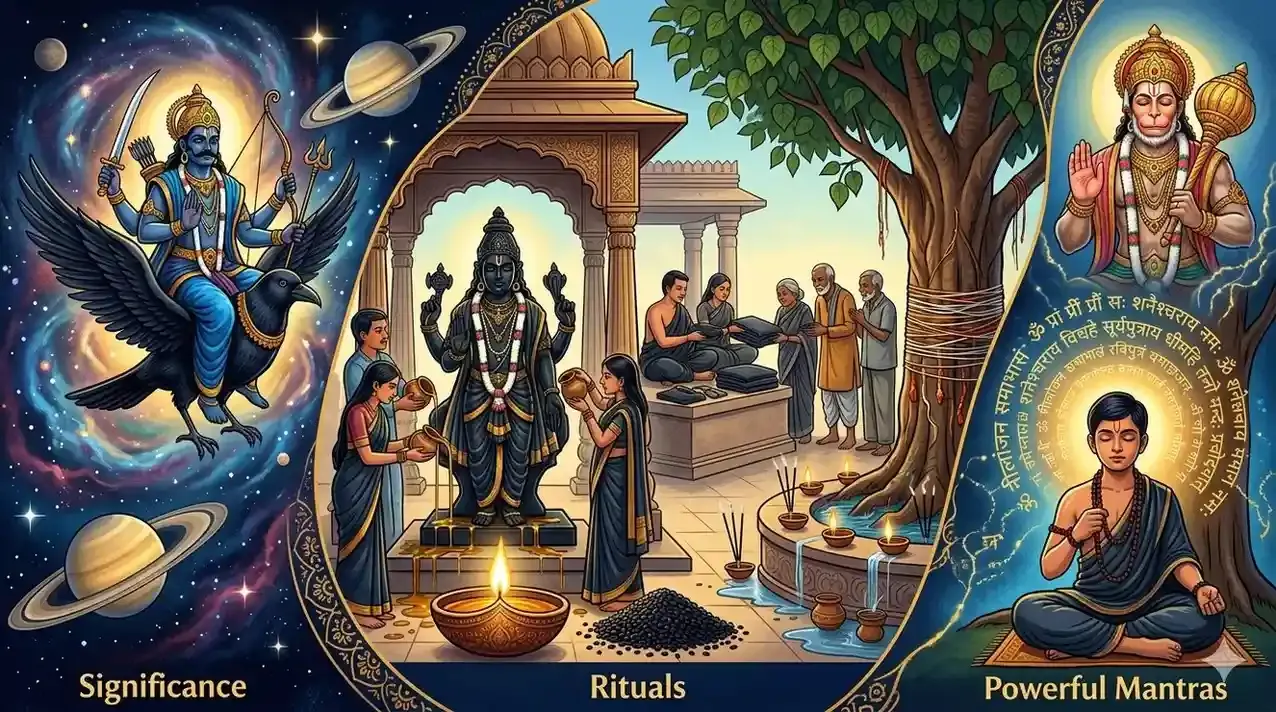
Shani Jayanti 2026: Date, Significance, Rituals & Powerful Mantras
Hindu Priest Jobs New Zealand 2026 — Auckland, Wellington, Christchurch Vacancies & NZ Religious Worker Visa Guide