Karma Explained: The Hindu Law of Cause and Effect — A Complete Devotional Guide
Table of Contents A Devotional Invocation Introduction: The Law That Governs All Life What Is Karma?
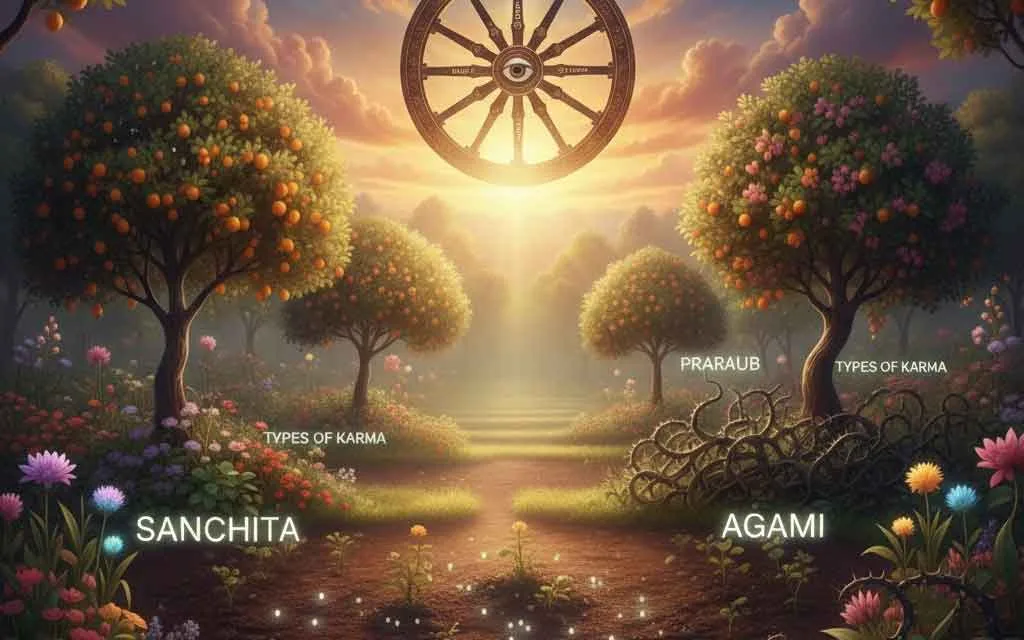
Table of Contents A Devotional Invocation Introduction: The Law That Governs All Life What Is Karma?
Table of Contents
- A Devotional Invocation
- Introduction: The Law That Governs All Life
- What Is Karma? The True Meaning Behind the Word
- The Origins of Karma: Vedic and Upanishadic Roots
- How Karma Works: The Mechanics of Cause and Effect
- The Three Types of Karma: Sanchita, Prarabdha, and Agami
- Good Karma and Bad Karma: Punya and Papa
- Karma Is Not Fate: Free Will in the Hindu Understanding
- Karma and Intention: The Role of the Heart
- Karma and Rebirth: How Actions Shape Future Lives
- Karma and Dharma: The Sacred Partnership
- Collective Karma: Families, Nations, and Humanity
- Can Karma Be Erased? Grace, Devotion, and Purification
- Nishkama Karma: Acting Without Desire — The Key to Freedom
- Karma in the Bhagavad Gita: Krishna's Supreme Teaching
- Karma in the Upanishads and Vedas
- Karma in Hindu Sacred Stories
- Karma Across Hindu Schools of Thought
- Common Misconceptions About Karma
- Living with Karma: Practical Spiritual Wisdom
- Frequently Asked Questions
- A Devotional Closing: The Garden of the Soul
1. A Devotional Invocation {#invocation}
Aum. Yad bhavam tad bhavati. As one thinks, so one becomes.
Karma is the teacher that never abandons the student. The universe is its classroom. Every moment is its lesson. Every soul is its beloved pupil.
May we act with wisdom. May we act with love. May we act with the knowledge that every seed we plant blooms in the garden of eternity.
Aum Shanti. Shanti. Shanti.
2. Introduction: The Law That Governs All Life {#introduction}
Long before modern physics discovered that every action produces an equal and opposite reaction — long before philosophers debated the ethics of moral accountability — the ancient sages of India had already mapped one of the most profound and comprehensive laws of existence:
What you do matters. What you think matters. What you intend matters.
Not just for this moment. Not just for this lifetime. But across the vast, unimaginable arc of the soul's eternal journey.
This is Karma — one of the most widely used Sanskrit words in the world today, and also one of the most widely misunderstood.
People speak casually of karma in everyday conversation — "What goes around comes around," "That's karma," "Good karma, bad karma." And while these popular usages carry a spark of the original truth, they barely scratch the surface of one of Hinduism's most profound, most compassionate, and most liberating insights into the nature of existence.
Karma is not a cosmic punishment machine. It is not fate. It is not luck. It is not the universe playing favorites or settling scores.
Karma is the sacred law of moral causation — the universe's precise, impersonal, infinitely wise system of ensuring that consciousness evolves, that every action finds its completion, that no soul is ever lost, and that the journey of every being moves — however slowly, however circuitously — toward truth, love, and ultimate freedom.
To understand karma is to understand the grammar of existence itself. It is to take profound responsibility for one's own life and liberation. And it is to discover, at the heart of what might first appear to be a doctrine of cosmic accounting, one of the most radically compassionate visions of reality ever conceived by the human spirit.
Let us enter this teaching with the reverence it deserves.
3. What Is Karma? The True Meaning Behind the Word {#meaning}
The Sanskrit Root
The word Karma (sometimes spelled Kamma in Pali, the language of early Buddhism) comes from the Sanskrit root kri — meaning "to do," "to act," "to make."
At its most fundamental level, karma simply means action.
But in the context of Hindu philosophy, karma means far more than physical action. It encompasses:
- Physical actions — what the body does
- Verbal actions — what the mouth speaks
- Mental actions — what the mind thinks, imagines, intends, and desires
All three dimensions of action — body, speech, and mind — generate karma. And it is this breadth that makes the Hindu understanding of karma so much more subtle and complete than popular culture's simplified version.
The Law of Karma
The Law of Karma states: every action — physical, verbal, or mental — generates a corresponding consequence that must eventually be experienced by the actor.
This is the universal principle of moral causation — as precise and as impersonal as the law of gravity. Just as a stone thrown upward must come back down regardless of who threw it, every karmic action must eventually produce its fruit (karmaphala) — regardless of whether the actor is a king or a beggar, a saint or a sinner, a human or a god.
The Brihadaranyaka Upanishad states it simply and profoundly:
"You are what your deep, driving desire is. As your desire is, so is your will. As your will is, so is your deed. As your deed is, so is your destiny."
This is not a threat. It is an invitation — to take ownership of the extraordinary creative power that every conscious being possesses.
4. The Origins of Karma: Vedic and Upanishadic Roots {#origins}
In the Rig Veda
The concept of karma appears in its earliest form in the Rig Veda — the oldest of the four Vedas, composed more than three thousand years ago. Here, karma appears primarily in the context of ritual action (yajna) — the precise performance of sacred ceremonies as acts whose effects reverberate through all the worlds.
The Vedic understanding was that the universe itself was sustained by right action — by the precise performance of sacrificial rites (karma) that maintained cosmic order (Rita, the precursor of the later concept of Dharma). To act rightly was to participate in the maintenance of cosmic harmony.
In the Upanishads
The Upanishads — composed roughly between 800 and 200 BCE — deepen the concept of karma from ritual action to the universal moral law governing the soul's journey across lifetimes.
The Chandogya Upanishad teaches: "Those whose conduct here on earth has been good will quickly attain a good birth — the birth of a Brahmin, a Kshatriya, or a Vaishya. But those whose conduct here has been evil will quickly attain an evil birth — the birth of a dog, a pig, or an outcast."
The Brihadaranyaka Upanishad introduces the intimate link between karma and rebirth: the soul carries its accumulated actions across the threshold of death into the next life, just as a caterpillar moves from one leaf to the next.
In the Bhagavad Gita
The Bhagavad Gita — delivered by Lord Krishna on the battlefield of Kurukshetra — transforms the understanding of karma from a law to be feared into a path to be embraced. Krishna reveals Karma Yoga — the art of right action offered to God — as one of the supreme paths to liberation.
The Gita does not merely describe karma. It shows how to transcend it.
5. How Karma Works: The Mechanics of Cause and Effect {#mechanics}
The Karmic Seed
Every intentional action — every deliberate thought, word, or deed — plants a karmic seed (karma-bija) in the deep soil of the soul's subtle body (sukshma sharira). This seed does not evaporate. It does not simply "go away" with time. It remains latent — sometimes for decades, sometimes for centuries, sometimes for lifetimes — until the conditions ripen for it to bear fruit.
This is why the effects of karma are not always immediately visible. The person who acts cruelly may seem to prosper for a time. The person who acts with great generosity may suffer immediate hardship. This apparent inconsistency confuses those who view karma only within the span of a single lifetime.
But karma operates across the vast landscape of multiple lifetimes. The seed planted today may bloom in this life, or in the next, or in a life still far in the future. The cosmic ledger is perfectly balanced — not in the currency of human-scale time, but in the timeless arithmetic of the soul's eternal journey.
Karma Is Impersonal
The Law of Karma is completely impersonal — like gravity, it plays no favorites. It does not punish out of anger. It does not reward out of sentiment. It simply reflects back to the actor the precise energetic quality of their actions — amplified and returned when conditions are ripe.
The universe does not judge. It mirrors.
The Three Channels of Karma
Karma flows through three channels:
Kayika Karma — Karma of the body: physical actions, from a gentle touch to an act of violence
Vachika Karma — Karma of speech: words spoken — truthful or deceptive, kind or cruel, healing or wounding
Manasika Karma — Karma of the mind: thoughts harbored, intentions formed, desires nurtured, judgments made
Of the three, mental karma is the most subtle and in many ways the most powerful — because it is the seed from which verbal and physical karma grow. A mind saturated with compassion naturally produces kind words and gentle actions. A mind saturated with fear or greed naturally produces harmful speech and destructive deeds.
This is why Hindu spiritual practice devotes such extraordinary attention to the purification of the mind — through meditation, mantra, study, and devotion. To purify the mind is to purify the very source of karma.
Karma Requires Intention (Sankalpa)
A crucial refinement in Hindu (and Buddhist) karma theory: karma is generated primarily by intentional action. An accidental step that crushes an insect does not generate the same karma as a deliberate act of cruelty. The Manusmriti and other texts recognize that intention — sankalpa — is the critical factor that determines the karmic weight of an action.
This does not mean that unintentional actions have zero consequence — they may still cause harm that must be addressed. But the depth of the karmic impression is proportional to the depth of the intention behind the act.
6. The Three Types of Karma: Sanchita, Prarabdha, and Agami {#three-types}
Hindu philosophy offers a brilliantly precise classification of karma into three categories — each playing a distinct role in the soul's journey:
1. Sanchita Karma — The Accumulated Reservoir
Sanchita (Sanskrit: accumulated, collected) karma is the vast, total reservoir of all karma accumulated across all of the soul's past lifetimes — every action, word, thought, intention, and desire from every life ever lived.
Imagine an enormous granary, filled with seeds of every possible variety — seeds of joy and sorrow, seeds of virtue and vice, seeds of wisdom and ignorance — accumulated over countless lifetimes. This is Sanchita karma.
Most of this karma lies dormant. In any single lifetime, only a small portion of the total Sanchita karma becomes active. The rest waits — patiently, perfectly — for the conditions that will allow it to bear fruit.
The complete exhaustion of all Sanchita karma is one way of describing Moksha — the final liberation in which the soul is freed from every trace of accumulated karmic debt.
2. Prarabdha Karma — The Karma Already in Motion
Prarabdha (Sanskrit: begun, commenced) karma is the specific portion of the Sanchita karma reservoir that has been activated for this particular lifetime — the karma that is currently ripening and being experienced.
Prarabdha karma determines the broad outlines of one's present existence:
- The family, culture, and country of one's birth
- The body one inhabits — its health, its gender, its physical capacities and limitations
- The general circumstances and major life events that one encounters
Prarabdha karma is sometimes called "arrow karma" — because like an arrow already released from the bow, it is already in motion. It must be experienced. It cannot be avoided, reversed, or prayed away. Even the greatest saints and liberated sages continue to experience prarabdha karma in the form of the body's natural experiences — hunger, aging, illness, death.
The famous story: when the great sage Ramana Maharshi was dying of cancer, his devotees wept and begged him to heal himself. He smiled gently and said: "The body has its own karma to fulfill. Why should I interfere?" The liberated soul does not suffer prarabdha karma — it simply observes it, like watching clouds pass through a clear sky.
3. Agami Karma — The Karma Being Created Now
Agami (Sanskrit: coming, forthcoming) karma — also called Kriyamana karma — is the karma being created right now through present thoughts, words, and actions.
This is the domain of free will. This is where the future is written.
While prarabdha karma has already been set in motion and cannot be changed, agami karma is entirely in our hands. Every choice we make right now — to act with love or fear, with honesty or deception, with compassion or cruelty, with wisdom or ignorance — is adding new seeds to the karmic granary and shaping the terrain of future lives.
This understanding is profoundly empowering: however difficult the circumstances of one's present life (prarabdha), the quality of one's future is always, always being shaped by the quality of one's present choices (agami).
The Karma Chart:
7. Good Karma and Bad Karma: Punya and Papa {#punya-papa}
Punya: Meritorious Karma
Punya (Sanskrit: virtue, merit, auspiciousness) is positive karma generated by actions that align with dharma — actions of generosity, compassion, truthfulness, devotion, service, and righteous living.
Punya generates:
- Pleasant circumstances in the present life
- A favorable rebirth — as a spiritually inclined human being, or in a celestial realm
- Increased opportunities for spiritual growth
- Inner qualities of peace, clarity, and goodness
Acts that generate punya include: worship and prayer, service to the poor and suffering, care for elders and teachers, truthful speech, reverence for life, charitable giving, and sincere spiritual practice.
Papa: Negative Karma
Papa (Sanskrit: sin, demerit, negative karma) is karma generated by actions that violate dharma — actions of violence, deception, greed, cruelty, disrespect, and willful harm.
Papa generates:
- Suffering and difficulty in the present life
- An unfavorable rebirth — in difficult human circumstances, or in painful intermediate states
- Inner qualities of confusion, restlessness, fear, and moral blindness
Beyond Punya and Papa: The Wisdom of Nishkama Karma
Here is where Hindu karma philosophy transcends simple moral accounting and arrives at something far more revolutionary:
Both punya (good karma) and papa (bad karma) bind the soul to samsara.
Good karma leads to pleasant rebirths and pleasant experiences — but still leads to rebirth. The soul bound by good karma is like a prisoner in a golden cage rather than an iron one. The cage is more comfortable — but it is still a cage.
True liberation requires transcending the entire karmic system — not through better karma management, but through acting in a way that generates no karma at all.
This is the teaching of Nishkama Karma — which we will explore in depth in Section 14.
8. Karma Is Not Fate: Free Will in the Hindu Understanding {#free-will}
Perhaps no aspect of karma is more widely misunderstood — and more important to clarify — than its relationship to fate and free will.
Karma does not mean that everything is predetermined.
This is a critical point. The doctrine of karma is not fatalism. It does not say that your life has been scripted from outside, that nothing you do matters, or that you should passively accept whatever happens to you as "karma" and do nothing.
The Analogy of the Cards
Think of karma this way: life is a card game. Your prarabdha karma determines the hand of cards you are dealt at birth — the circumstances, the body, the family, the general tendencies and challenges of this life. You did not choose this hand; it was dealt based on the karmas accumulated in previous lives.
But how you play those cards — the choices you make, the attitudes you cultivate, the response you give to each situation — is entirely your own. This is agami karma — the karma you are creating right now.
A person dealt a difficult hand who plays it with wisdom, love, and courage may reach liberation far sooner than a person dealt an easy hand who plays it with laziness, cruelty, and ignorance.
The Paradox of Free Will and Karma
Hindu philosophy holds a sophisticated position on free will: you are free, within the context of your karma. Your accumulated karmic tendencies (vasanas) create certain habitual patterns of thought and action — you may be predisposed toward certain emotions, desires, and behaviors based on past-life conditioning. But you are never compelled by these tendencies. You always have the capacity to observe them, resist them, and gradually transform them through sustained spiritual practice.
And the most profound freedom of all — the freedom of the Atman, the pure awareness that witnesses all karma without being bound by any of it — is always, already, completely free. It was never bound. Realizing this is Moksha.
9. Karma and Intention: The Role of the Heart {#intention}
"The thought manifests as the word. The word manifests as the deed. The deed develops into habit. And the habit hardens into character. So watch the thought and its ways with care — and let it spring from love, born out of concern for all beings." — Attributed to the Dhammapada (Buddhist, but resonant with Hindu thought)
Why Intention Is Everything
In the Hindu understanding of karma, intention (sankalpa or bhavana) is the single most important factor in determining karmic weight.
Consider two people who both perform the same external action — say, giving money to a person in need. One gives with genuine compassion and no thought of reward. The other gives to be seen, admired, and praised. Externally, the action is identical. Karmically, it is entirely different.
The first action generates pure, clean karma that lightens the soul. The second action generates a complex karma saturated with ego and desire, which binds rather than frees.
This is why the purification of motivation is, in Hindu spiritual teaching, the most fundamental work of the spiritual path. It is not enough to do good things. One must progressively purify the heart that motivates those good things — clearing away the layers of ego, fear, desire for recognition, and unconscious habit until actions arise from pure love, pure awareness, pure devotion.
The Mind as the Root
The Dhammapada opens with the words: "Mind is the forerunner of all actions." Hindu thought agrees completely. Every physical action begins as a mental event — a thought, an intention, a desire. To address karma at its root means to address the mind at its root.
This is the deep logic behind Hindu meditation practice: the more the mind is purified through sustained contemplation of the sacred, the purer the motivations from which action arises — and the lighter and cleaner the karma generated.
10. Karma and Rebirth: How Actions Shape Future Lives {#rebirth}
The full power and meaning of karma can only be understood in the context of rebirth (punarjanma) — the Hindu teaching that the soul takes on successive bodies, life after life, until it achieves liberation.
The Bridge Between Lives
At the moment of death, the physical body dissolves. But the subtle body (sukshma sharira) — which carries the mind, intellect, ego, and all accumulated karmic impressions — persists. This subtle body is the bridge between one life and the next.
The karma accumulated across this lifetime and all previous lifetimes travels with the subtle body — not in the form of a list of actions, but as deep impressions (samskaras) and tendencies (vasanas) woven into the very fabric of the soul's subtle nature.
These impressions and tendencies then shape the conditions of the next birth — the family, body, circumstances, and inner character that the soul brings into its new life.
Why We Don't Remember Past Lives
Most people do not consciously remember their past lives — and Hindu wisdom explains this as a mercy rather than a deprivation. The veil of forgetting (avidya) allows the soul to engage fully with the present life, rather than being overwhelmed by the accumulated memories of thousands of previous existences.
However, many of our deepest fears, strongest loves, most persistent habits, and most natural gifts are understood in Hindu thought as the living residue of past-life experiences and karmas — echoes of the soul's long, rich history finding expression in the present.
The Quality of Death and Rebirth
The Bhagavad Gita (8.6) teaches that the consciousness one holds at the moment of death has a particularly powerful influence on the nature of the next birth:
"Whatever state of being one remembers when he quits his body at the end of life, that state he will attain without fail."
This teaching drives the Hindu emphasis on dying consciously — with a peaceful mind, the name of God on one's lips, and awareness turned inward. The rites performed for the dying and the dead (antyesti samskaras), the chanting of sacred texts at the deathbed, and the ritual prayers for the departed are all understood as acts of profound karmic significance — supporting the soul in its most important transition.
11. Karma and Dharma: The Sacred Partnership {#dharma}
Karma and Dharma are the twin pillars of the Hindu ethical and spiritual universe — inseparable, interdependent, and together defining the complete framework for a righteous and spiritually meaningful life.
What Is Dharma?
Dharma (from the Sanskrit root dhri — "to uphold, to support, to sustain") is cosmic order, right conduct, moral law, one's sacred duty. It is simultaneously:
- The universal moral law that upholds all existence
- The specific duty appropriate to one's nature, stage of life, and circumstances
- The virtuous qualities — truthfulness, compassion, courage, purity — that define righteous character
How Karma and Dharma Relate
Dharma defines what right action is. Karma records whether you have acted rightly.
When one acts in accordance with one's dharma — fulfilling one's duties with integrity, compassion, and wisdom — one generates positive karma and moves toward liberation. When one violates dharma — abandoning duty out of cowardice, selfishness, or ignorance — one generates negative karma and moves toward greater bondage.
The Mahabharata teaches: "Dharma protects those who protect Dharma. Dharma destroys those who destroy Dharma."
This is not a warning from an angry God. It is a description of the natural operation of the karmic law: when one acts in harmony with cosmic order, the cosmic order sustains and supports one. When one violates cosmic order, the violation returns to its source.
Svadharma: Your Unique Sacred Duty
One of the most profound and challenging aspects of the dharma-karma teaching is the concept of svadharma — one's own, unique, individual dharma. In the Bhagavad Gita (3.35), Lord Krishna declares:
"It is far better to discharge one's prescribed duties, even though faultily, than another's duties perfectly. Destruction in the course of performing one's own duty is better than engaging in another's duties, for to follow another's path is dangerous."
Your svadharma is not defined simply by social role or caste. It arises from the deepest truth of your own nature — your unique combination of gifts, responsibilities, stage of life, and spiritual calling. To honor your svadharma fully, with integrity and without comparison to others, is to generate clean karma and move steadily toward liberation.
12. Collective Karma: Families, Nations, and Humanity {#collective-karma}
While karma is most commonly discussed in terms of the individual soul, Hindu philosophy also recognizes collective karma — the shared karmic inheritance of families, communities, nations, and all of humanity.
Family Karma
Families share a karmic bond that draws certain souls together across lifetimes. The joys, conflicts, debts, and love that characterize family relationships are understood as the working out of karmic connections established in previous lives. The soul who wronged another in one life may be born as their child in the next — bound in a relationship that offers the opportunity for healing, repayment, and ultimately, liberation.
This is why Hindu tradition places such deep importance on family rituals — the shodasha samskaras (sixteen life-cycle sacraments), ancestor worship (shraddha), and the prayers for the departed. These are not merely sentimental gestures; they are acts of karmic significance that honor and help to resolve the deep karmic bonds of the family soul-group.
National and Cultural Karma
Nations and civilizations also accumulate collective karma — through the choices, values, and actions of their people across generations. A nation that has historically acted with justice and compassion creates a collective store of merit that sustains it. A nation that has acted with cruelty and exploitation generates a collective burden that must eventually be faced.
This teaching carries a profound moral call: every individual who acts with integrity, compassion, and courage contributes not only to their own karmic account but to the upliftment of the collective karma of their community and nation.
The Karma of All Humanity
At the deepest level, all beings share a common karmic ground — because all arise from the same Supreme Consciousness. The suffering of one is, in the deepest sense, the suffering of all. The liberation of one illuminates the path for all.
This is the philosophical basis for the Hindu saint's prayer: "Sarve bhavantu sukhinah" — "May all beings be happy." Not just my family. Not just my community. Not just my species. All beings. For in the light of non-dual awareness, there are no others — only the One, wearing the beautiful, heartbreaking costumes of the many.
13. Can Karma Be Erased? Grace, Devotion, and Purification {#erasing-karma}
One of the most important and most comforting questions in the entire framework of karma: Can karma be dissolved? Can the karmic account be cleared before all its fruits have been experienced?
The answer of Hindu tradition — especially in the devotional schools — is a resounding, tender, compassionate yes.
Spiritual Practice as Karma Purification
Sustained spiritual practice — prayer, meditation, mantra, service, study of scripture — does not merely prevent the creation of new negative karma. It actively dissolves accumulated karma by purifying the vasanas (deep tendencies) and samskaras (mental impressions) from which karma arises.
The Bhagavata Purana teaches that sincere devotion to God — even a single moment of genuine, wholehearted remembrance of the Divine — can dissolve mountains of accumulated karma. Not because God is playing favorites, but because the very act of turning toward the Light dissolves the darkness that karma represents.
The Power of Repentance and Atonement
Hindu tradition also recognizes the power of sincere repentance (prayaschitta) — not as groveling self-punishment, but as the genuine turning of the heart away from wrong action and toward dharma. When one truly understands the harm one has caused, takes responsibility for it, makes amends where possible, and genuinely commits to a better path — the karmic force of the harmful action is significantly neutralized.
The Manusmriti and other texts outline specific prayaschitta (atonement) practices for various transgressions — but the deepest atonement is always internal: the genuine transformation of consciousness that prevents the harmful action from being repeated.
Divine Grace: The Supreme Dissolver of Karma
In the devotional traditions — Vaishnavism, Shaivism, Shaktism — divine grace (anugraha, prasada) is understood as the most powerful force in the universe, capable of dissolving any karmic burden in an instant.
When the devotee surrenders completely to the Divine — not partially, not strategically, but with the totality of their being — the Lord takes responsibility for that soul's liberation. The karmic burden that would have taken lifetimes to work through is dissolved in the fire of divine love.
"He who takes shelter of Me, even if he be of lower birth, women, merchants, as well as Shudras — even they attain the Supreme destination." — Bhagavad Gita 9.32
This is not cheap grace. It requires the deepest, most radical, most courageous form of surrender — the complete letting go of the ego's project of self-management and self-justification, and the unconditional offering of the entire self into the hands of the Divine.
But when that surrender is genuine, the grace that responds is without limit.
Prarabdha Karma: The One Exception
It is important to note that even divine grace does not typically dissolve prarabdha karma — the karma already in motion for this lifetime. Even the greatest saints continued to experience the fruits of their prarabdha karma in the form of physical illness, aging, and death. What grace dissolves is the suffering associated with these experiences — by transforming the inner relationship to them — and the vast accumulated reservoir of Sanchita karma that would otherwise require countless future births to exhaust.
14. Nishkama Karma: Acting Without Desire — The Key to Freedom {#nishkama}
If karma is generated by intentional action motivated by desire, then the most direct solution is both obvious and breathtakingly difficult: act without desire.
This is the teaching of Nishkama Karma — literally "desire-free action" — which Lord Krishna presents in the Bhagavad Gita as the master key to transcending the entire karmic system while remaining fully engaged in the world.
The Problem with Desire-Driven Action
When we act from desire — hoping for a particular outcome, fearing a particular consequence — we generate karma in two ways:
- The action itself, motivated by ego and desire, creates karmic impressions
- The attachment to the outcome creates additional layers of expectation, disappointment, or pride — all of which generate further karma
This is the trap of sakama karma (desire-motivated action): even well-intentioned actions performed with attachment to results bind the soul further to the wheel of samsara.
The Freedom of Nishkama Karma
Nishkama Karma transforms this entirely. The nishkama karmi:
- Acts fully, completely, and wholeheartedly in accordance with their dharma
- Brings total skill, attention, and dedication to every action
- Releases all attachment to outcomes — success or failure, praise or blame, gain or loss
- Offers the fruits of every action to God (Ishvara Arpana)
Such action generates no new karma — because karma is generated not by the action itself but by the ego's attachment to the action and its fruits. When the ego's claim on the action is relinquished — when the action is offered to the Divine — it flows through the individual like water through a clean pipe, leaving no karmic residue.
The Archer Metaphor
The Gita uses the image of a skilled archer: the archer must aim with complete focus and precision — giving total attention and skill to the shot. But the moment the arrow leaves the bow, the archer releases all attachment to where it lands. The archer's responsibility is the quality of the shot. The rest is in God's hands.
This is the art of nishkama karma: total engagement, total skill, total dedication — combined with total non-attachment to results.
Nishkama Karma in Daily Life
This is not a teaching for monks alone. It is the supreme practical wisdom for anyone navigating the demands of ordinary life:
- A parent who raises their child with complete love and dedication, without demanding that the child become what the parent wants them to be
- A doctor who brings every skill and care to each patient, without attaching their identity to whether the patient recovers
- A farmer who tends his fields with full effort and intelligence, and then offers the harvest — whether abundant or poor — to God with gratitude
Every act of daily life can become an act of liberation when performed with this spirit of nishkama karma.
15. Karma in the Bhagavad Gita: Krishna's Supreme Teaching {#bhagavad-gita}
The Bhagavad Gita is the most comprehensive and authoritative scripture on karma in all of Hindu tradition. It is not merely a text that describes karma — it is a living transmission of the wisdom that transforms karma.
The Context: A Moment of Karmic Crisis
The Gita opens at the most dramatic karmic moment imaginable: the warrior Arjuna stands on the battlefield of Kurukshetra, facing his own family and teachers in the opposing army. He is paralyzed — not by cowardice, but by a profound moral crisis. How can it be right to fight and kill people he loves? What karma will he generate? What is his duty?
This is not merely Arjuna's question. It is the universal human question: How do I act rightly in a world where every action has consequences, where every choice involves some harm, and where my own confusion makes it impossible to be certain I am right?
Lord Krishna's answer spans eighteen chapters — and at its heart is the teaching of karma in its fullest, most liberating dimension.
Key Karma Teachings of the Gita
"You have a right to perform your prescribed duties, but you are not entitled to the fruits of your actions. Never consider yourself the cause of the results of your activities, and never be attached to not doing your duty." — Bhagavad Gita 2.47
This single verse — among the most quoted in all of world literature — contains the complete teaching of Nishkama Karma in crystalline form.
"Let right deeds be thy motive, not the fruit which comes from them." — Bhagavad Gita 2.47 (Sir Edwin Arnold's translation)
"Those who are motivated only by desire for the fruits of action are miserable, for they are constantly anxious about the results of what they do." — Bhagavad Gita 2.49
"A person can rise through the efforts of his own mind; or draw himself down. For the mind is both friend and foe." — Bhagavad Gita 6.5
"Whatever you do, whatever you eat, whatever you offer or give away, and whatever austerities you perform — do that as an offering to Me." — Bhagavad Gita 9.27
This last verse is the complete formula for transforming all karma into liberation: offer everything — every meal, every act, every breath — to the Divine. When the ego's ownership of action is surrendered to God, karma loses its binding power.
16. Karma in the Upanishads and Vedas {#upanishads-vedas}
The Chandogya Upanishad: Karma and Rebirth
The Chandogya Upanishad (5.10.7) contains one of the earliest and most vivid descriptions of how karma shapes rebirth:
"Those whose conduct here on earth has been good will quickly attain a good womb — a Brahmin womb, a Kshatriya womb, or a Vaishya womb. But those whose conduct here has been stinking will quickly attain a stinking womb — a dog womb, a pig womb, or an outcast womb."
This teaching, understood in its full context, is not a social endorsement of caste hierarchy — it is a description of the natural karmic law by which the soul's inner qualities attract corresponding outer circumstances.
The Brihadaranyaka Upanishad: The Key Teaching
The Brihadaranyaka Upanishad (4.4.5) provides perhaps the most concise and profound statement of the karma-rebirth nexus:
"Now, a person consists of desires. As is his desire, so is his intention. As is his intention, so is his action. As is his action, so is his attainment."
This four-step chain — desire → intention → action → attainment — is the complete mechanics of karma in a single sentence. And it points precisely to where the intervention must occur: at the level of desire and intention, deep in the heart and mind — not merely at the level of external behavior.
The Katha Upanishad: The Eternal and the Temporary
The Katha Upanishad distinguishes between shreyas (the ultimately good — liberation) and preyas (the immediately pleasant — worldly enjoyment). It teaches that the soul that chooses shreyas over preyas — that chooses the path of liberation over the path of temporary pleasures — transcends karma and finds eternal freedom.
17. Karma in Hindu Sacred Stories {#sacred-stories}
The Story of Savitri and Satyavan: Love Conquers Karma
One of the most beloved stories in the Mahabharata tells of Savitri — a princess of extraordinary virtue, wisdom, and love — who chooses to marry Satyavan despite knowing from a divine prophecy that he will die within one year.
When Yama, the god of death, comes to claim Satyavan's soul, Savitri follows him, refusing to abandon her husband. Through the sheer force of her arguments, her dharmic insight, and her unshakeable love, she wins boon after boon from the God of Death — until finally, by asking for the blessing of many sons by Satyavan, she forces Yama to return her husband's life.
The message is luminous: the karma of death, which seemed fixed and unalterable, was transcended by the power of supreme virtue, love, and dharmic wisdom. Karma is real and powerful — but so is the human spirit when aligned with the highest good.
The Story of Harishchandra: Karma, Suffering, and Triumph
King Harishchandra — celebrated across Hindu tradition as the supreme embodiment of truthfulness — faced the most severe and seemingly unjust karmic trials imaginable. Stripped of his kingdom, separated from his wife and son, reduced to working in a cremation ground — all due to a test by the divine sage Vishwamitra — he never once lied or deviated from dharma, even when the truth would have destroyed him.
His absolute adherence to truth generated such powerful karma of virtue that it eventually purified every trace of difficulty, restored everything lost, and elevated him to divine glory. The story teaches that dharmic action sustained through the most crushing karmic trials is the most powerful force in the universe.
The Story of Ekalavya: The Karma of Self-Mastery
Young Ekalavya — a tribal boy who longed to learn archery from the great master Drona — was refused as a student because of his low birth. Rather than accepting defeat, Ekalavya fashioned a clay image of Drona and taught himself, in front of this imagined teacher, achieving a mastery that surpassed even Drona's best students.
When Drona demanded Ekalavya's right thumb as guru-dakshina (teacher's fee) — a devastating ask — Ekalavya gave it without hesitation. His selfless action, his extraordinary discipline, and his complete absence of bitterness generated karma of such purity that his name has been celebrated for three thousand years as the embodiment of supreme dedication and surrender.
18. Karma Across Hindu Schools of Thought {#schools}
Advaita Vedanta: Karma as Appearance
For Adi Shankaracharya's Advaita Vedanta, karma — like the entire phenomenal world — is ultimately part of maya (cosmic appearance). From the highest perspective, only Brahman is real; karma operates only within the realm of appearance, not in the ultimate reality of the Atman.
However, within that appearance, karma is entirely real and must be addressed through spiritual practice — specifically through the Jnana path that dissolves the fundamental ignorance (avidya) from which all karma arises. When ignorance is dissolved, karma is dissolved at its root — like a dream that evaporates upon waking.
Vishishtadvaita: Karma Under God's Sovereignty
For Ramanujacharya, karma is entirely real and governs the soul's journey — but it operates always under the sovereign will of God. God is not bound by karma — rather, karma is an instrument of God's will, through which the Supreme guides individual souls toward their ultimate fulfillment in divine union.
This tradition emphasizes that divine grace can override karma — not arbitrarily, but in response to the soul's sincere surrender and devotion.
Dvaita: Karma and Divine Justice
For Madhvacharya, karma is the precise instrument of God's perfect justice — ensuring that every soul receives exactly what its actions have merited. God (Vishnu) is the supreme administrator of the karmic law, ensuring its operation with complete fairness. Liberation comes when the soul, through devotion and grace, is freed from karma's jurisdiction and admitted into God's eternal presence.
Mimamsa: Karma as Cosmic Law
The Mimamsa school — one of the six classical schools of Hindu philosophy — presents karma in its most purely mechanical form: karma operates as an entirely autonomous cosmic law, without any supervising deity. Right action generates merit that automatically produces good results; wrong action generates demerit that automatically produces bad results. The universe is a perfectly self-regulating moral machine.
19. Common Misconceptions About Karma {#misconceptions}
Misconception 1: "Karma is Punishment"
Karma is not punishment delivered by an angry God. It is the impersonal, compassionate operation of the universe's own self-correcting mechanism. The consequences of karma are not imposed from outside; they arise naturally from the nature of the actions themselves — like a fire that naturally produces heat, not as a punishment for existing, but as an expression of its own nature.
Misconception 2: "Everything Bad That Happens Is Karma You Deserve"
This is one of the most harmful misuses of karma — using it to justify indifference to others' suffering. "They must have bad karma" is not a spiritually acceptable response to witnessing suffering. The doctrine of karma calls us to compassionate action in the face of suffering, not passive acceptance. We cannot fully know another soul's karmic situation — but we can always respond to suffering with love.
Misconception 3: "Good People Don't Suffer"
The existence of prarabdha karma explains why good, virtuous people sometimes experience great suffering. Prarabdha karma from past lives must be experienced — even by the most spiritually advanced souls. This is precisely why the great saints endured such extraordinary hardships: they were clearing the final residues of accumulated karma with rapid intensity, accelerated by their spiritual practice and grace.
Misconception 4: "Karma Means I Am Trapped by My Past"
On the contrary — the doctrine of karma is profoundly empowering. Yes, the present is shaped by the past. But the future is shaped by the present. Every moment of conscious, dharmic action is reshaping the karmic trajectory of the soul. No matter how heavy the karmic burden, the present moment always offers the opportunity for transformation.
Misconception 5: "Karma Is Only About Big Actions"
The subtlety of karma teaching is that every action matters — not just dramatic ones. The habitual small acts of kindness or cruelty, the quality of attention we bring to each moment, the quality of presence we offer to those we encounter — all of these accumulate into the karmic character that shapes the soul's destiny.
20. Living with Karma: Practical Spiritual Wisdom {#practical}
Understanding karma is not merely an intellectual exercise. It is a living wisdom that transforms how one moves through every moment of every day. Here are the practical implications of the karma teaching for daily life:
Watch Your Mind Before Your Actions
Since karma begins with intention and thought, the most powerful karmic practice is the cultivation of a purified, watchful mind. Regular meditation, mantra repetition, and self-observation allow you to catch the seeds of harmful action before they flower into words or deeds.
Act From Dharma, Not From Desire
Before acting, ask: Is this action in alignment with dharma — with what is truly right and good? Or is it driven by ego, fear, greed, or habit? The more consistently you act from dharma rather than desire, the lighter and cleaner your karmic trajectory becomes.
Release Attachment to Results
Practice the art of offering — do your best in every situation, then surrender the outcome to God. This does not mean indifference to results. It means caring deeply about the quality of your action while releasing your grip on how it turns out.
Respond to Suffering With Compassion
When you witness the suffering of others, do not comfort yourself with "that's their karma." Respond with love. Your compassionate response is your karma — and it is among the most purifying karma you can generate.
Make Your Life a Prayer
Transform every ordinary action into an act of conscious offering. Cook with love. Work with dedication. Speak with care. Love without condition. When all of life becomes an offering to the Divine, all of life becomes liberation.
Forgive
Holding grudges, resentments, and the desire for revenge generates heavy karma and keeps you bound to the very people and situations you wish to be free from. Forgiveness — genuine, deep, complete — is one of the most powerful karmic purifying acts available to us. It does not mean condoning wrong action. It means releasing the soul-binding chain of resentment.
21. Frequently Asked Questions {#faq}
Q: What does karma mean in Hinduism? In Hinduism, karma means action — specifically, intentional action and its inevitable moral and spiritual consequences. Every thought, word, and deed generates a karmic impression that will eventually produce a corresponding experience, either in this life or in a future life. Karma is the universal law of moral causation that governs the soul's journey across lifetimes.
Q: Is karma the same as fate in Hinduism? No. Karma is not fate. While prarabdha karma (the karma already in motion for this lifetime) does determine the broad circumstances of one's birth and life, how one responds to those circumstances — through present choices and actions (agami karma) — is entirely a matter of free will. The doctrine of karma is empowering, not fatalistic.
Q: Can karma be cancelled or removed? Yes. Sanchita karma (accumulated karma) can be dissolved through sincere spiritual practice, repentance, selfless service, devotion, and divine grace. Even very heavy karma can be neutralized by extraordinary acts of virtue, surrender to God, or the grace of a realized teacher. However, prarabdha karma (karma already in motion for this life) generally must be experienced, though its suffering can be transformed through spiritual practice.
Q: Does karma carry over to the next life? Yes. The soul's accumulated karma travels with the subtle body from one lifetime to the next. The circumstances, tendencies, gifts, and challenges of each new life are shaped by karma accumulated in previous lives. This is the mechanism by which karma drives the cycle of rebirth (samsara).
Q: Is karma the same in Hinduism and Buddhism? Both Hinduism and Buddhism recognize karma as the law of intentional action and its consequences. However, they differ in metaphysical framework: Hindu karma theory assumes an eternal individual soul (Atman) that carries karma across lives, while Buddhist karma theory operates without positing a permanent self. Despite this difference, the ethical implications are largely similar.
Q: What is the difference between karma and dharma? Dharma is the cosmic law of right conduct — what one should do. Karma is the law of cause and effect — the consequence of what one has done. They are complementary: acting in accordance with dharma generates positive karma and leads toward liberation; violating dharma generates negative karma and perpetuates suffering.
Q: Does thinking bad thoughts generate bad karma? Yes, but the degree depends on the intensity and deliberateness of the thought. A fleeting negative thought generates less karmic weight than a sustained, deliberate intention to harm. This is why Hindu spiritual practice places great emphasis on mental purification through meditation, mantra, and the cultivation of positive mental states — because the mind is the root from which all karma grows.
Q: Can love dissolve karma? In the devotional traditions of Hinduism, supreme love for God — Para Bhakti — is considered the most powerful dissolver of karma. When the heart is completely surrendered in love to the Divine, the ego that is the agent of karma-generating action dissolves, and with it, the entire karmic burden. Love is not merely a feeling in this tradition — it is a transformative spiritual force of the highest order.
22. A Devotional Closing: The Garden of the Soul {#closing}
Picture for a moment a garden — vast, ancient, stretching beyond sight in every direction.
In this garden, every soul has been planting seeds since the beginning of time. Some seeds were planted in wisdom — seeds of love, compassion, truth, courage, and surrender. These seeds grow into trees of extraordinary beauty, bearing fruits of joy, clarity, and liberation.
Other seeds were planted in ignorance — seeds of fear, anger, greed, and self-deception. These grow into thorny thickets that obscure the light and entangle the feet of the very gardener who planted them.
And here, right now, in this present moment — you are standing in your garden with a handful of seeds.
This is the teaching of karma.
Not a system of punishment. Not a cosmic trap. But the most intimate and honest mirror ever held up to the human soul — a mirror that says: You are the gardener. The garden reflects your own planting. And right now, in your hands, are the seeds of tomorrow.
The ancient sages who first perceived this law did not tremble before it. They were set free by it — because it meant that the future was not determined by an indifferent universe or a capricious deity. It was determined by them. By the quality of their thoughts. The depth of their love. The sincerity of their surrender.
Plant seeds of compassion, and compassion will bloom around you. Plant seeds of truth, and truth will illumine your path. Plant seeds of love — love for God, love for all beings, love that asks for nothing — and you will find, one day, that the garden has become the Garden of God, and that you are no longer a gardener standing in the garden.
You have become the garden itself.
"Karma is not a burden. Karma is the curriculum. And the classroom is your life."
Aum Tat Sat. Aum — That alone is Truth.
Aum Shanti. Shanti. Shanti.
This article is offered with devotion by HinduTone — illuminating the timeless wisdom of Sanatana Dharma for seekers everywhere.
Tags: karma in Hinduism, what is karma, Hindu law of cause and effect, types of karma, sanchita prarabdha agami karma, karma and rebirth, karma and dharma, nishkama karma, good karma bad karma punya papa, karma yoga Bhagavad Gita, how karma works, karma free will, collective karma, karma misconceptions, karma spiritual practice, Hindu philosophy karma, karma and moksha
Related Articles on HinduTone:
- Hindu Beliefs on Soul and Rebirth: Atman, Karma & Samsara Explained
- What Is Moksha? The Four Paths to Liberation in Hinduism
- Hindu Beliefs on the Supreme God: Brahman, Ishvara & the Divine
- The Bhagavad Gita: A Complete Chapter-by-Chapter Guide
- Dharma Explained: The Hindu Law of Right Conduct
- Hindu Beliefs on Death and the Afterlife
Published on HinduTone.com — Your devotional home for Hindu spirituality, culture, and sacred wisdom. © HinduTone | www.hindutone.com
You might also like
Karma, Rebirth, and Moksha Explained Simply: Core Concepts in Hinduism for 2026 Readers
Purushottam Maas 2026: Lord Vishnu's Sacred Gift of Spiritual Multiplication & Divine Grace
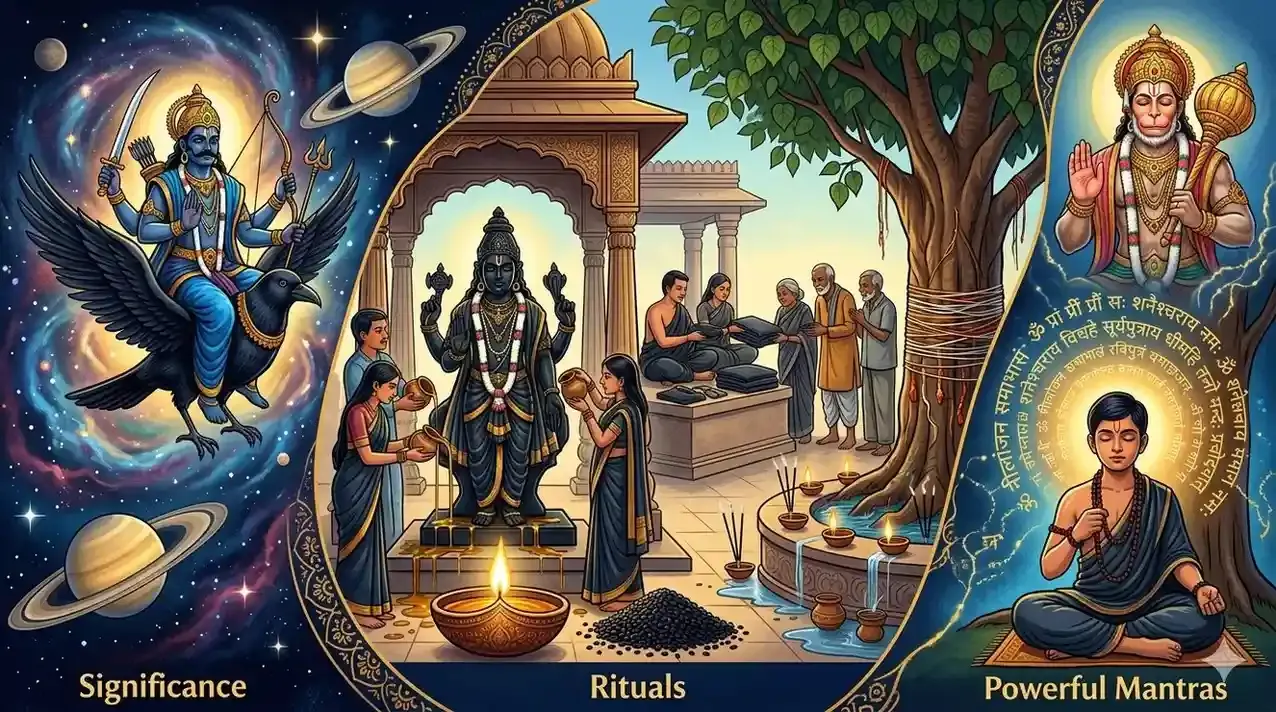
Shani Jayanti 2026: Date, Significance, Rituals & Powerful Mantras