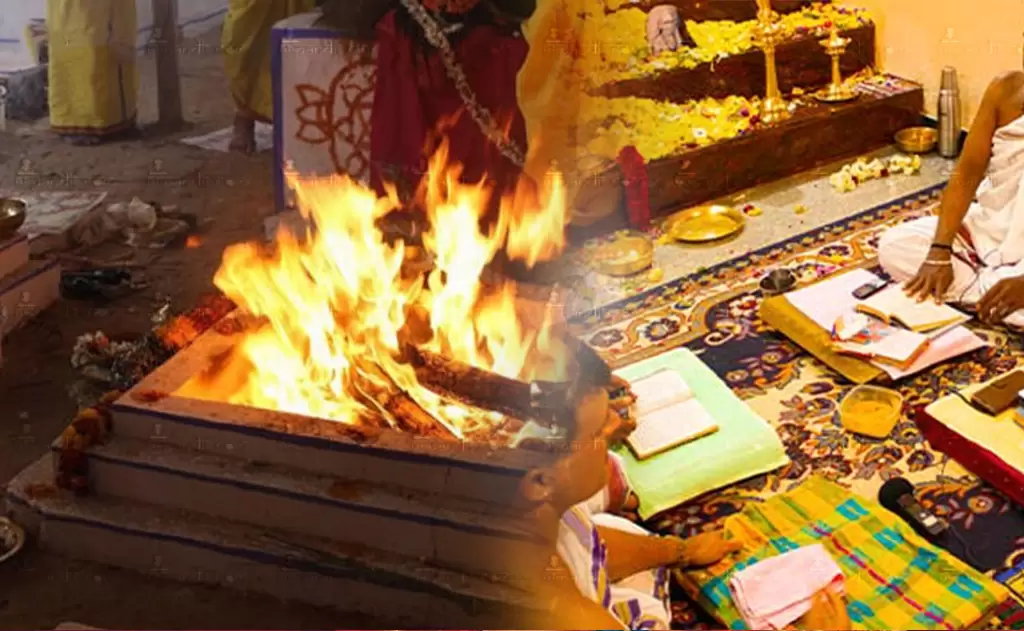
🚨 SHOCKING NEWS: Maha Kumbh Becomes Top Keyword in Google Trends in Pakistan, Qatar, and Other Islamic Nations!
In a surprising turn of events, the sacred Hindu festival Maha Kumbh has caught the attention of people in unexpected places, becoming one of the top trending…
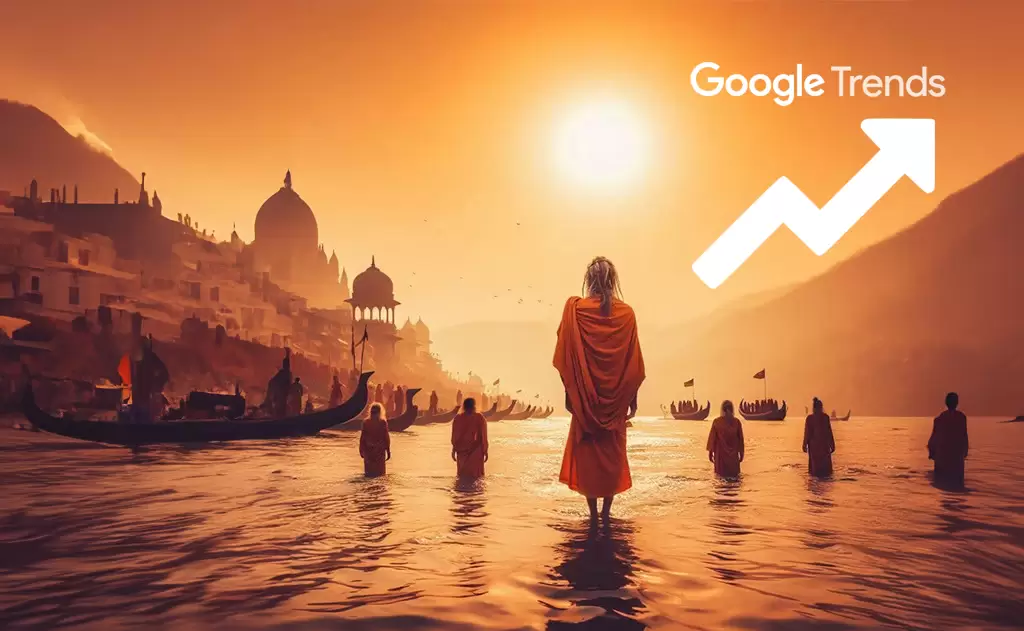
In a surprising turn of events, the sacred Hindu festival Maha Kumbh has caught the attention of people in unexpected places, becoming one of the top trending…
In a surprising turn of events, the sacred Hindu festival Maha Kumbh has caught the attention of people in unexpected places, becoming one of the top trending keywords in Pakistan, Qatar, and other Islamic nations. This growing curiosity about the world’s largest spiritual gathering shows that the divine message of Sanatana Dharma is crossing borders and attracting global interest, even in countries where Hinduism is a minority religion.
🌍 Global Fascination with Maha Kumbh: But it’s not just Islamic countries where this Hindu festival is making waves! Maha Kumbh has also attracted immense interest in nations like Nepal, Singapore, Australia, Canada, Ireland, Britain, Thailand, and the United States. Hindus and non-Hindus alike are showing deep curiosity about this age-old festival, proving that the timeless spiritual traditions of Bharat resonate with people of all backgrounds.
🔱 Maha Kumbh: A Universal Festival of Faith & Spiritual Awakening With millions of pilgrims expected to gather at the banks of the holy rivers, the Maha Kumbh represents unity, faith, and spiritual renewal. It’s no surprise that the world is tuning in to witness this awe-inspiring spectacle of devotion. The event, which happens once every 12 years, is a beacon of Sanatana Dharma’s deep spiritual roots, bringing Hindus together from every corner of the globe.
✨ What Does This Mean for Hindus Worldwide? The rising interest in Maha Kumbh from such diverse places signals a cultural renaissance—a renewed interest in Hinduism’s rich traditions and spiritual practices. It also highlights the universal appeal of Hindu values like peace, unity, and devotion. As the world watches, this is an incredible opportunity for Hindus everywhere to celebrate our heritage and share the spiritual wisdom of our ancient culture.
🚩 Join the Global Movement! Let’s spread the word and invite people from all over the world to experience the spiritual magic of Maha Kumbh. Together, we can showcase the power of Hindu spirituality and remind everyone that Sanatana Dharma stands for inclusivity, peace, and spiritual awakening. Share this post, and let’s unite Hindus globally to celebrate this once-in-a-lifetime event!
🌟 Jai Sanatana Dharma! 🌟
What is the Scriptural and Astronomical Basis for Kumbh Mela's 12-Year Cycle?
The Maha Kumbh's timing is rooted in Jyotisha Shastra, the ancient Vedic science of astronomy and astrology. The 12-year interval corresponds to Jupiter's (Brihaspati's) orbital period around the Sun. When Jupiter enters Vrishabha (Taurus) and the Sun and Moon align in specific configurations near the Makara or Mesha transitions, the waters of the Triveni Sangam — the confluence of the Ganga, Yamuna, and the invisible Saraswati at Prayagraj — are said to be charged with amrita, the nectar of immortality.
The Puranic basis for this belief is found in the Bhagavata Purana's account of Samudra Manthan, the churning of the cosmic ocean by the Devas and Asuras. During that churning, drops of amrita fell at four sacred sites: Prayagraj, Haridwar, Ujjain (Ujjayini), and Nashik (Tryambakeshwar). These four locations each host a Kumbh Mela on a rotating schedule, but the Prayagraj gathering every twelve years — the Maha Kumbh — is considered the most spiritually potent of all.
The 2025 Maha Kumbh at Prayagraj is particularly significant because a rare 144-year planetary alignment — a cycle completing 12 Purna Kumbhs — is coinciding with this event, drawing exceptional scholarly and popular attention worldwide, including from Muslim-majority nations curious about the astronomical and spiritual precision underlying the festival.
Why Does the Triveni Sangam at Prayagraj Hold Supreme Sanctity in Hindu Thought?
Prayagraj, historically known as Prayaga and mentioned in the Rigveda as a place of sacred confluence, holds the title 'Tirtharaja' — the king of all pilgrimage sites — within the Matsya Purana and the Padma Purana. The Triveni Sangam, where the Ganga flows from the northwest and the Yamuna from the south, is considered the earthly reflection of a cosmic junction. The third river, Saraswati, described as flowing underground (antarvaahini), is regarded as the river of wisdom and subtle consciousness.
Taking a holy dip — known as Amrit Snan or Shahi Snan — at the Sangam during auspicious tithis (lunar dates) such as Makar Sankranti, Mauni Amavasya, and Vasant Panchami is believed in the Dharmashastra tradition to dissolve accumulated karma across multiple lifetimes. This is not merely ritual belief; for tens of millions of pilgrims, the act of immersion is a visceral, lived experience of moksha-marga, the path toward liberation.
It is this combination of mythological depth, astronomical precision, and sheer human scale that has made international audiences — including those in Qatar, Pakistan, and the UAE — search for the Maha Kumbh online. The spectacle of millions converging peacefully on riverbanks is not only a spiritual phenomenon but also a civilisational statement.
How Do Akharas and Sadhus Shape the Identity of Maha Kumbh?
One of the most visually striking and spiritually central elements of Maha Kumbh is the procession of the Akharas — monastic orders of ascetics who have preserved Vedic and Agamic traditions for centuries. There are 13 officially recognised Akharas divided into Shaiva, Vaishnava, and Udasin traditions, including the ancient Juna Akhara, the Niranjani Akhara, and the Mahanirvani Akhara. The Shahi Snan (Royal Bath) processions, in which Naga Sadhus and Mahamandaleshwaras lead enormous columns of devotees on specific auspicious days, are considered among the most extraordinary human spectacles on Earth.
The Naga Sadhus — ash-smeared, unclothed renunciants who have taken the most radical form of Vairagya (detachment) — represent the living edge of Shaiva philosophy as laid out in texts like the Shiva Purana and the Linga Purana. Their presence is not performance; it is the culmination of years or decades of rigorous sadhana. Many international journalists and photographers who cover Maha Kumbh find themselves most captivated by this dimension, which partly explains why the event trends globally.
What Explains the Surge of Interest from Pakistan, Qatar, and Other Islamic Nations?
Several factors drive the trending searches from Muslim-majority countries. First, tens of millions of people of South Asian origin — many of them Hindu, Sikh, or of mixed heritage — live and work in Gulf nations like Qatar, UAE, and Saudi Arabia. For diaspora Hindus, searching for Maha Kumbh content is an act of cultural and spiritual connection with their homeland. Pakistan itself has a significant community of Hindus, estimated at several million, who follow the festival closely.
Second, international Arabic-language news channels and social media handles have increasingly covered Maha Kumbh as a geopolitical and cultural story, broadcasting satellite images of the tent city at Prayagraj — the largest temporary human settlement on the planet — and documenting the logistics that manage tens of millions of pilgrims. This coverage piques the curiosity of general Muslim audiences who may have little prior exposure to Hindu practices.
Third, the values visibly on display at Maha Kumbh — communal harmony, self-discipline, voluntary simplicity, and the quest for inner purification — resonate across religious boundaries. Scholars of comparative religion have noted parallels between the Kumbh pilgrimage and the Hajj to Mecca in terms of the transformative intention behind mass pilgrimage, even as the theological frameworks differ profoundly. This cross-cultural resonance is a natural driver of curiosity.
What Is the Significance of Kalpavas, the Month-Long Spiritual Residency During Maha Kumbh?
Beyond the single-day immersion, hundreds of thousands of pilgrims undertake Kalpavas — a practice of residing in temporary ashrams on the Sangam banks for the entire month of Magha (January–February) according to the Hindu lunar calendar. The Kalpavas practitioner, called a Kalpavasi, observes strict discipline: one meal a day, celibacy, daily predawn bathing in the Sangam, attendance at discourses, and continuous japa (mantra repetition). The Matsya Purana describes Kalpavas as equivalent in spiritual merit to a thousand Ashvamedha yajnas.
This practice reveals that Maha Kumbh is not purely a momentary event but a sustained spiritual retreat for its most devoted participants. In 2025, the Kalpavasi township at Prayagraj spans hundreds of hectares, with pilgrims from every Indian state as well as from the United States, Europe, and Southeast Asia. The sustained media interest, including live-streaming and YouTube coverage in multiple languages, has made this inner dimension of Kumbh visible to global audiences for the first time at scale.
How Has Maha Kumbh Influenced Art, Literature, and Global Cultural Discourse?
The Maha Kumbh has inspired an enormous body of creative work across centuries. The medieval Hindi poet-saint Tulsidas, author of the Ramcharitmanas, wrote reverently of the sanctity of Prayaga's confluence. The Allahabad of colonial times — today's Prayagraj — drew writers like Munshi Premchand who documented the social texture of Kumbh in their prose. In the modern era, photographers, documentary filmmakers, and photojournalists from National Geographic, the BBC, and Al Jazeera have produced landmark visual records.
UNESCO recognised Kumbh Mela by inscribing it on the Representative List of the Intangible Cultural Heritage of Humanity in 2017, acknowledging it as a living expression of humanity's collective spiritual imagination. This inscription has further elevated international awareness and is itself a reason why search engines in nations as distant as Qatar and Ireland return Maha Kumbh as a top keyword during the event's season.
For Hindus worldwide, this global recognition is not merely flattering — it is a call to deeper engagement with their own tradition. When millions of non-Hindus search for the meaning of Triveni Sangam, Naga Sadhus, or Amrit Snan, it opens a rare and genuine channel for the teachings of Sanatana Dharma to be shared with intellectual honesty and spiritual warmth.
Frequently Asked Questions
What is 🚨 SHOCKING NEWS?
In a surprising turn of events, the sacred Hindu festival Maha Kumbh has caught the attention of people in unexpected places, becoming one of the top trending keywords in Pakistan, Qatar, and other Islamic nations. This growing curiosity about the world’s largest spiritual gathering shows that the divine message of Sanatana Dharma is crossing borders and att
What are the key points about 🚨 SHOCKING NEWS?
🌍 Global Fascination with Maha Kumbh: But it’s not just Islamic countries where this Hindu festival is making waves! Maha Kumbh has also attracted immense interest in nations like Nepal, Singapore, Australia, Canada, Ireland, Britain, Thailand, and the United States.
Why does 🚨 SHOCKING NEWS matter in Hinduism?
It reflects core values of Sanatana Dharma and offers practical and spiritual guidance that remains relevant across generations.
How can devotees apply 🚨 SHOCKING NEWS in daily life?
By reflecting on its teaching, incorporating the related practices or observances into daily routine, and approaching it with sincere devotion and understanding.
You might also like
Gayatri Jayanti 2026: Date, Gayatri Mantra, Puja Vidhi & Significance
Hanuman Worship on Saturday: Powerful Rituals & Remedies for Shani Dosha
Shani Dev Puja Vidhi: Complete Rituals, Mantras & Saturday Vrat Guide