A Temple of Faith or Politics? The Digha Jagannath Controversy Ignites Tensions Between Bengal and Odisha
In the sun-drenched coastal town of Digha, West Bengal, a grand new temple dedicated to Lord Jagannath has risen, its towering spire casting a shadow not just…
In the sun-drenched coastal town of Digha, West Bengal, a grand new temple dedicated to Lord Jagannath has risen, its towering spire casting a shadow not just…
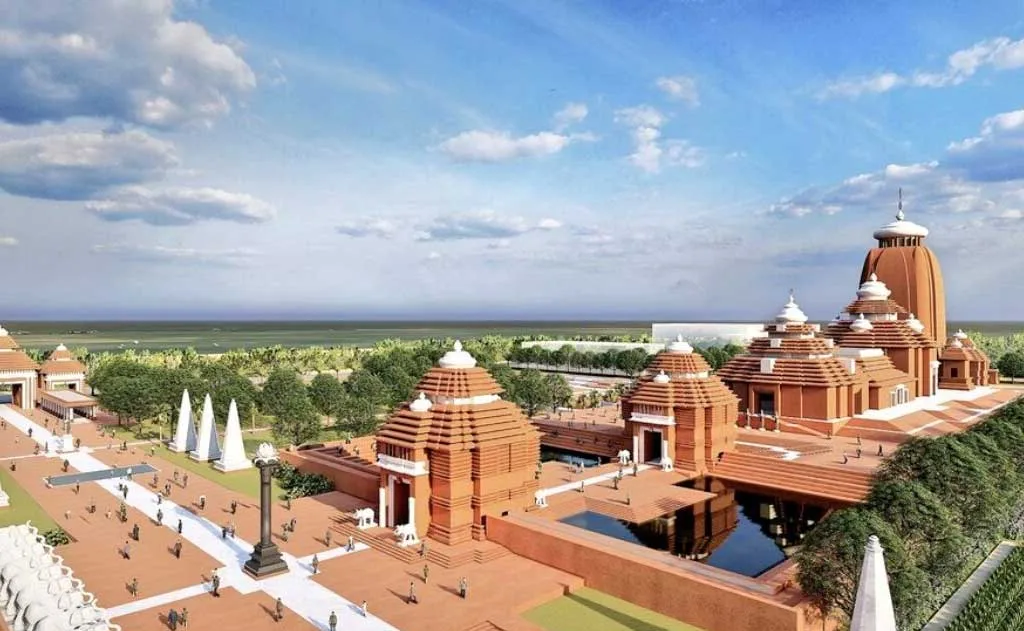
In the sun-drenched coastal town of Digha, West Bengal, a grand new temple dedicated to Lord Jagannath has risen, its towering spire casting a shadow not just over the Bay of Bengal but across the political and spiritual landscape of eastern India. Inaugurated on April 30, 2025, by West Bengal Chief Minister Mamata Banerjee, the Rs. 250 crore project, sprawling over 22 acres, was envisioned as a cultural and religious landmark. Yet, what was meant to be a celebration of devotion has spiraled into a heated controversy, pitting Bengal against Odisha, faith against politics, and tradition against ambition.
A Temple Rises in Digha
The Digha Jagannath Temple, constructed by the West Bengal Housing Infrastructure Development Corporation (WBHIDCO), is an architectural marvel, standing 213 feet tall—eerily close to the 214-foot height of the 12th-century Jagannath Temple in Puri, Odisha. Modeled after its ancient counterpart, the Digha temple boasts a sanctum sanctorum, assembly hall, dancing hall, and offering hall, all crafted from 300,000 cubic feet of Bansi Paharpur pink sandstone. On inauguration day, thousands of devotees thronged the site, their chants of “Jai Jagannath” mingling with the sea breeze, as Mamata Banerjee herself swept the sun-scorched road for the temple’s first-ever Rath Yatra on June 27, 2025.
Mamata hailed the temple as a symbol of unity, declaring, “This temple is for everyone. Let it be a place of pilgrimage for thousands of years.” She emphasized its potential to boost tourism, noting Digha’s proximity to Kolkata and its appeal as a seaside getaway. Slogans like “No need to go to Puri to see Jagannath Dham and the sea” echoed through promotional materials, positioning Digha as a convenient alternative for Bengali devotees. The involvement of the International Society for Krishna Consciousness (ISKCON) and the temple’s inclusive policy—allowing non-Hindus to enter, unlike Puri—added to its allure. Yet, beneath the fanfare, a storm was brewing.
Odisha’s Outrage: A Clash Over ‘Jagannath Dham’
The decision to brand the Digha temple as “Jagannath Dham” struck a raw nerve in Odisha, where the Puri Jagannath Temple holds an unparalleled spiritual status as one of Hinduism’s four sacred Char Dhams, alongside Badrinath, Dwarka, and Rameswaram. The term “Dham” is not merely a label; it carries profound scriptural weight, reserved for sites sanctified by 8th-century philosopher Adi Shankaracharya. Puri’s priests, servitors, and devotees saw the Digha temple’s nomenclature as an audacious overreach, accusing Mamata’s government of distorting tradition for political gain.
Puri’s chief servitor, Bhabani Das Mohapatra, called the Digha complex “a crime by Mamata Banerjee,” alleging it “arrogantly violated scriptural norms.” The Shankaracharya of Puri, Swami Nischalananda Saraswati, subtly but pointedly reaffirmed that only Puri holds the rightful title of “Jagannath Dham.” Odisha Chief Minister Mohan Charan Majhi formally urged Mamata to drop the “Dham” tag, stating, “Puri’s Jagannath Dham holds unparalleled religious, spiritual, and cultural significance for millions across India and the world.” Even Puri’s titular king, Gajapati Maharaja Dibyasingha Deb, appealed to ISKCON to intervene, warning of a violation of “scriptural injunctions.”
The controversy deepened when allegations surfaced that sacred neem wood (Daru) from Puri’s Nabakalebara ritual—used to carve the deities’ idols—was illicitly used for Digha’s idols. Ramakrushna Das Mahapatra, a senior Puri servitor who participated in Digha’s consecration, claimed the wood came from Puri’s 2015 ritual, sparking outrage. The Shree Jagannath Temple Administration (SJTA) suspended him for 309 days and barred him from entering Puri’s temple, while Odisha’s government launched a probe. Although the investigation found no evidence of stolen wood, the incident fueled perceptions of cultural appropriation.
Political Firestorm: BJP vs. TMC
The Bharatiya Janata Party (BJP), led by figures like Suvendu Adhikari, West Bengal’s Leader of Opposition, seized the opportunity to lambast Mamata. Adhikari called her a “fake Hindu,” arguing that government funds—Rs. 250 crore of taxpayer money—could not be used for religious projects under India’s secular Constitution. He pointed to the Ram Mandir in Ayodhya, built through public donations, as a contrast. “Puri Dham will remain Puri Dham,” Adhikari declared, accusing Mamata of misleading Bengalis by passing off a “cultural centre” as a temple. BJP MP Sukanta Majumdar went further, alleging Mamata was “climbing on the shoulders of Lord Jagannath” to win the 2026 West Bengal Assembly elections.
The BJP framed the Digha temple as a calculated move to divert pilgrims—and their economic contributions—from Puri, which relies heavily on Bengali tourists (14% of Odisha’s 97.25 lakh domestic tourists in 2023). Odisha BJP MP Baijayant Panda and sand artist Sudarsan Pattnaik echoed this sentiment, with Pattnaik urging Mamata to apologize for “hurting the sentiments of millions of Jagannath devotees.” In Murshidabad, where communal tensions flared over a new Waqf law, BJP workers renovated nine temples, signaling a counter-offensive.
Mamata, unfazed, dismissed the accusations as “slanderous” and politically motivated. Speaking in Murshidabad, she retorted, “They said I stole wood from Jagannath Temple. Why should I? We have plenty of neem trees in Bengal.” TMC spokesperson Kunal Ghosh defended her secular credentials, noting her support for Muslim, Christian, and Hindu sites alike. “What is BJP’s problem if people worship Jagannath in Digha?” he asked. TMC’s Jay Prakash Majumdar accused the BJP of hypocrisy, questioning why a “Hinduvadi” party opposed a Hindu temple.
A Deeper Game: Faith or Electoral Strategy?
Political analysts see the Digha temple as Mamata’s strategic counter to the BJP’s Hindu majoritarian narrative, which has gained traction in West Bengal since 2019, when the BJP won 18 of 42 Lok Sabha seats. With the 2026 elections looming, the temple is viewed as an attempt to woo Hindu voters in Purba Medinipur, a BJP stronghold where Adhikari defeated Mamata in the 2021 Nandigram polls. By invoking Lord Jagannath, a deity symbolizing universality, Mamata aims to project a “soft Hindutva” that balances her secular image with Hindu appeal, countering accusations of Muslim appeasement.
The TMC’s broader strategy includes initiatives like distributing prasad from the Digha temple to 10.4 million households, a move that sparked further controversy over authenticity but underscored Mamata’s outreach. Her announcement of a “Durga Angan” project, a year-round complex celebrating Bengal’s revered goddess, signals a continuation of this approach. Political scientist Udayan Bandopadhyay called it a “compulsion” in a landscape dominated by the BJP’s religious narrative.
Yet, the BJP faces its own dilemma. While criticizing Mamata, some leaders, like former state president Dilip Ghosh, attended the Digha inauguration, drawing internal backlash. A senior BJP leader admitted to The Indian Express, “We don’t want Mamata to hijack our temple politics.” The party’s shift from “Jai Shri Ram” to “Jai Maa Kali” and “Jai Maa Durga” reflects its own bid to localize its Hindutva appeal in Bengal.
Devotees Caught in the Crossfire
Amid the political slugfest, devotees are divided. In Digha, locals like Manik Sarkar, a retired government employee, expressed frustration, questioning whether the temple was about faith or politics. In Puri, devotees like Anirban Bose insisted, “Nothing compares with the Puri Temple.” Yet, for many in coastal Bengal, the Digha temple is a source of pride and convenience, drawing thousands to its first Rath Yatra.
The controversy also touched on deeper cultural tensions. TMC leader Kunal Ghosh invoked the 15th-century saint Chaitanya Mahaprabhu, speculating about his alleged killing by Puri priests, a move that further inflamed Odisha’s sentiments. TMC’s Akhil Giri accused the BJP of being “anti-Bengali,” highlighting the regional rivalry.
A Sacred or Secular Divide?
As the dust settles, the Digha Jagannath Temple stands as a paradox—a monument to devotion that has ignited division. For Mamata, it’s a bold gambit to reclaim Hindu voters while reinforcing Bengal’s cultural identity. For Odisha, it’s an affront to a sacred legacy. For the BJP, it’s a chance to paint Mamata as a political opportunist. And for devotees, it’s a question of whether faith can transcend the clamor of politics.
As West Bengal and Odisha brace for more debates, one thing is clear: the Digha temple, with its gleaming sandstone and towering ambitions, has become more than a place of worship. It’s a battleground where faith, politics, and regional pride collide, with the 2026 elections looming large.
Frequently Asked Questions
Where is A Temple of Faith or Politics? The Digha Jagannath located?
In the sun-drenched coastal town of Digha, West Bengal, a grand new temple dedicated to Lord Jagannath has risen, its towering spire casting a shadow not just over the Bay of Bengal but across the political and spiritual landscape of eastern India. Inaugurated on April 30, 2025, by West Bengal Chief Minister Mamata Banerjee, the Rs.
Who is the presiding deity of A Temple of Faith or Politics? The Digha Jagannath?
The temple's presiding deity and its significance are described in the guide above.
What are the timings and how do I reach A Temple of Faith or Politics? The Digha Jagannath?
Temples typically open early morning and evening; confirm current darshan timings before visiting. The nearest airport, railway station and road routes are covered in the guide above.
What is the best time to visit A Temple of Faith or Politics? The Digha Jagannath?
Major festival days and the cooler months are popular, though weekday mornings offer a calmer darshan. Plan around the temple's key festivals for the most vibrant experience.
You might also like
Divine Hindu Temple News, Festivals & Global Devotion in Jyeshtha Adhik Maas 2026
Shani Deva Temples Worldwide & Must-Performed Rituals — Complete Devotee's Guide
Jyeshtha Masam 2026: Dates, Significance, Festivals, Mantras, and Danas – Complete Guide