Ancient Dargah Vanishes Overnight Amid Temple Makeover – Sparks Outrage & Calls for Justice!
Hyderabad, February 25, 2026 – In a dramatic turn that has set Telangana's interfaith landscape on edge, the historic Dargah Hazrat Tajuddin Khaja Bagh Sawar –…
Hyderabad, February 25, 2026 – In a dramatic turn that has set Telangana's interfaith landscape on edge, the historic Dargah Hazrat Tajuddin Khaja Bagh Sawar –…
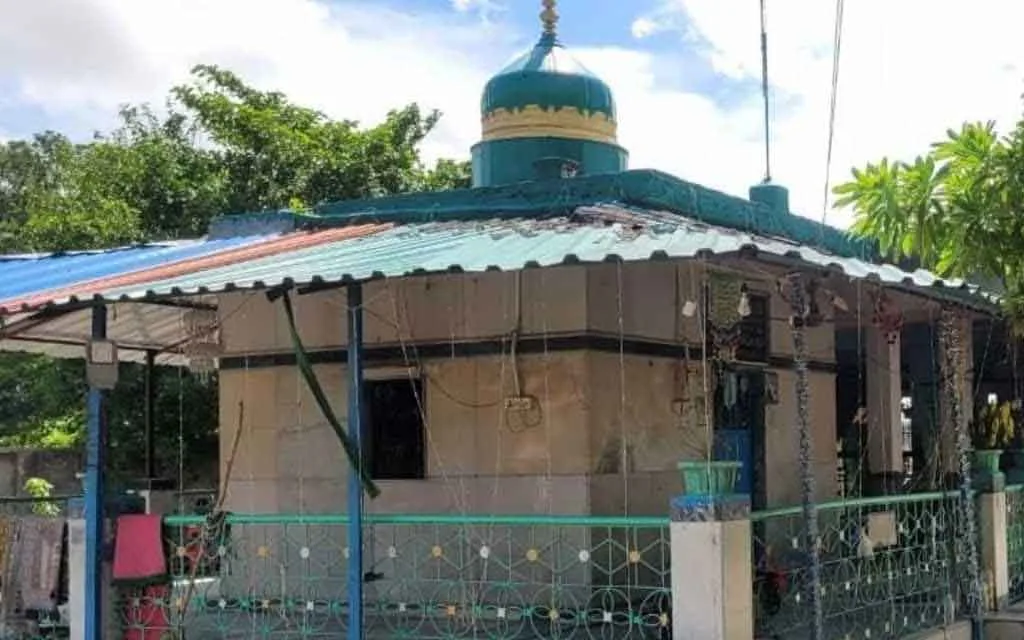
Hyderabad, February 25, 2026 – In a dramatic turn that has set Telangana's interfaith landscape on edge, the historic Dargah Hazrat Tajuddin Khaja Bagh Sawar – a 400-year-old (some say 800-year-old) Sufi shrine nestled inside the world-famous Sri Raja Rajeshwara Swamy Temple in Vemulawada – has reportedly been demolished. Graves shifted, structure razed, and the site cleared as part of the massive temple expansion project.
What began as a celebrated "victory for Hindu unity" back in October 2025 has exploded into fresh controversy just days ago. Temple authorities and state officials moved swiftly in the early hours, sealing off sections with tin sheets and heavy police presence, citing the ongoing ₹695-crore redevelopment plan to build better queue complexes, mandapas, and pilgrim facilities for the millions who flock to this "Dakshina Kashi" every year.
But the move has ignited fierce backlash from Muslim organizations:
- Movement for Peace and Justice (MPJ) staged protests in Karimnagar on February 24, demanding immediate reconstruction of the dargah at its original spot inside the temple premises. They accused "unconstitutional forces" of engineering communal division and filed a representation with the SP seeking legal action against those responsible.
- Majlis Bachao Tehreek (MBT) slammed the demolition as "illegal and condemnable," pointing fingers at local Congress MLA & Government Whip Adi Srinivas for allegedly pressuring a "development committee" of some Muslims to give consent – a move they call against Islamic principles. MBT delegations met the Telangana State Waqf Board Chairman and Minorities Commission Chairperson on February 23–24, submitting memorandums and warning that such actions hurt minority sentiments deeply.
- AIMIM echoed the outrage on social media, highlighting that no mutawalli can alienate Waqf land without proper approval. They noted the Waqf Board's CEO had already lodged a criminal complaint against the mutawalli involved, but local police are refusing to register an FIR. A Waqf Board task force was even denied entry to the site on Monday amid the chaos.
The Waqf Board had warned as far back as October 17, 2025, that only they hold authority over any relocation – yet reports now confirm graves were moved and a "new" makeshift dargah allegedly appeared 400 meters away.
Meanwhile, temple devotees continue to pour in (over 75,000 on peak days despite restrictions), with LED screens beaming darshan during the works. Officials insist the project will enhance facilities for lakhs of pilgrims, especially ahead of festivals.
No official statement has come from the Revanth Reddy government clarifying the exact legal basis for the demolition or addressing the Waqf objections. Silence from the top has only fueled speculation, social media storms, and fears of rising tensions in this otherwise harmonious spiritual hub.
Is this a necessary modernization for one of Telangana's holiest sites… or a dangerous precedent that erodes centuries of shared sacred space?
Stay tuned – Hindutone is on the ground tracking every twist in this unfolding saga. #Vemulawada #RajaRajeshwaraTemple #DargahDemolition #TelanganaNews #CommunalHarmony
What do YOU think – temple development at any cost, or protect shared heritage? Drop your views below!
What is the historical significance of Sri Raja Rajeshwara Swamy Temple in Vemulawada?
The Sri Raja Rajeshwara Swamy Temple in Vemulawada, located in Rajanna Sircilla district of Telangana, is dedicated to Lord Shiva in his form as Raja Rajeshwara — the sovereign lord of all realms. The presiding deity is a Swayambhu (self-manifested) Shivalinga, and the temple is revered as a Dakshina Kashi, meaning the Kashi of the South, drawing a direct spiritual parallel with the sacred Vishwanatha temple of Varanasi on the Ganges. Devotees believe that a pilgrimage to Vemulawada carries the same merit as darshan at Kashi itself.
Ancient inscriptional and literary evidence places the temple's active worship history across multiple dynasties, including the Rashtrakutas, Kalyani Chalukyas, and later Nizam-era patronage. The temple receives an estimated 50 lakh or more pilgrims annually, particularly during the Shivaratri and Karthika Masam seasons, making it one of the highest footfall Shaiva shrines in all of Telangana. The ongoing ₹695-crore redevelopment project is thus not merely administrative but reflects the enormous religious and economic weight this kshetra carries.
How does Waqf law govern the alienation or demolition of a dargah, and what violations are alleged here?
Under the Waqf Act of 1995, a waqf property — once dedicated as a charitable religious endowment — cannot be sold, mortgaged, exchanged, or alienated in any form without prior sanction from the State Waqf Board. The mutawalli, who is the appointed caretaker or manager of the waqf, holds only administrative and custodial authority; he does not hold ownership rights and therefore has no legal standing to consent to demolition on behalf of the endowment. Any such consent, regardless of how it was obtained, is void ab initio under the statute.
In the Vemulawada case, AIMIM and MBT have both pointed out that the Waqf Board's CEO had already lodged a criminal complaint against the mutawalli reportedly involved in granting consent, suggesting awareness within regulatory channels that proper procedure was bypassed. If the dargah was indeed registered as Waqf property, its demolition without a Board resolution and without due notice to affected parties would constitute a cognizable offence. Legal observers note that courts have historically treated unauthorized removal of Waqf structures seriously, making the question of whether a proper survey and title search was conducted before demolition absolutely central to any future judicial proceedings.
What is the tradition of coexisting shrines within Hindu temple complexes across India, and how is Vemulawada different?
India has a documented, centuries-long tradition of dargahs, mazars, and saint tombs located in proximity to or even within the outer prakaras (enclosure walls) of large temple complexes. This proximity often emerged organically over successive generations of local patronage where rulers and communities of different faiths shared sacred geography without formal legal delineation. Notable examples include the coexistence observed in temple-town environments at Tirupati, Palani, and several Nath shrine complexes across Rajasthan and Maharashtra.
Vemulawada's situation is distinct in a legally and spatially important way: the dargah was not merely adjacent to but reportedly situated inside the main temple premises, on land that falls within the administrative and possibly titlar jurisdiction of the Endowments Department-managed temple. This overlap of Waqf claim and Endowments Department control over the same physical space is precisely what has made the Vemulawada dispute so legally combustible. Neither side can resolve the underlying title question through protest alone; it requires a formal adjudication by competent courts examining original land records, Waqf registration documents, and Endowments Department survey records.
What role does the Telangana Endowments Department play in temple redevelopment, and who holds authority over such decisions?
The Telangana Endowments Department, functioning under the provisions of the Andhra Pradesh Charitable and Hindu Religious Institutions and Endowments Act of 1987 (as applicable to Telangana), holds statutory control over the management, administration, and development of major temples classified under its purview. Major temples such as Sri Raja Rajeshwara Swamy Temple at Vemulawada fall under the direct supervision of a Joint Commissioner or Executive Officer appointed by the Commissioner of Endowments, with significant redevelopment decisions requiring government sanction.
For a project of the scale of ₹695 crore, decisions about which structures to retain or remove within the temple complex would ordinarily require Environmental and Heritage clearances, a Master Plan approved by the state government, and coordination with the Archaeological Survey of India if the structure has antiquity beyond 100 years. Critics of the demolition argue that the overnight, covert nature of the action — with tin sheets and heavy police deployment used to prevent public visibility — is itself evidence that proper institutional procedure was circumvented, regardless of whichever authority ultimately claims responsibility.
What are the broader implications of this episode for interfaith coexistence and constitutional rights in Telangana?
Articles 25 and 26 of the Constitution of India guarantee every religious denomination the right to manage its own affairs in matters of religion and to maintain institutions for religious and charitable purposes. If the Dargah Hazrat Tajuddin Khaja Bagh Sawar was a recognized place of worship with an active congregation, its demolition without due legal process raises serious questions under these provisions, as well as under the Places of Worship (Special Provisions) Act of 1991, which prohibits the conversion of the character of any place of worship as it existed on August 15, 1947.
At the community level, incidents of this nature tend to harden positions on both sides, making the moderate, coexistence-oriented voices — the very people who have historically maintained harmony around pilgrimage sites — far less audible. Organizations like MBT and MPJ, whatever one's view of their political affiliations, are raising procedural grievances that any rule-of-law framework must take seriously: that demolition without notice, without compensation, and without judicial oversight sets a precedent that can be turned against any vulnerable community's sacred heritage. The long-term health of Telangana's interfaith landscape will depend significantly on how the state government and judiciary respond to those procedural concerns in the coming weeks.
Frequently Asked Questions
Where is Ancient Dargah Vanishes Overnight Amid Temple located?
Hyderabad, February 25, 2026 – In a dramatic turn that has set Telangana's interfaith landscape on edge, the historic Dargah Hazrat Tajuddin Khaja Bagh Sawar – a 400-year-old (some say 800-year-old) Sufi shrine nestled inside the world-famous Sri Raja Rajeshwara Swamy Temple in Vemulawada – has reportedly been demolished. Graves shifted, structure razed, and
Who is the presiding deity of Ancient Dargah Vanishes Overnight Amid Temple?
The temple's presiding deity and its significance are described in the guide above.
What are the timings and how do I reach Ancient Dargah Vanishes Overnight Amid Temple?
Temples typically open early morning and evening; confirm current darshan timings before visiting. The nearest airport, railway station and road routes are covered in the guide above.
What is the best time to visit Ancient Dargah Vanishes Overnight Amid Temple?
Major festival days and the cooler months are popular, though weekday mornings offer a calmer darshan. Plan around the temple's key festivals for the most vibrant experience.
You might also like

Shani Deva Temples Worldwide & Must-Performed Rituals — Complete Devotee's Guide

Jyeshtha Masam 2026: Dates, Significance, Festivals, Mantras, and Danas – Complete Guide

Purushottam Maas 2026: Lord Vishnu's Sacred Gift of Spiritual Multiplication & Divine Grace