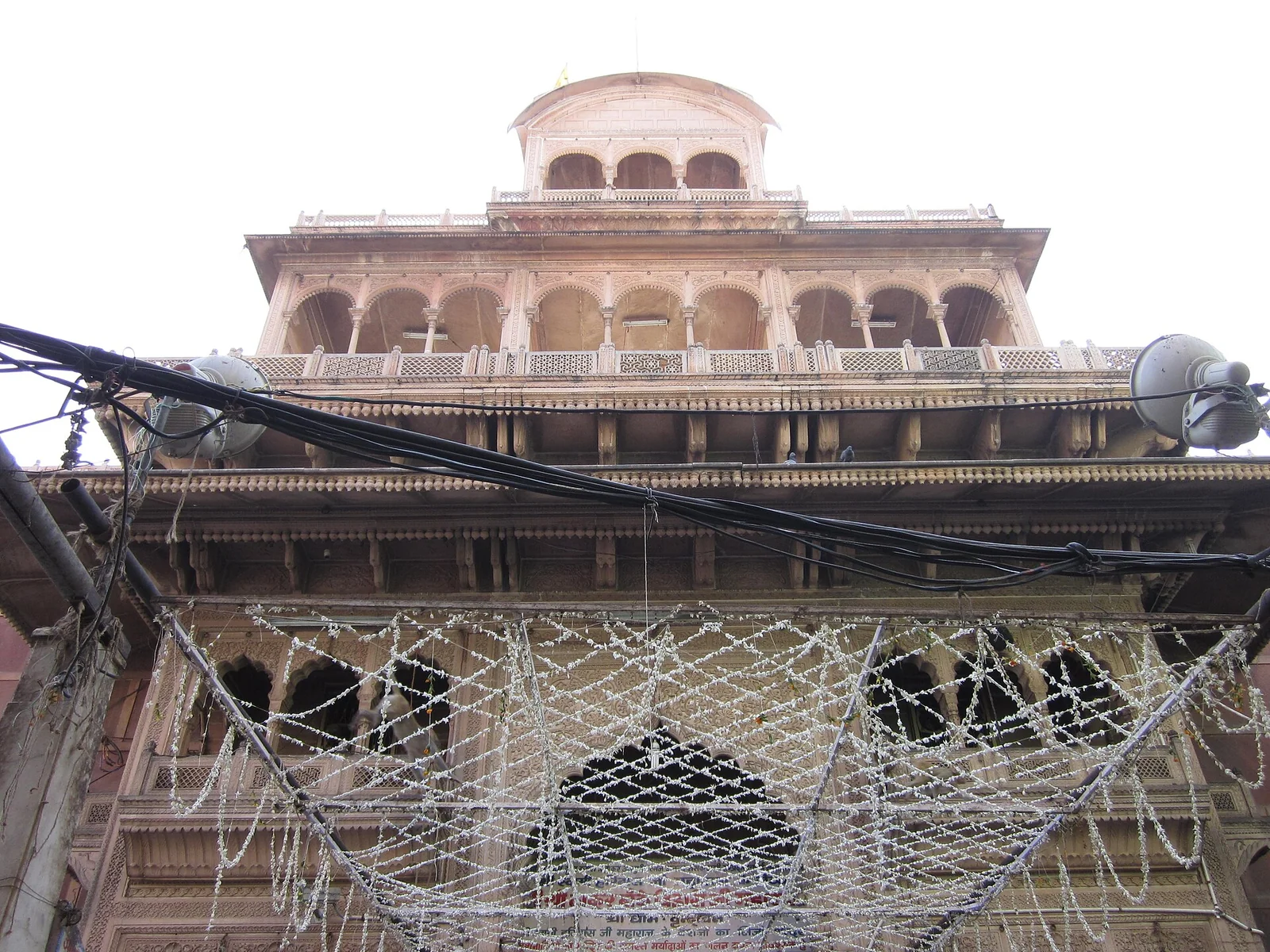
Chinmoy Krishna Das, a leader of the (ISKCON) Arrested in Chittagong, Bangladesh
Chandan Kumar Dhar, also known as Chinmoy Krishna Das, a leader of the International Society for Krishna Consciousness (ISKCON) in Chittagong, Bangladesh, is…
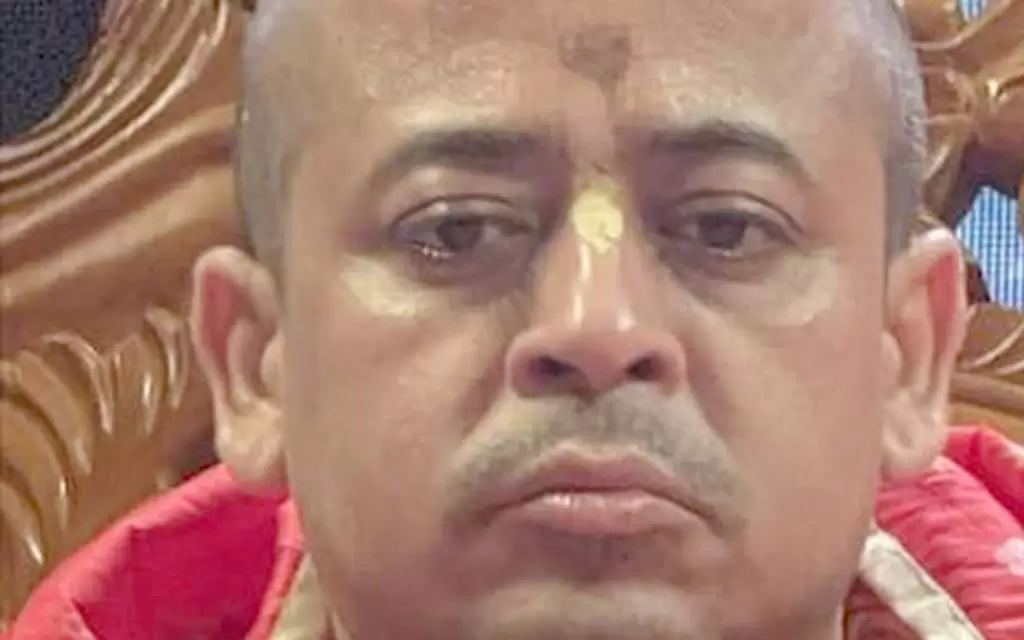
Chandan Kumar Dhar, also known as Chinmoy Krishna Das, a leader of the International Society for Krishna Consciousness (ISKCON) in Chittagong, Bangladesh, is…
Chandan Kumar Dhar, also known as Chinmoy Krishna Das, a leader of the International Society for Krishna Consciousness (ISKCON) in Chittagong, Bangladesh, is facing sedition charges following an incident during a rally on October 25, 2024. The rally, organized by the Hindu community under the banner "Sanatan Jagaran Mancha," reportedly involved a saffron-colored ISKCON flag being placed above Bangladesh's national flag on a pillar in Chattogram's New Market area. This act has sparked accusations of flag desecration, which led to the charges against Chinmoy and 18 others. Two individuals involved in the protest have been arrested, while the others face charges of sedition and conspiracy.
Chinmoy has defended the incident, claiming the saffron flag was mistakenly placed above a flag that resembled Bangladesh's national flag, and emphasized that he had no intention to disrespect the national symbol. This incident has drawn attention amid growing concerns over religious tensions and the treatment of Hindu minorities in Bangladesh. The controversy highlights the broader issues of religious freedom and minority rights in the country, with international bodies calling for fair treatment and an independent investigation
The arrest of ISKCON leader Chinmoy Das in Bangladesh has become a significant issue amid rising religious tensions. On October 25, 2024, during a rally organized by Hindu groups, a saffron flag, which is associated with the ISKCON organization, was flown above Bangladesh's national flag. This incident triggered accusations of disrespect towards the national symbol, leading to sedition charges against Chinmoy Das and 18 other Hindu leaders involved in the rally. Authorities have argued that the placement of the ISKCON flag above the national flag was a serious act of insult.
Chinmoy Das defended the situation by explaining that the flag flown was not Bangladesh's national flag, but a flag resembling it, and the incident was a mistake rather than an intentional act of desecration. He has denied any ill intent, asserting that those responsible for the error should be held accountable, but he claims he had no personal involvement in the desecration.
This incident has further highlighted the concerns over religious freedom in Bangladesh, especially for its Hindu minority. There have been increasing reports of violence and discrimination against Hindus in the country. Just days before the flag incident, a Hindu student was reportedly attacked and arrested under contentious circumstances, further intensifying concerns among the Hindu community.
Moreover, the case has drawn the attention of international human rights organizations, with many calling for a fair investigation and treatment of minority communities. The tension in Bangladesh between its religious groups is ongoing, and this arrest has added fuel to the debate about the safety and rights of Hindus in the region
Who is Chinmoy Krishna Das and What is His Role Within ISKCON Bangladesh?
Chinmoy Krishna Das, born Chandan Kumar Dhar, is a prominent Vaishnava preacher and devotee within the International Society for Krishna Consciousness (ISKCON), the global movement founded by His Divine Grace A.C. Bhaktivedanta Swami Prabhupada in 1966. In Bangladesh, ISKCON has maintained a significant presence, particularly in Chittagong (Chattogram), Dhaka, and Sylhet, serving the Hindu minority community through temples, festivals, and religious education rooted in Gaudiya Vaishnavism.
Chinmoy Krishna Das was known for his vocal advocacy on behalf of Bangladesh's Hindu minority, regularly speaking at religious gatherings and leading kirtanas and pravachanas (devotional discourses) centered on Srimad Bhagavad Gita and Srimad Bhagavatam. His prominence within the Sanatan Jagaran Mancha — a platform mobilizing Hindus to assert their religious and civil rights — made him a recognizable figure both within the community and among Bangladeshi authorities.
What is the Sanatan Jagaran Mancha and Why Was the October 25 Rally Organized?
Sanatan Jagaran Mancha, literally translating to 'Platform for the Awakening of the Eternal (Dharma),' is a collective body representing Hindu minority interests in Bangladesh. The organization has been increasingly active in the aftermath of political upheaval in Bangladesh during 2024, during which numerous reports emerged of attacks on Hindu temples, homes, and individuals across multiple districts including Comilla, Noakhali, and Rangpur.
The October 25, 2024 rally in Chattogram's New Market area was convened to demand legal protection for Hindu minorities, accountability for perpetrators of communal violence, and the enactment of a minority protection law. Such demands reflect long-standing grievances of the Hindu community, which constitutes approximately eight to nine percent of Bangladesh's population and has historically faced episodes of targeted communal violence, particularly during periods of political transition.
The Srimad Bhagavatam (7.14.18) reminds adherents that a devotee sees all living beings equally and seeks peace for all — a principle that underscores the non-confrontational intent that organizers attributed to the rally. Community leaders have stressed that the gathering was fundamentally a peaceful assertion of civil and religious rights, not an act of political sedition.
What Do Sedition Laws in Bangladesh Mean for Religious Minorities?
The sedition charges leveled against Chinmoy Krishna Das and the 18 other accused are filed under sections of Bangladesh's Penal Code inherited from British colonial legislation, which broadly penalize acts deemed to excite disaffection toward the government or to insult national symbols. Critics of these provisions argue that they carry wide interpretive latitude and have historically been applied in ways that disproportionately affect minority communities, political dissidents, and religious organizations.
International human rights organizations, including Amnesty International and Human Rights Watch, have periodically raised concerns about the use of sedition and blasphemy-adjacent statutes to silence minority voices in South Asia. In the specific context of Bangladesh's Hindu community, scholars note that charges involving alleged disrespect to national symbols can carry severe consequences, including prolonged pre-trial detention, which effectively silences community leaders even before a verdict is rendered.
For ISKCON as an institution, the case carries additional weight because the organization operates globally under formal religious registration in dozens of countries and maintains a long record of seva (selfless service) activities including food distribution through its Annadana programs. The criminalization of its leadership in Bangladesh raises questions about the operational safety of its devotees and affiliated temples across the country.
How Have Hindu and Vaishnava Communities Globally Responded to the Arrest?
The arrest of Chinmoy Krishna Das triggered swift condemnation from Hindu organizations across India, the United States, the United Kingdom, and Australia. ISKCON's international governing body released statements calling for the immediate and unconditional release of Chinmoy Das, characterizing the arrest as an infringement on religious freedom and the right to peaceful assembly. Several Indian politicians and religious leaders, including members of the Vishwa Hindu Parishad (VHP), echoed these calls and urged the Indian government to take up the matter through diplomatic channels.
In West Bengal, bordering Bangladesh, spontaneous protests were organized in Kolkata near the Dakshineswar Kali Temple area and near ISKCON's Mayapur complex — the latter being the global headquarters of ISKCON situated on the sacred banks of the Ganga and Saraswati rivers in Nadia district. Devotees performed Vishnu Sahasranama parayana and Hare Krishna mahamantra kirtanas as acts of solidarity and prayer for Chinmoy Das's release.
Within Bangladesh itself, Hindu lawyers and civil society members sought to provide legal representation for the accused, though reports indicated that initial bail hearings faced procedural obstacles, reflecting the broader climate of legal vulnerability facing minority communities in the country at the time.
What Is the Historical Context of Hindu Minority Rights in Bangladesh?
The Hindu community in Bangladesh, which was once nearly thirty percent of the population at the time of Partition in 1947, has steadily diminished to under ten percent over successive decades, a decline attributed to multiple waves of communal violence, discriminatory property legislation such as the Vested Property Act, and sustained emigration pressures. Episodes of mass violence against Hindus were recorded during the Liberation War of 1971, during communal riots in 1992 following the demolition of Babri Masjid in Ayodhya, and again during election-related violence in 2001.
Temples of historical and religious significance in Bangladesh — including the Dhakeshwari National Temple in Dhaka, the Kantajew Temple in Dinajpur (a stunning terracotta structure dedicated to Lord Krishna dating to the eighteenth century), and the Shri Shri Lokanath Brahmacharya Ashram in Baradi — have faced varying degrees of encroachment and periodic attack. These sites are not merely places of worship but living repositories of Bengal's Vaishnava and Shakta heritage.
The Bhagavad Gita (9.22) assures the devotee that the Lord personally carries what they lack and preserves what they have — a verse frequently cited by Bangladeshi Hindu leaders as a source of spiritual resilience amid material adversity. The current case involving Chinmoy Krishna Das is thus viewed by many in the community not as an isolated incident but as the latest chapter in a long narrative of minority vulnerability requiring urgent national and international attention.
What Are the Broader Implications for Religious Freedom in South Asia?
The Chinmoy Krishna Das case has emerged as a flashpoint in wider conversations about the condition of religious minorities across South Asia, a region where constitutional guarantees of religious freedom often coexist with ground-level realities of communal tension and selective enforcement of law. Bangladesh's constitution formally guarantees freedom of religion, yet critics argue that administrative and judicial mechanisms have frequently failed to protect minority communities from violence or to prosecute perpetrators adequately.
Diplomatic observers have noted that the case carries implications for Bangladesh's relationships with neighboring India and with Western donor nations that tie development assistance to human rights benchmarks. The United Nations Special Rapporteur on Freedom of Religion or Belief has broader mandates under which situations like this one — involving the arrest of a religious leader on charges linked to a community religious gathering — fall squarely within the scope of international scrutiny.
For the global Vaishnava community, the underlying theological principle at stake is the right to freely practice sadhana (spiritual discipline), engage in sankirtana (congregational chanting of the Holy Names), and gather for dharmic discourse — activities that form the irreducible core of ISKCON's mission as articulated by Srila Prabhupada and enshrined in the organization's founding documents. Devotees worldwide continue to monitor the legal proceedings and call for due process, transparency, and the protection of all individuals regardless of religious affiliation.
Frequently Asked Questions
What is Chinmoy Krishna Das, a leader of the (ISKCON)?
Chandan Kumar Dhar, also known as Chinmoy Krishna Das, a leader of the International Society for Krishna Consciousness (ISKCON) in Chittagong, Bangladesh, is facing sedition charges following an incident during a rally on October 25, 2024. The rally, organized by the Hindu community under the banner "Sanatan Jagaran Mancha," reportedly involved a saffron-col
What are the key points about Chinmoy Krishna Das, a leader of the (ISKCON)?
This act has sparked accusations of flag desecration, which led to the charges against Chinmoy and 18 others. Two individuals involved in the protest have been arrested, while the others face charges of sedition and conspiracy.
Why does Chinmoy Krishna Das, a leader of the (ISKCON) matter in Hinduism?
It deepens a devotee's connection with Lord Krishna and with the values of Sanatana Dharma — clarity, devotion and dharmic living.
How can devotees apply Chinmoy Krishna Das, a leader of the (ISKCON) in daily life?
By reflecting on its teaching, incorporating the related practices or observances into daily routine, and approaching it with sincere devotion and understanding.
You might also like
Shani Deva Temples Worldwide & Must-Performed Rituals — Complete Devotee's Guide
June 2026 Hindu Festivals: Complete Guide with Dates, Rituals, Mythological Stories, Spiritual Importance & Celebration Tips
Karthika Masam 2026: Dates, Rituals, Vrat, Festivals & North vs South India Guide