
Janmashtami Decoration & Dress Ideas 2025 – Home Decor & Traditional Attire Tips
The Spirit of JanmashtamiJanmashtami, the birth of Lord Krishna, is one of the most joyous Hindu festivals.
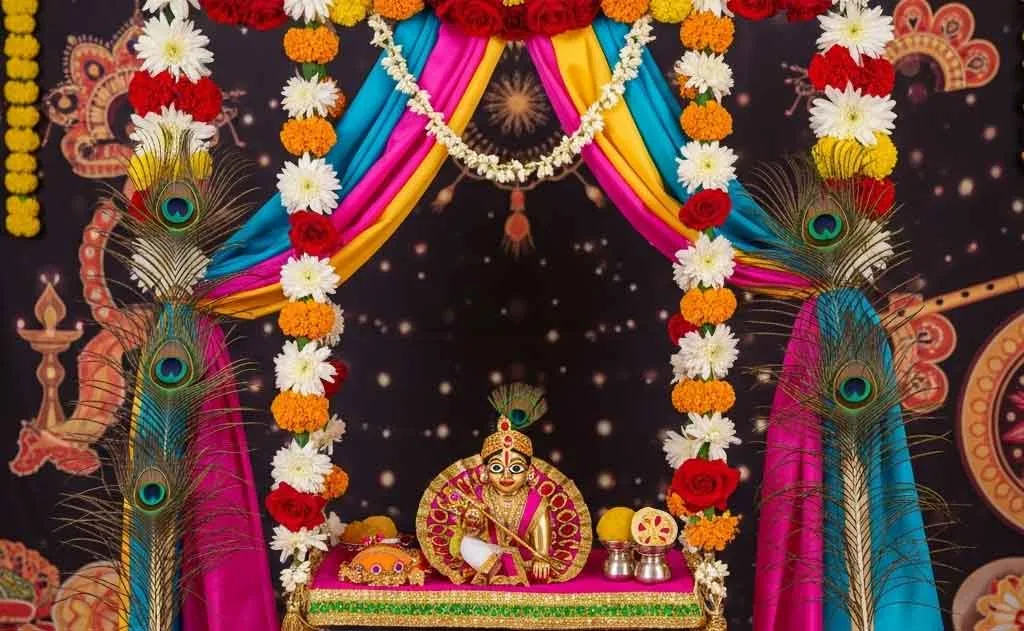
The Spirit of JanmashtamiJanmashtami, the birth of Lord Krishna, is one of the most joyous Hindu festivals.
The Spirit of Janmashtami
Janmashtami, the birth of Lord Krishna, is one of the most joyous Hindu festivals. It is marked by devotional singing, temple visits, delicious sweets, and beautifully decorated homes. The festival is also an opportunity to dress in traditional attire, reflecting the divine charm of Krishna and Radha.
Home Decoration Tips for Janmashtami 2025
1️⃣ Floral Rangoli Designs
Use fresh marigold, jasmine, and rose petals to create intricate rangoli patterns at your entrance.
Add diyas or LED lights around the rangoli for a glowing effect at night.
You can also use peacock feather motifs in the design, symbolizing Krishna’s favorite adornment.
Image Alt Text: "Floral rangoli Janmashtami decoration ideas 2025"
2️⃣ Krishna Cradle Decoration
Place a beautifully decorated swing (jhula) in your puja room with a Krishna idol.
Use colorful cloth, fresh flowers, and pearl garlands for a royal touch.
Add small bells or wind chimes so that every movement creates a serene sound.
Image Alt Text: "Krishna cradle decoration Janmashtami 2025"
3️⃣ Thematic Puja Corner
Decorate your puja area with blue and yellow drapes (Krishna’s colors).
Place butter pots (matkis) filled with sweets as symbolic offerings.
Add LED fairy lights for a festive glow.
4️⃣ DIY Peacock Feathers Backdrop
Create a photo corner with a peacock feather-inspired backdrop for family pictures.
This also serves as a Krishna-themed background for your bhajan/kirtan sessions.
Traditional Attire Ideas for Janmashtami
For Kids
Boys: Dress them as little Krishna with a dhoti, pitambar (yellow scarf), peacock feather crown, and flute.
Girls: Dress them as Radha with a lehenga-choli, floral jewelry, and colorful dupatta.
For Adults
Men: Opt for traditional kurta-pajama or dhoti-kurta in festive colors like saffron, cream, or royal blue.
Women: Wear silk sarees or lehengas in shades of yellow, blue, and green, paired with gold jewelry and floral hair accessories.
Add the Divine Vibe – Krishna Bhajans
Playing melodious Krishna bhajans during the celebration enhances the spiritual ambiance. You can create a playlist or embed a YouTube video in your blog post for visitors to enjoy.
Why Peacock Feathers, Yellow Silk, and Tulasi Hold Special Meaning on Janmashtami
Every element associated with Janmashtami decoration carries scriptural weight. The peacock feather (mayura puccha) adorning Krishna's crown is celebrated in the Bhagavata Purana (Skanda 10) as a gift from the peacocks of Vrindavana, who danced in joy when Krishna played his flute in the Rasa-lila. Placing peacock feathers in your home on Janmashtami is therefore not mere decoration — it is a conscious invocation of that joyful moment in Vrindavana.
Yellow silk, known as pitambara, is Krishna's signature garment and symbolises the radiance of the sun (surya-tejas) that illuminates all beings. The Vishnu Sahasranama refers to the Lord as 'Pitambaradhara,' one who wears golden-yellow cloth. Draping your puja corner in yellow or gifting children a yellow pitambara on this day directly mirrors this epithet. Tulasi (holy basil) is indispensable: the Padma Purana states that no offering to Vishnu or Krishna is complete without a Tulasi leaf, and a small Tulasi plant placed near the jhula (cradle) sanctifies the entire space.
The Significance of the Midnight Hour in Janmashtami Rituals and How to Prepare Your Home for It
Krishna's birth is said to have occurred precisely at midnight (nishitha kala) on the Ashtami tithi of the Krishna Paksha in the month of Shravana, as described in the Bhagavata Purana (10.3.1–5). This is why the central ritual — abhisheka (ritual bath) of the Krishna idol, followed by placing the infant deity in the decorated jhula — is performed at midnight rather than during daytime puja hours. Preparing your home for this moment means ensuring the puja corner is fully lit, the conch (shankha) is ready to be blown, and the family is gathered.
In the hours leading up to midnight, devotees observe an upavasa (fast). The atmosphere in homes and temples across Mathura, Vrindavana, Dwaraka, and Udupi (Sri Krishna Matha) builds to a crescendo with kirtan and recitation of the Dashavatara stotras. At home, you can re-create this energy by dimming all lights except the diyas around the jhula, playing Yamuna Ashtakam or the Govinda Namavali softly, and ensuring a fresh set of flowers — especially kadamba and parijata — is ready for the midnight offering, as these are Krishna's beloved flowers mentioned in the Gita Govinda of Jayadeva.
Regional Dress Traditions — From Mathura's Braj Style to Udupi's Tulu-Kannada Custom
While a dhoti-pitambara ensemble is the pan-India standard for dressing children as Krishna, regional textile traditions add fascinating variety. In the Braj region around Mathura and Vrindavana, boys wear a short printed dhoti called a 'lehanga-dhoti' in vibrant tie-dye (bandhani) fabric, paired with a mukuta (crown) decorated with real marigolds. Girls dressed as Radha in Braj traditionally wear a ghaghra-choli in the distinctive Braj panchrangi (five-colour) pattern, reflecting the colours of the five sakhi groups described in Vallabhacharya's commentary on the Bhagavata.
In coastal Karnataka, particularly around Udupi where the famous Sri Krishna Matha was established by Madhvacharya in the 13th century, devotees drape silk vastra in deep saffron and crimson for men, while women wear the Ilkal or Kanjivaram silk saree with a gold Vishnu-chakra motif border. In Gujarat, the influence of the Pushti Marga tradition founded by Vallabhacharya is evident in the elaborate shringar (adornment) of home idols with miniature embroidered garments called poshak — a tradition families can emulate at home using small brocade cloth squares and fresh flower garlands.
Prasad and Offering Etiquette — What to Place Before the Deity and Why
Makhan (fresh white butter) and mishri (rock sugar) are Krishna's most celebrated offerings, rooted in the countless Bhagavata Purana verses describing the butter-stealing (navaneeta chora) leelas of his childhood in Gokula. Placing a small matki filled with makhan before the deity at midnight is both scripturally appropriate and deeply evocative. Panchamrita — a mixture of milk, curd, honey, ghee, and sugar — is used for the abhisheka of the idol, after which it is distributed as prasad.
Traditionally, 56 food items called Chhappan Bhog are offered to Krishna, referencing the legend in which Indra's rain was subdued when Krishna held up Mount Govardhan for seven days and the villagers offered 56 meals to sustain him. Home celebrations can include a simplified version: poha (flattened rice), panchamrita, fresh fruits, mohan bhog (semolina sweet), and panjiri. Tulasi leaves must top each offering, and the Bhagavata Purana (10.81) emphasises that even a simple offering made with true bhakti (devotion) is fully accepted by the Lord.
Dahi Handi Decor and the Community Dimension of Janmashtami Celebrations
The Dahi Handi tradition, most vigorously celebrated in Mumbai, Pune, and across Maharashtra, commemorates Krishna's mischievous act of breaking earthen pots of curd and butter hung high by the gopis to keep them out of his reach — an episode described vividly in the Bhagavata Purana's Damodar-lila section. At home, hanging a decorated matki (earthen pot) filled with poha, coconut, and curd from a doorway or ceiling creates an immediate festive centrepiece that children can engage with.
For home decor, the matki itself is an ideal craft project: paint terracotta pots in blue and yellow, add mirror-work (shisha embroidery-style stickers), and string them with marigold torans (door hangings). This connects your home visually to the spirit of Nandagaon and Gokula, the villages of Krishna's childhood in the Vraja region of present-day Uttar Pradesh. Placing small footprint stickers (Krishna's pada-chinha) leading from the front door to the puja room is another beloved custom symbolising the arrival of Krishna into your household, inspired by the Padma Purana's description of Krishna's lotus feet as auspicious marks.
Selecting Fragrance and Music — The Sensory Offering That Completes Janmashtami Decor
The Narada Bhakti Sutras describe bhakti as a complete offering of all the senses to the divine, which means the fragrances and sounds present in your home on Janmashtami are as devotionally significant as the visual decor. Burn sandalwood (chandan) or champaka incense, both associated with Vishnu and Krishna in the Vishnu Purana and Bhagavata Purana respectively. Rose and jasmine attar can be sprinkled lightly on the puja cloth and jhula fabric.
For music, the tradition of Janmashtami kirtan draws from specific compositions: the Gopala Vallabha Ashtakam, the Madhurashtakam ('Adharam Madhuram'), and Surdas's padas from the Sur Sagar are all historically associated with midnight Krishna worship. In South India, the Thiruppavai of Andal (Divya Prabandha) and the Tiruvoimozhi of Nammalvar are recited in Vaishnava homes. Playing these compositions from just before sunset through to the midnight abhisheka moment transforms the entire home into a space of devotional focus, completing the sensory environment that your decoration and attire have already established.
You might also like
Must-Performed Rituals Every NRI Woman Should Do for Her Family's Wellbeing
Sunday Rituals in Hinduism — Ravivara Surya Puja, Sun Worship & Complete NRI Guide for 2026
Friday Rituals in Hinduism — Shukravar Lakshmi Puja, Devi Worship & Complete NRI Guide for 2026