Tulsi Pooja Vidhi – How to Worship the Sacred Basil Plant at Home
Tulsi, also known as Holy Basil, holds a deeply revered place in Hindu tradition.
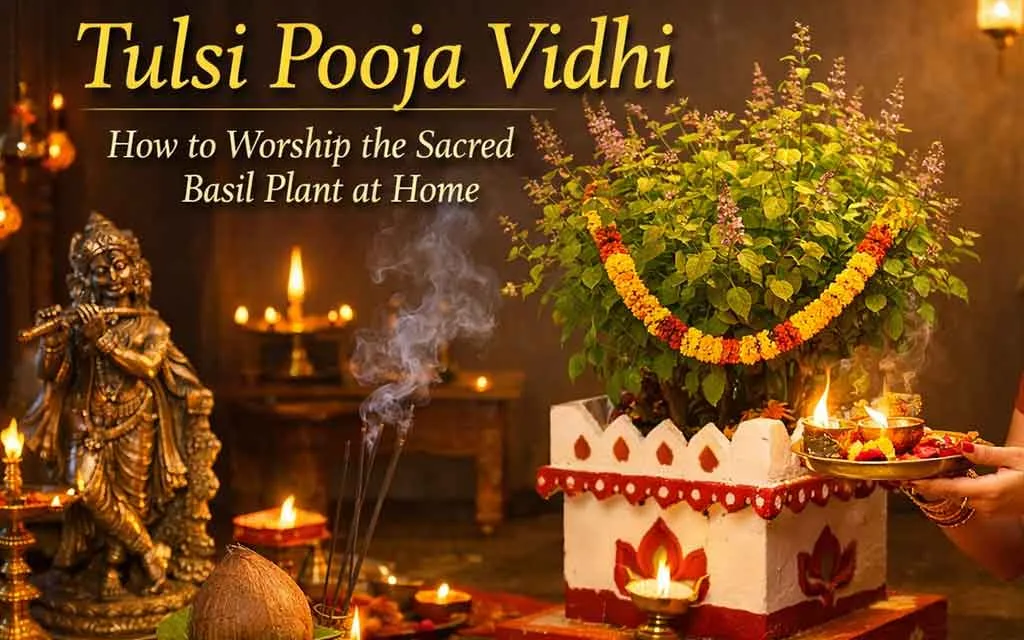
Tulsi, also known as Holy Basil, holds a deeply revered place in Hindu tradition.
Tulsi, also known as Holy Basil, holds a deeply revered place in Hindu tradition. Worshipped as a manifestation of Goddess Lakshmi and beloved of Lord Vishnu, the Tulsi plant is not just a herb but a sacred symbol of purity, devotion, and divine energy.
Spiritual Significance of Tulsi in Hinduism
Tulsi is considered one of the most sacred plants in Hindu culture. It is believed that:
- Tulsi is the earthly form of Goddess Lakshmi
- It is प्रिय (dear) to Lord Vishnu and Krishna
- It purifies the home and environment
- It removes negative energy and promotes positivity
Having a Tulsi plant at home is said to bring divine protection and spiritual upliftment.
Best Time to Perform Tulsi Pooja
Tulsi Pooja can be performed daily, but the most auspicious times are:
- Early morning after sunrise
- Evening during sunset
- Special days like Ekadashi, Kartik month, and Tulsi Vivah
Avoid plucking Tulsi leaves on Sundays and during certain inauspicious times as per tradition.
Tulsi Pooja Vidhi – Step-by-Step Ritual
Follow this simple yet powerful procedure to perform Tulsi Pooja at home:
1. Clean the Area
- Clean the space around the Tulsi plant
- Sprinkle Ganga jal or clean water for purification
2. Light a Diya
- Light an oil or ghee lamp near the Tulsi plant
- This symbolizes removal of darkness and ignorance
3. Offer Water (Jal Arpan)
- Gently pour water at the roots of the Tulsi plant
- This act signifies nurturing life and devotion
4. Apply Kumkum & Haldi
- Apply turmeric (haldi) and kumkum to the pot or near the plant
- Offer flowers if available
5. Offer Prayers
- Fold hands and pray with devotion
- Seek blessings for health, wealth, and peace
6. Perform Parikrama
- Circumambulate the Tulsi plant 3, 5, or 7 times
- This represents respect and surrender
7. Aarti
- Perform aarti with devotion
- Sing Tulsi or Vishnu aarti
Tulsi Mantras to Chant
Chanting mantras enhances the spiritual power of the पूजा:
Tulsi Pranam Mantra
“Tulsi Shri Sakhi Shubhe, Paapaharini Punyade
Namaste Naradanute, Narayan Manah Priye”
Meaning: O Tulsi, beloved of Lord Narayan, remover of sins, I bow to you.
Tulsi Gayatri Mantra
“Om Tulasyai Vidmahe
Vishnu Priyai Dheemahi
Tanno Vrinda Prachodayat”
Invokes divine blessings and purity.
[image: 🌸] Simple Chant
“Om Tulsi Devyai Namah”
Ideal for daily chanting.
Benefits of Tulsi Pooja
Regular worship of Tulsi brings multiple spiritual and practical benefits:
- Attracts positive energy and prosperity
- Improves mental peace and well-being
- Purifies air and environment
- Strengthens devotion and spiritual growth
- Removes obstacles and negativity
Important Rules to Follow
- Do not pluck Tulsi leaves at night
- Avoid touching the plant without bathing (as per tradition)
- Do not offer Tulsi leaves to Lord Shiva
- Maintain cleanliness around the plant
Devotional Reflection
As the diya flickers beside the Tulsi plant and the fragrance of devotion fills the air, one feels a divine connection to nature and the Supreme.
Tulsi teaches us simplicity, purity, and unwavering devotion. In her presence, the home becomes a sacred space, and the heart finds peace.
Conclusion
Tulsi Pooja is a beautiful blend of devotion, nature, and spirituality. By worshipping the sacred basil plant daily, devotees invite divine blessings, harmony, and prosperity into their lives.
Let Tulsi Devi reside in your home and heart, guiding you toward a life of peace and devotion.
Om Tulsi Devyai Namah
What Do the Puranas Say About Tulsi's Divine Origin?
The Skanda Purana and the Padma Purana both narrate in detail how Tulsi came to be one of the holiest plants on earth. According to the Padma Purana, Tulsi was a devoted woman named Vrinda, a great bhakta of Lord Vishnu, who was married to the asura king Jalandhar. Her unwavering pativrata dharma made Jalandhar virtually unconquerable. After a divine sequence of events involving Lord Vishnu's intervention, Vrinda was transformed into the Tulsi plant — forever enshrined as sacred to Vishnu and Lakshmi.
The Skanda Purana further records that Lord Vishnu himself declared: 'I do not desire sandalwood paste, flowers, or other offerings as much as I desire Tulsi leaves.' This declaration, known as Tulsi Mahima, is the scriptural basis for the universal practice of placing a single Tulsi leaf on any offering made to Vishnu or Krishna. Even a meal offered to the Lord without Tulsi is considered incomplete in Vaishnava sampradayas.
Why Is the Kartik Month Considered the Most Sacred Time for Tulsi Worship?
The month of Kartik (October–November in the Gregorian calendar) is described in the Vishnu Purana and Bhagavata Purana as the most pleasing month to Lord Vishnu — and by extension, to Tulsi Devi. During this entire month, devotees light a deepam (oil lamp) beside the Tulsi plant at dusk every evening, a practice called Kartik Deepotsav. It is believed that this single act of lamp-lighting during Kartik earns merit equivalent to performing a major yajna.
Tulsi Vivah, celebrated on the Dwadashi (twelfth lunar day) of Shukla Paksha in Kartik, marks the ceremonial marriage of the Tulsi plant to Lord Vishnu in his Shaligram form. This festival, observed widely across Maharashtra, Gujarat, and other states, officially signals the beginning of the Hindu wedding season. The Tulsi plant is decorated as a bride with a sari, bangles, and flowers, and the Shaligram stone representing Vishnu is placed beside her, with full Vedic wedding rituals performed by the family priest.
Which Leaves Should Be Offered and Which Should Never Be Plucked?
Classical smriti texts and the Hari Bhakti Vilasa — a Vaishnava manual compiled by Sanatana Gosvami — lay down precise rules about how and when Tulsi leaves may be plucked. Leaves should ideally be gathered in the morning after bathing, with a brief prayer asking Tulsi Devi's permission before plucking. One should never break more leaves than are needed, and the stem should not be torn roughly.
Tradition strictly prohibits plucking Tulsi leaves on Sundays, on Ekadashi tithi itself (though offering already-plucked leaves is permitted), on Dwadashi, during solar or lunar eclipses, and after sunset. The reason given in the Hari Bhakti Vilasa is that Tulsi Devi rests during these times and disturbing her is considered an act of adharma. Withered or naturally fallen leaves may always be used without restriction.
Two main varieties are worshipped: Rama Tulsi, which has lighter green leaves and a milder fragrance, and Shyama (Krishna) Tulsi, which has deep purple-tinged leaves and a sharper, more pungent aroma. The Bhagavata Purana mentions that Shyama Tulsi is especially dear to Lord Krishna, while both varieties are considered equally sacred for Vishnu puja.
How Should the Tulsi Vrindavan (Sacred Enclosure) Be Constructed and Placed?
A Tulsi Vrindavan is the raised, square or octagonal masonry pedestal in which the Tulsi plant is housed. The Agni Purana and regional Griha Shastra texts recommend placing the Vrindavan in the northeast (Ishanya kona) or the east-facing courtyard of the home, ensuring the plant receives maximum morning sunlight. The pedestal is traditionally made of brick, stone, or terracotta, and its four sides are often painted with images of Vishnu, Lakshmi, Garuda, and the conch-and-chakra symbols.
Homes in Varanasi, Mathura, Vrindavan, and Udupi — all major centers of Vaishnava worship — commonly feature elaborately carved stone Vrindavans in their courtyards, reflecting how central this practice is to household dharma. The daily circumambulation (parikrama) performed around the Vrindavan mirrors the cosmic parikrama devotees perform around sacred shrines, reinforcing the idea that the Tulsi plant itself is a tirtha — a place of crossing over — right within the home.
What Additional Mantras and Stotras Deepen the Tulsi Pooja Practice?
Beyond the Tulsi Pranam Mantra already mentioned, the Tulsi Ashtottara Shatanamavali — a garland of 108 names of Tulsi Devi — is recited by devout households, particularly in Karnataka and Andhra Pradesh, during the Kartik month. Each name praises a different quality of Tulsi: Vrindavanilaya (she who resides in Vrindavan), Vishnuvallabha (beloved of Vishnu), Pavani (the purifier), and Moksha Dayini (giver of liberation), among others.
The Tulsi Stotram from the Skanda Purana begins with the verse 'Devī tvam nirjitā lokān sarva devair architā' — 'O Goddess, you have conquered all worlds and are worshipped by all the gods.' Reciting this stotra after completing the daily pooja is considered especially meritorious. For households following the Gaudiya Vaishnava tradition, the mangalacharana (auspicious invocation) of Srimati Tulsi Devi is performed before any devotional program, placing her worship at the very foundation of all bhakti practice.
What Are the Common Mistakes Devotees Should Avoid During Tulsi Pooja?
One of the most frequently cited errors in traditional pooja manuals is watering the Tulsi plant on Ekadashi. The Ekadashi vrata is a fast dedicated to Vishnu, and Tulsi — as his consort — is also said to observe a form of austerity on that day. Watering is therefore avoided, though the plant may be gently dusted or cleaned. Similarly, pouring water over the leaves rather than the roots is discouraged, as it can damage the plant and is seen as disrespectful.
Offering non-vegetarian food, garlic, or onion anywhere near the Tulsi plant is considered highly inauspicious in all Vaishnava traditions. Approaching the plant without bathing, wearing footwear near the Vrindavan, or allowing the lamp to blow out mid-aarti are also considered lapses in ritual purity. The guiding principle from the smritis is bhava shuddhi — purity of feeling and body together — which ensures that even a simple daily offering becomes a genuine act of worship rather than a mechanical routine.
You might also like
Wednesday Rituals in Hinduism: Must-Perform Budhvar Puja, Vrats & Temples for Hindus in USA, UK, Canada, GCC, India & Australia

Bhagavad Gita Chapter 2 — Sankhya Yoga Complete Commentary: All 72 Verses, Immortality of Soul, Sthitaprajna, 30-Day NRI Practice Guide for 2026

Bhagavad Gita Chapter 18 — Moksha Sannyasa Yoga Complete Commentary: All 78 Verses, Sarva Dharman Parityajya, 30-Day NRI Practice Guide for 2026