Holi 2026 in Nepal: Fagu Purnima Dates, Spiritual Meaning, Events in Kathmandu Pokhara & Terai – Hindu Festival of Colors Traditions
Holi 2026 in Nepal, known reverently as Fagu Purnima, bursts forth as one of the most joyous expressions of Hindu devotion, community harmony, and seasonal…
Holi 2026 in Nepal, known reverently as Fagu Purnima, bursts forth as one of the most joyous expressions of Hindu devotion, community harmony, and seasonal…
Holi 2026 in Nepal, known reverently as Fagu Purnima, bursts forth as one of the most joyous expressions of Hindu devotion, community harmony, and seasonal renewal. This vibrant Festival of Colors shares deep roots with India's Holi yet carries uniquely Nepali flavors—blending ancient mythology, regional customs, and the Himalayan spirit of togetherness.
In Nepal's diverse landscape, Holi 2026 in Nepal unfolds across two days due to geographical and calendrical traditions: March 2, 2026 (Monday) in the hilly regions including Kathmandu Valley and Pokhara, and March 3, 2026 (Tuesday) in the Terai plains. This variation honors the lunar calendar while adapting to local climates and cultural rhythms, allowing the festival's joy to ripple from mountain valleys to southern lowlands.
Fagu Purnima 2026 date aligns with the full moon (Purnima) of Falgun (Phalguna) in the Bikram Sambat calendar (2082 B.S.), corresponding to Falgun 18 in hills and Falgun 19 in Terai. This sacred timing falls on Phalguna Purnima, a potent astrological moment when lunar energy amplifies devotion, emotional release, and spiritual cleansing—ideal for burning negativity and embracing renewal.
Holi in Nepal Terai vs hills highlights Nepal's cultural mosaic: hills emphasize temple rituals, folk songs, and gentle play amid cooler weather, while Terai mirrors India's exuberant style with larger gatherings and water-based fun in warmer plains. Both regions unite in celebrating the triumph of good over evil, divine love, and spring's arrival, reinforcing Hindu unity across borders.
Spiritually, Holi 2026 in Nepal invites introspection: forgive old grudges as colors wash away, surrender ego in shared joy, and awaken the soul like blooming rhododendrons. For locals and diaspora alike, it strengthens bonds of family, community, and dharma.
Spiritual Significance of Fagu Purnima in Nepal
Fagu Purnima draws from the same profound Hindu mythology as India's Holi, yet Nepali observances infuse it with local reverence for harmony and nature.
The core legend is Prahlad and Holika: demon king Hiranyakashipu's tyranny clashed with his son Prahlad's unshakeable devotion to Vishnu. Holika, immune to fire, carried Prahlad into flames—yet divine grace protected the devotee, consuming Holika instead. This victory symbolizes bhakti's power over ego and evil. In Nepal, the bonfire (often via chir pole burning) purifies homes and hearts, burning away sins, negativity, and past enmities.
Krishna-Radha's divine play adds ecstatic love: Krishna's color-smearing with gopis represents prema bhakti—sweet surrender and bliss. Colors symbolize life's joy, unity in diversity, and the dissolution of barriers. In Nepal's multi-ethnic society, Holi fosters inclusivity across castes, communities (Brahmin, Chhetri, Newar, Tharu, etc.), and faiths.
Spiritual significance Holi Nepal emphasizes:
- Spring renewal (Vasant Ritu): As winter fades, Fagu heralds warmth, mirroring atma's awakening.
- Forgiveness and harmony: "Bura na mano, Holi hai" erases grudges; family reconciliations strengthen bonds.
- Community unity: Shared feasts and play embody vasudhaiva kutumbakam.
- Purification: Fire rituals cleanse karma; colors awaken sattva.
Mantras enhance devotion:
- "Om Holikaye Namah" during bonfire offerings.
- "Om Namo Bhagavate Vasudevaya" for Krishna bhakti.
- Forgiveness prayer: "Kshama Yachami" (I seek forgiveness).
Astrologically, Phalguna Purnima heightens emotional and spiritual energies, making Fagu Purnima perfect for sadhana, seva, and gratitude.
Fagu Purnima 2026 Dates & Regional Variations
Holi 2026 in Nepal spans two days due to lunar tithi and regional customs:
- Hilly regions (Kathmandu Valley, Pokhara, hills): March 2, 2026 (Monday, Falgun 18, 2082 B.S.) — main celebration with chir pole, colors, and music.
- Terai region (plains like Janakpur, Birgunj, Chitwan): March 3, 2026 (Tuesday, Falgun 19, 2082 B.S.) — public holiday, aligning closely with India's Rangwali Holi.
This split allows extended joy: hills kick off the festivities, Terai continues the momentum. In valleys, cooler weather favors daytime play; Terai's warmth invites water splashing.
Holi Celebrations in Kathmandu 2026
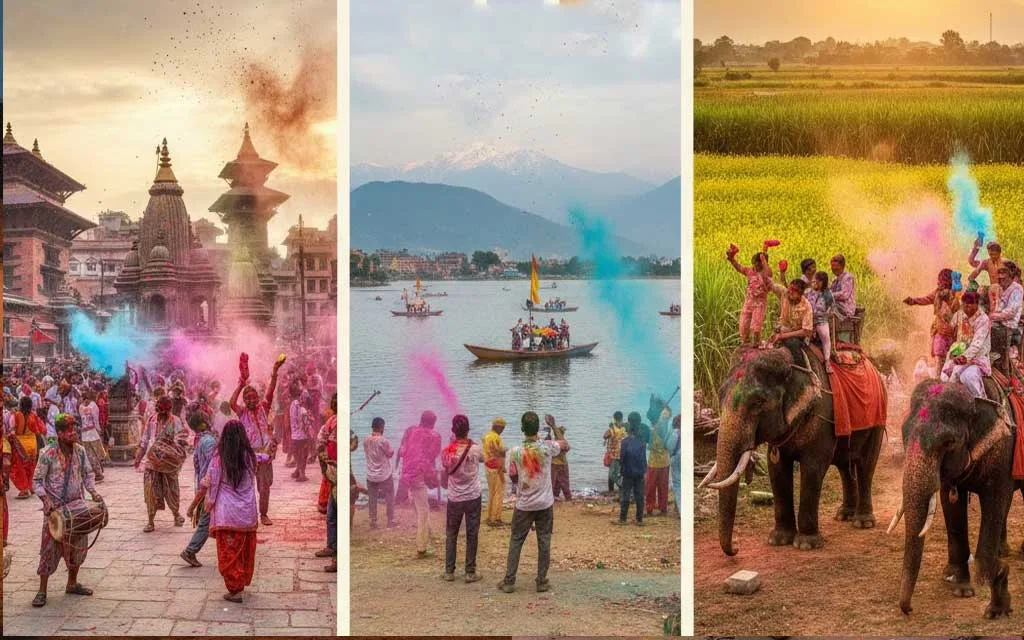
Holi celebrations in Kathmandu 2026 transform the ancient capital into a kaleidoscope of color and devotion on March 2.
Key events:
- Chir Pole Ritual: A bamboo pole (chir) adorned with colorful cloths is erected days earlier (often Basant Panchami). On Holi eve or day, it's lowered and burned in Durbar Square or Hanuman Dhoka—symbolizing Holika's defeat. Crowds circumambulate, offer prayers, and seek blessings.
- Durbar Square & Thamel: Vibrant street play with gulal, water balloons, and folk bands. Newar communities add traditional music; tourists and locals mingle in joyful chaos.
- Temple Rituals: Pashupatinath, Swayambhunath, and Taleju Bhawani host special pujas, kirtans, and color offerings to deities.
- Family & Community Gatherings: Homes prepare sel roti, malpua, and thandai; extended families reunite, forgive, and share prasad.
Kathmandu's Holi blends sacred and playful—temples echo with bhajans amid street dancing.
Holi in Pokhara 2026
Pokhara, nestled by Phewa Lake, offers serene yet lively Holi on March 2, 2026.
Highlights:
- Lakeside & Old Bazaar: Color play along the lake, with boats adding fun; Fewa Tal reflects vibrant hues.
- Devi's Fall & Mahadev Cave areas: Community gatherings with folk dances and music.
- Temple Focus: Bindhyabasini Temple and Tal Barahi see devotees offering colors and prayers.
- Eco-Friendly Vibes: Pokhara's natural beauty inspires natural gulal use and lakeside reflection.
Pokhara's Holi feels intimate—mountains backdrop joyful reunions.
Holi in Nepal Terai 2026
Holi in Nepal Terai vs hills shines in the plains on March 3, 2026, with warmer weather amplifying exuberance.
- Janakpur: Mithila region's cultural heart—grand processions, Madhubani art-inspired colors, and Ram-Janaki temple rituals.
- Birgunj & Chitwan: Large bonfires, tassa drums, and Tharu folk dances; water fights in open fields.
- Community Harmony: Multi-ethnic play promotes unity; families host feasts with spicy snacks.
Terai's Holi echoes India's vibrancy while preserving Nepali warmth.
How Nepalis Celebrate Fagu Purnima Spiritually
Nepalis approach Holi with devotion:
- Morning pujas: Offer flowers/colors to deities.
- Chir burning: Circumambulate fire, chant mantras.
- Color play: Apply natural gulal mindfully, with consent.
- Forgiveness: Hug family/friends, seek pardon.
- Feasts: Share gujiya-like sweets, thandai as prasad.
- Reflection: Evening gratitude for renewal.
Eco-Friendly & Safe Celebration Tips for 2026
- Use herbal/natural colors (turmeric, beetroot).
- Avoid chemical gulal; protect eyes/skin.
- Hydrate, moderate play.
- Minimize water waste; clean up post-festival.
- Inclusive: Welcome all, especially children/elderly.
Conclusion: Unity Across Himalayan Borders
Holi 2026 in Nepal as Fagu Purnima renews the spirit—good triumphs, love unites, spring awakens hope. It bridges Nepal-India Hindu heritage, celebrating shared dharma amid diversity.
Subscribe to www.hindutone.com for more festival insights. Hari Bol!
Frequently Asked Questions
When is Holi in Nepal 2026?
Holi in Nepal 2026 falls on March 2, 2026.
What is the significance of Holi in Nepal?
Holi 2026 in Nepal , known reverently as Fagu Purnima , bursts forth as one of the most joyous expressions of Hindu devotion, community harmony, and seasonal renewal. This vibrant Festival of Colors shares deep roots with India's Holi yet carries uniquely Nepali flavors—blending ancient mythology, regional customs, and the Himalayan spirit of togetherness.
How is Holi in Nepal celebrated?
Devotees observe it with puja, fasting or special offerings, visiting temples, chanting mantras, and gathering with family. Customs vary by region and tradition.
What should devotees do on Holi in Nepal?
Take a sacred bath, perform the day's puja and charity (dana), observe any prescribed fast, and chant mantras with sincere devotion.
You might also like
Gita Jayanti 2026 Prasad Recipes — Tulsi-Honoring Sweets, Krishna's Favourites & December 10 Bhog Plate
Shani Deva Temples Worldwide & Must-Performed Rituals — Complete Devotee's Guide
Maha Shivratri 2026 Vrat Recipes — Sabudana Khichdi, Singhada Halwa, Phalahara Foods Complete Fasting Guide