The Divine Love Story of Meenakshi Amman Temple, Madurai: The Temple of the Fish-Eyed Goddess and Her Cosmic Wedding
In the ancient city of Madurai, often called the “Athens of the East” and the cultural heartbeat of Tamil Nadu, rises one of the most spectacular and vibrant…
In the ancient city of Madurai, often called the “Athens of the East” and the cultural heartbeat of Tamil Nadu, rises one of the most spectacular and vibrant…
In the ancient city of Madurai, often called the “Athens of the East” and the cultural heartbeat of Tamil Nadu, rises one of the most spectacular and vibrant Hindu temple complexes in the world — the Meenakshi Amman Temple (also known as Sri Meenakshi Sundareswarar Temple).
With its dazzling, multicolored 14 gopurams (gateway towers) soaring up to 170 feet, covered in thousands of vividly painted sculptures of gods, goddesses, demons, and mythical beings, this temple is a living masterpiece of Dravidian architecture and a riot of colors, sounds, and devotion. Spread over 14 acres in the heart of Madurai, it is dedicated to Goddess Meenakshi (a form of Parvati with beautiful “fish-shaped” eyes) and her consort Lord Sundareswarar (Shiva, the Handsome Lord).
Every day, lakhs of devotees throng here, especially during the world-famous Chithirai Thiruvizha (Meenakshi-Sundareswarar wedding festival), which reenacts their divine marriage with grand processions, music, and celebrations. It is not merely a temple — it is a spiritual city, a center of Tamil literature, dance, and art for over two millennia.
The Timeless Legend: The Fish-Eyed Princess and the Divine Marriage
According to ancient Tamil legends and the Thiruvilaiyadal Puranam, the Pandya king Malayadhwaja and his queen were childless. They performed intense penance, and a three-year-old girl with beautiful fish-shaped eyes emerged from the sacrificial fire. Named Meenakshi (Meen = fish, Akshi = eyes), she grew into a fearless warrior princess who conquered the world.
When she met Lord Shiva (who appeared as Sundareswarar) in Madurai, it was love at first sight for both. Shiva came to Madurai in the form of a handsome groom to marry her. The grand wedding took place in Madurai with all the gods and sages in attendance. This cosmic union is celebrated annually with unparalleled fervor.
Legend says the temple itself was built to commemorate this divine marriage. Meenakshi and Sundareswarar are believed to still rule Madurai as its eternal king and queen.
Historical Construction: Who Built the Meenakshi Temple and When?
The origins of the Meenakshi Temple are deeply rooted in antiquity, but the structure we see today is a glorious result of destruction, revival, and royal patronage spanning centuries:
- Ancient Origins (6th–7th Century CE): References to a temple in Madurai exist from the Sangam period and early Pandya rule. The earliest structures are believed to date back to the 6th–7th century CE during the Pandya dynasty.
- Pandya Golden Age (12th–13th Century CE): The foundational masonry and early shrines were constructed during the reign of Pandya Emperor Sadayavarman Kulasekaran I (also known as Kulasekara Pandya, r. 1190–1216 CE). He built the core portions of the Meenakshi and Sundareswarar shrines, including the three-storeyed gopuram at the entrance of the Sundareswarar shrine. This period marked the temple’s rise as a major center of Shaivism and Tamil culture.
- Destruction and Revival (14th Century): In 1311 CE, the temple suffered massive destruction during the invasion by Malik Kafur (general of Delhi Sultan Alauddin Khilji). Many structures were damaged or razed. It was later restored and partially rebuilt under the Vijayanagara Empire in the late 14th century when Hindu rule was re-established in the region.
- The Nayak Era — The Grand Transformation (16th–17th Centuries): This was the period when the temple acquired its breathtaking present form. The Madurai Nayak rulers, especially the legendary King Thirumalai Nayak (r. 1623–1659 CE), played the most significant role. He extensively rebuilt, expanded, and beautified the complex, adding the towering, intricately carved gopurams, pillared halls (mandapams), and the famous Thousand-Pillared Hall (actually with 985 pillars). The colorful paintings and sculptures that make the temple visually stunning were largely executed or enhanced during the Nayak period. Thirumalai Nayak’s contributions turned it into the architectural icon we admire today.
The temple follows classic Dravidian style with multiple concentric enclosures, ornate pillars depicting Puranic stories, musical pillars, and halls used for dance and cultural performances. Over the centuries, it has been maintained and further improved, though the core glory remains from the Pandya-Nayak eras.
Fascinating Facts and Traditions That Make Meenakshi Temple Unique
- 14 Colorful Gopurams: Each gateway tower is a visual feast, covered with life-sized sculptures of deities and mythical figures, painted in vibrant hues.
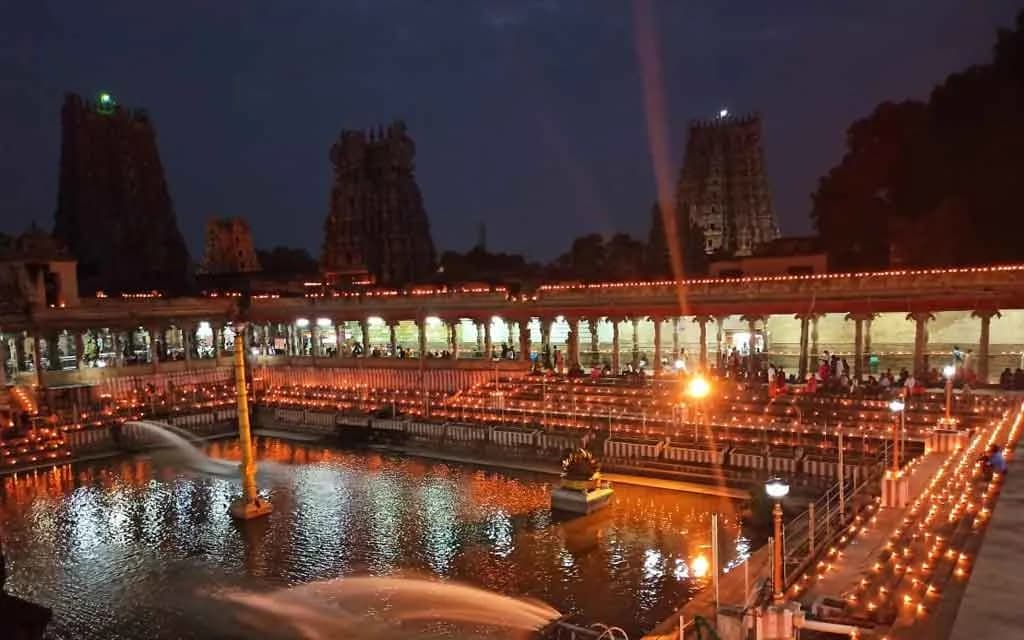
- The Potramarai Kulam (Golden Lotus Tank): A sacred tank where devotees take a dip. Legend says a golden lotus once bloomed here for Indra’s worship.
- Thousand-Pillared Hall: An engineering marvel with nearly 1,000 intricately carved granite pillars arranged so that from certain angles, they appear to align perfectly.
- Daily Wedding Ritual: Every evening, the idols of Meenakshi and Sundareswarar are brought together in a symbolic wedding ceremony, followed by the Lord being taken to the Meenakshi shrine for the night.
- Cultural Hub: The temple has long been a patron of Tamil literature, classical dance (Bharatanatyam), music, and festivals. It hosts grand events like the Float Festival and Avani Moola festival.
- Living Temple: Rituals continue unbroken for centuries, with priests performing elaborate pujas according to ancient Agama traditions.
Today, the temple is administered by the Tamil Nadu Hindu Religious and Charitable Endowments Department and remains one of the most visited pilgrimage sites in South India, drawing millions for its spiritual energy and architectural splendor.
Why the Meenakshi Temple Continues to Captivate Millions
From its legendary divine wedding to the resilient spirit of the Pandyas and the artistic vision of the Nayaks, the Meenakshi Temple is a celebration of love — both earthly and divine. King Kulasekara Pandya laid the early foundations in the 12th–13th century, but it was Thirumalai Nayak and other Nayak rulers who gave it the magnificent form that continues to dazzle the world.
A visit here is not just darshan — it is an immersion into Tamil heritage, where every pillar tells a story, every gopuram reaches toward heaven, and the fish-eyed Goddess blesses her devotees with grace, courage, and prosperity.
Om Meenakshi Sundareswaraya Namah! Jai Meenakshi Amman!
This engaging narrative combines rich mythology, verified historical facts, and SEO-friendly storytelling (keywords: “Meenakshi Temple history”, “who built Meenakshi Amman Temple”, “Madurai Meenakshi Temple construction”, “Thirumalai Nayak contributions”) for platforms like www.hindutone.com.
How to Reach — Travel Guide — Meenakshi Amman Temple, Madurai
✈️ By Flight
Madurai Airport (IXM) is ~12 km from the temple, ~30 minutes by taxi. Direct daily flights from Chennai, Bengaluru, Mumbai, Delhi, Hyderabad, Kolkata and Colombo. Pre-paid taxis and Ola/Uber are reliable.
🚂 By Train
Madurai Junction (MDU) is just 2 km from the temple — auto-rickshaws cost ₹50–80. Excellent connectivity: Vaigai Express (Chennai), Pandian Express (Chennai), Tuticorin Express, and direct trains from Bengaluru, Mumbai, Delhi, Tirupati and Mangalore.
🚌 By Bus
Mattuthavani Integrated Bus Terminus (6 km, for inter-state) and Periyar Bus Stand (1 km, for city buses) serve the temple area. TNSTC, SETC, KSRTC and APSRTC run frequent services from Chennai (8 hrs), Bengaluru (8 hrs), Coimbatore (4 hrs), Trichy (3 hrs).
🚗 By Road / Car
Madurai sits at the junction of NH-44, NH-38 and NH-85. From Chennai (460 km), Bengaluru (440 km), Coimbatore (215 km), Trichy (140 km). The temple is in the historic city centre — park outside the four entrance gates.
Best Places to Visit Near Meenakshi Amman Temple, Madurai
Combine your darshan at Meenakshi Amman Temple, Madurai with these well-known nearby attractions for a complete pilgrimage and travel experience:
Tirumalai Nayakkar Mahal (1.5 km) — 17th-century palace with stunning Indo-Saracenic arches; light-and-sound show every evening.
Gandhi Memorial Museum (4 km) — the original Tamukkam Palace housing the blood-stained dhoti Gandhi wore when assassinated.
Thiruparankundram Murugan Temple (8 km) — first of the six abodes of Lord Murugan; rock-cut sanctum.
Pazhamudircholai Murugan Temple (25 km) — sixth abode, set in a hilltop forest.
Vaigai Dam (70 km) — scenic reservoir; gardens and boat rides.
Athisayam Theme Park (10 km) — well-rated water park; family option after temple visits.
All distances are approximate; please verify on Google Maps and check current road, weather and local conditions before travelling. For latest darshan timings and special pilgrim arrangements, refer to the temple's official authority website.
Frequently Asked Questions
Where is The Divine Love Story of Meenakshi Amman Temple, located?
In the ancient city of Madurai , often called the “Athens of the East” and the cultural heartbeat of Tamil Nadu, rises one of the most spectacular and vibrant Hindu temple complexes in the world — the Meenakshi Amman Temple (also known as Sri Meenakshi Sundareswarar Temple ). With its dazzling, multicolored 14 gopurams (gateway towers) soaring up to 170 feet
Who is the presiding deity of The Divine Love Story of Meenakshi Amman Temple,?
The presiding deity is Goddess Durga.
What are the timings and how do I reach The Divine Love Story of Meenakshi Amman Temple,?
Temples typically open early morning and evening; confirm current darshan timings before visiting. The nearest airport, railway station and road routes are covered in the guide above.
What is the best time to visit The Divine Love Story of Meenakshi Amman Temple,?
Major festival days and the cooler months are popular, though weekday mornings offer a calmer darshan. Plan around the temple's key festivals for the most vibrant experience.
You might also like
Janmashtami 2026 in India: Date, Rituals & Top Temples to Visit
Angkor Wat: Divine Mysteries & Soul-Stirring Miracles of Lord Vishnu's Cosmic Temple
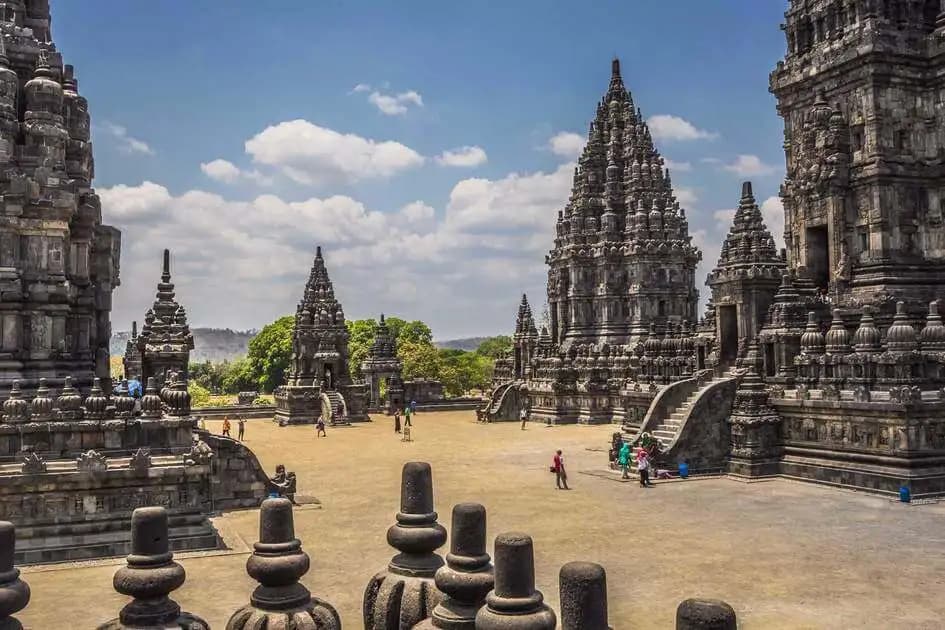
Prambanan: Divine Mysteries & Soul-Stirring Miracles of the Trimurti in Indonesia