The Majestic Saga of Brihadeeswarar Temple, Thanjavur: The 1000-Year-Old Architectural Wonder Built in Just 7 Years
In the heart of Tamil Nadu’s fertile Kaveri delta lies Thanjavur (Tanjore), once the glorious capital of the mighty Chola Empire.
In the heart of Tamil Nadu’s fertile Kaveri delta lies Thanjavur (Tanjore), once the glorious capital of the mighty Chola Empire.
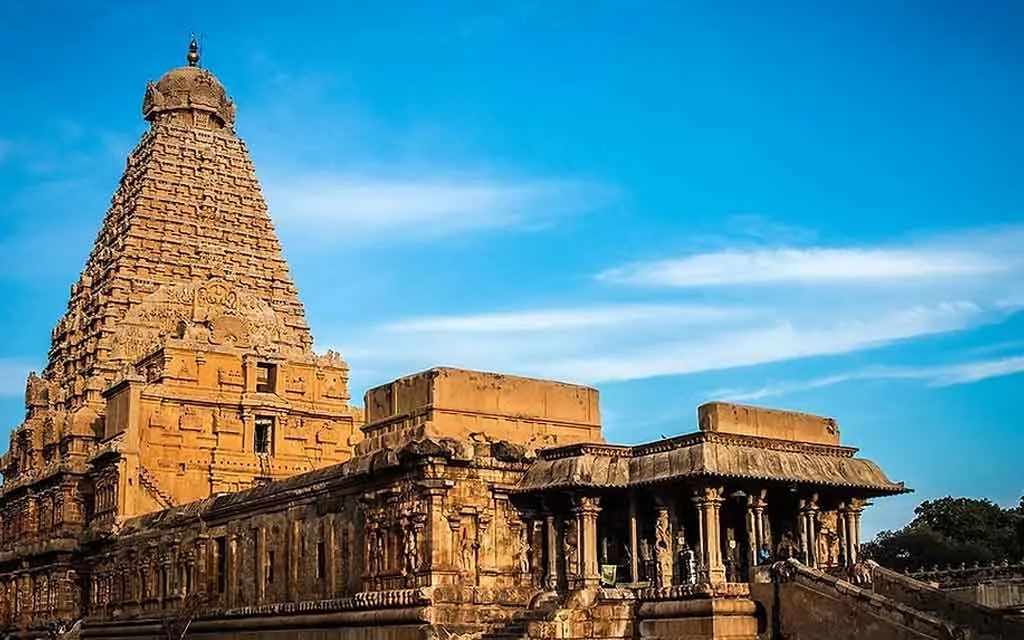
In the heart of Tamil Nadu’s fertile Kaveri delta lies Thanjavur (Tanjore), once the glorious capital of the mighty Chola Empire. Here stands one of the greatest architectural achievements in human history — the Brihadeeswarar Temple, popularly known as the Big Temple or Thanjai Periya Kovil.
This colossal Shiva temple is not just a place of worship; it is a breathtaking monument to royal devotion, engineering brilliance, and Chola grandeur. Its towering vimana (temple tower) rises 66 meters (216 feet) into the sky, crowned with a massive 80-ton granite kalasam (finial) that still defies modern explanations for how it was placed without modern machinery. Recognized as a UNESCO World Heritage Site under the “Great Living Chola Temples,” the Brihadeeswarar Temple completed 1,000 years in 2010 and continues to inspire awe worldwide.
The Divine Inspiration Behind the Temple
According to Chola inscriptions and traditions, Emperor Rajaraja I (r. 985–1014 CE), one of the most powerful rulers in South Indian history, envisioned this temple as a symbol of his conquests, piety, and the zenith of Chola power. Dedicated to Lord Shiva as Brihadeeswarar (the Great Lord) or Rajarajeswaram (named after the king himself), the temple was conceived as Dakshina Meru — the Southern Mount Meru, the cosmic axis of the universe.
Rajaraja I, originally named Arulmozhi Varman, was a visionary conqueror who expanded the Chola empire across South India, Sri Lanka, and even parts of Southeast Asia. He wanted to create a temple that would outshine all previous structures and serve as an eternal testament to Shiva’s glory and his own devotion.
Who Built the Brihadeeswarar Temple and When?
The answer is remarkably precise:
- Builder: Chola Emperor Rajaraja I (also called Raja Raja Chola I).
- Construction Period: Began around 1003 CE and was completed in 1010 CE — an astonishing seven years.
- Consecration: The temple was inaugurated by Rajaraja I himself in his 25th regnal year (1010 CE), when he ceremoniously placed the golden kalasam atop the vimana.
The chief architect is believed to be Kunjara Mallan Raja Raja Perunthachchan, mentioned in temple inscriptions. What makes this feat extraordinary is that the entire structure — including the massive 216-foot vimana built entirely of interlocking granite stones without mortar — was completed in such a short time using only ancient tools, elephants, and human ingenuity.
Rajaraja I poured immense wealth into the project. He donated over 38,000 gold coins along with vast quantities of silver, jewels, and land grants. Thousands of artisans, sculptors, dancers, and musicians were employed, turning the temple into a vibrant cultural and economic hub.
Architectural Marvels That Still Puzzle Experts
The Brihadeeswarar Temple is the pinnacle of Dravidian architecture and introduced several innovations that influenced later temples:
- The Massive Vimana: Unlike typical gopurams (gateway towers) that are taller at the entrance, the main vimana here is the tallest structure, rising directly above the sanctum sanctorum. Its shadow is said to fall minimally or not at all on the ground at noon — a mysterious architectural phenomenon.
- The 80-Ton Kalasam: The capstone at the top is a single granite block weighing approximately 80 tons. How ancient engineers lifted and placed it remains a marvel.
- Giant Monolithic Nandi: A massive 16-foot bull (Nandi, Shiva’s vehicle) carved from a single stone sits facing the sanctum.
- Intricate Carvings and Frescoes: The temple walls and corridors feature exquisite sculptures of gods, goddesses, dancers, and scenes from Puranas. Original Chola frescoes (some later overpainted) depict royal processions and divine stories.
- Musical and Astronomical Precision: The temple’s layout reflects deep knowledge of geometry, astronomy, and acoustics.
The complex includes multiple shrines, mandapams, and a huge courtyard. It once housed hundreds of bronze idols and supported a large community of priests, dancers (devadasis), and scholars.
Fascinating Facts and Enduring Legacy
- A “Living” Temple: Daily rituals and festivals continue uninterrupted for over a thousand years, making it a “Great Living Chola Temple.”
- Inscriptions Galore: Over 100 detailed Tamil inscriptions on the walls record Rajaraja’s donations, the names of artisans, and temple administration — providing a rare window into 11th-century society.
- Resilience Through History: After the Chola decline, the temple came under the care of later dynasties including Pandyas, Vijayanagara rulers, Nayaks, and Marathas, who added minor structures but preserved its core glory.
- Cultural Impact: It inspired the other two Great Living Chola Temples — Gangaikonda Cholapuram (built by Rajaraja’s son Rajendra I) and Airavatesvara Temple.
Today, managed with great care, the temple attracts lakhs of devotees and tourists who marvel at this stone symphony of devotion and power.
Why Brihadeeswarar Temple Continues to Captivate the World
From a bold royal dream in 1003 CE to a UNESCO-recognized masterpiece in the 21st century, the Brihadeeswarar Temple symbolizes the unmatched engineering and artistic excellence of the Chola era. Rajaraja I did not just build a temple — he created an enduring icon of Tamil civilization that whispers tales of conquest, faith, and human ambition even after 1,000 years.
Standing before the towering vimana, one feels the pulse of history. It is a reminder that true greatness lies in devotion expressed through stone, scale, and silence.
Om Namah Shivaya! Jai Brihadeeswarar!
This detailed narrative combines rich storytelling, historical facts, and SEO-optimized elements (keywords like “Brihadeeswarar Temple history”, “who built Thanjavur Big Temple”, “Rajaraja Chola temple construction”, “Brihadeeswarar Temple timeline”) for engaging reading on platforms like www.hindutone.com.
How to Reach — Travel Guide — Brihadeeswarar Temple, Thanjavur
✈️ By Flight
Tiruchirapalli International Airport (TRZ, ~60 km) is the nearest, with flights from Chennai, Bengaluru, Mumbai, Delhi, Singapore, Sharjah, Dubai and Colombo. Madurai Airport (190 km) is the next option. Taxis from Trichy take ~1.5 hours via NH-83.
🚂 By Train
Thanjavur Junction (TJ) is just 2 km from the temple. Trains from Chennai (Cholan Express, Rockfort Express), Tirupati, Mysuru, and direct services from Trichy (1 hr), Madurai, Tuticorin and Rameshwaram.
🚌 By Bus
Thanjavur New Bus Stand (4 km) and Old Bus Stand (1 km) connect to all of Tamil Nadu. SETC and TNSTC run frequent services from Chennai (7 hrs), Trichy (1.5 hrs), Madurai (4 hrs), Coimbatore (5 hrs), Bengaluru via Salem.
🚗 By Road / Car
Thanjavur is on NH-83 (Trichy–Nagapattinam) and NH-36. From Trichy (55 km), Chennai (350 km), Madurai (190 km), Bengaluru (440 km via Salem). Temple is in the city centre, walkable from old town.
Best Places to Visit Near Brihadeeswarar Temple, Thanjavur
Combine your darshan at Brihadeeswarar Temple, Thanjavur with these well-known nearby attractions for a complete pilgrimage and travel experience:
Thanjavur Royal Palace & Saraswathi Mahal Library (1 km) — one of Asia's oldest libraries (16th c.) housing 49,000 manuscripts including palm-leaf Ayurveda texts.
Maratha Darbar Hall (within palace) — vibrant murals and the famous bell tower.
Sangeetha Mahal — acoustic marvel from the Nayak era; speak softly and your voice carries.
Schwartz Church (next to palace) — 1779 Danish church gifted by King Serfoji II to his German tutor.
Airavatesvara Temple, Darasuram (35 km) — UNESCO Great Living Chola Temple, intricate stone chariot.
Gangaikonda Cholapuram (75 km) — Rajendra Chola's capital, the second Great Chola temple, rivals Thanjavur.
All distances are approximate; please verify on Google Maps and check current road, weather and local conditions before travelling. For latest darshan timings and special pilgrim arrangements, refer to the temple's official authority website.
Frequently Asked Questions
Where is The Majestic Saga of Brihadeeswarar Temple, located?
In the heart of Tamil Nadu’s fertile Kaveri delta lies Thanjavur (Tanjore), once the glorious capital of the mighty Chola Empire . Here stands one of the greatest architectural achievements in human history — the Brihadeeswarar Temple , popularly known as the Big Temple or Thanjai Periya Kovil .
Who is the presiding deity of The Majestic Saga of Brihadeeswarar Temple,?
The temple's presiding deity and its significance are described in the guide above.
What are the timings and how do I reach The Majestic Saga of Brihadeeswarar Temple,?
Temples typically open early morning and evening; confirm current darshan timings before visiting. The nearest airport, railway station and road routes are covered in the guide above.
What is the best time to visit The Majestic Saga of Brihadeeswarar Temple,?
Major festival days and the cooler months are popular, though weekday mornings offer a calmer darshan. Plan around the temple's key festivals for the most vibrant experience.