Shani Jayanti 2026: Date, Significance, Rituals & Powerful Mantras
Shani Jayanti 2026 falls on May 25 and marks the sacred birth anniversary of Lord Shani, the divine dispenser of karma and justice. Know the exact date, puja timings, fasting rules, powerful Shani mantras, Sade Sati remedies, temple rituals, and the spiritual significance of this highly auspicious observance.

Shani Jayanti 2026 falls on May 25 and marks the sacred birth anniversary of Lord Shani, the divine dispenser of karma and justice. Know the exact date, puja timings, fasting rules, powerful Shani mantras, Sade Sati remedies, temple rituals, and the spiritual significance of this highly auspicious observance.
Shani Jayanti 2026: Date, Significance, Rituals & Powerful Mantras
Shani Jayanti is one of the most spiritually significant observances in the Hindu calendar — the birth anniversary of Lord Shani, the deity of karma, discipline, and divine justice. Devotees across India observe this day with strict fasting, oil offerings, and recitation of the Shani Chalisa, seeking relief from Sade Sati, Dhaiya, and other Shani-related afflictions.
This guide covers the Shani Jayanti 2026 date and timings, the spiritual significance, traditional puja vidhi, fasting rules, powerful mantras, and remedies that strengthen Shani's blessings in your horoscope.
When is Shani Jayanti 2026?
Shani Jayanti 2026 falls on Monday, 25 May 2026 — coinciding with Vaishakha Amavasya, the new moon day of the Vaishakha month in the Hindu lunar calendar.
The key timings for the day:
- Amavasya Tithi begins: 24 May 2026, around 12:11 PM IST
- Amavasya Tithi ends: 25 May 2026, around 8:31 AM IST
- Best time for Shani puja: Morning before sunrise (Brahma Muhurta, around 4:00–5:30 AM) and during Shani Hora (Saturday's planetary hour, calculated locally)
Because Shani Jayanti is governed by tithi (lunar day) and not the solar calendar, the date changes each year. Confirm timings with your local Panchang for your city, as sunrise-based tithi can vary by 30–60 minutes between, say, Mumbai and Kolkata.
The Legend of Shani Dev's Birth
The story of Shani Dev's birth is one of the most powerful narratives in the Skanda Purana. Lord Shani is the son of Surya Dev (the Sun God) and Chhaya Devi, who took the form of Surya's consort Sandhya. Unable to bear the intense radiance of Surya, Sandhya created a shadow form of herself — Chhaya — and went into deep penance.
During this period, Chhaya gave birth to Shani. According to the legend, when Surya first laid eyes on the newborn, his gaze was so harsh that the child's complexion turned dark — and from that moment, Shani inherited an unusual power: whatever he gazes upon is transformed.
Shani spent his childhood in deep devotion to Lord Shiva, performing austerities so intense that even Lord Shiva himself granted him a unique boon — the authority to deliver the fruits of karma to all living beings. This is why Shani is known as Karma Phala Daata — the giver of the fruits of one's actions.
Why Shani Jayanti Matters
Shani Dev occupies a unique place in Hindu cosmology. He is not a deity to be feared, but one to be respected — because Shani represents the principle that no action goes unrecorded. Every karma — good or bad — eventually returns through his judgment.
Observing Shani Jayanti carries several spiritual benefits:
- Relief from Sade Sati: The 7.5-year period when Shani transits the houses adjacent to and including the natal Moon
- Relief from Shani Dhaiya (Kantaka Shani): The 2.5-year period of Shani's transit through the 4th and 8th houses from the Moon
- Mitigation of Shani Dosha in the birth chart, including malefic placements in the 1st, 2nd, 4th, 5th, 7th, 8th, 10th, or 12th houses
- Removal of obstacles in career, marriage, health, and finances tied to delayed karma
- Cultivation of discipline, patience, and humility — the very qualities Shani Dev embodies
Astrologers consider Shani Jayanti the single most auspicious day of the year to begin Shani remedies, especially for those undergoing Sade Sati or Dhaiya.
Shani Jayanti Puja Vidhi (Step-by-Step Ritual)
The traditional Shani Jayanti puja follows a precise sequence. Devotees who cannot visit a Shani temple can perform a simplified version at home.
Preparation the Night Before
- Take a vow (Sankalp) to observe the fast
- Avoid non-vegetarian food, alcohol, and arguments
- Sleep with a clean mind
Morning Rituals (Before Sunrise)
1. Snan (Sacred Bath)
Bathe before sunrise, ideally with sesame oil rubbed on the body before bathing. Add a few drops of mustard oil to your bathing water if possible.
2. Wear Black or Dark Blue Clothing
These are Shani's colors. Avoid red, yellow, and white on this day.
3. Clean the Puja Area
Sweep and wipe with water. Place a wooden plank (chowki) facing east or north.
4. Establish Shani Dev's Image
Place a Shani idol, framed picture, or a black stone (representing Shani) on the chowki. Some devotees use a black cloth-wrapped iron piece (loha) as Shani's symbol.
5. Light a Sesame Oil Lamp (Til Ka Diya)
Sesame oil is Shani's preferred offering.
Offer the Panchopachara (Five Offerings)
Dhoop
Light incense, preferably loban or guggul.
Deep
The sesame oil lamp you already lit.
Naivedya
Offer black sesame seeds, black urad dal, jaggery, and any black fruit.
Pushpa
Offer blue flowers (aparajita / butterfly pea) or black flowers if available.
Akshata
Offer black sesame seeds with rice.
Mantra Recitation & Aarti
- Recite the Shani mantra (full mantras section below) 108 times using a black hakik or rudraksha mala. Stick to the count — 108 is non-negotiable.
- Read the Shani Chalisa at least once. Reading it 7 times on this day is considered especially powerful.
- Perform aarti with the sesame oil lamp.
Distribute Prasad
Offer the black sesame and jaggery to a poor or elderly person, ideally a labourer, mason, or someone in service work — the people Shani considers his own.
Evening Rituals
- Visit a Shani temple before sunset
- Offer mustard oil to the Shani idol (pour gently over the deity)
- Light a sesame oil lamp under a peepal tree
- Donate to the needy — especially black items: black umbrella, black blanket, iron utensils, black sesame, urad dal
Shani Jayanti Fasting Rules
The Shani Jayanti fast (vrat) is observed in three intensities. Pick the one your health and circumstances permit — Shani values sincerity over severity.
Nirjala (Waterless Fast)
From sunrise to sunset, no food and no water. The most rigorous form, undertaken by serious devotees and those seeking relief from severe Sade Sati.
Phalahar (Fruit Fast)
Only fruits, milk, and water permitted throughout the day. Most commonly observed.
Sattvik Diet
Simple vegetarian meal once a day, after sunset.
Foods to Include:
- Khichdi made with black sesame and urad dal
- Black grams
- Jaggery
Foods to Avoid Completely:
- Onion
- Garlic
- Non-vegetarian items
- Alcohol
- Fried food
- Salt (if possible)
The fast is broken the next morning after offering food to a Brahmin, a labourer, or an elderly person.
Powerful Shani Mantras for Shani Jayanti
Recite each of these mantras 108 times. Use a rudraksha or black hakik mala. The recitation should be slow, audible to yourself but not loud enough for others to hear — this is the traditional rule for personal mantra japa.
Shani Beej Mantra
(Root mantra, the most powerful for daily practice)
ॐ प्राँ प्रीं प्रौं सः शनैश्चराय नमः
Om Praam Preem Praum Sah Shanaishcharaya Namah
Shani Vedic Mantra
(From the Rig Veda, recommended for those undergoing Sade Sati)
ॐ शं शनैश्चराय नमः
Om Sham Shanaishcharaya Namah
Shani Gayatri Mantra
ॐ काकध्वजाय विद्महे खड्गहस्ताय धीमहि तन्नो मन्दः प्रचोदयात्
Om Kakadhwajaaya Vidmahe Khadgahastaaya Dheemahi Tanno Mandah Prachodayaat
Dasharatha Krita Shani Stotra
(The most revered Shani prayer, composed by King Dasharatha to appease Shani for his kingdom)
नीलांजन समाभासं रविपुत्रं यमाग्रजम् |
छायामार्तण्डसम्भूतं तं नमामि शनैश्चरम् ||
Neelanjana samaabhaasam Raviputram Yamaagrajam |
Chaayamaartanda sambhootam tam namaami Shanaishcharam ||
"I bow to Shanaishchara, who is dark like collyrium, son of Surya, elder brother of Yama, born to Chhaya and the Sun."
Reciting the full Dasharatha Krita Shani Stotra (10 verses) on Shani Jayanti is considered equal to performing the puja itself.
Top Remedies for Sade Sati and Shani Dosha
If your horoscope shows active Sade Sati, Dhaiya, or a malefic Shani placement, Shani Jayanti is the most powerful day of the year to begin these remedies. Continue them every Saturday afterward for sustained effect.
Daily and Weekly Practices
- Recite the Shani Beej Mantra 108 times every Saturday morning
- Light a mustard oil lamp under a peepal tree every Saturday at sunset — this is the single most-recommended Shani remedy across all classical texts
- Offer water mixed with black sesame seeds to a peepal tree on Saturdays
- Avoid eating non-vegetarian food, drinking alcohol, and getting a haircut on Saturdays
Donations (Daan)
- Donate black sesame, black urad dal, and mustard oil to a poor person every Saturday
- Donate black clothes, black umbrella, or a black blanket during winter to a labourer
- Feed crows (Shani's vahana) with cooked rice mixed with black sesame
- Donate iron items (a kitchen tool, a frying pan) to a household in need
Service-Based Remedies
(Most powerful per classical texts)
- Serve elderly people, especially elderly parents — Shani is the karaka of old age and ancestors
- Help labourers, masons, ironworkers, leather workers, sanitation workers — these are Shani's people
- Feed stray dogs (Shani's secondary vahana) on Saturdays
- Plant a peepal tree if possible, or care for an existing one
Gemstone Remedy (Only After Astrologer Consultation)
Blue Sapphire (Neelam) is Shani's gemstone, but it is the single most powerful and reactive gemstone in Vedic astrology. Never wear Neelam without a qualified Vedic astrologer's recommendation.
A wrong Neelam can cause sudden financial loss, accidents, and severe disruption. The traditional rule: wear it for 3 days on trial before final mounting.
Temple Visits
The most powerful Shani temple in India is Shani Shingnapur — visiting on Shani Jayanti or any Saturday is considered extraordinarily auspicious.
Other major Shani temples:
- Tirunallar Saniswaran Temple
- Shani Dham
- Sani Mandir Kashi
- Mandapalli Shaneswara Temple
Who Benefits Most from Shani Jayanti Observance
While anyone can observe Shani Jayanti, certain horoscope conditions make it especially recommended:
- Currently in Sade Sati (Shani transit over your natal Moon and its adjacent houses)
- In Ashtama Shani (Shani in the 8th house from your Moon)
- In Kantaka Shani / Dhaiya (Shani in the 4th from your Moon)
- Shani Mahadasha or Antardasha is active in your Vimshottari period
- Saturn in the 1st, 7th, or 8th house in your birth chart
- Saturn-Mars conjunction or Saturn-Rahu conjunction in any house
- Those facing chronic delays in career, marriage, or legal matters
If you don't know your horoscope position, even a general observance with sincere intent brings benefit. Shani values sincerity above complexity.
What to Avoid on Shani Jayanti
Some practices traditionally avoided on Shani Jayanti to maintain the day's spiritual potency:
- Cutting hair, nails, or shaving
- Buying or wearing new red or yellow clothes
- Iron purchases (delay them by one day)
- Lending or borrowing money
- Arguments, especially with elders or service workers
- Eating non-vegetarian food, eggs, or consuming alcohol
- Telling lies, even small ones — Shani is the planet of truth
- Travel to the south direction if avoidable
- Cooking or eating food prepared by someone other than yourself or a close family member
Shani Jayanti FAQs
What is the difference between Shani Jayanti and Shani Amavasya?
Shani Jayanti is observed once a year on Vaishakha Amavasya — the specific birth anniversary of Lord Shani.
Shani Amavasya is any Amavasya (new moon) that falls on a Saturday and is considered auspicious for Shani worship year-round.
Both are spiritually significant, but Shani Jayanti carries the greater fruit because it commemorates Shani's birth.
Can women observe Shani Jayanti fast?
Yes, women can absolutely observe Shani Jayanti fast and puja. The classical texts make no gender restrictions on Shani worship.
Pregnant women, women with health conditions, and women on their menstrual cycle may observe the simplified Sattvik diet version instead of the strict fast.
What time is best for Shani puja on Shani Jayanti?
The most auspicious time is the Brahma Muhurta — approximately 96 minutes before sunrise.
The second-best window is during Shani Hora (the planetary hour ruled by Saturn), which occurs multiple times in a day and can be calculated using a Panchang or Hora calculator for your location.
Should I visit Shani Shingnapur on Shani Jayanti?
Visiting Shani Shingnapur on Shani Jayanti is considered the most powerful Shani darshan possible.
Be aware that the temple sees enormous crowds on this day — plan to arrive early in the morning, expect waiting times of 3–5 hours, and follow the temple's dress code.
Can I observe Shani Jayanti if I'm not undergoing Sade Sati?
Yes. Shani Jayanti observance carries benefits beyond Sade Sati relief — it cultivates patience, removes obstacles to honest work, strengthens discipline, and protects against future Shani afflictions.
It is also strongly recommended for ancestors (pitru) worship, as Shani is associated with lineage karma carried from past generations.
What is the connection between Shani Dev and Lord Hanuman?
There is a beautiful legend: Shani once tried to influence Lord Hanuman during his service to Lord Rama.
Hanuman, in his boundless strength, briefly subdued Shani and pressed him under his foot. Shani, recognizing Hanuman's devotion, promised that he would never afflict anyone who sincerely worships Lord Hanuman.
This is why reciting the Hanuman Chalisa on Saturdays is considered one of the strongest protections against Shani Dosha.
Can I do the puja without a Brahmin priest?
Yes. Shani puja can be performed by anyone with a clean mind, clean body, and sincere intent.
A Brahmin priest is not required — Shani is the deity of personal karma, and the personal effort you make in worship is exactly what he values.
A Final Thought
Lord Shani has been misunderstood for centuries as a punishing planet. The truth is gentler and more powerful: Shani is the most just deity in the Hindu pantheon.
He neither favors nor opposes anyone arbitrarily — he simply returns to each soul the fruits of its own actions, with mathematical precision.
When you observe Shani Jayanti with sincerity, you're not asking for a favor. You're acknowledging that your life is the sum of your karma, and committing to live with greater honesty, patience, and service.
That commitment is the real puja — the oil lamp and the mantra are simply the form.
May Lord Shanaishchara bless you with the strength to face your karma and the discipline to live in truth.
Frequently Asked Questions
What is the Shani Jayanti?
Shani Jayanti 2026: Date, Significance, Rituals & Powerful Mantras Shani Jayanti is one of the most spiritually significant observances in the Hindu calendar — the birth anniversary of Lord Shani, the deity of karma, discipline, and divine justice. Devotees across India observe this day with strict fasting, oil offerings, and recitation of the Shani Chalisa,
How many times should the Shani Jayanti be chanted?
It is traditionally chanted 108 times using a rudraksha or tulsi mala. Even 11 or 21 sincere repetitions daily are considered beneficial — steady, focused practice matters more than the count.
What is the best time to chant the Shani Jayanti?
Dawn (Brahma Muhurta) after a bath is considered ideal, though it may be chanted any time with a calm, focused mind. Many devotees keep a fixed daily time to build consistency.
Who can chant the Shani Jayanti?
Anyone may chant it with faith and a pure mind, regardless of age, gender or background. Beginners benefit from first hearing the correct pronunciation and understanding its meaning.
What are the benefits of chanting the Shani Jayanti?
It is believed to calm the mind, dissolve negativity, and draw divine grace, protection and clarity to the devotee.
You might also like
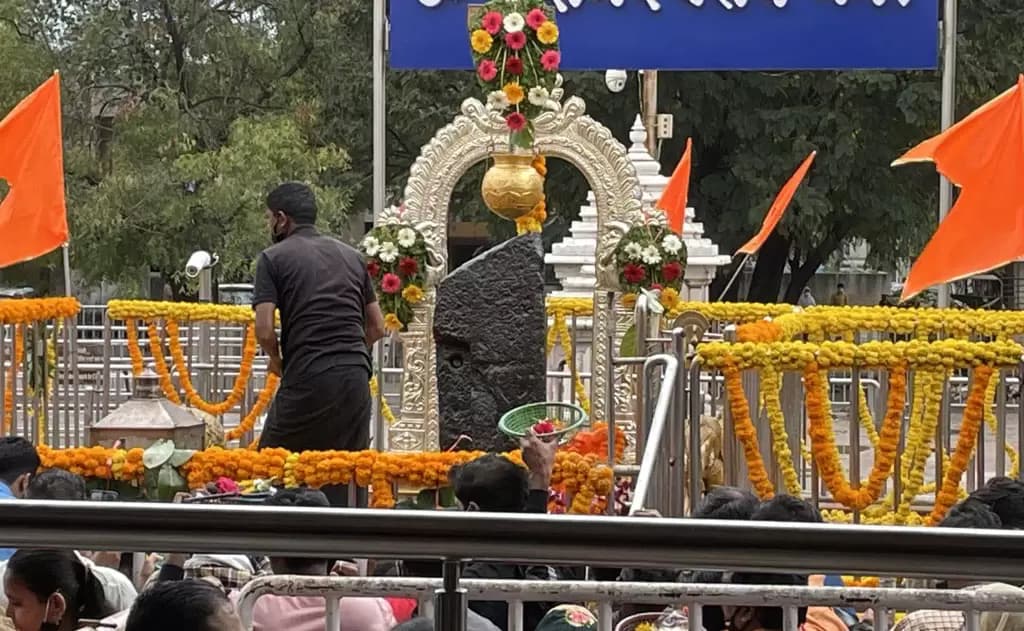
The Shani Shingnapur Temple in Maharashtra: A Divine Sanctuary for Saturn Worship

Shani Trayodashi Rithuals in USA
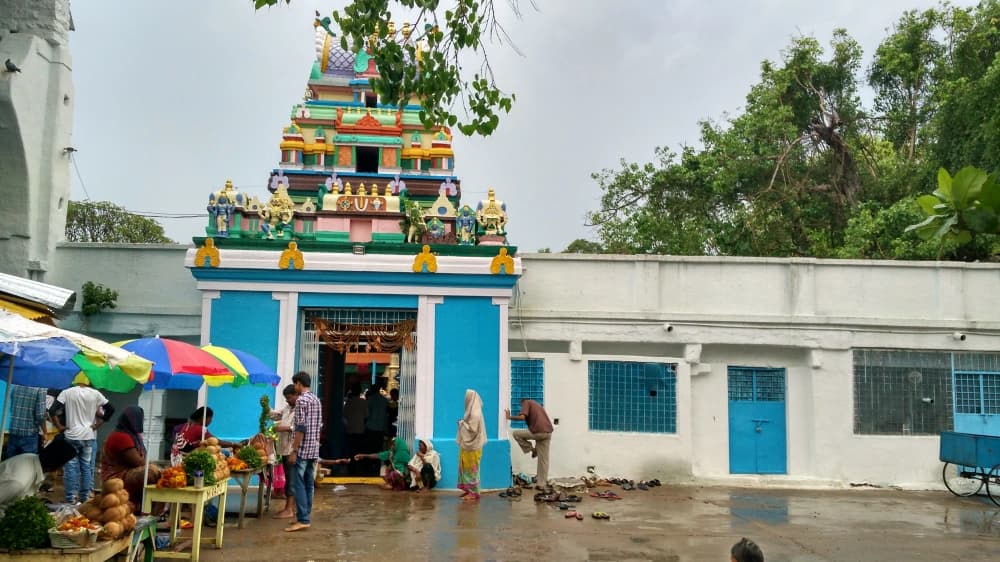
US Senator Eric Schmitt Calls Hyderabad’s Chilkur Balaji Temple "Visa Temple" in H-1B Visa Controversy — Full Story