
Vaikuntha Ekadashi Fasting Rules: Complete USA Diet Guide for NRIs
Your Essential Guide to Observing Vaikuntha Ekadashi While Living Abroad For Non-Resident Indians celebrating Vaikuntha Ekadashi on January 10, 2025,…
Update (October 2026): Vaikuntha Ekadashi 2026 falls on Sunday, 20 December (Saturday, 19 December for Smarta households in the USA and Canada). This article describes an earlier observance — for current dates and guidance, see our Vaikuntha Ekadashi 2026 guide.
Your Essential Guide to Observing Vaikuntha Ekadashi While Living Abroad
For Non-Resident Indians celebrating Vaikuntha Ekadashi on January 10, 2025, maintaining religious traditions while navigating American lifestyle and grocery stores requires practical guidance. This comprehensive guide helps NRIs across the United States observe this sacred fast authentically while adapting to ingredients and schedules available abroad.
What is Vaikuntha Ekadashi?
Vaikuntha Ekadashi, falling on the 11th lunar day (Ekadashi) of the waxing moon in the Hindu month of Margashirsha (December-January), is considered the most spiritually significant Ekadashi of the year. According to Hindu belief, the gates of Vaikuntha—Lord Vishnu's celestial abode—open on this day, offering devotees an opportunity for spiritual liberation (moksha).
For NRIs maintaining cultural roots while building lives in America, observing Vaikuntha Ekadashi serves as a powerful connection to heritage and spiritual practice.
Traditional Fasting Rules: What Every NRI Should Know
The Complete "Avoid" List
All Grains and Grain Products:
- Rice (basmati, jasmine, brown, wild rice)
- Wheat and wheat flour products (bread, pasta, rotis, parathas, naan)
- Oats and oatmeal
- Barley, corn, quinoa
- Millet (bajra, jowar, ragi)
- All breakfast cereals
- Corn chips, tortillas, crackers
All Lentils and Beans:
- Dal varieties (moong, toor, masoor, urad, chana)
- Kidney beans, black beans, pinto beans
- Chickpeas (kabuli chana, black chana)
- All lentil products
- Soy products (tofu, tempeh, soy milk, edamame)
Specific Vegetables:
- Onions and garlic (strictly prohibited)
- Leeks, shallots, scallions
- Mushrooms
- Radishes
- Okra (bhindi) - in some traditions
- Eggplant (baingan) - regional variations
Other Restrictions:
- All non-vegetarian foods
- Eggs (considered non-vegetarian in Hindu tradition)
- Regular table salt (must use rock salt/sendha namak)
- Alcohol and tobacco
- Processed foods with grain additives
- Asafoetida (hing) - some traditions
Hidden Sources to Watch: Many packaged American foods contain hidden grains, soy, or bean derivatives. Always read ingredient labels carefully.
Foods You CAN Eat
Fruits (All Varieties):
- Bananas, apples, oranges, grapes
- Berries (strawberries, blueberries, raspberries)
- Melons, papayas, mangoes (seasonal)
- Pomegranates, pears, peaches
- Avocados
- Dried fruits (dates, raisins, figs)
Dairy Products:
- Whole milk, 2% milk, skim milk
- Plain yogurt (dahi)
- Paneer (cottage cheese)
- Ghee (clarified butter)
- Butter, cream, cheese
- Greek yogurt (check for no gelatin)
Root Vegetables and Tubers:
- Potatoes (all types)
- Sweet potatoes and yams
- Tapioca/cassava (yuca root)
- Arrowroot
- Water chestnuts (singhara)
- Pumpkin, butternut squash
- Bottle gourd (lauki/dudhi)
- Raw banana/plantain
- Cucumbers
Nuts and Seeds:
- Almonds, cashews, pistachios
- Walnuts, pecans, macadamia
- Peanuts (permitted in most traditions)
- Pumpkin seeds, sunflower seeds
- Coconut (fresh, dried, unsweetened)
Special Fasting Ingredients:
- Sabudana (tapioca pearls)
- Singhara atta (water chestnut flour)
- Rajgira (amaranth seeds and flour)
- Makhana (fox nuts/lotus seeds)
- Kuttu ka atta (buckwheat flour)
- Sendha namak (rock salt)
The NRI Shopping Guide: Where to Find Everything
Walmart - Your Basic Fasting Essentials
Fresh Produce Section:
- All types of potatoes ($2-4 for 5lb bag)
- Sweet potatoes (usually $0.99/lb)
- Bananas (typically $0.59/lb)
- Seasonal fruits
- Butternut squash
- Cucumbers
Dairy Aisle:
- Milk (various brands, $3-4/gallon)
- Plain yogurt (Dannon, Yoplait plain)
- Butter and cream
- Sour cream
Pantry Items:
- Raw honey ($5-8)
- Mixed nuts ($6-10)
- Dried fruits
- Coconut oil
- Himalayan pink salt (substitute for sendha namak)
Cost for Basic Week: Approximately $40-60 for one person
Costco - Best Value for Bulk Buying
NRI Favorites:
- Organic bananas (3lbs, $1.99)
- Kirkland Greek yogurt (48oz, $4.99)
- Mixed nuts variety pack (2.5lbs, $15-20)
- Organic ghee (24oz, $12-15)
- Frozen berry mix (4lbs, $10-12)
- Sweet potato pack (10lbs, $8-10)
- Himalayan pink salt (large container, $5-7)
Cost Savings: Shopping at Costco before Ekadashi can save 30-40% compared to regular stores, especially for nuts and dairy products.
Costco Membership Worth It? For families or NRIs hosting Ekadashi gatherings, absolutely. The savings on bulk items pay for the $60 annual membership in 2-3 shopping trips.
Indian Grocery Stores - Essential Specialty Items
Must-Have Indian Stores in Major US Cities:
East Coast:
- Patel Brothers (NJ, NY, PA, MD, VA, NC, FL)
- Subzi Mandi (NJ)
- India Bazaar (multiple states)
West Coast:
- Vik's Chaat Corner & Market (Berkeley, CA)
- India Sweets and Spices (multiple CA locations)
- Patel Brothers (CA, WA, AZ)
Midwest:
- Patel Brothers (IL, MI, OH, MN)
- Indo-American (Chicago suburbs)
- Fresh Farms (Chicago area)
South:
- Patel Brothers (TX, GA, FL)
- Raja Foods (Houston, Dallas)
- Annapurna (Atlanta area)
Essential Items from Indian Stores:
- Sabudana/tapioca pearls ($3-5 for 2lb bag)
- Singhara atta ($4-6 per kg)
- Rajgira seeds/flour ($5-7 per pack)
- Sendha namak (rock salt) ($2-3)
- Makhana (fox nuts) ($6-10 per bag)
- Fresh paneer ($4-6 per lb)
- Curry leaves, cilantro
- Bottle gourd (lauki) - when available
- Raw banana/plantain
Online Shopping Options for NRIs Without Local Indian Stores:
- iShopIndian.com (nationwide delivery)
- Amazon.com (sabudana, makhana, singhara atta available)
- Weee! app (Asian/Indian groceries delivered)
- FreshDirect (select metro areas)
Whole Foods & Trader Joe's - Premium Options
Whole Foods:
- Organic produce
- High-quality dairy products
- Specialty flours (amaranth, arrowroot)
- Premium nuts and seeds
- Natural sweeteners
Trader Joe's:
- Affordable organic options
- Unique nut varieties
- Frozen fruit selections
- Dried fruit packs
- Coconut products
Price Point: 20-30% higher than Walmart but excellent quality for special fasting days.
Complete Ekadashi Meal Plan for NRIs
Pre-Dawn Meal (Before Sunrise)
Option 1: Energy-Packed Smoothie Bowl
- Banana, berries, Greek yogurt blend
- Topped with almonds, pumpkin seeds, coconut
- Drizzle of honey
- Prep time: 10 minutes
- Available at: Any US supermarket
Option 2: Indian-Style Sabudana Khichdi
- Soaked tapioca pearls with peanuts and potatoes
- Seasoned with cumin and sendha namak
- Prep time: 25 minutes (soak overnight)
- Ingredients from: Indian grocery store
Option 3: Sweet Potato Hash
- Diced sweet potatoes sautéed in ghee
- Mixed nuts for protein
- Seasoned with rock salt and black pepper
- Prep time: 20 minutes
- Available at: Walmart/Costco
Breakfast Ideas (7-9 AM)
Quick Office-Ready Options:
- Fruit salad with yogurt (prep the night before)
- Mixed nuts and dried fruit trail mix
- Banana with almond butter
- Smoothie in a travel cup
Weekend Leisurely Breakfast:
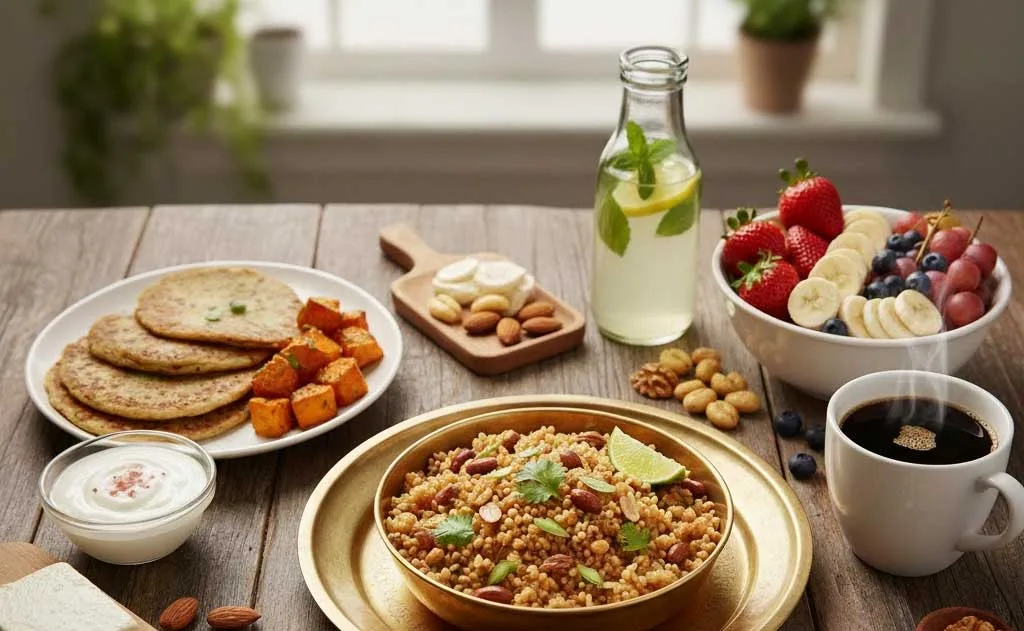
- Kuttu ka dosa (buckwheat pancakes)
- Fresh fruit platter
- Coconut chutney
- Makhana (roasted fox nuts)
Lunch Ideas (12-2 PM)
Pack-and-Go Work Lunches:
Option 1: Baked Potato Bowl
- Large baked potato (microwave at work)
- Topped with plain yogurt, cucumber
- Side of mixed nuts
- Fresh fruit
Option 2: Sweet Potato and Paneer Salad
- Roasted sweet potato cubes
- Crumbled paneer
- Mixed greens, cucumber
- Lemon juice dressing
Option 3: Sabudana Vada
- Make ahead on weekend
- Travels well in lunch box
- Pair with yogurt dip
- Side of fruits
Home Lunch Options:
- Aloo paneer curry with cucumber raita
- Pumpkin soup with coconut milk
- Potato and yogurt curry (dahi aloo)
- Bottle gourd khichdi with sabudana
Dinner Ideas (6-8 PM)
Family-Style Dinners:
Traditional Indian:
- Singhara puri or kuttu paratha
- Aloo sabzi (potato curry)
- Cucumber raita
- Fresh fruit for dessert
Fusion Style:
- Loaded baked sweet potato
- Green salad with nuts
- Fruit smoothie
- Makhana snack
Simple & Light:
- Pumpkin and potato curry
- Plain yogurt
- Roasted makhana
- Fresh fruit platter
Snacks Throughout the Day
Office Snacks:
- Mixed nuts from desk drawer
- Banana or apple
- Greek yogurt cup
- Roasted makhana
Evening Snacks:
- Fresh coconut pieces
- Fruit smoothie
- Homemade trail mix
- Sweet potato chips (air-fried)
Traditional Indian Snacks:
- Peanut chikki
- Coconut barfi
- Sabudana kheer
- Dry fruit ladoo
Special Diets: Ekadashi for Every NRI
Vegan Ekadashi (For Plant-Based NRIs)
Challenges: Traditional Ekadashi relies heavily on dairy. Here's how to adapt:
Protein Sources:
- Nuts (almonds, cashews, walnuts) - 1/4 cup = 6-8g protein
- Peanut butter (2 tbsp = 8g protein)
- Pumpkin seeds and sunflower seeds
- Coconut products
Dairy Replacements:
- Coconut milk (full-fat for richness)
- Almond milk (check ingredients - no grain additives)
- Cashew cream (blend soaked cashews)
- Coconut yogurt (So Delicious brand at most US stores)
Vegan Meal Examples:
- Sabudana khichdi with coconut oil (no ghee)
- Sweet potato curry with coconut milk
- Fruit smoothies with almond milk and dates
- Roasted vegetables with coconut oil
Where to Shop: Trader Joe's and Whole Foods have excellent vegan options. Always verify ingredients—many meat alternatives contain soy or grains.
Gluten-Free Ekadashi (Perfect for Celiac NRIs)
Good News: Traditional Ekadashi fasting is naturally 100% gluten-free since wheat is prohibited!
Gluten-Free Flours (All Permitted):
- Singhara atta (water chestnut flour)
- Rajgira atta (amaranth flour)
- Kuttu ka atta (buckwheat flour)
- Arrowroot powder
- Tapioca starch
Benefits for Celiac NRIs: Ekadashi fasting offers a day of naturally safe eating without worry about cross-contamination.
Where to Buy: Indian stores carry all traditional fasting flours. Bob's Red Mill (available at most US supermarkets) also carries amaranth and arrowroot flour.
Keto/Low-Carb Ekadashi
Challenges: Traditional fasting includes high-carb potatoes, sweet potatoes, and sabudana.
Keto-Friendly Modifications:
- Focus on nuts, seeds, and dairy
- Limit potato intake, increase leafy vegetables
- Use avocados for healthy fats
- Coconut-based dishes
- Paneer as main protein
Sample Keto Ekadashi Day:
- Breakfast: Coconut flour pancakes with berries
- Lunch: Paneer tikka with cucumber salad
- Dinner: Cauliflower rice substitute (if personally acceptable)
- Snacks: Nuts, cheese, makhana
Note: Strict keto may be difficult on Ekadashi. Consider this a mindful modified fast day.
Diabetic-Friendly Ekadashi
Challenges: Many traditional fasting foods are high glycemic (potatoes, sabudana).
Management Strategies:
- Eat smaller, more frequent meals
- Pair carbs with protein (potatoes with paneer)
- Choose lower-GI options (sweet potatoes over white potatoes)
- Monitor blood sugar regularly
- Consult doctor before fasting
Diabetic-Safe Meals:
- Greek yogurt with berries and nuts (low sugar)
- Roasted vegetables with paneer
- Mixed nuts as main snacks
- Small portions of complex carbs
Important: Many NRI physicians understand cultural fasting. Discuss your Ekadashi plans with your doctor, especially if on medication.
Time Management for Working NRIs
Adjusting Fasting to American Work Schedule
Morning Routine (6-8 AM):
- Wake up before sunrise for pre-dawn meal
- Quick shower and prayers
- Pack lunch the night before
- Arrive at work on normal schedule
At the Office (9 AM - 5 PM):
- Keep nuts and fruits at your desk
- Explain briefly if colleagues ask about lunch
- Take regular water breaks
- Use lunch hour for meditation or temple visit if nearby
Evening (6-9 PM):
- Return home for proper meal
- Evening prayers and scripture reading
- Prepare for next day
- Early bedtime to wake before sunrise for Parana
Meal Prep Strategy for Busy NRIs
Weekend Before Ekadashi:
- Shop for all ingredients (Saturday)
- Prep and portion fruits (Sunday)
- Make large batch of sabudana vada or aloo tikki (freeze extras)
- Soak sabudana overnight before fast day
- Prepare trail mix portions
Night Before Ekadashi:
- Set multiple alarms for pre-dawn wake-up
- Lay out clothes
- Prepare coffee/tea materials (if permitted in your tradition)
- Charge phone/devices for morning prayers
Time-Saving Tips:
- Use instant pot for faster cooking
- Buy pre-cut vegetables (Costco, Trader Joe's)
- Frozen fruits work perfectly for smoothies
- Batch-cook potatoes in advance
Navigating Social Situations
Explaining Ekadashi to American Colleagues
Simple Explanation: "I'm observing a religious fast today—it's similar to fasting in other religions but with specific dietary rules. I'll be eating fruits, vegetables, and dairy but avoiding grains and beans."
If They Press for Details: "It's a Hindu tradition honoring Lord Vishnu. The fasting is meant for spiritual purification and discipline."
What NOT to Say: Avoid over-explaining or apologizing. Your religious practice is valid and needs no justification.
Restaurant Dining on Ekadashi
Best Restaurant Options:
Mexican Restaurants:
- Baked potato (ask for no beans, no rice)
- Guacamole with vegetables
- Fruit sides
- Avoid: tortillas (corn), beans, rice
Mediterranean/Greek:
- Greek yogurt dishes
- Baked potatoes
- Cucumber salad
- Hummus (check—it's chickpeas, not allowed)
- Avoid: pita bread, falafel (chickpeas)
American Diners:
- Baked or mashed potatoes
- Side salads (no croutons)
- Fruit cups
- Cottage cheese
Salad Bars (Whole Foods, Sweetgreen):
- Perfect option—build your own
- Load up on permitted vegetables
- Add nuts and seeds
- Skip grains, beans, tofu
Hosting Ekadashi Gatherings
Potluck Ideas for NRI Communities:
- Assign categories: appetizers, mains, desserts
- Share permitted ingredient list in advance
- Label all dishes clearly
- Create shared recipe document
Popular Ekadashi Party Foods:
- Sabudana vada platter
- Fruit chaat
- Aloo tikki with yogurt dip
- Makhana (savory and sweet)
- Paneer tikka
- Coconut barfi
- Fresh fruit platter
Regional Variations Among NRIs
North Indian Style
- Heavy use of kuttu and singhara atta
- Rajgira laddoos
- Sabudana khichdi
- Aloo jeera, aloo tamatar
South Indian Style
- Koottu with raw banana
- Coconut-based curries
- Sabudana vada (different preparation)
- Fresh coconut with jaggery
Gujarati Style
- Rajgira khichdi
- Farali pattice
- Shakarkandi (sweet potato) chaat
- Makhana kheer
Maharashtrian Style
- Sabudana khichdi with peanuts
- Sabudana vada (crispy version)
- Rajgira sheera
- Batata vada (potato fritters)
Tip for NRIs: Preserve your family's regional traditions while adopting practical American adaptations.
Religious and Spiritual Aspects
Proper Fasting Protocol
Starting the Fast:
- Wake before sunrise on Ekadashi
- Bathe and wear clean clothes
- Perform morning prayers/puja
- Begin fast after sunrise
- Some traditions start previous sunset
During the Fast:
- Chant Vishnu mantras or bhajans
- Read Bhagavad Gita or Vishnu Purana
- Visit temple if available
- Avoid negative thoughts and arguments
- Practice kindness and charity
Breaking the Fast (Parana):
- Must break within specific time window on Dwadashi
- Check Hindu calendar apps for your location time
- Begin with water and prayer
- Eat light, easily digestible food
- Slowly reintroduce regular diet
Temple Visits in USA
Major US Temples with Ekadashi Programs:
Northeast:
- ISKCON NYC (Brooklyn)
- Hindu Temple of Connecticut (Middletown)
- Bharatiya Temple (Troy, MI)
Southeast:
- ISKCON Atlanta
- Sri Venkateswara Temple (Pittsburgh)
- Hindu Temple of Florida (Tampa)
Midwest:
- ISKCON Chicago
- Hindu Temple of Greater Chicago (Lemont)
- Radha Madhav Dham (Austin, TX)
West Coast:
- ISKCON Los Angeles
- Sri Radha Krishna Temple (Spanish Fork, UT)
- Fremont Hindu Temple (CA)
Check: Most temples host special Ekadashi programs with kirtans, lectures, and prasadam distribution.
Apps and Resources for NRIs
Essential Apps:
- Drik Panchang: Most accurate fasting times for US locations (free)
- Hindu Calendar: Panchang and festival dates
- ISKCON Ekadashi: Specific Ekadashi guidance and reminders
- MyTemple: Find temples near you in USA
Websites:
- HareKrsna.com: Ekadashi information and recipes
- IndianEagle.com: NRI community resources
- TempleDirectory.com: Find local temples
Cost Breakdown: Ekadashi on a Budget
Budget-Friendly Shopping ($30-40 per person)
Walmart Shopping List:
- 5lb bag potatoes: $3
- 3lb bananas: $2
- Yogurt (32oz): $3
- Mixed nuts (1lb): $8
- Sweet potatoes (2lb): $3
- Seasonal fruits: $8
- Butter/ghee: $5
- Honey: $5
- Total: ~$37
Indian Store Additions:
- Sabudana (2lb): $4
- Sendha namak: $2
- Makhana: $6
- Total additional: $12
Grand Total: ~$50 (feeds 1-2 people comfortably for Ekadashi)
Premium Organic Option ($80-100 per person)
Whole Foods/Trader Joe's:
- Organic produce: $25
- Premium dairy: $15
- Organic nuts: $20
- Specialty items: $15
- Total: ~$75
Indian Store:
- Premium quality fasting items: $20
Grand Total: ~$95
Money-Saving Tips for NRIs:
- Buy bulk at Costco before Ekadashi (saves 30-40%)
- Share large quantities with other NRI families
- Grow curry leaves and cilantro at home
- Make your own paneer (1/2 gallon milk = 1lb paneer)
- Stock up during Indian store sales
- Buy sabudana and dry goods in bulk—they don't expire
Common Mistakes NRIs Make
Ingredient Confusion
WRONG: "Quinoa is gluten-free, so it's allowed" [image: ✅] CORRECT: Quinoa is a grain/pseudo-grain and is NOT permitted despite being gluten-free and healthy.
WRONG: "This veggie burger is fine since I'm vegetarian" [image: ✅] CORRECT: Most veggie burgers contain beans, soy, or grains—all prohibited on Ekadashi.
WRONG: "Oat milk is dairy-free, so it's okay" [image: ✅] CORRECT: Oat milk is made from oats (grain) and is NOT allowed. Use coconut or almond milk instead.
WRONG: "Soy sauce is just a condiment" [image: ✅] CORRECT: Soy sauce is made from soybeans, which are prohibited.
WRONG: "I can eat any gluten-free bread" [image: ✅] CORRECT: Most gluten-free breads use rice flour or corn—still grains, still prohibited.
Label Reading Errors
Hidden Prohibited Ingredients:
- Modified food starch (usually corn)
- Rice syrup
- Soy lecithin
- Textured vegetable protein
- Pea protein
- Oat fiber
- Gelatin in yogurt (use plant-based thickeners)
Always Read Labels On:
- Yogurt (check for gelatin, grain thickeners)
- Protein bars (almost all contain grains/soy)
- Packaged snacks
- Salad dressings
- Non-dairy milk (check for oat or soy base)
- Protein powders (usually soy, pea, or rice based)
Timing Mistakes
Breaking fast at wrong time: Parana must occur within specific window on Dwadashi. Use Drik Panchang app for your US city's exact timing.
Starting too late: If you wake after sunrise on Ekadashi, you've technically missed the optimal start time according to strict tradition.
Eating during prohibited hours: Some traditions prohibit eating after sunset on Ekadashi itself.
Health and Wellness Considerations
Staying Energized While Fasting
Hydration is Key:
- Drink 8-10 glasses of water throughout the day
- Coconut water (check for no additives)
- Herbal teas
- Fresh fruit juices (no added sugar)
Energy Management:
- Eat every 3-4 hours (small portions)
- Balance carbs (potatoes) with protein (nuts, dairy)
- Don't skip the pre-dawn meal
- Get adequate sleep the night before
Exercise Adjustment:
- Light yoga or walking is fine
- Avoid intense gym workouts
- Postpone running or heavy lifting
- Listen to your body
For NRIs with Health Conditions
Diabetes:
- Monitor blood sugar frequently
- Eat smaller, frequent meals
- Pair carbs with protein
- Keep fast-acting glucose handy
- Consult your doctor first
Hypertension:
- Rock salt still contains sodium—use sparingly
- Focus on fruits and vegetables
- Stay well-hydrated
- Avoid fried foods
Pregnancy:
- Most traditions allow pregnant women to eat normally
- Modified fasting (fruits and milk only) is acceptable
- Consult both doctor and religious advisor
- Spiritual intention matters more than strict fasting
Heart Conditions:
- Be cautious with high-fat dairy
- Choose low-fat yogurt and milk
- Focus on fruits, vegetables, nuts
- Doctor clearance essential
Children and Ekadashi
Age Guidelines:
- Under 8 years: No fasting required
- 8-12 years: Partial fasting (one meal of permitted foods)
- 12+ years: Can attempt full fast with parental guidance
Teaching Children About Ekadashi:
- Focus on stories of Lord Vishnu
- Involve them in cooking fasting foods
- Make it fun, not restrictive
- Emphasize spiritual meaning over rules
For American-Born Indian Kids:
- Explain cultural significance
- Compare to fasting in other religions
- Let them choose participation level
- Celebrate with special treats using permitted ingredients
Recipes with Exact US Measurements
Classic Sabudana Khichdi (Serves 4)
Ingredients:
- 2 cups sabudana (tapioca pearls)
- 3 medium potatoes, diced
- 1/2 cup roasted peanuts
- 2 tbsp ghee or coconut oil
- 1 tsp cumin seeds
- 2 green chilies, chopped (optional)
- Rock salt to taste
- Fresh cilantro for garnish
- Lime juice
Method:
- Soak sabudana in water overnight (8-10 hours)
- Drain completely—pearls should be soft but not mushy
- Heat ghee in large pan over medium heat
- Add cumin seeds, let sizzle for 30 seconds
- Add diced potatoes, cook until golden (8-10 minutes)
- Add peanuts, stir for 2 minutes
- Add drained sabudana, mix gently
- Add rock salt, cook 5-7 minutes, stirring frequently
- Pearls should become translucent and separate
- Garnish with cilantro and lime juice
Time: 30 minutes (plus overnight soaking) Where to buy ingredients: Indian grocery store (sabudana, sendha namak), Walmart (potatoes, peanuts)
American-Style Sweet Potato Hash (Serves 2)
Ingredients:
- 2 large sweet potatoes, diced (about 3 cups)
- 1/4 cup ghee or butter
- 1/2 cup raw cashews
- 1/2 cup raisins
- 1 tsp cinnamon
- Himalayan pink salt to taste
- 2 tbsp honey (optional)
Method:
- Heat ghee in cast-iron skillet over medium-high
- Add diced sweet potatoes, spread in single layer
- Cook 5 minutes without stirring (creates crispy bottom)
- Flip and cook another 5 minutes
- Add cashews, cook 3 minutes until golden
- Add raisins and cinnamon, stir for 1 minute
- Season with pink salt
- Drizzle honey if desired
Time: 20 minutes Where to buy: All ingredients at Walmart or Costco Perfect for: Weekend breakfast or dinner
Paneer Tikka (Air Fryer Version - Serves 4)
Ingredients:
- 16oz paneer (2 packages), cubed
- 1 cup plain yogurt
- 2 tbsp lemon juice
- 1 tsp cumin powder
- 1 tsp coriander powder
- 1/2 tsp turmeric
- Rock salt to taste
- Black pepper
- 2 bell peppers, cubed
Method:
- Mix yogurt, lemon juice, and all spices in bowl
- Add paneer and bell peppers, coat well
- Marinate 30 minutes (or overnight in fridge)
- Preheat air fryer to 375°F
- Place paneer and peppers in single layer
- Cook 12-15 minutes, shaking basket halfway
- Serve hot with yogurt dip
Time: 45 minutes (including marination) Where to buy: Paneer from Indian store, everything else from regular supermarket Alternative: Can bake at 400°F for 20-25 minutes
Makhana (Fox Nuts) Three Ways
Savory Roasted:
- 2 cups makhana
- 1 tbsp ghee
- 1/4 tsp black pepper
- Rock salt to taste
- Heat ghee, add makhana, roast 5-7 minutes until crispy
- Season and cool
Sweet Cinnamon:
- 2 cups makhana
- 1 tbsp butter
- 2 tbsp honey
- 1 tsp cinnamon
- Same method, add cinnamon and honey at end
Curry Leaf (South Indian Style):
- 2 cups makhana
- 1 tbsp coconut oil
- 10 curry leaves
- 1/4 tsp black pepper
- Rock salt
- Roast as above, add curry leaves when almost done
Time: 10 minutes each Where to buy: Makhana from Indian stores or Amazon Storage: Store in airtight container for up to 2 weeks
No-Cook Energy Balls (Makes 20)
Ingredients:
- 1 cup dates, pitted (Medjool work best)
- 1 cup mixed nuts (almonds, cashews)
- 1/2 cup coconut flakes
- 2 tbsp honey
- 1 tsp vanilla extract (check ingredients)
Method:
- Blend dates and nuts in food processor until sticky
- Add coconut, honey, vanilla
- Pulse until combined
- Roll into 1-inch balls
- Roll in extra coconut flakes
- Refrigerate 1 hour before serving
Time: 15 minutes Where to buy: All ingredients at Costco or Whole Foods Storage: Keep refrigerated up to 1 week Perfect for: Quick energy snack at office
Breaking the Fast (Parana) - The Right Way
Understanding Parana Timing
Critical Rule: Parana MUST be done at the correct time on Dwadashi (day after Ekadashi), or the fast may be considered invalid according to scriptures.
How to Find Your Time:
- Download Drik Panchang app
- Enter your US city
- Check Ekadashi date for "Parana Time"
- Set alarm for within that window
Typical Parana Windows:
- Usually 2-4 hour window after sunrise on Dwadashi
- Must NOT be done during Dwadashi's prohibited time
- Earlier is better than later within the window
Example for New York (verify for your specific date):
- Sunrise: 7:15 AM
- Parana begins: 7:30 AM
- Parana ends: 9:45 AM
- Idealtime: 8:00-9:00 AMFirst Foods to Break the FastTraditional Method:
- Drink water mixed with tulsi (holy basil) leavesEat small amount of fruit or sweetPerform prayer/thanksgivingEat light meal within Parana window
- Glass of warm water or tulsi teaFew pieces of fresh fruitLight khichdi (rice and moong dal—now permitted)Plain yogurtAvoid: heavy, fried, or spicy foods
- Glass of waterBanana or appleOatmeal with honey (grains now allowed)Plain yogurtToast with butter
- Breakfast: Light and easy to digestLunch: Regular but not heavyDinner: Normal diet
- Very spicy foodsHeavy fried itemsLarge portionsDifficult-to-digest foods
- Attend and order permitted items (baked potato, salad)Politely explain your religious observanceBring your own foodOffer to attend but skip eating Your religious practice is protected under US workplace discrimination laws.
- Fruit salad with yogurtCheese cubes and crackers made from singhara attaTrail mixSweet potato chips (homemade)Juice box or coconut water
- Aloo dishes (specify no onion/garlic)Paneer dishesRaitaFruit-based desserts Avoid: Any curry with onion/garlic base (most restaurant curries)
- "I'm observing a religious fast today""It's similar to Lent or Ramadan""I'll join you next time" Most Americans respect religious practices. Don't over-explain or apologize.
- Granola (oats)Soy nutsChickpeasAny grain-based ingredients Plain nuts, seeds, and dried fruit mixes are fine.
- Hindu temple communitiesISKCON centers (especially welcoming for Ekadashi)Indian cultural associationsNeighborhood apps (Nextdoor, Facebook groups)WhatsApp groups for local Indian community
- Reddit: r/hinduismFacebook: "NRI Hindu Community" groupsInstagram: #EkadashiFasting #NRILifeTemple websites with event calendars
- Share recipes and shopping tipsPotluck gatheringsSupport for children's questionsPreserve traditions togetherLess isolation in observing festivals
- Kids exposed to different culture at schoolPeer pressure to eat "normal" foodDifficulty explaining "why"Balancing American and Indian identity
- Start young with stories, not restrictionsMake it fun and special, not punitiveExplain the "why" at age-appropriate levelLead by exampleDon't force—encourageConnect with other Indian familiesCelebrate the uniqueness of dual heritage
- Record family recipes with measurementsVideo grandparents explaining traditionsCreate family cookbook with US ingredient substitutionsShare on family WhatsApp groupWrite down regional variationsPass on to next generation
- Using Costco ingredients instead of Indian bazaarAir fryer instead of deep fryingAmerican measurements instead of "andaaza"Simplified recipes for busy schedules The core spiritual practice remains authentic
- Planning is essential: Shop ahead at both American supermarkets and Indian storesFlexibility within tradition: Use available ingredients while respecting core rulesTime management: Balance American work schedule with fasting requirementsCommunity matters: Connect with other NRIs for support and celebrationHealth first: Consult doctors if you have medical conditionsTeach mindfully: Pass traditions to children without forceStay informed: Use apps for accurate timing in your US location
- Devotion to Lord VishnuSelf-discipline and sacrificeSpiritual purificationSeeking moksha (liberation)Gratitude and prayer
- Drik Panchang (timing)Hindu Calendar (dates)ISKCON Ekadashi (guidance)
- Walmart/Costco (basics)Indian stores (specialty items)Amazon (online backup)
- Local templesNRI organizationsOnline forums
- NRIGlobe.com (community articles)Temple hotlinesWhatsApp groups
Frequently Asked Questions
Which foods are avoided on Vaikuntha Ekadashi?
All grains and grain products, all lentils and beans, onions and garlic, mushrooms, non-vegetarian foods, eggs, alcohol and tobacco are avoided. Regular table salt is replaced by rock salt (sendha namak).
What can NRIs eat while fasting on Vaikuntha Ekadashi?
Fruits, dairy such as milk, yogurt, paneer and ghee, potatoes, sweet potatoes, nuts and seeds are allowed. Special fasting ingredients include sabudana, singhara atta, rajgira, makhana and kuttu ka atta.
Where can NRIs in the USA buy Ekadashi fasting ingredients?
Basics like potatoes, bananas, nuts and dairy are available at Walmart, Costco, Whole Foods and Trader Joe's. Sabudana, singhara atta, makhana and sendha namak come from Indian stores such as Patel Brothers, or online from iShopIndian.com and Amazon.
Why is Vaikuntha Ekadashi considered so significant?
It falls on the 11th lunar day of the waxing moon in Margashirsha and is considered the most spiritually significant Ekadashi of the year. As commonly believed, the gates of Vaikuntha, Lord Vishnu's abode, open on this day, offering a chance at moksha.
Can vegan NRIs observe the Ekadashi fast?
Yes. Dairy can be replaced with coconut milk, almond milk, cashew cream or coconut yogurt, and sabudana khichdi can be made with coconut oil instead of ghee. Always check labels for hidden grain or soy additives.
What are the dates for Vaikuntha Ekadashi in 2026?
Vaikuntha Ekadashi 2026 falls on Sunday, 20 December, or Saturday, 19 December for Smarta households in the USA and Canada. The 10 January 2025 observance is an earlier one.
Share this with family and friends
Send it on WhatsApp, post it, or copy the link.
More from USA
- Vastu for a House in the USA: A Practical NRI Guide to Directions, Puja Rooms and Simple Adjustments
- Hindus in USA 2026 — Complete Country Guide: Temples, Community, Festivals, Cities, Statistics & Diaspora State of the Nation
- H1-B Visa 2026-2027 — The Complete Survival Guide for Indian IT Professionals
- Hindu Priest Jobs in USA 2026: Pandit Vacancy Guide for Temples
- Hindu Temples & Festivals in USA — Complete NRI Guide to Celebrating Sanatana Dharma Across America (2026)
You might also like

Top Temples in New Zealand to Celebrate Vaikuntha Ekadashi

Top New Zealand Temples to Celebrate Vaikuntha Ekadashi - December 2026

Vaikuntha Ekadashi in Telangana: Yadadri & Chilkur Balaji
