
Akshaya Tritiya and Lakshmi – How to Invite Wealth & Prosperity Into Your Life
"This content is written with devotional reverence and Vedic accuracy.
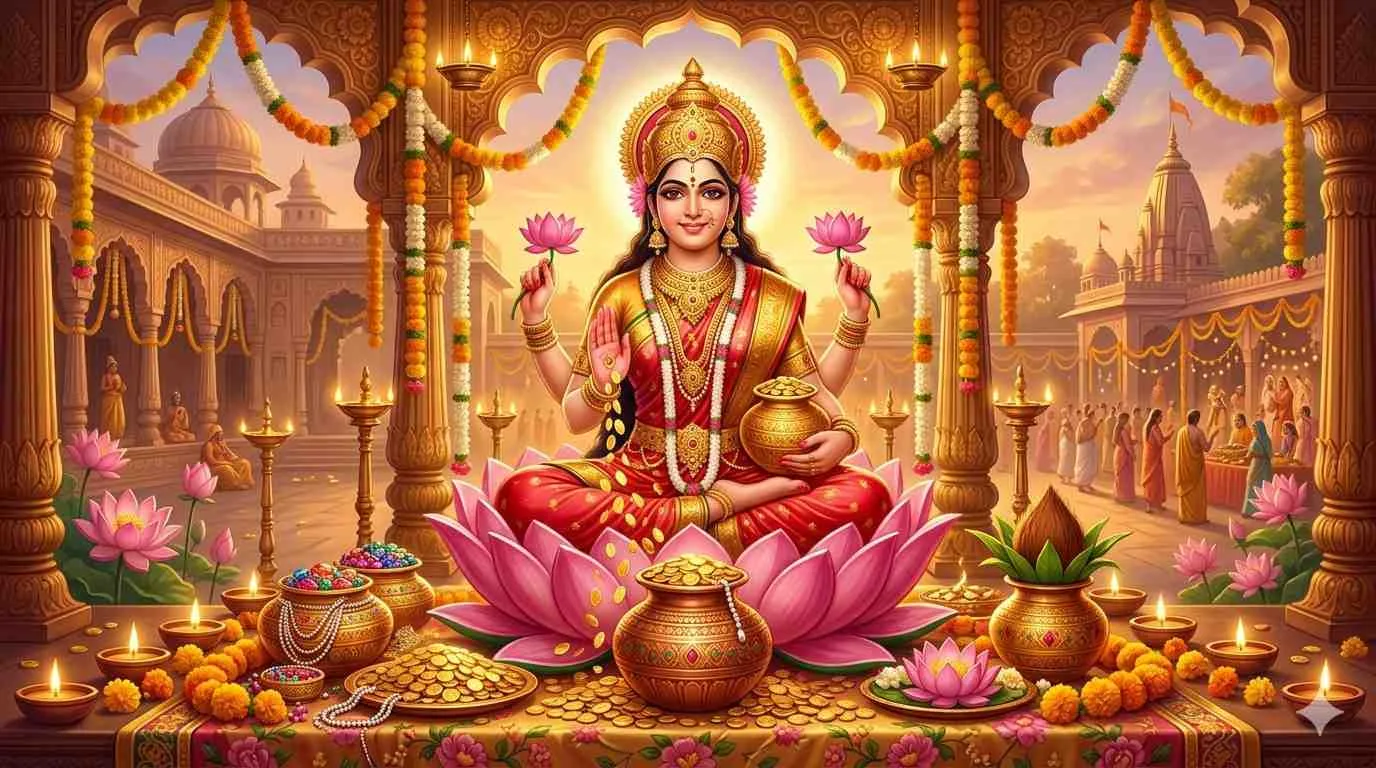
"This content is written with devotional reverence and Vedic accuracy.
"This content is written with devotional reverence and Vedic accuracy. HinduTone is committed to sharing Hindu traditions faithfully, respectfully, and in their full spiritual depth."
Introduction — When the Goddess Is Most Ready to Arrive
In the entire Hindu calendar, there is one day on which Goddess Lakshmi is said to be closest to the earth — when the veil between her divine realm and our mortal world grows thin, and a sincere heart, a lit lamp, and a whispered mantra are enough to draw her grace into every corner of a home.
That day is Akshaya Tritiya.
Not Diwali — though Diwali too is sacred to Lakshmi.
Not Varalakshmi Vratam — though that too is deeply auspicious.
Akshaya Tritiya — the third lunar day of Vaishakha, when both the Sun and the Moon are simultaneously exalted — is considered by Vedic astrologers and spiritual masters to be the single most powerful day of the year to invite Sri Mahalakshmi, the Goddess of wealth, abundance, beauty, and grace, into your life and home.
But here is the question that most people don't ask:
What does it actually mean to invite Lakshmi? And how do you do it in a way that truly works?
This guide — written from authentic Vedic tradition and devotional practice — answers exactly that.
At HinduTone, we believe that rituals without understanding are gestures, but rituals with understanding are conversations with the Divine. So before we tell you what to do, we will tell you why — because when you understand the soul of a practice, every act becomes a prayer.
Who Is Goddess Lakshmi? — Understanding the One You Are Inviting
Before you can invite someone into your home, you must know who they are.
Sri Mahalakshmi — also known as Shri, Kamala, Padmavati, Indira, Lokamata — is not simply the goddess of money. To reduce Lakshmi to a deity of gold coins and bank balances is to misunderstand her entirely.
In the Vedic tradition, Lakshmi is the animating principle of prosperity in all its forms:
- [image: 🌾] Dhana Lakshmi — material wealth and financial abundance
- [image: 🌾] Dhanya Lakshmi — abundance of food, nourishment, and grain
- [image: 🌾] Gaja Lakshmi — power, strength, and regal grace
- [image: 🌾] Santana Lakshmi — blessing of children and family continuity
- [image: 🌾] Veera Lakshmi — courage, resilience, and the wealth of inner strength
- [image: 🌾] Vijaya Lakshmi — victory, success, and achievement
- [image: 🌾] Vidya Lakshmi — knowledge, wisdom, and the wealth of education
- [image: 🌾] Adi Lakshmi — the primordial, transcendent form — the grace that underlies all existence
The Ashta Lakshmi — these eight forms — together represent the complete spectrum of a blessed life. On Akshaya Tritiya, all eight forms are said to be simultaneously active and accessible.
Lakshmi's Nature — What She Is Drawn To
The Puranas speak clearly about what draws Lakshmi toward a home and what drives her away. Understanding this is not superstition — it is practical spiritual wisdom validated by centuries of Vedic tradition.
Lakshmi is drawn toward:
- Cleanliness and order — both physical and mental
- Gratitude and contentment
- Generosity and charity
- Truthful speech and righteous living
- Devoted, consistent worship — especially of Vishnu
- The sound of sacred mantras, bells, and conch shells
- The fragrance of sandalwood, lotus, and jasmine
- The light of ghee lamps
Lakshmi departs from homes where there is:
- Quarrelling, harsh words, and disrespect
- Dirt, disorder, and neglect
- Ingratitude and complaint
- Greed without generosity
- Disrespect toward women, elders, or guests
- Tamasic behaviour — excessive sleep, lethargy, intoxication
"Lakshmi does not arrive because you light a lamp. She arrives because you have become the kind of home she would choose to live in." — rooted in the Vishnu Purana's teachings on Shri Sukta
This distinction is the most important thing in this entire article.
The Vedic Connection — Why Akshaya Tritiya Is Lakshmi's Most Sacred Day
The Astronomical Reason
On Akshaya Tritiya, a rare celestial alignment occurs:
- [image: ☀️] Sun in Aries (Mesh Rashi) — its sign of exaltation — radiates at full divine power
- [image: 🌙] Moon in Taurus (Vrishabha Rashi) — its sign of exaltation — shines with heightened receptive grace
In Vedic astrology, the Sun represents the divine masculine principle — consciousness, authority, and dharma. The Moon represents the divine feminine principle — emotion, receptivity, and abundance.
When both luminaries are simultaneously exalted, the masculine and feminine cosmic energies are in perfect balance. This balance is the energetic signature of Lakshmi herself — who is the divine feminine in perfect harmony with the masculine Vishnu.
The Skanda Purana declares this tithi as Swayam Siddha Muhurta — a self-proven, self-auspicious moment. No pandit needs to verify it. No individual horoscope needs to be checked. The cosmos itself has aligned for the flourishing of all.
The Mythological Reason — When Lakshmi First Emerged
The Devi Bhagavatam and several Puranic texts connect Akshaya Tritiya with a moment that changed the cosmos forever — the Samudra Manthan (Churning of the Cosmic Ocean).
When the devas and asuras churned the ocean of creation in search of amrita (the nectar of immortality), fourteen divine treasures emerged from the deep. Among them — rising upon a lotus flower, radiant with gold, garlanded with jewels, flanked by divine elephants pouring sacred water over her from golden vessels — emerged Sri Mahalakshmi.
She looked upon the cosmos.
She chose Lord Vishnu as her eternal consort.
And in that moment, prosperity, grace, and abundance were wedded permanently to righteousness and divine order.
Some Puranic traditions hold that this emergence of Lakshmi occurred on Akshaya Tritiya — making this day literally the birthday of cosmic prosperity, the day when abundance first entered the world.
Whether this is the case in all traditions or some, the spiritual message is unified: Akshaya Tritiya is the day most aligned with the energy Lakshmi represents — and therefore the most powerful day to enter into conscious relationship with that energy.
What Wealth Means in the Vedic Tradition — A Crucial Distinction
Before we move to the rituals, we must address something that is often misunderstood in contemporary Lakshmi worship.
The Vedic tradition does not treat wealth as a goal in itself. It treats wealth as a responsibility and a resource — a flow of energy that, when rightly used, becomes a vehicle for dharma.
The Arthashastra, the Vishnu Purana, and the teachings of Adi Shankaracharya all agree:
"Artha (wealth) is one of the four Purusharthas — the four aims of human life. It is legitimate, necessary, and honourable to seek it. But it must always be sought through dharmic means and directed toward dharmic ends."
This is why, in authentic Lakshmi worship, we do not simply pray for money. We pray for:
- The wisdom to earn through righteous effort
- The discernment to use wealth for good
- The generosity to share so that prosperity flows and does not stagnate
- The contentment to be grateful for what is already present
When you approach Lakshmi with this understanding — not as a vending machine for riches, but as the divine force of righteous abundance — the relationship transforms. And mysteriously, practically, and verifiably in the experience of millions of devotees across centuries: she responds.
How to Invite Lakshmi on Akshaya Tritiya — The Complete Vedic Guide
The following guidance is drawn from traditional puja paddhati (ritual procedure), the Shri Sukta from the Rigveda, and Lakshmi Tantra. Adapt it to your home and capacity — sincerity matters more than perfection.
[image: 🏡] Step 1 — Prepare Your Home (The Night Before)
Lakshmi's first requirement is a clean, welcoming space.
The evening before Akshaya Tritiya:
- Deep clean your home — particularly the entrance, the puja room, and the kitchen. Sweep outward from the center (symbolically releasing stagnation).
- Place fresh mango leaves (torana) at the entrance — the mango tree is sacred to Lakshmi and its leaves are believed to purify the atmosphere.
- Draw a rangoli at the threshold — ideally with lotus motifs or footprint patterns (symbolising Lakshmi walking into your home).
- Place a small pot (kalash) filled with water, topped with mango leaves and a coconut, at the entrance or puja space. The kalash represents Goddess Lakshmi's divine vessel of abundance.
- Remove clutter from every corner — broken items, unused old things, and accumulated disorder are considered obstacles to Lakshmi's entry. This is not superstition; it is the practical spiritual wisdom that order invites clarity, and clarity invites grace.
[image: 🌅] Step 2 — The Morning of Akshaya Tritiya — Personal Purification
Rise before sunrise. This early hour — Brahma Muhurta — is the most sattvic and spiritually charged time of day.
- Take a sacred bath — add a few drops of gangajal (Ganga water) or a pinch of turmeric to the bathwater. As you bathe, mentally offer your body to the divine as a clean vessel.
- Wear clean, preferably yellow or golden clothing — these colours resonate with Lakshmi's energy. Avoid black or white for the main puja.
- Offer the Sun his due — step outside, face east, and pour water (arghya) toward the rising sun while chanting "Om Suryaya Namaha" three times.
[image: 🪔] Step 3 — Setting Up the Lakshmi Puja Space
Create a sacred altar with:
Place a red or yellow cloth as the base of your altar. The direction to face while performing puja is East or North — both auspicious for Lakshmi worship.
[image: 📿] Step 4 — The Puja Sequence (Shodashopachara — 16-Step Worship)
Simplified authentic version for home practice:
1. Avahana (Invocation) Light the ghee lamp. Ring a bell if you have one. Fold your hands and speak from the heart: "O Jagadamba Mahalakshmi, on this sacred day of Akshaya Tritiya, I humbly invite you into this home. Please be present, please receive this worship."
2. Asana (Offering a Seat) Place a fresh flower or a clean cloth piece before the image, symbolising offering Lakshmi a royal seat.
3. Arghya (Water Offering) Offer a small bowl of clean water with a flower dipped in it — a gesture of welcoming a divine guest.
4. Pushpa (Flower Offering) Offer lotus flowers, rose petals, or marigolds — ideally yellow or pink. Place them lovingly at her feet.
5. Dhupa (Incense) Light incense — sandalwood, lotus, or jasmine. Wave it gently in a circular motion before the image, creating a fragrant sacred atmosphere.
6. Dipa (Lamp) Wave the ghee lamp before the image in a slow, loving clockwise motion — this is the aarti. Chant "Om Mahalakshmyai Namaha" as you do.
7. Naivedya (Food Offering) Place before Lakshmi:
- A small bowl of kheer (rice pudding) or payasam
- Yellow sweets — kesar ladoo or besan halwa
- Fresh fruits
- A handful of turmeric rice
8. Tambula (Betel Leaf) Offer betel leaves with a coin placed upon them — a traditional gesture of inviting the divine to stay.
9. Pradakshina and Namaskara (Circumambulation and Prostration) Perform three clockwise circumambulations around the altar (or turn around yourself if space is limited). Then prostrate fully, forehead to the floor, in complete surrender.
10. Prarthana (Personal Prayer) Speak your sincere prayer. Be specific. Be humble. Ask not just for money but for the grace to live, earn, and give righteously.
[image: 🎵] Step 5 — The Mantras — Lakshmi's Sacred Sound
Sound is the most direct pathway to the divine in Vedic tradition. These mantras, chanted with focus and devotion, create a vibrational environment that resonates with Lakshmi's energy.
Primary Lakshmi Mantra (108 times):
Om Shrim Mahalakshmyai Namaha ॐ श्रीं महालक्ष्म्यै नमः
Shri Sukta Invocation (from the Rigveda):
Hiranya Varnaam Harineem Suvarna Rajata Srajaam Chandraam Hiranya Mayeem Lakshmeem Jatavedo Ma Aavaha
(Translation: O Fire God, invoke for me that Lakshmi — golden in hue, radiant as the moon, garlanded in gold and silver, the embodiment of abundance.)
Lakshmi Gayatri (for wisdom-wealth):
Om Mahadevyai Cha Vidmahe Vishnu Patnyai Cha Dheemahi Tanno Lakshmi Prachodayat
Simple Nama Japa for those new to mantra:
Om Namah Bhagavate Vasudevaya (108 times — invoking Vishnu, in whose presence Lakshmi always abides)
Guidance: Use a tulsi or crystal mala (rosary) for counting. Sit in a clean, quiet space facing East. Complete the chanting before eating.
[image: 💛] Step 6 — The Most Important Ritual — Dana (Giving)
Here is the ritual that most people overlook — and it is the most powerful of all.
The Vishnu Purana states clearly:
"Lakshmi does not reside permanently in the home of the one who only takes. She stays eternally in the home of the one who gives."
On Akshaya Tritiya, the act of dana (charitable giving) is not supplementary to worship — it is worship.
What to give:
- [image: 🌾] Anna Daan — donate food, grains, or cooked meals to those in need. This is the single most powerful offering on this day.
- [image: 💧] Jal Daan — donate water, especially earthen pots of cool water — a deeply auspicious gift in summer heat.
- [image: 👗] Vastra Daan — donate clothing to the poor, especially to women and girls.
- [image: 📚] Vidya Daan — support the education of a child — even sponsoring one school meal counts.
- [image: 💰] Dhana Daan — give a portion of your income or savings to a temple, charitable organisation, or directly to someone in genuine need.
The rule of dana on Akshaya Tritiya: Whatever you give today, give it without expectation of return, without publicity, and without accounting for it afterward. The moment you calculate your giving, the energy diminishes. Give and let go.
"The hand that gives on Akshaya Tritiya becomes Akshaya — it never runs empty."
[image: 🥇] Step 7 — Buying Gold on Akshaya Tritiya — The Tradition Explained
Across India, Akshaya Tritiya is synonymous with the purchase of gold — and this tradition has profound spiritual roots, not merely commercial ones.
In Vedic symbolism, gold represents Lakshmi's own energy made material — it does not rust, does not diminish, does not corrupt with time. It is the Akshaya metal — eternal and imperishable.
Purchasing gold on this day is therefore not merely a financial investment. It is a symbolic act of establishing Lakshmi's permanent residence in your home.
Spiritually correct way to buy gold on Akshaya Tritiya:
- Purchase it after completing the morning puja — not before.
- Place the new gold before Lakshmi's image during puja before wearing or storing it.
- Offer it to her first: "O Devi, this belongs to you. I am only its keeper."
- Do not buy gold from money borrowed in haste or through financial strain. The energy of debt-driven acquisition runs counter to Lakshmi's nature.
If you cannot afford gold: Buy a small quantity of turmeric, silver, copper, or even seeds — the principle is the same. Lakshmi honours intention more than quantity. A gram of gold purchased with gratitude is more sacred than a kilogram purchased with anxiety.
[image: 🌿] Step 8 — Lakshmi's Evening Aarti and the Eternal Lamp
As evening approaches on Akshaya Tritiya:
- Light a five-wick ghee lamp (panch mukhi diya) in your puja room as darkness falls — this is Maha Lakshmi's aarti.
- Sing or play Lakshmi Aarti — "Om Jai Lakshmi Mata" — the traditional devotional hymn
- Ring a bell continuously during aarti to fill the home with sacred sound
- After the aarti, distribute prasad to every member of the household — and if possible, to neighbours and guests
Traditionally, the lamp lit during Lakshmi's evening aarti on Akshaya Tritiya is never blown out — it is left to burn until it extinguishes itself naturally. This is symbolic of allowing Lakshmi's presence to linger of her own accord, not extinguishing it by our inattention.
Lakshmi Puja Mistakes to Avoid — What Diminishes Her Grace
Based on traditional Vedic guidance, avoid the following on Akshaya Tritiya and in general Lakshmi worship:
[image: ❌] Do not worship Lakshmi without Vishnu — she is Vishnu Patni, always worshipped in connection with her divine consort. An image of Lakshmi alone is complete for daily worship, but include Vishnu in your prayer and intention.
[image: ❌] Do not use broken or chipped vessels, torn cloth, or wilted flowers — Lakshmi is the goddess of beauty and grace. She is drawn to what is clean and whole.
[image: ❌] Do not leave the puja space unlit — the diya must burn during the entire puja. An unlit puja room is considered a closed door.
[image: ❌] Do not quarrel, speak harshly, or complain on this day — energy set on Akshaya Tritiya is amplified. Negativity on this day is also Akshaya — it too multiplies.
[image: ❌] Do not eat before completing the morning puja — offer the naivedya first; partake of prasad after.
[image: ❌] Do not purchase for show — whether it is gold, offering, or charity, everything done for the benefit of an audience loses its spiritual potency. God sees the interior.
The Connection Between Lakshmi and Vishnu — Why It Matters for Your Worship
A crucial insight for anyone seeking Lakshmi's lasting grace:
The Puranas state repeatedly that Lakshmi follows Vishnu — and she stays wherever Vishnu is honoured. This means:
- If you want Lakshmi to be stable in your home — worship Vishnu with consistency.
- Read or recite the Vishnu Sahasranama regularly — Lakshmi is said to be most pleased when she hears her husband's thousand names.
- Practice Vishnu's values — truthfulness, compassion, protection of the weak, righteous action. These are what make a home Vishnu's — and therefore Lakshmi's.
The deepest Vedic teaching about wealth is this:
"You do not attract Lakshmi by worshipping only her. You attract Lakshmi by becoming Vishnu — by becoming righteous, steady, compassionate, and dharmic. She follows goodness. She always has."
Post-Akshaya Tritiya — How to Keep Lakshmi Once She Arrives
Many people perform the Akshaya Tritiya puja beautifully and then return to their ordinary patterns — wondering why the energy doesn't last.
The truth is: Lakshmi's arrival is one blessing; her continued residence is a practice.
Here is how to maintain her presence through the year:
Weekly: Perform a simple Lakshmi puja on Fridays — her sacred day. Offer a lotus flower, light a ghee lamp, and chant "Om Shrim Mahalakshmyai Namaha" 21 times.
Monthly: On each Purnima (full moon), donate food or money to someone in genuine need — even something small. This keeps the flow of abundance moving.
Daily: Keep your home clean. Speak gratefully. Say good things about your financial life, not anxious things. Lakshmi is repelled by worry and attracted by contentment.
Continuously: Honour every woman in your life — mother, wife, daughter, sister, colleague — with genuine respect. The Padma Purana states: "Where women are honoured and respected, the goddess Lakshmi resides permanently."
Frequently Asked Questions (FAQ Schema)
Q1: Can I perform Lakshmi puja on Akshaya Tritiya at home without a pandit?
A: Yes, absolutely. The Vedic tradition has always encouraged home worship. As long as your heart is sincere, your space is clean, and you follow the basic puja steps outlined above, your worship is complete and accepted. A pandit adds learned recitation — but Lakshmi responds to devotion first.
Q2: What time is best for Lakshmi puja on Akshaya Tritiya 2025?
A: Akshaya Tritiya 2025 falls on April 30, 2025. The tritiya tithi begins at 5:31 AM. The most auspicious window for puja is sunrise to noon (approximately 6:00 AM to 12:00 PM IST). However, since the entire day is a Swayam Siddha Muhurta, any time during the day is auspicious. Evening aarti can be performed at sunset.
Q3: Is buying gold on Akshaya Tritiya necessary for Lakshmi's blessing?
A: Not at all. Gold is a symbolic act — spiritually valid but not spiritually mandatory. Lakshmi's blessing comes from devotion, charity, and righteous living — not from the purchase price of any metal. If buying gold is within your means and done with devotion, it is wonderful. If it is not, offer turmeric, copper, or seeds — the intention carries the same sanctity.
Q4: Can women perform Lakshmi puja during menstruation?
A: Practices vary across traditions and regions. Many traditional Brahmin families ask women to rest from temple-style puja during this time. However, prayer, mantra chanting, and listening to devotional content are always accessible to all. Consult your family tradition and follow what resonates with respect.
Q5: What is the significance of offering kheer (rice pudding) to Lakshmi?
A: Kheer — made of milk, rice, and sugar — is a composite offering that represents the three forms of Lakshmi's abundance: the cow (spiritual abundance), the grain (material abundance), and sweetness (the quality of life she bestows). It is the traditional naivedya on all major Lakshmi festival days.
Q6: How is Akshaya Tritiya different from Diwali for Lakshmi worship?
A: Both days are deeply associated with Lakshmi, but their energies differ. Diwali is a night-festival of welcoming Lakshmi back after a period of darkness — it is celebratory and communal. Akshaya Tritiya is a daylight festival of cosmic alignment — more suited to new beginnings, deep puja, and the planting of spiritual seeds. On Akshaya Tritiya, the emphasis is on initiating a relationship with abundance through righteous action.
A Devotional Note — The Lakshmi That Lives Within
There is a teaching in the Lakshmi Tantra that is rarely spoken of in popular discourse:
"The Lakshmi who blesses you from outside is a reflection of the Lakshmi who already lives within you."
The divine feminine principle of abundance, grace, and creative power is not foreign to you. It is not something you must travel far to find or pray to from a great distance. It lives within you — as your own capacity for love, for generosity, for creativity, for gratitude.
When you clean your home on the eve of Akshaya Tritiya, you are cleaning your mind.
When you light a lamp, you are lighting your own awareness.
When you give in charity, you are opening your own hands to receive.
When you chant her name, you are calling forth the abundant nature that is your own birthright.
This is why the Vedic seers said:
"Griha Lakshmi" — the Lakshmi of the home — is the woman who lives in it, loves in it, and tends to it with devotion. When she is honoured, Lakshmi never leaves.
On this Akshaya Tritiya, may you honour the Lakshmi within yourself and in every soul around you. May your home become a vessel too full of grace to contain it — and may that grace overflow into the lives of all who enter.
Conclusion — The Day the Universe Says Yes
Akshaya Tritiya is not simply a shopping day or a gold-buying occasion — though these have their legitimate place in tradition.
It is the day on which the universe has aligned itself most favourably for human flourishing. It is the day Lakshmi is most present, most willing, most responsive. It is the day when a clean home, a sincere prayer, a handful of rice given to a hungry stranger, and a whispered mantra can set in motion a tide of grace that continues — Akshaya, without end — for years to come.
The door to abundance is not opened by wealth. It is opened by readiness — by becoming the kind of person, the kind of home, the kind of heart that Lakshmi would choose to dwell in.
On this Akshaya Tritiya, become that.
And watch her arrive.
[image: 🙏] Om Shrim Mahalakshmyai Namaha
May Goddess Lakshmi bless every home, every heart, and every sincere seeker on this eternal day.
For more authentic Vedic rituals, devotional stories, mantra guides, and festival wisdom, visit HinduTone.com — your trusted companion on the path of dharma and devotion.
[image: 📌] Internal Linking Suggestions (for HinduTone CMS)
You might also like
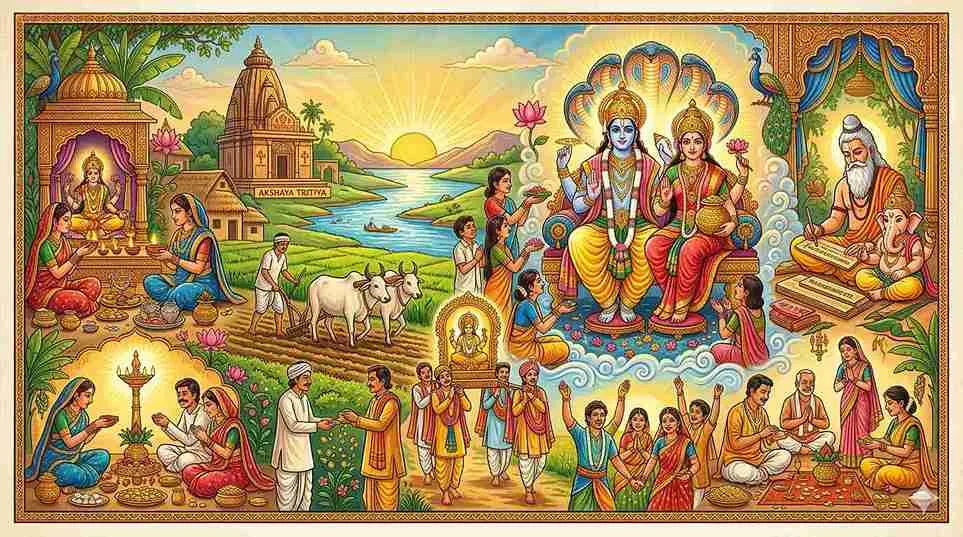
The Story Behind Akshaya Tritiya – Why It's Called Eternal Day
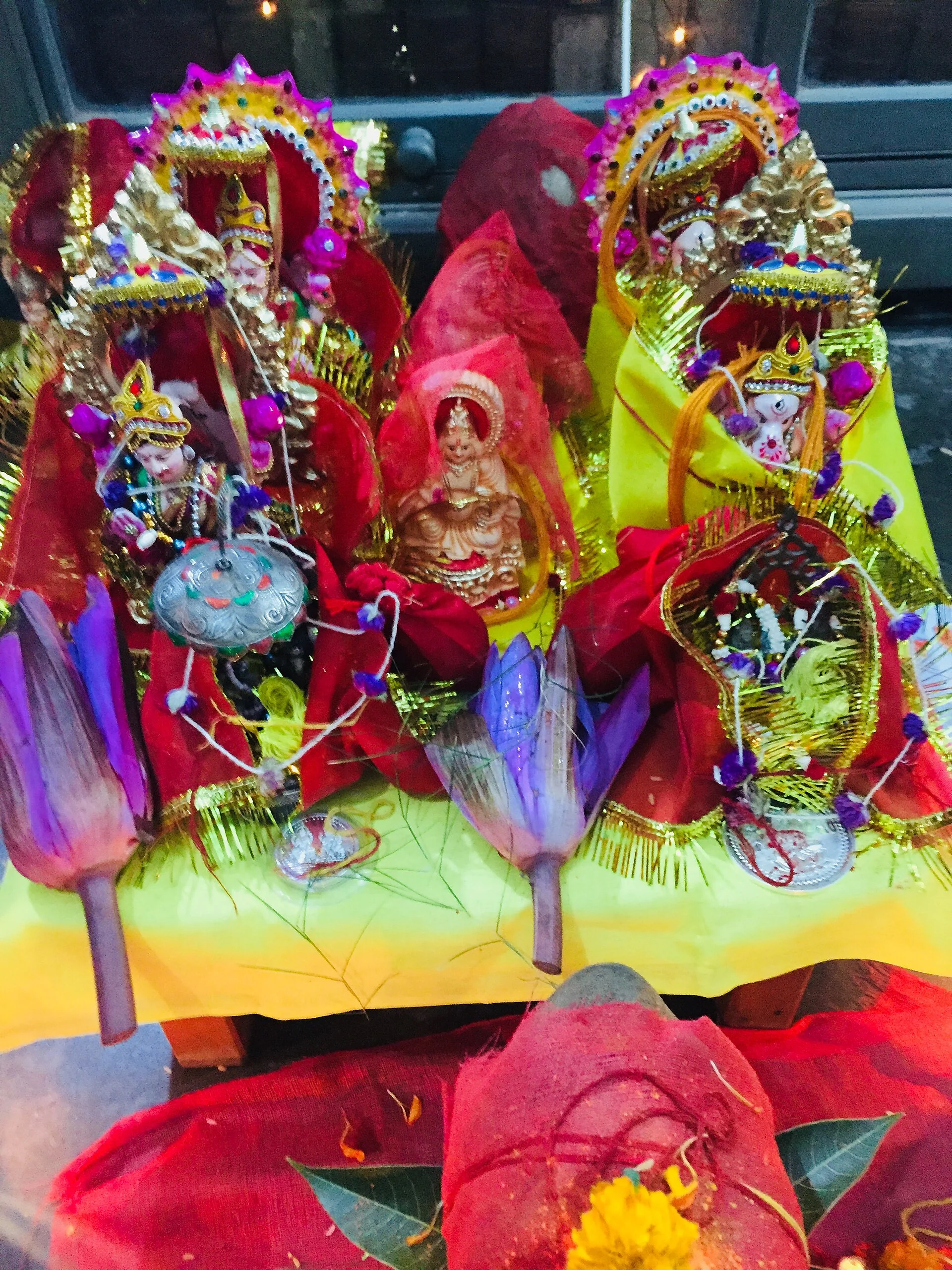
Sri Suktam: Complete Guide to the 15-Verse Vedic Hymn to Goddess Lakshmi
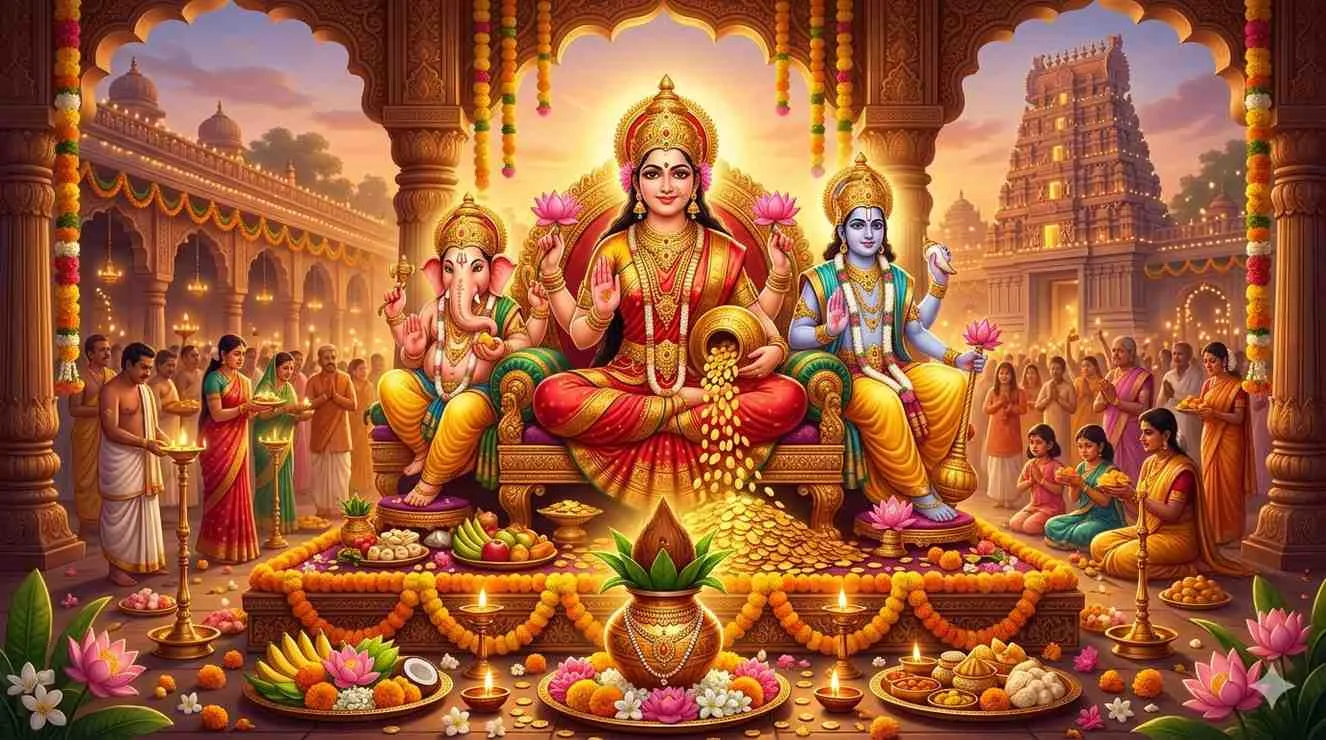
Akshaya Tritiya 2026 — The Eternal Wealth Day of the Hindu Calendar