
Sri Suktam: Complete Guide to the 15-Verse Vedic Hymn to Goddess Lakshmi
The supreme Vedic hymn to Goddess Lakshmi — 15 verses from the Rig Veda Khila, daily prosperity invocation across millennia. Discover the full Sanskrit text, transliteration, verse-by-verse meaning, when and how to recite, the eight-day Sri Sukta vidhanam, and why this is considered the most spiritually charged Lakshmi mantra in Hinduism.
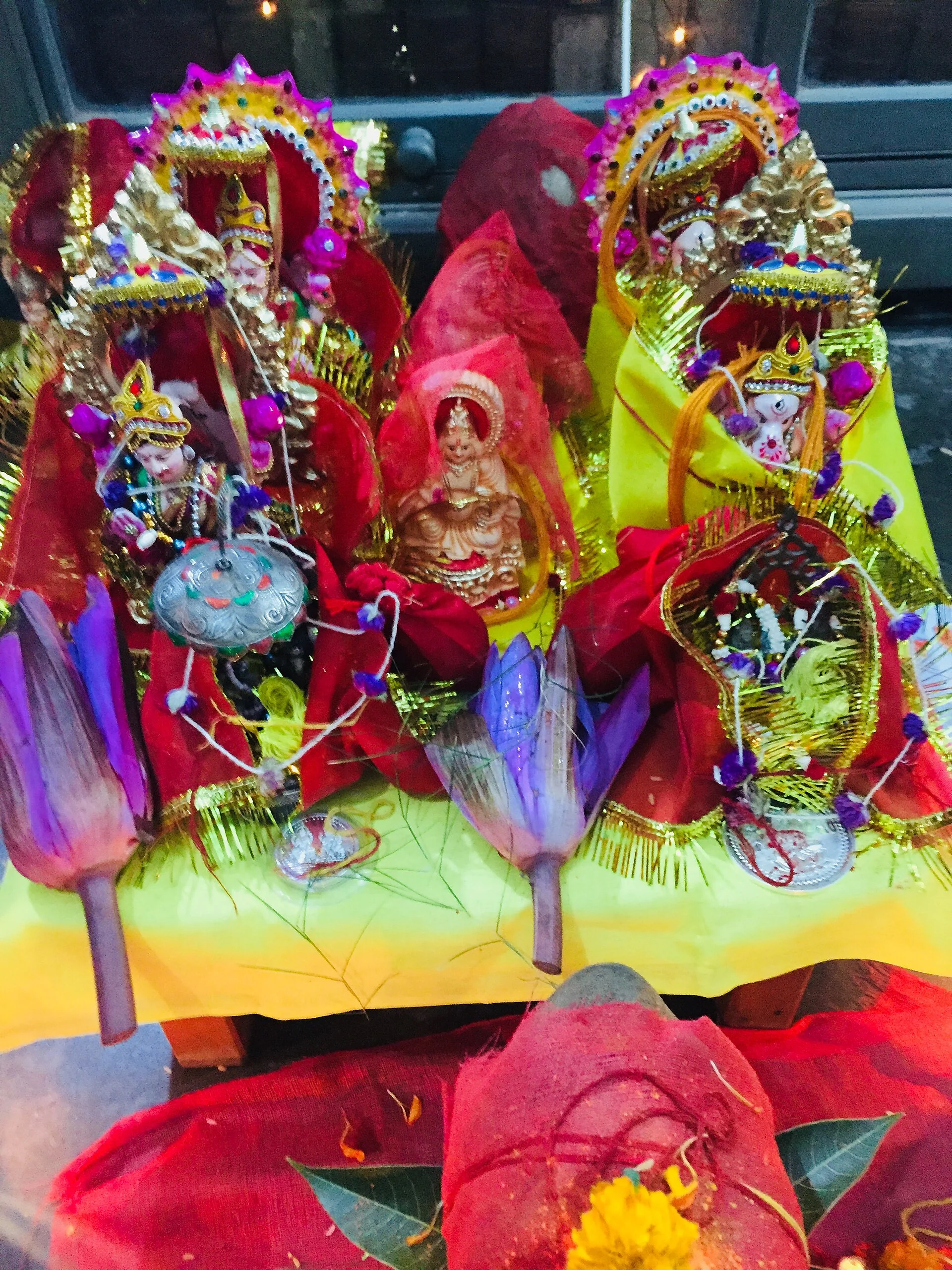
The supreme Vedic hymn to Goddess Lakshmi — 15 verses from the Rig Veda Khila, daily prosperity invocation across millennia. Discover the full Sanskrit text, transliteration, verse-by-verse meaning, when and how to recite, the eight-day Sri Sukta vidhanam, and why this is considered the most spiritually charged Lakshmi mantra in Hinduism.
Of all the prayers to Goddess Lakshmi in the Hindu canon, none is more ancient, more frequently chanted, or more carefully preserved than the Sri Suktam — the fifteen-verse Vedic hymn from the Khila (appendix) of the Rig Veda. Believed to have been composed by the rishi Ananda Kardama in the late Vedic period, the Sri Suktam has been recited daily by Hindu women, in homes across the subcontinent, for at least two and a half thousand years. It is the supreme invocation of Lakshmi — the goddess of wealth, beauty, fertility, and grace — and it is the verse that women murmur over their evening lamps, that brahmins recite at every Lakshmi puja, that yogic practitioners use for the cultivation of inner abundance.
This HinduTone guide opens the Sri Suktam: its origin in the Rig Veda Khila, the full Sanskrit text with transliteration, verse-by-verse meaning, the prescribed eight-day Sri Sukta vidhanam, the specific spiritual benefits documented across centuries, and a practical recitation guide for modern householders.
What is the Sri Suktam? Origin and Authority
The Sri Suktam belongs to the Khila portion of the Rig Veda — a body of appendix hymns that the early Vedic compilers preserved alongside the canonical 10 mandalas. Khila hymns are considered late-Vedic (roughly 1000–800 BCE), composed after the main Rig Veda was settled but before the Brahmana commentaries. The Sri Suktam itself is identified at Khila 2.6 in the Sayana edition; the rishi (composer) is recorded as Ananda Kardama, the daughter of Bhrigu and the divine attendant of Goddess Lakshmi herself.
Structurally, the Sri Suktam consists of fifteen verses (mantras) plus an introductory invocation. Each verse describes the goddess in a different aspect — her radiance, her gold, her elephants, her ability to remove poverty and misfortune, her residence in cow-byres and grain-stores, her capacity to bless devotees with sons and grandchildren. Together they form a complete devotional portrait: not the abstract Lakshmi of philosophical Vedanta, but the immediate, present-day goddess who responds to invocation.
The text is in classical Vedic Sanskrit. Modern editions vary slightly — the most authoritative is the Krishna Yajurveda Taittiriya recension, which adds a phala-shruti (fruits-of-recitation) verse at the end. The version most commonly recited today preserves the original fifteen verses plus the phala-shruti, totalling sixteen meaningful units.
When to Recite the Sri Suktam
The shastras prescribe specific times when the Sri Suktam is most spiritually effective:
- Friday morning, between 5:00–7:00 AM (Lakshmi-vara, the day of the goddess).
- Diwali night (Amavasya of Karthika month) during the main Lakshmi puja.
- Mahalakshmi Vrata — daily recitation across all sixteen days. Sri Suktam is the principal stotra of the vrata.
- Varalakshmi Vratham — on the Friday before Shravan Purnima, recited at the abhishekam moment.
- Akshaya Tritiya — the day Lakshmi enters every home; Sri Suktam is recited to consecrate her seat.
- Sankashti Chaturthi evening (waning phase Chaturthi) for removal of financial doshas.
- Daily morning recitation after bath, before family altar — recommended for general prosperity.
- On any major financial decision (business launch, large purchase, contract signing) — Sri Suktam at dawn beforehand.
The Eight-Day Sri Sukta Vidhanam
Beyond casual recitation, the most spiritually powerful practice is the Ashta-dina Sri Sukta Vidhanam — the eight-day Sri Sukta vow. Practiced by householders facing chronic financial blockages or undertaking major life transitions:
- Day 1 (Tuesday or Friday): begin with Ganesha Vandana, then 1 round of Sri Suktam (15 verses recited slowly and clearly).
- Day 2: 2 rounds of recitation, morning and evening.
- Day 3: 3 rounds — morning, midday, evening.
- Days 4-7: continue increasing by one round per day until day 7's 7 rounds.
- Day 8: 21 rounds (jaya saptati) — the concluding intensification. Most devotees set aside the entire day.
- Throughout the eight days: vegetarian diet, abstention from anger and gossip, gold/silver coin in the puja space, daily abhishekam of a small Lakshmi murti or yantra.
- On day 8 evening: a special abhishekam with milk, panchamrit, and rose water; followed by feeding 16 women (sumangalis); the vidhanam is sealed by tying a yellow thread around the right wrist.
Sri Suktam: Verse-by-Verse with Meaning
Below, all 15 verses in Sanskrit Devanagari, transliteration, and English meaning. Each verse is a complete unit of devotional intent; many practitioners pause for a few breaths between verses to absorb the meaning.
Verse 1: Invoking the Golden-Hued Goddess
हिरण्यवर्णां हरिणीं सुवर्णरजतस्रजाम् | चन्द्रां हिरण्मयीं लक्ष्मीं जातवेदो म आवह ||
Hiranyavarnam Harinim, Suvarnarajatasrajam | Chandram Hiranmayim Lakshmim Jatavedo Ma Avaha ||
"O Jatavedas (Agni), bring to me that Lakshmi who is golden-hued, like a gentle deer, adorned with garlands of gold and silver, radiant as the moon, whose entire form is made of gold."
Verse 2: Invoking Lakshmi Through Fire
तां म आवह जातवेदो लक्ष्मीमनपगामिनीम् | यस्यां हिरण्यं विन्देयं गामश्वं पुरुषानहम् ||
Tam Ma Avaha Jatavedo Lakshmim-Anapagaminim | Yasyam Hiranyam Vindeyam Gam-Ashvam Purushanaham ||
"Bring to me, O Jatavedas, that Lakshmi who never departs — through whose grace I shall obtain gold, cattle, horses, and sons (children)."
Verse 3: Lakshmi on the Lotus, Surrounded by Elephants
अश्वपूर्वां रथमध्यां हस्तिनादप्रबोधिनीम् | श्रियं देवीमुपह्वये श्रीर्मा देवीर्जुषताम् ||
Ashva-Purvam Ratha-Madhyam, Hasti-Nada-Prabodhinim | Shriyam Devim-Upahvaye Shrir-Ma Devir-Jushatam ||
"I invoke Goddess Shri, preceded by horses, seated in the middle of her chariot, awakened by the trumpeting of elephants. May the goddess Lakshmi be pleased with me."
Verse 4: Lakshmi as Smile and Splendour
कांसोस्मितां हिरण्यप्राकारामार्द्रां ज्वलन्तीं तृप्तां तर्पयन्तीम् | पद्मे स्थितां पद्मवर्णां तामिहोपह्वये श्रियम् ||
Kamsosmitam Hiranya-Prakaram, Ardram Jvalantim, Triptam Tarpayantim | Padme Sthitam Padma-Varnam, Tam-iha-Upahvaye Shriyam ||
"I invoke here Goddess Lakshmi, whose smile is gentle, who is enclosed in golden walls, soft and radiant, content and giving contentment — she who stands on the lotus, of lotus-hue."
Verse 5: Lakshmi as the Source of All Wealth
चन्द्रां प्रभासां यशसा ज्वलन्तीं श्रियं लोके देवजुष्टामुदाराम् | तां पद्मिनीमीं शरणमहं प्रपद्ये अलक्ष्मीर्मे नश्यतां त्वां वृणे ||
Chandram Prabhasam, Yashasa Jvalantim, Shriyam Loke Deva-Justam-Udaram | Tam Padminim-Im Sharanam-Aham Prapadye, Alakshmir-Me Nashyatam Tvam Vrine ||
"To that radiant moon-like goddess Shri, who blazes with fame, who is generous and honoured by the gods in the worlds — to her, holding the lotus, I take refuge. May my poverty be destroyed. I choose you."
Verse 6: The Sun-Born Goddess
आदित्यवर्णे तपसोऽधिजातो वनस्पतिस्तव वृक्षोऽथ बिल्वः | तस्य फलानि तपसा नुदन्तु मायान्तरायाश्च बाह्या अलक्ष्मीः ||
Aditya-Varne Tapaso-Adhijato, Vanaspatis-Tava Vrikshotha Bilvah | Tasya Phalani Tapasa Nudantu, Mayantara-Yashca Bahya Alakshmih ||
"O goddess radiant as the sun, the lord of the forest, the Bilva tree, is born from your tapasya. May its fruits dispel by their power both inner illusion and outer poverty."
Verse 7: Liberation from Hunger and Thirst
उपैतु मां देवसखः कीर्तिश्च मणिना सह | प्रादुर्भूतोऽस्मि राष्ट्रेऽस्मिन् कीर्तिमृद्धिं ददातु मे ||
Upaitu Mam Deva-Sakhah Kirtish-cha Manina Saha | Pradurbhutosmi Rashtre-Asmin Kirtim-Riddhim Dadatu Me ||
"Let the friend of the gods (Lakshmi) approach me, along with fame and jewels. I have appeared in this kingdom; may she grant me fame and prosperity."
Verse 8: Removing Hunger, Thirst, and Misfortune
क्षुत्पिपासामलां ज्येष्ठामलक्ष्मीं नाशयाम्यहम् | अभूतिमसमृद्धिं च सर्वान्निर्णुद मे गृहात् ||
Kshut-Pipasa-Malam Jyeshtham-Alakshmim Nashayamy-Aham | Abhutim-Asamriddhim Cha Sarvan-Nirnuda Me Grihat ||
"I destroy the elder sister of Lakshmi — poverty — along with hunger, thirst, and impurity. Drive away from my house all infertility and lack of prosperity."
Verse 9: The Fragrant Goddess
गन्धद्वारां दुराधर्षां नित्यपुष्टां करीषिणीम् | ईश्वरीं सर्वभूतानां तामिहोपह्वये श्रियम् ||
Gandha-Dvaram Dura-Dharsham, Nitya-Pushtam Karishinim | Ishvarim Sarva-Bhutanam, Tam-iha-Upahvaye Shriyam ||
"I invoke here Goddess Lakshmi — whose presence is fragrance, who is unassailable, ever-nourished, abundant; the queen of all beings."
Verse 10: Goddess of Mind and Speech
मनसः काममाकूतिं वाचः सत्यमशीमहि | पशूनां रूपमन्नस्य मयि श्रीः श्रयतां यशः ||
Manasah Kamam-Akutim, Vachah Satyam-Ashimahi | Pashunam Rupam-Annasya, Mayi Shrih Shrayatam Yashah ||
"May we attain the wishes of mind, the intent of will, and the truth of speech; may the form of cattle and food, and Lakshmi herself, and fame — all dwell in me."
Verse 11: Lakshmi as the Goddess of Cardamom and Wealth
कर्दमेन प्रजाभूता मयि सम्भव कर्दम | श्रियं वासय मे कुले मातरं पद्ममालिनीम् ||
Kardamena Praja-Bhuta, Mayi Sambhava Kardama | Shriyam Vasaya Me Kule, Mataram Padma-Malinim ||
"O Kardama (rishi, father of Anandakardama), by your offspring I became established. Let your lineage dwell in me. Cause Mother Lakshmi, garlanded with lotus, to reside in my family."
Verse 12: The Goddess as Family Prosperity
आपः सृजन्तु स्निग्धानि चिक्लीत वस मे गृहे | नि च देवीं मातरं श्रियं वासय मे कुले ||
Apah Srijantu Snigdhani, Chiklita Vasa Me Grihe | Ni Cha Devim Mataram Shriyam, Vasaya Me Kule ||
"May the waters create lubricating things (oils, ghee, milk). O Chiklita (son of Lakshmi), dwell in my house. Let the goddess Lakshmi, my mother, reside in my family."
Verse 13: Bow to Lakshmi Through Surrender
आर्द्रां पुष्करिणीं पुष्टिं पिङ्गलां पद्ममालिनीम् | चन्द्रां हिरण्मयीं लक्ष्मीं जातवेदो म आवह ||
Ardram Pushkarinim Pushtim, Pingalam Padma-Malinim | Chandram Hiranmayim Lakshmim, Jatavedo Ma Avaha ||
"O Jatavedas, bring to me that Lakshmi who is soft, of lotus-pond fragrance, nourishing, tawny-hued, garlanded with lotuses, moon-like, made of gold."
Verse 14: Lakshmi the Eternal Goddess
आर्द्रां यः करिणीं यष्टिं सुवर्णां हेममालिनीम् | सूर्यां हिरण्मयीं लक्ष्मीं जातवेदो म आवह ||
Ardram Yah Karinim Yashtim, Suvarnam Hema-Malinim | Suryam Hiranmayim Lakshmim, Jatavedo Ma Avaha ||
"O Jatavedas, bring to me that Lakshmi who is soft, hand-held (offering protection), of golden ornaments, garlanded with gold — sun-like, made of gold."
Verse 15: Final Invocation — Eternal Lakshmi
तां म आवह जातवेदो लक्ष्मीमनपगामिनीम् | यस्यां हिरण्यं प्रभूतं गावो दास्योऽश्वान् विन्देयं पुरुषानहम् ||
Tam Ma Avaha Jatavedo, Lakshmim-Anapagaminim | Yasyam Hiranyam Prabhutam, Gavo Dasyo-Ashvan, Vindeyam Purushanaham ||
"Bring to me, O Jatavedas, that Lakshmi who never departs — through whose presence I shall obtain abundant gold, cows, servants, horses, and sons."
Phala Shruti: The Fruits of Reciting Sri Suktam
At the end of the fifteen verses, traditional recitation adds the phala-shruti — the declaration of merit. This is a single concluding verse that summarizes the benefits the shastras promise for sincere recitation:
"पद्मानने पद्म-ऊरु पद्म-अक्षि पद्म-सम्भवे | त्वं मां भजस्व पद्म-अक्षि येन सौख्यं लभाम्यहम् ||"
"O lotus-faced, lotus-thighed, lotus-eyed, lotus-born goddess — accept me, O lotus-eyed one, that I may attain happiness."
Spiritual Benefits Documented Across Centuries
The shastras and the unbroken oral tradition record specific benefits for sincere Sri Suktam recitation:
- Removal of chronic financial blockages — particularly the kind that resist all material remedies.
- Granting of abundance not just in wealth but in family relationships, fame, and inner contentment.
- Protection of the household from misfortune, fire, theft, and natural calamities.
- For unmarried women: blessings for a harmonious marriage; for married women: marital harmony and progeny.
- For businesses and households: the goddess takes up residence at the place of recitation and refuses to leave.
- Psychologically: the act of reciting the Sri Suktam shifts the mind from scarcity-consciousness to abundance-consciousness — a transformation that benefits modern devotees regardless of metaphysical beliefs.
Practical Recitation Guide for Modern Householders
- Set a clean, fragrant space — your puja corner or a dedicated meditation spot. A small Lakshmi murti or yantra should be present.
- Time: morning between 5–7 AM if possible. If not, evening between 6–8 PM. Avoid midday and night-time recitation.
- Posture: cross-legged on a clean mat. Spine straight. Eyes open or softly closed.
- Pace: slow. The 15 verses can be recited at any pace, but the prescribed pace is 8-10 minutes for one complete round. Faster pace dilutes the practice.
- Pronunciation matters. If your Sanskrit is limited, use a recorded audio of a Brahmin priest reciting the verses; chant alongside.
- After the recitation, offer a flower, a few grains of rice, or a single coin to the goddess. Then sit silently for 5 minutes.
- Daily recitation, even one round, compounds. Three months of consistent daily practice is described in the shastras as the threshold at which the goddess begins to "respond."
- For special occasions: 11 rounds for solving a specific financial issue. 21 rounds for major life decisions. 108 rounds (mahā-pārāyaṇa) for crises.
Why the Sri Suktam Endures
Across two and a half millennia, through the Vedic period and the Brahmana period, the Bhakti movement and the colonial era, the digital age and the modern global diaspora — the Sri Suktam has remained the central daily Lakshmi practice of Hindu women. It has not survived because of grand temples or priestly authority. It has survived because mothers taught daughters, and daughters became mothers, and the fifteen verses crossed unbroken from one evening lamp to the next, from one wedding altar to the next, from one new business opening to the next.
The teaching of the Sri Suktam is simple: prosperity is not a substance to be earned but a goddess to be invoked. The goddess is not absent from any home — she only waits to be welcomed. The fifteen verses are the welcome. They have been spoken for so long that even when a modern Hindu household recites them today, the air itself recognizes them. The lamp brightens. The grain stays fresh. The home settles into something deeper than abundance — into the quiet certainty that the goddess is here.
Sri Maha Lakshmyai Namah. Om Shrim Shriyei Namah. Padma-Priyaya Namo Namah.
Frequently asked questions
How many verses does the Sri Suktam have?
The Sri Suktam has fifteen verses from the Khila (appendix) of the Rig Veda. The commonly recited version adds a phala-shruti verse, giving sixteen units.
When is the best time to recite the Sri Suktam?
Friday, the day of Lakshmi, is prescribed, with Diwali night, Akshaya Tritiya and Varalakshmi Vratham also named. A daily recitation after bath before the family altar is recommended for general prosperity.
What is the Sri Sukta Vidhanam?
It is an eight-day vow that begins with Ganesha Vandana and one round on day 1, adding a round each day to 7 on day 7 and 21 rounds on day 8. It includes a vegetarian diet and daily abhishekam of a Lakshmi murti or yantra.
Who composed the Sri Suktam?
The rishi is recorded as Ananda Kardama, and the hymn is identified at Khila 2.6 in the Sayana edition. It is considered late-Vedic, roughly 1000-800 BCE.
How do I conclude the eight-day Sri Sukta Vidhanam?
On the evening of day 8, perform a special abhishekam with milk, panchamrit and rose water, then feed 16 sumangali women. The vidhanam is sealed by tying a yellow thread on the right wrist.
You might also like
Purusha Suktam: Complete Guide to the Cosmic Hymn from Rig Veda 10.90
Narayan Suktam: Complete Guide to the Vedic Hymn of the Supreme Vishnu
Akshaya Tritiya and Lakshmi – How to Invite Wealth & Prosperity Into Your Life