Ashta Lakshmi — The 8 Divine Forms of Wealth Goddess Lakshmi
Introduction: The Eightfold Blessings of Maa Lakshmi Ashta Lakshmi (अष्टलक्ष्मी), meaning “Eight Lakshmis,” refers to the eight divine manifestations of…
Introduction: The Eightfold Blessings of Maa Lakshmi Ashta Lakshmi (अष्टलक्ष्मी), meaning “Eight Lakshmis,” refers to the eight divine manifestations of…
Introduction: The Eightfold Blessings of Maa Lakshmi
Ashta Lakshmi (अष्टलक्ष्मी), meaning “Eight Lakshmis,” refers to the eight divine manifestations of Goddess Lakshmi, the Hindu deity of wealth, fortune, beauty, and prosperity. While Maha Lakshmi is the supreme form, these eight aspects represent different dimensions of abundance essential for a balanced, fulfilling life. “Ashta” means eight in Sanskrit, and each form bestows a unique type of wealth — from material riches to spiritual liberation, courage, knowledge, and progeny.
Worshipping the Ashta Lakshmi is especially popular during Diwali Lakshmi Puja (November 8, 2026), Dhanteras, Navratri, Varalakshmi Vrat, and Fridays. Devotees believe that invoking all eight forms brings holistic prosperity: material success, inner strength, wisdom, family happiness, victory, and ultimately moksha (liberation). The concept highlights that true wealth is multifaceted — not just money, but health, courage, knowledge, food, and ethical living.
This comprehensive guide for www.hindutone.com explores the mythology, significance, iconography, individual descriptions, mantras, and worship practices of the Ashta Lakshmi. It includes practical tips for home or temple puja and relevance for Hindus in the USA, UK, Canada, and Australia. The popular Ashta Lakshmi Stotram is also provided with lyrics, transliteration, and meaning.
Mythological Background and Significance
Goddess Lakshmi emerged during the Samudra Manthan (churning of the cosmic ocean) along with other divine treasures. She is the eternal consort of Lord Vishnu and is often depicted seated on a lotus, holding lotuses in her hands, with elephants (gaja) anointing her — symbolizing royal authority and abundance.
The Ashta Lakshmi concept evolved in South Indian traditions (especially Tamil Nadu) and gained popularity through the Ashta Lakshmi Stotram, attributed to Sri Adi Shankaracharya or later bhakti traditions. Each form addresses a specific human need, teaching that prosperity must encompass all aspects of life for true happiness.
In modern times, especially among the diaspora, Ashta Lakshmi worship reminds devotees that wealth includes emotional well-being, intellectual growth, and spiritual depth — not merely financial gain. Temples like the Ashta Lakshmi Temple in Chennai or diaspora shrines often feature idols or pictures of all eight forms arranged together.
The 8 Divine Forms of Ashta Lakshmi: Names, Meanings, and Iconography
Here is the standard traditional list (minor regional variations exist, such as Dhairya instead of Veera in some lists):
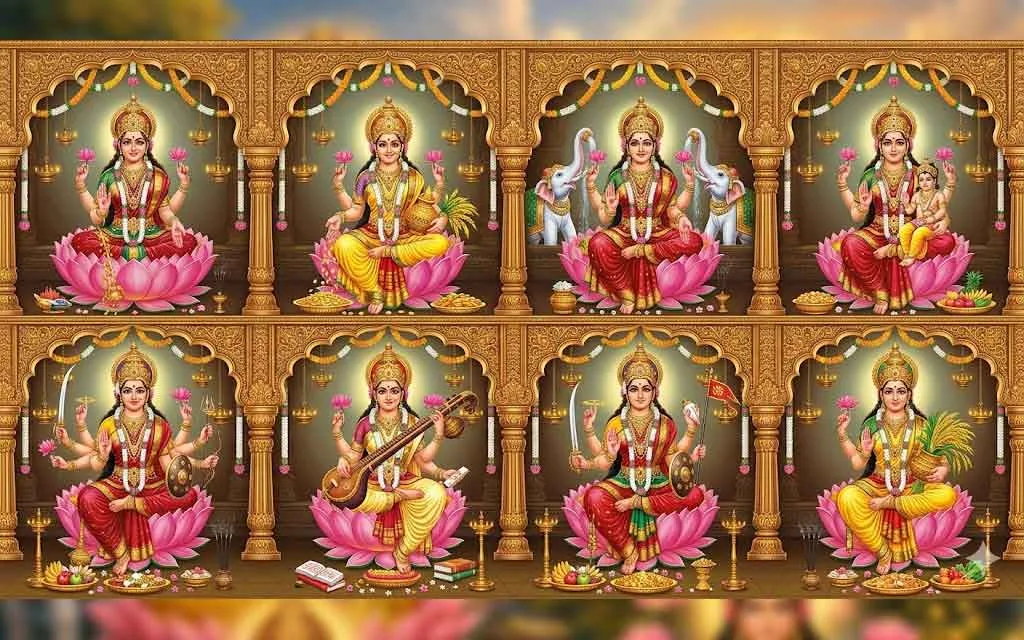
- Adi Lakshmi (Primeval or Maha Lakshmi)
- Meaning: The primordial form; also called Moksha Pradayani (bestower of liberation).
- Significance: Represents eternal spiritual wealth and the ultimate goal of life — freedom from the cycle of birth and death. She is the source of all other forms.
- Iconography: Four hands holding lotus flowers, conch, discus, and mace (similar to Maha Lakshmi). Seated on a lotus with a serene expression.
- Blessings: Spiritual enlightenment, inner peace, and moksha.
- Dhana Lakshmi (Goddess of Material Wealth)
- Meaning: Dhana = wealth/money.
- Significance: Bestows financial prosperity, gold, property, business success, and tangible resources.
- Iconography: Holds gold coins, lotuses, and sometimes a pot of wealth. Often shown with elephants pouring water.
- Blessings: Monetary abundance, career growth, and removal of poverty.
- Dhanya Lakshmi (Goddess of Agricultural Wealth / Grains)
- Meaning: Dhanya = grains / blessed / nourishing food.
- Significance: Provides food security, good harvests, health through nutrition, and the fortune of never going hungry.
- Iconography: Holds sheaves of paddy or grains, lotuses, and fruits. Radiant and benevolent.
- Blessings: Abundance of food, good health, and sustenance for the family.
- Gaja Lakshmi (Goddess of Power, Strength, and Royal Wealth)
- Meaning: Gaja = elephant.
- Significance: Symbolizes royal authority, animal wealth (cows, elephants for farming and transport), power, and dignity. She emerged during the Samudra Manthan with elephants anointing her.
- Iconography: Seated on a lotus with two or more elephants bathing her with water pots. Holds lotuses and sometimes a vessel of wealth.
- Blessings: Strength, influence, respect, and protection from enemies.
- Santana Lakshmi (Goddess of Progeny / Offspring)
- Meaning: Santana = progeny / children.
- Significance: Blesses with healthy children, family continuity, and harmonious domestic life.
- Iconography: Holds a child in one arm, lotuses, and other auspicious items. Depicted as a loving mother.
- Blessings: Fertility, happy children, and strong family bonds.
- Veera Lakshmi (or Dhairya Lakshmi — Goddess of Courage and Strength)
- Meaning: Veera = courageous / heroic; Dhairya = patience and fortitude.
- Significance: Grants bravery, inner strength, determination, and the power to overcome challenges.
- Iconography: Holds weapons like a sword or bow, along with lotuses. Fierce yet protective expression.
- Blessings: Courage to face difficulties, willpower, and resilience.
- Vidya Lakshmi (Goddess of Knowledge and Wisdom)
- Meaning: Vidya = knowledge / learning.
- Significance: Bestows education, wisdom, skills, creativity, and intellectual growth.
- Iconography: Holds books, veena (musical instrument), or palm leaf manuscripts, along with lotuses. Serene and scholarly appearance.
- Blessings: Academic success, wisdom, artistic talents, and clarity of mind.
- Vijaya Lakshmi (or Jaya Lakshmi — Goddess of Victory and Success)
- Meaning: Vijaya = victory.
- Significance: Grants success in all endeavors, triumph over obstacles, and overall achievement.
- Iconography: Holds a conch, discus, or victory banner, seated on a lotus. Radiant and victorious posture.
- Blessings: Victory in competitions, legal matters, business, and life goals.
Ashta Lakshmi Stotram — Sacred Hymn with Lyrics
The Ashta Lakshmi Stotram is a beautiful devotional song that praises each form individually. It is commonly sung during Lakshmi Puja.
Adi Lakshmi Sumanasa vandita sundari mādhavi, chandra sahodari hemamaye Munigaṇa vandita mokṣapradāyani, mañjula bhāṣiṇi vēdanutē Paṅkajavāsini dēva supūjita, sadguṇa varṣiṇi śāntiyutē Jaya jaya hē madhusūdana kāmini, ādilakṣmi paripālaya mām
(Meaning): O Adi Lakshmi, worshipped by the virtuous, beautiful consort of Madhava, sister of the moon, golden one… Bestower of moksha… Protect me always!
(The stotram continues similarly for each form with the refrain “Jaya Jaya Hey Madhusudana Kamini Sada Palaya Maam” — Victory to You, beloved of Madhusudana (Vishnu), , always protect me!)
Full stotram verses for other forms follow the same pattern, praising Dhanya Lakshmi for grains, Gaja Lakshmi for removing misfortunes, etc. Many beautiful audio renditions are available online.
Worship Practices and Puja Vidhi for Ashta Lakshmi
- Altar Setup: Arrange pictures or idols of all eight forms (or a single Ashta Lakshmi panel) around Maha Lakshmi. Use a red or yellow cloth.
- Samagri: Lotuses or flowers, incense, ghee lamps, fruits, sweets (especially coconut, peda), rice, kumkum, turmeric, coins, and grains.
- Mantras:
- General: Om Shreem Mahalakshmyai Namah
- For each form: Add the specific name, e.g., Om Adi Lakshmyai Namah, Om Dhana Lakshmyai Namah, etc.
- Sequence: Start with Ganesha, then worship each Ashta Lakshmi form sequentially while offering flowers and chanting the stotram or individual mantras. Conclude with Maha Lakshmi aarti.
- Best Days: Diwali evening (Pradosh Kaal), Fridays, or during Navratri’s Lakshmi phase.
- Offerings: Specific items like grains for Dhanya Lakshmi, books for Vidya Lakshmi, or symbolic weapons for Veera Lakshmi.
Practical Tips for Diaspora Hindus in USA, UK, Canada, and Australia
- Many temples (e.g., in New Jersey, London, Toronto, Sydney) have Ashta Lakshmi shrines or host special pujas during Diwali.
- Home worship: Use printed charts or digital images if physical idols are unavailable. Perform in the evening after work/school.
- Adaptations: Vegan offerings, shorter stotram recitations, or virtual group chanting via video calls.
- Teaching Children: Explain each form simply — “Adi Lakshmi gives inner peace, Vidya Lakshmi helps with studies” — to make heritage relatable.
- Eco-Friendly: Use clay diyas and natural flowers.
Benefits of Worshipping Ashta Lakshmi
Invoking all eight forms ensures balanced prosperity: financial stability without stress, knowledge without arrogance, courage without recklessness, and victory aligned with dharma. It purifies the mind, removes obstacles, and attracts positive energy.
Conclusion: Embracing Complete Prosperity
The Ashta Lakshmi teach us that wealth is holistic — encompassing body, mind, family, and soul. Whether you light a single lamp on Diwali or recite the full stotram daily, sincere devotion to these eight forms invites Maa Lakshmi’s complete grace.
May the Ashta Lakshmi bless you with abundant health, wealth, wisdom, courage, progeny, victory, and spiritual liberation.
Jai Maa Lakshmi! Om Shreem Mahalakshmyai Namah!
Frequently Asked Questions
Who is Ashta Lakshmi?
Introduction: The Eightfold Blessings of Maa Lakshmi Ashta Lakshmi (अष्टलक्ष्मी), meaning “Eight Lakshmis,” refers to the eight divine manifestations of Goddess Lakshmi , the Hindu deity of wealth, fortune, beauty, and prosperity. While Maha Lakshmi is the supreme form, these eight aspects represent different dimensions of abundance essential for a balanced,
How is Ashta Lakshmi worshipped?
Through daily puja, mantra chanting, aarti and offerings of flowers, lamps and prasad — on dedicated days and festivals associated with the deity.
What are the benefits of worshipping Ashta Lakshmi?
Devotees seek blessings for protection, prosperity, health, wisdom and inner peace, and a deeper connection with the divine.
Which day is dedicated to Ashta Lakshmi?
Each deity has an associated day and festivals; worshipping on that day, with fasting and mantra, is considered especially auspicious (see the guide above).