

Om Namah Shivaya: The Sacred Five-Syllable Mantra and Its Profound Significance in Hinduism
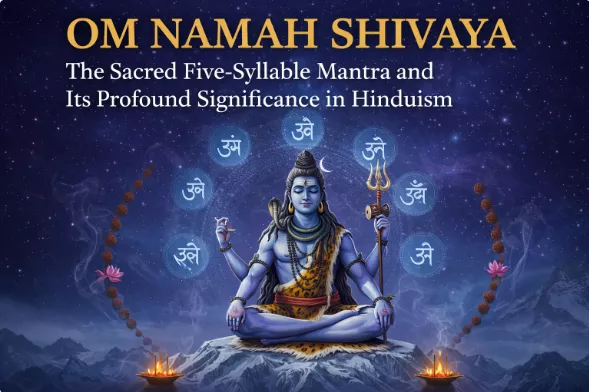
Om Namah Shivaya: The Sacred Five-Syllable Mantra and Its Profound Significance in Hinduism
Introduction to Om Namah Shivaya
Om Namah Shivaya stands as one of the most powerful and revered mantras in Hindu spirituality. This ancient five-syllable chant, known as the Panchakshari Mantra, has been recited by devotees of Lord Shiva for thousands of years. The mantra represents not just a prayer but a complete spiritual practice that encompasses devotion, meditation, and self-realization.
Meaning and Translation of Om Namah Shivaya
The mantra Om Namah Shivaya translates to “I bow to Shiva” or “Salutations to Shiva.” Breaking down each component reveals deeper layers of meaning:
Om – The primordial sound of the universe, representing ultimate reality and consciousness.
Namah – Means “to bow” or “salutations,” expressing humility and surrender.
Shivaya – Refers to Lord Shiva, the auspicious one, the transformer and destroyer of ignorance.
Together, these syllables create a mantra that acknowledges the divine presence within and around us, while expressing reverence for the supreme consciousness that Shiva represents.
The Five Sacred Syllables and the Pancha Bhutas
The five syllables of Na-Ma-Shi-Va-Ya hold special significance in Hindu philosophy, as they correspond to the five elements (Pancha Bhutas) that constitute the physical universe:
- Na – Earth (Prithvi)
- Ma – Water (Jala)
- Shi – Fire (Agni)
- Va – Air (Vayu)
- Ya – Space or Ether (Akasha)
This connection signifies that chanting the mantra harmonizes the practitioner with the fundamental forces of nature and creation itself.
Spiritual Significance in Hindu Tradition
Om Namah Shivaya occupies a central position in Shaivism, one of the major traditions within Hinduism. The mantra appears in the ancient Yajurveda, specifically in the Shri Rudram hymn, making it one of the oldest continuously chanted mantras in human history.
Key Spiritual Benefits
Liberation (Moksha) – Regular chanting is believed to lead devotees toward spiritual liberation by dissolving the ego and removing karmic obstacles.
Inner Transformation – The mantra works on subtle levels to purify the mind, body, and spirit, transforming negative tendencies into positive qualities.
Divine Connection – It establishes a direct connection with Lord Shiva, inviting his grace and blessings into the devotee’s life.
Mental Peace – The rhythmic repetition calms the mind, reduces stress, and brings emotional stability.
How Hindus Practice Om Namah Shivaya
Daily Japa (Repetition)
Many devotees incorporate the mantra into their daily spiritual practice through japa, the meditative repetition of sacred sounds. Practitioners typically use a rudraksha mala (prayer beads) to count 108 repetitions, though some perform multiples of this number.
During Meditation
The mantra serves as an excellent focal point during meditation sessions. Practitioners may chant it aloud, whisper it, or repeat it mentally while focusing on the breath or visualization of Lord Shiva.
Temple Worship and Rituals
Om Namah Shivaya resonates through Hindu temples worldwide, especially during Shivaratri, the great night dedicated to Lord Shiva. Priests and devotees chant it during abhishekam (ritual bathing of the Shiva lingam) and other ceremonial practices.
Kirtan and Group Chanting
Community gatherings often feature kirtan sessions where groups chant Om Namah Shivaya together, creating powerful collective spiritual energy that participants believe amplifies the mantra’s effects.
The Mantra’s Role in Different Life Situations
Hindu tradition teaches that Om Namah Shivaya can be invoked in various circumstances:
During Challenges – When facing difficulties, the mantra provides strength, courage, and the wisdom to overcome obstacles.
For Healing – Many believe the vibrations of the mantra promote physical and emotional healing.
Seeking Guidance – Devotees chant it when making important decisions, trusting that Shiva’s wisdom will illuminate the right path.
Celebrating Joy – The mantra is also chanted during auspicious occasions and celebrations as an expression of gratitude.
Philosophical Depth: The Atman and Shiva
On a philosophical level, Om Namah Shivaya represents the recognition that the individual soul (Atman) and the supreme consciousness (Brahman/Shiva) are fundamentally one. The act of bowing to Shiva symbolizes the ego surrendering to higher truth, acknowledging that divinity resides within every being.
This non-dualistic understanding forms the foundation of Advaita Vedanta philosophy and demonstrates why the mantra transcends simple prayer to become a tool for self-realization.
Scientific Perspective on Mantra Chanting
While the spiritual benefits remain primary for practitioners, modern research has begun exploring the physiological effects of mantra repetition. Studies suggest that rhythmic chanting can:
- Reduce stress hormones like cortisol
- Lower blood pressure and heart rate
- Increase production of endorphins and dopamine
- Enhance focus and cognitive function
- Promote relaxation through vagal nerve stimulation
These findings complement traditional teachings about the holistic benefits of mantras like Om Namah Shivaya.
Om Namah Shivaya in Popular Culture
The mantra has transcended religious boundaries to influence yoga practices, meditation centers, and spiritual communities worldwide. Its universal message of inner peace and divine connection resonates with seekers from various backgrounds, making it one of Hinduism’s most recognized contributions to global spirituality.
Guidelines for Proper Chanting
Traditional teachings offer guidance for maximizing the benefits of Om Namah Shivaya practice:
Intention – Approach the mantra with sincere devotion and clear intention.
Regularity – Consistent daily practice yields greater results than sporadic intensive sessions.
Posture – Sit comfortably with spine straight to facilitate proper breathing and energy flow.
Pronunciation – While perfection isn’t required, making an effort to pronounce the syllables clearly shows respect for the sacred tradition.
Environment – Choose a clean, quiet space that supports concentration and reverence.
Conclusion: The Timeless Power of Om Namah Shivaya
Om Namah Shivaya remains a cornerstone of Hindu spiritual practice because it encapsulates profound truths in a simple, accessible form. Whether chanted for devotion, meditation, healing, or self-realization, this ancient mantra continues to guide millions of Hindus on their spiritual journeys.
The five sacred syllables carry the wisdom of millennia while remaining remarkably relevant to contemporary seekers. By connecting practitioners to the transformative energy of Lord Shiva, Om Namah Shivaya offers a timeless path toward inner peace, divine grace, and ultimate liberation.
For those exploring Hindu spirituality or deepening their existing practice, Om Namah Shivaya serves as both a beginning and a destination—a simple sound that opens doors to infinite consciousness.
Related Topics: Shiva mantras, Hindu meditation practices, Shivaratri celebration, Rudraksha beads significance, Shaivism traditions
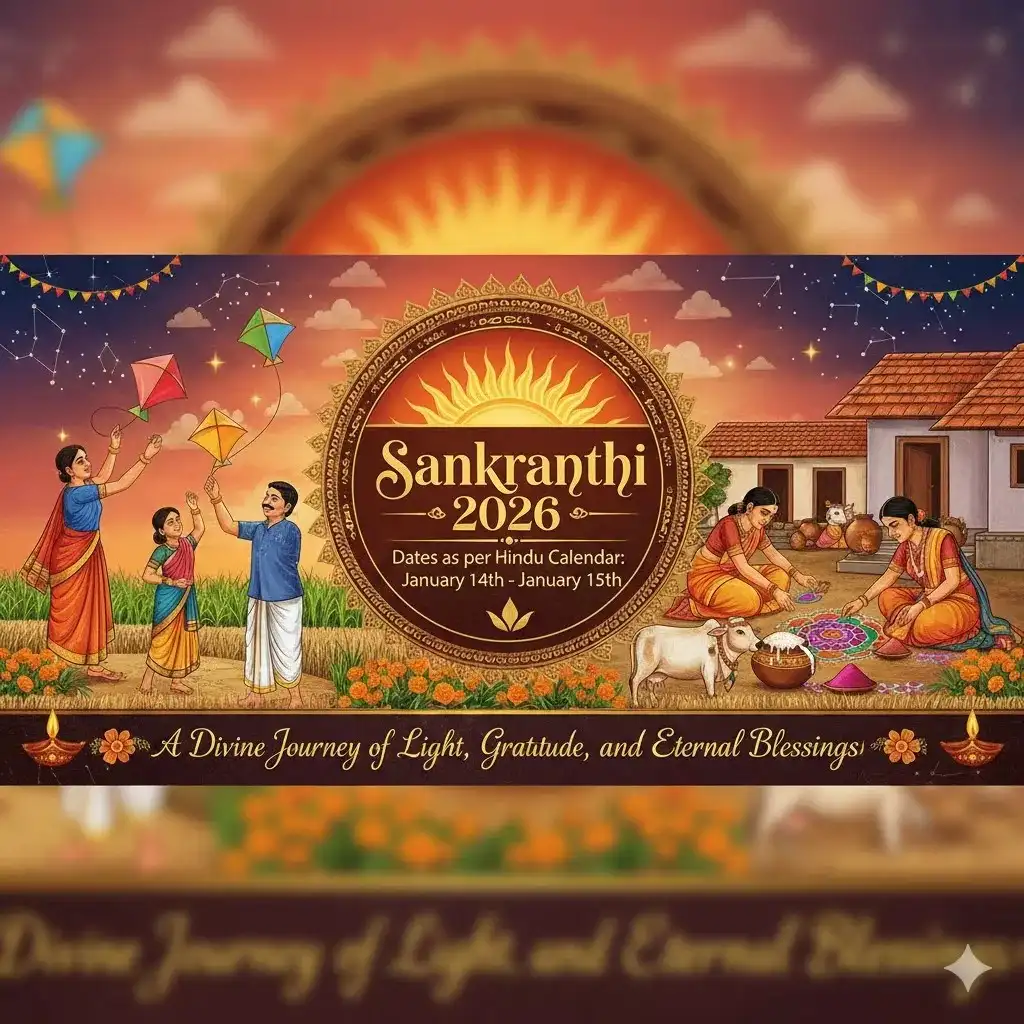
Sankranthi 2026 Dates as per Hindu Calendar: A Divine Journey of Light, Gratitude, and Eternal Blessings
Discover more
Spiritual Guidance Services
Yoga and meditation courses
Sloka & Mantras
Vishnu Temple Information
Hindu devotional books
Customized horoscope reports
The Gita
Navaratri Festival Goods
Sanskrit mantra CDs audio
Online religious classes
Om Suryaya Namah… As the golden rays of Surya Bhagavan gently caress the earth, the sacred festival of Sankranthi arrives, filling every heart with divine joy, abundance, and spiritual renewal. In this auspicious year of 2026, devotees across Bharat, especially in the sacred lands of Andhra Pradesh and Telangana, prepare to welcome the Sun God’s northward journey – the holy Uttarayana – with unwavering devotion and pure bhakti.
Beloved seekers of dharma, as we stand on January 12, 2026, the divine moment draws near. Let us immerse our souls in the devotional essence of Sankranthi 2026, understanding its sacred dates, timeless rituals, and profound spiritual significance according to the eternal Hindu panchang.
Sacred Dates of Sankranthi 2026 – A Four-Day Divine Celebration
According to the ancient Hindu solar calendar and revered panchangs followed in Telugu states:
- Bhogi Panduga – Wednesday, January 14, 2026 The sacred beginning, where devotees rise before dawn to cleanse body, mind, and home. Bonfires (Bhogi mantalu) burn away negativity, old possessions, and past karmas, inviting fresh prana and positivity into our lives. O Lord Agni, purify us!
- Pedda Panduga / Makar Sankranti / Pongal – Thursday, January 15, 2026 The heart of the festival! On this most auspicious day, Surya Dev enters Makara Rashi (Capricorn), marking the divine Uttarayana. Families offer sweet pongal to the Sun God at sunrise, perform holy snan, draw beautiful muggu (rangoli), and fly kites symbolizing the soul’s ascent towards Paramatma. This is the day of supreme gratitude for the harvest and cosmic grace.
- Kanuma Panduga – Friday, January 16, 2026 A day of profound reverence for Go-Mata (cows) and all animals that sustain life. Devotees decorate cattle, offer them special naivedyam, and seek blessings for agricultural prosperity. It reminds us of our sacred bond with prakriti and all living beings.
- Mukkanuma – Saturday, January 17, 2026 (observed in many families) The loving conclusion, filled with family feasts, visits to relatives, and sharing of joy. A day to strengthen bonds of love, affection, and togetherness under the divine grace of Sankranthi.
These dates reflect the beautiful tradition in Andhra Pradesh and Telangana, where the main celebration of Pongal/Pedda Panduga aligns with January 15, 2026, honoring the solar transition with deepest devotion.
Discover more
The Gita
Puja Thali sets
Astrology consultation service
Traditional Indian clothing
Online religious classes
Hindu Mantras Collection
Temple Tour Booking
Festival celebration kits
Bhagavad Gita
Sanatana Dharma Books
The Eternal Spiritual Significance of Sankranthi
O devotees of Surya Narayana! Sankranthi is not merely a festival – it is a divine reminder of the soul’s journey from darkness to light. When Bhagavan Surya enters Makara Rashi, the gates of heaven open wider. Uttarayana begins – the six-month period most favorable for sadhana, tapasya, and attainment of moksha.
As Bhishma Pitamaha in the Mahabharata chose this sacred time to leave his mortal body, so too do we offer our prayers, charities, and til-gur (sesame-jaggery) sweets during Punya Kaal, seeking forgiveness of sins and showering of divine blessings.
This harvest festival teaches us eternal truths:
- Gratitude for Annadata (the provider of food)
- Surrender to the cosmic rhythm of nature
- Sharing love and prosperity with all
Timeless Devotional Rituals to Follow in 2026
- Arise at Brahmamuhurta – Take holy bath with sesame water, remembering Surya Dev.
- Offer Arghya – Face the rising Sun, offer water, flowers, and chant Aditya Hridayam Stotram or Gayatri Mantra.
- Prepare Pongal – Cook sweet pongal with milk, rice, jaggery, and ghee as naivedyam to Bhagavan.
- Perform Daan – Give til, jaggery, clothes, and food to the needy – the highest act of punya.
- Fly Kites & Draw Muggu – Let your spirit soar high while decorating homes with sacred patterns.
- Worship Go-Mata on Kanuma – Offer green grass, bananas, and seek her blessings for family welfare.
May every ritual be an offering at the lotus feet of Lord Surya.
Discover more
Spiritual wellness retreats
Hindu deity artwork posters
Sloka & Mantras
Maha Kumbh Mela
Sanatana Dharma Courses
Bhagavad Gita
Hindu cultural events tickets
Gita
Hindu Temple Directory
Diwali Festival Decor
A Heartfelt Sankranthi Prayer from Hindutone
O Surya Bhagavan, the eternal witness of all karma! As You move northward, illuminate our path with knowledge. Bless our fields with abundance, our homes with harmony, our hearts with pure bhakti. May til-gur sweeten our relationships, and kite strings connect us to Your divine grace. Jai Suryanarayana! Jai Sankranthi!
Til Gul Ghya, God God Bola! Happy Sankranthi 2026 to all devotees! May this sacred festival fill your life with unending joy, prosperity, and the eternal light of dharma.
Magha Masam Significance in Hinduism: Rituals, Benefits, and Global Observance for Hindus in USA, UK, Australia, and Canada
Discover more
Traditional Indian clothing
Maha Kumbh Mela
Hindu deity artwork posters
Online religious classes
The Gita
Hindu cultural events tickets
Dharma Wisdom Content
Yoga and meditation courses
Navaratri Festival Goods
Hindu Devotional Articles
Oh, beloved devotees of the Eternal Sanatana Dharma! As the chill of winter begins to wane and the divine light of spring beckons, we find ourselves drawn into the sacred embrace of Magha Masam, one of the most spiritually enriching Hindu sacred months. In this devotional journey through the heart of Hinduism, let us surrender our souls to the boundless grace of Lord Vishnu, the preserver of the universe, who reigns supreme during this auspicious period. Magha Masam, the eleventh month in the Hindu lunar calendar, is a time when the cosmos aligns to shower blessings upon those who seek purification, devotion, and moksha. For Hindus worldwide, including our brothers and sisters in the USA, UK, Australia, and Canada, this month offers a profound opportunity to reconnect with our roots, perform timeless rituals, and attain spiritual elevation amidst the hustle of modern life.
In this spiritually rich blog, we delve deep into the Magha Masam significance, exploring its scriptural foundations, sacred rituals like Magha Snanam, the immense benefits for the soul, and the crowning glory of Magha Purnima. We also illuminate how NRI Hindus can observe these traditions abroad, fostering Vishnu bhakti in distant lands. Whether you’re a Hindu in the USA seeking solace in community temples or a devotee in Canada yearning for the divine waters of the Ganga, let this article be your guiding light. As we chant the holy names and immerse in bhakti, remember the words from ancient scriptures: through devotion in Magha, sins dissolve like mist before the rising sun.
Discover more
Krishna Janmashtami
Prayer beads malas
Sanatana Dharma Courses
Handmade religious crafts
Festival celebration kits
Hindu devotional books
Spiritual travel packages
Incense and incense holders
Health
Hindu Festival Guides
The Spiritual Essence of Magha Masam in Hinduism
Dearest seekers of truth, let us begin by unfolding the profound Magha Masam significance in Hinduism. Derived from the Sanskrit word “Magha,” which aligns with the Magha Nakshatra on the full moon day, this month is revered as a Vishnu bhakti month, where Lord Vishnu, in His form as Madhava, governs the cosmic energies, inviting devotees to purify their body, mind, and spirit.
In Sanatana Dharma, Magha Masam is not merely a calendar event but a divine invitation to shed the burdens of karma. Ancient texts proclaim it as “Ma+Agham,” where “Ma” signifies absence and “Agham” denotes sin, evil, or suffering. Thus, Magha Masam is the month free from sin, a sacred window for attaining moksha rituals in Hinduism. Socially, it heralds the end of dry winter and the bloom of spring, symbolizing renewal and adjustment to seasonal changes. For Hindus, this is a time when one year on Earth equates to a single day in the higher realms, with Magha ushering in the dawn for the gods.
Discover more
Hindu devotional books
Yoga and meditation courses
Health
Horoscope Updates Service
Prayer beads malas
Handmade religious crafts
Hindu Devotional Articles
Hindu cultural events tickets
Hindu Mantras Collection
Navaratri Festival Goods
Discover more
Hindu Devotional Items
Hindu Devotional Articles
The Gita
Donation platforms for temples
Spiritual Guidance Services
Puja Thali sets
Discover more
Sloka & Mantras
Temple Tour Booking
Spiritual wellness retreats
Temple Donation Platform
Hindu devotional books
Spiritual Yatra Packages
Hindu deity artwork posters
Festival celebration kits
Navaratri Festival Goods
Sanatana Dharma Courses
Traditional Indian clothing
Mahakumbh
Incense and incense holders
Krishna Janmashtami
Oh, faithful ones, imagine the rivers swelling with divine nectar, the air humming with mantras, and the heart overflowing with bhakti. This month is dedicated to ancestors (Pitru Devatas), Lord Surya, Goddess Saraswati, and Lord Shiva in Lingam form, who are believed to have manifested during this period. It is an auspicious time for life milestones like marriages, Upanayanam (thread ceremony), and housewarmings, as the energies foster harmony and prosperity.
Discover more
Temple Donation Platform
the Gita
Mahakumbh
Hindu deity artwork posters
Sanatana Dharma Books
Recipes for festival foods
Hindu Recipes Ebook
Temple Tour Booking
Sanskrit mantra CDs audio
Bhagavad Gita
In the grand tapestry of Hindu sacred months, Magha stands out for its emphasis on charity, fasting, and holy baths. Unlike Kartika Masam, focused on lighting lamps, Magha prioritizes Magha Snanam – the ritual bath that cleanses the soul. Devotees believe that performing rituals here multiplies merits exponentially, leading to liberation from the cycle of birth and death. As we proceed, let us invoke Lord Vishnu’s grace: “Om Namo Narayanaya,” and explore the scriptural depths that sanctify this month.
Discover more
Spiritual travel packages
Hindu deity artwork posters
Sanatana Dharma Books
Discover more
Krishna Janmashtami
Hindu Devotional Items
Hindu deity artwork posters
Religious statues and idols
Mahakumbh
Health
Spiritual Yatra Packages
Hindu Gods Statues
Sanatana Dharma Courses
Sanatana Dharma Books
Prayer beads malas
Hindu Devotional Articles
Mahakumbh
Hindu Recipes Ebook
Puja Thali sets
Spiritual Yatra Packages
Gita
Discover more
Bhagavad Gita
Temple Donation Platform
Temple visit guidebooks
Horoscope Updates Service
Spiritual Yatra Packages
Prayer beads malas
Sanskrit mantra CDs audio
Navaratri Festival Goods
Customized horoscope reports
Hindu Recipes Ebook
Scriptural References and Sanskrit Slokas on Magha Masam
Discover more
Hindu Devotional Articles
Gita
Sanskrit mantra CDs audio
Hindu Mantras Collection
Maha Kumbh Mela
Hindu Festival Guides
Customized horoscope reports
Hindu Devotional Items
Navaratri Festival Goods
Krishna Janmashtami
Beloved children of the Divine, the sanctity of Magha Masam is etched in the eternal verses of our sacred scriptures. The Vedas, Puranas, and epics like the Mahabharata extol its virtues, urging devotees to embrace its rituals for spiritual upliftment. Let us recite and reflect upon these divine utterances, allowing their vibrations to resonate within our souls.
From the Mahabharata (Anushasana Parva), Lord Bhishma imparts wisdom to Yudhishthira: “In the month of Magha, ten thousand tirthas and thirsty millions of other tirthas come to Prayaga. Bathing there with a restrained soul and observing rigid vows cleanses one of all sins and attains heaven.” This reference underscores Prayaga (modern Prayagraj) as the epicenter of Magha’s spiritual power, where the Ganga, Yamuna, and Saraswati converge.
The Vayu Purana and Brahmanda Purana elaborate on Magha Snanam’s merits: “By means of baths in Magha, calamities perish, sins perish.” They describe how bathing in sacred waters during this month purifies even the gravest sins, equating it to superior ritual sacrifices.
A profound sloka from the Dharma Shastras captures the essence: “Maaghamsyaatitimaaghah” – meaning, in Magha, no further sins can be acquired, as the month itself eradicates them. Chant this with devotion:
माघंस्यातितिमाघः (Māghaṃsyātitimāghaḥ)
This mantra reminds us that Magha is a shield against evil, a gateway to purity.
In the Vishnu Sahasranama Stotram (Sloka 47), Lord Vishnu is hailed as “Maha Makhah,” the presiding deity of Yagna, aligning with Magha’s nakshatra. Recite:
ओम महा मखाय नमः (Om Mahā Makhāya Namaḥ)
The Padma Purana narrates stories of kings and sages who attained moksha through Magha observances. One tale speaks of King Harishchandra, whose devotion during Magha led to divine intervention, freeing him from trials.
For moksha rituals in Hinduism, the Skanda Purana emphasizes charity: “Daan in Magha pleases Lord Vishnu, granting residence in Vaikuntha.” A sloka to meditate upon:
माघे स्नानं दानं च विष्णु भक्तिर् विशेषतः मोक्षं ददाति साधकेभ्यो हरिर् एव न संशयः (Māghe snānaṃ dānaṃ ca viṣṇu bhaktir viśeṣataḥ Mokṣaṃ dadāti sādhakebhyo harir eva na saṃśayaḥ)
Translation: Bathing and charity in Magha, with special Vishnu bhakti, grants moksha without doubt, by Hari Himself.
These references from Puranas like Vayu, Brahmanda, and Padma affirm Magha’s role in Sanatana Dharma rituals. Oh devotees, let these slokas be your daily chant, drawing you closer to the Divine during this Vishnu bhakti month.
Discover more
Hindu Recipes Ebook
Incense and incense holders
Vishnu Temple Information
Sloka & Mantras
Hindu Festival Guides
Spiritual travel packages
Sanatana Dharma Books
Recipes for festival foods
Religious statues and idols
Donation platforms for temples
Key Rituals During Magha Masam: Embracing Vishnu Bhakti
Discover more
Astrology consultation service
Customized horoscope reports
Temple visit guidebooks
Hindu deity artwork posters
Spiritual Yatra Packages
Donation platforms for temples
Hindu Festival Guides
Vishnu Temple Information
Maha Kumbh Mela
Hindu Devotional Articles
O faithful hearts, let us now immerse in the sacred rituals of Magha Masam, where every act becomes a yagna unto the Lord. These Sanatana Dharma rituals are pathways to divine purification, blending physical discipline with spiritual fervor.
Foremost is Magha Snanam, the holy bath that devotees perform daily during the month. Devotees rise before dawn, invoking: “Gange cha Yamune chaiva Godavari Saraswati,” and bathe in rivers like the Ganga. If unavailable, a home bath with turmeric and sesame seeds suffices, symbolizing inner cleansing.
Fasting on Ekadashis like Shattila and Jaya Ekadashi is pivotal. On Shattila Ekadashi, offer sesame seeds to ancestors; on Jaya, perform Vishnu puja for victory over sins. Charity (Daan) amplifies merits – donate food, clothes, or cows, as per the Padma Purana.
Worship Lord Surya on Sundays with Aditya Hridaya Stotram:
जय जय हे महिषहर जय जय हे करुणाब्धे (Jaya Jaya He Mahishahara Jaya Jaya He Karunabdhe)
Vasant Panchami honors Saraswati with yellow attire and knowledge-seeking rituals. Ratha Saptami involves drawing a chariot for Surya, symbolizing life’s journey.
For ancestors, perform Tarpanam on Amavasya. In temples, yagnas and havans invoke divine presence. These rituals, performed with bhakti, lead to moksha, as the month aligns human efforts with cosmic grace.
The Profound Benefits of Magha Snanam and Moksha Rituals in Hinduism
Dear souls yearning for liberation, the benefits of Magha Masam are as vast as the ocean of Lord’s mercy. Magha Snanam benefits include physical health through seasonal adaptation and spiritual purification, eradicating sins equivalent to yagnas.
Discover more
Mahakumbh
Online religious classes
Navaratri Festival Goods
Krishna Janmashtami
Vishnu Temple Information
Spiritual wellness retreats
Puja Thali sets
Sloka & Mantras
Astrology consultation service
Donation platforms for temples
Scriptures promise: bathing in Magha destroys calamities and sins, granting heaven. It purifies the aura, balances chakras, and invites divine blessings for prosperity and peace.
Moksha rituals in Hinduism during Magha – like Snanam, Daan, and fasting – lead to liberation. The Dharma Shastras state it cleanses dreadful sins, paving the path to Vishnu Loka. Emotionally, it fosters inner peace; socially, charity builds community harmony.
For health, cold baths boost immunity; spiritually, they align with higher realms. As per Puranas, consistent observance ensures ancestral blessings and karmic release, culminating in eternal bliss.
Magha Purnima: The Culmination of Divine Purification
Oh radiant full moon of devotion, Magha Purnima marks the zenith of Magha Masam, a day of ultimate spiritual renewal. It concludes the Magh Mela at Prayagraj, where millions bathe for purification.
Significance: It symbolizes the full bloom of bhakti, cleansing sins and granting moksha. Rituals include holy dips, fasting, havans, and charity. Devotees chant Vedic mantras and offer to the needy.
Legends link it to Lord Vishnu’s blessings and the end of Magha Snanam. Observing it pleases deities, ensuring heavenly abode. In global contexts, it’s a time for community gatherings, amplifying its divine energy.
Celebrating Magha Masam Abroad: Guidance for USA Hindus
Beloved Magha Masam USA Hindus, though far from India’s sacred rivers, the Divine’s grace knows no bounds. In the land of opportunity, observe Magha through temples like Sri Venkateswara Temple in Pittsburgh or Hindu Temple of Florida. These host Snanam simulations with Ganga Jal, Ekadashi fasts, and Surya pujas.
For home rituals, perform dawn baths with mantras, donate to local charities, and join virtual kirtans. Temples like Karya Siddhi Hanuman Temple in Texas organize Magha events, fostering community bhakti. Embrace Vishnu bhakti by reciting Sahasranama, adapting traditions to American life while preserving Sanatana Dharma.
Magha Masam in UK Hindu Temples
O devotees in the UK, let Magha’s light shine through temples like BAPS Shri Swaminarayan Mandir in London, where grand festivals echo India’s vibrancy. Magha Masam UK Hindu temples celebrate with Snanam rituals using holy water, Saraswati pujas on Vasant Panchami, and community daan.
Temples such as the Shri Venkateswara (Balaji) Temple in Birmingham host Magha events, including havans and discourses. For NRIs, these spaces provide solace, allowing observance of moksha rituals amid British winters. Chant slokas daily, participate in temple seva, and share prasad to keep the flame of devotion alive.
Observing Magha Masam Rituals in Australia
Faithful Magha Masam Australia Hindu rituals thrive in temples like Sydney Durga Temple or Shiva Vishnu Temple in Melbourne. Amidst summer down under, devotees perform Snanam in ocean waters or temple pools, invoking Ganga’s purity.
Temples organize Ratha Saptami processions and Ekadashi fasts. For home practice, use Australian rivers for baths, donate to Hindu organizations, and celebrate Vasant Panchami with cultural events. This Vishnu bhakti month unites the diaspora, offering spiritual renewal in a multicultural land.
Magha Masam in Canada Indian Community
Dear Magha Masam Canada Indian community, embrace this sacred month at temples like Hindu Sabha Temple in Brampton, North America’s largest, hosting elaborate Magha rituals. From Toronto’s BAPS Mandir to Vancouver’s Lakshmi Narayan Temple, observe Snanam with imported Ganga Jal, fasts, and pujas.
Community events include havans on Purnima and charity drives. Adapt to Canadian winters by indoor baths and virtual satsangs. These practices preserve Sanatana Dharma, providing emotional and spiritual support for NRIs seeking moksha.
Discover more
Horoscope Updates Service
Sanatana Dharma Courses
Spiritual wellness retreats
Temple Donation Platform
Hindu Recipes Ebook
Hindu Gods Statues
Yoga and meditation courses
the Gita
Gita
Puja Thali sets
Conclusion: Embracing the Eternal Light of Magha Masam
As we conclude this devotional odyssey, O eternal seekers, let Magha Masam’s grace envelop your lives. This Hindu sacred month, with its rituals and benefits, is a beacon for global Hindus, bridging distances through unwavering bhakti. Whether in USA temples or Canadian communities, observe with pure hearts, and may Lord Vishnu grant you purification and moksha.
For More Devotional Journey, Follow
- Temples
https://hindutone.com/temples/ - Tirumala Updates
https://hindutone.com/tirumala/ - Sabarimala Yatra
https://hindutone.com/category/sabarimala-yatra/ - Pooja, Slokas & Mantras
https://hindutone.com/pooja-slokas-and-mantras/ - Hindu Gods
https://hindutone.com/hindu-gods/
Related posts:
 Powerful Mantras and Poojas to Get Relief from Black Magic, Devils,Evil Eyes, and Vasikaran
 Powerful Mantras to Chant on Akshaya Tritiya for Wealth, Health, and Prosperity
 Om Namo Venkatesaya: The Sacred Mantra of Devotion and Divine Protection
 Powerful Wednesday Mantras for Career Growth and Health: Unlocking Success with Budh Beej, Vishnu, and Ganesha Mantras
 Powerful Hindu Mantras for Job Security, Career Growth, Promotions, and Salary Hikes
 Money Myths and Mantras in Hinduism: Ancient Wisdom for Modern Prosperity


 ︎
︎

