Om Namo Venkatesaya: The Sacred Mantra of Devotion and Divine Protection
Among the most beloved and powerful mantras in the Hindu spiritual tradition is "Om Namo Venkatesaya"—a deeply sacred invocation dedicated to Lord…
Among the most beloved and powerful mantras in the Hindu spiritual tradition is "Om Namo Venkatesaya"—a deeply sacred invocation dedicated to Lord…
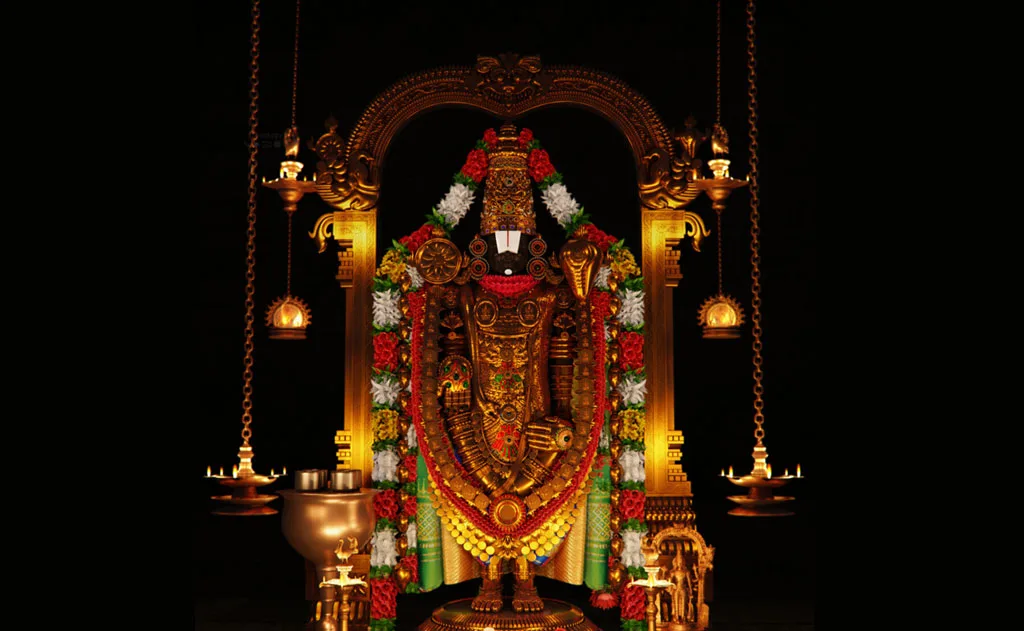
Among the most beloved and powerful mantras in the Hindu spiritual tradition is "Om Namo Venkatesaya"—a deeply sacred invocation dedicated to Lord Venkateswara, the presiding deity of Tirumala. Revered as the Kali Yuga Varada (the boon-giver of Kali Yuga), Lord Venkateswara is an incarnation of Vishnu whose divine presence draws millions of devotees from around the world. At www.hindutone.com, we delve into the meaning, significance, and spiritual benefits of chanting this timeless mantra.
Meaning of Om Namo Venkatesaya
The mantra is composed of four profound elements:
- Om – the primordial sound, symbol of universal consciousness
- Namo – a salutation, meaning “I bow to” or “I surrender”
- Venkatesaya – referring to Lord Venkateswara, the Lord who removes sins and grants liberation
Together, the mantra means: “I bow in reverence to Lord Venkateswara.” It is both a devotional surrender and a request for divine guidance.
Spiritual Significance
Chanting "Om Namo Venkatesaya" invokes the grace and blessings of Lord Venkateswara. This mantra is:
- A remover of obstacles and karmic burdens
- A catalyst for inner peace and mental clarity
- A shield of divine protection against negativity
- A path to devotion, humility, and spiritual evolution
Origin and Popularity
This mantra gained global popularity through devotional practices, temple traditions, and the renowned Telugu film “Om Namo Venkatesaya.” It is often recited in the sacred premises of Tirumala temple, during Suprabhatam, and by countless households and spiritual communities.
How to Practice the Mantra
- Best Time to Chant: Early morning (Brahma Muhurta) or during evening prayers
- Number of Repetitions: 108 times using a tulsi or rudraksha mala
- Ideal Environment: A clean, quiet space with a picture or idol of Lord Venkateswara
- Optional Additions: Lighting a ghee lamp, offering tulsi leaves, or visiting the temple
Devotional and Psychological Benefits
- Instills a sense of surrender and faith
- Calms the nervous system through its sonic rhythm
- Helps in reducing anxiety, fear, and restlessness
- Creates a vibrational field of divine protection around the chanter
Conclusion
"Om Namo Venkatesaya" is not just a mantra—it is a bridge to the divine, a call from the heart to the infinite compassion of Lord Venkateswara. Its repetition sanctifies the mind, empowers the spirit, and illuminates the path of bhakti. At Hindutone, we celebrate the healing power of sacred sound and invite all seekers to experience the divine through this holy chant.
What is the scriptural root of the name Venkatesa, and what does it reveal about the deity?
The name Venkateswara is derived from the Sanskrit compound Venkata-Isha, meaning 'Lord of Venkata.' The hill itself carries a layered etymology: one tradition traces 'Venkata' to the combination of 'Vem' (sins) and 'Kata' (the power to destroy), making Venkatadri literally the hill that burns away accumulated sins. This interpretation is supported in the Brahmanda Purana and the Venkatachala Mahatmya section of the Skanda Purana, which extensively glorify the sanctifying power of the hill and its presiding Lord.
The Varaha Purana dedicates an entire section—the Venkatachala Mahatmya—to explaining why this kshetra (sacred ground) holds exceptional efficacy in the present age. It describes how even the sight of the hill, called Seshachalam because it rests upon Adishesha (the cosmic serpent), grants liberation. The mantra 'Om Namo Venkatesaya' thus encodes within its very last word the promise of the hill: every repetition is a symbolic ascent of Venkatadri and a step closer to moksha.
How does Om Namo Venkatesaya relate to the Ashtakshara and other Vaishnava maha-mantras?
Vaishnava tradition recognises a hierarchy of sacred formulae centred on Vishnu and his avatars. The most foundational is the Ashtakshara mantra 'Om Namo Narayanaya' (eight syllables), enshrined in the Taittiriya Aranyaka of the Krishna Yajurveda. 'Om Namo Venkatesaya' follows the identical grammatical structure—pranava (Om), namah (salutation in the dative case), and the deity's name in the dative—making it a kshetra-specific invocation that carries the same devotional grammar as its Vedic prototype.
The Pancharatra Agama tradition, which governs the ritual worship at Tirumala Tirupati Devasthanams, classifies Venkateswara as Svayam Vyakta—self-manifested Vishnu—rather than a consecrated image installed by human hands. This status elevates the mantra: addressing a Svayam Vyakta murti directly through his kshetra-name is considered particularly potent because the deity's presence is held to be natural and eternal. Devotees who are initiated into the Ramanuja sampradaya of Sri Vaishnavism often recite this mantra alongside the Dvaya mantra as part of daily nityakarma (obligatory devotional practice).
What is the place of this mantra within the Tirumala Suprabhatam and daily temple ritual?
The predawn service at Tirumala begins with Sri Venkateswara Suprabhatam, composed by the 15th-century scholar-poet Sri Prativadi Bhayankaram Annangaracharya. The Suprabhatam's 29 verses serve as the divine wake-up call to the Lord, and 'Om Namo Venkatesaya' functions as the devotional anchor that pervades the entire morning sequence of rituals. Following Suprabhatam, the Thomala Seva (floral garland service) and Archana are performed, during which priests chant the Venkateswara Ashtottara Shatanamavali—108 names of the Lord—each prefixed with 'Om' and suffixed with 'namah', structurally echoing the root mantra.
The Tirumala temple follows the Vaikhanasa Agama, one of the two principal Vaishnava Agamic traditions, for its daily worship schedule (nityaradhana). The schedule spans six major sevas from Thiruvanandal (early morning) to Ekanta Seva (night). Chanting 'Om Namo Venkatesaya' at home during Brahma Muhurta—the 48-minute window approximately 96 minutes before sunrise—is considered an act of aligning one's personal worship with the cosmic rhythm of the temple's opening worship, creating a spiritual resonance between the individual devotee and the Lord's eternal seva.
Which pilgrimage traditions and regional customs surround the chanting of this mantra?
The padayatra (foot pilgrimage) to Tirumala, undertaken by millions of devotees from Andhra Pradesh, Telangana, Tamil Nadu, and Karnataka, is itself conducted as an extended recitation of 'Om Namo Venkatesaya.' Groups of pilgrims walking the traditional footpath routes—particularly the ancient Alipiri path at the base of Tirupati and the Srivari Mettu path from Chandragiri side—recite the mantra rhythmically to maintain pace and focus, transforming each step into an act of japa (meditative repetition). This practice transforms the entire 11-kilometre ascent into a moving mantra mala.
In many Telugu households, it is customary to begin any auspicious undertaking—a wedding, a new business, an examination—with 108 recitations of 'Om Namo Venkatesaya,' often accompanied by breaking a coconut and offering it to a picture of Venkateswara. In Karnataka and Tamil Nadu, where the Lord is venerated as Srinivasa and Perumal respectively, the mantra is integrated into Thiruvasagam-style bhajan sessions and is sung in call-and-response format during Vaikunta Ekadashi and Brahmotsavam celebrations.
What does the theology of Kali Yuga Varada mean, and why is this mantra considered especially effective in the present age?
The title Kali Yuga Varada—'the boon-granting Lord of Kali Yuga'—appears prominently in the Bhavishyottara Purana and is elaborated in the Venkatachala Mahatmya. Hindu cosmology describes Kali Yuga as an age marked by diminished tapas (austerity), shortened lifespans, and weakened mental concentration, making the rigorous practices of earlier yugas inaccessible to most people. The Puranas consequently teach that namasankirtana—the loving repetition of divine names—is the supreme sadhana of this age, a teaching encapsulated in the Srimad Bhagavatam (12.3.51): 'kaler dosha-nidhe rajann asti hy eko mahaan gunah kirtanad eva krishnasya mukta-sangah param vrajet.'
Lord Venkateswara is understood to have deliberately chosen Venkatadri as his permanent abode in the Kali Yuga so that even those without scriptural learning or ritual perfection can receive his grace simply through darshan (sacred sight) and nama-japa. Chanting 'Om Namo Venkatesaya' is therefore not merely devotional sentiment but a theologically grounded act: it invokes a deity who has, according to scriptural testimony, made himself maximally accessible precisely in the age when human spiritual capacity is at its lowest ebb. This understanding gives the mantra its quality of being simultaneously simple in form and vast in soteriological scope.
How can a sincere devotee deepen the practice of this mantra beyond simple repetition?
Classical Bhakti shastra, particularly the Narada Bhakti Sutras, distinguishes between sakama bhakti (devotion with desire) and nishkama bhakti (desireless devotion). A practitioner may begin chanting 'Om Namo Venkatesaya' with specific prayers—health, protection, removal of debt—and this is entirely valid within tradition. Over time, however, the Sutras encourage the devotee to move toward chanting the mantra purely for the joy of remembering the Lord, without any agenda. Sri Ramanujacharya's concept of prapatti (total self-surrender) described in the Gadya Traya holds that the ultimate fruit of such surrender is the Lord's unconditional grace, which subsumes and exceeds all petitioned boons.
Integrating the mantra into seva (selfless service) deepens its potency significantly. Participating in annadanam (free food distribution) at the Tirumala temple complex—one of the largest such operations in the world—while internally reciting the mantra links outer action with inner invocation. At home, pairing the japa with regular reading of the Venkateswara Mahatmya from the Skanda Purana, or listening to the Tiruppavai of Andal (which celebrates Vishnu's grace in the context of devotional surrender), creates a multi-layered sadhana that nourishes intellect, emotion, and will simultaneously.
More prayers for NRI families
- Chilkur 'Visa Balaji': 11 and 108 pradakshina guide for NRIs
- Hindu prayers and mantras for green card approval (NRI guide)
Also read: Venkateswara Ashtottaram (108 names).
Frequently Asked Questions
What is the Om Namo Venkatesaya?
Among the most beloved and powerful mantras in the Hindu spiritual tradition is "Om Namo Venkatesaya" —a deeply sacred invocation dedicated to Lord Venkateswara , the presiding deity of Tirumala. Revered as the Kali Yuga Varada (the boon-giver of Kali Yuga), Lord Venkateswara is an incarnation of Vishnu whose divine presence draws millions of devotees from a
How many times should the Om Namo Venkatesaya be chanted?
It is traditionally chanted 108 times using a rudraksha or tulsi mala. Even 11 or 21 sincere repetitions daily are considered beneficial — steady, focused practice matters more than the count.
What is the best time to chant the Om Namo Venkatesaya?
Dawn (Brahma Muhurta) after a bath is considered ideal, though it may be chanted any time with a calm, focused mind. Many devotees keep a fixed daily time to build consistency.
Who can chant the Om Namo Venkatesaya?
Anyone may chant it with faith and a pure mind, regardless of age, gender or background. Beginners benefit from first hearing the correct pronunciation and understanding its meaning.
What are the benefits of chanting the Om Namo Venkatesaya?
Devotees chant it to invoke Lord Vishnu's grace — for inner peace, protection, focus and spiritual progress.
You might also like
Om Namo Narayanaya
Lingaraja: Divine Mysteries & Soul-Stirring Miracles of the Eleventh-Century Shiva-Vishnu Temple at Bhubaneswar
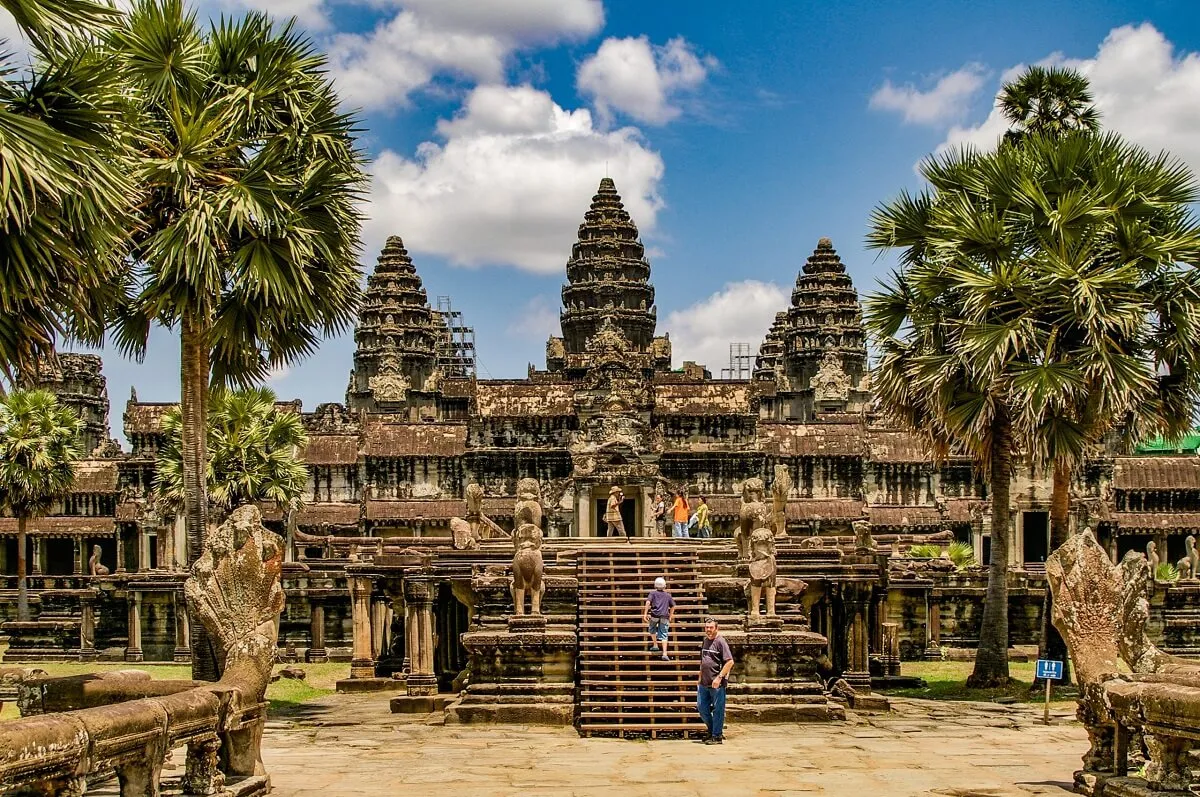
Angkor Wat: Divine Mysteries & Soul-Stirring Miracles of Lord Vishnu's Cosmic Temple