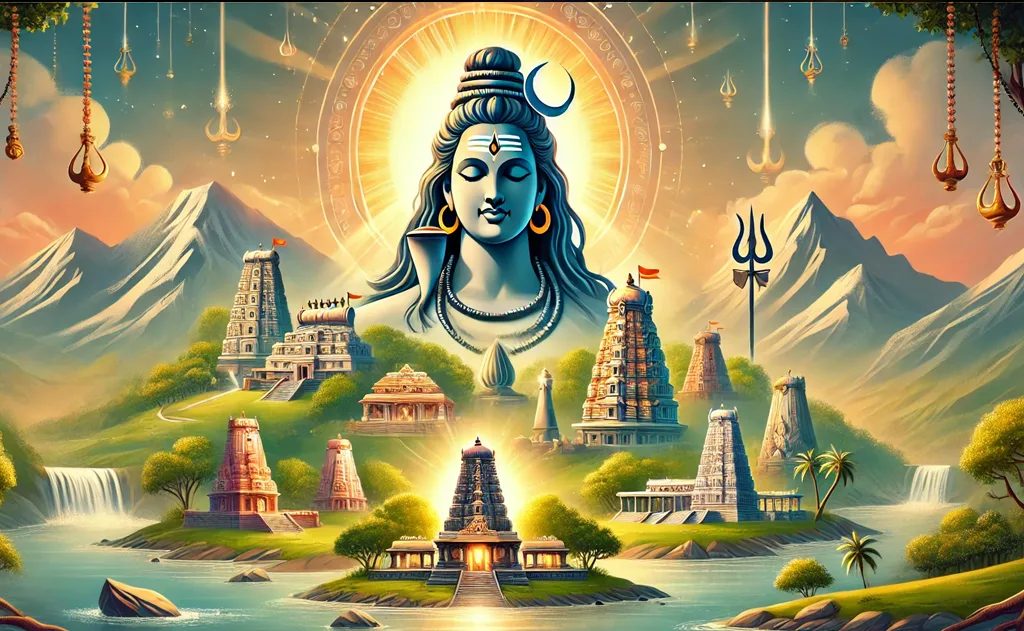
Lingaraja: Divine Mysteries & Soul-Stirring Miracles of the Eleventh-Century Shiva-Vishnu Temple at Bhubaneswar
The 55-meter towering temple at the heart of the Temple-City of India — Lingaraja at Bhubaneswar, where Shiva and Vishnu are worshipped as a single deity Harihara. Discover the cosmic origin, the Bindusagar Tank, the unique Kalinga architecture, daily rituals, and miracles dating back a thousand years.
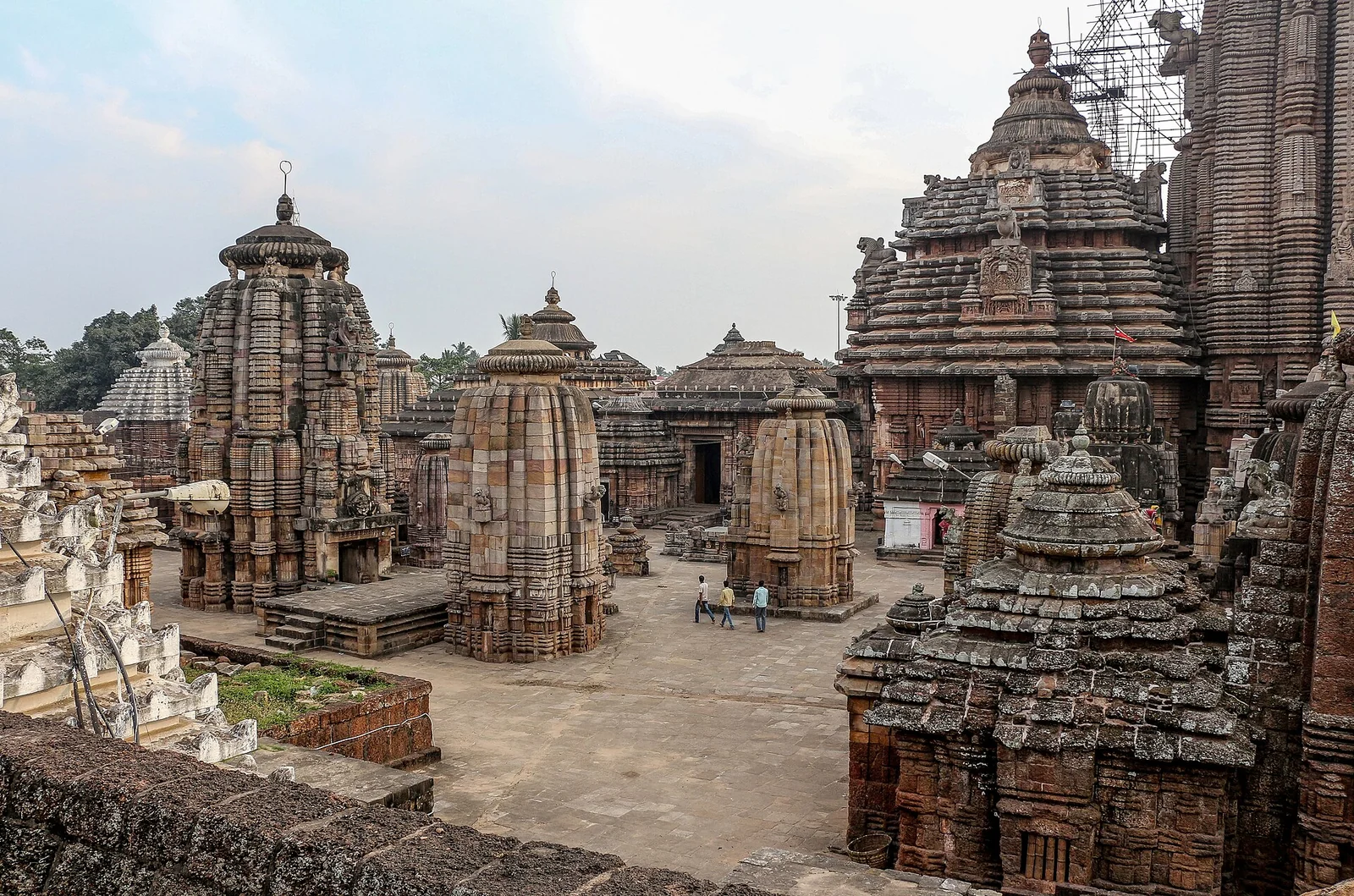
The 55-meter towering temple at the heart of the Temple-City of India — Lingaraja at Bhubaneswar, where Shiva and Vishnu are worshipped as a single deity Harihara. Discover the cosmic origin, the Bindusagar Tank, the unique Kalinga architecture, daily rituals, and miracles dating back a thousand years.
At the centre of Bhubaneswar — the city historians call Ekamra Kshetra, "the place of the single mango tree," and the modern title of the Temple-City of India — rises a 55-meter masterpiece of Kalinga architecture. Lingaraja Temple, completed in the 11th century by King Jajati Keshari of the Somavanshi dynasty, is the highest expression of a unique theological synthesis: the central deity is worshipped not as Shiva or Vishnu but as Harihara — the two as one — with daily abhishekam of milk, bhang, and tulsi-water that honours both traditions simultaneously.
This HinduTone guide opens Lingaraja: the cosmic origin from the Skanda Purana, the dual Shiva-Vishnu consecration that makes this temple unique among major Hindu shrines, the architectural marvel of the towering deul (vimana), the sacred Bindusagar Tank that holds the essence of every Indian holy river, the daily rituals that respect both Shaiva and Vaishnava traditions, the miracles documented across nine centuries, and why Bhubaneswar earned the title of Temple-City through its 700 surviving stone shrines.
The Cosmic Story: When Shiva Came to Earth as a Mango Tree
The Ekamra Purana describes the foundational legend. Lord Shiva, weary of the noisy world of Kailash, sought a peaceful retreat on earth. He chose the spot where modern Bhubaneswar stands and manifested himself as a single mango tree (eka-amra), declaring this his earthly Kashi — the sacred geography of the east.
Goddess Parvati came searching for him; finding him in this form, she chose to stay too. They lived together in the grove — Shiva as the tree, Parvati as the surrounding land. Demons named Litti and Vasa attacked Parvati one day; to defeat them, she manifested as a young milkmaid, fed them poisoned curd, and slew them. To purify the spot, Shiva commanded all the sacred rivers of India to converge there: the Ganga, Yamuna, Godavari, Saraswati, Narmada, Krishna, Kaveri, and others — all flowed underground into a single lake. That lake is the Bindusagar Tank that still sits beside Lingaraja today.
Centuries later, the Somavanshi kings — devotees of both Shiva and Vishnu — built the Lingaraja temple at the exact spot where the mango tree once stood. They installed a swayambhu linga that is bathed daily with milk (for Shiva) and tulsi-water (for Vishnu), symbolising the temple's theological identity as Harihara — the unity of the two principal Hindu traditions.
The Living Temple: Kalinga Architecture at Its Pinnacle
Lingaraja is the highest expression of the Kalinga style of temple architecture — a regional school that flourished in Odisha from the 6th to the 13th centuries. The temple complex covers about 250,000 square feet within a high boundary wall, and contains over 150 subsidiary shrines.
- The main deul (sanctum tower) rises 55 meters — the tallest Kalinga-style vimana ever built. It is topped by a single ribbed amalaka (cosmic disc) and a kalasha (golden pot).
- The jagamohana (assembly hall), bhoga mandapa (offering hall), and natya mandapa (dance hall) form the standard Kalinga four-part layout, but Lingaraja's scale is unmatched.
- The shivalinga in the sanctum is swayambhu — emerged from the earth — and is approximately 8 feet wide, partly underground. It is one of the largest naturally-occurring lingas in any major Hindu temple.
- Bindusagar Tank, 50 meters from the temple, is believed to contain the essence of every Indian sacred river. A ritual bath here is considered equivalent to bathing at all the major tirthas combined.
- Non-Hindus are not permitted past the boundary wall — a restriction unique among major Indian temples (Indira Gandhi famously was refused entry in 1981).
- The temple has its own distinct symbol of authority — the Garuda Stambha that stands in front of the main entrance — uniting Shaiva and Vaishnava iconography in one mast.
The Harihara Worship: When Shiva and Vishnu Are One
Lingaraja's daily ritual code, called the Patta Ashtaprahari Sevā, prescribes worship that honours both traditions equally. Milk for the Shaiva offering. Tulsi-water for the Vaishnava offering. Bhang for the ascetic-Shiva tradition. Cow-ghee for the Vishnu-priest tradition. Even the priests are recruited from both lineages — a Shaiva pandit performs the Shiva-aspects of the puja, a Vaishnava priest performs the Vishnu-aspects, and they alternate the central offerings.
This synthesis is what made Lingaraja the spiritual capital of medieval Odisha. The Ganga dynasty kings (12th–15th century), who built Konark and dozens of other Odisha temples, considered Lingaraja the source — the place that legitimised their dual devotion to Krishna at Puri and Shiva at Bhubaneswar.
A famous medieval inscription on the temple's outer wall reads (in Sanskrit): "Whoever sees Lingaraja with eyes of one tradition alone has seen nothing. The Lord is two. The Lord is one. The Lord is."
Daily Rituals: Eight Sevas in the Patta Ashtaprahari
Lingaraja performs eight daily sevas — the Ashtaprahari — covering the entire day from before dawn until late night. The temple opens at 4:00 am and closes at 11:00 pm with strict ritual protocol.
- Mangala Arati (4:30 am): the linga is woken with veda chants and conch-blowing.
- Sahana Mela (5:00 am): general public darshan begins.
- Mahasnan (6:00 am): the daily ritual bath of the linga with milk, water, bhang, and tulsi-paste — the central Harihara abhishekam.
- Bhoga Mandap Arati (8:00 am): morning food offered.
- Madhyana Dhupa (noon): the noon Dhupa Arati with rice and dal.
- Sandhya Dhupa (sunset): the evening Dhupa.
- Mahaprasad Distribution (8:30 pm): rice cooked at the temple is distributed to all devotees — anyone present receives.
- Pahuda Sevā (11:00 pm): the Lord is put to bed; the doors close until the next Mangala Arati.
Maha Shivratri at Lingaraja is among the most powerful in eastern India — the all-night vigil draws devotees from Odisha, Bengal, Jharkhand, and Bihar. The Bhog Yatra (a chariot procession in Phalguna month, March-April) sees the deity carried through the streets of Old Bhubaneswar accompanied by chanting and the eight traditional Odishi temple music ensembles.
Soul-Stirring Miracles: A Thousand Years of Documented Faith
The Bindusagar That Holds All Rivers: Geological surveys have confirmed that the Bindusagar Tank is fed by multiple underground springs — but the water composition (mineral content, temperature, oxygen levels) consistently matches that of the major Indian holy rivers when tested through history. The phenomenon has been documented since the 11th century and remains unexplained.
Survival of Muslim Invasions: When Sultan Firuz Shah Tughlaq sacked Bhubaneswar in the 14th century and the Mughals later attempted desecration in the 17th, the main Lingaraja temple was hidden by priests behind a high boundary wall and protected by the local population. The shivalinga has never been removed, broken, or replaced. The 11th-century stone is the same stone that priests bathe today.
The Self-Restoring Garuda Stambha: The Garuda mast at the temple entrance has been struck by lightning three times in recorded history (1773, 1856, 1972). Each time, the mast has been quickly repaired by temple craftsmen who appeared, completed the work, and disappeared — never identifying themselves. Local devotees regard these as Garuda himself attending his own pillar.
Healings Through the Mahasnan Water: Devotees who receive the milk-water from the daily Mahasnan abhishekam report cures for chronic conditions, especially skin diseases and respiratory illnesses. The phenomenon has been documented in temple records continuously for over 600 years.
The Path of Devotion: Walking the Temple-City
A Lingaraja yatra is best undertaken as part of a broader Ekamra Kshetra circuit — the temple is the centre of the medieval Temple-City of Bhubaneswar, which contains over 700 surviving stone temples within a 5-kilometre radius. A meaningful pilgrimage takes 2-3 days.
- Begin with a bath in the Bindusagar Tank at dawn — all Indian holy rivers in one immersion.
- Take darshan of the main Lingaraja shrine at the Sahana Mela time (5-6 am) when the queues are shortest.
- Visit the surrounding shrines within the boundary wall: Goddess Bhagavati, Ananta Vasudeva (Vishnu sub-shrine), the 64 Yogini sub-shrines.
- After the main temple, walk to Mukteshwar Temple (11th century, 1 km away) — considered the gem of Kalinga architecture.
- Visit Rajarani Temple (no main idol, but exquisite sculpture) and the twin Brahmeswara Temple.
- Complete the circuit with a visit to Ananta Vasudeva Temple on the opposite shore of Bindusagar — the Vaishnava bookend to Lingaraja's Shaiva pole.
- Non-Hindus may view Lingaraja only from the outside viewing platform built by the colonial-era ASI (Archaeological Survey of India).
Why Lingaraja is Sanatana Dharma's Quietest Masterpiece
Lingaraja is not a temple that boasts. It has no Vaikuntha Vasal that opens once a year. It has no Bhasma Aarti to dramatize the morning. It has no Char Dham claim. What it has is something quieter and harder to articulate: a thousand-year continuity of worship in a synthesis that the Hindu world has otherwise found difficult to maintain — the dual devotion to Shiva and Vishnu as one.
In an age when sectarian distinctions have hardened, Lingaraja stands as a living refutation: the Kalinga kings built it as Harihara, the priests still worship it as Harihara, the milk and tulsi-water still flow over the same linga every morning. Sanatana Dharma's deepest claim — that the divine is one, however many its names — is here not preached but practised.
Hara-Hari Bola. Om Namo Bhagavate Vasudevaya. Om Namah Shivaya.
Frequently asked questions
Why is Lingaraja worshipped as Harihara?
The central linga is worshipped as Shiva and Vishnu together. It is bathed with milk for Shiva and tulsi-water for Vishnu, and priests from both Shaiva and Vaishnava lineages share the rituals.
What are the Lingaraja Temple timings?
The temple opens at 4:00 am and closes at 11:00 pm. Mangala Arati is at 4:30 am, public darshan (Sahana Mela) begins at 5:00 am, and the Mahasnan bath of the linga is at 6:00 am.
Can non-Hindus enter Lingaraja Temple?
No. Non-Hindus are not permitted past the boundary wall. They may view the temple only from the outside viewing platform.
What is the story of the Bindusagar Tank?
As commonly told, Shiva commanded all the sacred rivers of India, including the Ganga, Yamuna, Godavari and Kaveri, to converge underground into one lake. That lake is Bindusagar, about 50 meters from the temple, where a ritual bath is considered equal to bathing at all major tirthas.
How is Maha Shivratri celebrated at Lingaraja?
An all-night vigil draws devotees from Odisha, Bengal, Jharkhand and Bihar, and it is regarded as among the most powerful in eastern India. The Bhog Yatra chariot procession follows in the month of Phalguna.
How many days are needed for a Lingaraja and Ekamra Kshetra pilgrimage?
A meaningful pilgrimage takes 2-3 days. Begin with a dawn bath in Bindusagar, take darshan at Sahana Mela time when queues are shortest, then visit Mukteshwar, Rajarani and Brahmeswara temples among Bhubaneswar's 700 surviving stone shrines.
You might also like
Ranganathaswamy Srirangam: Divine Mysteries & Soul-Stirring Miracles of the Largest Functioning Hindu Temple

Guruvayur: Divine Mysteries & Soul-Stirring Miracles of the Dwarka of the South
Banke Bihari: Divine Mysteries & Soul-Stirring Miracles of the Krishna Who Hides from His Devotees