The Twelve Jyotirlingas of Lord Shiva: A Complete Pilgrim's Guide Across India
Twelve pillars of light, one supreme Shiva — discover the complete circuit of India's most sacred Jyotirlingas. Cosmic origin in the Skanda Purana, profiles of all 12 shrines from Somnath to Grishneshwar, suggested yatra itineraries, and the spiritual significance of completing the Dwadasha Jyotirlinga darshan.
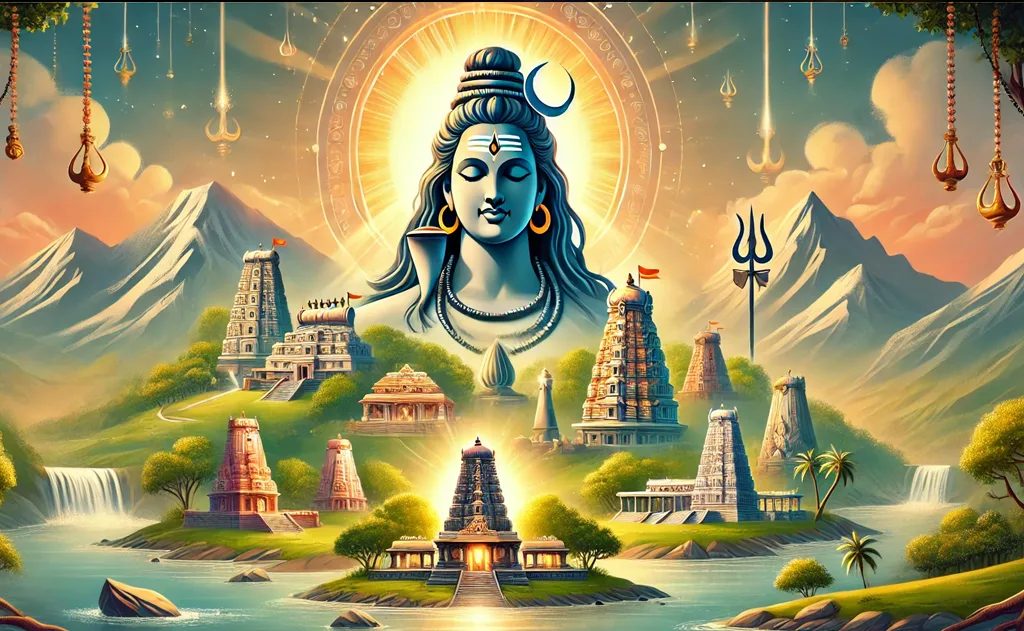
Twelve pillars of light, one supreme Shiva — discover the complete circuit of India's most sacred Jyotirlingas. Cosmic origin in the Skanda Purana, profiles of all 12 shrines from Somnath to Grishneshwar, suggested yatra itineraries, and the spiritual significance of completing the Dwadasha Jyotirlinga darshan.
Twelve pillars of cosmic light, scattered across India from the Arabian Sea to the Bay of Bengal, from the high Himalayas to the deep south — the Dwadasha Jyotirlingas are the most sacred sites of Shaiva worship in the Hindu world. Each one was consecrated, the Shiva Purana tells us, at the precise spot where Lord Shiva himself manifested as a column of infinite light. Each one carries a distinct legend, a distinct architectural tradition, a distinct ritual code. And yet together they form a single coherent geography of Shiva's presence on earth, an unbroken pilgrimage circuit that the devout have walked for two thousand years.
This HinduTone pillar guide profiles all twelve Jyotirlingas — their cosmic origin from the Brahma-Vishnu dispute, the unique features and architecture of each shrine, the daily rituals, the suggested yatra sequences, the spiritual benefits of completing the Dwadasha Jyotirlinga darshan, and pointers to detailed individual guides for the most-visited shrines.
What is a Jyotirlinga? The Cosmic Origin
The Shiva Purana describes the foundational event. In the beginning, Brahma the creator and Vishnu the preserver argued about which of them was supreme. As their dispute reached cosmic proportions, an infinite pillar of light pierced through the three worlds — an axis of fire with no beginning and no end. They were stunned. To settle the matter, they agreed: whoever found the source of the light would be declared supreme.
Vishnu took the form of a great boar (Varaha) and burrowed downward, searching for the pillar's base. Brahma took the form of a swan and flew upward, searching for its top. Eons passed. Neither found an end. Vishnu humbly returned and admitted defeat. Brahma, refusing to admit ignorance, falsely claimed he had reached the top — and was instantly cursed by Shiva for the lie, condemning him to be the only major deity without a major temple of his own (which is why the only major Brahma temple in India is at Pushkar).
From that endless pillar of light, Shiva emerged in his cosmic form, declaring himself the unmanifest source of all. The pillar then settled across the earth in twelve specific locations — twelve Jyotirlingas, twelve self-manifested columns of light that became, over the ages, the most sacred Shaiva pilgrimage sites in the world. They are not idols carved by human hands. They are the original light itself, given physical form.
The Twelve Jyotirlingas: Complete List
In the canonical order recited in the Dwadasha Jyotirlinga Stotra (composed by Adi Shankaracharya in the 8th century CE), the twelve Jyotirlingas are:
- 1. Somnath — Gujarat (the first Jyotirlinga; Soma the Moon's tapasya)
- 2. Mallikarjuna — Andhra Pradesh (Lord Shiva as the husband of Goddess Mallika)
- 3. Mahakaleshwar — Ujjain, Madhya Pradesh (Shiva as the Lord of Time)
- 4. Omkareshwar — Madhya Pradesh (Shiva on the Om-shaped Mandhata island)
- 5. Vaidyanath (Baidyanath) — Deoghar, Jharkhand (Shiva as the divine physician)
- 6. Bhimashankar — Pune district, Maharashtra (Shiva who killed Tripurasura's son Bhima)
- 7. Ramanathaswamy — Rameswaram, Tamil Nadu (Shiva installed by Lord Rama)
- 8. Nageshwar — Dwarka, Gujarat (Shiva as the Lord of Serpents)
- 9. Kashi Vishwanath — Varanasi, Uttar Pradesh (Shiva as the Lord of the Universe)
- 10. Trimbakeshwar — Nashik, Maharashtra (Shiva with three eyes, source of Godavari)
- 11. Kedarnath — Uttarakhand (Shiva in the high Himalayas, hump of Nandi)
- 12. Grishneshwar — Aurangabad, Maharashtra (Shiva who granted moksha to a devoted woman)
Profile of Each Jyotirlinga
1. Somnath — Gujarat
On the Saurashtra coast where the Arabian Sea pounds the ancient shoreline, Somnath was the first of the twelve to be consecrated. The Moon god Soma performed intense tapasya here after being cursed with a wasting disease by his father-in-law Daksha. Shiva, moved by the devotion, partially restored Soma — granting that he would wax and wane forever but never fade completely. Soma installed the Jyotirlinga in gratitude. The temple has been destroyed seventeen times and rebuilt seventeen times across two thousand years, most famously by Mahmud of Ghazni in 1024 and most recently restored by Sardar Vallabhbhai Patel in 1951. See the complete guide: hindutone.com/temples/somnath-divine-mysteries-miracles/
2. Mallikarjuna — Srisailam, Andhra Pradesh
On the Nallamala hills above the Krishna river, Mallikarjuna combines Jyotirlinga status with Shakti Peetha status — one of only two places in India where the male and female cosmic principles are venerated together at the same site (the other being Kashi). The name comes from Mallika (Goddess Parvati) and Arjuna (Lord Shiva); when Karthikeya left home in anger after a sibling dispute with Ganesha, Shiva and Parvati came to this hill to seek him. They never returned to Kailash. The temple's strict Vaikhanasa tradition continues daily rituals exactly as prescribed in the 9th-century Tantric texts. Srisailam is also one of the rare temples where the deity is touched directly during darshan — a privilege not granted at most major Jyotirlingas.
3. Mahakaleshwar — Ujjain, Madhya Pradesh
The only Jyotirlinga where the deity faces south — the direction of Yama, the god of death — Mahakaleshwar is Shiva as the conqueror of time itself. The sanctum lies below ground level; the pilgrim physically descends to meet the Lord of Time. The famous Bhasma Aarti at 4:00 AM is the only Hindu ritual in the world that uses cremation ash as the primary offering. The shrine emerged when Shiva descended in his terrifying form to slay the demon Dushana, who threatened the brahmin boy Shrikar. See the complete guide: hindutone.com/temples/mahakaleshwar-divine-mysteries-miracles/
4. Omkareshwar — Madhya Pradesh
On the Mandhata island in the Narmada river — an island shaped exactly like the Hindu Om symbol when viewed from above — Omkareshwar holds a unique distinction: it is the only Jyotirlinga where two lingas are worshipped together. The main Omkareshwar linga is on the island itself; the Amareshwar linga is on the south bank of the Narmada. Devotees traditionally take darshan of both. The legend describes how Mandhata, an ancestor of Lord Rama, performed such intense tapasya here that Shiva agreed to settle permanently on the island. The Narmada parikrama (circumambulation of the entire Narmada river, a 1,300-km pilgrimage) traditionally begins and ends at Omkareshwar.
5. Vaidyanath (Baidyanath) — Deoghar, Jharkhand
Also called Vaijnath or Baidyanath, this Jyotirlinga is Shiva as the divine physician — the Lord who heals all illness. The legend is unusual: when Ravana could not move the Kailash mountain itself to Lanka, he received the Lord's favour and was given a Shivalinga with the condition that it could not be set down on earth until reaching Lanka. Ravana, needing to relieve himself en route, was tricked by Vishnu into handing the linga to a Brahmin boy — who set it down at Deoghar. The linga became immovable. Ravana could not lift it; he punched it in frustration, leaving the mark on the shivalinga visible to this day. Vaidyanath is especially powerful for healings — devotees with chronic illness make the pilgrimage and report dramatic cures.
6. Bhimashankar — Pune District, Maharashtra
In the dense Western Ghats forests at 3,250 feet altitude, Bhimashankar is where Lord Shiva slew Tripurasura's son Bhima — not the famous Mahabharata Bhima but a different demon, son of Karkati and Kumbhakarna. When Bhima learned that his father Kumbhakarna had been killed by Rama, he performed tapasya and was granted invincibility — then began terrorizing devotees of Shiva. The gods pleaded with Shiva, who emerged from the earth as a column of fire and killed Bhima in a single blow. The sweat that poured from Shiva's body formed the Bhima river. The temple is built in the Hemadpanthi style — black volcanic stone, intricate carvings, and a unique north-facing main entrance.
7. Ramanathaswamy — Rameswaram, Tamil Nadu
The only Jyotirlinga in the Char Dham — the four-corner pilgrimage circuit of India — and the only one where Lord Vishnu (as Lord Rama) himself worshipped Shiva. After defeating Ravana, Rama needed to install a Shivalinga to absolve the brahmahatya sin. Sita made a linga from sea-sand at the last muhurat moment; Hanuman arrived with a Kailash linga moments later. Rama installed Sita's sand-linga as the main deity and Hanuman's Kailash linga as Vishwanath beside it, decreeing that pilgrims must worship Vishwanath first. The temple has the longest pillared corridor of any temple in the world (1,219 meters), 22 sacred theerthams (wells), and is one of the rare places where the substance of the linga (compressed Treta Yuga sea-sand) has not eroded across millennia. See the complete guide: hindutone.com/temples/ramanathaswamy-divine-mysteries-miracles/
8. Nageshwar — Dwarka, Gujarat
Just outside Dwarka, the legendary city of Lord Krishna, Nageshwar is Shiva as the Lord of Serpents. The Shiva Purana describes how the demon Daruka and his demoness wife Daruka kidnapped a Shiva devotee named Supriya and his fellow pilgrims, imprisoning them in their underwater fortress. Supriya led the prisoners in chanting the Shiva Panchakshari mantra. Shiva manifested from the earth, killed Daruka, and installed himself as the local Jyotirlinga to grant protection to all pilgrims who passed through. The shrine is notable for its 25-meter-tall standing Shiva statue visible from a great distance, and for being the only Jyotirlinga associated with the Naga (serpent) tradition of Shaiva worship.
9. Kashi Vishwanath — Varanasi, Uttar Pradesh
The most spiritually charged shrine in all of Hinduism — Kashi Vishwanath stands at the centre of Varanasi, the city Lord Shiva carries on the tip of his trident, the only earthly ground where dying is said to grant moksha directly. The shivalinga is svayambhu (self-manifested). The garbhagriha is oriented toward Manikarnika ghat — the cremation ground. Devotees can touch the linga directly, a rare privilege among major temples. Saint Tulsidas composed the Ramcharitmanas here. The Kashi-Rameswaram pilgrimage — bathing in the Ganga at Kashi, carrying that water 2,500 km across India, pouring it on the Rameswaram linga — is the supreme north-south Hindu yatra. See the complete guide: hindutone.com/temples/kashi-vishwanath-divine-mysteries-miracles/
10. Trimbakeshwar — Nashik, Maharashtra
At the source of the Godavari river — the Ganga of the south — Trimbakeshwar holds the only three-faced Jyotirlinga in India. The three faces represent the Trimurti: Brahma, Vishnu, and Shiva. The lingas are tiny (less than a few centimetres each) and are worshipped together inside a silver crown. The temple has a strict tradition: only Brahmins are permitted into the innermost sanctum during the main puja, with pilgrims viewing from a slight distance. The Triambakeshwar Kumbh Mela — held every 12 years — is one of the four Kumbh Melas of India. The temple is also famous for the Narayan Nagbali puja, a unique rite to remove ancestral curses.
11. Kedarnath — Uttarakhand
At 11,755 feet in the Garhwal Himalayas, accessible only six months of the year (May to October) due to deep snow, Kedarnath is where the back of Nandi the bull merged with Mount Kedar after the Pandavas pursued Shiva for absolution after the Kurukshetra war. The shivalinga is uniquely shaped — pyramidal, conical, representing the hump of Nandi. The current temple is over 1,200 years old, built by Adi Shankaracharya himself, and has survived multiple earthquakes (most recently the 2013 flash flood) which left the temple miraculously intact while devastating the surrounding town. Kedarnath is part of both the Char Dham of Uttarakhand and the Panch Kedar circuit. See the complete guide on hindutone.com/temples/kedarnath-divine-mysteries-miracles/.
12. Grishneshwar — Aurangabad, Maharashtra
The last and twelfth Jyotirlinga, in the Daulatabad region near the famous Ellora Caves, Grishneshwar tells the unique story of a devoted woman named Kusuma. Married to a brahmin whose first wife killed her young son out of jealousy, Kusuma immersed her son's body in a pond she had blessed with daily Shiva worship — and her son emerged alive. Shiva, witnessing her unwavering devotion, manifested as the Jyotirlinga to grant moksha to her family. The shrine is the smallest of the twelve, accessible to all, with no caste or gender restrictions on the sanctum — making it the most democratic of the twelve. The temple's proximity to the Ellora rock-cut caves (UNESCO World Heritage Site) makes it a frequent destination for combined heritage-spiritual pilgrimage.
Suggested Yatra Itineraries
Completing the full Dwadasha Jyotirlinga circuit requires careful planning — the temples span over 3,000 kilometers across India. Most devotees split the yatra into regional clusters:
- Cluster A — South & West (5 temples, ~10 days): Somnath → Nageshwar (Dwarka, same day) → Mallikarjuna (Srisailam) → Ramanathaswamy (Rameswaram) → Bhimashankar (return via Pune).
- Cluster B — Central India (3 temples, ~5 days): Mahakaleshwar (Ujjain) → Omkareshwar (same state, easy day-trip) → Trimbakeshwar (Nashik).
- Cluster C — North (2 temples, ~7 days): Kashi Vishwanath (Varanasi) → Vaidyanath (Deoghar, train via Patna).
- Cluster D — Maharashtra remainder + Himalaya (2 temples, ~7 days): Grishneshwar (Aurangabad) → Kedarnath (Uttarakhand — only May-Oct).
- Total time for full yatra: 4-6 weeks for those doing it all in one stretch. Most devotees spread across 2-3 years.
A traditional sequencing rule: many lineages prescribe that the full yatra should begin at Somnath (the first Jyotirlinga consecrated) and conclude at Grishneshwar (the twelfth and last). The Kedarnath leg is typically inserted as a separate pilgrimage due to its seasonal accessibility.
Spiritual Benefits of the Dwadasha Jyotirlinga Darshan
The Shiva Purana is unambiguous: completing the full circuit of all twelve Jyotirlingas in a single lifetime is one of the highest forms of merit available to a Hindu devotee. The traditional benefits described:
- Absolution of accumulated karma across multiple lifetimes — particularly the heavier karmas of harm, deception, and broken vows.
- Removal of doshas (afflictions) including pitru-dosha (ancestral curses), graha-dosha (planetary afflictions), and kala-sarpa-dosha (serpent-time curse).
- Establishment of unbroken family lineage — children born to those who have completed the circuit are said to be born under unusually favourable astrological combinations.
- Moksha-grace — those who complete the yatra are promised that their consciousness at the moment of death will be drawn directly to Shiva's sanctum at Kashi, regardless of where they physically die.
- Protection during transitions — major life passages (marriage, childbirth, career change) become smoother for those whose family lineage has completed the yatra.
Modern devotees may not feel bound by traditional metaphysics, but the documented experiences of pilgrims who complete the circuit are consistent across centuries: profound shifts in life direction, dissolution of long-standing relationship blockages, and a settling of inner restlessness that cannot be attributed to ordinary travel-novelty.
The Dwadasha Jyotirlinga Stotram
Composed by Adi Shankaracharya in the 8th century, the Dwadasha Jyotirlinga Stotram is a single Sanskrit verse that names all twelve Jyotirlingas in sequence. The traditional belief: reciting this stotra is itself the equivalent of touching all twelve Jyotirlingas in person, for those who cannot complete the physical pilgrimage. The stotra begins:
"Saurashtre Somanatham cha, Sri Shaile Mallikarjunam | Ujjayinyam Mahakalam, Omkaram Mamaleshwaram |"
"Saurashtra holds Somnath, Sri Shaila holds Mallikarjuna; Ujjain holds Mahakal, the Om-shaped island holds Omkareshwar..."
The full stotra runs four verses and names all twelve in geographic and theological order. It is recited at the conclusion of every major Shiva puja in Maharashtrian, Gujarati, and Karnataka households — embedding the entire pilgrimage circuit into daily worship.
Best Times for the Dwadasha Jyotirlinga Yatra
- Sawan (Shravan month, July–August): the holiest Shiva month. Some pilgrims undertake the entire yatra in this single month — physically grueling but spiritually unsurpassed.
- Maha Shivratri (Phalguna Krishna Chaturdashi, Feb–March): the single most powerful Shiva night of the year. Many devotees time their yatra to be at Kashi or Somnath on this night.
- Karthika Purnima (Nov): the original Dev Diwali, anniversary of the Tripurasura destruction. Especially powerful at Somnath and Kashi.
- Avoid: monsoon for the Western Ghats temples (Bhimashankar, Trimbakeshwar); winter for Kedarnath (closed Nov-Apr).
- Best general season: October-November or February-March, when most regions are climate-pleasant.
Why the Twelve Jyotirlinga Yatra Defines Shaiva Devotion
Of all the pilgrimage circuits in Hinduism — the Char Dham, the Panch Kedar, the Ashta Vinayak, the Shakti Peethas — the Dwadasha Jyotirlinga is uniquely comprehensive. It spans north-south, east-west, mountain-coast, ancient-modern. It connects Tamil Nadu to Jharkhand, Gujarat to Uttarakhand, Maharashtra to Madhya Pradesh. It includes shrines so accessible they receive a million pilgrims a year (Kashi, Somnath) and shrines so remote they require helicopter or multi-day trekking (Kedarnath, Mallikarjuna). It honours legends from the Treta Yuga (Rama at Rameswaram), the Dwapara Yuga (Krishna near Nageshwar), the historical period (Adi Shankara at Kedarnath), and the modern period (Patel at Somnath).
To complete the twelve is to walk through every layer of Indian sacred geography — to touch the same light in twelve distinct manifestations, each with its own story, its own architecture, its own rhythm of worship. For those who finish the circuit, the cumulative experience is described as a kind of mapping — Shiva no longer feels remote or abstract but as an immediate presence felt at twelve specific coordinates that have been entered, walked, and bowed before.
Whether your circumstances permit the full pilgrimage or only the recitation of the Dwadasha Stotram in a home shrine, the twelve are with you. The light pillars do not move. They wait.
Om Namah Shivaya. Har Har Mahadev. Jai Shiva Shankara.
Frequently asked questions
How did the Jyotirlingas come into being?
As commonly told in the Shiva Purana, Brahma and Vishnu argued over who was supreme, and an infinite pillar of light appeared. Shiva emerged from it, and the pillar then settled across the earth in twelve places as the twelve Jyotirlingas.
Which is the first of the 12 Jyotirlingas?
Somnath in Gujarat, on the Saurashtra coast, is the first in the canonical order of the Dwadasha Jyotirlinga Stotra composed by Adi Shankaracharya. The Moon god Soma is said to have installed it in gratitude to Shiva.
Which Jyotirlinga faces south?
Mahakaleshwar in Ujjain, Madhya Pradesh, is the only Jyotirlinga where the deity faces south, the direction of Yama. Its sanctum lies below ground level, and its Bhasma Aarti is held at 4:00 AM.
Which Jyotirlinga is part of the Char Dham circuit?
Ramanathaswamy at Rameswaram, Tamil Nadu. It is the only Jyotirlinga in the Char Dham and is associated with Lord Rama worshipping Shiva after defeating Ravana. The temple has 22 sacred theerthams.
Which Jyotirlingas are in Maharashtra?
Bhimashankar in Pune district, Trimbakeshwar near Nashik and Grishneshwar near Aurangabad. Trimbakeshwar is the source of the Godavari, and Bhimashankar stands in the Western Ghats at 3,250 feet.
Which Jyotirlinga has two lingas worshipped together?
Omkareshwar in Madhya Pradesh, on the Om-shaped Mandhata island in the Narmada. The main Omkareshwar linga is on the island and the Amareshwar linga is on the south bank, and devotees traditionally take darshan of both.
You might also like

Bhimashankar Jyotirlinga Reopens June 15, 2026 After Major Renovation
Lingaraja: Divine Mysteries & Soul-Stirring Miracles of the Eleventh-Century Shiva-Vishnu Temple at Bhubaneswar
Ashta Vinayak Yatra: The Eight Sacred Ganesha Temples of Maharashtra — Complete Pilgrim's Guide