Banke Bihari: Divine Mysteries & Soul-Stirring Miracles of the Krishna Who Hides from His Devotees
The Krishna who cannot bear sustained eye contact — Banke Bihari at Vrindavan, where the curtain is drawn every few minutes lest devotees lose themselves in the divine gaze. Discover the cosmic origin, Swami Haridas, the unique no-bell no-conch worship, Jhulan Yatra, and miracles of the most intimate Krishna shrine in India.
The Krishna who cannot bear sustained eye contact — Banke Bihari at Vrindavan, where the curtain is drawn every few minutes lest devotees lose themselves in the divine gaze. Discover the cosmic origin, Swami Haridas, the unique no-bell no-conch worship, Jhulan Yatra, and miracles of the most intimate Krishna shrine in India.
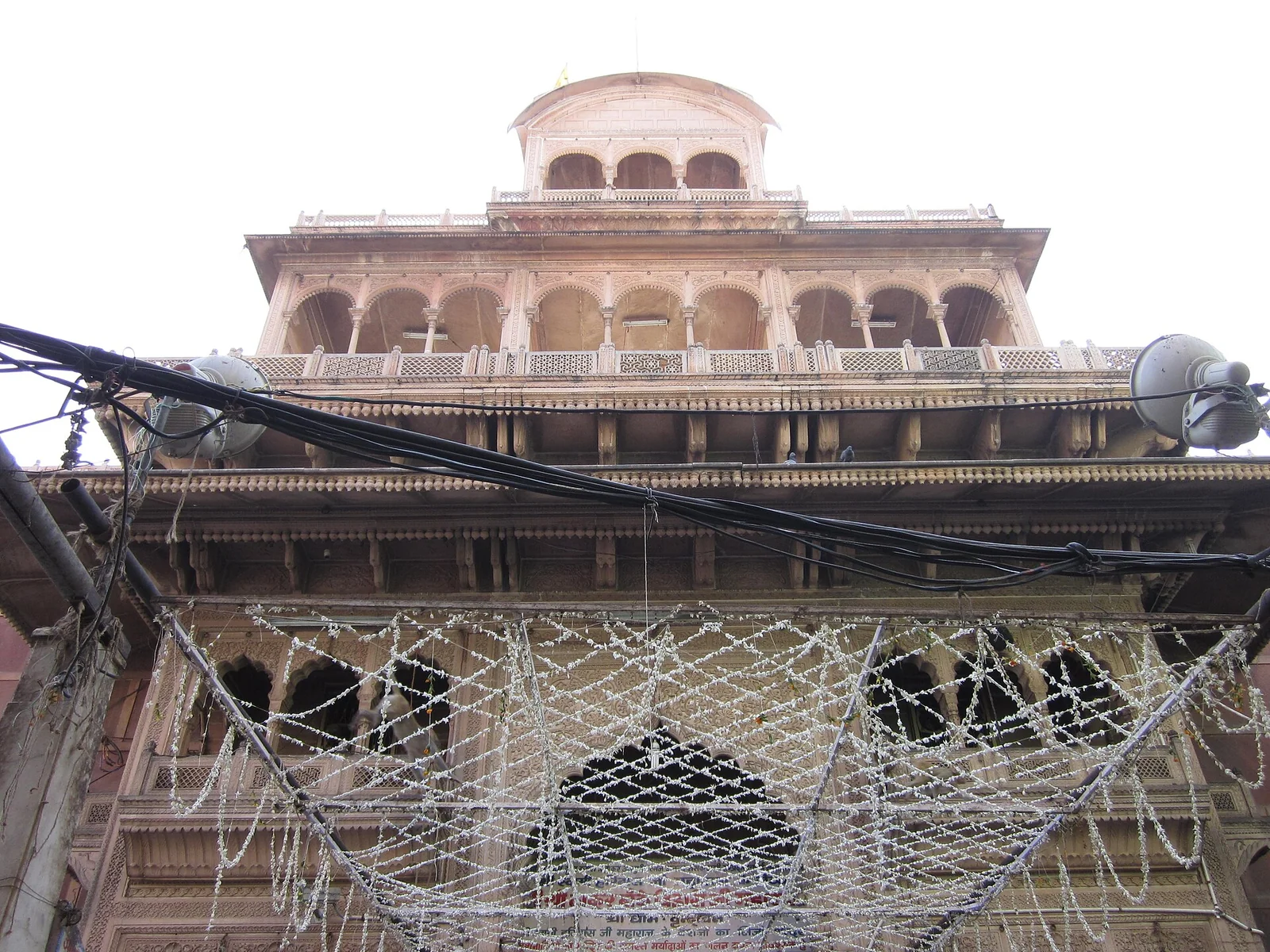
In the narrow lanes of Vrindavan, behind the Yamuna river's western bank, in a temple that has no architectural grandeur but draws thousands of pilgrims every day, lives a Krishna unlike any other. He is small — a child-form Krishna, barely three feet tall, leaning slightly on a flute. He does not wear a crown; he does not sit on a throne. He stands. And every two minutes, a curtain is drawn across him.
This is Banke Bihari — "the bent Lord" — and the curtain is the central protocol of his worship. The temple's priests say that this Krishna's gaze is so charged with sweetness that sustained eye contact dissolves the devotee's identity entirely. So they close the curtain, restore the devotee, then open it again — a rhythm of darshan-and-pause that no other major Hindu temple practices. This HinduTone guide opens the most intimate Krishna shrine in India.
The Cosmic Story: When Swami Haridas Sang Krishna Into Form
In the early 16th century, the saint-musician Swami Haridas — guru of the legendary singer Tansen and an austere bhakti practitioner of the Nimbarka sampradaya — lived in deep meditation on a small grove of Nidhivan in Vrindavan. He had renounced the world entirely, sang nothing but Krishna devotional songs, and had attained a state of constant absorption in the divine union of Radha and Krishna.
One day, his disciples — themselves accomplished singers — pleaded with him: "Guruji, you have realized the highest. Will you not give us a glimpse of what you see?" Swami Haridas was reluctant; the realm of pure bhava (devotional emotion) is not something to be displayed. But the disciples persisted, and the saint at last began to sing.
As Swami Haridas sang, Radha and Krishna manifested before him in their union form — Yugala Murti. The disciples were overwhelmed. Haridas, fearing the disciples would not survive the full vision, requested Krishna to soften the appearance. The deity then took the bent posture — leaning slightly forward, flute against his lips, smiling — that the temple still worships today. Radha merged into Krishna at that moment, leaving only the single bent form. Swami Haridas named him Banke Bihari — "the one who is bent" — and a humble shrine was built around the manifested murti.
The murti has never been re-carved. It is not a sculpted statue. The temple priests insist — and the unbroken tradition supports them — that the murti is the original self-manifested form that emerged from Swami Haridas's singing in the early 1500s. The current temple structure was built over it in the 19th century, but the murti is older than any structure that has held it.
The Living Sanctum: A Temple Without Bells or Conches
Banke Bihari's temple is small. The garbhagriha is barely a few feet wide. The murti stands on a silver pedestal. There is no ornate prabhavali, no jewelled crown, no procession route. The architecture is intentionally restrained — the focus is the deity's direct presence.
- The murti is approximately 3 feet tall, made of dark stone, bent slightly forward, with both hands resting on a flute held to the lips. The face has a child-like smile that visitors describe as the most disarming expression in any Hindu murti.
- The temple uses no bells, no conches, no traditional aarti music. Bell and conch are considered too loud — they would startle Banke Bihari, who is depicted as a young child. Only soft devotional music plays.
- The Mangala Arati of most temples (early morning) is absent here — Banke Bihari sleeps in. The temple opens at 7:45 am, when the deity is "ready to be seen."
- The curtain protocol: a heavy maroon curtain is drawn across the sanctum every 2-3 minutes during darshan. The priest pulls the curtain shut, says a brief prayer, opens it again. This continues throughout the entire darshan window.
- No tulsi-leaves are placed at the deity's feet during darshan (only after closing) — the priests believe Banke Bihari's gaze upon the green leaves would diminish their offering quality.
Why the Curtain Closes: The Theology of the Divine Gaze
No other major Hindu temple practices the curtain protocol of Banke Bihari. The explanation, repeated by the temple's priests across generations, is rooted in the Nimbarka sampradaya theology of the divine gaze.
In ordinary darshan, the devotee looks at the deity. The deity's gaze is mediated through the priest's arati, through the offered lamp, through the surrounding ritual. At Banke Bihari, the murti is unusually direct — the deity's eye-contact reaches the devotee unmediated.
Vaishnava theology holds that the divine gaze is energetically transformative. A few moments of unmediated darshan with a self-manifested Krishna can dissolve karmic residues, alter the devotee's emotional state, and in some cases produce ecstatic absorption. The temple's curtain is a kindness: it allows the devotee to absorb the gaze in small, manageable portions rather than risk losing themselves entirely.
Devotees who have visited often describe the alternating rhythm — open, close, open, close — as itself meditative. They come into the temple in linear consciousness; they leave it in something else. The curtain, in this telling, is not a protocol of restraint but of pacing — a teacher who knows what the student can hold.
Daily Rituals: The Soft Worship of a Child-Krishna
Banke Bihari follows the Pushti Marga and Nimbarka tradition with its own modifications. Five sevas through the day, all conducted with quiet music, soft offerings, and the deity treated as a young child.
- Shringar Arati (8:00 am): the deity is dressed for the day in fresh silks. Different colours are worn each day of the week — yellow on Thursday, red on Tuesday, green on Wednesday, blue on Saturday.
- Rajbhog (11:00 am): the noon meal is offered. The deity is fed before he gives darshan in the afternoon. Sweet preparations — pedha, mathuriya, ladoo — are the standard offerings.
- Utthapan (5:30 pm): the deity is woken from his afternoon nap. The most popular darshan window for visitors.
- Bhog (7:00 pm): the evening meal.
- Shayan Arati (9:00 pm): the deity is sung to sleep with soft devotional song. The temple closes; the sanctum doors are bolted.
On Janmashtami (Krishna's birthday, August-September), the temple stays open through the entire night for the first time in the year. Devotees pour in from across India; the special abhishekam at midnight is performed with milk, panchamrit, and the temple's own Yamuna water. The Jhulan Yatra (Krishna-on-the-swing festival in monsoon Shravan) is the temple's most distinctive celebration — the deity is placed on an ornate silver swing for 13 days, and devotees gently push the swing as part of their darshan.
Soul-Stirring Miracles: From Swami Haridas to Today
The Self-Manifested Origin: The first and most foundational miracle is the manifestation of Banke Bihari from Swami Haridas's singing in the early 16th century. The historical record — documented in disciple accounts and corroborated by Mughal-era references to the temple — confirms that the murti was not sculpted, but appeared. The temple has never displayed any sculptor's record or carving date.
The Tulsidas Encounter: Saint Tulsidas (the same who composed Ramcharitmanas at Kashi) visited Banke Bihari in the late 1500s. According to legend, when Tulsidas saw the murti, he addressed Krishna: "Lord, my devotion is to Ram. Show me Ram's form here." Krishna closed his eyes; when they opened, the murti had taken the form of Ram with bow and arrow, briefly. Tulsidas wept; the form returned to Krishna. The story is preserved in both the Banke Bihari temple records and in some versions of Tulsidas's biographical traditions.
Mughal Survival: When Aurangzeb's armies threatened Vrindavan in the 1670s, the Banke Bihari murti was hidden by Swami Haridas's spiritual descendants in the Nidhivan grove for over a decade. When the danger passed, the murti was returned to its original spot. The hiding location is still venerated within Nidhivan today.
Healings in the Sanctum: Vrindavan's devotional tradition is rich with stories of physical and emotional healings at Banke Bihari. The deity is especially associated with healings of grief, depression, and emotional grief — devotees who have lost loved ones consistently describe a softening, a lifting, after extended visits. The curtain's rhythm seems to assist whatever the bhava demands.
The Path of Devotion: Approaching the Bent Lord
A Banke Bihari yatra has its own atmosphere. Vrindavan is dense, crowded, ancient — the lanes around the temple are barely wide enough for two people abreast. The pilgrim must accept the chaos as part of the journey.
- Arrive early — the queue forms before 7:45 am opening time. Late morning visits can mean 2-3 hour waits.
- Wear modest clothing in white, yellow, or saffron. Western dress is not forbidden but is discouraged.
- Carry only a small offering — sweets, white flowers, fresh tulsi. The temple does not accept large material gifts.
- During darshan, do not call out, clap, or ring any bell — the silence protocol is strict.
- When the curtain closes between glimpses, use those moments to bring your mind back to your reason for coming. The curtain is the meditation.
- After darshan, walk to Nidhivan (5-minute walk) — the grove where Swami Haridas first sang Banke Bihari into form. The trees of Nidhivan are said to come alive each night with Radha-Krishna lila; visitors are not permitted in the grove after sunset.
- Take prasad of dry pedha or mathuriya from the temple shop — Banke Bihari's favourite sweets.
Why Banke Bihari is the Most Intimate Shrine in India
Most major Hindu temples are theatres of public devotion. The deity is grand; the rituals are elaborate; the darshan is mediated through layers of priesthood and protocol. Banke Bihari is something else entirely. It is a small temple, a small deity, a soft ritual rhythm — and the result, paradoxically, is the most direct devotional encounter that Hindu practice offers.
The curtain is the secret. By rationing the gaze, the temple ensures the devotee actually receives it. By refusing bells and conches, the temple respects the deity as a child. By preserving a 500-year-old self-manifested murti exactly as it appeared to Swami Haridas, the temple maintains a connection to the moment when the divine took form for a single saint who sang.
Vrindavan is many temples. Banke Bihari is its softest, most personal, most psychologically precise. The pilgrim who has stood before that curtain, watched it open and close a dozen times, and left changed will understand what the chronicles have been describing for five centuries.
Radhe Radhe. Jai Shri Banke Bihari Lal Ki.
Frequently asked questions
Why is a curtain drawn in front of Banke Bihari every few minutes?
The temple's priests say the deity's gaze is so charged that sustained eye contact can overwhelm a devotee. A curtain is drawn every 2-3 minutes during darshan, then reopened, so devotees absorb the gaze in small portions.
Why are there no bells or conches at Banke Bihari Temple?
Bell and conch are considered too loud for the deity, who is worshipped as a young child and would be startled. Only soft devotional music is played, and there is no traditional aarti music.
What time does Banke Bihari Temple open?
The temple opens at 7:45 am, as there is no early-morning Mangala Arati and the deity is said to sleep in. The queue forms before opening, and late-morning visits can mean waits of 2-3 hours.
Who established Banke Bihari and how did the murti appear?
As commonly told, Swami Haridas, a saint-musician of the Nimbarka sampradaya, sang in Nidhivan in the early 16th century and Radha-Krishna appeared in union form. At his request the form softened into the single bent figure worshipped today.
What is the dress code and what should I carry for darshan at Banke Bihari?
Modest clothing in white, yellow or saffron is recommended; Western dress is not forbidden but is discouraged. Carry only a small offering such as sweets, white flowers or fresh tulsi, and do not call out or clap during darshan.
When is Jhulan Yatra at Banke Bihari Temple?
Jhulan Yatra is held in the monsoon month of Shravan. The deity is placed on an ornate silver swing for 13 days, and devotees gently push the swing as part of their darshan.
You might also like

Guruvayur: Divine Mysteries & Soul-Stirring Miracles of the Dwarka of the South
Ranganathaswamy Srirangam: Divine Mysteries & Soul-Stirring Miracles of the Largest Functioning Hindu Temple
Somnath: Divine Mysteries & Soul-Stirring Miracles of the First Jyotirlinga