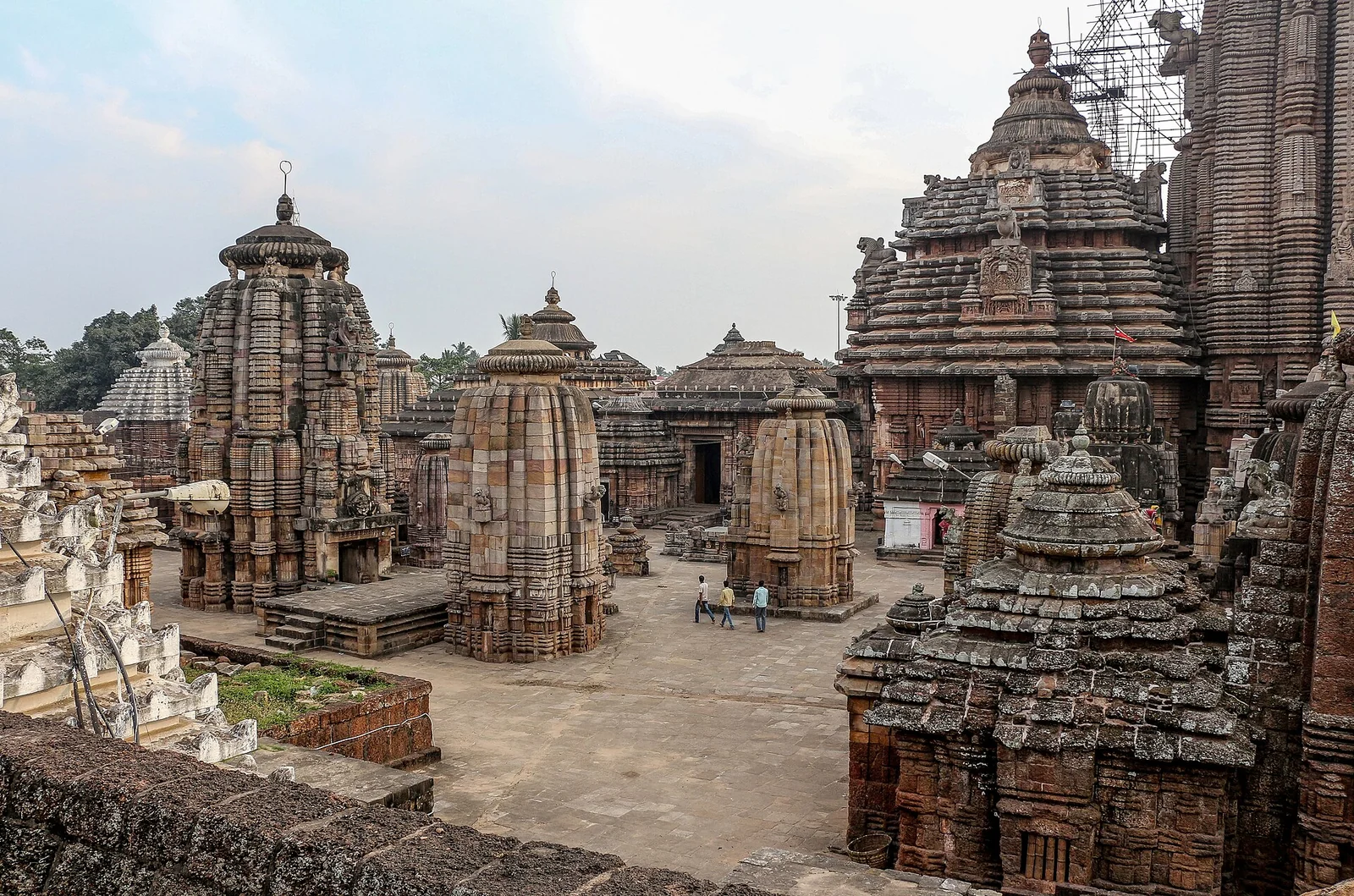
Somnath: Divine Mysteries & Soul-Stirring Miracles of the First Jyotirlinga
The first of the twelve Jyotirlingas, destroyed seventeen times and rebuilt seventeen times — discover Somnath, the temple by the Arabian Sea where Lord Shiva conquers death itself. Cosmic origin, the Vallabhbhai Patel restoration, the Tristhali ritual, daily rituals, and miracles of unbroken faith.
The first of the twelve Jyotirlingas, destroyed seventeen times and rebuilt seventeen times — discover Somnath, the temple by the Arabian Sea where Lord Shiva conquers death itself. Cosmic origin, the Vallabhbhai Patel restoration, the Tristhali ritual, daily rituals, and miracles of unbroken faith.
On the Saurashtra coast of Gujarat, where the Arabian Sea pounds the ancient shoreline, rises Somnath — the first of the twelve Jyotirlingas, the temple that has been destroyed seventeen times and rebuilt seventeen times in two thousand years. No other shrine in India has been so violently contested. No other shrine has refused, with such quiet stubbornness, to stay broken. It stands today exactly where it has always stood, the Arabian Sea breaking against its ramparts, the Lord of the Moon installed exactly where Soma installed him in the beginning of time.
This HinduTone guide explores the divine origin of Somnath, the architectural masterpiece restored by Sardar Vallabhbhai Patel, the daily rituals, the soul-stirring miracles, the Tristhali pilgrimage (Somnath–Dwarka–Prabhas Patan), and why this temple stands as the unbroken proof that faith outlasts every empire.
The Cosmic Story: When the Moon Was Cursed and Shiva Restored Him
The Skanda Purana, the Mahabharata, and the Shiva Purana tell the same story: Chandra (Soma), the Moon god, had married twenty-seven daughters of Daksha Prajapati. Of these, he favoured only Rohini, neglecting the other twenty-six. Outraged, Daksha cursed Soma with a wasting disease — his light began to dim, his form to vanish from the heavens. The cosmos itself dimmed with him; tides faltered, plants withered, the rhythms of nature broke down.
On the advice of Brahma, Soma traveled to the Saurashtra coast and performed an intense tapasya to Lord Shiva. For six months he worshipped without food or water. Shiva, moved by the devotion, appeared and partially restored him — Soma would wax and wane forever, dying in the dark half of the lunar month and reviving in the bright half, but never again would he fade completely. In gratitude, Soma installed a Jyotirlinga at the site of his tapasya and named it Somnath — "the Lord of Soma." This was the first of the twelve great Jyotirlingas to be consecrated on earth.
From that day, the moon's cycle has been Shiva's rhythm. Maha Shivratri is the darkest night, when the moon is closest to its own death — and yet Shiva, ever-living, holds the cosmos steady. Every full moon at Somnath, the tide rises to the temple steps as if to greet the Lord. Devotees who stand on the seafront at moonrise on Purnima describe a presence so palpable they cannot speak.
Seventeen Destructions and Seventeen Rebuilds: The Temple That Refused to Die
No temple in India has been attacked as repeatedly as Somnath. The first historical reference to its wealth comes from Al-Biruni in the 11th century, who described it as the richest temple in the world. That wealth made it a target. In 1024 CE, Mahmud of Ghazni led his sixteenth military campaign specifically to sack Somnath; he broke the shivalinga, melted the gold and silver, and rode away with so much treasure his caravan stretched for kilometres.
The temple was rebuilt by the Solanki kings of Gujarat within a generation. It was destroyed again, by Alauddin Khalji's general in 1299, by Muzaffar Shah I in 1395, by Mahmud Begada in 1451, by Aurangzeb in 1665 (twice — Aurangzeb wanted to be certain), and by Bombay Province administrators in colonial times who deliberately suppressed worship. Each time, the temple was rebuilt. Each time, a new shivalinga was installed at the same spot. The legend, the chronicles, and the geology agree: the present sanctum stands on the exact place Soma installed his lingam in the beginning of time.
The modern restoration is its most famous chapter. After Indian independence in 1947, Sardar Vallabhbhai Patel — the Iron Man, India's first Home Minister — personally took up Somnath's rebuilding as one of his first acts. The Junagadh nawab fled to Pakistan; Patel announced the temple would be restored. Construction began in 1950; the consecration was performed by President Rajendra Prasad on May 11, 1951, against the wishes of Nehru. Patel declared at that moment: "This is the temple that no power on earth can keep down." It still stands.
The Living Sanctum: What the Temple Holds Today
The present Somnath temple is the seventeenth incarnation, rebuilt in the Chalukyan style, with a 155-foot shikhara crowned by a 10-tonne kalash and a 14-foot flag. The sanctum is austere by deliberate design — after centuries of looting, the architects of the modern rebuild chose to make the deity's presence speak rather than the gold.
- The shivalinga in the garbhagriha is the seventeenth — installed in 1951 on the precise GPS coordinates of the original. Stone-core, with a polished black surface.
- The Banstambha (arrow pillar) outside the temple bears an inscription declaring that there is no land between Somnath and the South Pole — an unbroken straight line of sea, a geographic-spiritual statement of the temple's position at the southernmost tip of Saurashtra.
- The Tristhali shrine just to the north marks where the Shri Krishna passed his last earthly days, killed by a hunter's arrow in nearby Bhalka Tirtha. Pilgrims combine Somnath darshan with Bhalka Tirtha for Krishna and Dwarka for the kingdom — the Tristhali yatra.
- The Arabian Sea breaks directly against the temple wall. There is no land between the sanctum and the Antarctic, the Banstambha promises.
- The original Vedi (sacrificial altar) of Soma, dated to the second millennium BCE by archaeologists, is still visible in the temple's archaeological zone.
Daily Rituals: How Somnath Worships Its Lord
Five aartis structure the day at Somnath, with the dawn Mangla Aarti drawing devotees from across India. The temple opens at 6:00 am and remains open continuously until 9:30 pm, with the famous evening Sound-and-Light show narrating the temple's history projected on its walls every evening.
- Mangla Aarti (7:00 am): the Lord is woken with veda chanting and abhishekam.
- Madhyahna Aarti (noon): annaprasad offered.
- Sandhya Aarti (7:00 pm): the day's closing — performed as the sun sets into the Arabian Sea.
- Light & Sound Show (8:00 pm, October–March): the chronicle of the temple narrated by Amitabh Bachchan, projected on the shikhara.
- Shayan Aarti (9:00 pm): the Lord is put to rest.
Maha Shivratri here is unmatched in its intensity. Devotees keep the all-night vigil; the linga is bathed in 21 abhishekams through the night; the dawn closing aarti is taken in the freezing sea breeze with the moon setting over the water. Many devotees regard the Mahashivratri darshan at Somnath as the most powerful in all twelve Jyotirlingas.
Soul-Stirring Miracles: When the Sea Itself Worships
The Floating Linga: One of the most enduring legends, found in the Shiva Purana, describes the original Somnath linga as suspended in mid-air by powerful magnets in the floor and ceiling of the original temple. Mahmud of Ghazni's account, written by his court historian, partially corroborates this — describing that the linga "had no support," and that when removed and broken, the gold and gems hidden in the ceiling fell to the floor. Whether magnetic or miraculous, the chronicle survives.
Survival of the Lingam Substance: Through seventeen destructions, the same Shivalinga material — sandstone with embedded crystals — has been recovered and reused. The current linga incorporates fragments believed to date back several thousand years, recovered during the 1951 reconstruction.
The Tide That Bows: Every Purnima (full moon) at high tide, the Arabian Sea waters reach the lower steps of the temple. Local priests document this as the cosmic acknowledgement of Soma's monthly waxing — the Moon's gratitude expressed through the tide. Modern oceanographers explain the phenomenon as a coincidence of geography and tidal cycle; devotees see the geography itself as part of the design.
Patel's Promise Kept: When Sardar Patel announced in 1947 that Somnath would be restored, India was bankrupt, partitioned, and grieving. The temple's reconstruction was funded entirely by public donations — no government money was used. The Banstambha, the Sound-and-Light show, the temple museum, the surrounding pilgrim infrastructure: all of it stands today as a monument not just to Shiva but to a nation's refusal to forget itself.
The Tristhali Yatra: Somnath–Bhalka Tirtha–Dwarka
The traditional Saurashtra pilgrimage is the Tristhali — three sacred sites, one continuous journey. Begin at Somnath for the Jyotirlinga darshan; travel 5 km to Bhalka Tirtha where Lord Krishna passed from his earthly form; then proceed 240 km north to Dwarka, the kingdom Krishna built and the only Char Dham city to be claimed by the sea. The Saurashtra coast is dense with the memory of two yugas — Shiva's Treta Yuga consecration at Somnath and Krishna's Dwapara Yuga kingdom at Dwarka — bracketing each other.
Guidance for the pilgrim:
- Plan to spend at least three days — Somnath, Bhalka, and Dwarka cannot be rushed.
- Attend the Mangla Aarti at Somnath at 7:00 am; the dawn aarti by the Arabian Sea is the temple's most powerful moment.
- Stand at the Banstambha after darshan; read the inscription about the straight line to the South Pole. It is meant to humble the devotee, not the geographer.
- Watch the Sound-and-Light Show in winter months — the temple's own history narrated on its own walls.
- Visit during a Purnima if possible — the tide rising to the temple steps is the most quietly powerful witness you will ever stand for.
- Combine with Dwarka — the loop closes the Vaishnava and Shaiva traditions in a single yatra.
Why Somnath is the Unbroken Promise of Sanatana Dharma
No other temple in India has been so visibly tested as Somnath. Seventeen invasions, seventeen rebuilds, two thousand years of repeated destruction — and yet the sanctum stands today on the exact spot Soma installed his lingam at the beginning of time. The geographic coordinates have not moved. The deity has not moved. The faith has not moved.
Somnath is the unrelenting answer of Sanatana Dharma to every claim that it can be broken. Each rebuilding has been an act of cultural memory; each pilgrim who walks past the Banstambha is part of an unbroken chain. The temple is not just for Shiva — it is for every Indian who ever wondered whether what was destroyed can be made again.
It can. It has been. It stands.
Om Namah Shivaya. Jai Somnath.
Frequently asked questions
Why is Somnath called the first Jyotirlinga?
As commonly told, the Moon god Soma was cursed by Daksha and worshipped Shiva on the Saurashtra coast. Shiva partially restored him, and in gratitude Soma installed the first of the twelve Jyotirlingas there, naming it Somnath.
What are the Somnath Temple timings and aarti times?
The temple opens at 6:00 am and stays open until 9:30 pm. Mangla Aarti is at 7:00 am, Sandhya Aarti at 7:00 pm and Shayan Aarti at 9:00 pm.
Who rebuilt Somnath after independence?
Sardar Vallabhbhai Patel took up the rebuilding after 1947. Construction began in 1950, and President Rajendra Prasad performed the consecration on May 11, 1951, with the work funded by public donations.
What is the Tristhali Yatra?
It is the pilgrimage of Somnath, Bhalka Tirtha and Dwarka. Bhalka Tirtha is 5 km from Somnath and Dwarka is 240 km further north, so plan at least three days.
When is the Light and Sound show at Somnath?
The show is held at 8:00 pm from October to March. It narrates the history of the temple, projected on the shikhara.
What is the Banstambha at Somnath?
The Banstambha, or arrow pillar, stands outside the temple. Its inscription declares there is no land between Somnath and the South Pole, an unbroken line of sea.
You might also like

Mahakaleshwar: Divine Mysteries & Soul-Stirring Miracles of the Lord of Time at Ujjain
The Twelve Jyotirlingas of Lord Shiva: A Complete Pilgrim's Guide Across India

Amarnath: Divine Mysteries & Soul-Stirring Miracles of the Ice Linga Cave in Kashmir