Guruvayur: Divine Mysteries & Soul-Stirring Miracles of the Dwarka of the South
The 5,000-year-old Krishna murti rescued from the sinking Dwarka — discover Guruvayur at the heart of Kerala. Krishna as Guruvayurappan, the Narayaneeyam, Punnathur Kotta elephant sanctuary, daily Nirmalya darshan, Ekadasi tradition, and miracles documented across centuries.
The 5,000-year-old Krishna murti rescued from the sinking Dwarka — discover Guruvayur at the heart of Kerala. Krishna as Guruvayurappan, the Narayaneeyam, Punnathur Kotta elephant sanctuary, daily Nirmalya darshan, Ekadasi tradition, and miracles documented across centuries.
In the heart of Kerala, on the flat green coastal plain near Thrissur, stands a temple that the Malayali tradition calls Bhuloka Vaikuntha — Heaven on Earth. Guruvayur is the abode of Sri Krishna as Guruvayurappan, "the Lord of Guruvayur," worshipped through a small but extraordinarily ancient murti said to be over five thousand years old — the original Vishnu murti rescued from Dwarka as that city sank beneath the sea at the end of the Dwapara Yuga. The temple does not boast tall gopurams or vast prakaras. The miracle is the murti itself, and the unbroken devotional tradition that has sustained it.
This HinduTone guide opens Guruvayur: the cosmic origin of the Dwarka murti, the divine consecration by Guru Brihaspati and Vayu, the daily Nirmalya darshan that begins at 3:00 am, the Narayaneeyam composed in 1586 by Melpathur Bhattathiri that itself became a healing scripture, the Punnathur Kotta elephant sanctuary, the strict Ekadasi tradition, and the miracles that have made Guruvayur the most beloved Krishna shrine in South India.
The Cosmic Story: When Krishna's Murti Was Saved from a Sinking City
The Brihad Aaranyaka Upanishad mentions an ancient murti, originally worshipped by Brahma himself, that was passed to Sutapas in Satya Yuga, then to Kashyapa, then to Vasudeva (Krishna's father), and finally to Krishna himself in Dwarka. Krishna installed it in his own palace and worshipped it daily as the family deity of his kingdom.
At the end of the Dwapara Yuga, as Krishna prepared to leave his earthly form, he gave specific instructions to his disciple Uddhava: "Save the family murti. After I am gone, Dwarka will sink. The murti must continue to receive worship in the Kali Yuga." Krishna also instructed Uddhava to approach Guru Brihaspati, the preceptor of the gods, for help finding the right place to install it.
Within seven days of Krishna's passing, Dwarka sank beneath the Arabian Sea. Uddhava, holding the murti, met Guru Brihaspati. Together with Vayu (the wind god), the three traveled south, searching for the perfect spot. They found a beautiful lotus-filled lake in what is today central Kerala, surrounded by sacred groves and visited by the seven sages. There, Brihaspati and Vayu consecrated the murti together. The place came to be called Guruvayur — "the place of Guru and Vayu." The murti has been worshipped here continuously ever since, an unbroken chain from the Dwapara Yuga to today.
The Living Sanctum: A Murti of Cosmic Material
The Guruvayur murti is unlike any other in India. It stands about 4 feet tall, made of a substance the temple priests call Patala Anjanam — a black stone-like material derived from a divine alloy described in the Vishnu Sahasranama. Modern geologists have not been able to identify the material conclusively; it is unique in mineral composition.
- The murti has four hands — holding the conch (shankha), discus (chakra), mace (gada), and lotus (padma) — the classic Vishnu iconography.
- A Tulsi garland is offered daily and remains until the next morning's Nirmalya darshan, when the previous day's flowers are distributed as prasad.
- The temple has a unique tradition of Avval Vazhipadu — the priest must approach the murti from the south side, with prescribed protocol. Northerners are not permitted to perform direct seva.
- Non-Hindus are not permitted past the outer gateway. The restriction is strict and ancient; the temple's purity protocols are unique in India.
- The Krishnanattam dance-drama, performed in the temple's courtyard, is over 350 years old and was choreographed specifically for Guruvayurappan.
- The sanctum is small and intimate. The pilgrim is only a few feet from the murti during darshan — the closest physical approach in any major Krishna temple.
Daily Rituals: Five Pujas and the Nirmalya Darshan
Guruvayur follows the Tantra Samuchayam Agama. Five major pujas structure the day, with the famous Nirmalya darshan at 3:00 am being the most spiritually charged moment.
- Nirmalya Darshan (3:00 am): the murti is shown still wearing the previous day's flowers and ornaments — a darshan that the entire South Indian tradition regards as the most powerful in any Krishna temple. To take Nirmalya darshan once is said to grant the merit of many ordinary visits.
- Pulariya Vendalpoor (4:00 am): the murti is bathed and oiled.
- Usha Puja (5:00 am): full abhishekam with milk, water, sandal paste.
- Etiruttu Puja (8:00 am): the morning offering of food, considered the Lord's breakfast.
- Pantheeradi Puja (10:00 am): the second food offering.
- Ucha Puja (noon): the noon abhishekam and offering — considered the most elaborate of the day.
- Sheeveli (5:00 pm): the deity is taken in procession around the inner courtyard, accompanied by temple elephants.
- Athazha Puja (8:00 pm): the night offering.
- Trippuka (9:00 pm): incense puja, closing the day.
On Ekadasi days — particularly Guruvayur Ekadasi (Vrischika month, November–December) — the temple is at its most powerful. Devotees fast through the day, attend all pujas, and stand in queues that wrap around the temple complex.
The Narayaneeyam: A Healing Composed in 1586
In 1586, the Sanskrit scholar Melpathur Narayana Bhattathiri came to Guruvayur with rheumatism so severe he could barely walk. He resolved to compose a thousand verses on Lord Krishna and offer them at the temple — and to write one section per day until completion. The composition that emerged is called the Narayaneeyam — a 1,036-verse Sanskrit poetic distillation of the Bhagavata Purana, composed by Bhattathiri while at Guruvayur, completed in 1587.
Tradition holds that as Bhattathiri composed each section, his rheumatism diminished. By the time he completed the 100th day, the disease had vanished entirely. The Narayaneeyam itself became a healing scripture: devotees with chronic conditions still come to Guruvayur and read the entire text aloud over 100 days, with the chronicles recording many cures. The temple keeps a dedicated section of its outer courtyard for Narayaneeyam recitations.
Punnathur Kotta: The Temple's 60 Elephants
Three kilometres from the main temple lies one of the most extraordinary sights in any Hindu shrine — Punnathur Kotta, the Guruvayur Temple's elephant sanctuary. Over 60 elephants live here, all donated to the Lord by devotees over the centuries. They are not zoo animals; they are seva-elephants, formally consecrated to the temple, fed and cared for by dedicated mahouts, and given the dignity of festival participation.
On festival days, the temple's lead elephant — currently Karnan, a magnificent 9-foot tusker — leads the Sheeveli procession with the Lord's portable murti seated on his back. Pilgrims who visit Punnathur Kotta often describe a profound calm settling over them in the presence of these elephants; the animals are credited with their own form of darshan-power. Many devotees consider visiting both the main temple and Punnathur Kotta the complete Guruvayur experience.
Soul-Stirring Miracles: The Lord Who Listens
Bhattathiri's Cure: The completion of the Narayaneeyam coincided with the complete remission of the author's rheumatic affliction. The text is documented; the cure is documented; the temple has kept the connection alive for over 430 years.
The Tipu Sultan Episode: In 1789, Tipu Sultan's army marched on Guruvayur intending to destroy the temple. According to local chronicles, the army camp pitched at Manattala (5 km away) was struck by a sudden plague of locusts; the men panicked; and the next day, before the attack could begin, news arrived that Tipu had been recalled to Mysore by a British advance. The temple was spared by what the priests describe as the Lord's direct intervention.
Healing for Newlyweds: Guruvayur is famously the temple where South Indian families come to perform the Tulabharam (weighing in offerings against the body weight of the devotee) — particularly for newborn children and newlyweds. Centuries of records describe difficult childbirths resolved, fertility issues addressed, and marital reconciliations following Tulabharam at Guruvayur.
The Continuing Murti: Despite over five thousand years of continuous daily worship — multiple abhishekams a day with oil, milk, sandalwood, and water — the Patala Anjanam material has not noticeably eroded. Modern observations confirm what the priests have always said: the substance is not behaving as any known stone would. The murti continues, year after year, exactly as Brihaspati and Vayu installed it.
The Path of Devotion: Approaching Guruvayurappan
A Guruvayur yatra has its own protocol. The temple is strict about purity, dress code, and timings — the pilgrim must prepare accordingly. The reward is one of the most intimate Krishna darshans available anywhere in the Hindu world.
- Non-Hindus are not permitted past the outer gate. The temple's restriction is absolute and unchallengeable.
- Men must wear traditional dhoti and remove upper-body clothing inside the temple. Women must wear sarees or salwar-kameez; no jeans or western dress.
- Try to attend the Nirmalya Darshan at 3:00 am at least once — the queue is much shorter, and the spiritual depth is incomparable.
- Perform a Tulabharam if your family tradition prescribes it; the offering can be flowers, fruit, rice, or in some cases gold equal to the devotee's body weight.
- Recite the Narayaneeyam if you have the time and language ability; even one daskakam (set of ten verses) a day is considered powerful.
- Visit Punnathur Kotta — the elephant sanctuary — as part of the same pilgrimage. The lead elephant gives a different kind of darshan.
- Try to align your visit with Ekadasi for the deepest seva experience.
Why Guruvayur is the Dwarka of the South
When Dwarka sank into the Arabian Sea, the tradition tells us, Lord Krishna ensured that the most precious sacred object of his earthly kingdom — the family murti — would continue to be worshipped. He arranged for Uddhava, Brihaspati, and Vayu to relocate it, install it, and entrust its care to the priestly families of Kerala. They have kept that trust for over five thousand years.
Guruvayur is a quieter temple than Tirumala. It does not have the architectural grandeur of Srirangam. But for the South Indian devotee, it is the closest thing to a personal audience with Krishna that exists anywhere — the murti is intimate, the rituals are tender, the air is dense with continuity. The Krishna who once played the flute on the banks of the Yamuna is, the tradition insists, still here, still listening, still smiling.
Om Krishnaya Vasudevaya. Sri Guruvayurappan Saranam.
Frequently asked questions
Who is the main deity of Guruvayur Temple?
Sri Krishna worshipped as Guruvayurappan, "the Lord of Guruvayur". The murti is said to be over five thousand years old, the Vishnu murti rescued from Dwarka as it sank.
How did Guruvayur get its name?
As commonly told, Guru Brihaspati and Vayu, the wind god, consecrated the murti together at a lotus-filled lake in central Kerala. The place became known as Guruvayur, "the place of Guru and Vayu".
What time is the Nirmalya darshan at Guruvayur?
Nirmalya darshan begins at 3:00 am, when the murti is shown still wearing the previous day's flowers and ornaments. Pulariya Vendalpoor follows at 4:00 am and Usha Puja at 5:00 am.
Can non-Hindus enter Guruvayur Temple?
No. Non-Hindus are not permitted past the outer gateway. Men must wear a traditional dhoti and remove upper-body clothing inside the temple.
What is the Narayaneeyam and why is it linked to Guruvayur?
It is a 1,036-verse Sanskrit distillation of the Bhagavata Purana, composed in 1586 by Melpathur Narayana Bhattathiri at Guruvayur. Tradition holds that his rheumatism eased as he wrote it.
What is Punnathur Kotta?
Punnathur Kotta is the temple's elephant sanctuary, three kilometres from the main temple. Over 60 elephants donated by devotees live there, cared for by mahouts.
You might also like
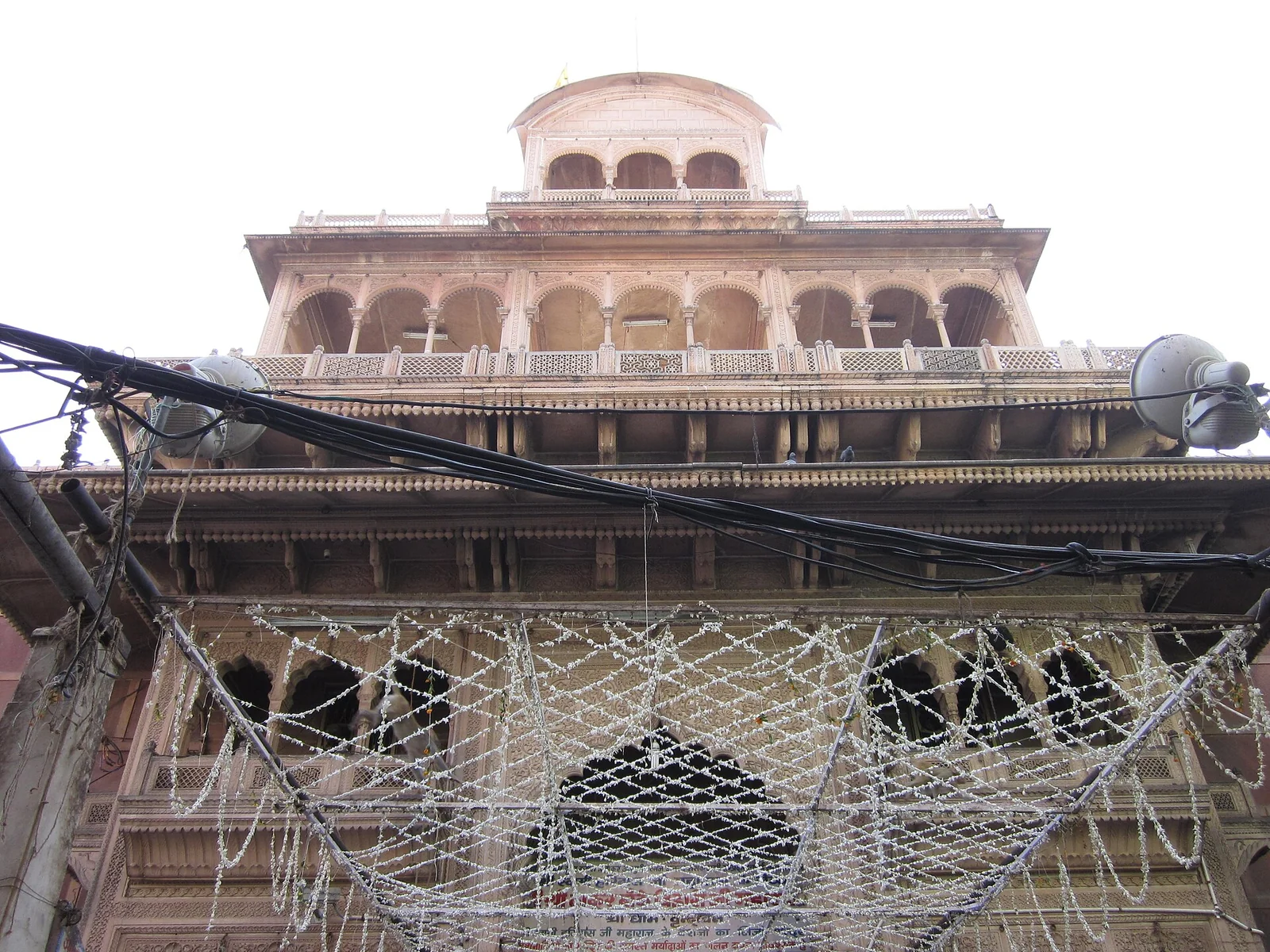
Banke Bihari: Divine Mysteries & Soul-Stirring Miracles of the Krishna Who Hides from His Devotees
Ranganathaswamy Srirangam: Divine Mysteries & Soul-Stirring Miracles of the Largest Functioning Hindu Temple

Kerala’s Vaikuntha Ekadashi Traditions at Guruvayur Temple