

Puthandu 2026 Pachadi Recipe & Auspicious Muhurat
Om Shri Ganeshaya Namaha | Invocation for New Beginnings
As we stand on the threshold of a new solar cycle, we bow before Lord Brahma, the creator of the universe, and seek blessings from our family deities for a year filled with prosperity, health, and spiritual growth. Puthandu, the sacred Tamil New Year, marks not just a change in the calendar but a divine opportunity to refresh our lives with renewed devotion, gratitude, and hope.
May this Puthandu 2026 bring abundance to your home, peace to your heart, and wisdom to your soul. Let us welcome the auspicious month of Chithirai with open hearts and reverent minds.
Puthandu 2026 Date and Timings
Puthandu Date: Tuesday, April 14, 2026
Mesha Sankranti Moment: 8:32 AM (IST)
Panchangam Details for Puthandu 2026:
- Tithi: Shukla Pratipada (first lunar day of the bright fortnight)
- Nakshatra: Ashwini (the first constellation, symbolizing new beginnings)
- Yoga: Vishkambha
- Karana: Bava
- Sunrise: 6:03 AM
- Sunset: 6:28 PM
- Moonrise: 6:45 AM
The Mesha Sankranti, marking the Sun’s transition into Aries (Mesha Rasi), occurs at the precise moment when the solar New Year begins. This astronomical event is calculated based on the ancient Hindu Panchangam and holds immense spiritual significance across Tamil Nadu, Kerala, and other southern regions.
Auspicious Muhurat for Kani Viewing: 6:03 AM to 7:00 AM (first hour after sunrise)
Best Time for Temple Visits: 6:00 AM to 10:00 AM
Ideal Time for New Ventures: 9:00 AM to 11:30 AM (considered highly favorable for starting new business activities, education, or spiritual practices)
Spiritual Significance of Tamil New Year
The Dawn of Chithirai: A Cosmic Reset
Puthandu arrives with the first day of Chithirai, the first month in the Tamil calendar. This sacred day represents far more than a temporal marker—it symbolizes the eternal cycle of creation, preservation, and transformation ordained by the Divine Trinity.
The Tamil New Year is intrinsically linked to the solar calendar, aligning human life with cosmic rhythms. When the Sun enters Mesha Rasi (Aries), it marks the beginning of Uttarayana, the northward journey of the Sun, considered highly auspicious in Vedic tradition. This celestial movement is believed to energize the Earth with positive vibrations, making it an ideal time for new beginnings.
The Philosophy Behind Puthandu
In Tamil philosophy, “Puthu” means new and “Andu” means year. But the deeper meaning extends beyond mere newness—it represents:
Renewal of Spirit: Puthandu encourages us to shed old grudges, negative patterns, and limiting beliefs. It’s a time to forgive, forget, and move forward with a purified heart.
Gratitude for Abundance: The harvest season preceding Puthandu reminds us to thank Mother Nature and the Divine for sustaining us throughout the year.
Family Bonding: Puthandu strengthens family ties as members gather to celebrate, share meals, seek blessings from elders, and reinforce cultural values.
Karmic Cleansing: Many believe that sincere prayers and charitable acts on Puthandu can wash away past karmic debts and set positive intentions for the year ahead.
Traditional Puthandu Rituals: Celebrating the Sacred Way
1. Kani Kaanal (Viewing the First Sight)
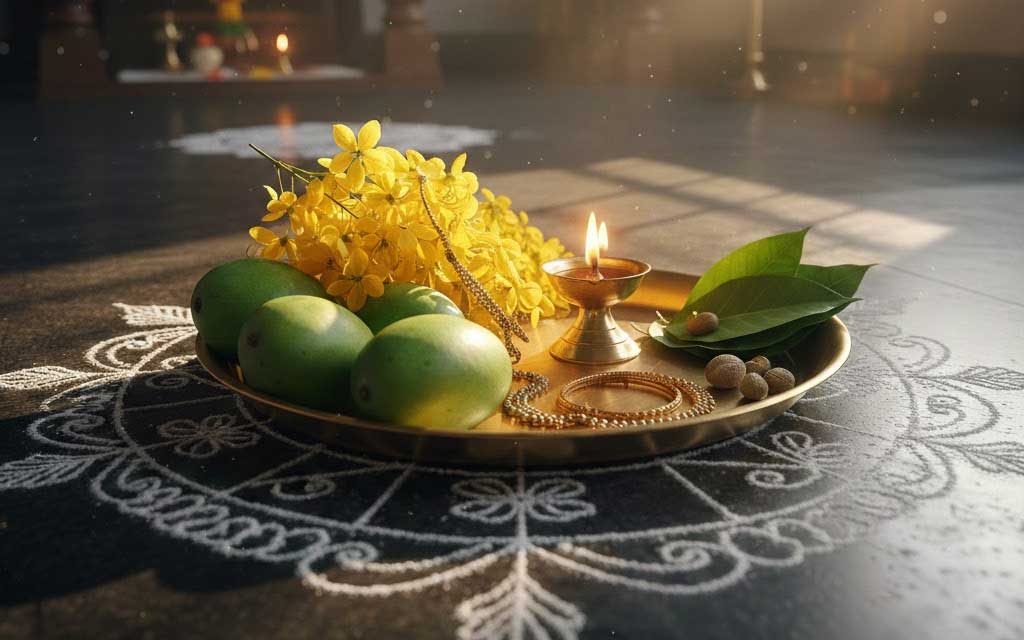
The most cherished tradition of Puthandu is “Kani Kaanal”—the ritual of viewing auspicious items as the first sight upon waking. This practice is rooted in the belief that what we see first on New Year’s Day influences our fortune for the entire year.
Traditional Kani Items Include:
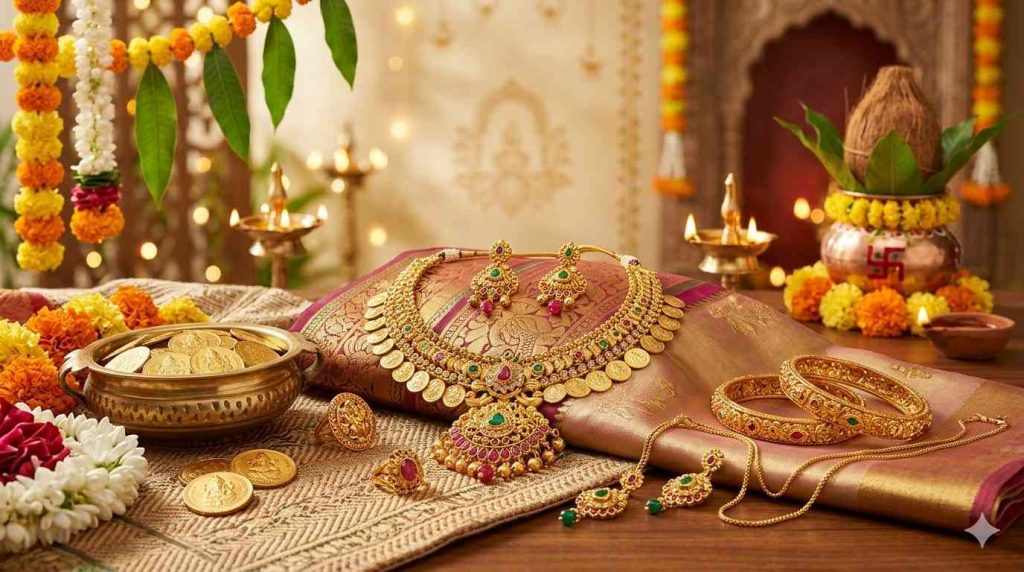
- Gold and silver jewelry (symbolizing wealth)
- Fresh flowers, especially konna poo (golden shower blossoms)
- Fresh fruits: mango, banana, jackfruit
- Betel leaves and areca nuts
- Coconut
- Mirror (to see oneself and recognize inner divinity)
- Holy texts: Bhagavad Gita, Thirukkural, or family scriptures
- Rice, lentils, and grains
- A lit oil lamp (representing knowledge dispelling ignorance)
How to Perform Kani Kaanal:
On the eve of Puthandu, family members arrange these items beautifully on a brass or silver plate called “Kani thambalam.” They place it in the prayer room or a special altar. On Puthandu morning, the eldest family member wakes everyone gently, keeping their eyes closed, and leads them to view the Kani together while chanting “Kanni Kaanum Neram” (time to view the auspicious sight).
This shared moment of viewing divine abundance together strengthens family bonds and sets a positive, grateful tone for the year.
2. Kolam: Sacred Geometry at the Threshold
Before sunrise, women and girls draw intricate Kolams (rangoli) at the entrance of their homes. Using rice flour, these geometric patterns serve multiple purposes:
- Inviting Goddess Lakshmi: Beautiful Kolams are believed to attract the goddess of wealth and prosperity
- Feeding creatures: Rice flour kolams provide food for ants and birds, practicing compassion
- Meditative art: Creating complex patterns requires focus and becomes a moving meditation
- Aesthetic beauty: Transforms the threshold into a sacred space
Special Puthandu Kolams often incorporate mango leaves, flower petals, and vibrant colors, creating spectacular designs that celebrate nature’s abundance.
3. Ritualistic Bath and New Clothes
A ceremonial oil bath (Ennai Kuli) early in the morning is traditional. Applying sesame oil mixed with turmeric and holy ash is believed to purify the body and prepare it as a temple for the soul.
After the sacred bath, everyone wears new clothes, preferably in auspicious colors like yellow, red, or green. This practice symbolizes shedding the old and embracing the new with renewed energy.
4. Temple Darshan and Prayers
Visiting temples on Puthandu is considered highly meritorious. Major temples across Tamil Nadu, especially Meenakshi Temple in Madurai, Kapaleeshwarar Temple in Chennai, and Arulmigu Dhandayuthapani Temple in Palani, witness massive crowds.
Devotees offer special prayers, perform abhishekams (ritual bathing of deities), and seek blessings for health, prosperity, and spiritual progress. Chanting the following mantras is considered particularly auspicious:
Gayatri Mantra: “Om Bhur Bhuvaḥ Swaḥ Tat Savitur Vareṇyaṃ Bhargo Devasya Dhīmahi Dhiyo Yo Naḥ Prachodayāt”
Tamil Prayer for Puthandu: “Karpagame kan neer pol kaakkum amma Arpudha mayil eeri varum muruga”
5. Reading Panchangam Predictions
Traditionally, families gather to hear the yearly Panchangam reading by learned elders or priests. The Panchangam provides astrological predictions for:
- Monsoon patterns and agricultural guidance
- Auspicious periods for weddings, housewarming, business ventures
- Challenging periods requiring extra caution
- Rashifal (yearly horoscope) for each zodiac sign
- Festivals and fasting days for the year
This ancient practice connects families with cosmic rhythms and helps them plan their year wisely.
The Sacred Symbolism of Six Tastes in Maanga Pachadi
One of the most profound traditions of Puthandu is preparing and consuming Maanga Pachadi (raw mango chutney). This unique dish incorporates six distinct tastes, each representing fundamental aspects of human existence:
- Sweet (Jaggery/Sugar): Happiness, joy, and pleasant experiences
- Sour (Raw Mango): Disappointments, challenges, and sorrow
- Bitter (Neem flowers): Health challenges and difficult periods
- Spicy (Chili): Passion, anger, and intense emotions
- Salty (Salt): Stability, grounding, and essential sustenance
- Astringent (Tamarind): Fear, anxiety, and uncertainty
The Philosophy Behind Pachadi
By consuming all six tastes together on New Year’s Day, devotees acknowledge and accept that life will bring varied experiences. Rather than seeking only sweetness, we embrace the complete spectrum of existence with equanimity. This practice cultivates:
- Acceptance: Understanding that both joy and sorrow are temporary
- Gratitude: Appreciating sweet moments while recognizing bitter ones make us stronger
- Resilience: Preparing mentally for life’s ups and downs
- Spiritual maturity: Moving beyond craving pleasure and avoiding pain
The act of mixing these tastes into one harmonious dish teaches us that integration, not segregation, leads to wholeness.
Step-by-Step Maanga Pachadi Recipe
Ingredients:
Primary:
- 1 large raw mango (firm, not too sour)
- 2 tablespoons jaggery (or to taste)
- 1/4 teaspoon salt
- 1 green chili (adjust to preference)
- Small handful of fresh neem flowers (if available)
- 1 teaspoon tamarind pulp
For Tempering:
- 1 tablespoon coconut oil or gingelly oil
- 1/2 teaspoon mustard seeds
- 1/2 teaspoon urad dal
- A pinch of asafoetida (hing)
- 5-6 curry leaves
- 1 red chili (broken)
Optional:
- 2 tablespoons grated coconut
- 1/4 teaspoon turmeric powder
Preparation Method:
Step 1: Prepare the Mango Wash the raw mango thoroughly. Peel and cut into small cubes or thin strips. The mango should be firm and mildly sour for the best taste.
Step 2: Cook the Base In a pan, add the mango pieces with 1/4 cup water. Add turmeric powder and salt. Cook on medium heat until the mango becomes slightly soft but retains shape (about 5-7 minutes). Don’t overcook—the mango should have a slight crunch.
Step 3: Add the Six Tastes
- Add jaggery and let it melt completely, stirring gently
- Add tamarind pulp for tanginess
- Add finely chopped green chili for spice
- If using neem flowers, rinse them well and add now (use sparingly as they’re intensely bitter)
- The salt is already added, completing all six tastes
Step 4: Prepare the Tempering Heat oil in a small tadka pan. When hot, add mustard seeds. When they crackle, add urad dal and fry until golden. Add curry leaves, broken red chili, and asafoetida. Fry for 10 seconds.
Step 5: Combine and Rest Pour the tempering over the mango mixture. Mix gently. If using grated coconut, add it now. Let the pachadi rest for at least 30 minutes before serving to allow flavors to meld.
Step 6: Serve with Devotion Traditionally, Maanga Pachadi is served as the first item in the Puthandu feast. Offer it first to your family deity or place it before pictures of gods and goddesses. Then distribute it to all family members, explaining the significance to children.
Pro Tips:
- Use traditional brass or bronze vessels for authentic taste
- Adjust jaggery and chili according to family preference, but maintain the essence of all six tastes
- Fresh neem flowers can be found near neem trees during spring; use very sparingly
- Leftover pachadi can be stored in the refrigerator for 2-3 days
How to Prepare for Puthandu at Home: A Complete Guide
One Week Before:
House Cleaning and Purification:
- Deep clean every room, especially the prayer area
- Declutter and donate items you no longer need (practicing aparigraha—non-attachment)
- Wash curtains, bedsheets, and upholstery
- Polish brass and copper items used for worship
Shopping and Planning:
- Purchase new clothes for family members
- Buy fresh flowers, especially jasmine and marigold
- Gather ingredients for Pachadi and festive feast
- Collect items for Kani arrangement: fruits, flowers, jewelry, holy books
Spiritual Preparation:
- Increase daily prayer and meditation time
- Read scriptures like Thirukkural or Bhagavad Gita
- Practice forgiveness: mentally release grudges and resentments
- Plan charitable acts: donation to temples, feeding the poor, supporting education
Two Days Before:
Kolam Practice:
- If you’re learning new Kolam designs, practice them
- Prepare rice flour by sun-drying rice and grinding it
- Gather natural colors: turmeric, kumkum, flower petals
Puja Preparation:
- Clean the prayer room thoroughly
- Polish puja vessels and lamps
- Ensure you have adequate oil, wicks, incense, camphor
- Prepare special garlands for deities
Eve of Puthandu:
Kani Arrangement: Set up the Kani display with love and care. Involve children in arranging items, explaining the significance of each element.
Cooking Preparations:
- Soak lentils and rice for next day’s cooking
- Prepare some dishes in advance that can be reheated
- Keep all ingredients ready for Maanga Pachadi
Evening Puja: Conduct a special evening prayer thanking the Divine for the completing year and seeking blessings for the new one.
Early to Bed: Rest well to wake up refreshed before sunrise.
Puthandu Day Schedule:
5:00 AM: Wake up, light a lamp in the prayer room
5:30 AM: Ritual oil bath
6:00 AM: Draw Kolam at the entrance
6:03 AM: Kani Kaanal (auspicious first sight)
6:30 AM: Morning puja and prayers
7:30 AM: Prepare Maanga Pachadi
8:00 AM: Offer food to deities, serve Pachadi to family
9:00 AM: Temple visit (if planned)
12:00 PM: Traditional feast with family
Evening: Visit relatives, exchange wishes, enjoy cultural programs
Devotional Prayers for Puthandu
Prayer to Lord Ganesha (Remover of Obstacles)
“Vakratunda Mahaakaaya Surya Koti Samaprabha Nirvighnam Kuru Me Deva Sarva-Kaaryeshu Sarvadaa”
Translation: O Lord with the curved trunk, whose magnificence equals millions of suns, please remove all obstacles from all my endeavors, always.
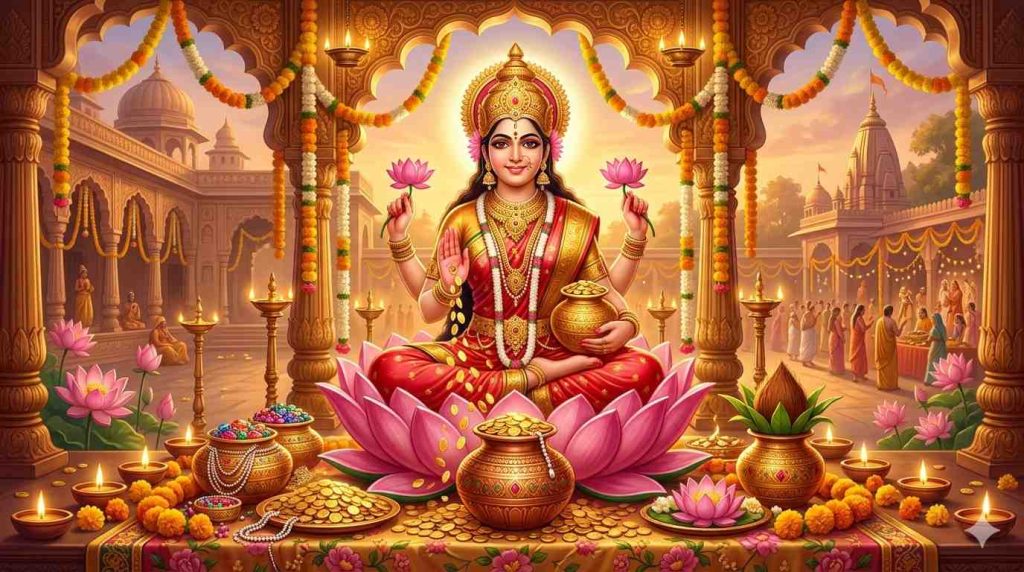
Prayer to Goddess Lakshmi (For Prosperity)
“Om Shreem Hreem Shreem Kamale Kamalalaye Prasanna Prasanna Prasanna Om Shri Maha Lakshmiyei Namaha”
Translation: I bow to Goddess Lakshmi, who resides in the lotus and blesses us with prosperity and auspiciousness.
Tamil Prayer for Family Welfare
“Annaiyum Pitavum Mun Andri Deivam Thannaiyum Thavirinum Thar Porul Enne”
Translation: Mother and father are the gods who appeared before us; what use are other gods if we abandon them?
Universal Peace Prayer
“Sarve Bhavantu Sukhinah Sarve Santu Niraamayaah Sarve Bhadraani Pashyantu Maa Kashcid-Duhkha-Bhaag-Bhavet”
Translation: May all be happy, may all be free from disease, may all experience auspiciousness, may none suffer.
Puthandu 2026: Fostering Devotion and Prosperity
Building Spiritual Discipline
Use Puthandu as a starting point for establishing spiritual practices:
Daily Routines:
- Wake up at Brahma Muhurta (90 minutes before sunrise)
- Practice pranayama and meditation
- Read one verse from sacred texts
- Maintain a gratitude journal
Monthly Observances:
- Fast on Ekadashi days
- Visit temples on full moon and new moon
- Practice Mauna (silence) for spiritual introspection
- Perform acts of charity
Yearly Goals:
- Memorize one sacred text
- Master one spiritual practice (japa, meditation, yoga)
- Serve in temple or community service
- Deepen understanding of Tamil spiritual heritage
Creating Prosperity Through Right Action
Prosperity in Hindu philosophy extends beyond material wealth to encompass health, relationships, knowledge, and spiritual growth.
Financial Wisdom:
- Start saving or investing on Puthandu for good fortune
- Clear debts and avoid accumulating new ones
- Practice tithing: donate 10% of income to worthy causes
- Maintain account books and financial discipline
Health and Wellness:
- Adopt sattvic diet emphasizing fresh, vegetarian foods
- Establish regular exercise routine
- Practice yoga for physical and mental balance
- Avoid negative habits and addictions
Relationship Enrichment:
- Strengthen family bonds through shared meals and rituals
- Resolve conflicts and practice forgiveness
- Mentor younger generation in cultural values
- Respect and care for elders
Knowledge Acquisition:
- Learn Tamil language and literature
- Study Vedic scriptures and commentaries
- Develop new professional skills
- Cultivate arts: music, dance, or traditional crafts
Heartfelt Puthandu Wishes and Blessings
Traditional Tamil Wishes:
“Puthandu Vazthukal! Iniya Tamil Puthuandu Nalvaazhthukkal!” (Happy New Year! Sweet Tamil New Year Wishes!)
“Puthaandu Pirandha Inthana Anbulla Nalil, Ungalukku Manithanai Arokiyamum, Sambalavum, Saanthamum Unda Aaga Ventukiren!” (On this auspicious day of the New Year, I wish you health, prosperity, and peace!)
Blessings from Elders to Younger Generation:
“May Lord Murugan guide your path with wisdom, May Goddess Lakshmi fill your home with abundance, May your life bloom like the Konna flowers, And may you bring honor to our heritage through righteous living.”
Wishes for Family and Friends:
“Puthandu brings new hopes and fresh beginnings, May your year overflow with divine grace, May every Kolam you draw bring blessings, And every prayer you offer bear fruit.”
Professional Wishes:
“As we enter Chithirai with gratitude and hope, May your business flourish like spring blossoms, May your efforts bring sweet success, And may prosperity flow like the sacred Kaveri.”
Spiritual Wishes:
“In this sacred year of 2026, May your devotion deepen like roots seeking water, May your wisdom grow like the banyan’s branches, And may you realize the Divine within.”
Connecting with Your Roots: Why Puthandu Matters Today
In our fast-paced modern world, ancient festivals like Puthandu serve as anchors, connecting us to timeless values and eternal truths.
Cultural Identity
For Tamils across the globe, Puthandu preserves linguistic heritage, traditional arts, and philosophical wisdom. Teaching children these customs ensures that future generations remain rooted while adapting to contemporary life.
Astrological Awareness
The Panchangam system, perfected over millennia, helps us live in harmony with natural cycles. Understanding yearly predictions enables better planning and decision-making.
Community Bonding
Festivals unite families separated by distance and generations divided by age. Shared celebration creates collective joy and mutual support.
Environmental Consciousness
Traditional practices like drawing Kolams with rice flour, using earthen lamps, preparing food with seasonal produce, and wearing natural fabrics teach sustainable living.
Mental Well-being
The ritual of accepting all six tastes in Pachadi offers profound psychological wisdom: embracing life’s fullness prevents disappointment when challenges arise.
Puthandu Across Tamil Nadu: Regional Variations
While the essence remains the same, different regions add unique flavors:
Chennai: Grand temple processions, classical music concerts, and dance performances
Madurai: Special rituals at Meenakshi Amman Temple with elaborate decorations
Kanyakumari: Beach sunrise viewing combined with temple visits
Thanjavur: Classical arts celebrations honoring the region’s cultural legacy
Coimbatore: Agricultural communities perform special prayers for abundant harvest
Conclusion: Embracing the New Year with Faith and Joy
As the Sun enters Mesha Rasi on April 14, 2026, at 8:32 AM, millions of Tamil hearts will beat in unison, celebrating Puthandu with devotion, gratitude, and hope. This sacred festival reminds us that while time moves in cycles, each moment offers fresh potential for growth, transformation, and divine connection.
The Maanga Pachadi teaches that life’s flavor comes not from sweetness alone but from the balanced integration of all experiences. The Kolam demonstrates that beauty arises from patient effort and mindful presence. The Kani Kaanal shows that what we focus our attention upon shapes our reality.
May this Puthandu 2026 bring renewed dedication to dharma (righteousness), deepened bhakti (devotion), expanded jnana (wisdom), and overflowing prosperity to you and your loved ones.
Let us step into this new year with the prayer:
“Lokah Samastah Sukhino Bhavantu” May all beings everywhere be happy and free.
Iniya Puthandu Nalvaazhthukkal!
Meta Title: Puthandu 2026: Tamil New Year Date (April 14), Rituals, Pachadi Recipe & Muhurat
Meta Description: Complete guide to Puthandu 2026 (Tamil New Year): Exact date, auspicious timings, Kani ritual, Maanga Pachadi recipe with 6 tastes, spiritual significance, Panchangam details, and heartfelt wishes. Celebrate April 14, 2026 with devotion!
Focus Keywords: Puthandu 2026, Tamil New Year 2026, Puthandu date 2026, Maanga Pachadi recipe, Tamil New Year rituals, Kani Kaanal, Chithirai, Hindu Panchangam 2026
LSI Keywords: Mesha Sankranti, Tamil Panchangam, Puthandu wishes, Tamil calendar, solar new year, Ugadi 2026, South Indian festivals, Tamil traditions, Kolam designs, six tastes significance
Social Sharing Message: “Celebrate Puthandu 2026 on April 14! Discover the spiritual significance, sacred rituals, authentic Maanga Pachadi recipe, and auspicious timings for Tamil New Year. #Puthandu2026 #TamilNewYear #HinduTone”
Related posts:
 Vaikuntha Ekadashi in Dubai 2025–2026: Vishnu & Krishna Temples Guide
 Vaikunta Ekadashi 2025 in San Antonio: Temples, Events & Devotee Guide
 Pushya Masam 2026 Pournami: Complete Guide to Significance, Rituals & Observances
 Hinduism in the USA 2026: Complete Guide to Hindu Festivals, Sacred Mantras, Temple Life & Spiritual Practices for American Hindus
 Magha Masam 2026: Divine Month of Spiritual Purification and Moksha
 Saraswati Puja 2026 Vidhi: Complete Step-by-Step Rituals, Samagri List & Significance for Vasant Panchami on January 23
 Cheti Chand 2026: Sindhi New Year Date, Jhulelal Puja, Rituals, Significance & Akho Teej Wishes
 Prabhava Year 2026–2027 Tirumala Festival Calendar from Ugadi to Ugadi – Complete Guide