Cheti Chand 2026: Sindhi New Year Date, Jhulelal Puja, Rituals, Significance & Akho Teej Wishes
Published Date: Category: Festivals • Hindu New Year • Regional Festivals • Sindhi Culture Cheti Chand 2026 Date and Muhurat Cheti Chand 2026 Date: Friday –…

Published Date: Category: Festivals • Hindu New Year • Regional Festivals • Sindhi Culture Cheti Chand 2026 Date and Muhurat Cheti Chand 2026 Date: Friday –…
Published Date: Category: Festivals • Hindu New Year • Regional Festivals • Sindhi Culture
Cheti Chand 2026 Date and Muhurat
Cheti Chand 2026 Date: Friday – March 20, 2026
This is the primary observance day for most Sindhi communities in India (Gujarat, Rajasthan, Maharashtra, Madhya Pradesh, etc.).
Panchangam Key Details (2026):
- Chaitra Shukla Dwitiya (second day of bright half of Chaitra month)
- Cheti Chanda Muhurat (auspicious evening time for main rituals): Approximately 06:32 PM to 07:59 PM (varies slightly by location; consult local Panchangam)
- Often celebrated one day after Gudi Padwa / Ugadi (which falls on March 19 in 2026)
- Coincides with Jhulelal Jayanti – birth anniversary of Lord Jhulelal (Uderolal / Varun Dev)
Note: Some regions may observe main processions or akhand jyot on March 19 evening leading into March 20. Always check local Sindhi calendar (Tipno) for exact family traditions.
Devotional Story & Significance of Sindhi New Year
Cheti Chand is the most sacred festival for the Sindhi community — marking the Sindhi New Year and the divine birth of Lord Jhulelal (also known as Uderolal, Amar Uderolal, or Varun Dev — the water deity and protector saint).
Heart-touching legend: Centuries ago, the people of Sindh (now in Pakistan) faced severe oppression under a tyrant ruler who persecuted Hindus and demanded they convert or face death. In despair, the community prayed fervently to Varuna (god of water) for 40 days.
On the 40th day, a miraculous child was born on a lotus leaf floating on the Indus River. This divine child — Jhulelal — grew miraculously fast and confronted the ruler with divine power. He restored faith, protected the community, and promised to always safeguard Sindhis wherever they go.
Jhulelal is revered as:
- Protector of water and rivers (vital for Sindh's survival)
- Symbol of unity, harmony, and resilience
- Ishtadev (personal deity) for millions of Sindhis worldwide
Spiritual message of Cheti Chand:
“No matter where life takes you, keep faith in the divine — just as Jhulelal protected our ancestors through water, He will guide and bless every sincere devotee in the new year.”
The festival beautifully blends Vaishnava bhakti, reverence for water as life-giver, and gratitude for survival and migration — making it deeply devotional and emotionally resonant.
Jhulelal Puja Rituals & How to Celebrate at Home
Traditional ways Sindhi families observe Cheti Chand devotionally:
1. Early Morning – Purification & Preparation
- Wake up before sunrise
- Take holy bath (many use river water if possible; otherwise normal bath with turmeric)
- Clean home thoroughly
- Light an akhand jyot (continuous lamp) in front of Jhulelal's photo or idol
2. Baharana Sahib – The Core Offering
- Prepare a large thali with:
- Wheat or rice grains
- Sugar candy (misri)
- Fruits (especially bananas, coconut)
- Sweets (mithai like boondi laddoo)
- Betel nuts, leaves, cardamom
- Red cloth, flowers, akshat (rice grains)
- Place a silver or copper pot (kalash) filled with water on the thali
- Decorate with red cloth and flowers
- Offer this Baharana to Lord Jhulelal with full devotion
- Chant Jhulelal bhajans or “Jhulelal Bolo, Lal Sain Bolo”
3. Lal Loi – Hoisting the Red Flag
- Hoist a small red flag (Lal Loi) outside the home or on a pole
- Symbolizes victory of good over evil and Jhulelal's protection
4. Akho Teej Connection
- Many observe fast or partial fast till evening
- In some traditions, Akho Teej (third day after Cheti Chand) includes charity and special pujas
5. Processions & Community Celebrations
- Large palanquin (jhoola) processions carrying Jhulelal idol to nearby water body (river, lake, sea)
- Singing devotional bhajans, playing music
- Immersion or aarti at water's edge
6. Charity & Seva
- Distribute prasad, sweets, and food to the needy
- Donate to temples or Sindhi community causes
Traditional Sindhi Foods & Symbolism
Food is offered as Prasad and shared with love.
Popular items:
- Sai Bhaji – Spinach & lentil stew (symbol of nourishment)
- Chola (chickpeas curry)
- Mithai (sweet boondi, laddoo)
- Tahiri (sweet rice)
- Papad & pickles
Symbolism: Simple, sattvic food reminds us of humility, gratitude for water (basis of agriculture), and sharing blessings.
Heartfelt Cheti Chand Wishes & Blessings
- Cheti Chand jo mubarak! May Lord Jhulelal shower His choicest blessings of peace, protection, and prosperity on you and your family.
- Lal Sain jo aashirwad — May the divine water god guide your path with harmony and success in the new year.
- Jhulelal Bolo! Wishing you a joyous Sindhi New Year filled with bhakti, unity, and endless grace.
- Akho Teej ra mubarak! May every difficulty turn into divine opportunity this year.
- Sindhyat Day Mubarak! Let the spirit of Jhulelal keep your heart strong, your home happy, and your faith unbreakable.
Final Prayer for Cheti Chand
“He Jhulelal Sain, He Uderolal… You emerged from the sacred waters to protect the helpless. On this Cheti Chand, accept our humble offerings. Bless us with Your protection, Fill our lives with harmony and devotion, And guide every Sindhi soul across the world with Your divine light.”
Jai Jhulelal! Cheti Chand Mubarak!
Frequently Asked Questions
When is Cheti Chand 2026?
Cheti Chand 2026 falls on Friday, March 20, 2026, on Chaitra Shukla Dwitiya. The evening muhurat is approximately 06:32 PM to 07:59 PM and varies slightly by location, so check the local Panchangam.
Who is Lord Jhulelal?
Jhulelal, also called Uderolal, Amar Uderolal or Varun Dev, is the water deity and protector saint of Sindhis. As commonly told, he was born on a lotus leaf on the Indus River after the community prayed to Varuna for 40 days.
What is Baharana Sahib in the Cheti Chand puja?
Baharana is the core offering, a thali with grains, misri, fruits, sweets, betel leaves and nuts, red cloth and flowers. A kalash of water is placed on it and offered to Jhulelal with bhajans.
What is the Lal Loi tradition?
Families hoist a small red flag, the Lal Loi, outside the home or on a pole. It symbolises the victory of good over evil and Jhulelal's protection.
How is Cheti Chand celebrated outside India?
Sindhi families worldwide light an akhand jyot before Jhulelal's photo, make the Baharana offering and sing bhajans. Where a river or sea is not close, a local water body or aarti at the water's edge can mark the jhoola procession.
What is the link between Cheti Chand and Akho Teej?
Akho Teej falls three days after Cheti Chand in some traditions and includes charity and special pujas. Many people also keep a fast or partial fast until evening on Cheti Chand.
You might also like

Cheti Chand 2026 – Sindhi New Year & Jhulelal Jayanti: Date, Muhurat, Rituals, Story & Significance
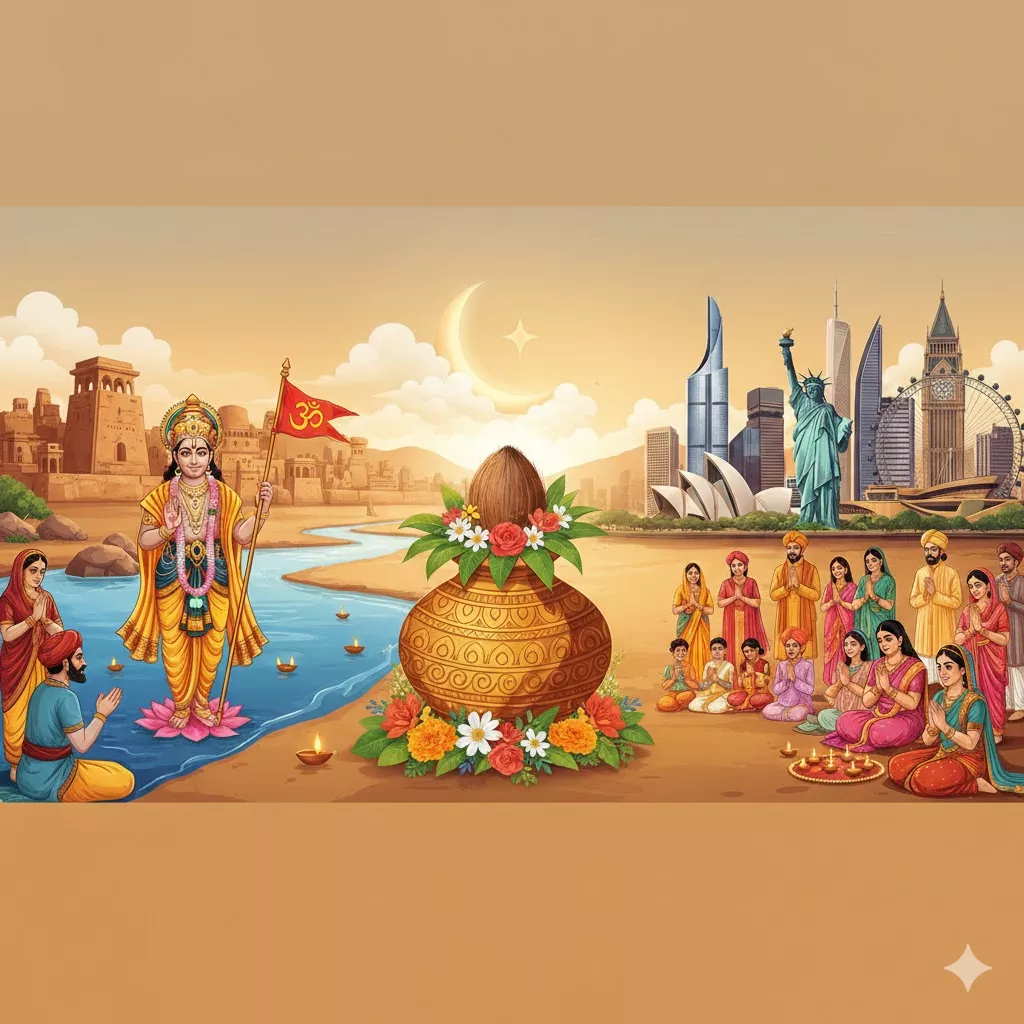
Cheti Chand 2026 for NRI Hindus: Sindhi New Year Date, Puja Timings, Rituals, Jhulelal Significance & Global Celebrations

Sindhi New Year (Cheti Chand) Celebrations in Canada: Comprehensive Guide for Sindhi Diaspora – 2026 Edition