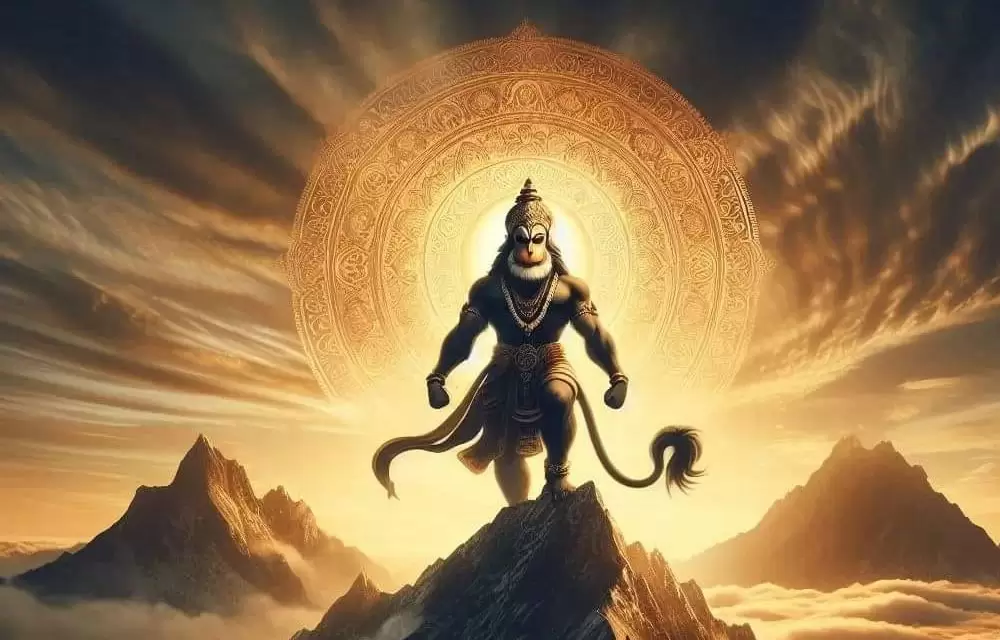
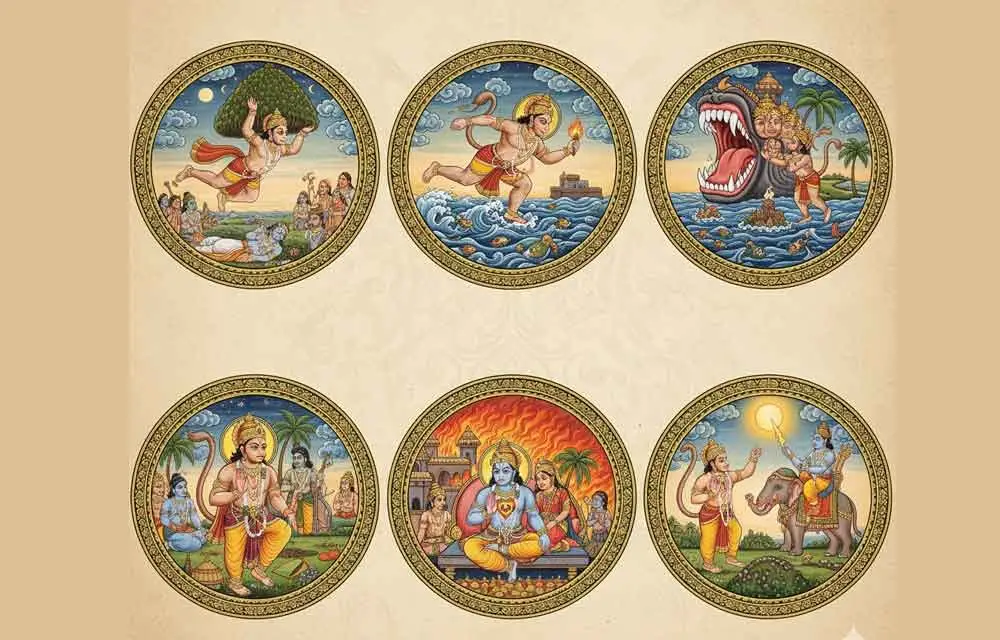
Hanuman — also Anjaneya, Bajrang Bali, Maruti, Pavan-putra, Sankat-Mochan — is the divine vanara devotee of Lord Rama, the very embodiment of bhakti and strength. Born to Anjana and the wind-god Vayu (with Lord Shiva's amsha), he leaped the ocean to find Sita in Lanka, set Lanka on fire with his burning tail, brought the Sanjeevani mountain to revive Lakshmana, and stood eternally as Rama's most-faithful servant. He is the Chiranjivi — the deathless one — said to still be alive on earth in places where the Ramayana is recited. HinduTone's Hanuman hub covers his full story and practice: the Sundarakanda of Valmiki Ramayana (Hanuman's exploits in Lanka, considered the most-recited Ramayana book); his birth-story to Anjana with the boon of immortality; his childhood test of attempting to swallow the sun; the Sanjeevani-rescue; his lifelong service to Rama and Sita. Mantras include the foundational Hanuman Chalisa (40 verses by Tulsidas, the most-recited Hindu hymn after Gayatri), the Bajrang Baan, the Hanuman Bahuk, the Sankat Mochan Hanumanashtak, and the 108 names. We also cover his festival calendar: Hanuman Jayanti (April full moon — Chaitra Purnima — celebrated as his birth day in North India), Hanuman Jayanti in South India (Margashirsha Krishna Trayodashi, November/December), the 41-day Hanuman Mala vrata for serious sadhakas, and Tuesday/Saturday vratas. His most powerful temple kshetras: Hampi Anjaneya Hill (his birthplace), Salasar Balaji (Rajasthan), Bade Hanuman Mandir Prayagraj, and the global Hanuman temple network.
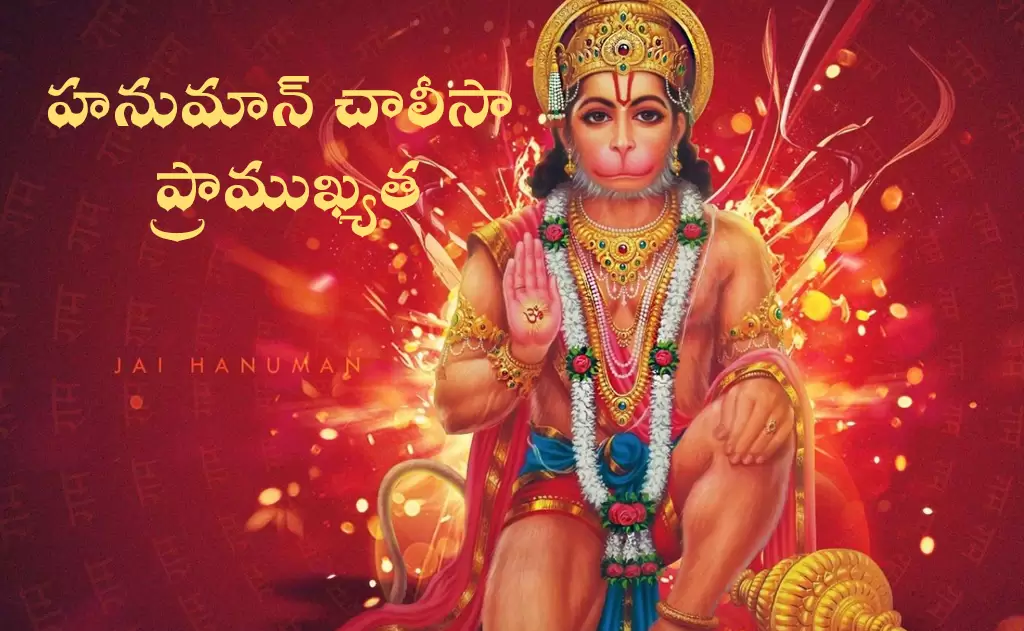
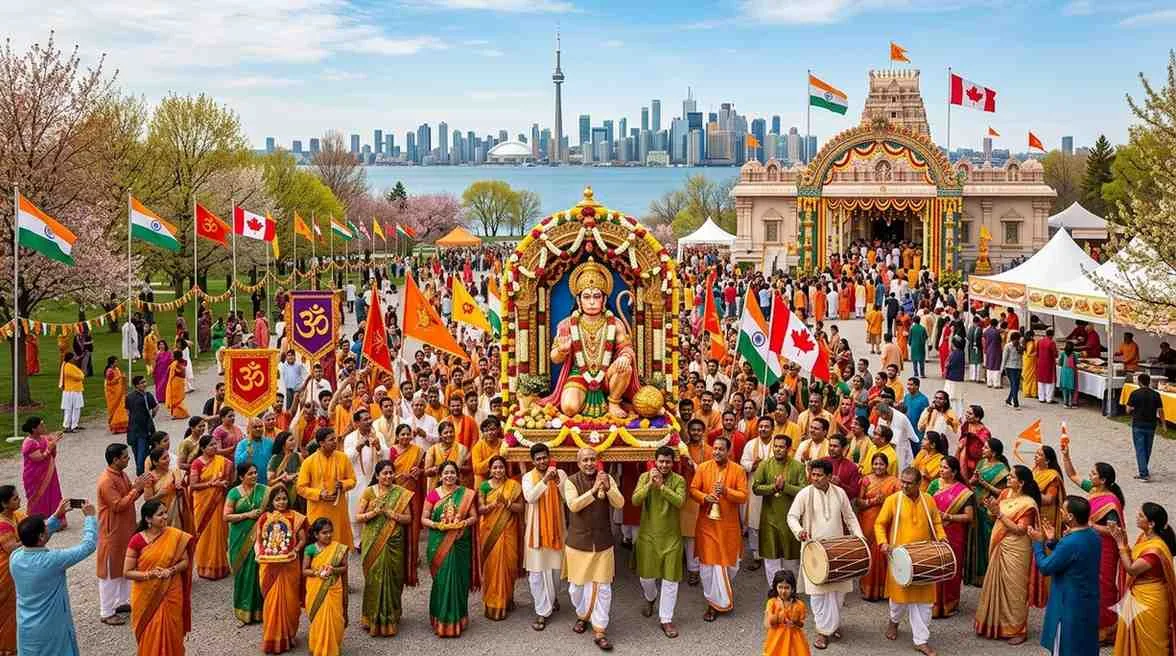
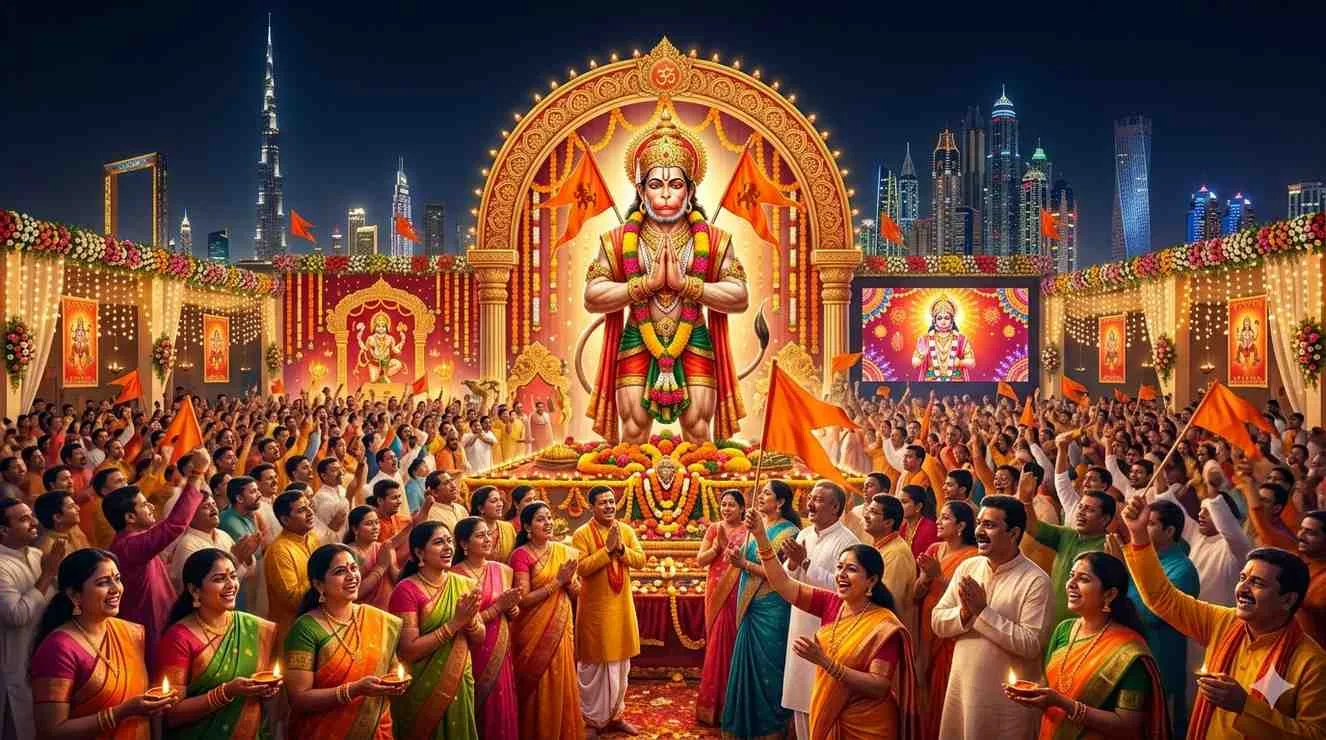
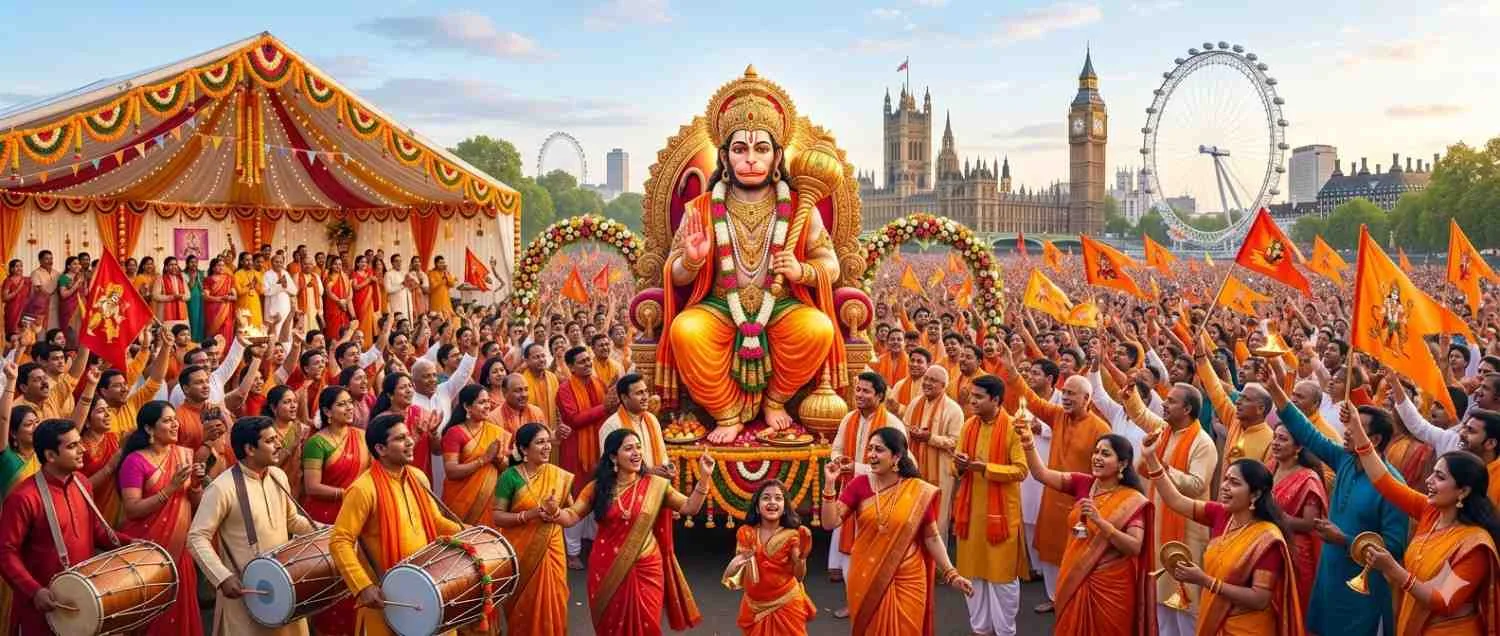
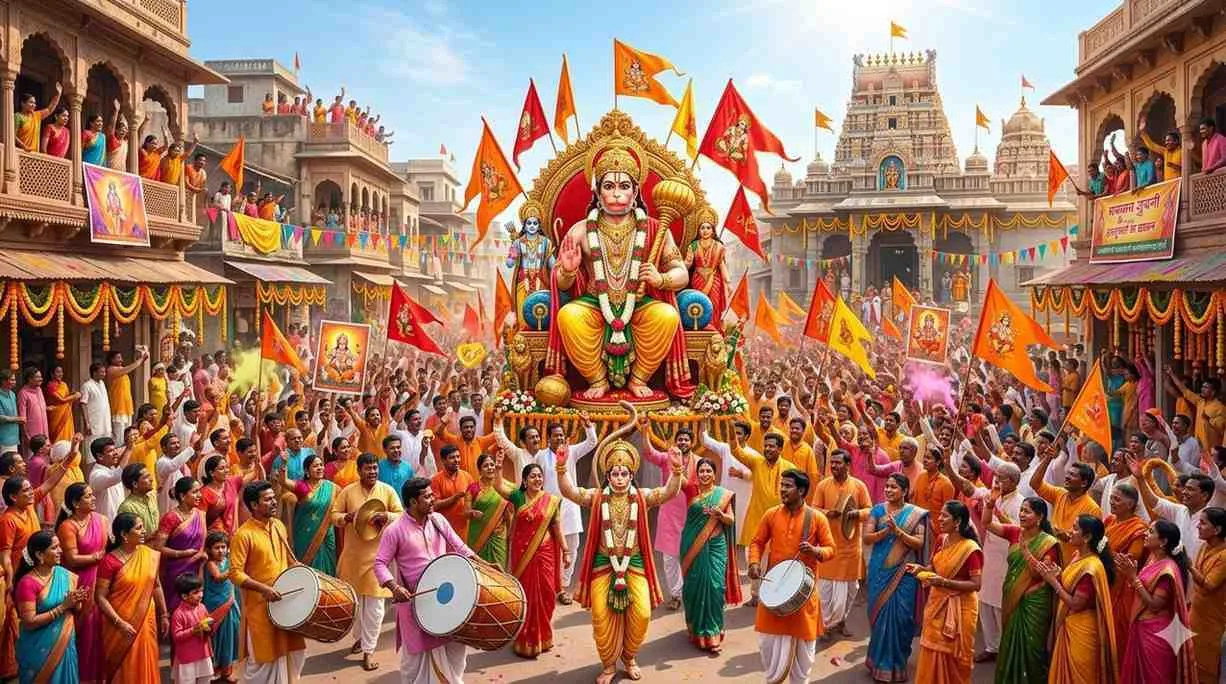
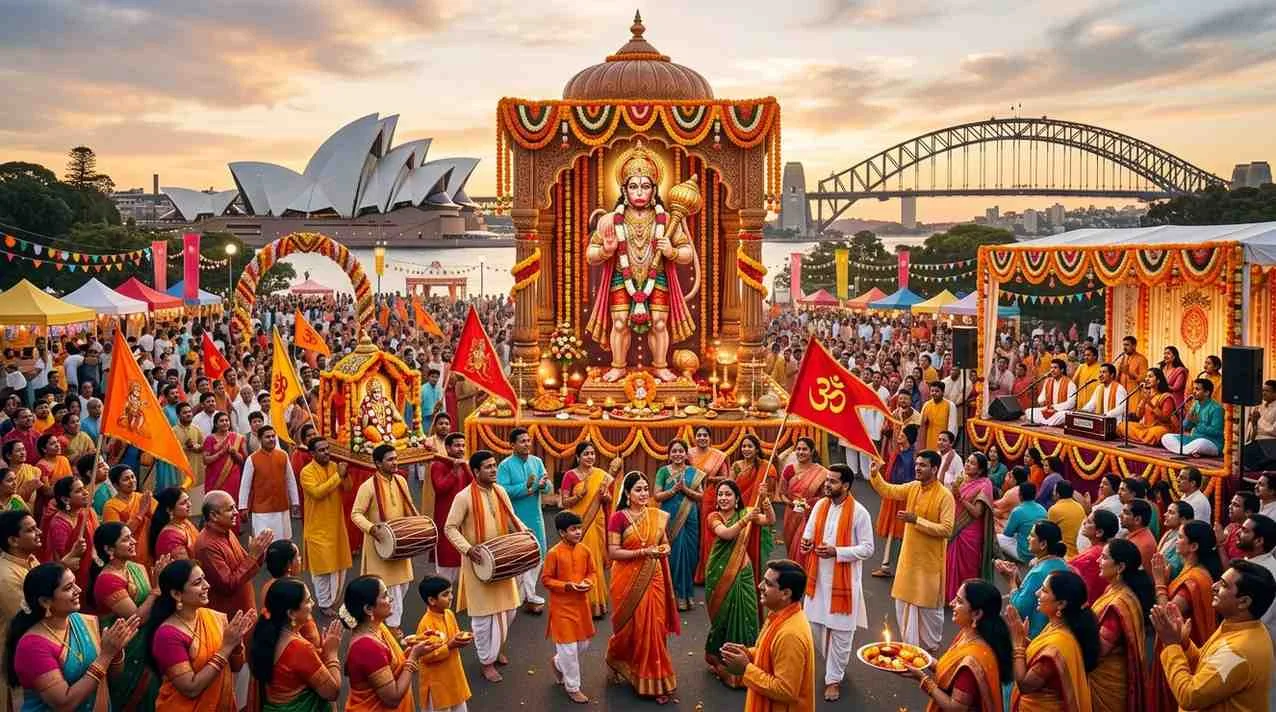
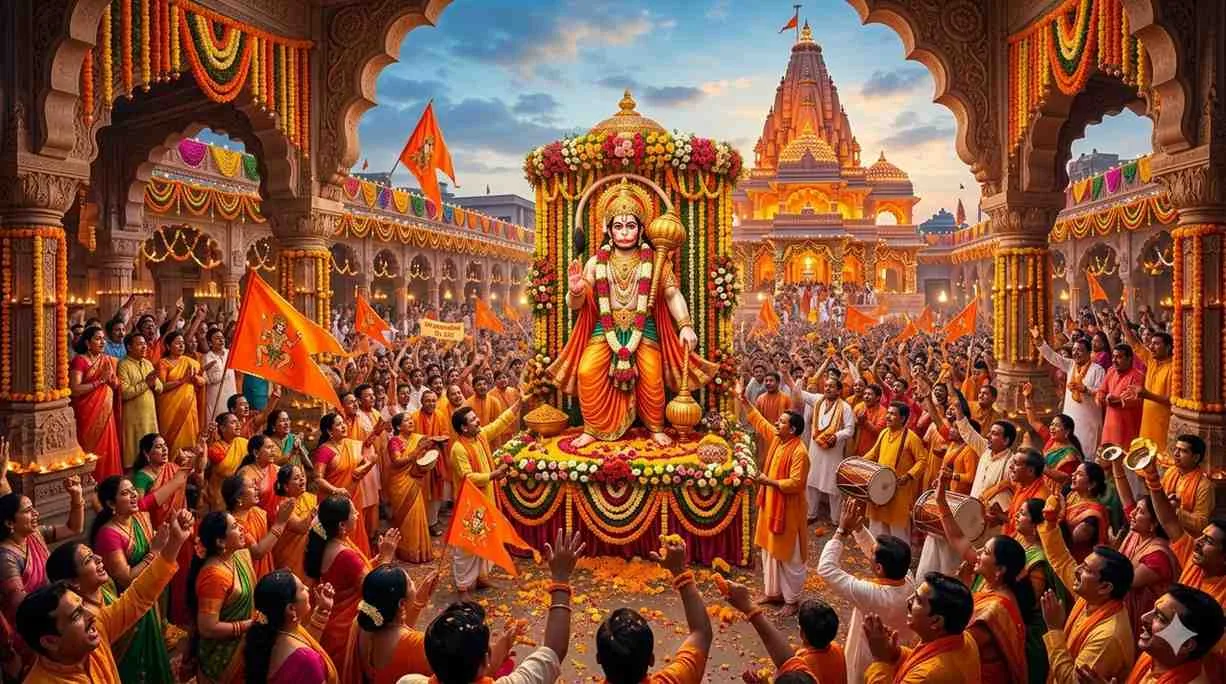
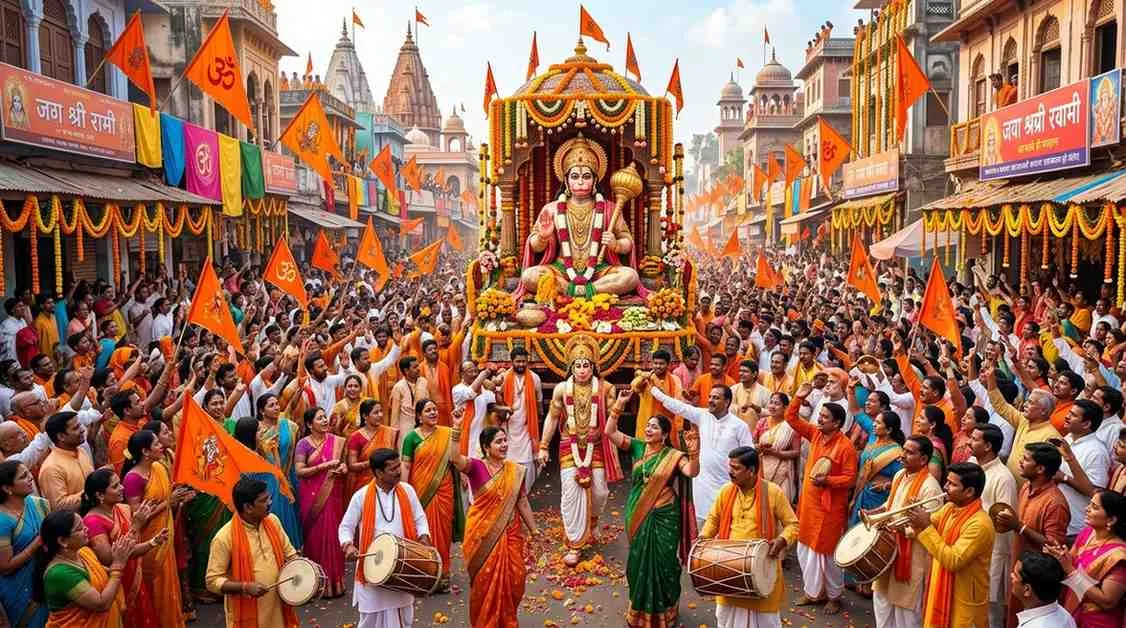
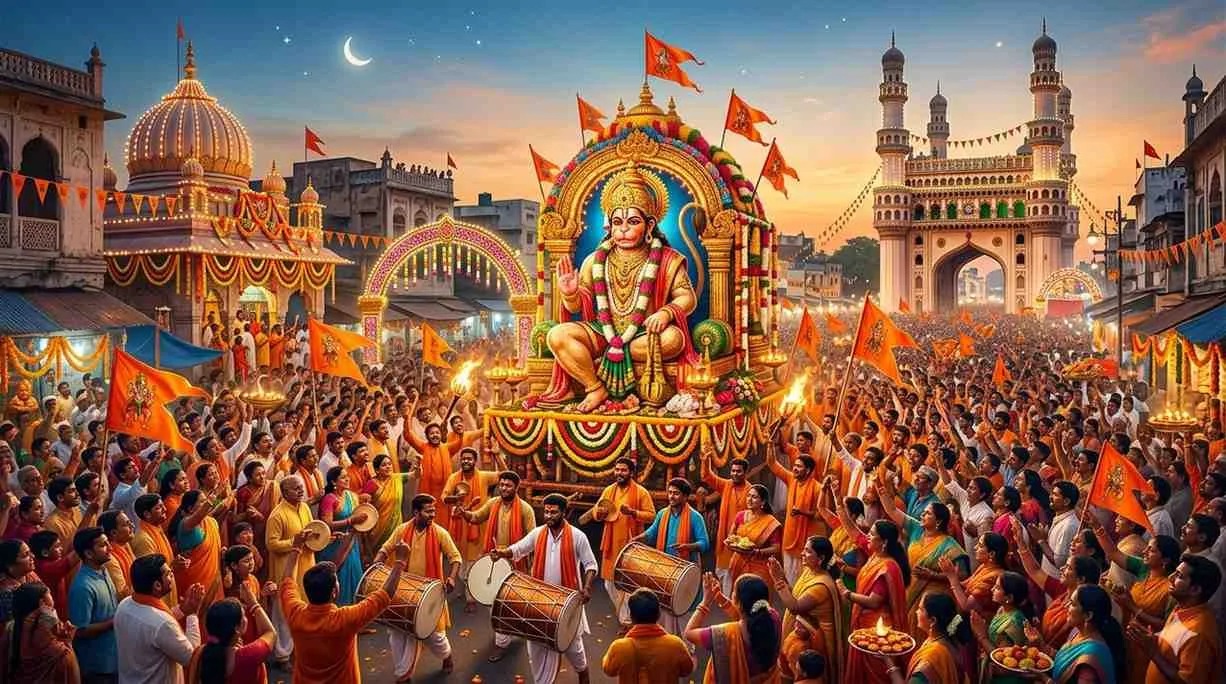
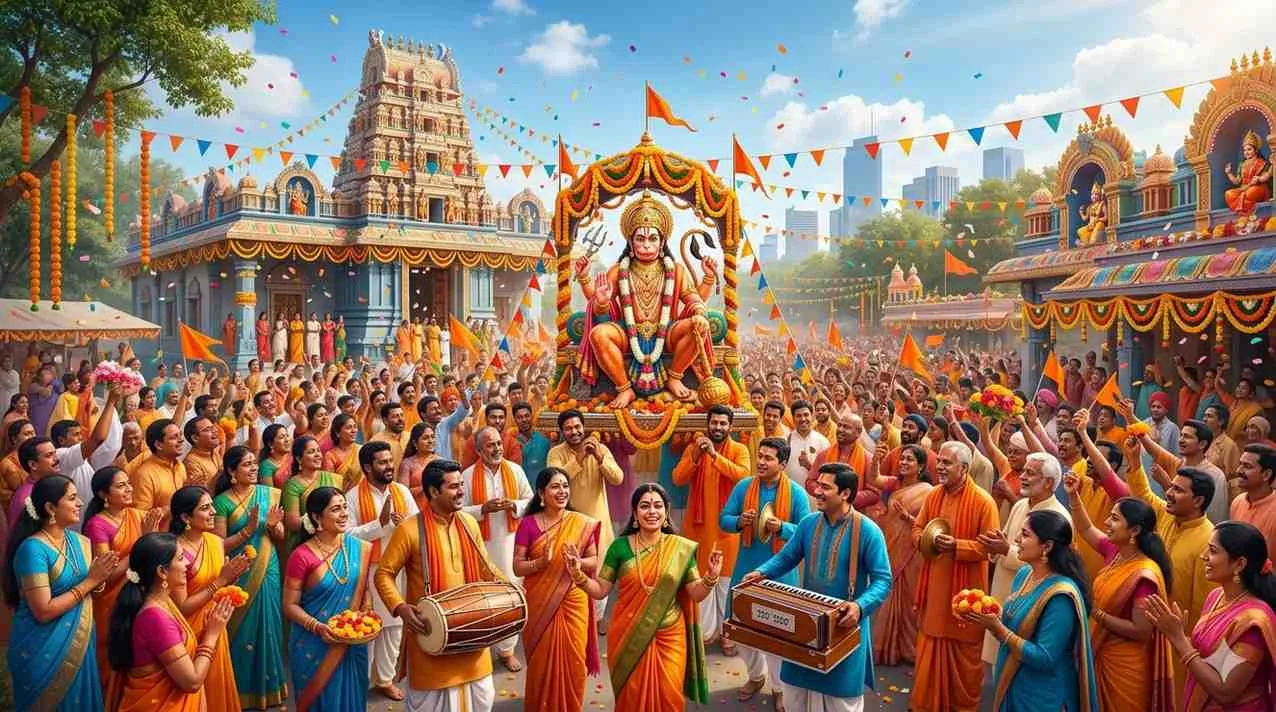
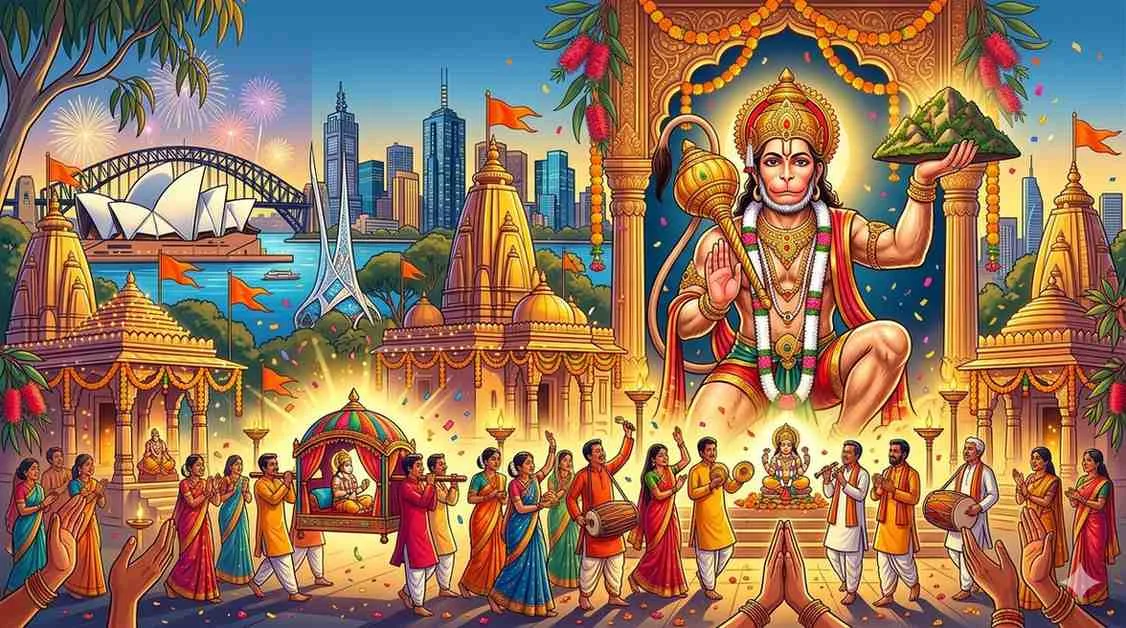
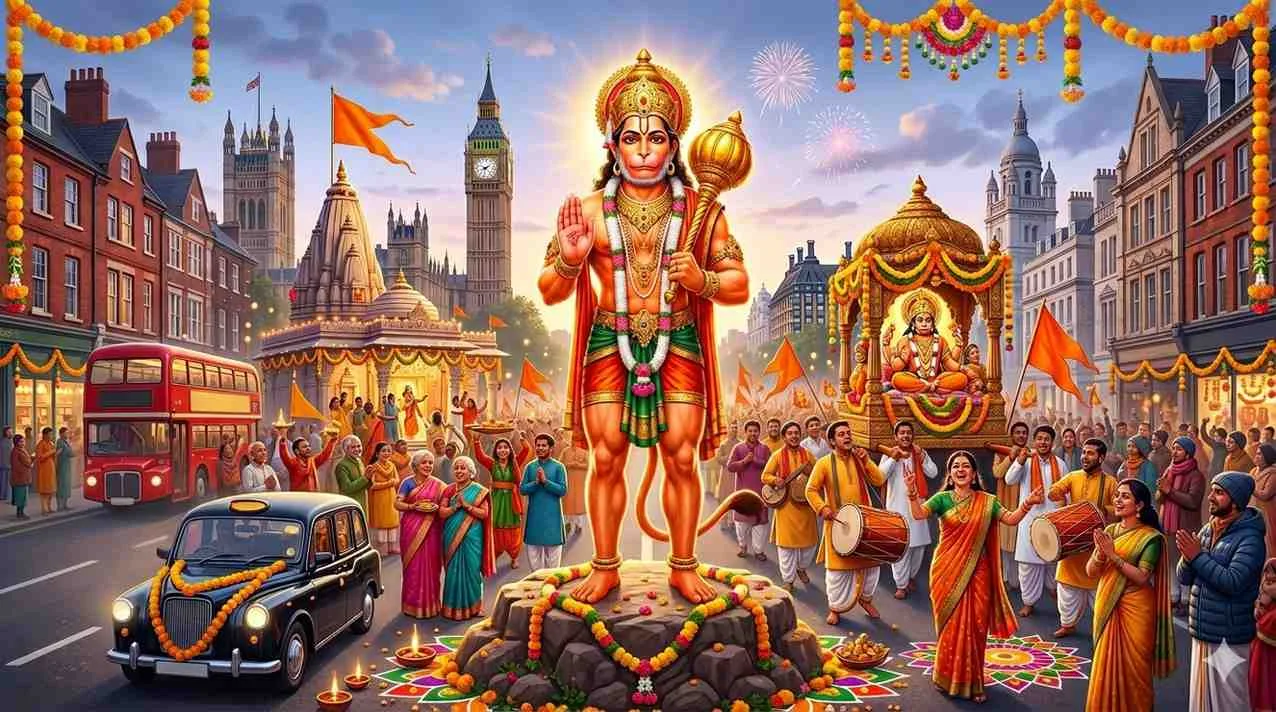
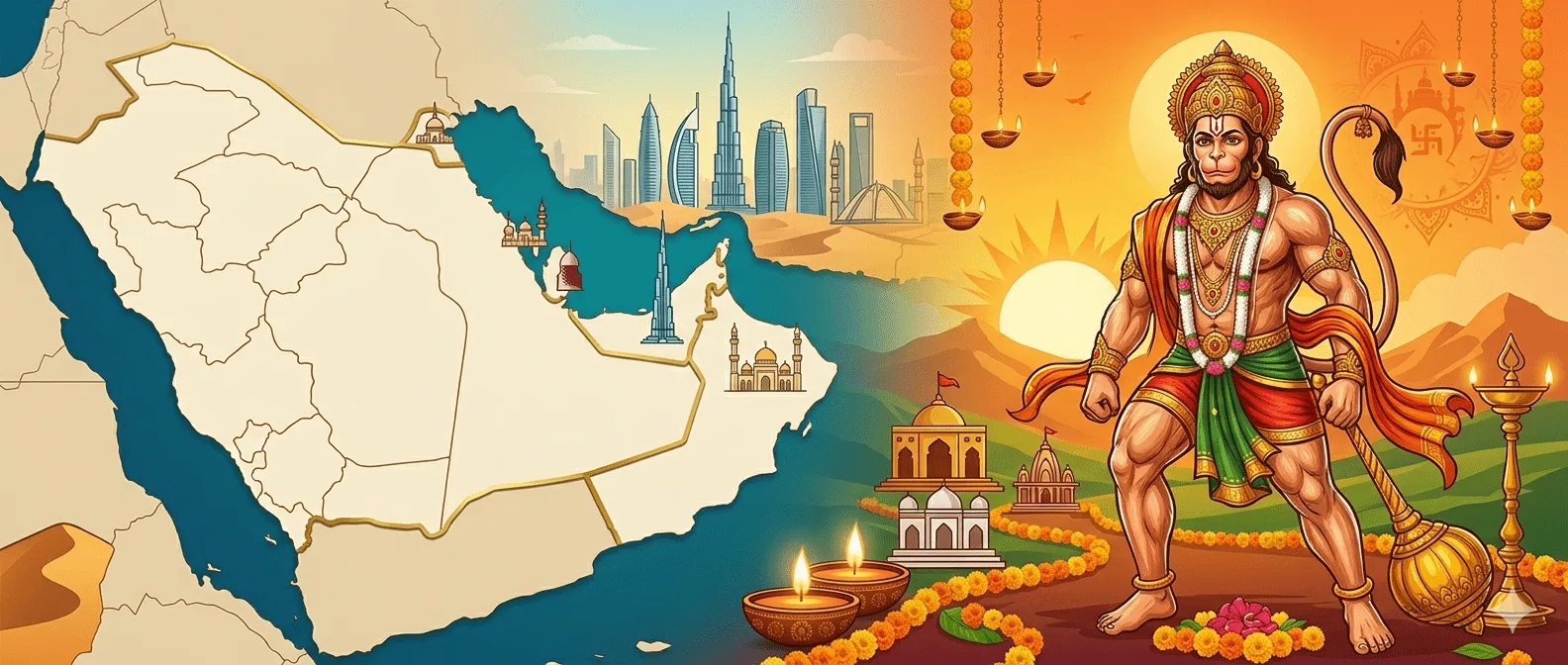
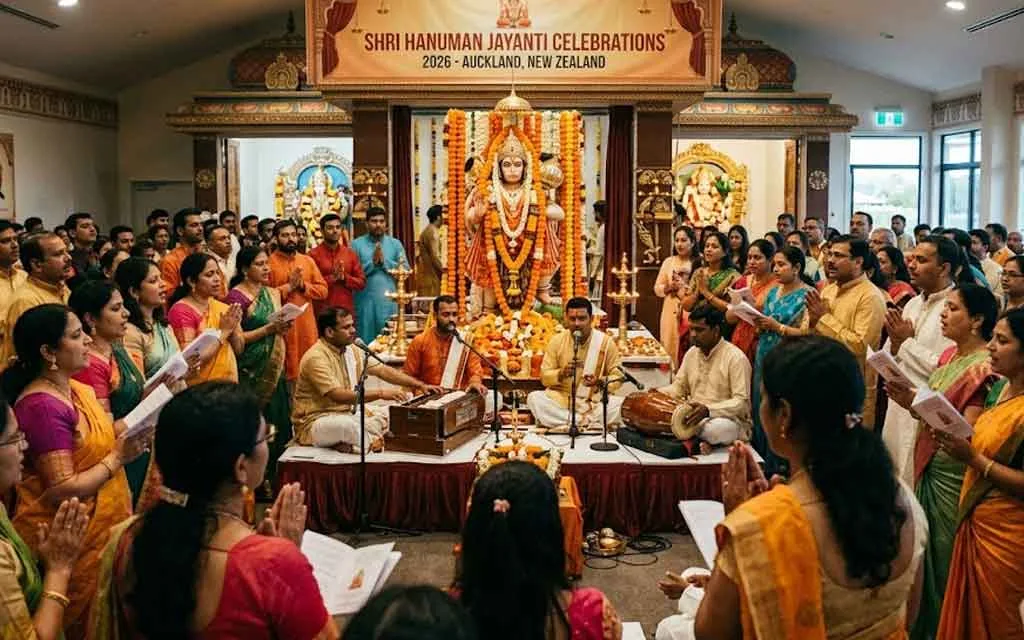
The Hanuman Chalisa is a 40-verse devotional hymn composed by Sant Tulsidas in the 16th century, in Awadhi (a dialect of Hindi). It praises Hanuman's strength, devotion to Rama, and ability to grant courage and protection. Daily recitation — especially on Tuesday and Saturday — is among the most-practiced Hindu devotional acts globally.
Hanuman Jayanti 2026 (North Indian tradition, Chaitra Purnima) falls on Tuesday, 31 March. The South Indian Hanuman Jayanti (Margashirsha Krishna Trayodashi) falls in November/December. Both are observed with Hanuman Chalisa recitation, abhishekam with sindoor and oil, and sweet bundi prasad.
A 41-day discipline starting on a Saturday or Tuesday: daily Hanuman Chalisa (108 or 1,008 times), Bajrang Baan, satvik diet (no onion/garlic), brahmacharya, sleeping on the floor, wearing red. Practitioners often wear a red mala or rakshasutra. The vrata is associated with overcoming Mangal Dosha and Sade Sati troubles.
Tuesday (Mangalwar) and Saturday (Shanivar). Tuesday because Hanuman is the planet Mars (Mangal) personified; Saturday because Hanuman is the parihara (remedy) for Saturn (Shani) afflictions — including Sade Sati. Devotees offer sindoor, oil-lamp and Hanuman Chalisa recitation on both days.
After Hanuman entered Lanka to find Sita, Ravana ordered his tail set on fire as punishment. Hanuman embraced the fire as Lord Rama's blessing and used the burning tail to set Lanka ablaze before escaping. The fire-tail iconography commemorates this turning point in the Sundarakanda.
