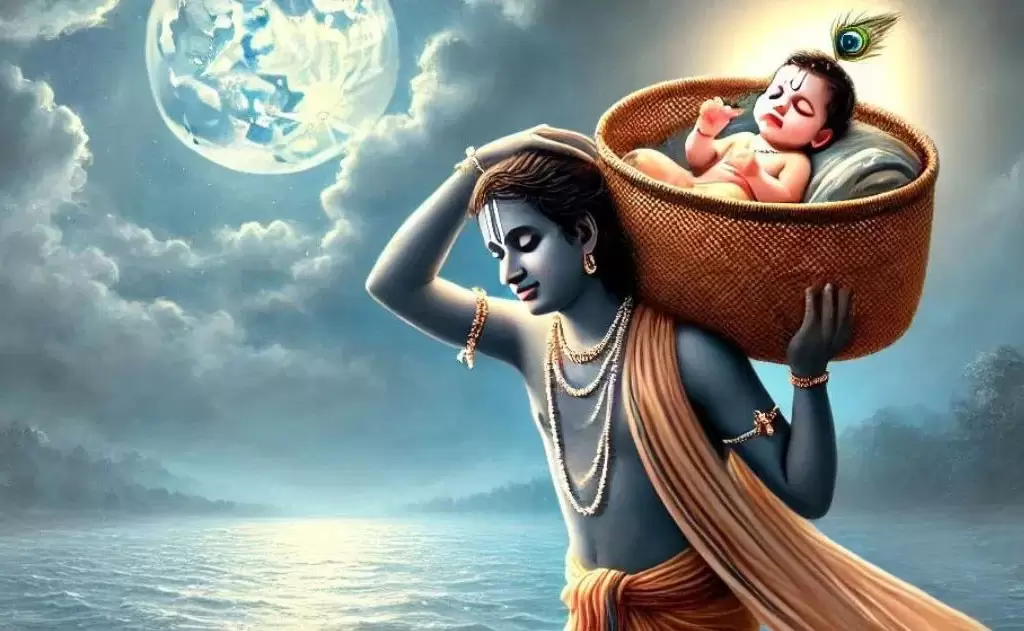
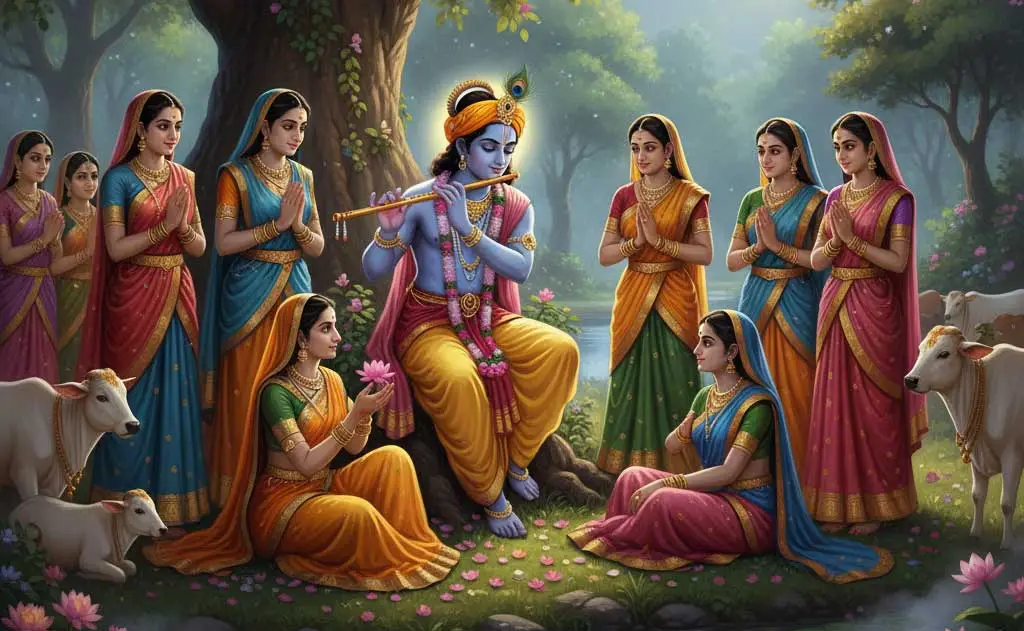
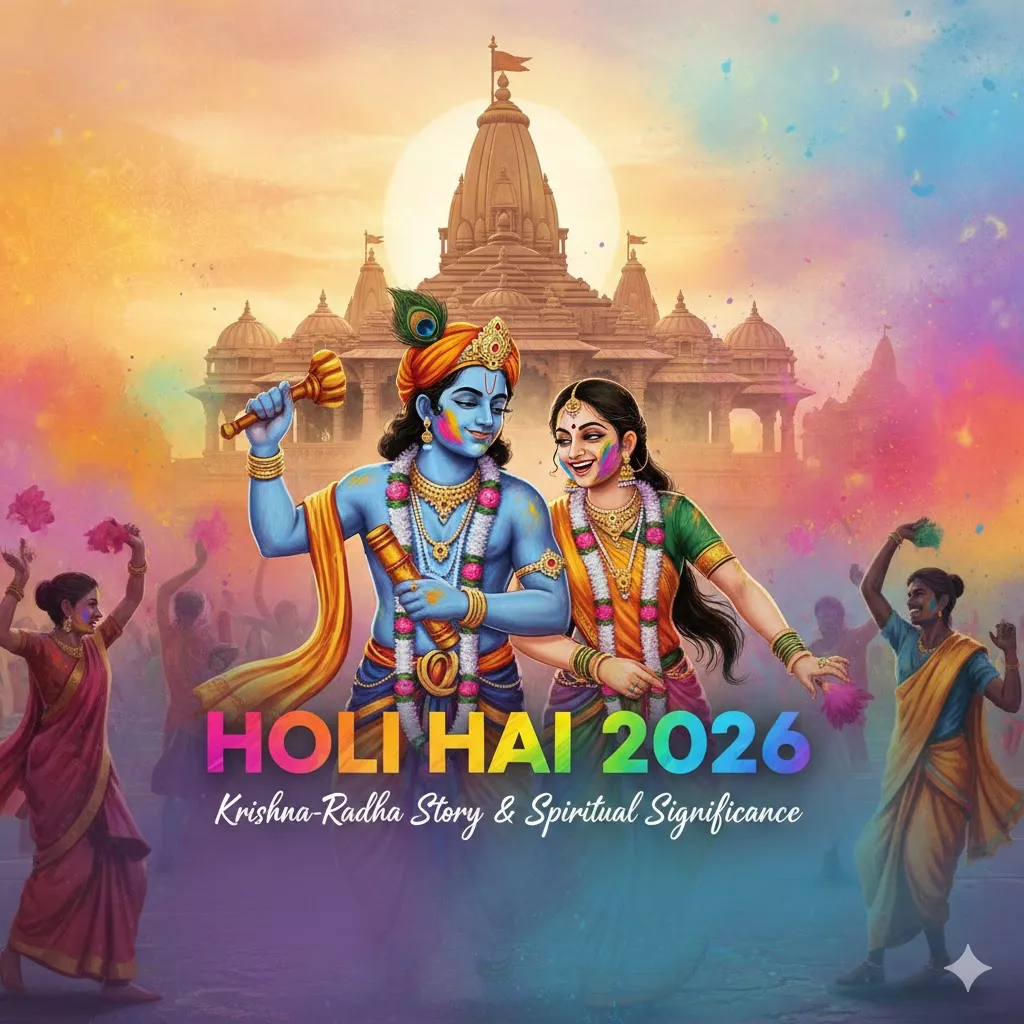
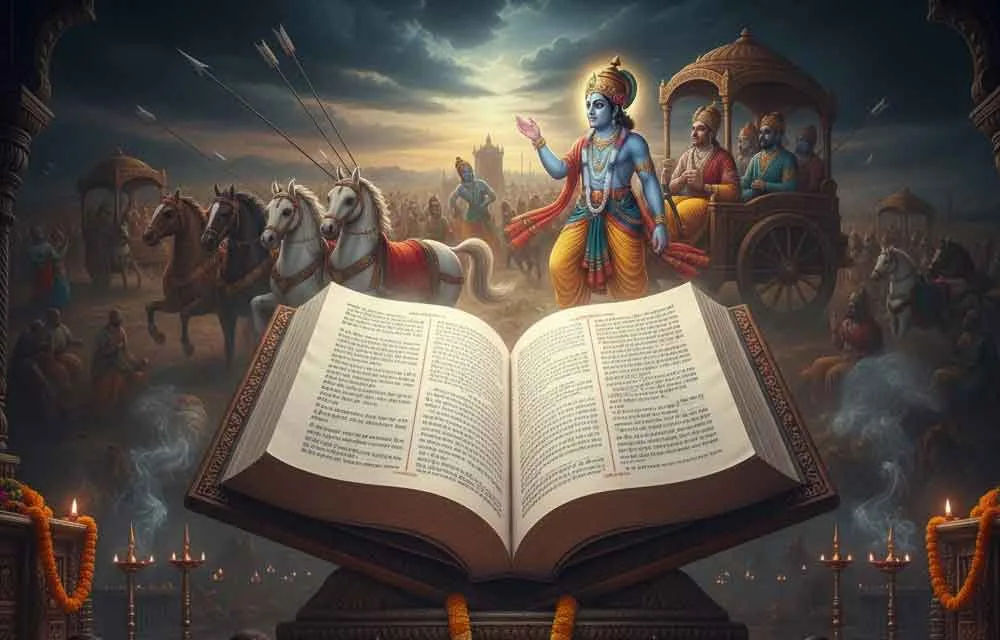
Krishna is the eighth avatar of Vishnu and, in the Bhagavata tradition, the Supreme Personality of Godhead himself. Born to Devaki and Vasudeva in a Mathura prison cell at midnight on Krishna Paksha Ashtami in Bhadrapada month, he overthrew the tyrannical Kamsa, slew the demons Putana, Trinavarta, Aghasura and many more, and danced the Raasa Leela with the gopis of Vrindavan. Later, on the battlefield of Kurukshetra, he delivered the Bhagavad Gita to Arjuna — the supreme Upanishadic teaching of yoga, dharma and liberation that has shaped Indian thought for 5,000 years. HinduTone's Krishna hub covers his full lila and teaching: the Bhagavata Purana's 12 cantos with the Tenth Canto's Krishna-leela as its devotional centerpiece; the Bhagavad Gita's 18 chapters of yoga teachings (Karma, Bhakti, Jnana, Dhyana, Raja); the Hare Krishna Maha-mantra (Hare Krishna Hare Krishna Krishna Krishna Hare Hare / Hare Rama Hare Rama Rama Rama Hare Hare) propagated by Chaitanya Mahaprabhu and ISKCON; the Krishna Sahasranama (1,000 names); and the famous Govardhan Hill lifting. We also cover his pilgrimage triangle: Mathura (birthplace), Vrindavan (childhood Raasa-leela), Dwarka (kingship). Festival calendar: Krishna Janmashtami (August/September), Govardhan Puja (the day after Diwali), Holi (Krishna's Lila-festival of colours, especially at Barsana and Vrindavan), Gita Jayanti (Margashirsha Shukla Ekadashi).


"Hare Krishna Hare Krishna Krishna Krishna Hare Hare / Hare Rama Hare Rama Rama Rama Hare Hare" — the 32-syllable mantra from the Kali-Santarana Upanishad, propagated globally by ISKCON. Devotees chant 16 rounds (1,728 mantras) daily on a 108-bead japa-mala as a path to Krishna bhakti.
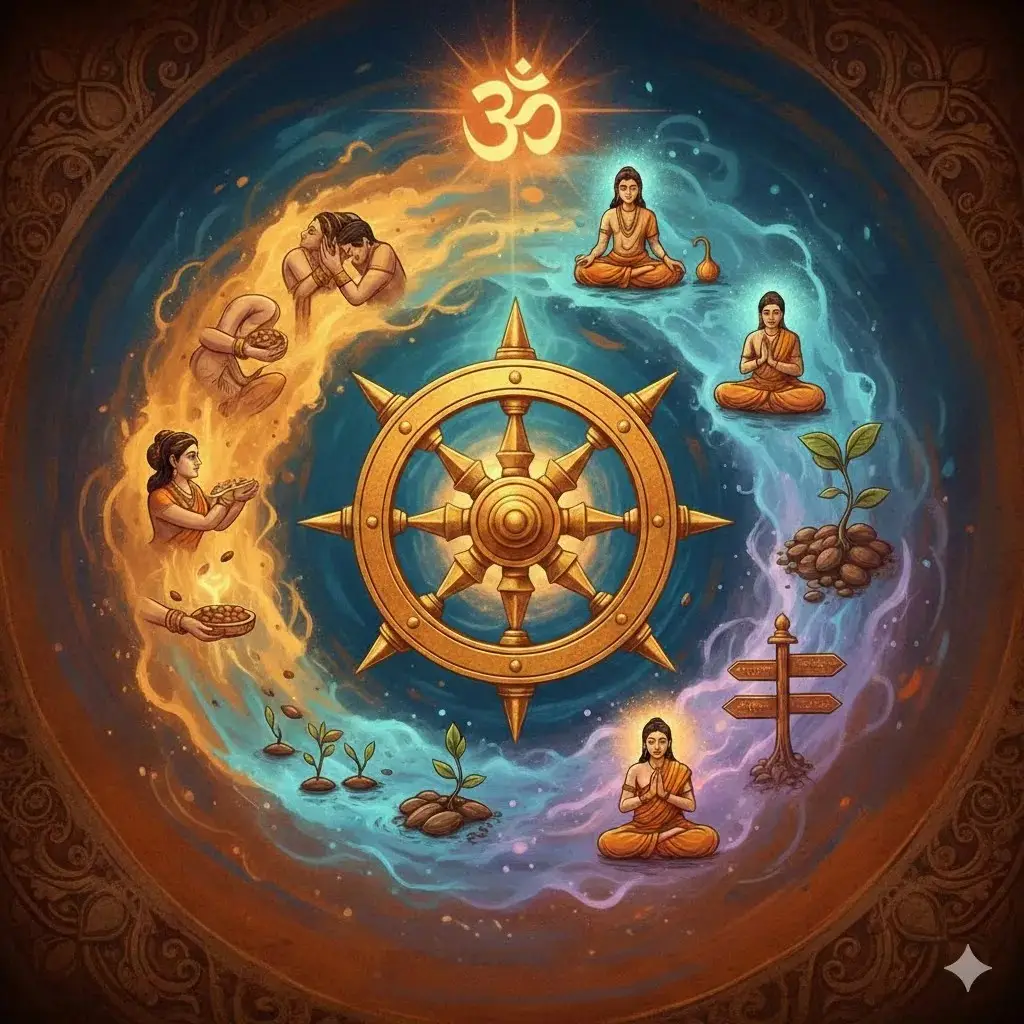
The Bhagavad Gita teaches that liberation comes through three converging paths: Karma Yoga (selfless action without attachment to results), Bhakti Yoga (loving devotion to Krishna), and Jnana Yoga (knowledge of the unchanging Self). The ultimate teaching is sharanagati — complete surrender to Krishna as the Supreme Person.
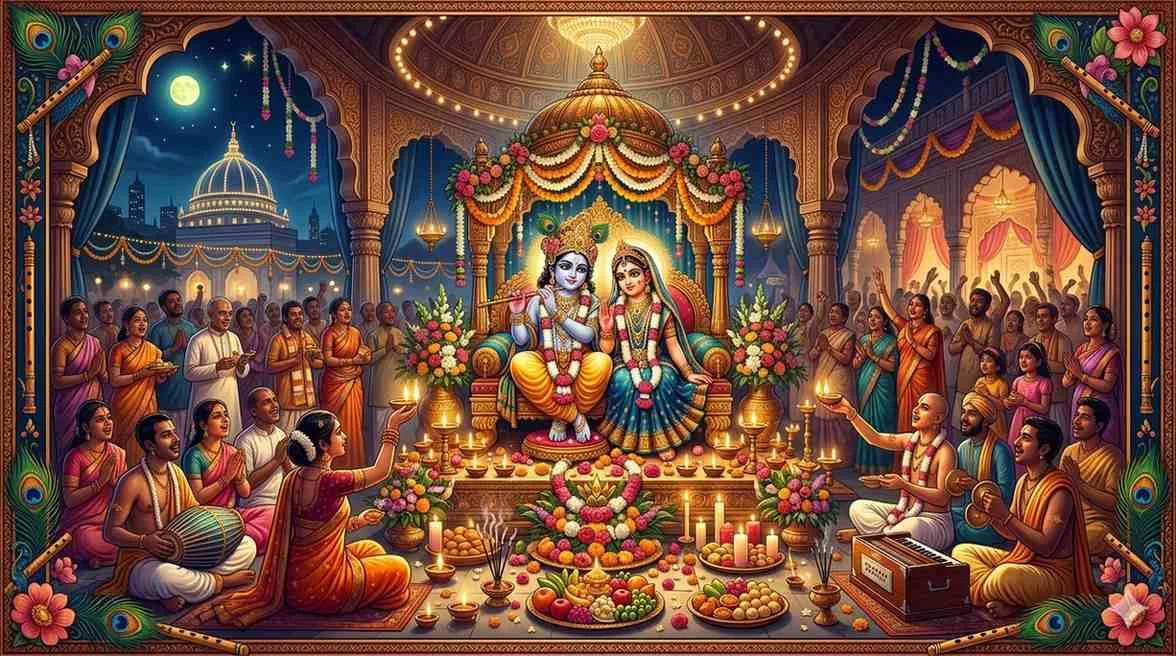
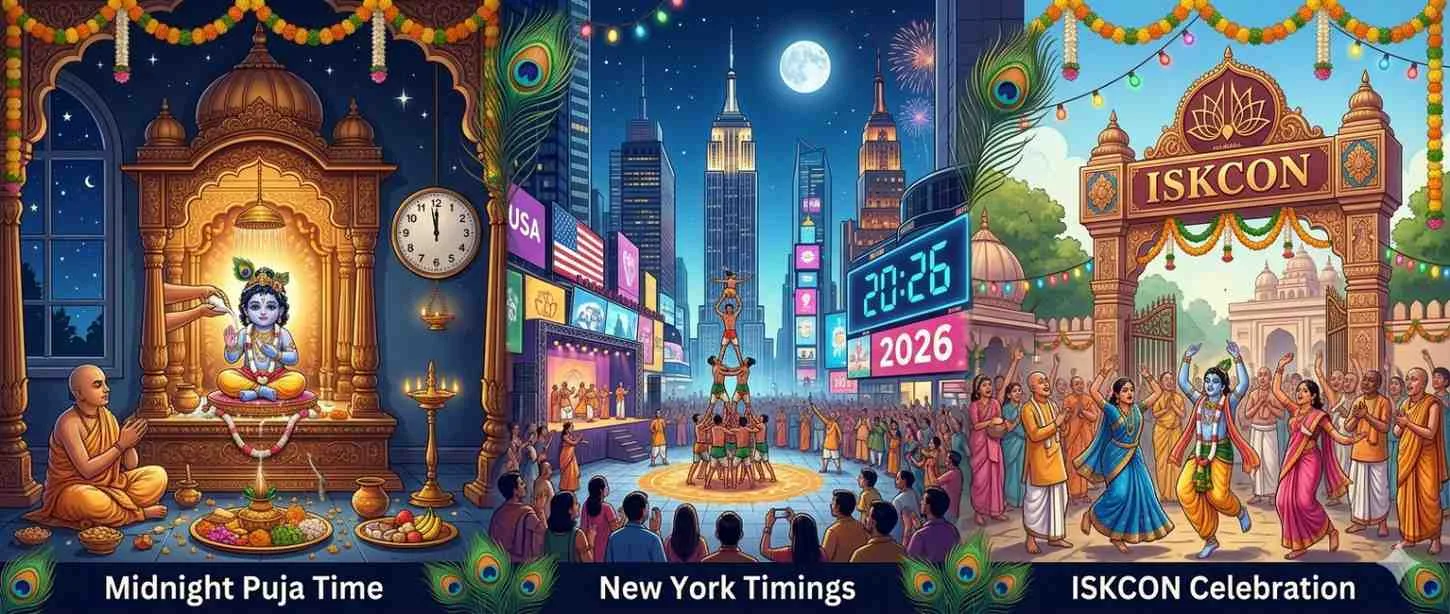
Krishna Janmashtami 2026 falls on Saturday, 5 September. The festival is celebrated at midnight (Krishna's birth-hour), with fasting through the day, bhajan/keertan into the night, abhishekam and naivedyam at midnight, and the breaking of the dahi-handi the following day.
The murali (flute) symbolises Krishna's call to the soul — the divine music that draws all beings towards him. The hollow bamboo represents the devotee emptied of ego; Krishna's breath through it becomes divine music. In Vrindavan tradition, his flute call summoned the gopis to the Raasa Leela.
In mainline Vaishnavism, Krishna is the eighth avatar (incarnation) of Vishnu. In Gaudiya Vaishnavism (the Chaitanya tradition), the relationship is reversed: Krishna is the Supreme Personality and Vishnu is one of his expansions. Both views coexist in the broader Hindu tradition.
