Sanatan Dharma for Young NRIs: A Complete, Honest Guide for Hindus Growing Up in USA, UK, Canada, Australia & UAE
Sanatan Dharma — the eternal, universal way — is the actual self-name of what the world calls Hinduism. This in-depth guide is written for second- and third-generation NRI youth in the USA, UK, Canada, Australia and the UAE. Covers what the word truly means, the four core pramanas, the ten yamas-niyamas, real practical practices for college campuses and corporate life, identity questions, addressing common misconceptions, and a 21-day starter plan.
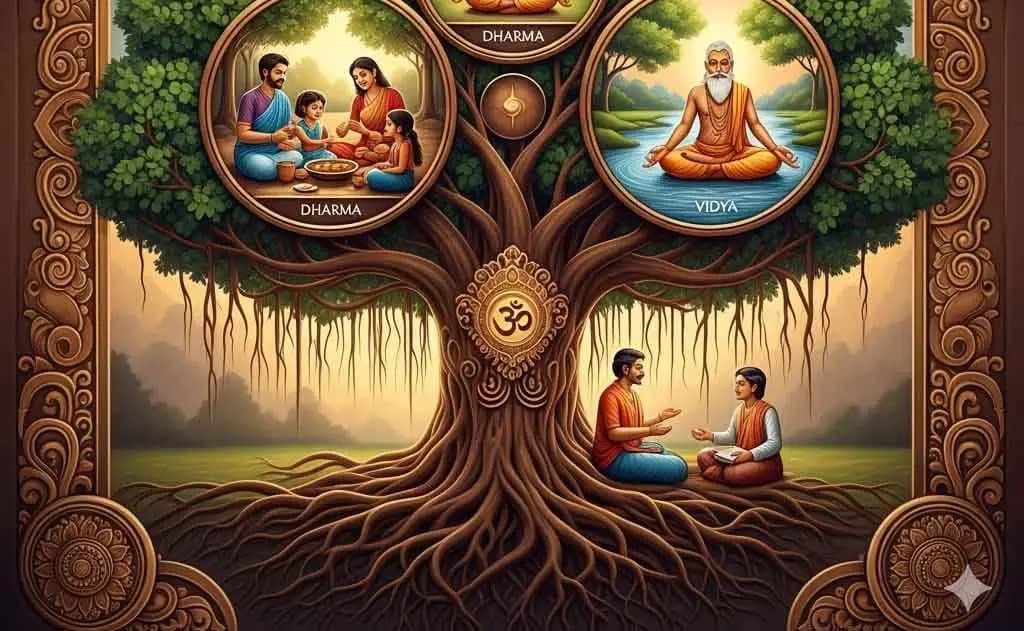
Sanatan Dharma — the eternal, universal way — is the actual self-name of what the world calls Hinduism. This in-depth guide is written for second- and third-generation NRI youth in the USA, UK, Canada, Australia and the UAE.
“Dharmo rakshati rakshitah.” — Dharma protects those who protect dharma. (Manusmriti 8.15) — the single line that defines an entire civilisation.
What is Sanatan Dharma — and why the word matters
Sanatan Dharma (सनातन धर्म) literally means "the eternal way" or "the timeless principle". It is the original, civilizational self-name of what the modern world calls "Hinduism". The word "Hindu" itself was a foreign label, used by Persian and later British administrations to describe the people who lived east of the Indus river. The word "Sanatan Dharma", in contrast, is internal — it appears in our own Vedas, Upanishads and Bhagavad Gita.
Why does this distinction matter for an NRI teenager in Brampton, Edison, Houston, Hounslow, Sydney or Sharjah? Because the moment you understand that your tradition is not a "religion" in the narrow Abrahamic sense — but a sanatan, eternal, principle-based way of life — much of the awkward "explain your religion" pressure dissolves. You are not part of a sect. You are part of a 5,000-year-old continuous civilisation.
Core idea: dharma is not "religion" — it is a principle
In English, "religion" tends to mean a fixed creed: one prophet, one book, one God, one community. Sanatan Dharma is something different. It rests on four pillars:
Sanatan: eternal — not founded on a date.
Universal: open to all who live by dharma; no exclusive claim.
AdvertisementPluralist: "Ekam sat, vipra bahudha vadanti" — Truth is one, the wise call it by many names (Rig Veda 1.164.46).
Experience-based: the only proof of God is direct experience (anubhava); scripture is a guide, not a final court.
For young NRIs, this means you are never asked to "convert" your friends or to claim that other paths are wrong. The Bhagavad Gita itself, in 4.11, says: "Yadrishi bhajante mam, tadeva bhajamy aham" — "in whatever way men approach me, in that same way do I receive them." That is the most generous theology in human history.
The four pramanas — how Sanatan Dharma decides what is true
In a TikTok world where everything is "my truth", Sanatan Dharma offers something striking: a 4,000-year-old epistemology — a science of how to test what is true. The four pramanas are:
Pratyaksha: direct sensory experience — what you actually see, hear, touch, taste, smell.
Anumana: inference — logic and reason. Yes, Sanatan Dharma demands logic. The Nyaya school is one of the world’s oldest schools of formal logic.
AdvertisementUpamana: analogy and comparison — how new knowledge maps onto known knowledge.
Shabda: reliable testimony — verified scripture (Vedas, Upanishads, Gita) and trustworthy teachers.
A young NRI who learns these four is intellectually equipped to handle every "Why do you believe in many gods?" question at university. The answer: I don’t "believe" — I test, I reason, I experience, I refer. That is what Sanatan Dharma asks of every honest human being.
The ten yamas and ten niyamas — the operating system
Forget the "do this, don’t do that" caricature of Hinduism in school textbooks. The real ethical core of Sanatan Dharma is twenty principles — ten yamas (restraints) and ten niyamas (observances) — codified by Patanjali, Sandilya and others.
Ten yamas (restraints)
Ahimsa: non-violence in thought, word and deed.
Satya: truthfulness without hurting others.
AdvertisementAsteya: non-stealing — including not stealing time, ideas, attention.
Brahmacharya: right use of energy; for grihasthas this is mindful relationships, not celibacy.
Kshama: forgiveness, especially of oneself.
Dhriti: steadfastness — staying with the practice through hard days.
Daya: compassion for every living being.
Arjava: honesty and inner transparency.
Mitahara: moderate, satvik diet.
AdvertisementSaucha: cleanliness of body, mind and environment.
Ten niyamas (observances)
Hri: healthy modesty — neither false humility nor performative pride.
Santosha: contentment with what is.
Dana: charity, big and small.
Astikya: faith in the eternal — that consciousness is not random.
Ishvara-pujana: daily worship — even five minutes counts.
Siddhanta-sravana: listening to dharmic teachings.
AdvertisementMati: developing right understanding through study.
Vrata: keeping resolutions — fasts, sankalpas, promises.
Japa: mantra repetition.
Tapas: voluntary discipline — cold shower, fasting, sadhana.
Hindu population — where the diaspora actually is
Across the five primary diaspora geographies covered by HinduTone:
USA: approx 4.0 million Hindus, fastest-growing religious community in 25 of 50 states. Second-largest Indian-origin diaspora globally.
Canada: approx 830,000 Hindus, with strong concentrations in Brampton, Mississauga, Markham, Surrey BC, and Calgary.
UK: approx 1.04 million Hindus, the second-largest non-Christian religion in Britain. Major centres: London (Neasden, Wembley, Hounslow, East Ham), Leicester, Birmingham, Manchester, Glasgow.
Australia: approx 685,000 Hindus, the fastest-growing religion in Australia per the 2021 census. Major centres: Sydney (Helensburgh, Parramatta, Glenmore Park), Melbourne (The Basin, Tarneit), Perth, Brisbane, Adelaide.
UAE: approx 1.0 million Hindus across UAE, mostly Indian expats; Abu Dhabi’s BAPS Hindu Mandir, the largest stone-built Hindu temple in the Middle East, opened in February 2024.
Combined, that is more than 7.5 million Hindus living, working and raising children in these five countries. You are not a minority of one — you are part of a globally networked civilisation.
Daily Sanatan Dharma practices — practical and modern
Morning (5 minutes)
Wake up before sunrise where possible. Place your right palm on your forehead and chant: "Karagre vasate Lakshmi, kara madhye Saraswati, kara mule sthitah Brahma, prabhate kara darshanam." Look at both palms — Lakshmi at the fingertips, Saraswati in the middle, Brahma at the base.
After brushing/bath, light a lamp at your altar. Even a tea-light counts.
Three pranayamas + one mantra: Anulom-Vilom alternating breath × 9 + 11 chants of any one of: Gayatri, Maha Mrityunjaya, Om Namah Shivaya, Om Namo Bhagavate Vasudevaya.
Workday
Before the first email: 1 minute of silent gratitude. Resolve: "I will work as karma-yoga today — full effort, surrendered fruits."
Before lunch: "Brahmarpanam Brahma havir" (Bhagavad Gita 4.24) — silently or aloud. Even a sandwich becomes prasad.
Conflict at work: breath in for 4 counts, hold 4, breath out 6. Recite "shanti shanti shanti" in your head.
On the commute home: 5 minutes of japa or one chapter of the Gita on audiobook.
Evening
Family arati at the home altar. Even a 60-second arati with one diya counts.
Read or listen to one verse of the Bhagavad Gita — slowly. Not to "finish" but to absorb.
Say "Om Shanti" with your spouse and children before sleep.
How to handle the hard questions on a college campus
"Why do you have so many gods?"
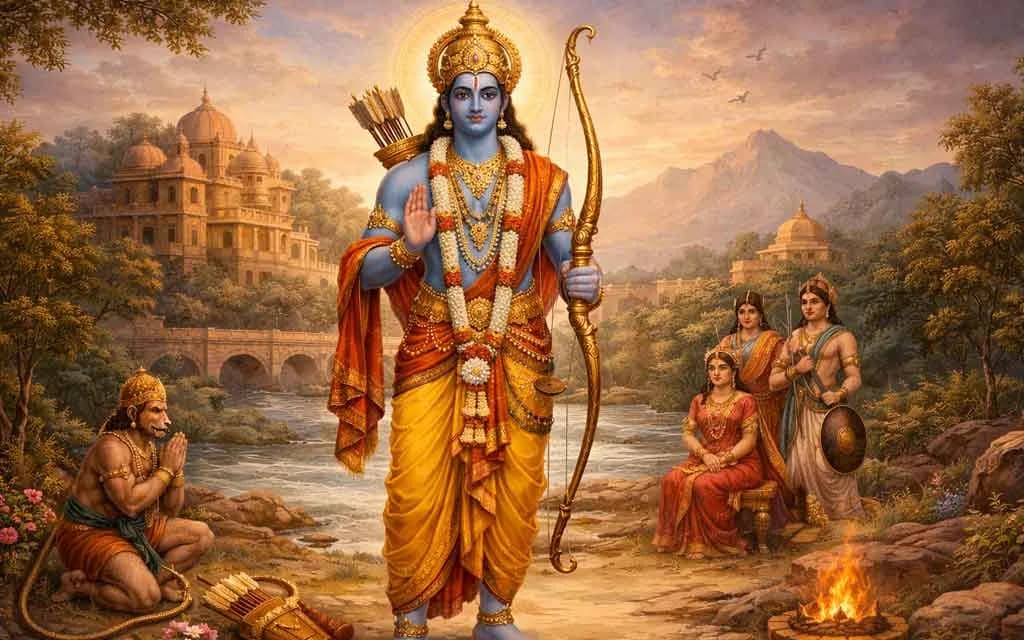
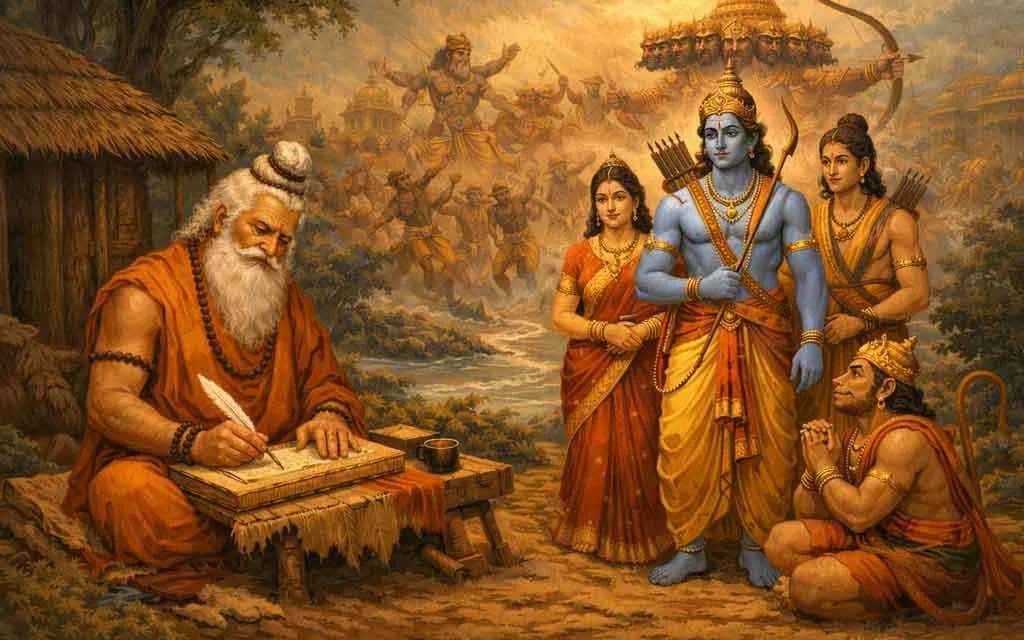
Sanatan Dharma teaches one infinite consciousness — Brahman — manifesting through unlimited names and forms. The "many gods" are like many windows into one room: Shiva for transformation, Vishnu for preservation, Devi for power, Ganesha for new beginnings. Whether one prefers a personal form or formless meditation, both reach the same Truth. See Lord Rama — the ideal man, king and avatar as one beautiful illustration.
"Isn’t Hinduism caste-based?"
The varna system was originally a meritocratic four-fold division of social functions — knowledge, governance, commerce and service — open to all and based on aptitude. Caste discrimination as practised in modern times is a political distortion, condemned by the Upanishads, the Bhagavad Gita and almost every saint of Sanatan Dharma — Adi Shankaracharya, Ramanuja, Madhva, Basava, Kabir, Tukaram, Chaitanya, Ramakrishna, Vivekananda, Aurobindo. Real Sanatan Dharma rejects birth-based discrimination outright.
"Hinduism is polytheistic and unscientific."
Sanatan Dharma is panentheistic monism — one consciousness, infinite forms. It is, if anything, more philosophically rigorous than crude monotheism. The Nyaya school predates Aristotelian logic. The Samkhya school predates modern psychology by 2,500 years. Aryabhata calculated pi and the earth’s rotation; Sushruta performed cataract surgery. The Vedas are not anti-science — they are the original wonder.
"Why do Hindus worship idols?"
A murti (deity-image) is not the deity itself — it is a yantra, a focusing tool, like a flag is to a country. The mind cannot easily concentrate on the formless. The murti gives form to the formless for the duration of meditation. Adi Shankaracharya in his Vivekachudamani makes this very clear.
"You can’t be a Hindu and be modern."
Tell them: Sundar Pichai, Satya Nadella, Vivek Murthy (former US Surgeon General), Rishi Sunak (former UK PM), Kamala Harris’ mother, Ajay Banga (World Bank), Indra Nooyi, Padmasree Warrior, Jagmeet Singh, Kamla Persad-Bissessar — Hindu/Sikh/Indic-rooted, all modern, all globally consequential. Sanatan Dharma was always pro-modernity — that’s how the Vedas were preserved across millennia.
Reading list — start small, go deep
Bhagavad Gita: start with Eknath Easwaran’s translation. Then graduate to Swami Chinmayananda or Swami Sivananda. See our Bhagavad Gita category for chapter-wise commentary.
Ramcharitmanas (Tulsidas) and Valmiki Ramayana: the Ramayana is the dharmic civics textbook. Read at least the Ayodhya Kanda once.
Upanishads: Isha, Kena, Katha, Mundaka — short and life-changing.
Yoga Sutras of Patanjali: Edwin Bryant translation; the manual of the mind.
Vivekachudamani (Adi Shankaracharya): the crown-jewel of Advaita Vedanta.
Swami Vivekananda’s Chicago lectures: 1893 — the moment Sanatan Dharma was reintroduced to the modern West.
Vishnu Sahasranama: see our Vishnu Sahasranama — 1000 names of Lord Vishnu for the complete recitation guide.
Yantra, Mantra, Tantra: our explainer on Yantra vs Mantra vs Tantra demystifies the three.
21-day starter plan for an NRI student or young professional
Week 1 — anchor (days 1–7)
Each morning: three pranayamas + 11 Gayatri mantras. Three minutes total.
Each evening: one verse of the Bhagavad Gita with English commentary. Read aloud.
Weekend: visit a temple, attend an arati, eat prasad.
Week 2 — deepen (days 8–14)
Add 11 chants of Om Namah Shivaya or Om Namo Bhagavate Vasudevaya.
Read Gita Chapter 12 (Bhakti Yoga) — the shortest chapter, the most actionable.
Choose one yama and one niyama to practise consciously this week.
Week 3 — integrate (days 15–21)
Tuesday: chant the Hanuman Chalisa. Saturday: chant Maha Mrityunjaya Mantra.
Read the first 10 names of Vishnu Sahasranama.
Have one honest conversation about your dharma with a parent and one with a non-Hindu friend.
Day 21: decide which two practices stay with you for life.
Frequently asked questions about Sanatan Dharma for NRI youth
Is it OK to call myself "Hindu" or should I say "Sanatani"?
Both are correct. "Hindu" is the geographic-historic label and is now adopted by us. "Sanatani" is more philosophically precise. Use either with confidence.
Can I be a Hindu and not believe in caste?
Yes — that is in fact the position of every classical Vedantic acharya from Shankara to Ramanuja to Vivekananda. Birth-based discrimination is anti-Sanatan-Dharma.
Can I be a Hindu and eat meat?
Sanatan Dharma strongly recommends sattvic vegetarianism, especially for spiritual practice. There are regional and historical variations. Aim to reduce, especially on Tuesdays, Saturdays, Ekadashis, and during festivals.
I am dating someone non-Hindu — what do I do?
Sanatan Dharma is non-coercive. Live your dharma with sincerity and integrity. If your partner is curious, share. If not, respect. Marriages thrive on mutual respect, not creed-matching alone.
My parents are very orthodox — and I am modern. How do I balance?
Honour them. They preserved the dharma across an ocean. Adopt the timeless principles (yamas, niyamas, gita-study) — these never go out of date — while choosing your own form of practice. Sanatan Dharma has 1,000 paths.
Should I learn Sanskrit?
A little goes a long way. Even 50 Sanskrit words — atman, brahman, dharma, karma, moksha, satya, ahimsa, seva, prana, mantra — change how you understand your own civilisation.
Can I worship at home without a priest?
Absolutely. The home is the first temple. Five minutes of mindful arati at a clean altar is sufficient.
What if I have not been raised with rituals?
No problem — start today. Sanatan Dharma is a forgiving tradition. The first sankalpa erases years of distance.
Are yoga, Ayurveda and meditation truly Hindu?
Yes — all three are direct contributions of Sanatan Dharma to humanity. The fact that they have become global is something to be proud of, not an invitation to dilute the source.
Is Sanatan Dharma against women?
Sanatan Dharma is the only major civilisation that worships the supreme as feminine — Devi, Shakti, Parvati, Lakshmi, Saraswati, Durga, Kali. The Devi Mahatmya is older than every Abrahamic scripture. Misogyny in the modern subcontinent is a deviation, not the source.
Can a non-Hindu convert to Sanatan Dharma?
There is no formal "conversion" because there is nothing to convert from — Sanatan Dharma is open to all by birthright as conscious beings. A simple sankalpa from any temple acharya, plus Gayatri diksha, is the most common formal entry.
How do I keep my dharma alive at university?
Find your local Hindu Students Council (HSC), HinduYUVA, or BAPS Yuva Forum. Carry one mantra in your head. Keep one murti in your dorm. Read one verse of the Gita on Sundays. That is enough.
Your dharma is older than every modern country
When you sit in a lecture hall in Stanford, in a finance office in Canary Wharf, in a hospital in Sydney, in an oil-and-gas firm in Abu Dhabi, in a startup in Toronto — the unbroken tradition you carry with you is older than every modern country in the world. The Vedas were oral before England, France, the US, Canada, Australia or the UAE existed as polities. That is not arrogance — it is responsibility.
Aham brahmasmi. I am that infinite consciousness. Tat tvam asi. That you are. Sarvam khalvidam brahma. All this, indeed, is Brahman. Carry these forward.
Subscribe to HinduTone for weekly NRI-youth-focused dharma content — written specifically for the second and third generation diaspora.
You might also like
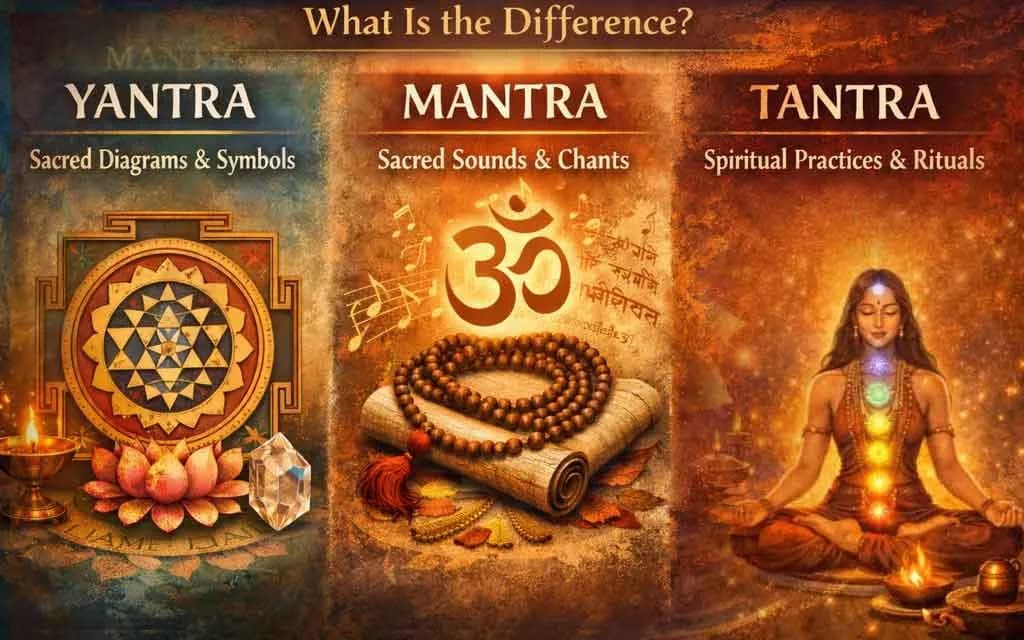
Yantra vs Mantra vs Tantra — What Is the Difference? | Complete Hindu Guide
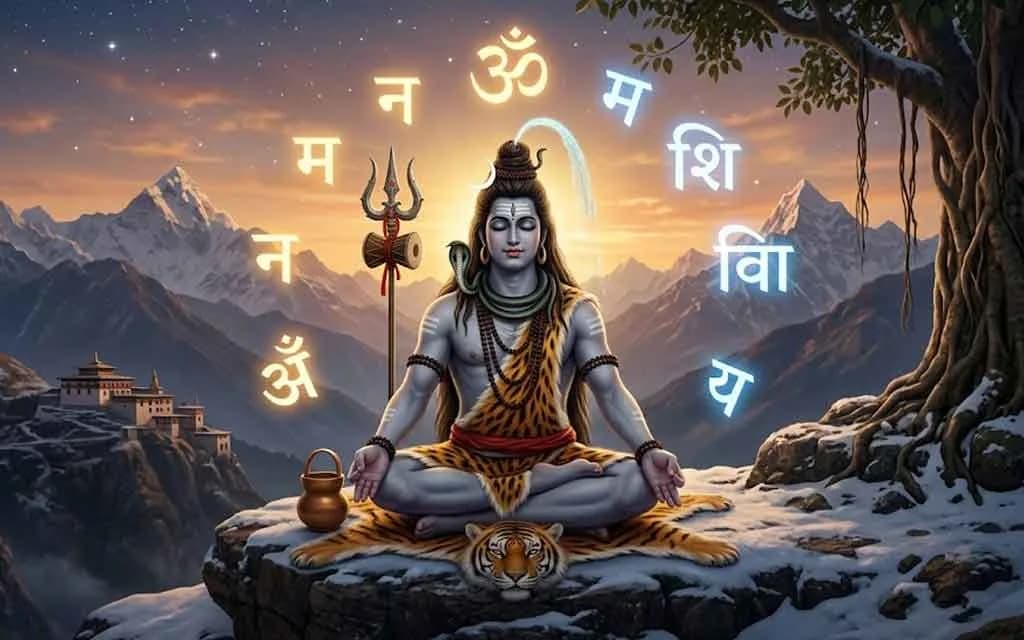
Om Namah Shivaya: The Five-Syllable Mantra That Contains the Universe
Valmiki Ramayana: The Complete Story of Lord Rama — Chapter by Chapter | HinduTone