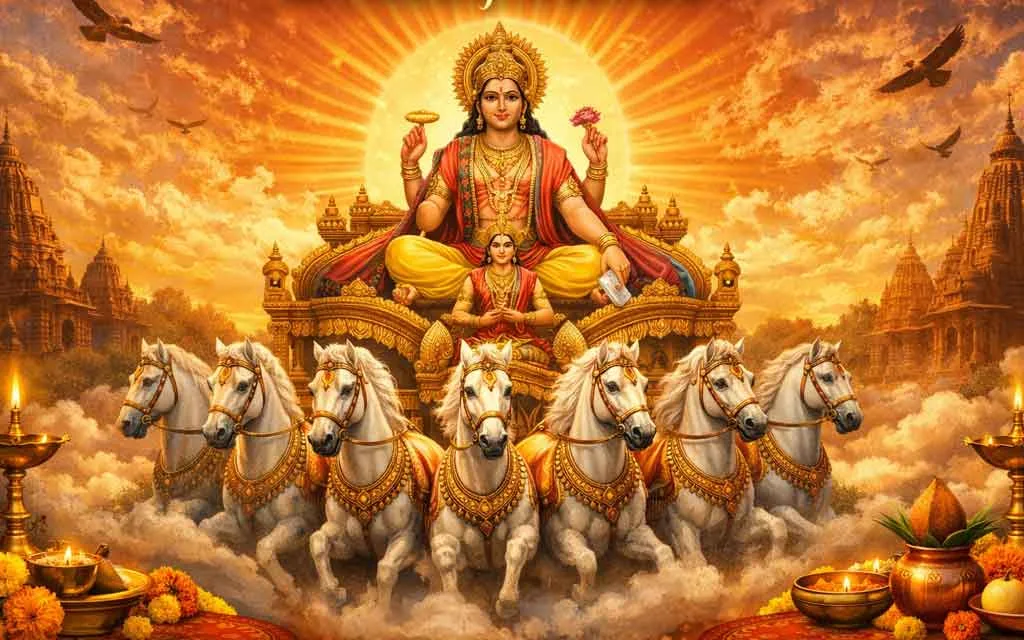
Lord Rama: The Ideal Man, King & Avatar — Complete Spiritual Biography
"Ramo Vigrahavān Dharmaḥ" — Rama is Dharma itself, embodied in human form.
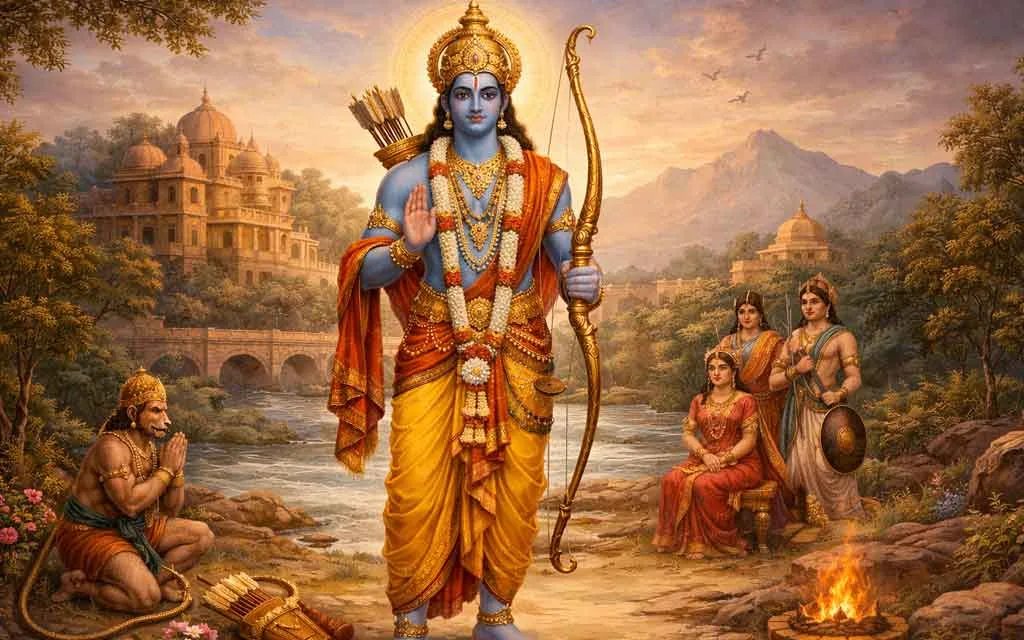
"Ramo Vigrahavān Dharmaḥ" — Rama is Dharma itself, embodied in human form.
"Ramo Vigrahavān Dharmaḥ" — Rama is Dharma itself, embodied in human form. — Valmiki Ramayana
✦ Introduction: The Eternal Light of Ayodhya
In the vast ocean of Hindu sacred tradition, few names resonate with the depth, devotion, and divine grace that the name Rama does. Across millennia, from the banks of the Sarayu River to the farthest corners of Southeast Asia, the story of Rama has illuminated the hearts of billions. He is not merely a legendary king or a mythological hero — He is the living embodiment of Dharma, the cosmic moral order that sustains all of existence.
Lord Rama is the seventh avatar of Lord Vishnu, the Preserver and Protector of the Universe, who descended upon the earth in the Treta Yuga to restore righteousness, destroy the tyranny of the demon king Ravana, and show humanity the highest ideal of human virtue. Every action of Rama — as a son, a husband, a brother, a king, a warrior, and a friend — is a sacred teaching. His life is a scripture, His footprints a pilgrimage, and His name — Rama, Rama, Rama — a liberation.
The great sage Valmiki composed the original Ramayana, one of the two greatest epics of Hinduism, recording the divine life and leelas (divine plays) of Lord Rama. Later, the poet-saint Tulsidas composed the immortal Ramcharitmanas in the 16th century, bringing Rama's story to every heart that could chant, every home that could light a lamp, every soul that sought the path home.
✦ Part I: The Divine Purpose — Why Rama Descended
The Burden of the Earth
Before Rama's birth, the Earth — personified as the goddess Bhumi Devi — was weeping. She had been burdened beyond her capacity by the sins of Ravana, the ten-headed demon king of Lanka. Ravana was brilliant, learned in the Vedas, a master of music, a great devotee of Lord Shiva — and yet consumed by pride, lust, and the intoxication of power.
Armed with a boon of near-invincibility — he could not be killed by gods, demons, or heavenly beings — Ravana terrorized the three worlds. Sages were slaughtered, sacrifices disrupted, celestial beings enslaved, and women dishonored. The balance of cosmic Dharma had tilted to the edge of catastrophe.
The gods — Brahma, Indra, and all the celestials — approached Lord Vishnu at His abode in Vaikuntha and pleaded for intervention. Vishnu, with His compassionate smile, heard their prayer and made His divine promise:
"I shall descend to the Earth as the son of King Dasharatha of Ayodhya. I shall take human form, live by human dharma, and slay Ravana — not by divine power alone, but through the strength of righteousness, loyalty, love, and truth."
The entire universe trembled with joy. The descent of Vishnu as Rama was not merely a military mission — it was a divine teaching mission. He would show the world what it means to be fully human and fully divine at once.
✦ Part II: The Birth of Rama — Ramnavami, the Sacred Dawn
The Kingdom of Ayodhya
Ayodhya — the very name means "that which cannot be conquered" — stood as the jewel of the ancient world on the banks of the sacred Sarayu River in present-day Uttar Pradesh. It was a city of golden spires, fragrant gardens, wise ministers, prosperous citizens, and righteous kings. The Ikshvaku dynasty, also known as the Suryavansha (Solar Dynasty), had ruled it for ages uncounted, every king a paragon of justice.
King Dasharatha was its reigning monarch — renowned throughout the universe for his valor, generosity, and wisdom. His name literally means "he who can fight in ten directions simultaneously." He had won battles against the gods themselves and was beloved by both sages and subjects. Yet the shadow of sorrow hung over his magnificent court: despite three beloved queens — Kaushalya, Kaikeyi, and Sumitra — Dasharatha had no heir.
The Putrakameshti Yajna
Advised by the great sage Vasishtha, Dasharatha performed the Putrakameshti Yajna — the sacred fire ceremony for the gift of children — conducted by the brilliant sage Rishyashringa. As the sacred fire blazed heavenward, from its heart arose a resplendent divine being, holding a golden vessel overflowing with Payasam (sacred pudding of milk, rice, and ghee), blessed with Vishnu's own grace.
The king distributed the Payasam to his three queens with trembling, grateful hands.
And then — on the blessed ninth day of the bright fortnight of the month of Chaitra, when the sun stood in the sign of Aries, and the nakshatra of Punarvasu graced the sky — Rama was born to Queen Kaushalya, radiant and blue-hued like the evening sky, bearing the marks of Vishnu upon His body, with eyes like lotus petals, a smile like the crescent moon.
The sage Valmiki writes that at the moment of Rama's birth:
"The seasons grew gentle, flowers bloomed on trees out of season, the rivers ran clear, and the gods rained down flowers from the heavens."
Simultaneously, Bharata was born to Kaikeyi, and the twins Lakshmana and Shatrughna to Sumitra. But it was Rama — fair-hearted, lotus-eyed, gentle yet fierce — who was the fullness of Vishnu's presence. Lakshmana, ever devoted, was Vishnu's divine serpent Adishesha incarnated; Bharata was the discus Sudarshana; and Shatrughna was the conch Panchajanya embodied in flesh.
This day is celebrated across the Hindu world as Rama Navami — one of the most sacred festivals, marked with fasting, singing of Rama's glories, and the chanting of the Ramayana.
✦ Part III: The Boyhood of Rama — Virtue Born, Not Made
Growing Up in Ayodhya
From His earliest childhood, Rama radiated an extraordinary quality: even in play, He embodied perfect virtue. He never spoke harshly. He never acted in self-interest. He honoured every elder, cared for every servant, loved every creature. The people of Ayodhya looked at Him and felt their hearts swell — they knew, without knowing why, that this child was something beyond ordinary greatness.
Rama and His brothers were educated by the sage-preceptor Vasishtha, who taught them the Vedas, the Vedangas, the sciences of governance, warfare, and philosophy. Rama absorbed all knowledge effortlessly — not because He was a god in disguise, but because He applied every teaching to His life immediately. He was the ideal student: humble, attentive, grateful, and sincere.
With Sage Vishwamitra — The First Hero's Journey
When Rama was still a youth of sixteen summers, the formidable sage Vishwamitra arrived at Dasharatha's court with a request that shook the king to his core: "Give me your eldest son Rama. Demons are disturbing my sacred yajnas. I need Rama to protect the ceremonies."
Dasharatha was horrified. He offered his armies, himself — anything but his beloved Rama. The sage Vasishtha counseled the king: "Send Rama. He is more than sufficient. This is his destiny."
And so Rama, barely more than a boy, walked into the dangerous forests with Vishwamitra and Lakshmana. There He:
- Slew the demoness Tataka — the terrifying rakshasi who had laid waste to the forests, overcoming His own hesitation to strike a woman, but acting in accordance with higher duty
- Received divine weapons (Astras) from Vishwamitra — celestial missiles charged with the power of gods, fire, wind, and thunder
- Purified Ahalya — the stone-cursed wife of sage Gautama, who had waited ages for liberation. The touch of Rama's foot dissolved her curse. This became one of the most beloved images in Hindu devotion: the grace of Rama liberating the fallen
- Journeyed to Mithila, the kingdom of the philosopher-king Janaka
✦ Part IV: Sita — The Sacred Union of Divinity
The Swayamvara of Mithila
In the kingdom of Mithila, ruled by the wise and spiritually elevated King Janaka, there lived a girl of incomparable beauty, grace, and spiritual depth — Sita. She was not born of woman. Janaka had found her as an infant in a furrow of ploughed earth while conducting a sacred ritual — hence her name, Sita, "she who came from the furrow." She was a child of the Earth herself, Bhumi Devi's daughter, the incarnation of the goddess Lakshmi, Vishnu's eternal consort.
Janaka had declared: only the man who could lift and string the Shiva Dhanush — the legendary bow of Lord Shiva, so massive that five hundred men carried it on a wheeled cart — could wed his daughter.
Many kings had come. Great warriors, sons of gods, prideful monarchs. None could even move it.
When Rama stepped forward, a stillness fell over the assembly. He gazed at the bow not with ambition but with serene purpose. He lifted it with effortless grace, strung it in a single motion — and in drawing it fully, the bow snapped with a sound that shook the three worlds.
Sita stepped forward, her heart already knowing what her eyes confirmed: this was her Rama. She placed the garland of flowers around His neck. Heaven rejoiced. The marriage of Rama and Sita is the cosmic reunion of Vishnu and Lakshmi in human form — the union of dharma and devotion, strength and surrender, protection and grace.
Their love story is not merely romantic — it is the model of all sacred relationship: founded on respect, sustained by duty, deepened by sacrifice, and ultimately transcendent of all earthly conditions.
✦ Part V: The Exile — When Dharma Wears a Crown of Thorns
Kaikeyi's Boons and the Shattering of Ayodhya
Upon returning to Ayodhya as a married prince of incomparable valor, Rama's coronation was announced. All of Ayodhya erupted in celebration. The city was decked with flowers, the streets fragrant with incense, the people's faces alight with joy.
But in the inner chambers of the palace, darkness was at work.
Manthara, a hunchbacked maidservant consumed by jealousy and smallness of vision, poisoned the mind of Queen Kaikeyi — the most beautiful of Dasharatha's queens and once the king's most beloved. Kaikeyi had saved Dasharatha's life in battle long ago; in gratitude, he had granted her two boons, to be called whenever she wished.
Manthara convinced Kaikeyi to use these boons now: exile Rama for fourteen years to the forest, and crown Bharata king instead.
Dasharatha, bound by his word — for a king's sworn promise was dharma itself — collapsed in agony. He begged Kaikeyi with tears streaming down his ancient face. He could not break his oath. But Rama, told of what had transpired, smiled gently and immediately agreed to go into exile.
This moment is the spiritual heart of the entire Ramayana.
Every saint and commentator has meditated on it for thousands of years: Rama did not argue. He did not feel injustice. He did not even permit Lakshmana — who raged with righteous fury — to oppose the decision. He said:
"A father's word is more sacred than a kingdom. Dharma asks this of me. I go gladly."
He then went to His mother Kaushalya, to Sita, to Lakshmana — and one by one, with love and calm, prepared for the forest.
Sita's Devotion — The Choice That Defines Her
When Rama tried to convince Sita to remain in the palace — "the forest is full of danger, this is not your duty, stay here in comfort" — Sita replied with words that have echoed through Hindu civilization as one of its greatest declarations of love and spiritual resolve:
"Where you are, that is my home. Where you walk, that is my path. Where you rest, that is my heaven. A wife who remains while her husband faces hardship has not understood the meaning of being a wife. I follow you, Rama — not out of obligation, but because you are my very soul."
She went.
Lakshmana too refused to stay, saying he would rather be Rama's shadow in the forest than a prince in the palace without Him. The three — Rama, Sita, and Lakshmana — emerged from the city dressed in bark cloth. Thousands of weeping citizens followed them to the banks of the Ganga, begging them to return.
King Dasharatha, bereft of his son's sight, died of grief within days — his heart broken by the separation from Rama.
✦ Part VI: Life in the Forest — The Sage Among the Trees
The Forest as Sacred Classroom
For fourteen years, Rama, Sita, and Lakshmana wandered the forests of ancient India — from the Chitrakut hills to the banks of the Godavari. Far from being years of suffering, the Aranya Kanda (Forest Chapter) of the Ramayana reveals Rama as the Supreme Teacher, the forest as a sacred university, and the sages as eager students and guides.
They lived with extraordinary simplicity — fruits, roots, water, and the company of the holy. Rama spent time with sages such as Atri, Agastya, and Sarabhanga, receiving wisdom and protecting their ashrams from demonic disturbances. In return, the sages offered divine weapons and sacred knowledge.
This period shows Rama's equality in all conditions — the same serenity in a palace as in a hermitage, the same love for Sita in silks as in bark, the same dignity in a crown as in matted locks. Equanimity is one of Rama's supreme divine qualities.
The Meeting with Surpanakha and the Turning Point
At the Panchavati hermitage on the banks of the Godavari, the demon Surpanakha — Ravana's sister — came to Rama consumed with desire. When she threatened Sita and was repulsed by Lakshmana, who cut off her nose and ears, she fled to Lanka screaming of her humiliation.
But her description of Sita's beauty ignited in Ravana a fatal obsession. The demon king — proud, brilliant, already doomed by his own character — resolved to take Sita.
✦ Part VII: The Abduction of Sita — The Test of All Tests
Maricha's Golden Deer
Ravana deployed his uncle Maricha, a shape-shifting demon, who transformed into a golden deer of breathtaking beauty. Sita, enchanted, asked Rama to capture it. Rama followed — but first instructed Lakshmana to guard Sita with His life.
As Rama pursued the deer deep into the forest, Maricha, when struck by Rama's arrow, cried out in Rama's voice: "Lakshmana! Sita!"
Sita, hearing what she believed was Rama in danger, insisted Lakshmana go to His aid. Lakshmana was torn. He knew it was a trap. He drew a Lakshmana Rekha — a sacred protective line of fire around the hermitage — and made Sita promise never to cross it.
Ravana then came in the guise of a wandering sanyasi — a mendicant monk — and stood at the threshold. He spoke softly of philosophy and asked for alms. Sita, dutiful to the laws of hospitality, stepped across the line to offer food.
In that instant, Ravana revealed his monstrous form and snatched Sita away in his flying chariot, soaring southward through the sky toward Lanka.
The vulture-king Jatayu — an old and noble bird, a devotee of Rama — saw this and fought Ravana with his last strength, tearing at Ravana's chariot, injuring the demon king. Ravana severed Jatayu's wings. The great bird fell.
But Jatayu lived just long enough to tell Rama which direction Sita had been taken. In the Hindu tradition, Jatayu is revered as one of the greatest devotees of Rama — who gave his body, his life, and his very last breath in service of his Lord.
Rama wept over Jatayu as a son weeps for a father, and performed Jatayu's last rites Himself — an act that demonstrated: Rama's love knows no barrier of caste, species, or hierarchy.
✦ Part VIII: Building the Alliance — Hanuman and the Vanaras
The Meeting with Sugriva
Searching desperately for Sita, Rama and Lakshmana came to the Rishyamuka Mountain, where the exiled vanara (monkey) prince Sugriva lived in hiding, terrified of his powerful brother Vali.
And here occurred the most celebrated meeting in the Ramayana: Sugriva sent his most trusted minister to investigate these two strangers.
That minister was Hanuman — the son of the Wind God, devotee supreme, the most beloved figure in all of Hindu devotion.
When Hanuman approached Rama in the guise of a brahmin scholar and began to speak, Rama turned to Lakshmana and said:
"Lakshmana, whoever taught this being the Vedas and sent him as a messenger — their teaching has truly borne fruit. Not a word out of place, not a gesture lacking in grace. This is the most perfect servant of Dharma I have ever seen."
Hanuman revealed himself. At the first sight of Rama's face, tears streamed from Hanuman's eyes. The devotee had found his Lord. The Lord had found His devotee. Their relationship is one of the most sacred themes in Hinduism — the inseparable bond between the Supreme and the surrendered soul.
Rama formed an alliance with Sugriva: Rama would slay Vali and restore Sugriva's kingdom; Sugriva's armies of vanaras would help find Sita.
The Slaying of Vali
Vali was mighty beyond measure — he had once fought the great demon Dundubhi for an entire year and thrown him from heaven to earth. Rama slew Vali from behind a tree. This act has generated profound philosophical debate for centuries: Was it just? Was it dharma?
Vali himself, wounded and dying, questioned Rama. And Rama gave a careful, compassionate explanation rooted in the dharma of that time and circumstance. But what is most remarkable is this: even Vali, hearing Rama's words, was satisfied. In his last moments, he accepted Rama's judgment, surrendered to His grace, and attained liberation. Even those Rama slew were liberated — this is the grace of the Avatar.
✦ Part IX: Hanuman Crosses the Ocean — The Glory of Devotion
The Search for Sita
Sugriva sent his armies in four directions to search for Sita. The southern party, led by the great Angada with Hanuman among them, reached the southern shore of the ocean. Lanka lay across the sea — a crossing of one hundred yojanas (hundreds of miles), seemingly impossible.
One by one the great vanaras admitted they could not make the crossing. Then Jambavan, the elderly bear-king, turned to Hanuman with knowing eyes and reminded him of his boundless power — power that had been forgotten through a childhood curse.
In that moment, Hanuman remembered who He was.
He grew to colossal size, stood atop Mount Mahendra, roared with a sound that sent the ocean trembling, and leapt across the sea in a single bound — soaring through the sky like the sun itself, parting clouds, scattering sea creatures, blazing with the light of devotion.
He slew the mountain-demon Mainaka's temptation to rest, defeated the sea-demoness Simhika, and landed on the shores of Lanka.
Finding Sita in Ashoka Vatika
Hanuman searched all of Lanka in miniature form and at last found Sita — seated under an Ashoka tree in Ravana's garden, the Ashoka Vatika, surrounded by demonesses, thin and grief-stricken, dressed in a single soiled garment, her hair matted, refusing to eat, refusing to be broken — though she had been offered every luxury, every threat, and every temptation by Ravana to accept him.
Sita's steadfastness is the spiritual marvel of the Ramayana. She is not a passive victim — she is an active spiritual warrior, maintaining the flame of her devotion to Rama as the one supreme truth in the midst of every darkness.
Hanuman approached her softly, chanting Rama's glories, and showed her Rama's ring. Sita wept. She gave Hanuman her Chudamani — the divine jewel from her hair — as a token for Rama.
Then Hanuman, ever bold, allowed himself to be captured by Ravana's forces deliberately — and was brought before Ravana's court in chains. He delivered Rama's message directly to Ravana's face: "Return Sita. Surrender to Rama. Save yourself and your people."
Ravana, drunk with pride, ordered Hanuman's tail to be set on fire. Hanuman leapt from building to building, burning Lanka with his blazing tail, then doused it in the ocean, and flew back across the sea to bring Rama the news: "I have seen Sita. She lives. She waits. She is faithful. Lanka can be taken."
✦ Part X: The Building of Rama Setu — Faith Moves Mountains and Seas
The Divine Bridge
Rama stood at the edge of the southern ocean, and with the power of His prayer — calling upon the ocean to yield a path — commanded the sea. When the ocean initially did not respond, Rama took up His bow in righteous anger, ready to dry up the ocean. The ocean god, terrified, appeared and advised: "Among your armies there are two — Nala and Nila — who bear divine boons. Whatever they place upon my waters shall float."
And so the greatest construction miracle in sacred history began. Millions of vanaras carried boulders from the mountains, inscribed each one with "Rama" and cast them into the sea — and they floated. The bridge — Rama Setu (Adam's Bridge), stretching from the tip of India to Lanka — was built in five days.
Geological evidence of this underwater ridge still exists in the Palk Strait. For Hindus, it is not a legend — it is sacred geography.
✦ Part XI: The Battle of Lanka — Dharma's Final War
The Great War
The armies clashed in battles that shook the earth. Ravana sent his greatest warriors: Indrajit (Meghanada), who had once bound even Indra; Kumbhakarna, the mountain-sized brother; Atikaya, the colossal; generals and demons without number.
Lakshmana was struck down by Indrajit's devastating Brahmastra and lay near death. In this darkest hour, Hanuman flew to the Himalayan Mountains to fetch the life-restoring herb Sanjeevani. Unable to identify the herb, he lifted the entire mountain and carried it back to Lanka. Lakshmana was revived. Hanuman's devotion is so complete that when he cannot find the solution, he brings the entire source.
One by one, Ravana's generals were slain. Kumbhakarna fell. Indrajit was slain by Lakshmana on an auspicious night after a fierce battle.
Rama vs. Ravana — The Final Confrontation
At last, Ravana himself entered the field — magnificent, terrifying, riding a divine chariot, wielding celestial weapons, his ten heads roaring, his twenty arms hurling destruction. The battle was epic beyond description.
Rama stood on the ground — without a chariot, without divine armour — while Ravana flew above in his celestial vehicle. The sage Agastya appeared and taught Rama the Aditya Hridayam — the hymn to the Sun, source of all dharmic power and divine grace.
Rama used the Brahmastra gifted by Agastya — a divine arrow of cosmic power, containing within it the fire of the sun, the wind of storms, the weight of the earth, and the water of all oceans — and launched it at Ravana's heart.
Ravana fell.
The demon king who had terrorized the three worlds, who had studied the Vedas and composed hymns to Shiva, who had wasted his brilliance and learning on pride — fell at the feet of Rama's dharma. And even in falling, he was granted liberation — for one who dies by Rama's hand is freed from the cycle of rebirth.
✦ Part XII: The Return — Pushpaka Vimana and the Joy of the World
Agni Pariksha — The Trial by Fire
After Ravana's death, Rama requested Sita be brought to Him. Before the assembled armies of both worlds, Rama asked Sita to prove her purity — a moment that has caused both profound pain and profound reflection in Hindu tradition.
Sita, with absolute calm and divine dignity, stepped into the sacred fire. The fire god Agni himself rose, cradling Sita in his arms, and declared her purity to the entire assembled world. In the deeper mystical interpretation: Sita was never truly touched by Ravana; her divine shadow entered Lanka while her true self rested with Agni. The Agni Pariksha was the revelation of what was always already true.
The gods descended from heaven. Dasharatha's spirit appeared and blessed his son. Indra sent the divine physician to revive all the fallen vanaras. Heaven and earth rejoiced.
The Return to Ayodhya — Diwali
Rama, Sita, Lakshmana, Hanuman, and the great army boarded the Pushpaka Vimana — the magnificent flying chariot — and flew northward to Ayodhya, arriving exactly as the fourteen years of exile ended.
Bharata, who had refused the throne and ruled as regent with Rama's sandals placed on the seat, ran to meet his brother. Their reunion is one of the most moving scenes in all sacred literature — the reunion of love that had endured fourteen years of separation, of duty, of grief, and of longing.
Ayodhya erupted in joy. Every citizen lit a lamp. The entire city blazed with the light of millions of oil diyas. The darkness of those fourteen years was dissolved in one blazing ocean of light.
This is Diwali — the Festival of Lights — still celebrated every year across the world, not merely as a Hindu festival but as the triumph of light over darkness, dharma over adharma, love over hatred, and the return of the divine to the hearts of the faithful.
✦ Part XIII: Rama Rajya — The Kingdom of God on Earth
The Ideal Reign
Rama's rule — Rama Rajya — became the Hindu civilization's eternal standard for perfect governance. In Rama Rajya:
- No one died before their time — no untimely death, no disease uncured, no suffering unaddressed
- No one went hungry — prosperity was universal
- No one was oppressed — every citizen was treated as a beloved child of the king
- The environment thrived — rivers flowed clean, forests were abundant, rain came at the right time
- Truth was the currency of life — not a single lie was spoken in the kingdom
- The king served the people — not the reverse
Mahatma Gandhi's vision of independent India was explicitly called Rama Rajya — the kingdom where dharma rules, the leader serves, and every soul flourishes.
The Sorrow of a King
Yet even in glory, Rama faced the most heart-wrenching test of dharma: a washerwoman's citizen questioned Sita's purity. Rama, bound by his dharma as a king — a king who must be above the slightest shadow of public suspicion — made the most painful decision of his life: he asked Lakshmana to take Sita to the forest.
Sita, pregnant with twin sons, was left near the ashram of Valmiki. There she gave birth to Lava and Kusha — the twin sons of Rama.
This episode is the Ramayana's deepest wound, its most humanizing tragedy. Here Rama is not a triumphant god but a suffering man, a king whose duty cost him his deepest joy. He never remarried. He placed a golden image of Sita beside him for all royal ceremonies — she remained his queen in every ritual though separated in life.
The Reunion of Lava, Kusha, and Rama
Valmiki composed the Ramayana and taught it to Lava and Kusha, who sang it before assemblies — and finally before Rama himself at a great yajna. Rama, hearing His own story from the lips of two boys whose faces mirrored His own, understood who they were, and wept.
Sita was summoned. Before the great assembly, Rama asked her once more to declare her purity. Sita — worn by every trial, pure as the earth itself — spoke her final words:
"If I have been faithful to Rama in thought, word, and deed — as I have been, as I know I have been — then let my mother, the Earth, receive me."
The earth split open. The divine throne arose. Sita descended into the embrace of her mother, the Earth, and was gone.
Rama was inconsolable. The gods told him it was time. The mission was complete. Vishnu's descent was over. Rama walked into the sacred Sarayu River, and as He descended, the sky blazed with divine light, flowers rained from heaven, and Vishnu returned to Vaikuntha — carrying in His heart every soul of Ayodhya who followed Him into the sacred waters.
✦ Part XIV: The Esoteric Rama — Deeper Meanings of the Sacred Life
Rama as the Inner Self (Atman)
In the Adhyatma Ramayana and the commentaries of great saints, Rama is identified as the Atman — the indwelling Self of every being. The entire Ramayana is thus an internal journey:
Every soul is Sita — pure, divine, but captive to the ego-Ravana in the Lanka of the lower mind. The function of spiritual practice — bhakti, jnana, karma — is to build the Rama Setu bridge and retrieve the self from captivity.
The Name "Rama" as Liberation
The sages declare: "Rama" is not merely a name — it is a mantra of the highest order.
- Ra = the seed sound of fire (Agni Bija), that burns away all karma
- Ma = the seed sound of water (Varuna Bija), that cools and purifies
The divine name Rama is said to contain the essence of the thousand names of Vishnu (Vishnu Sahasranama) compressed into two syllables. Lord Shiva Himself whispers the name "Rama" into the ear of every dying person at Kashi (Varanasi) — granting liberation at the moment of death.
The sage Tulsidas wrote in the Ramcharitmanas:
"Mangal bhavan amangal haari, dravau so Dashrath Ajir bihaari" — "May He who is the home of all auspiciousness, destroyer of all evil, who roams the courtyard of Dasharatha — that Rama — bless us with His grace."
✦ Part XV: The Great Devotees of Rama
Hanuman — The Ideal Devotee
No devotee in Hindu tradition equals Hanuman in completeness of devotion. He is strength and gentleness, wisdom and humility, fearlessness and surrender, all in one.
Hanuman is said to be immortal — a Chiranjeevi — present wherever the Ramayana is sung, wherever Rama's name is chanted. Devotees believe that when you sing or read the Ramayana with love, Hanuman is physically present, weeping with joy.
Hanuman's own teaching: when asked once to show his devotion, he tore open his chest — and inside was revealed the image of Rama and Sita, inscribed upon his heart. Ram Naam is written on every cell of his being.
Shabari — The Devotion that Transcends Every Boundary
Shabari was a tribal woman — low-born by the rigid social standards of her time — who had waited decades in her forest ashram, sustained only by the promise of her guru that Rama would one day visit her.
When Rama came to her doorstep, Shabari offered him berries — but she had bitten each one to test for sweetness, keeping only the sweetest. By the orthodoxies of caste purity, this should have been unacceptable. Rama ate them with relish, declaring He had never tasted sweeter fruit.
Shabari represents the absolute democracy of devotion — that love offered with complete sincerity transcends every social, ritual, and intellectual barrier. God tastes the sweetness of love, not the protocol of offering.
Vibhishana — The Devotee Who Chose God Over Family
Vibhishana, Ravana's own younger brother, was the righteous voice in Lanka — always counseling Ravana to return Sita, always warning of the consequences of adharma. When Ravana refused, Vibhishana made the most agonizing choice: he left Lanka and surrendered to Rama.
Even Rama's own generals were suspicious. But Rama proclaimed:
"If someone comes to me once and says 'I am yours,' I accept him as mine forever — whether he comes from the camp of the gods or the demons."
Vibhishana was embraced, crowned king of Lanka, and became one of the immortal Chiranjeevis — living as a devotee of Rama until the end of the age.
✦ Part XVI: The Living Rama — Worship, Temples & Celebration
Sacred Sites of Rama's Journey
The geography of India is a living Ramayana. Every place Rama touched became sacred:
- Ayodhya (Uttar Pradesh) — Birthplace of Rama; the Ram Janmabhoomi temple, newly consecrated in January 2024, stands as one of the greatest acts of Hindu cultural revival in modern history
- Chitrakut (UP/MP border) — Where Rama, Sita, and Lakshmana lived in the forest; where Bharata came to meet Rama
- Nashik/Panchavati (Maharashtra) — On the Godavari, where Sita was abducted
- Hampi (Karnataka) — Ancient Kishkindha, the vanara kingdom
- Rameshwaram (Tamil Nadu) — Where Rama built the bridge; one of the four sacred dhamas of Hinduism; the Ramanathaswamy Temple houses the Jyotirlingam
- Dhanushkodi — The tip of India, where Rama's bridge began
- Sri Lanka — Ravana's Lanka; Sita Amman Temple at Nuwara Eliya marks where Sita was kept
How to Honor Lord Rama
Daily Practice:
- Chant "Jai Shri Ram" or "Sri Ram Jai Ram Jai Jai Ram" (the taraka mantra) daily
- Read or listen to the Ramcharitmanas or Valmiki Ramayana
- Perform morning aarti with incense, lamp, flowers, and fruit
Sacred Days:
- Rama Navami (Chaitra Shukla Navami) — Rama's birthday; fast, kirtan, and Ramayana path
- Diwali — Rama's return to Ayodhya; light lamps in every home
- Hanuman Jayanti — Honor the greatest devotee of Rama
- Vivah Panchami — Anniversary of Rama and Sita's sacred marriage
The Ramayana Path: Reading the entire Ramayana (Sundarakanda or full Ramcharitmanas) is considered one of the most powerful spiritual practices in Vaishnavism — it brings peace, protection, health, and liberation to the home.
✦ Part XVII: The Teachings of Rama's Life — Practical Dharma
Lord Rama's life is an inexhaustible scripture of practical dharma. Here are its central teachings:
1. [image: 🪷] Honour Your Word (Satya)
Rama gave up a kingdom to honour His father's word. Truth is the foundation of all dharma. When even kings protect their promises at all cost, civilization stands.
2. [image: 🪷] Serve with Humility (Seva)
Rama served sages in the forest, touched the feet of elders, embraced the humble, ate Shabari's bitten berries. Position never justifies arrogance; strength must always serve.
3. [image: 🪷] Love Without Condition (Prema)
Rama's love for Sita, Lakshmana, Bharata, Hanuman, and even enemies like Vali and Ravana — all served their ultimate welfare. True love seeks the beloved's liberation, not merely their proximity.
4. [image: 🪷] Equanimity in All Conditions (Samata)
In a palace or a forest, in victory or in grief, in reunion or separation — Rama was always centered, always the same. Dharma does not change with circumstances.
5. [image: 🪷] Fearlessness (Abhaya)
Rama never feared death, defeat, or dishonour for Himself. He feared only the failure of dharma. True courage is not the absence of fear — it is absolute clarity of purpose.
6. [image: 🪷] The King Serves the People (Seva Rajya)
A king is the servant of dharma and the protector of the people's welfare, not the beneficiary of power. Rama Rajya is a standard of governance the world has not yet fully achieved — but must aspire to.
✦ Epilogue: Rama Lives in the Name
Thousands of years have passed since Rama walked the earth. Empires have risen and fallen. Languages have been born and died. Civilizations have come to dust.
Rama remains.
Not in stone alone, though the temples stand magnificent. Not in text alone, though the Ramayana is translated into every language under the sun. Not in memory alone, though every Hindu child hears His name before they can walk.
Rama remains because He is the Atman — the indestructible self at the center of every heart. Every time a person chooses truth over convenience, He is there. Every time a person protects the weak at cost to themselves, He stirs. Every time a devotee sits in the pre-dawn quiet and whispers, "Rama... Rama... Rama..." — the name itself becomes a lamp, and in its light, all darkness dissolves.
The saints say: Rama's story is not in the past. It is happening now. It is happening in you.
Sita is your soul — pure, waiting, captive perhaps in some corner of illusion. Ravana is the ego that holds her. Hanuman is your devotion, your faith, your life-force — the one who can cross any ocean if he remembers who he is.
And Rama — Lord Rama — stands at the shore of the inner ocean, bow in hand, eyes filled with infinite love, calling you home.
"Siyavar Ramchandra ki Jai!" Victory to Rama, Lord of Sita, embodiment of all that is auspicious, righteous, and eternally true!
✦ Sacred Mantras for Lord Rama
 The Taraka Mantra (Liberation Mantra):
Sri Ram Jai Ram Jai Jai Ram
श्री राम जय राम जय जय राम

 The Mula Mantra:
Om Sri Ramaya Namah
ॐ श्री रामाय नमः

 Ashtakshari (8-syllable mantra):
Sri Rama Rama Rameti, Rame Rame Manorame
Sahasranama Tat Tulyam, Rama Nama Varanane

 Daily Blessing:
Mangal Bhavan Amangal Haari
Dravau So Dashrath Ajir Bihaari
✦ References & Sacred Sources
- Valmiki Ramayana — The original Sanskrit epic in 7 Kandas (24,000 verses)
- Ramcharitmanas — Tulsidas (16th century, Awadhi language)
- Adhyatma Ramayana — Esoteric/spiritual interpretation
- Ananda Ramayana — Devotional elaborations
- Kamba Ramayanam — Tamil Ramayana by Kamban (12th century)
- Krittivasi Ramayan — Bengali version by Krittibas Ojha
- Torave Ramayana — Kannada version
- Ezuthachan's Adhyatma Ramayanam — Malayalam version
Published with devotion on HinduTone.com — Your sanctuary of Hindu spirituality, devotion, and sacred wisdom.
May the blessings of Lord Rama bring peace, prosperity, and liberation to every reader. Jai Shri Ram!
© HinduTone.com | All spiritual content shared for the upliftment of all souls.
Frequently Asked Questions
Who is Lord Rama?
"Ramo Vigrahavān Dharmaḥ" — Rama is Dharma itself, embodied in human form. — Valmiki Ramayana ✦ Introduction: The Eternal Light of Ayodhya In the vast ocean of Hindu sacred tradition, few names resonate with the depth, devotion, and divine grace that the name Rama does.
How is Lord Rama worshipped?
Through daily puja, mantra chanting, aarti and offerings of flowers, lamps and prasad — on dedicated days and festivals associated with the deity.
What are the benefits of worshipping Lord Rama?
Devotees seek blessings for protection, prosperity, health, wisdom and inner peace, and a deeper connection with the divine.
Which day is dedicated to Lord Rama?
Each deity has an associated day and festivals; worshipping on that day, with fasting and mantra, is considered especially auspicious (see the guide above).
You might also like
Lord Ganesha: 108 Names, Significance & Mantras — The Complete Spiritual Guide
Ganapati Atharvashirsha: Meaning, Benefits & Full Text — Complete Guide
Rudram Chamakam: The Complete Guide to the Supreme Shiva Hymn