Bilvashtakam Lyrics, Meaning, and Monday Puja Guide – Complete Shiva Devotional
Read complete Bilvashtakam lyrics in Sanskrit with English meaning, transliteration & Monday puja guide. Learn how Bilva leaves please Lord Shiva. Best for Somavar Vrat.
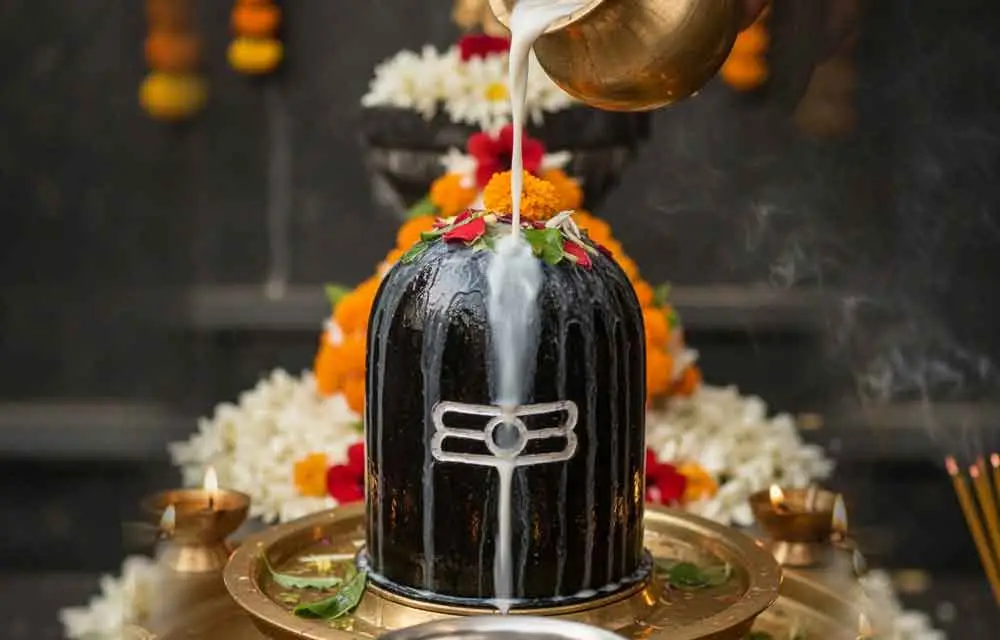
Read complete Bilvashtakam lyrics in Sanskrit with English meaning, transliteration & Monday puja guide. Learn how Bilva leaves please Lord Shiva.
Of all the offerings made to Lord Shiva, none is more beloved, more auspicious, or more powerfully described in scripture than the Bilva leaf — the three-lobed leaf of the sacred Bel tree (Aegle marmelos). And of all the stotras that glorify this sacred offering, none is more devotionally rich than the Bilvashtakam — a hymn of eight verses, each proclaiming the extraordinary spiritual power of the Bilva leaf when offered to Lord Shiva.
This complete guide from HinduTone covers everything you need to know about the Bilvashtakam — its Sanskrit lyrics, English transliteration, verse-by-verse meaning, the spiritual and scientific significance of the Bilva leaf, and a step-by-step Monday puja guide for offering Bilva to Lord Shiva at home or at the temple.
Whether you are observing the Somavar Vrat, preparing for Maha Shivratri, or simply deepening your daily Shiva practice — this guide will transform how you understand and use the Bilva leaf in worship.
🔱 Om Namah Shivaya 🔱
What Is Bilvashtakam?
The Bilvashtakam (also spelled Bilvashtaka or Bel Patra Ashtakam) is a Sanskrit stotra composed of eight devotional verses (ashtakam = eight) in praise of the Bilva leaf and its power to please Lord Shiva. Each verse concludes with the sacred line:
"Bilvapatrena Pujaye" — (I worship Shiva with the Bilva leaf)
This refrain makes the Bilvashtakam not just a hymn but also an act of offering — each verse is itself a dedication of the leaf to Mahadeva.
Who Composed the Bilvashtakam?
The Bilvashtakam is traditionally attributed to Adi Shankaracharya (788–820 CE), the great Advaita Vedanta philosopher and saint who also composed the Lingashtakam, Shiva Panchakshara Stotra, and numerous other Shiva hymns. Some traditions attribute it to the ancient Shaivite tradition without a single author, suggesting it emerged from the oral devotional literature of the Agamic schools of South India.
Why Is It Chanted on Mondays?
Monday (Somavar) is the sacred day of Lord Shiva. The Bilvashtakam is particularly potent on Mondays because:
- The Moon (Soma/Chandra), which rules Monday, governs the Bilva tree in Ayurvedic and Vedic cosmology.
- Shiva wears the crescent moon and is the lord of Soma — making Monday the ideal day to offer Soma-associated plants like Bilva.
- The Shiva Purana specifically states that one Bilva leaf offered on a Monday is worth more than gold, gems, and even elaborate yagnas (fire rituals).
The Sacred Bilva Leaf: Spiritual Significance
Before reciting the Bilvashtakam, every devotee should understand why Lord Shiva loves the Bilva leaf so deeply. This is not mythology alone — it is rooted in profound theological, Ayurvedic, and ecological wisdom.
The Three Lobes: A Cosmic Symbol
The Bilva leaf is trifoliate — it has three lobes joined at a single stem. This sacred geometry mirrors several triads central to Shaivite philosophy:
- The Trimurti: Brahma (creator), Vishnu (preserver), Shiva (destroyer)
- The Three Eyes of Shiva: His two physical eyes and the third eye of wisdom on his forehead
- The Three Gunas: Tamas, Rajas, and Sattva — the three qualities of all existence
- Past, Present, Future: Time itself in its three dimensions
- The Trishula (Trident): Shiva's divine weapon
When a devotee offers a Bilva leaf, they are symbolically offering the entire cosmos — all of time, all of existence, all of consciousness — to Lord Shiva.
Scriptural Authority for Bilva Offering
The Shiva Purana, Skanda Purana, and Linga Purana all extensively praise Bilva offering. The Shiva Purana declares:
"One who offers a single Bilva leaf to Shiva on a Monday is freed from the sins of a thousand lifetimes."
The Atharva Veda also references the Bilva tree as sacred and purifying. In the Ayurvedic tradition, the Bilva tree (Aegle marmelos) is one of the Dashamoola (ten roots) — a powerful medicinal plant known for its cooling, healing, and anti-inflammatory properties.
Scientific Connection
Modern research on Aegle marmelos confirms powerful antibacterial, antifungal, antidiabetic, anti-inflammatory, and antioxidant properties. When used in puja and temple spaces, Bilva leaves have been shown to purify the air and create a cooling, calming atmosphere — which traditional science always knew as its divine property.
Rules for Collecting and Offering Bilva Leaves
How to Choose the Right Bilva Leaf
- Use only trifoliate leaves — the three-lobed form is essential
- Fresh leaves are best, but dried or slightly yellowed leaves are also acceptable
- The leaf should be intact — do not use torn, insect-eaten, or broken leaves
- The stem should be attached when possible
- Pick before sunrise on Monday if collecting fresh from a tree
What to Avoid
- Do not pluck Bilva leaves on the fourth day of the lunar month (Chaturthi), Sunday, or during eclipse periods (Grahan Kala)
- Do not offer a leaf with more than three lobes (five-lobed is inauspicious for Shiva puja in most traditions)
- Do not use a leaf that has already been offered before
- Do not pick Bilva leaves after sunset
- Avoid leaves from a tree in a cremation ground unless you are a Tantric practitioner with specific guidance
How to Offer Bilva to the Shiva Linga
The traditional method of offering Bilva is to place the smooth (upper) surface of the leaf facing downward toward the Linga, with the stalk pointing toward you (the devotee). This is mentioned in the Shiva Purana as the correct method.
Alternatively, some traditions place leaves with the stem pointing toward Shiva — follow the practice of your sampradaya (tradition) or pandit.
Complete Bilvashtakam Lyrics with Meaning
Here is the complete Bilvashtakam — Sanskrit text, Roman transliteration, and English meaning — verse by verse.
Invocation Before Chanting
Begin with three repetitions of "Om Namah Shivaya". Then offer a Bilva leaf mentally to Shiva before reciting.
ॐ नमः शिवाय · Om Namah Shivaya
Shloka 1
Sanskrit:
त्रिदलं त्रिगुणाकारं त्रिनेत्रं च त्रियायुधम् । त्रिजन्म पापसंहारम् एकबिल्वं शिवार्पणम् ॥
Transliteration:
Tridalam Trigunakaram Trinetraṃ Cha Triyayudham · Trijanma Papa Samharam Eka Bilvam Shivarpanam
Meaning: This Bilva leaf, which has three lobes, which represents the three divine qualities (gunas), which symbolizes Lord Shiva's three eyes, and which embodies His three weapons — this single leaf, when offered to Shiva, destroys sins accumulated across three lifetimes. I offer this one Bilva leaf to Lord Shiva.
Devotional Insight: The opening verse establishes the cosmological significance of the leaf before the act of offering. The devotee is reminded that they hold the entire universe — all qualities, all time, all divine power — in one small leaf.
Shloka 2
Sanskrit:
त्रिशाखैः बिल्वपत्रैश्च अच्छिद्रैः कोमलैः शुभैः । शिवपूजां करिष्यामि एकबिल्वं शिवार्पणम् ॥
Transliteration:
Trishakhaihi Bilvaptraischa Achhidraih Komalaihi Shubhaihi · Shiva Pujam Karishyami Eka Bilvam Shivarpanam
Meaning: With Bilva leaves that have three branches, are without holes or blemishes, are tender and auspicious — I shall perform Shiva's worship. I offer this one Bilva leaf to Lord Shiva.
Devotional Insight: This verse specifies the qualities of the ideal Bilva leaf. The leaf must be achhidra (without holes — symbolizing completeness) and komala (tender — symbolizing freshness and life). The devotee's offering must be the best they have.
Shloka 3
Sanskrit:
कोटि कन्या महादानं तिलपर्वत कोटयः । काञ्चनं क्षीरदानं च एकबिल्वं शिवार्पणम् ॥
Transliteration:
Koti Kanya Mahadanam Tilaparvata Kotayah · Kanchanam Ksheera Danam Cha Eka Bilvam Shivarpanam
Meaning: The merit of donating crores of girls in marriage (Kanyadan), of donating mountains of sesame seeds in their millions, of donating gold and milk — all this merit is contained in a single Bilva leaf offered to Lord Shiva.
Devotional Insight: It places the simple act of offering a Bilva leaf above the greatest charities and donations known in the Vedic tradition. This teaches that inner devotion (bhakti) is more powerful than external gifts.
Shloka 4
Sanskrit:
दन्तिकोटि सहस्राणि वाजपेय शतानि च । कोटि कन्या महादानं एकबिल्वं शिवार्पणम् ॥
Transliteration:
Danti Koti Sahasrani Vajapeya Shatani Cha · Koti Kanya Mahadanam Eka Bilvam Shivarpanam
Meaning: The merit of performing thousands of crores of elephant donations (Gajadan), of performing a hundred Vajapeya yagnas, of the great merit of donating crores of girls in marriage — all this is equaled by offering one Bilva leaf to Shiva.
Devotional Insight: The Vajapeya yajna is among the most elaborate and expensive Vedic rituals, historically performed only by kings. A single leaf, offered by even the poorest devotee with a pure heart, equals all these royal deeds. Shiva is the god of the common person.
Shloka 5
Sanskrit:
लक्ष्मी अस्तोत्तर शतं च लक्ष्मी सहस्र नाम च । शत चन्द्रस्य दानं च एकबिल्वं शिवार्पणम् ॥
Transliteration:
Lakshmi Ashtottara Shatam Cha Lakshmi Sahasra Nama Cha · Shata Chandrasya Danam Cha Eka Bilvam Shivarpanam
Meaning: The merit of reciting the 108 names of Goddess Lakshmi, the merit of chanting Her thousand names (Sahasranama), the merit of donating a hundred moons — all this equals one Bilva leaf offered to Shiva.
Devotional Insight: This verse connects the Bilva leaf to the Shakti tradition as well. By stating that a Bilva leaf offered to Shiva equals the complete Lakshmi Sahasranama, the hymn bridges Shaiva and Vaishnava traditions.
Shloka 6
Sanskrit:
उमया सह देवेश नन्दिवाहन शूलिन् । बिल्वपत्रार्चनं प्रीत्या एकबिल्वं शिवार्पणम् ॥
Transliteration:
Umaya Saha Devesh Nandi Vahana Shulin · Bilvapatra Archanam Pritya Eka Bilvam Shivarpanam
Meaning: O Lord of the gods who is accompanied by Uma (Parvati), who rides Nandi the sacred bull, who bears the trident — I joyfully worship You with Bilva leaves. I offer this one Bilva leaf to Lord Shiva.
Devotional Insight: After five verses describing the cosmic equivalence, the sixth verse shifts to a deeply personal mode of address. The devotee now speaks directly to Shiva. This personalization of the infinite divine is the essence of Bhakti yoga.
Shloka 7
Sanskrit:
सुवर्ण स्तम्भ मध्यस्थं त्रैलोक्यं समलंकृतम् । शिवाय बिल्वपत्राणि एकबिल्वं शिवार्पणम् ॥
Transliteration:
Suvarna Stambha Madhyastham Trailokya Samalankritam · Shivaya Bilvapattrani Eka Bilvam Shivarpanam
Meaning: I offer Bilva leaves to Shiva, who dwells in the center of the golden pillar (the Jyotirlinga), who is the one who adorns and fills all three worlds with glory. I offer this one Bilva leaf to Lord Shiva.
Devotional Insight: The "golden pillar" is a reference to the Jyotirlinga — the column of infinite light that neither Brahma nor Vishnu could find the beginning or end of. The devotee participates in this infinite mystery by offering the Bilva.
Shloka 8
Sanskrit:
राजद्वारे गुरोः स्थाने नदी तीरे च शंकरे । याहि नित्यं बिल्वपत्रम् एकबिल्वं शिवार्पणम् ॥
Transliteration:
Raja Dvare Guroh Sthane Nadi Teere Cha Shankare · Yahi Nityam Bilvapattram Eka Bilvam Shivarpanam
Meaning: Whether at the royal court, at the teacher's (Guru's) place, or on the banks of a river — wherever one goes, always offer a Bilva leaf to Lord Shankara. I offer this one Bilva leaf to Lord Shiva.
Devotional Insight: The final verse transforms the Bilvashtakam from a puja ritual into a way of life. Wherever you are — in worldly life, in the realm of learning, or in nature's sacred spaces — the Bilva leaf and Lord Shiva are always with you. This is Shiva's democratic divinity.
Phalashruti (The Fruit of Recitation)
Sanskrit:
मूलतो ब्रह्मरूपाय मध्यतो विष्णुरूपिणे । अग्रतः शिवरूपाय बिल्वोऽयं शिवार्पणम् ॥
Transliteration:
Moolato Brahma Rupaya Madhyato Vishnu Rupine · Agratah Shiva Rupaya Bilvo'yam Shivarpanam
Meaning: At its roots dwells Brahma; in its middle dwells Vishnu; at its tip dwells Shiva. This Bilva leaf is an offering to Lord Shiva.
Devotional Insight: The Phalashruti reveals the ultimate secret of the Bilva leaf: the entire Trinity dwells within a single leaf. Offering the Bilva is therefore offering to all existence, all divinity, all consciousness at once.
Step-by-Step Monday Puja Guide: How to Offer Bilva to Shiva
What You Need
- Bilva (Bel) leaves — fresh, trifoliate, intact (available at Indian stores or grown at home)
- Shiva Linga (idol or image)
- Water for Abhishekam (ritual bathing)
- Milk, honey, curd, ghee, sugar (Panchamruta for special Abhishekam)
- Dhoop and agarbatti (incense)
- Diya (oil lamp) with sesame oil or ghee
- Camphor for aarti
- Kumkum and vibhuti (sacred ash)
- White or yellow flowers (avoid red flowers for Shiva puja)
Stage 1: Purification (Before 6:30 AM)
- Wake up early — ideally at Brahma Muhurta (4:00–6:00 AM)
- Take a bath. Wear clean, preferably white clothes
- Clean the puja space and wipe the Shiva Linga with a clean cloth
- Light the diya and incense. The fragrance purifies the space
Stage 2: Sankalpa (Declaration of Intent)
Sit before the Shiva Linga, close your eyes, and take a Sankalpa: "On this sacred Monday, I, [your name], dedicate this puja to Lord Shiva. I offer Bilva leaves and chant the Bilvashtakam for [state your purpose — peace, health, liberation, family welfare, etc.]."
Stage 3: Abhishekam (Ritual Bathing of the Linga)
Pour the following in sequence while chanting "Om Namah Shivaya":
- Water — symbolizes purity
- Milk — symbolizes nourishment
- Honey — symbolizes sweetness of devotion
- Curd/Yogurt — symbolizes prosperity
- Ghee — symbolizes enlightenment
- Sugar — symbolizes bliss
- Final water rinse — to cleanse after Panchamruta
Wipe the Linga gently with a clean cloth after Abhishekam.
Stage 4: Apply Vibhuti and Kumkum
Apply vibhuti (sacred ash) to the Linga first, then a small mark of kumkum. Sandalwood paste (chandan) can also be applied.
Stage 5: Offer Bilva Leaves While Chanting Bilvashtakam
Now comes the heart of the Monday puja. Take each Bilva leaf and offer it to Lord Shiva as you recite each verse of the Bilvashtakam — one Bilva leaf per shloka. At the Phalashruti, offer a final special leaf as the concluding offering.
If you have more Bilva leaves, you may offer them in multiples of 3, 5, 11, 21, 108, or 1008 — all auspicious numbers in Shiva worship.
Stage 6: Offer Flowers and Dhatura
After Bilva leaves, offer white flowers. Dhatura (thorn apple) flowers are particularly sacred to Shiva, though they must be handled carefully as the plant is toxic.
Stage 7: Light Camphor and Perform Aarti
Light camphor in the aarti plate and perform the circular Aarti while chanting "Om Jai Shiv Omkara" or any Shiva Aarti you know.
Stage 8: Pradakshina (Circumambulation)
If space permits, walk clockwise around the Shiva Linga three times (or as many times as you wish), chanting "Om Namah Shivaya" with each step.
Stage 9: Prostrate and Pray
Prostrate fully before Lord Shiva (Sashtanga Namaskar — touching forehead, both hands, both knees, both feet to the ground) as an act of complete surrender.
Stage 10: Silent Meditation
Sit quietly for 5–10 minutes. Let the energy of the puja settle. Visualize Lord Shiva's blue throat, crescent moon, matted hair, third eye, and serene smile. Feel His presence in your heart.
Stage 11: Distribute Prasadam
The Panchamruta (milk-based Abhishekam water) and any food offered becomes sacred Prasadam. Distribute it to all family members.
How Many Times Should You Chant Bilvashtakam?
- Daily devotion — 1 time every day
- Somavar Vrat — 3 times every Monday
- Special wish or prayer — 11 times across 11 consecutive Mondays
- Deep sadhana — 108 times on Mondays during Shravan month
- Maha Shivratri — As many as possible on the night of Shivratri
Bilva Leaves: When and Where to Source Them
Growing a Bilva Tree at Home
The Bel tree (Aegle marmelos) can be grown in a large pot or garden. It is a hardy tree suitable for tropical and subtropical climates. NRIs in Florida, Texas, California (USA), and UAE can grow it outdoors. In colder climates (UK, Canada), it can be grown as a conservatory or indoor plant in a large container.
A home-grown Bilva tree is considered enormously auspicious — the Skanda Purana says that a home with a Bilva tree is itself a Shiva temple.
Buying Bilva Leaves
- India — Available at any flower/puja shop near Shiva temples; abundantly available on Mondays and during Shravan
- USA — Indian grocery stores in cities with large Hindu populations: Patel Brothers, Apna Bazar, Subzi Mandi chains. Also available dried online on Amazon
- UK — Available at Southall, Wembley, and Leicester Indian stores. Some Hindu temples distribute Bilva leaves on Mondays
- Canada — Indian stores in Brampton, Mississauga, Surrey, and Markham often stock Bilva leaves
- UAE — Karama and Meena Bazaar areas in Dubai have Indian stores stocking puja items including Bilva
When Fresh Bilva Is Not Available
If fresh leaves are unavailable, the following are acceptable alternatives:
- Dried Bilva leaves (widely available online)
- Bilva leaf powder sprinkled on the Linga
- Symbolic offering: Draw a Bilva leaf on paper with devotion and offer it
- Recite "Bilva Samarpayami" while mentally visualizing the offering
The Shiva Purana assures that sincere mental offering (manasika puja) when physical items are unavailable is equally accepted.
Benefits of Reciting Bilvashtakam and Offering Bilva Leaves
As Stated in Scripture
- Destroys sins of three lifetimes (Shloka 1)
- Merit equal to crores of acts of great charity (Shlokas 3 & 4)
- Merit equal to reciting all names of Goddess Lakshmi (Shloka 5)
- Attainment of Shiva's presence in all places (Shloka 8)
- Liberation (Moksha) through persistent devotion
As Experienced by Devotees
- Mental peace and clarity — The act of carefully selecting, cleaning, and offering Bilva leaves is itself a mindfulness practice
- Family harmony — Monday Bilva puja creates a shared ritual that strengthens family bonds
- Health benefits — Bilva leaves in the home environment have known antimicrobial properties
- Relief from anxiety and depression — The rhythmic chanting of the Bilvashtakam activates parasympathetic healing
- Spiritual progress — Regular Bilva offering is said to accelerate spiritual growth by purifying karmic blocks
Bilvashtakam vs. Lingashtakam: What's the Difference?
- Bilvashtakam — Focus: Sacred Bilva leaf offering. Best for: Bilva offering phase of puja
- Lingashtakam — Focus: Glorification of Shiva Linga. Best for: Abhishekam phase
- Both: 8 verses + Phalashruti, composed by Adi Shankaracharya, essential for Somavar puja
Pro Tip: For a complete and powerful Monday Shiva puja, chant Lingashtakam during Abhishekam and Bilvashtakam while offering Bilva leaves. Together they create the most devotionally complete Shiva worship possible.
Special Occasions to Recite Bilvashtakam
- Every Monday (Somavar) — Most regular and accessible practice
- Shravan Mondays (July–August) — Most powerful Mondays of the year for Shiva
- Maha Shivratri — Night-long Bilva offering tradition
- Pradosham — Bi-monthly (8th and 13th lunar day) evening puja
- Kartik Month — Sacred month for Shiva — daily Bilva puja is ideal
- Shivaratri (monthly) — 14th day of every dark fortnight
- Shravan Purnima — Full moon in Shravan — especially auspicious
- Annadanam (food donation events) — Bilvashtakam chanted at community events
FAQs About Bilvashtakam and Bilva Puja
Q1. Can women chant Bilvashtakam and offer Bilva leaves?
Yes. The Bilvashtakam is a stotra open to all devotees regardless of gender. Women can fully participate in Bilva puja, including on Mondays. During menstruation, some traditions advise women to avoid physical contact with the Linga but permit chanting and mental offering.
Q2. Can I reuse Bilva leaves offered to Shiva?
According to tradition, offered Bilva leaves can be reused only in a specific ritual called Bilva Parna Dwadashi. In general practice, once offered, they should be placed respectfully at the base of a tree or in flowing water, not discarded in garbage.
Q3. How many Bilva leaves should I offer?
The minimum is one per verse (8 leaves for the complete Bilvashtakam). Auspicious numbers include 11, 21, 108, and 1008 for special occasions.
Q4. Can I chant Bilvashtakam without physically having Bilva leaves?
Yes. Mental offering (manasika puja) is accepted when physical leaves are unavailable. Simply visualize offering a pristine Bilva leaf to Shiva with each verse.
Q5. Is there a specific time I must NOT offer Bilva leaves?
Avoid offering Bilva on Chaturthi (4th lunar day), on the specific forbidden days mentioned in the Shiva Purana, and during eclipse periods. Mondays, Shivaratri, and Pradosham are always safe and auspicious.
Q6. Can children participate in Bilva puja?
Absolutely. Teaching children to carefully select, clean, and reverently offer Bilva leaves to Lord Shiva is one of the most beautiful ways to raise spiritually grounded children.
Q7. What do I do with Bilva leaves after the puja?
Place them respectfully under a sacred tree (preferably another Bilva tree, Peepal, or Tulsi plant), in a clean garden space, or in flowing water. Do not throw them in garbage.
Q8. Can I offer Bilva leaves at home if I cannot go to a temple?
Yes, absolutely. The Bilvashtakam's final verse specifically says "wherever you are" — the offering is valid at home, at the riverside, at the teacher's place. Location does not restrict the power of sincere devotion.
The Leaf That Holds the Universe
The Bilvashtakam is more than a hymn. It is a meditation on the profound truth that the infinite can be contained in the finite — that the entire cosmos, all the gods, all time, and all merit can be held in the three lobes of a simple leaf. And when that leaf is offered to Lord Shiva with a pure heart on a sacred Monday morning, something miraculous happens: the devotee and the divine meet.
Lord Shiva is not impressed by gold or extravagance. He is the one who was satisfied by Kannappa's raw devotion, by Nandanar's untouchable purity, by the simple flowers of forest-dwelling devotees. He is moved only by love. The Bilva leaf, freely given by nature, offered with the Bilvashtakam's ancient words — this is the love Shiva treasures most.
Begin your Bilva puja this Monday. If you have leaves, offer them. If you don't, offer them in your heart. The Lord of Kailash is always listening.
🔱 Har Har Mahadev — Om Namah Shivaya 🔱
Related Reading on HinduTone
- How to Chant Lingashtakam on Monday – Complete Guide
- Best Shiva Songs and Bhajans for Monday Morning – NRI Guide
- Somavar Vrat Katha: The Complete Monday Fast Story
- Om Namah Shivaya: The Power of the Panchakshara Mantra
- Maha Shivratri Puja Guide: Complete Ritual with Mantras
- Shiva Panchakshara Stotram: Lyrics, Meaning & Benefits
You might also like
How to Chant Lingashtakam on Monday: A Complete Guide for Every Hindu
Kalabhairava Ashtami 2026: Puja Vidhi, Mantras & Rituals (June 8)
Pradosham: Complete Guide to Monday Shiva Puja on the 13th Lunar Day