Hindu Vrat Guide 2026 for Busy Professionals Abroad: Ekadashi, Pradosh, Shivratri, Karva Chauth & Sankashti Calendar with Office-Friendly Recipes
A complete, professional-life-friendly Hindu vrat guide for 2026 — the 24 Ekadashis, monthly Pradosh and Sankashti Chaturthi, Maha Shivratri (15 Feb 2026), Karva Chauth (8 Nov 2026), Vat Savitri, Sawan Somwar, Hanuman Jayanti and Hartalika Teej — adapted for NRIs working 9-to-9 in the USA, UK, Canada, Australia and UAE. Includes office-friendly meal plans, hydration rules, Ayurvedic rationale and 12 FAQs.
A complete, professional-life-friendly Hindu vrat guide for 2026 — the 24 Ekadashis, monthly Pradosh and Sankashti Chaturthi, Maha Shivratri (15 Feb 2026), Karva Chauth (8 Nov 2026), Vat Savitri, Sawan Somwar, Hanuman Jayanti and Hartalika Teej — adapted for NRIs working 9-to-9 in the USA, UK, Canada, Australia and UAE. Includes office-friendly meal plans, hydration rules, Ayurvedic rationale and 12 FAQs.
“Yathaiv anuktam vyakti vrate, deha-shuddhi-shrama bhavet.” — Even unspoken, a vrat purifies the body and reduces karmic friction. — Bhavishya Purana.
Why Hindu vrat matters more — not less — in modern professional life
For an NRI software engineer in San Jose, a doctor in Manchester, a banker in Toronto, a researcher in Sydney, or a project manager in Abu Dhabi, the question often surfaces: do I really have time for vrat? Sanatana Dharma’s answer is striking — vrat was always designed for the householder, not the renunciate. The 24 Ekadashis and the monthly Pradosh and Sankashti are explicitly built around the average human metabolic cycle. They serve three simultaneous purposes: digestive rest, mental clarity, and dharmic discipline.
In 2024–25, the Western world rediscovered "intermittent fasting" as a wellness trend. The Hindu calendar quietly says: we have been doing this for 5,000 years, plus we attached a deity, a story, a sankalpa and a mantra to each fast. Modern NRIs are rediscovering vrat through both lenses — health and devotion. See our broader pieces on Mangalvar — sacred Tuesday, Somvar — sacred Monday, Guruvar — sacred Thursday, and Shanivar — sacred Saturday.
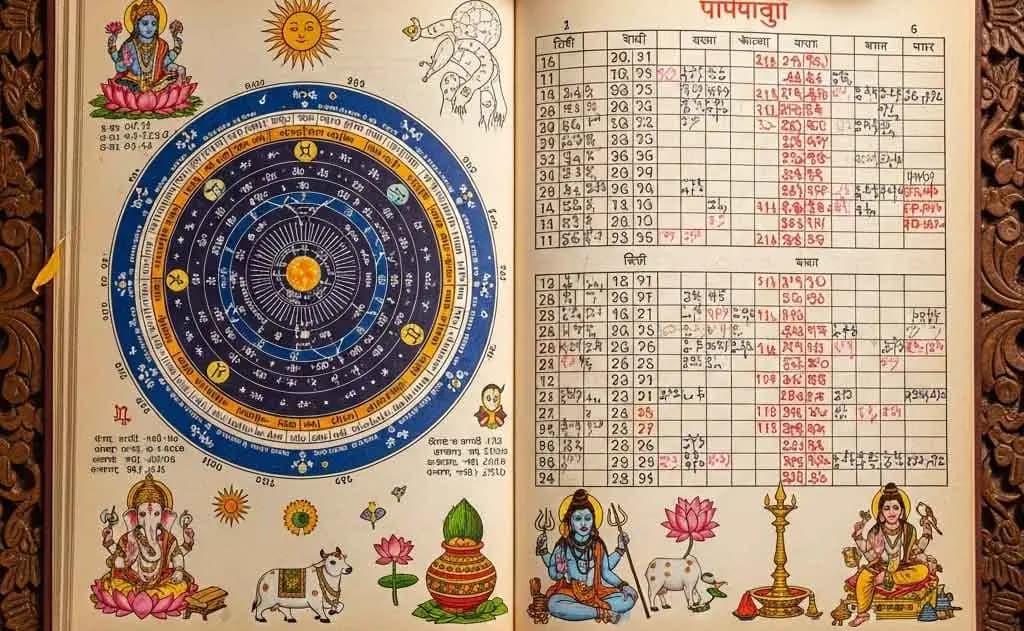
Ekadashi 2026 — full 24-fast calendar (en route through Vaikuntha Ekadashi 2026)
Ekadashi is the 11th day of every lunar half-month — observed by Vaishnavas as a fast for liberation. There are 24 Ekadashis in a year, of which Nirjala Ekadashi (10 June 2026) is the most rigorous. Vaikuntha Ekadashi (29 December 2026) is the most spiritually charged — the gateway to Vishnu Loka.
First half of 2026
Pausha Putrada Ekadashi — Sun 4 Jan 2026.
Shattila Ekadashi — Mon 19 Jan 2026.
AdvertisementJaya Ekadashi — Tue 3 Feb 2026.
Vijaya Ekadashi — Tue 17 Feb 2026.
Amalaki Ekadashi — Wed 4 Mar 2026.
Papamochani Ekadashi — Thu 19 Mar 2026.
Kamada Ekadashi — Fri 3 Apr 2026.
Varuthini Ekadashi — Sat 18 Apr 2026.
AdvertisementMohini Ekadashi — Sat 9 May 2026.
Apara Ekadashi — Sun 24 May 2026.
Nirjala Ekadashi — Wed 10 Jun 2026 — most rigorous.
Yogini Ekadashi — Tue 23 Jun 2026.
Second half of 2026
Devshayani Ekadashi — Wed 8 Jul 2026 — Lord Vishnu’s sleeping period (Chaturmasya) begins.
Kamika Ekadashi — Wed 22 Jul 2026.
AdvertisementPutrada (Pavitra) Ekadashi — Thu 6 Aug 2026.
Aja Ekadashi — Thu 20 Aug 2026.
Parsva (Parivartini) Ekadashi — Fri 4 Sep 2026.
Indira Ekadashi — Fri 18 Sep 2026.
Papankusha Ekadashi — Sun 4 Oct 2026.
Rama Ekadashi — Mon 19 Oct 2026.
Devuthani (Prabodhini) Ekadashi — Wed 4 Nov 2026 — Vishnu wakes; Tulsi Vivah season.
AdvertisementUtpanna Ekadashi — Thu 19 Nov 2026.
Mokshada Ekadashi (Vaikuntha Ekadashi) — Tue 29 Dec 2026 — most powerful liberation Ekadashi.
Saphala Ekadashi — Wed 13 Jan 2027.
Other key vrats in 2026
Pradosh Vrat (twice a month — Trayodashi)
Sunset–9 PM evening fast for Lord Shiva. Two per month. Saumya Pradosh (Mon), Shiva Pradosh (Sat), and the rest by weekday.
Sankashti Chaturthi (once a month — Krishna Chaturthi)
Lord Ganesha fast until moonrise. Most powerful for crisis relief.
Maha Shivratri 2026
Sunday 15 February 2026. Day-long fast, all-night Shiva jagaran. The most-observed Hindu vrat in the world.
Sawan Somwar 2026
Mondays of Sawan / Shravana — 14, 21, 28 July, 4 August 2026. Four Somwars. See our Sawan Somwar 2026 — 4 Mondays, Vrat Vidhi & Mantras for full details.
Hartalika Teej 2026
Sunday 13 September 2026. Day-long nirjala fast by married women for marital harmony and by unmarried women for a Shiva-like husband.
Vat Savitri Vrat 2026
Wed 27 May 2026 (Jyestha Amavasya). Married women circumambulate the banyan tree 7 times for marital longevity. NRI women in apartment cities can perform the ritual at any large tree (oak, fig, mulberry) with the substitution sankalpa.
Karva Chauth 2026
Sunday 8 November 2026 — same day as Diwali Lakshmi Puja. Day-long nirjala fast for husband’s longevity, broken at moonrise after seeing the moon through a sieve and the husband’s face. Co-celebration with Diwali makes 8 Nov 2026 unusually intense in NRI households.
Hanuman Jayanti 2026
Mon 13 April 2026 (Chaitra Purnima for Maharashtra/UP/Bihar) and Mon 7 December 2026 (Margashirsha Purnima for Tamil Nadu/Kerala). Fast on either or both based on family tradition. See our Hanuman Chalisa benefits & 30-day NRI practice.
Surya Jayanti / Ratha Saptami 2026
Tuesday 24 February 2026. Sun-fast for health and energy.
Office-friendly vrat food — what NRIs actually eat at their desks
Phalahara breakfast (5 minutes)
Sabudana khichdi (overnight-soaked sabudana, peanut, cumin, ghee, sendha namak — 8 minutes)
Banana + almond + dates smoothie
Sweet potato chaat with peanuts
Singhara atta pancake with banana
Lunch (office desk)
Sabudana vada + curd in a steel tiffin
Kuttu paratha + raita
Rajgira parathi + lauki sabzi
Fruit thali — apple + papaya + pomegranate + paneer cubes
Tea-break / 4 PM
Cardamom tea + makhana
Lassi + dry fruits
Coconut water
Evening break-fast (after sunset / moonrise per vrat)
Sama rice kheer + fruit
Aloo poori (only on those vrats that permit grains; not on Ekadashi)
Singhara halwa + fruits
Phalahari thali at any temple’s annadana hall
Hydration rule: a strict-fast Ekadashi (Nirjala) prohibits even water; a partial-fast Ekadashi allows water and milk. Pradosh and Sankashti generally allow water through the day.
The Ayurvedic science behind vrat
Ekadashi: digestion is at its biological lowest on day 11 of the lunar cycle — the body benefits from fewer grains.
Pradosh: a partial fast in the late afternoon coincides with the natural dip in metabolic activity at sandhya — useful for clarity.
Sankashti: moonrise-fast allows the body to follow circadian rhythm and allows the digestive fire (jathar-agni) to reset.
Maha Shivratri: the all-night jagaran during winter induces a controlled ketogenic state, supporting deep meditation.
Karva Chauth: day-long nirjala in late autumn supports thyroid and liver detox.
Hartalika Teej: day-long nirjala at the start of autumn aligns with Ayurvedic seasonal cleansing (rituvachara).
When NRIs should NOT fast
Pregnancy and breastfeeding: avoid strict fasts; a satvik full-meal diet is preferred.
Diabetes (insulin-dependent): strict nirjala is contraindicated; consult your physician for a partial-fruit fast.
Eating disorders or recent recovery: skip fasting; do mantra and seva instead.
Recent surgery / chemotherapy: no fast.
Children below 12: partial fast at most.
Jet lag / heavy travel days: postpone the strict fast; do sankalpa and sponsor a temple puja instead.
Sanatana Dharma is forgiving on vrat — sankalpa carries the merit even if the body cannot. Many NRI families "outsource" the fast to Tirumala, Kashi Vishwanath, Sabarimala or BAPS Sahayog for crisis days when work is overwhelming.
Frequently asked questions
Can I drink water on Ekadashi?
Yes — except on Nirjala Ekadashi (10 June 2026), which is explicitly nirjala (without water). Other 23 Ekadashis allow water and milk in moderation.
Can I drink coffee on a fast day?
Pure black coffee without milk and sugar is technically permissible but discouraged. Tea with milk + cardamom is the traditional fast-day beverage.
What grains are allowed on a fast day?
Generally none. Permitted "fast grains" are sabudana, sama rice, kuttu, rajgira, singhara — these are technically not grains but tubers/seeds.
Can I take medicines during a fast?
Yes — never compromise medication. Sankalpa-substitution applies.
Is intermittent fasting the same as Ekadashi vrat?
They overlap but are not identical. IF is metabolic; Ekadashi is dharmic + metabolic. The shastric vrat carries spiritual merit; IF carries only metabolic benefit.
Can I exercise on a fast day?
Light yoga, walking and pranayama are recommended. Avoid heavy weight-training or intense cardio on Nirjala or Karva Chauth.
What if I forget a fast?
Observe the next Ekadashi/Pradosh/Sankashti with extra sincerity. The Hindu calendar offers many chances.
Can NRIs do an online sponsorship instead of fasting?
Yes — TTD, Sabarimala, Vaishno Devi, BAPS, ISKCON, Akshaya Patra all allow online vrat-sankalpa for any major fast. The puja is performed in your name.
Should I fast on a non-Hindu spouse’s religious holiday?
Sanatana Dharma supports respectful inter-faith life. Choose your own dharmic vrat; honour your spouse’s tradition without compromising your own.
Is there a vrat for graduation or job interviews?
Sankashti Chaturthi (Ganesha) for removal of obstacles, Saturday Hanuman fast for confidence, and an 11-Hanuman-Chalisa anushthana the day before are the classical NRI-professional combination.
What food is the safest break-fast after a long fast?
Banana + a small portion of kheer + water. Avoid heavy oily food immediately — gradual reintroduction protects the digestive system.
Can I observe vrat during a corporate work trip?
Yes — carry sabudana, makhana, dry fruits, banana, dates. Most international hotels provide fruit and curd on request. The sankalpa is what matters.
A 21-day starter plan for the NRI professional
Day 1: partial Ekadashi (next available) — fruits + milk only.
Day 7: Pradosh — sunset to 9 PM fast.
Day 14: Sankashti — until moonrise. Ganesha mantra.
Day 21: full satvik day — no onion, no garlic, no meat, no alcohol, satvik mind. Result-review of three weeks.
Closing — fasting is the most ancient prayer
Long before "wellness" became a Silicon Valley industry, Sanatana Dharma made vrat the most accessible prayer. It costs nothing. It needs no priest. It works on the body and on the soul simultaneously. For an NRI professional running between Slack channels, school runs and tube-station commutes, vrat is the one practice that fits into any week and grows into a lifetime.
Phalahara, Sankalpa, Shraddha. The three pillars of Hindu fasting — and the three pillars of Hindu life.
Subscribe to HinduTone for the monthly NRI vrat planner.
You might also like
Shanivar — The Sacred Saturday: Complete Guide to Rituals, Shani Dev Worship, Peepal Tree Puja & Fasting for Hindus in India and Across the World
Thursday Rituals in Hinduism: Complete Guide to Guruvar Pooja, Temples & Sacred Foods
Yantra vs Mantra vs Tantra — What Is the Difference? | Complete Hindu Guide