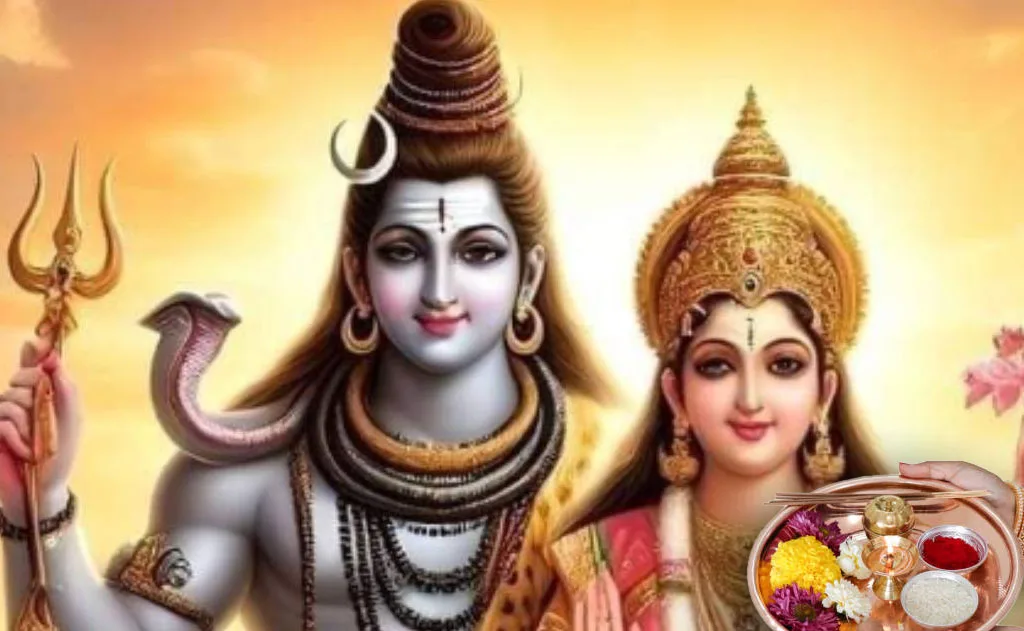
Somvar — The Sacred Monday: Complete Guide to Rituals, Fasting & Shiva Worship for Hindus in India and Across the World
Published by HinduTone.com | Dharma · Devotion · Daily Practice "Someshwaraya Vidmahe, Mahadevaya Dhimahi, Tanno Rudrah Prachodayat." — Shiva Gayatri Mantra…
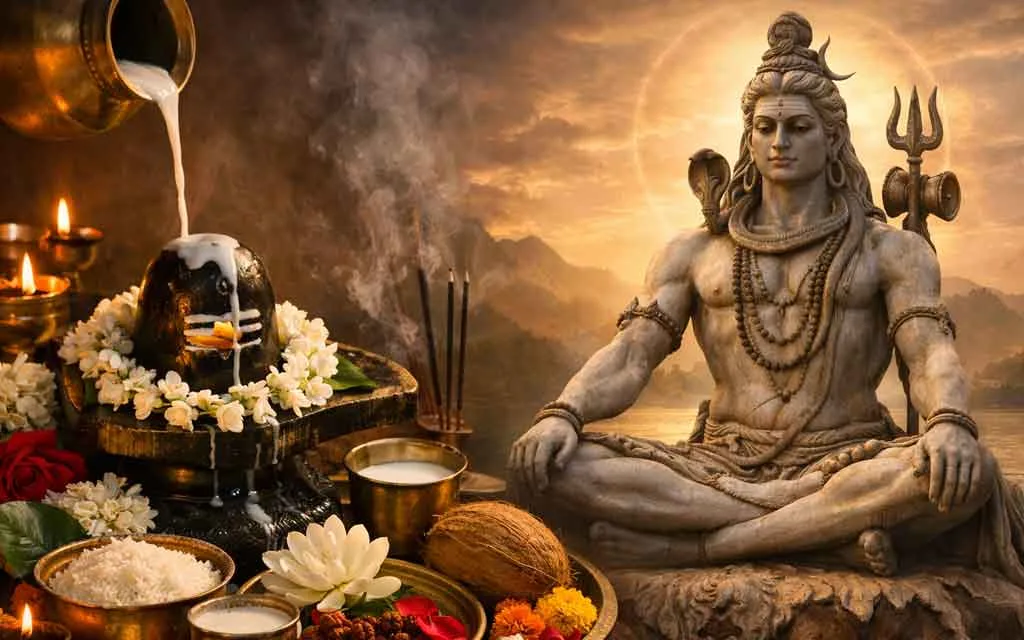
Published by HinduTone.com | Dharma · Devotion · Daily Practice
Updated complete guide: for step-by-step puja, verified mantras with meaning and fasting options, read Monday Shiva puja, Somvar vrat and mantras, part of our Hindu days of the week series.
"Someshwaraya Vidmahe, Mahadevaya Dhimahi, Tanno Rudrah Prachodayat." — Shiva Gayatri Mantra
Introduction — Why Monday Belongs to Lord Shiva
In the divine rhythm of the Hindu calendar, where every day is a celestial gift wrapped in sacred meaning, Monday — Somvar — stands apart as a day of singular spiritual power. The word Somvar comes from "Soma" (the Moon) and "Var" (day): the Day of the Moon. And in the Vedic universe, the Moon and Lord Shiva are inseparable — Shiva wears the crescent moon in his matted locks, earning him the glorious names Chandrashekhara (he who wears the Moon as his crown) and Somnath (Lord of the Moon).
The story behind this sacred bond is told in the Puranas: Chandra (the Moon God) was cursed by Daksha Prajapati and began to wane continuously, losing his light, his strength, and his life. In absolute desperation, Chandra sought refuge at the holy feet of Lord Shiva. Moved by Chandra's sincere repentance and devotion, Mahadeva placed the crescent moon upon his own divine head — arresting the curse and restoring the Moon to his monthly cycle of waxing and waning. This act of supreme compassion is the eternal reason why Monday is Shiva's day.
For millions of Hindus across India and in every corner of the world, Monday is not merely the beginning of the working week. It is a sacred portal — a weekly opportunity to pour one's love, prayers, desires, and surrender at the lotus feet of the most approachable of all gods: Bholenath, the innocent, the easily pleased, the great giver of boons.
This guide from HinduTone.com covers everything a devotee needs — every ritual, every mantra, every fast rule, every form of worship, and complete practical guidance for NRI Hindus in the USA, UK, Australia, and Canada to observe Somvar with full devotion, wherever they may be.
The Spiritual Significance of Somvar — Seven Sacred Dimensions
1. Shiva as Mahadeva — The Supreme Lord
Monday worship is directed to Lord Shiva in his fullness — as Mahadeva (the Greatest God), Mahakala (the Lord of Time and Death), Nataraja (the Cosmic Dancer), Ardhanarishvara (the union of Shiva and Shakti), Pashupatinath (Lord of All Living Beings), and Bholenath (the Innocent, Generous One). Each of Shiva's 1,008 names reveals a different dimension of his infinite nature — and Monday is the day to approach all of them.
2. Moon Energy — Governing Emotions and the Mind
In Vedic astrology (Jyotish), the Moon governs the mind (manas), emotions, intuition, memory, mother, and the subconscious. Monday worship and fasting directly strengthen the Moon (Chandra) in one's astrological chart (Kundli), bringing emotional stability, mental clarity, improved intuition, and freedom from anxiety and depression. For those with a weak, afflicted, or debilitated Moon in their birth chart, Monday observance is one of the most powerful astrological remedies available.
3. The Most Easily Pleased God
Among all the deities of the Hindu pantheon, Shiva is famously known as Ashutosh — he who is pleased instantly, he who requires the least to grant the greatest boons. A single Bilva leaf offered with sincere devotion on Monday is said to please Mahadeva more than elaborate rituals offered to other deities. This quality makes Somvar worship uniquely accessible — it requires no great wealth, no elaborate ceremony, only a clean heart and genuine bhakti.
4. Purification of Seven Kinds of Sin
The Shiva Purana declares that sincere worship of Lord Shiva on Monday dissolves sins of seven categories — committed in thought, word, and deed; knowingly and unknowingly; in the present life and in past lives. Monday is therefore one of the most potent days for spiritual cleansing and karma dissolution.
5. Path to Moksha
Monday worship is not only for worldly desires. The Shiva Purana and Linga Purana both affirm that sustained Somvar Vrat, observed with genuine detachment and spiritual intent, leads ultimately to liberation (moksha) — the release from the cycle of birth and death. Shiva, as Mahakala, is the only deity who can grant this supreme gift.
6. Protection from Negative Energies
Lord Shiva is the destroyer of all that is negative, harmful, and impure. Chanting Shiva mantras on Monday — especially the Maha Mrityunjaya Mantra — is said to create an invisible shield of divine protection around the devotee and their family, dissolving black magic, the evil eye (nazar), planetary afflictions, and all forms of negative influence.
7. Regional Traditions Across India
Monday worship takes different forms across India's diverse regional traditions — each beautiful in its own way:
- North India (Uttar Pradesh, Bihar, Rajasthan, MP): Somvar Vrat with salt-free fasting, temple visits, Shiva Abhishekam, and Somvar Vrat Katha recitation.
- Maharashtra: Barefoot walks to Shiva temples, daily Abhishekam, and group Maha Mrityunjaya Mantra chanting.
- Gujarat: Nirjala (waterless) fasts during Shravan Mondays; group Katha gatherings in homes and temples.
- Tamil Nadu & Karnataka: Intense Abhishekam with milk, honey, and sacred herbs; Shiva Sahasranama recitation; Bilva leaf Archana.
- West Bengal & Odisha: Elaborate Shiva Puja with Panchamrit, flowers, and recitation of Shiva Mahimna Stotram.
- Andhra Pradesh & Telangana: Shiva temple visits at dawn; offering of Bilva garlands and Panchamrit Abhishekam.
The Three Forms of Somvar Vrat
Form 1 — Simple Somvar Vrat (Weekly Monday Fast)
The basic, weekly Monday fast that any devotee can begin on any Monday of the year. No specific start date is required. The devotee fasts from sunrise to moonrise (or sunset), observes Shiva Puja morning and evening, and breaks the fast with simple, sattvic (pure) food. This is the most common and most accessible form of Monday worship.
Form 2 — Solah Somvar Vrat (The Sixteen Monday Fast)
The most celebrated and powerful form of Monday fasting in all of Hinduism. The devotee observes a strict vrat for 16 consecutive Mondays without interruption. This vrat is linked to the legend of Goddess Parvati herself, who is said to have performed this very fast to win Lord Shiva as her husband. The Solah Somvar Vrat Katha (the sacred story) is read aloud during the puja on each of the 16 Mondays. On the 17th Monday, the Udyapan (concluding ceremony) is performed.
Most auspicious months to begin Solah Somvar Vrat:
- Shravan (Sawan) — most powerful of all
- Chaitra (March–April)
- Vaishakha (April–May)
- Jyeshtha (May–June)
- Kartika (October–November)
- Margashirsha (November–December)
Form 3 — Som Pradosh Vrat (Monday Trayodashi Fast)
When the Trayodashi tithi (13th day of the lunar fortnight) falls on a Monday, it creates the exceptionally rare and supremely auspicious Som Pradosh — considered the most potent Pradosh of the entire year. On this day, Shiva performs the Tandava (cosmic dance) in the evening twilight hour, and all the gods gather to watch. Devotees who observe Som Pradosh Vrat are said to receive boons equivalent to performing the Ashvamedha Yajna (the grand horse sacrifice of ancient kings).
Complete Somvar Puja Vidhi — Step-by-Step
Preparation the Night Before
- Lay out your puja items: Shivling or Shiva murti, copper Kalash (vessel), Panchamrit ingredients, Bilva leaves, flowers, incense, ghee lamp.
- Take a vow of mental purity — avoid anger, gossip, and negativity from Sunday evening onward.
- If possible, observe brahmacharya (celibacy) on Sunday night.
Morning Routine — The Sacred Beginning
Step 1 — Brahma Muhurta Awakening Rise between 4:00 AM and 5:30 AM, before the world stirs. This pre-dawn window is the hour when Shiva's energy is most accessible to the sincere devotee. Sit quietly for five minutes in stillness and gratitude before rising.
Step 2 — Ritual Bath Bathe with clean water. If available, add a few drops of Ganga Jal (Ganges water) or a small amount of black sesame seeds (til) to the bath water — both are sacred to Shiva. Wear clean, freshly washed clothes — preferably white (for purity), saffron (for devotion), or light blue (associated with Shiva's complexion).
Step 3 — Set Up the Puja Space Clean the altar. Place the Shivling or Shiva murti at the centre. Arrange around it:
- Copper Kalash filled with clean water (or Ganga Jal)
- Ingredients for Panchamrit: milk, curd, honey, ghee, sugar
- Bilva (Bel) leaves — three-leafed, unbroken, fresh
- White or blue flowers (dhatura, white lotus, blue lotus, jasmine)
- Dhatura fruit (if available — most sacred to Shiva)
- Incense (agarbatti) — sandalwood or rudraksha fragrance
- Ghee lamp (diya)
- Red or white sandalwood paste (chandan)
- Akshat (unbroken rice grains)
Step 4 — Sankalpa (Sacred Vow) Sit facing east or north. Sprinkle clean water on yourself and your puja space. Join your palms and declare your Sankalpa (intention) from the heart:
"Om Namo Bhagavate Rudraya. Adya Somvare, Shri Mahadeva prasadartham, , aham Somvar Vrat karishye."
(O Lord Rudra, today being Monday, for the grace of Mahadeva and for , I observe this Somvar Vrat.)
The Heart of the Puja — Abhishekam
Abhishekam — the ceremonial bathing of the Shivling — is the supreme act of Monday worship. It is said that each sacred substance poured over the Shivling fulfils a specific kind of wish:
How to perform Abhishekam:
- Hold the Kalash in both hands.
- Begin pouring slowly over the Shivling from top to bottom.
- Chant "Om Namah Shivaya" continuously throughout.
- Pour each substance separately, in the order above.
- After all substances, offer plain clean water as the final rinse.
- Gently wipe the Shivling and decorate with sandalwood paste, fresh flowers, and Bilva leaves.
The Panchamrit (Five Nectars) can be combined: Mix milk, curd, honey, ghee, and sugar together first and pour as one offering, then follow with Ganga Jal.
Offerings — What to Offer Lord Shiva on Monday
Bilva Patra (Bel Leaves) — The Supreme Offering Of all offerings, Bilva leaves are the most beloved to Lord Shiva. The three leaves of the Bilva patra represent the three eyes of Shiva, the Trishul (trident), and the Trinity (Brahma-Vishnu-Mahesh). A single Bilva leaf offered with sincere devotion is said to be equivalent to performing a great yajna.
Before offering, recite:
"Tridalam trigunaakaaram trinetram cha triyaayudham, Trijanma paapasanhaaram bilvapatram Shivaarpananam."
Other sacred offerings to Lord Shiva:
- White flowers (especially white dhatura, jasmine, ketaki is the only flower Shiva refused)
- Blue lotus
- Akanda (Calotropis) flowers
- Chameli (jasmine)
- Dhatura fruit and flower — uniquely sacred to Shiva
- Sandalwood paste (chandan)
- Vibhuti (sacred ash — the most characteristic of all Shiva offerings)
- Rudraksha garland
- Raw rice (akshat)
- Coconut
- Sugarcane
What NOT to offer Lord Shiva:
- Tulsi (sacred to Vishnu, not offered to Shiva directly)
- Ketaki (Kewra) flowers — refused by Shiva due to an ancient transgression
- Vermilion (sindoor)
- Broken or incomplete Bilva leaves
Mantra Recitation — The Sacred Sounds of Monday
The Panchakshari Mantra — Five Sacred Syllables
ॐ नमः शिवाय Om Namah Shivaya
This is the supreme Shiva mantra — the most chanted mantra in all of Hinduism. The five syllables Na-Ma-Shi-Va-Ya represent the five elements: earth, water, fire, air, and space. Chant 108 times using a Rudraksha mala on Monday mornings.
The Maha Mrityunjaya Mantra — The Great Death-Conquering Mantra
ॐ त्र्यम्बकं यजामहे सुगन्धिं पुष्टिवर्धनम्। उर्वारुकमिव बन्धनान् मृत्योर्मुक्षीय माऽमृतात्॥
Om Tryambakam Yajamahe Sugandhim Pushti-vardhanam, Urvarukamiva Bandhanan Mrityor Mukshiya Mamritat.
Meaning: We worship the Three-Eyed One (Shiva), who is fragrant and who nourishes all beings. As the cucumber is severed from bondage to the vine, may He liberate us from death, for the sake of immortality.
This mantra is the most powerful of all Vedic mantras for health, protection, healing, and liberation. Chant 108 times on Monday, or 1,008 times during Shravan Mondays for maximum potency.
The Shiva Gayatri Mantra
ॐ तत्पुरुषाय विद्महे महादेवाय धीमहि। तन्नो रुद्रः प्रचोदयात्॥
Om Tatpurushaya Vidmahe Mahadevaya Dhimahi, Tanno Rudrah Prachodayat.
Meaning: We meditate upon the Supreme Being, the Great God. May Rudra inspire and illuminate our intellect.
Chant 108 times after the Panchakshari and Maha Mrityunjaya Mantra.
Shiva Ashtakam — Eight Verses of Praise
Prabhumlinga lingarchana lolupendraja sastradi tatvaparimarshanena...
The complete Shiva Ashtakam (composed by Adi Shankaracharya) may be recited or played as background during the puja — its eight verses praise Shiva in his universal, formless, and personal aspects.
Rudrashtakam — The Eight-Verse Hymn of Rudra
Namamishaameesha nirvana roopam...
The Ramcharitmanas Rudrashtakam, written by Goswami Tulsidas, is one of the most beloved Shiva stotras in North Indian tradition. It is particularly popular during Monday puja and Shravan worship.
The 108 Names of Lord Shiva (Shiva Ashtottara Shatanamavali)
Recite the 108 names of Shiva on Mondays, offering a Bilva leaf or flower with each name. This is especially powerful during Shravan Mondays and Maha Shivaratri.
Some of the most potent names: Om Shivaya Namah · Om Maheshvaraya Namah · Om Shambhave Namah · Om Pinakine Namah · Om Shashishekharaya Namah · Om Vamadevaya Namah · Om Viraupakshaya Namah · Om Kapardine Namah · Om Nilalohitaya Namah · Om Shankaraya Namah · Om Shulpanaye Namah · Om Khatvangine Namah · Om Vishnuvallabhaya Namah · Om Shipivishtaya Namah · Om Ambikanathaya Namah · Om Shrikanthaya Namah · Om Bhakta Vatsalaya Namah · Om Bhavaya Namah · Om Sarvaaya Namah · Om Trilokeshaya Namah...
Evening Puja — Completing the Day's Worship
The evening puja on Somvar is equally important and should not be neglected:
- Light the ghee diya and incense at dusk (sunset to 8 PM).
- Offer fresh water and flowers to the Shivling.
- Recite the Somvar Vrat Katha (the sacred Monday story from the Puranas) — either aloud or by listening to a recording.
- Perform Shiva Aarti — "Om Jai Shiv Onkara" — with the ghee lamp, circling it clockwise before the deity seven times.
- Offer prasad (sweet rice, fruit, milk sweet) to Shiva, then distribute to all family members.
- Break the fast after the evening puja with simple, sattvic food.
Fasting Rules — Somvar Upavasa
Complete Fast (Nirjala or Nirahara)
No food or water from sunrise to moonrise. This is the strictest form, observed especially on Shravan Mondays. Breaking the fast in the evening after the puja with fruit and milk is the common practice.
Partial Fast (Phal-Ahar Vrat)
Allowed throughout the day: fresh fruits, milk, curd, buttermilk, coconut water, fruit juices, dry fruits, sabudana (sago/tapioca), sendha namak (rock salt), potatoes, sweet potatoes, and rajgira (amaranth) flour preparations.
Not allowed: grains (wheat, rice, maize), regular table salt (iodised salt), lentils and pulses, non-vegetarian food, alcohol, and onion/garlic.
One-Meal Fast (Ekabhukte Vrat)
The devotee eats only one meal per day — in the afternoon or evening after the puja — consisting of simple, grain-free, salt-free sattvic food.
Vrat Food Specialties for Somvar
Traditional Monday vrat recipes prepared and enjoyed across India:
- Sabudana Khichdi (tapioca with peanuts and cumin)
- Kuttu ki Puri (buckwheat flour bread)
- Singhare ka Halwa (water chestnut flour pudding)
- Samak rice (barnyard millet) with curd
- Aloo ki Sabzi (potato curry without onion/garlic, in rock salt)
- Fresh fruit chaat
- Makhana (fox nut) kheer
- Banana sheera
- Cold milk with mishri (rock sugar)
Solah Somvar Vrat — The Sixteen Monday Fast
Origin and Legend
The Solah Somvar Vrat is rooted in one of the most enchanting stories in the Shiva Purana. Once, Lord Shiva and Goddess Parvati were wandering and visited a magnificent Shiva temple in the city of Amravati. While there, they played a game of Chausar (an ancient board game). The temple priest, a devoted Shiva bhakta, predicted that Shiva would win. However, Parvati won — and angered at the wrong prediction, she cursed the priest with leprosy. Years later, an Apsara (celestial being) visiting the same temple advised the afflicted priest to observe the Solah Somvar Vrat with complete sincerity. The priest did so — and after 16 Mondays of devoted worship, Lord Shiva appeared and the leprosy was completely cured. When Parvati learned of the vrat's extraordinary power, she observed it herself — and witnessed miraculous positive changes in her family, including the return of her son Kartikeya. Kartikeya shared the knowledge of this vrat with a Brahmin friend, who through the vrat's grace found a perfect bride. The chain of blessings continued to multiply — and thus the Solah Somvar Vrat became one of the most cherished vrats in all of Hindu tradition.
Who Should Observe Solah Somvar Vrat?
- Unmarried individuals seeking a suitable life partner
- Married couples seeking harmony, understanding, and longevity in their marriage
- Those seeking relief from chronic illness or health problems
- Those with a weak or afflicted Moon (Chandra) in their horoscope
- Those seeking to dissolve past-life karma and family curses (Pitru Dosha)
- Those seeking career success, financial stability, or removal of obstacles
- Spiritual seekers seeking accelerated progress toward Shiva's grace and moksha
Rules of Solah Somvar Vrat
- Begin on the first Monday of Shravan month (most powerful), or on any Monday of the specified months above.
- Fast for 16 consecutive Mondays without breaking the chain. If a Monday is missed due to illness or emergency, that Monday does not count — continue until 16 successful Mondays are completed.
- Women may skip Mondays during menstruation — these do not count and the chain continues the following Monday.
- On each Monday: bathe early, perform Shiva Abhishekam with Panchamrit, offer Bilva leaves and white flowers, chant the Maha Mrityunjaya Mantra 108 times, recite the Solah Somvar Vrat Katha, and observe the fast until evening.
- Prepare the Churma prasad (wheat flour, ghee, and jaggery sweet) for offering and distribution on each of the 16 Mondays.
- Maintain brahmacharya (celibacy) on each Monday of the vrat.
- Observe silence (mauna) for as long as possible on each vrat day.
Udyapan — The Concluding Ceremony (17th Monday)
On the 17th Monday — after all 16 fasting Mondays are complete — the Udyapan ceremony concludes the vrat:
- Perform an elaborate Shiva Puja with all 16 types of Upachar (offerings).
- Prepare 5 kg of Churma (wheat sweet) as the primary prasad offering.
- Invite Brahmins (minimum 1, ideally more) for the puja and feed them with respect.
- Donate dakshina (monetary gift) to the officiating priest.
- Distribute the Churma prasad to all family members, friends, and neighbours.
- The devotee may now break the vrat cycle, having completed the full 16-Monday commitment.
Shravan Somvar — The Holiest Mondays of the Year
The holy month of Shravan (Sawan) — typically falling between July and August — is the most sacred month in the Hindu calendar for Lord Shiva. All four (or five) Mondays of Shravan are collectively known as Shravan Somvar — and each one is an occasion for intensified worship, fasting, and pilgrimage.
The mythology behind Shravan's special sanctity: it was during the churning of the cosmic ocean (Samudra Manthan) that the deadly poison Halahala emerged. The three worlds faced destruction. Only Lord Shiva, in an act of supreme selfless sacrifice, drank the entire poison and held it in his throat — turning it blue and earning the name Neelkanth (the Blue-Throated One). The gods poured holy water over Shiva's throat to cool it — and this act of loving reverence is echoed every Monday of Shravan by millions of devotees who offer water and milk over the Shivling.
Shravan Somvar 2026 Dates: (Shravan month in 2026 — verify with your local Panchang for regional variations)
Exact dates depend on whether you follow the North Indian or South Indian Panchang calendar. Always confirm with your local priest or Panchang.
Special Shiva Temples in India — Where Somvar Is Celebrated with Greatest Glory
The Twelve Jyotirlingas — Supreme Sacred Shrines
The Jyotirlingas are the 12 self-manifested shrines of Lord Shiva — the most sacred Shiva temples in the world. Visiting any Jyotirlinga on a Monday (especially a Shravan Monday) is said to grant moksha. The twelve are:
Note: During Shravan Mondays, all 12 Jyotirlingas witness extraordinary scenes of devotion, with massive queues of devotees (often lasting many hours), elaborate Abhishekam, and special pujas. If you can visit one Jyotirlinga on a Shravan Somvar, it is considered one of the greatest acts of pilgrimage in a Hindu devotee's life.
Other Major Shiva Temples Particularly Active on Mondays
- Pashupatinath Temple, Kathmandu, Nepal — one of the most sacred in all of Asia
- Lingaraja Temple, Bhubaneswar, Odisha
- Chidambaram Nataraja Temple, Tamil Nadu
- Brihadeeswara Temple, Thanjavur, Tamil Nadu
- Murudeshwar Temple, Karnataka (with the world's second-tallest Shiva statue)
- Amarnath Cave, Jammu & Kashmir (the supreme Shiva pilgrimage)
- Kailash Mansarovar, Tibet — the abode of Shiva himself
Somvar Rituals for NRI Hindus — Complete Country-Wise Guide
For the Hindu diaspora, every Monday is an opportunity to be as connected to Lord Shiva as any devotee in Varanasi or Ujjain. Lord Shiva is omnipresent — Sarvavyapi — and his grace flows equally to the devotee in Sydney, Toronto, London, or New York. What matters is not the geography but the sincerity.
[image: 🇮🇳] India — By Region
North India (Delhi, UP, Rajasthan, Bihar, MP, Punjab, Haryana): Somvar is observed with particular intensity. Devotees visit Shiva temples at dawn, offer Panchamrit Abhishekam, and observe strict salt-free fasts. The Solah Somvar Vrat is extremely popular among young women seeking marriage. During Shravan, Kanwariyas (male devotees) carry Ganga Jal from Haridwar or Gaumukh on foot (sometimes hundreds of kilometres) to offer at their local Shivling. Maha Mrityunjaya Mantra chanting sessions (Anushthana) are organized in many neighbourhoods.
Maharashtra: Shiva temples are elaborately decorated. Devotees walk barefoot to the temple on Mondays, especially during Shravan. Maharashtra's own Jyotirlingas — Trimbakeshvar, Bhimashankar, and Grishneshvar — witness enormous gatherings every Monday. The unique practice of Mahashivratri-style night vigils is sometimes observed on Shravan Mondays.
Gujarat: Many Gujarati families observe nirjala (completely waterless) fasts on all Shravan Mondays — a remarkable act of devotion in the summer heat. Group Shiva Katha gatherings at homes and community halls are a distinctive Gujarati tradition.
Tamil Nadu & Karnataka: Intense Shivling Abhishekam with a variety of sacred substances. Shiva Sahasranama Archana (offering 1,000 names) is a regular Monday practice. The temples of Chidambaram, Thiruvannamalai, and Madurai are especially vibrant on Mondays.
Andhra Pradesh & Telangana: Devotees visit temples at first light. Bilva garland Archana and elaborate Panchamrit Abhishekam define the Monday worship. Shiva temples in Srisailam (Mallikarjuna Jyotirlinga) and Yaganti draw large Monday crowds.
[image: 🇺🇸] United States of America
Setting Up Monday Worship at Home: Most Indian grocery stores across the USA (Patel Brothers, India Palace, Apna Bazar, Subzi Mandi, and others) carry all the essentials: Bilva leaves (fresh or dried), Rudraksha malas, Panchamrit ingredients, Vibhuti, incense, and small brass or copper Shivlings. Copper Kalash and puja thali sets are available on Amazon and in Indian stores.
If Ganga Jal is Unavailable: Use clean, still spring water (not tap water with chlorine, if possible). The bhavana (intention) and mantra transform the water into sacred offering.
If Fresh Bilva Leaves are Unavailable: Dried Bilva leaves are available online (Amazon, Puja stores). Alternatively, three ordinary leaves (of any clean, non-thorny plant) offered with the Bilva mantra and sincere intention are accepted by Bholenath.
Major Shiva Temples in the USA celebrating Somvar:
Shravan Somvar Events in the USA: During the Shravan month, most major Hindu temples in the USA host special Somvar programmes — Rudrabhishekam, group Maha Mrityunjaya chanting, Katha, and communal prasad. Check your local mandir's calendar in July–August each year.
[image: 🇬🇧] United Kingdom
Home Worship: The UK's well-established Indian grocery networks (in Leicester, Southall, Wembley, Harrow, Birmingham's Soho Road, and Manchester's Rusholme) provide excellent access to all Monday puja essentials. Many UK-based Indian grocery stores specifically stock fresh Bilva leaves during Shravan. Online stores like Puja Megastore (UK) and Vedic Vaani ship across the country.
Major Shiva Temples in the UK:
Shravan in the UK: Leicester's Hindu community — among the most vibrant outside India — observes Shravan Mondays with remarkable energy. Group Shiva Katha gatherings, Rudrabhishekam events, and communal Somvar fasting are well-established traditions. The National Council of Hindu Temples (NCHT UK) coordinates many UK-wide Shravan events.
[image: 🇦🇺] Australia
Home Worship: Most Indian grocery stores in Sydney, Melbourne, Brisbane, Perth, and Adelaide carry puja essentials. The large South Indian communities of Sydney (particularly Parramatta and Western Sydney) and Melbourne (Dandenong and Clayton) have particularly well-stocked Indian stores. Online delivery of Bilva leaves, Rudraksha, and Vibhuti is available through Indian grocery networks.
Major Shiva Temples in Australia:
January Monday Note for Australia: January — Australian summer — is often when Australian Hindus perform extended Shiva worship at home due to the long daylight hours and school holidays. Many families use this time to begin or continue Solah Somvar Vrat. January also benefits from the proximity to Makar Sankranti, keeping the devotional spirit high.
[image: 🇨🇦] Canada
Home Worship: The Greater Toronto Area (Brampton, Mississauga, Scarborough), Greater Vancouver, and Calgary have the largest Indian Hindu populations in Canada. All Indian grocery stores in these areas (Iqbal Foods, Nations Fresh Foods, Indo-Canadian stores in Brampton's Peel Village) carry full ranges of puja materials. Puja items are also available through online retailers shipping across Canada.
Major Shiva Temples in Canada:
Brampton and Mississauga have Canada's most vibrant Somvar observance culture, with group Shiva bhajan sessions, Maha Mrityunjaya Anushthana events during Shravan, and community fasting programmes organized by multiple mandirs and Hindu cultural organizations including Vishwa Hindu Parishad (VHP) Canada.
Practical NRI Tips — Adapting Monday Rituals Abroad
Substitutions for Unavailable Items
Time Zone Adaptations
For NRI devotees in Western countries, the pre-dawn Brahma Muhurta falls at different times than in India, but the principle is the same: rise at least 90 minutes before local sunrise. Use a local sunrise calculator to establish your exact Brahma Muhurta window every Monday.
When Work Makes Full Fasting Difficult
Lord Shiva is Bholenath — the easily pleased. If a full day's fast is impractical due to work or health, even a partial fast (no grains, no salt, fruit-only until evening) observed with sincere intention carries full spiritual merit. Many NRI devotees observe: fruit breakfast, sattvic lunch, Shiva puja in the evening, and breaking of fast with prasad.
Online Resources for NRI Monday Worship
- Rudrabhishekam Booking: Many India-based temples (Kashi Vishwanath, Somnath, Srisailam, Trimbakeshvar) now offer online Rudrabhishekam booking — where priests perform the Abhishekam on your behalf and send you the prasad and certificates by post.
- Live-streamed Puja: All 12 Jyotirlinga temples now live-stream their daily Abhishekam on YouTube. Watching and chanting along from your home temple abroad is a valid and powerful form of participation.
- Online Pandit Services: For performing Solah Somvar Vrat Udyapan or special Shiva Puja abroad with a qualified priest joining by video call, services like Vedic Vaani, IndiaPuja, and 99Pandit operate internationally.
Benefits of Somvar Vrat — Worldly and Spiritual
Worldly (Prakritic) Benefits
- Finding a suitable life partner (most commonly cited benefit — Parvati herself observed this vrat for this purpose)
- Marital harmony, understanding, and longevity in marriage
- Relief from chronic illness and restoration of health
- Success in career, business, and financial matters
- Resolution of long-standing family disputes and conflicts
- Relief from planetary doshas — particularly Chandra (Moon) afflictions, Kaal Sarp Dosha, and Pitru Dosha
- Protection from enemies and negative influences
Spiritual (Adhyatmic) Benefits
- Purification of sins from multiple lifetimes
- Strengthening of the Moon in one's astrological chart — bringing emotional stability and mental clarity
- Deepened devotion (bhakti) and accelerated spiritual growth
- Enhanced wisdom, intuition, and inner peace
- Gradual dissolution of the ego through surrender (sharanagati)
- Ultimate liberation (moksha) — freedom from the cycle of birth and death
Health (Sharirik) Benefits
- Fasting on Mondays gives the digestive system a weekly rest, improving gut health and metabolism
- Restriction to sattvic foods detoxifies the body of accumulated toxins
- Early rising and morning ritual practices regulate the circadian rhythm
- Mantra chanting (particularly the Maha Mrityunjaya Mantra) has been shown in studies to increase alpha brain waves, reducing cortisol and promoting calm
- The Surya Namaskar and pranayama often practiced alongside morning puja improve respiratory and cardiovascular health
Somvar Vrat Katha — The Sacred Monday Story (Summary)
The canonical Somvar Vrat Katha — recited in full on each of the 16 Mondays of the Solah Somvar Vrat — tells the following story:
Once, in the city of Amravati, there lived a wealthy merchant who was deeply devoted to Lord Shiva. Despite his wealth, he had no children. His wife observed the Somvar Vrat faithfully every Monday. Lord Shiva, pleased by her devotion, appeared to the merchant in a dream and granted him a son. A son was indeed born — but Shiva had warned that the boy would only live to the age of 16. The parents, unwilling to tell their son, arranged for him to go to Kashi for education, accompanied by his maternal uncle.
On the boy's 16th birthday, while passing through Ujjain, the merchant's son met a wedding procession. He entered a dharamshala to rest for the night. As fate would have it, Lord Shiva and Parvati were watching over him. Lord Yama (the God of Death) came to claim the boy's soul. Parvati, moved by compassion, interceded with Shiva. Shiva told Yama that the boy would be spared — for on that very night, the youth had involuntarily been present in a place where a Somvar Vrat Katha was being recited, and this merit had extended his life. The boy lived on, returned home, and his overjoyed parents were told by a celestial voice that their son's life had been saved by the grace of Somvar Vrat. The family observed the vrat with even greater devotion thereafter, and were ultimately blessed with prosperity, health, and spiritual liberation.
The Katha teaches: even involuntary or accidental presence in a space where Shiva is worshipped generates spiritual merit. Imagine, then, the merit of conscious, devoted Monday worship.
Closing Blessing — From HinduTone.com
ॐ नमः शिवाय
May Lord Shiva, the Mahadeva, the Bholenath, the Chandrashekhara, the Neelkanth — shower his choicest blessings upon every reader who turns their Monday into an act of love and surrender at his holy feet.
May the Maha Mrityunjaya Mantra protect you and your family from all harm, illness, and fear. May the sacred Bilva leaf you offer carry your deepest prayer directly to the heart of Shiva. May the water you pour over his Linga wash away the accumulated karma of lifetimes. May every Somvar of your life become a drop of Ganga water — pure, sacred, life-giving.
Har Har Mahadev! Jai Bholenath! Jai Shiv Shankar!
© 2026 HinduTone.com — The Voice of Hindus Worldwide: Unity in Diversity
Address: Nilagiri Block, 513, 5th Floor, Beside Ameerpet Metro Station, Ameerpet, Hyderabad – 500016
Note: Ritual timings and Shravan dates vary by region and Panchang tradition. Always confirm with your local priest or Panchang for exact dates and timings. Spiritual practices are most effective when performed with sincerity, faith, and a clean heart — regardless of location or circumstance.
Tags: Somvar Vrat · Monday fast Hindu · Somvar Vrat 2026 · Shravan Somvar 2026 · Solah Somvar Vrat · 16 Monday fast · Lord Shiva Monday rituals · Shiva Abhishekam · Maha Mrityunjaya Mantra · Om Namah Shivaya · NRI Shiva puja · Monday fast USA UK Australia Canada · Hindu NRI rituals · Shravan 2026 · Som Pradosh · Hindu Monday worship · Bilva patra offering · Jyotirlinga pilgrimage · Chandrashekhara · Bholenath worship
Frequently Asked Questions
Why is Monday dedicated to Lord Shiva?
Somvar means the Day of the Moon, and Shiva wears the crescent moon, earning names like Chandrashekhara and Somnath. As commonly told, Chandra was cursed by Daksha and took refuge with Shiva, who placed the crescent on his head and restored the Moon's waxing and waning.
What are the three forms of Somvar Vrat?
Simple Somvar Vrat is a weekly Monday fast that can start on any Monday. Solah Somvar Vrat is a fast for 16 consecutive Mondays with Udyapan on the 17th, and Som Pradosh Vrat is observed when Trayodashi falls on a Monday.
When should I begin the Solah Somvar Vrat?
Shravan (Sawan) is described as the most powerful month to begin. Chaitra, Vaishakha, Jyeshtha, Kartika and Margashirsha are also considered auspicious.
What is needed for a Monday Shiva puja at home?
Keep a Shivling or Shiva murti, a copper kalash of water, Panchamrit (milk, curd, honey, ghee, sugar), fresh three-leafed Bilva leaves, flowers, incense, a ghee lamp, sandalwood paste and akshat. Even a single Bilva leaf offered with sincere devotion is said to please Shiva.
What does the Somvar morning routine look like?
Rise between 4:00 AM and 5:30 AM, bathe, and wear clean white, saffron or light blue clothes. Then set up the puja space, sit facing east or north, and take the Sankalpa before worship.
How can NRI Hindus in the USA, UK, Australia or Canada observe Somvar?
Somvar can be observed anywhere with a simple puja at home. A weekly Monday fast needs no special start date, and it can be kept with morning and evening Shiva Puja and a sattvic meal to break the fast.
Share this with family and friends
Send it on WhatsApp, post it, or copy the link.
More from Spirituality
- Daiva Sankalpam (Divine Will): The Story of the Sadhu on the Sinking Boat
- Deeparadhana: Significance of Lighting the Lamp, Deepam Jyoti Parabrahma Meaning, Oil and Wicks
- Chilkur Balaji 'Visa Balaji' Temple: The 11 and 108 Pradakshina Custom Explained for NRIs
- Ekagrata (One-Pointedness): Yoga Concentration and Samyama Glossary
- Complete MBBS Once in Life: The Spiritual Meaning of Mahabharata, Bhagavatam, Bhagavad Gita & Ramayana
You might also like
Why Monday /Somvar is Precious to Lord Shiva
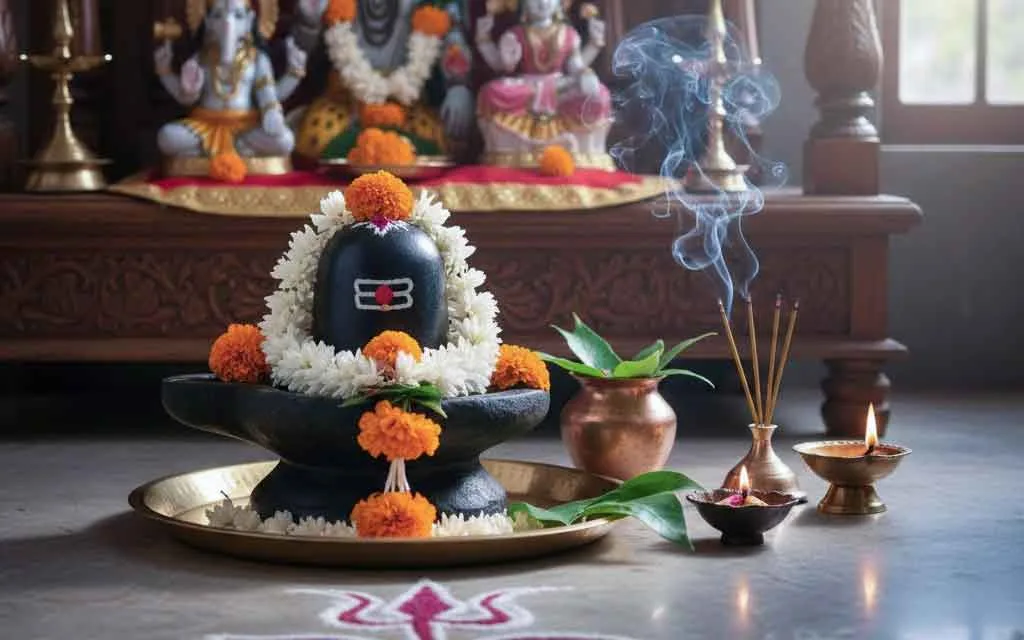
The Sacred Importance of Monday in Hinduism: Essential Rituals for Somvar Vrat, Solah Somvar Fast, and Practical Guidance for NRIs to Perform Shiva Puja with Deep Devotion
Monday Shiva Puja: Somvar Vrat, Om Namah Shivaya Mantra and Rituals