Bhaja Govindam: Adi Shankaracharya's Most Beloved Philosophical Hymn — Complete Guide to 31 Verses
The 8th-century philosophical hymn composed by Adi Shankaracharya in Kashi — 31 verses warning of impermanence and calling the seeker back to Govinda. Discover the legend of its composition, the key verses, philosophical depth, and why "Bhaja Govindam, Bhaja Govindam" has been one of the most-recited Hindu hymns for over a thousand years.
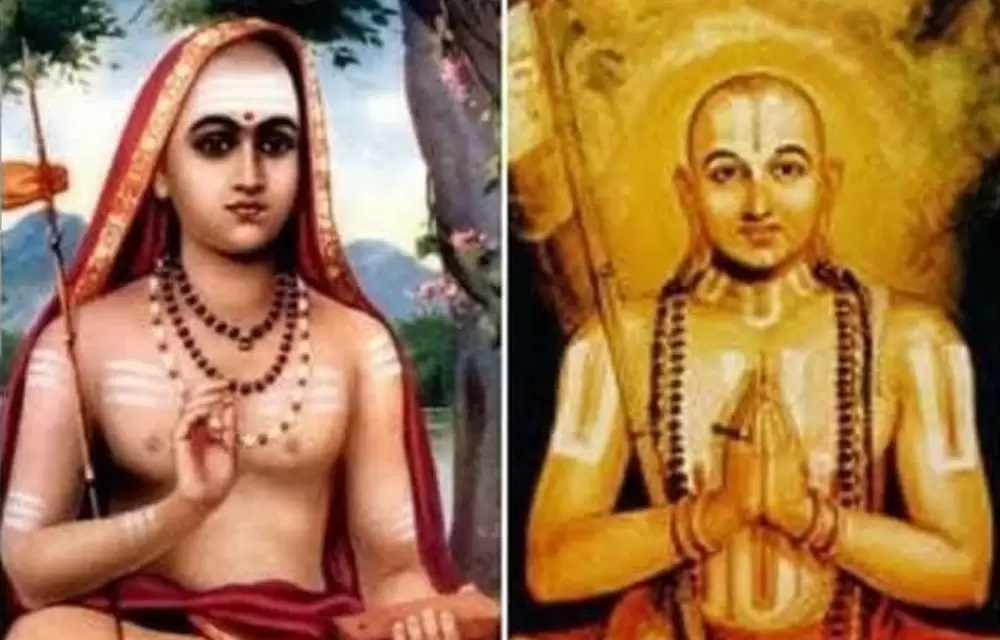
The 8th-century philosophical hymn composed by Adi Shankaracharya in Kashi — 31 verses warning of impermanence and calling the seeker back to Govinda. Discover the legend of its composition, the key verses, philosophical depth, and why "Bhaja Govindam, Bhaja Govindam" has been one of the most-recited Hindu hymns for over a thousand years.
Of all the philosophical hymns composed by Adi Shankaracharya — the 8th-century Advaita master who reformed Hinduism — none is more widely loved or more frequently quoted than the Bhaja Govindam. Composed in Kashi, on the banks of the Ganga, the 31-verse poem is at once a sharp philosophical warning about the illusion of worldly attachment and a tender, almost desperate, devotional invocation: "Worship Govinda, worship Govinda, worship Govinda, O fool — at the time of death, your grammar will not save you."
This HinduTone guide opens the Bhaja Govindam: the legend of its composition (Shankara seeing an old man memorising Sanskrit grammar at the river ghat), the philosophical foundations in Advaita Vedanta, all 31 verses summarised with the most important quoted in full, and why this single hymn remains the most-recited Adi Shankara composition in the modern Hindu world.
The Legend of Composition: Kashi, the Old Man, and the Grammar
The traditional account of the Bhaja Govindam's composition is one of the most beloved stories in Indian intellectual history. Adi Shankara, then a young teacher in his thirties, was visiting Kashi. Walking along a Ganga ghat one morning, he saw an elderly man laboriously trying to memorise the Sanskrit declensions ("ḍukṛn karaṇe" — a particular grammatical rule from Panini). The old man was at the very end of his life. He had spent his entire life chasing intellectual mastery; now, with death visible, he was still wrestling with grammar.
Shankara stopped and composed, on the spot, the opening verse of what would become the Bhaja Govindam: "Worship Govinda, worship Govinda, worship Govinda, O fool! At the time of death, your grammar (vyakaranam) will not save you." The point was sharp: intellectual achievement without devotional foundation is wasted at the moment that matters most.
Shankara composed twelve verses on the spot. His fourteen senior disciples were so moved that each composed one verse in response. Shankara then concluded with an additional fifteen verses, bringing the total to 41 (or 31 in some recensions, with later verses being attributed to disciples). The work is sometimes called the Charpata Panjarika Stotram (the "Smackdown of Foolishness Hymn") in alternative tradition.
Key Verses with Meaning
Below are the most-recited verses with Sanskrit and English meaning. The full hymn runs to 31 verses; these are the ones every Hindu hears from childhood:
Verse 1: The Foundational Refrain
भज गोविन्दं भज गोविन्दं गोविन्दं भज मूढमते | सम्प्राप्ते सन्निहिते काले नहि नहि रक्षति डुकृञ्करणे ||
Bhaja Govindam Bhaja Govindam, Govindam Bhaja Mudhamate | Sam-prapte Sannihite Kale, Nahi Nahi Rakshati Dukrin-karane ||
"Worship Govinda, worship Govinda, worship Govinda, O fool! When death arrives close, grammar (Dukrn-karane) will absolutely not save you."
Verse 2: The Illusion of Wealth
मूढ जहीहि धनागमतृष्णां कुरु सद्बुद्धिं मनसि वितृष्णाम् | यल्लभसे निजकर्मोपात्तं वित्तं तेन विनोदय चित्तम् ||
Mudha Jahihi Dhanagama-trishnam, Kuru Sad-buddhim Manasi Vitrishnam | Yal-labhase Nija-karmopattam, Vittam Tena Vinodaya Chittam ||
"O fool, give up the thirst for accumulating wealth. Cultivate dispassion in your mind. With whatever wealth comes to you through your own past karma, entertain your mind."
Verse 8: The Body's Reality
को न्वहं कुत आयातः का मे जननी को मे तातः | इति परिभावय सर्वमसारं विश्वं त्यक्त्वा स्वप्नविचारम् ||
Ko Nv-aham Kuta Ayatah, Ka Me Janani Ko Me Tatah | Iti Paribhavaya Sarvam-asaram, Vishvam Tyaktva Svapna-vicharam ||
"Who am I? Where did I come from? Who is my mother? Who is my father? Reflect on the insubstantiality of all this. Renounce the world as one renounces dream-like imaginings."
Verse 17: The Truth About Yourself
कस्त्वं कोऽहं कुत आयातः का मे जननी को मे तातः | इति परिभावय सर्वमसारं विश्वं त्यक्त्वा स्वप्नविचारम् ||
Kas-tvam Koham, Kuta Ayatah, Ka Me Janani Ko Me Tatah | Iti Paribhavaya Sarvam-asaram, Vishvam Tyaktva Svapna-vicharam ||
"Who are you? Who am I? Where did I come from? Who is my mother? Who is my father? Reflect on the insubstantiality of all this; renounce the world as a passing dream."
Verse 22: The Final Address
रथ्याचर्पटविरचितकन्थः पुण्यापुण्यविवर्जितपन्थः | योगी योगनियोजितचित्तो रमते बालोन्मत्तवदेव ||
Rathya-charpata-virachita-kanthah, Punya-apunya-vivarjita-panthah | Yogi Yoga-niyojita-chitto, Ramate Balon-mattavadeva ||
"The yogi, clad in a patchwork garment made of rags found in the street, walks a path that is beyond merit and demerit — his mind absorbed in yoga, he rejoices like a child or a madman."
The Philosophical Substance: Vairagya and Devotion
Bhaja Govindam combines two strands that are sometimes considered separate in Hindu philosophy: vairagya (dispassion, the recognition that worldly objects cannot satisfy ultimate desire) and bhakti (devotion to the divine). For Shankara, these are not opposites but complementary. The dispassion that the hymn cultivates is not a cold renunciation; it is the clearing of the heart so that devotion to Govinda — Krishna, the supreme cowherd — can take root.
Throughout the 31 verses, the same pattern recurs: recognise the insubstantiality of [some worldly thing]; then return to Govinda. The targets cycle through: wealth (v.2), attachment to family (v.4), pride in youth (v.5), grammar/intellectual pride (v.1), bodily beauty (v.7), the body itself (v.9). Each is dismissed as transitory; each is followed by the refrain Bhaja Govindam.
Why Bhaja Govindam Endures
Twelve hundred years after its composition, the Bhaja Govindam remains one of the most-recited Hindu hymns. It is sung at temple kirtans, taught to children in Hindu schools, set to music by classical composers (M.S. Subbulakshmi's recording is iconic), translated into every major Indian language, and recited at funerals as a meditation on impermanence.
The hymn endures because its message is direct, embodied, and applicable. It does not require Advaita philosophical training to understand "grammar will not save you." It does not require knowledge of Sanskrit poetics to feel the urgency of "worship Govinda, worship Govinda, worship Govinda." It is philosophy for the householder, the businessman, the student, the dying — Shankara at his most accessible and most demanding simultaneously.
Govindeti Sada Smara. Worship Govinda, always.
Frequently asked questions
Who composed Bhaja Govindam and where?
Adi Shankaracharya, the 8th-century Advaita master, composed it in Kashi on the banks of the Ganga. It is a poem of 31 verses on the illusion of worldly attachment and devotion to Govinda.
What is the legend behind the composition of Bhaja Govindam?
As commonly told, Shankara saw an elderly man at a Ganga ghat memorising Sanskrit grammar rules near the end of his life. He composed the opening verse on the spot, warning that grammar will not save one at the time of death.
What does the opening verse of Bhaja Govindam mean?
It says "Worship Govinda, worship Govinda, worship Govinda, O fool!" and adds that grammar will not save you when death arrives. Intellectual achievement without devotion is wasted at the moment that matters most.
How many verses does Bhaja Govindam have?
The hymn is known as a 31-verse poem. As commonly told, Shankara composed twelve verses and his disciples added more, giving 41 in some accounts and 31 in some recensions, with later verses attributed to disciples.
What is the alternative name of Bhaja Govindam?
It is also called the Charpata Panjarika Stotram in an alternative tradition. Both names refer to the same hymn by Adi Shankaracharya.
Do I need Sanskrit or Advaita training to recite Bhaja Govindam?
No. Its message is direct, and the refrain "worship Govinda" needs no philosophical training. It combines vairagya (dispassion) with bhakti (devotion), clearing the heart so devotion to Govinda can take root.
You might also like
Soundarya Lahari: Adi Shankaracharya's 100-Verse Hymn to the Divine Mother — Complete Guide
Sri Suktam: Complete Guide to the 15-Verse Vedic Hymn to Goddess Lakshmi
Purusha Suktam: Complete Guide to the Cosmic Hymn from Rig Veda 10.90