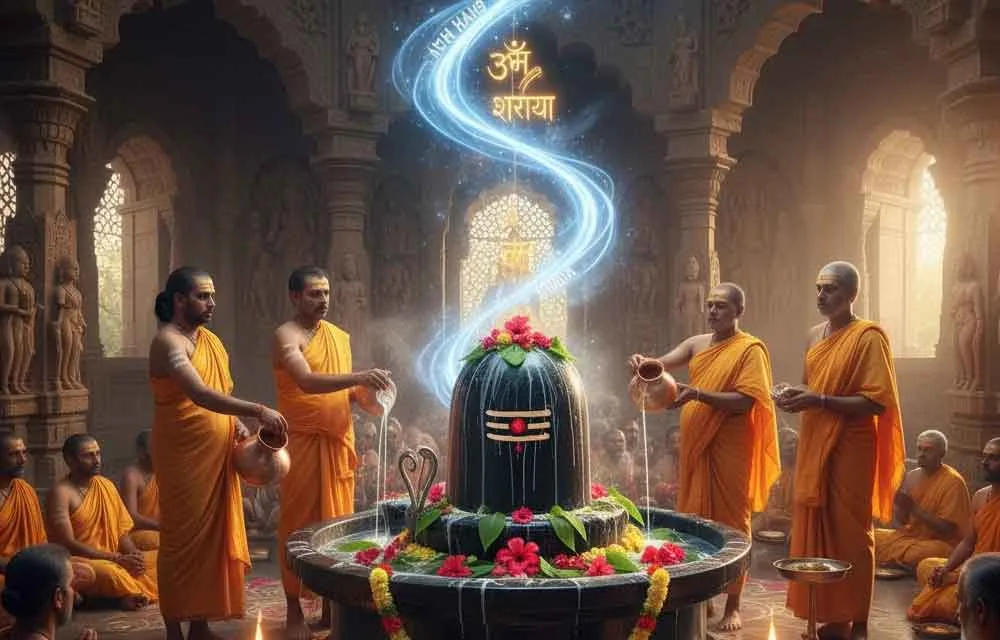
What Hindus and the World Must Learn from Adi Shankaracharya — Timeless Wisdom for the Modern Age
A devotional tribute to Jagadguru Adi Shankaracharya — his Advaita Vedanta, Shanmata synthesis, Bhakti hymns and Mahavakyas, and what every Hindu and seeker can learn from his 32-year mission to revive Sanatana Dharma.
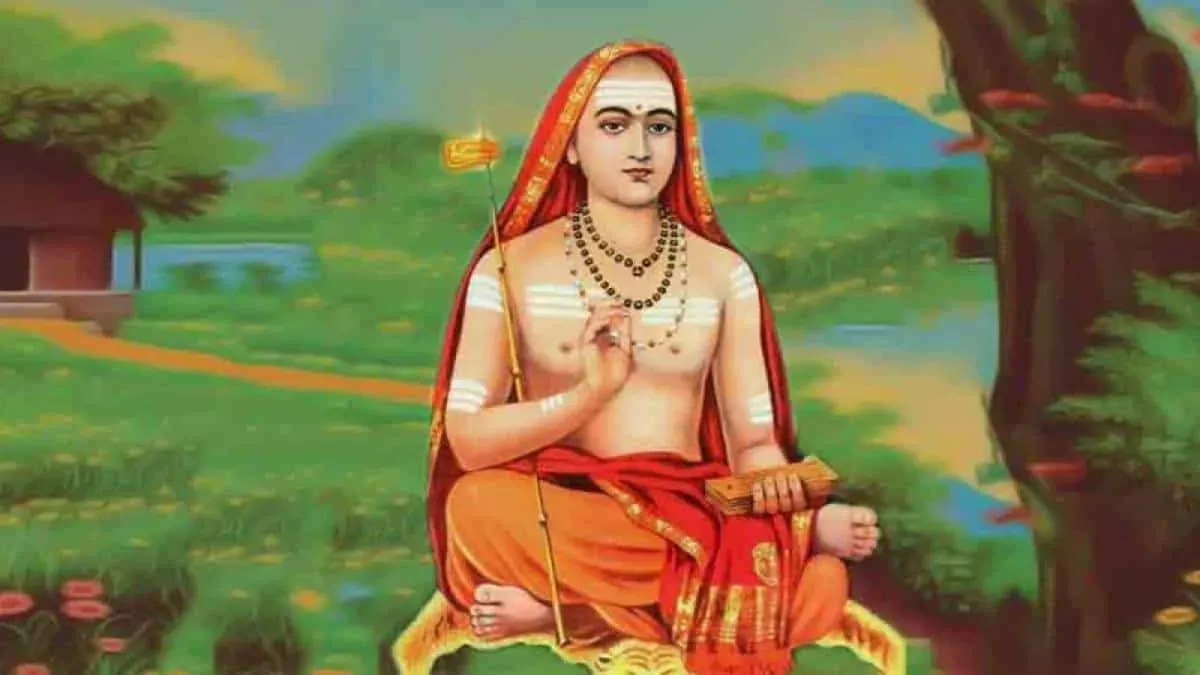
A devotional tribute to Jagadguru Adi Shankaracharya — his Advaita Vedanta, Shanmata synthesis, Bhakti hymns and Mahavakyas, and what every Hindu and seeker can learn from his 32-year mission to revive Sanatana Dharma.
Brahma satyam jagat mithya, jivo brahmaiva naparah.
— Adi Shankaracharya
(Brahman alone is real; the world is an illusion; the individual self is non-different from Brahman.)
In an age of division, confusion, and spiritual hunger, one name resonates across the centuries like a thunderbolt of divine light — Jagadguru Adi Shankaracharya. Born over 1,200 years ago in the sacred land of Kaladi, Kerala, this extraordinary saint-philosopher walked the entire length and breadth of Bharat in just 32 short years — and in that brief life, he achieved what most souls cannot in a thousand lifetimes.
He revived Sanatana Dharma when it was under threat of fragmentation. He unified a diverse subcontinent through the power of Advaita Vedanta. And he left behind a treasury of wisdom so vast, so luminous, that it continues to light the path for millions of seekers worldwide.
Today, on the auspicious occasion of Shankaracharya Jayanti, HinduTone offers this devotional tribute — and a heartfelt invitation to every Hindu and every human being: sit at the feet of this Jagadguru and receive his immortal lessons.
Who Was Adi Shankaracharya? A Brief Sacred Introduction
Adi Shankaracharya (approximately 788–820 CE) was not merely a scholar or a monk — he was a divine manifestation, believed by devotees to be an avatar of Lord Shiva himself. Born to Sivaguru and Aryamba in Kaladi, Kerala, young Shankara displayed extraordinary spiritual gifts from infancy.
- He renounced the world and became a sannyasi at the age of 8.
- He studied under the great sage Govindapada and mastered the Vedas, Upanishads, and Brahma Sutras.
- He walked thousands of kilometers across India, debating, teaching, and re-establishing Dharma.
- He founded four sacred Mathas (monasteries): Sringeri (South), Dwaraka (West), Puri (East), and Jyotirmath (North) — forming a spiritual grid that unifies the Hindu world to this day.
- He composed over 300 works including commentaries on the Upanishads, the Bhagavad Gita, and Brahma Sutras, as well as sublime devotional hymns like the Soundaryalahari and Bhaja Govindam.
He attained Mahasamadhi at the sacred hill of Kedarnath at just 32 years of age — having accomplished the work of entire civilizations.
10 Profound Lessons from Adi Shankaracharya — For Hindus and for All Humanity
1. You Are Not the Body — You Are Brahman
Perhaps the most revolutionary truth Adi Shankaracharya proclaimed to the world is the foundational teaching of Advaita Vedanta (Non-Dualism):
Aham Brahmasmi — I am Brahman. I am the infinite, undivided, eternal Consciousness.
In a world obsessed with physical identity, social labels, caste, nationality, gender, and race — Shankaracharya shatters every barrier with this single liberating declaration. You are not your body. You are not your mind. You are not your nationality or social status.
You are the deathless, boundless, luminous Self — one with the Supreme Reality.
Lesson for Hindus: Stop limiting yourself to caste divisions, regional identities, and sectarian labels. The Vedic truth is that all beings share the same divine essence.
Lesson for the World: Every conflict born of "us vs. them" — racism, nationalism, tribalism — dissolves when we recognize the Advaitic truth: there is only ONE Reality, and you and I are both expressions of it.
2. Honor the Scriptures — But Realize Their Truth Within
Shankaracharya was the greatest commentator on the Prasthanatrayi — the three foundational texts of Hindu philosophy: the Upanishads, Bhagavad Gita, and Brahma Sutras. Yet his ultimate message was not blind scriptural obedience — it was direct inner realization.
He taught that the Vedas and Upanishads are like fingers pointing to the moon — they are invaluable guides, but the seeker must ultimately experience the truth of Brahman within their own consciousness.
Lesson for Hindus: Study our sacred scriptures with devotion and rigor. But let that study lead you inward — to meditation, self-inquiry (vichara), and direct experience of the divine Self.
Lesson for the World: No holy book, no religion, is an end in itself. All genuine spiritual traditions ultimately point toward the same inner truth. Intellectual religion without inner realization remains hollow.
3. Unity in Diversity — The Shanmata Synthesis
One of Shankaracharya's most profound practical contributions was his establishment of the Shanmata system — a framework that harmonized six major Hindu sects: Shaivism, Vaishnavism, Shaktism, Ganapatya, Kaumara, and Saura.
He taught that all these forms of God — Shiva, Vishnu, Shakti, Ganesha, Kartikeya, and Surya — are expressions of the same one Brahman. Worshipping any of them with devotion leads to the same ultimate liberation.
Lesson for Hindus: End the pointless sectarian rivalries. Whether you are a devotee of Shiva or Vishnu, Rama or Krishna, Durga or Lakshmi — you worship the same Supreme Reality. Celebrate this magnificent diversity as a spiritual richness, not a cause for division.
Lesson for the World: Religious wars and inter-faith conflicts arise from the illusion that "my God" is different from "your God." The Advaitic vision offers a profound remedy: all genuine paths lead to the One.
4. The Power of Viveka — Discriminative Wisdom
Shankaracharya taught that the most essential spiritual faculty is Viveka — the ability to discriminate between the nitya (eternal) and the anitya (transient), between the real and the unreal.
In his immortal Vivekachudamani (The Crest-Jewel of Discrimination), he outlines the four-fold qualifications (Sadhana Chatushtaya) needed for liberation:
- Viveka — Discrimination between real and unreal
- Vairagya — Dispassion toward transient pleasures
- Shat-Sampat — Six virtues (calmness, restraint, withdrawal, endurance, faith, and concentration)
- Mumukshutva — Burning desire for liberation
Lesson for Hindus: In the age of social media, consumerism, and sensory overload, cultivate Viveka. Ask: What is truly permanent? What am I chasing that will ultimately leave me empty?
Lesson for the World: Modern civilization glorifies endless consumption, instant gratification, and superficial pleasures. Shankaracharya's call to discriminative wisdom is the antidote to the epidemic of meaninglessness plaguing modern life.
5. Bhakti and Jnana Are Not Opposites
A common misconception is that Shankaracharya was a cold intellectual who dismissed devotion (Bhakti). Nothing could be further from the truth. He composed some of the most soul-stirring devotional hymns in all of Hindu literature:
- Bhaja Govindam — A passionate call to seek God before death takes us
- Soundaryalahari — A rapturous hymn to the Divine Mother
- Shivanandalahari — An ocean of devotion to Lord Shiva
- Kanakadara Stotram — A prayer to Goddess Lakshmi
He showed the world that the highest Jnana (knowledge) and the deepest Bhakti (devotion) are two wings of the same bird — both essential for the flight toward Moksha.
Lesson for Hindus: Do not separate intellectual study from heartfelt worship. Visit your temples. Sing bhajans. Prostrate before the divine with full love. Let knowledge and devotion walk together.
Lesson for the World: Pure rationalism without spiritual love produces a cold, fragmented civilization. And blind faith without wisdom produces fanaticism. The synthesis of heart and intellect — as Shankaracharya embodied — is the way forward.
6. Maya — Understanding the Nature of Illusion
Adi Shankaracharya's concept of Maya is one of the most sophisticated philosophical ideas in human history. Maya does not mean the world does not exist — it means the world, as we ordinarily perceive it through our ego-bound consciousness, is not the ultimate reality.
The world is mithya — not purely false, but relatively real, like a dream that is real while it lasts but dissolves upon waking.
Lesson for Hindus: Understanding Maya liberates us from excessive attachment — to wealth, to fame, to relationships that are inherently impermanent. This does not mean renouncing the world, but engaging with it without being enslaved by it.
Lesson for the World: How much of our suffering arises from treating temporary things as permanent? Our careers, our possessions, our social status — all of these are part of Maya. Shankaracharya's teaching invites us to hold the world lightly, with wisdom and grace.
7. Walk the Entire Earth — Serve Dharma with Tireless Energy
By the age of 32, Shankaracharya had walked the entire length and breadth of the Indian subcontinent multiple times — on foot — to teach, debate, and re-establish Dharma. He did not sit in comfortable seclusion. He engaged with kings, scholars, ordinary people, and social outcasts alike.
He established the four Mathas at the four corners of India not just as monastic institutions, but as living centers of education, culture, and Dharmic leadership.
Lesson for Hindus: Your dharma is not fulfilled by private worship alone. Go out. Teach. Serve. Protect and share the wisdom of your tradition. Be a living expression of Sanatana Dharma in the world.
Lesson for the World: True wisdom is not passive. It does not hide in monasteries while the world burns. Shankaracharya's life is a model of engaged spirituality — combining the deepest inner realization with tireless outer service.
8. Debate with Respect — Win with Knowledge, Not Violence
Shankaracharya engaged in hundreds of Shastrartha (scriptural debates) across India — with Buddhist scholars, Mimamsakas, Charvakas, Jains, and rival Hindu philosophers. He defeated them all — through the sheer power of his logic, knowledge, and spiritual authority.
But he did so with dignity, respect, and humility. When he defeated the great scholar Mandana Mishra, he treated him as a worthy opponent, eventually accepting him as his own disciple (Sureshvaracharya). When he encountered Ubhaya Bharati, Mandana's learned wife, he respectfully engaged with her brilliant questions.
Lesson for Hindus: In an age of aggressive online debates and religious polarization — learn to stand for your tradition with knowledge and grace. Win minds and hearts through wisdom, not aggression or mockery.
Lesson for the World: Political, religious, and social conflicts could be transformed if we adopted Shankaracharya's model: respectful debate, rigorous intellectual engagement, and genuine openness to truth — wherever it is found.
9. The Path of Renunciation Is the Highest Freedom
At the age of eight, young Shankara sought his mother's permission to become a sannyasi. She was reluctant to lose her only son. According to tradition, when a crocodile grabbed the boy's leg in the river, he asked his mother's permission to renounce, lest he die without taking sannyasa. She relented, and the crocodile released him.
This beautiful story illustrates Shankaracharya's teaching: true renunciation is not about running away from life — it is about recognizing that the highest freedom lies in offering everything to God.
Even as a sannyasi, he fulfilled his duty — he returned to perform his mother's last rites, breaking monastic conventions out of love and filial devotion.
Lesson for Hindus: Renunciation (Vairagya) is not about fleeing responsibilities. It is about fulfilling all duties with love, while remaining inwardly free from attachment.
Lesson for the World: The highest human freedom is not the freedom to consume more — it is the freedom that comes from inner detachment, simplicity, and service. This is the Shankaracharyan ideal.
10. Bhaja Govindam — The Most Important Reminder for Our Age
Perhaps the single most urgent teaching Shankaracharya offers the modern world comes from his short, fiery poem: Bhaja Govindam (Seek Govinda, Seek God).
He wrote this masterpiece when he saw an old Sanskrit scholar obsessively drilling grammar rules on the streets of Varanasi, oblivious to the fact that his death was approaching. The poem opens with a thunderclap:
Bhaja Govindam, Bhaja Govindam, Bhaja Govindam, moodha-mathe!
Samprapte sannihite kale, nahi nahi rakshati dukrun-karane!
Seek Govinda! Seek Govinda! O fool! Grammar rules will not save you when death arrives!
This is not an anti-intellectual message — it is a divine wake-up call. No amount of worldly knowledge, wealth, social position, or intellectual achievement can protect us from the inevitable moment of death and the question it poses: What did you do with your life? Did you seek the Eternal?
Lesson for Hindus: In our busy lives of career-building, social media scrolling, and endless entertainment — do not forget the most fundamental human calling: to seek the Divine. Make time for prayer, meditation, pilgrimage, and satsang.
Lesson for the World: The most successful, educated, and wealthy societies in history have eventually collapsed when they lost their spiritual foundation. Shankaracharya's Bhaja Govindam is a timeless alarm bell for every civilization: seek what is eternal, not just what is profitable.
Shankaracharya's Four Mahavakyas — The Four Great Declarations
One of the most precious gifts Adi Shankaracharya preserved and propagated are the Four Mahavakyas (Great Sayings) from the four Vedas — each assigned to one of his four Mathas:
- Prajnanam Brahma — Consciousness is Brahman. (Rig Veda · Govardhan Matha, Puri)
- Aham Brahmasmi — I am Brahman. (Yajur Veda · Sringeri Matha)
- Tat Tvam Asi — That thou art. (Sama Veda · Dwaraka Matha)
- Ayam Atma Brahma — This Self is Brahman. (Atharva Veda · Jyotirmath)
These four declarations are not theological assertions to be believed — they are truths to be realized through meditation, self-inquiry, and grace.
Why the World Needs Advaita Vedanta Now More Than Ever
We live in an age of:
- Identity fragmentation — people defined by labels, groups, and categories
- Environmental destruction — driven by a worldview of separation from nature
- Religious extremism — fueled by the belief that God belongs only to "my" religion
- Mental health crisis — epidemic loneliness, anxiety, and meaninglessness
- Political polarization — an inability to see the humanity in the "other"
Advaita Vedanta — the philosophy Adi Shankaracharya systematized and gifted to humanity — addresses every single one of these crises at the root.
When we truly realize that we are all one — that the same Brahman dwells in every heart, every tree, every creature — we cannot destroy nature, because we would be destroying ourselves. We cannot hate the "other," because there is no other. We cannot feel alone, because we are part of an infinite, loving Consciousness.
This is not poetry. This is philosophy. This is the science of the Self — and it is Adi Shankaracharya’s greatest gift to humanity.
A Devotional Prayer on Shankaracharya Jayanti
O Jagadguru Adi Shankaracharya,
You who blazed like a thousand suns in the darkness of ignorance,
We bow at your lotus feet.
You showed us that we are not this body, not this mind,
But the infinite Brahman — pure, luminous, and free.
Grant us the wisdom of Viveka,
The grace of Vairagya,
The fire of Mumukshutva,
And the love that overflows in Bhakti.
May your four Mathas remain as beacons of Dharma,
May your Advaita teaching spread to every corner of the world,
May all beings wake up to the truth you proclaimed:
"Tat Tvam Asi" — That Thou Art.
Om Tat Sat.
Key Works of Adi Shankaracharya to Begin Your Journey
If you wish to dive deeper into the ocean of Shankaracharya's wisdom, here are the best places to begin:
- Vivekachudamani — The Crest-Jewel of Discrimination (start here for Vedanta philosophy)
- Bhaja Govindam — A short, powerful devotional poem (accessible to all)
- Atma Bodha — Self-Knowledge (a beautiful introduction to Advaita)
- Manisha Panchakam — Five verses on the unity of all selves (profound and moving)
- Soundaryalahari — The Wave of Beauty (for devotees of Devi)
- Commentary on Bhagavad Gita — For those who love the Gita
Final Reflection — The Living Legacy of Adi Shankaracharya
Adi Shankaracharya did not just live 1,200 years ago. He lives in every verse of the Upanishads, every chant in every temple, every sannyasi who walks the path of renunciation, and every Hindu who knows in their heart that the divine is not far away — but is the very ground of their own being.
His four Mathas stand. His philosophy endures. His hymns are sung every morning in millions of homes. His message to every soul remains unchanged:
You are not the small, fearful ego you think you are.
You are Brahman — infinite, blissful, and free.
Wake up. Realize this. And be liberated.
On this Shankaracharya Jayanti, let us renew our commitment to study his teachings, practice his wisdom, and carry the torch of Advaita Vedanta into a world that needs its light more desperately than ever.
Jai Adi Shankaracharya!
Share this post with every Hindu and every seeker who is hungry for the eternal truth of Sanatana Dharma. Let the wisdom of Jagadguru reach every corner of the world.
Written with devotion by the HinduTone team — your home for Sanatana Dharma, Hindu philosophy, and spiritual wisdom.
Frequently Asked Questions
What is What Hindus and the World Must Learn from Adi?
Brahma satyam jagat mithya, jivo brahmaiva naparah. — Adi Shankaracharya (Brahman alone is real; the world is an illusion; the individual self is non-different from Brahman.) In an age of division, confusion, and spiritual hunger, one name resonates across the centuries like a thunderbolt of divine light — Jagadguru Adi Shankaracharya .
What are the key points about What Hindus and the World Must Learn from Adi?
Born over 1,200 years ago in the sacred land of Kaladi, Kerala, this extraordinary saint-philosopher walked the entire length and breadth of Bharat in just 32 short years — and in that brief life, he achieved what most souls cannot in a thousand lifetimes. He revived Sanatana Dharma when it was under threat of fragmentation.
Why does What Hindus and the World Must Learn from Adi matter in Hinduism?
It reflects core values of Sanatana Dharma and offers practical and spiritual guidance that remains relevant across generations.
How can devotees apply What Hindus and the World Must Learn from Adi in daily life?
By reflecting on its teaching, incorporating the related practices or observances into daily routine, and approaching it with sincere devotion and understanding.
You might also like
Bhaja Govindam: Adi Shankaracharya's Most Beloved Philosophical Hymn — Complete Guide to 31 Verses
What Is True Poverty? | Dharma Is the Greatest Wealth | Sanatana Dharma
Bilvashtakam Lyrics, Meaning, and Monday Puja Guide – Complete Shiva Devotional