Udhayanidhi Stalin Calls to Eradicate Sanatana Dharma in TN Assembly
DMK Leader of Opposition Udhayanidhi Stalin renewed his call to “eradicate” Sanatana Dharma in the new Tamil Nadu Assembly on May 12, 2026, drawing sharp reactions from BJP and Hindu groups under the TVK-led government.
DMK Leader of Opposition Udhayanidhi Stalin renewed his call to “eradicate” Sanatana Dharma in the new Tamil Nadu Assembly on May 12, 2026, drawing sharp reactions from BJP and Hindu groups under the TVK-led government.
Chennai, May 13, 2026 — DMK Leader of Opposition Udhayanidhi Stalin reignited a major controversy on May 12 during the first session of the Tamil Nadu 17th Legislative Assembly by repeating his call to “eradicate” or “abolish” Sanatana Dharma, claiming it divides people.
What Udhayanidhi Stalin Said
In his maiden speech as Leader of Opposition, Udhayanidhi stated:
“Sanatana Dharma, which divides the people, must certainly be abolished.”
Advertisement
This comes just days after actor-turned-politician C. Joseph Vijay’s TVK ended decades of Dravidian rule by winning 108 seats in the April–May 2026 elections. DMK secured 59 seats and sits as the main opposition. No objections were raised in the House as CM Vijay listened attentively.
Background and 2023 Controversy
Udhayanidhi had earlier compared Sanatana Dharma to diseases like malaria, dengue, and COVID-19 that “must be eradicated.” The Madras High Court had observed those remarks as hate speech against the Hindu community.
He also raised concerns over the alleged sidelining of the Tamil invocation song Tamil Thai Vazhthu during the new government’s swearing-in.
Strong Reactions Pour In
BJP and Hindu Groups: Strongly condemned the remarks as “hate speech,” “venom,” and anti-Hindu politics. Leaders said it reflects DMK’s ideology that contributed to their electoral defeat.
DMK’s Defence: The party claims the comments target caste hierarchies and social divisions, not Hinduism itself.
Legal Angle: Fresh complaints and legal challenges are expected, building on pending 2023 cases.
Why It Matters
This episode has once again brought Tamil Nadu’s ideological divide into sharp focus — Dravidian social justice politics versus Hindu cultural identity — under the new TVK-led government.
Sanatana Dharma, representing core Hindu traditions followed by over 87% of Tamil Nadu’s population, remains a sensitive flashpoint in state politics.
For live updates and reactions, stay tuned to Hindutone.com — your voice for Sanatan and Tamil culture.
Sources
Deccan Herald — Udhayanidhi Stalin again calls for ‘eradication’ of Sanatana Dharma
The Week — ‘Sanatana Dharma should be abolished’: Udhayanidhi Stalin’s remarks trigger debates
Wion — Udhayanidhi reiterates ‘Sanatan Dharma should be eradicated’ remark in TN Assembly
India TV — Udhayanidhi revives anti-Sanatan pitch in TN Assembly
LiveLaw — Madras HC: ‘Clear attack on Hinduism’; quashes FIR against Malviya
ECI — 2026 Tamil Nadu Legislative Assembly election results
Advertisement
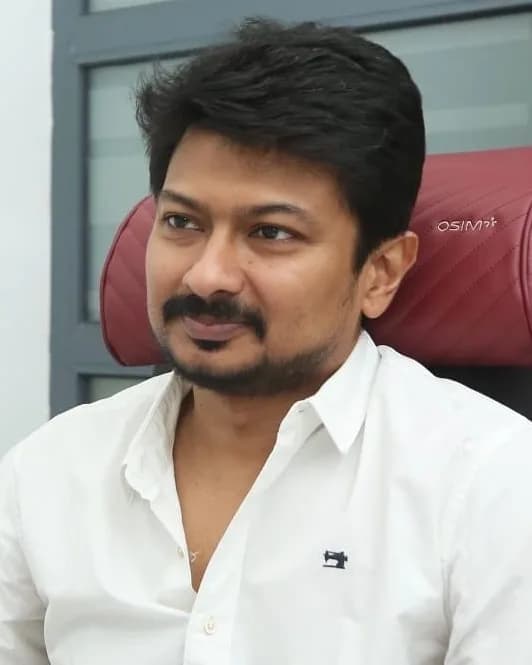
Image: Udhayanidhi Stalin, file photo (2020) by Articist, CC BY-SA 4.0 via Wikimedia Commons.
What Does Sanatana Dharma Actually Mean — and Why Hindus Reject the 'Division' Claim
The term Sanatana Dharma derives from two Sanskrit roots: 'Sanatana,' meaning eternal or beginningless, and 'Dharma,' meaning cosmic order, righteousness, and duty. Far from being a social hierarchy invented to divide people, the phrase appears in texts as ancient as the Rigveda and is elaborated across the Bhagavata Purana (Skanda 7, Chapter 11), where sage Narada defines Sanatana Dharma as qualities such as non-violence (ahimsa), truthfulness (satya), compassion (daya), and purity (shaucha) — attributes available to every human being regardless of birth.
Hindu scholars and Acharyas consistently point out that equating Sanatana Dharma with caste discrimination is a categorical error. The Bhagavad Gita (Chapter 18, verse 41) does describe the varna system, but classical commentators from Adi Shankaracharya onward have interpreted it as a description of quality and action (guna-karma), not a rigid birth-based structure. Conflating the two allows political actors to misrepresent a vast philosophical tradition in order to score electoral points.
Over 87 percent of Tamil Nadu's population identifies as Hindu, and a significant portion actively participates in temple worship, festivals such as Pongal, and pilgrimage to shrines like the Arulmigu Meenakshi Amman Temple in Madurai and the Arulmigu Kapaleeswarar Temple in Chennai — all of which are expressions of living Sanatana Dharma. For these millions, the tradition is not an abstraction but a daily lived reality.
The Madras High Court's 2023 Observations and the Continuing Legal Jeopardy
When Udhayanidhi Stalin first made his 'eradicate Sanatana Dharma' remarks at a conference in Chennai in September 2023, multiple petitions were filed before the Madras High Court and the Supreme Court of India. The Madras High Court, while hearing related petitions, observed that comparing a religious tradition to diseases such as malaria and dengue amounted to speech targeting the sentiments of the Hindu community and could fall within the ambit of hate speech under Indian law.
Under Sections 153A and 295A of the Indian Penal Code (now re-enacted under the Bharatiya Nyaya Sanhita), promoting enmity between groups on grounds of religion and deliberate acts to outrage religious feelings are cognisable offences. Several First Information Reports (FIRs) were registered in states including Uttar Pradesh and Madhya Pradesh in 2023. With Udhayanidhi now repeating the call on the floor of the Tamil Nadu Assembly on May 12, 2026, legal experts anticipate fresh petitions, and the earlier cases — many still pending — are likely to be revived with added urgency.
The legislative setting adds another dimension: statements made on the floor of a state assembly carry conditional privilege under Article 194 of the Constitution, but this privilege does not extend to statements that constitute incitement or hate speech directed at an entire religious community, as courts have held in various precedents. Whether the May 12 remarks will be challenged on this constitutional angle is expected to be a central question in forthcoming legal proceedings.
Tamil Nadu's Temple Tradition — A Living Testimony to Sanatana Dharma's Roots in the State
Tamil Nadu is home to more Agama-consecrated Hindu temples than any other state in India, including the 108 Divya Desams glorified by the Alvars and the 276 Paadal Petra Sthalams celebrated by the Nayanmars. Temples such as the Arulmigu Brihadeeswarar Temple in Thanjavur — a UNESCO World Heritage Site built by Raja Raja Chola I in the 11th century — stand as architectural proof that Sanatana Dharma has been the cultural and spiritual spine of Tamil civilisation for well over a millennium.
The Tevaram hymns composed by Thirugnana Sambandar, Thirunavukkarasar (Appar), and Sundarar are sung in Tamil Nadu's Shaiva temples to this day as part of Thirumurai recitation, a practice unbroken for over 1,200 years. Similarly, the Nalayira Divya Prabandham of the Vaishnava Alvars forms the liturgical core of worship at Ranganathaswamy Temple in Srirangam, the largest functioning temple complex in India. These living traditions demonstrate that Sanatana Dharma and Tamil culture are not opposing forces — they are deeply interwoven.
Any political call to 'eradicate' Sanatana Dharma therefore resonates, for many Tamil Hindus, as an attack not on caste oppression but on these beloved temples, hymns, festivals, and the very identity of Tamil civilization. This is precisely why the remarks draw disproportionate public outrage far beyond the BJP's political base.
The Dravidian Movement's Historical Stance Toward Sanatana Dharma — Context for the Remarks
Udhayanidhi's comments do not arise in a vacuum. The Dravidian political movement, founded in its modern form by Periyar E. V. Ramasamy through the Self-Respect Movement in the 1920s, has long critiqued Brahminical social structures, often framing this critique as opposition to 'Sanatana Dharma.' Periyar's writings, including 'Why I Am an Atheist' and 'Kudi Arasu' journal articles, equated the varna system with Sanatana Dharma and called for its abolition — a rhetorical tradition that the DMK has inherited and periodically amplifies.
However, critics note a critical analytical flaw in this tradition: it reduces an entire philosophical and devotional civilization to its worst social abuses, ignoring centuries of Tamil Bhakti saints — many from so-called lower castes — who found in Sanatana Dharma a path of direct devotion to the divine. Thirugnana Sambandar, Thirupaan Alvar, and Nandanar are celebrated precisely because they transcended caste barriers through their devotion, suggesting that the tradition itself carried corrective spiritual resources against discrimination.
With the DMK's significant electoral defeat in the 2026 Tamil Nadu elections — reduced to 59 seats as TVK under C. Joseph Vijay swept to power — political observers question whether doubling down on the anti-Sanatana rhetoric represents a genuine ideological conviction or a calculated effort to consolidate a shrinking base, even at the cost of deepening social polarisation in the state.
Hindu Groups' Response — Demands, Protests, and the Push for Legal Accountability
Following the May 12 speech, organisations including the Vishwa Hindu Parishad (VHP), the Hindu Munnani, and the BJP's Tamil Nadu unit called for immediate legal action and demanded that the Speaker of the Tamil Nadu 17th Legislative Assembly expunge the remarks from the official record. Street protests were reported in Chennai, Coimbatore, and Madurai, with activists burning symbolic effigies and chanting slogans demanding respect for Sanatana Dharma.
Several Hindu Dharmic leaders and temple priests in Tamil Nadu issued formal statements asserting that the remarks amount to an attack on the faith of crores of Tamil Hindus who worship daily in the state's more than 38,000 Hindu temples administered by the Tamil Nadu Hindu Religious and Charitable Endowments (HR&CE) Department. They demanded that the new TVK government under Chief Minister C. Joseph Vijay — who had listened to the speech without objection — publicly clarify its administration's stance on the protection of Hindu religious sentiments.
Hindu advocacy groups have also raised the broader question of institutional accountability: while calls to eradicate Sanatana Dharma are made from legislative podiums, the very temples of that tradition remain under government control through the HR&CE Act, a colonial-era framework that critics argue uniquely targets Hindu institutions. Many leaders are using the controversy to renew their demand for temple autonomy and the return of temple management to Hindu trusts — a demand that transcends party lines and enjoys wide popular support among Tamil Hindus.
Frequently Asked Questions
What is Udhayanidhi Stalin Calls to Eradicate Sanatana?
Chennai, May 13, 2026 — DMK Leader of Opposition Udhayanidhi Stalin reignited a major controversy on May 12 during the first session of the Tamil Nadu 17th Legislative Assembly by repeating his call to “eradicate” or “abolish” Sanatana Dharma, claiming it divides people. What Udhayanidhi Stalin Said In his maiden speech as Leader of Opposition, Udhayanidhi s
What are the key points about Udhayanidhi Stalin Calls to Eradicate Sanatana?
Joseph Vijay’s TVK ended decades of Dravidian rule by winning 108 seats in the April–May 2026 elections. DMK secured 59 seats and sits as the main opposition.
Why does Udhayanidhi Stalin Calls to Eradicate Sanatana matter in Hinduism?
It reflects core values of Sanatana Dharma and offers practical and spiritual guidance that remains relevant across generations.
How can devotees apply Udhayanidhi Stalin Calls to Eradicate Sanatana in daily life?
By reflecting on its teaching, incorporating the related practices or observances into daily routine, and approaching it with sincere devotion and understanding.
You might also like
Tamil Nadu CM Vijay Orders Closure of 717 TASMAC Liquor Shops Near Temples, Schools & Bus Stands
Urgent Call: Every Indian Must Stand with Hindus Facing Persecution in Bangladesh – December 2025 Update
Brahmacharya Era | Delayed Marriages, Declining Population and the Future of Family System