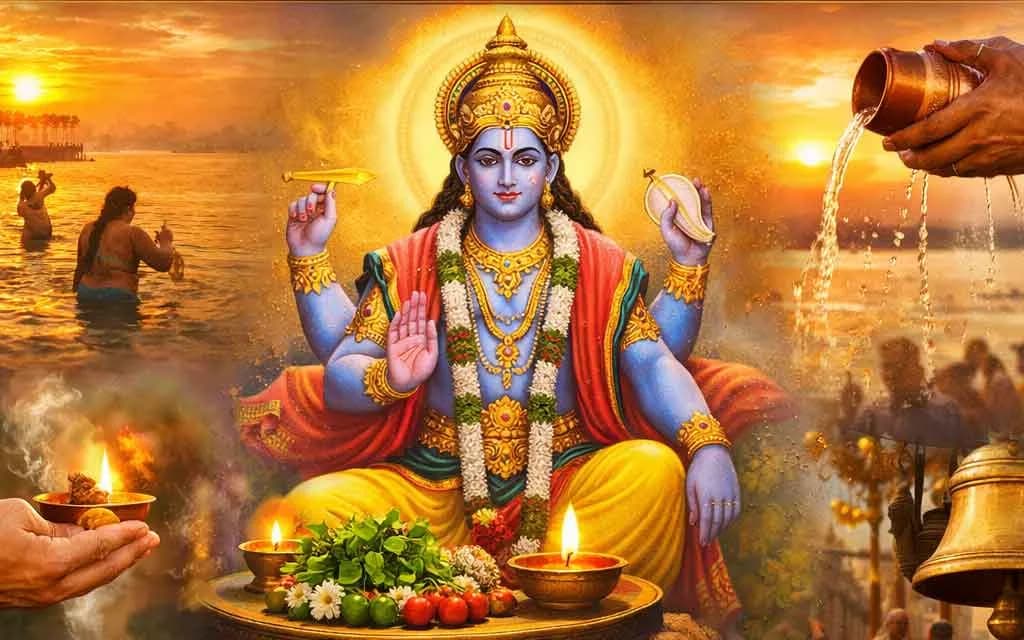
Hindu Festivals in May & June 2026: Ganga Saptami, Sita Navami, Buddha Purnima, Ganga Dussehra, Nirjala Ekadashi — Complete Vaishakha–Jyeshtha Guide
Complete day-wise guide to Hindu festivals in May and June 2026 — Ganga Saptami, Sita Navami, Mohini Ekadashi, Narasimha Jayanti, Buddha Purnima, Apara Ekadashi, Vat Savitri, Shani Jayanti, Ganga Dussehra, Gayatri Jayanti, Nirjala Ekadashi, Vat Purnima and Yogini Ekadashi. With rituals, mantras, dates, NRI timing notes and family observance tips.
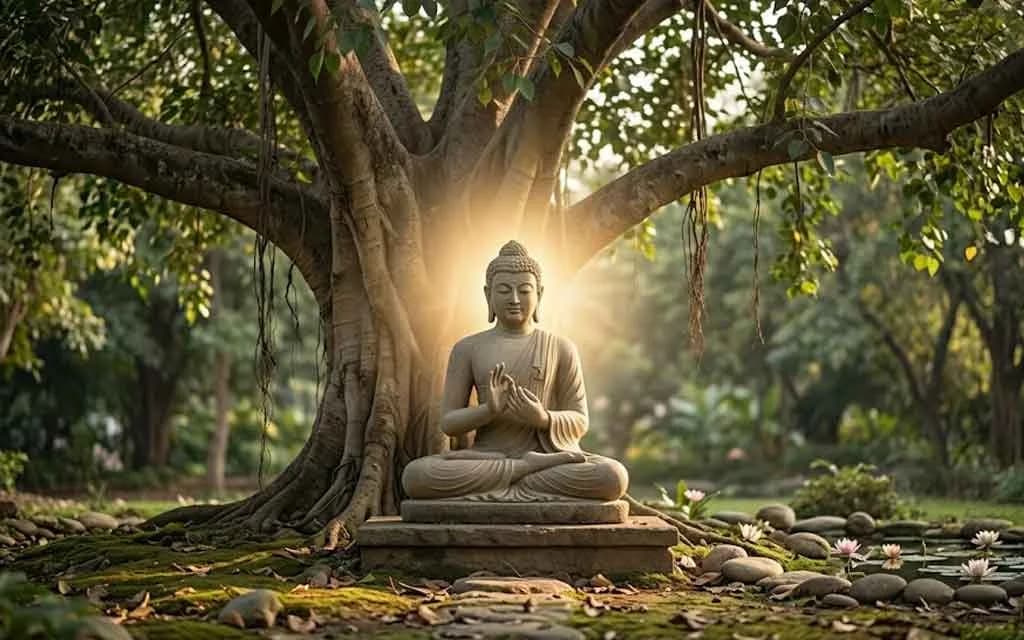
Complete day-wise guide to Hindu festivals in May and June 2026 — Ganga Saptami, Sita Navami, Mohini Ekadashi, Narasimha Jayanti, Buddha Purnima, Apara Ekadashi, Vat Savitri, Shani Jayanti, Ganga Dussehra, Gayatri Jayanti, Nirjala Ekadashi, Vat Purnima and Yogini Ekadashi. With rituals, mantras, dates, NRI timing notes and family observance tips.
“Vaishakhe Jagatam Nathah, Jyeshthe Triloka Pavani” — Vaishakha belongs to the Lord of the worlds; Jyeshtha sanctifies the three worlds.
May and June 2026 — two of the most spiritually charged months in the Hindu year
The window from early May to late June 2026 is one of the densest stretches of sacred observances in the Sanatan calendar. It spans the second half of Vaishakha Masam (Vishnu’s most beloved month) and most of Jyeshtha Masam (the month of Ganga’s descent). Inside these eight weeks fall the descent of Maa Ganga to the earth, the appearance of Sita Devi, the avatara day of Lord Narasimha, the Mahaparinirvana of Bhagavan Buddha, the iron-fast of Nirjala Ekadashi, and a constellation of vrats and snanams that observant Hindus across India and the diaspora have kept for thousands of years.
This guide collects every major observance between 1 May and 30 June 2026 in one place — with dates, tithi timings, scriptural roots, ritual steps, family puja vidhi, and notes for devotees in the USA, UK, Canada, Australia, New Zealand, UAE, Singapore, and South Africa. Bookmark it, share it with your family WhatsApp group, and let it be your panchang companion for these two months.
Read alongside our Vaishakha Masa 2026 — significance and Vishnu worship guide and Importance of Vaishakha Masam — rituals, mantras, sacred temples.
At-a-glance — May & June 2026 festival calendar
All dates are based on Drik Panchang for India (IST). NRI readers should adjust for local sunrise; we list timing notes for the USA, UK, Canada, Australia, and UAE under each festival below.
May 2026
Sun, 3 May 2026 — Ganga Saptami (Ganga Jayanti): descent of Maa Ganga from Brahma’s kamandalu.
AdvertisementMon, 4 May 2026 — Bagalamukhi Jayanti / Sita Navami eve preparation.
Tue, 5 May 2026 — Sita Navami: appearance of Sita Devi as Janaki, Bhumija.
Sat, 9 May 2026 — Mohini Ekadashi: Vishnu’s Mohini-rupa fast of liberation.
Sun, 10 May 2026 — Pradosh Vrat (Ravi Pradosh): Shiva’s twilight worship.
Mon, 11 May 2026 — Narasimha Jayanti: avatara of Lord Narasimha; nightfall puja.
Tue, 12 May 2026 — Vaishakha Purnima / Buddha Purnima: Buddha Jayanti, Kurma Jayanti and Chitra Pournami in the south.
AdvertisementSun, 24 May 2026 — Apara Ekadashi: fast for liberation from sins of past births.
Mon, 25 May 2026 — Som Pradosh / Masik Shivaratri.
Wed, 27 May 2026 — Vat Savitri Vrat (Amavasya): Savitri’s vow under the banyan tree.
Wed, 27 May 2026 — Shani Jayanti: birth anniversary of Shani Bhagavan.
Thu, 28 May 2026 — Jyeshtha Masa begins (Purnimanta) / Rohini Vrat.
June 2026
Wed, 3 Jun 2026 — Vinayaka Chaturthi (Jyeshtha Shukla).
AdvertisementSun, 7 Jun 2026 — Mahesh Navami / Dhumavati Jayanti.
Tue, 9 Jun 2026 — Ganga Dussehra: the descent-day of Ganga, supreme bathing tithi.
Wed, 10 Jun 2026 — Gayatri Jayanti: appearance of the mother of all mantras.
Wed, 10 Jun 2026 — Nirjala Ekadashi (Bhima Ekadashi): the iron-fast without water.
Thu, 11 Jun 2026 — Pradosh Vrat.
Sun, 14 Jun 2026 — Jyeshtha Purnima / Vat Purnima: the second Vat Savitri (regional).
Tue, 16 Jun 2026 — Mithuna Sankranti: Sun enters Gemini; sacred to Lord Jagannath at Puri.
AdvertisementTue, 23 Jun 2026 — Yogini Ekadashi: purification fast that destroys curses and ill karma.
Wed, 24 Jun 2026 — Pradosh Vrat / Masik Shivaratri.
Sat, 27 Jun 2026 — Ashadha Amavasya — final day of Jyeshtha Masa.
Ganga Saptami — 3 May 2026 (Sunday)
Why this day matters
Also called Ganga Jayanti, this is the tithi when Maa Ganga first emerged from Brahma’s kamandalu and rested in the matted locks of Lord Shiva before her descent to earth on Ganga Dussehra. Vaishakha Shukla Saptami is celebrated as her punaravatarana — her re-emergence — at Haridwar, Varanasi, Prayagraj, and Rishikesh.
Rituals
Snanam: a holy bath in the Ganga, or — when far away — Vaishakha Snan in any river or at home with Ganga jal mixed in fresh water.
Mantra: Om Namo Gangaye Vishvarupinyai Narayanyai Namo Namah
Offering: lit diya floated on the river at sunset, white lotus, sandalwood, kheer.
AdvertisementDaanam: water-pots (jala kumbha), buttermilk, fans, umbrellas — gifts that ease the summer heat.
For NRIs
Devotees in the US, UK, Canada, Australia and the UAE can perform Ganga Avahana at home: place clean water in a copper kalasha, drop a pinch of stored Ganga jal in it, light a diya, recite the Ganga Stotram of Adi Shankaracharya, and offer the water to your tulasi plant or to the earth at sunrise.
Sita Navami — 5 May 2026 (Tuesday)
Janaki Jayanti — the appearance of Sita Devi
Vaishakha Shukla Navami is the day Sita Devi appeared from the furrow (sita) of King Janaka’s plough at Punaura Dham, Sitamarhi (Bihar). She is Bhumija — daughter of the earth, embodiment of shakti, kshama (forbearance), and dharma. The day is observed as a fast by married Hindu women for a long, harmonious married life — a south-Indian and east-Indian counterpart of Sita Rama Kalyanam.
Sita Navami Vrat Vidhi
Wake before sunrise; sankalpa for the vrat.
Bathe and wear yellow or red.
Decorate a kalasha with mango leaves and a coconut; place a Sita-Rama murti or photo on a wooden platform.
Offer red flowers, kumkum, akshata, fruits and kheer.
Recite Sita Ashtottara Shatanamavali, Ramacharitamanas Bal Kand verses on Sita’s birth.
Break the fast at sunset with milk and fruit; many keep the full fast till next morning.
Mohini Ekadashi — 9 May 2026 (Saturday)
Vaishakha Shukla Ekadashi recalls Lord Vishnu’s Mohini avatara during the Samudra Manthana — when he distributed the divine amrita to the devas. The Skanda Purana says even one Mohini Ekadashi observed with sincerity grants moksha equal to a thousand pilgrimages.
Vrat steps
Dashami evening: one sattvic meal before sunset; no grains, onion or garlic from then.
Ekadashi day: full fast or phalahara (fruits, milk); recite Vishnu Sahasranama and Mohini Ekadashi katha from Skanda Purana.
Dwadashi morning: break fast after sunrise with cow-milk, tulasi water, and sattvic prasadam.
Narasimha Jayanti — 11 May 2026 (Monday)
The lion-form of Vishnu, born from a pillar at twilight
Vaishakha Shukla Chaturdashi marks the avirbhava (manifestation) of Sri Lakshmi Narasimha — the half-man, half-lion fourth avatara of Vishnu who emerged from a pillar in Hiranyakashipu’s palace to protect the boy-devotee Prahlada. He is the destroyer of fear, the guardian of devotees, and one of the most fiercely loved deities in Andhra and Telangana.
Worship is performed at sandhya kala (twilight) — the moment that is neither day nor night, indoors nor outdoors — when Narasimha appeared. See our Top 10 Narasimha Swamy Temples in India and Narasimha Mantras Collection — Maha Mantra, Gayatri, Kavacham, Stotras.
Sandhya Puja Vidhi
Begin around 30 minutes before sunset; bathe and wear clean clothes.
Place Narasimha murti on a red cloth; offer red hibiscus, vermilion, tulsi.
Light a ghee lamp; recite Narasimha Maha Mantra — Om Ugram Veeram Mahavishnum….
Read the Prahlada-Hiranyakashipu episode from the Bhagavata Purana 7th canto.
Naivedyam: panakam, vada-pappu, kheer, tender coconut — cooling offerings to the fierce Lord.
Buddha Purnima / Vaishakha Purnima — 12 May 2026 (Tuesday)
Three sacred events on a single full-moon
The full-moon of Vaishakha is unique because three of the most important moments in the life of Buddha fell on it: his janma (birth) at Lumbini, his sambodhi (enlightenment) at Bodh Gaya, and his mahaparinirvana (final liberation) at Kushinagar. To Sanatani Hindus, Bhagavan Buddha is the ninth avatara of Vishnu. The same tithi is also Kurma Jayanti (Vishnu’s tortoise avatara), and Chitra Pournami in Tamil Nadu.
Read together with our Buddha Purnima 2026 — significance, history, rituals & message of peace and Buddha Purnima 2026 in the USA — date, story, rituals.
How to observe
Snanam: the most rewarded bath of the year — at sunrise in any holy river, or pour Ganga jal over the head while reciting Om Vishnave Namah.
Daanam: water-pots, fans, umbrellas, footwear, sesame, gold; donating to the visually impaired and to gaushalas is specifically extolled in Skanda Purana.
Vrat: milk-and-fruit fast; full puja in the evening with white lotus, white sandal, kheer.
Dharma study: read at least one chapter of the Bhagavad Gita, the Dhammapada, or the Vishnu Sahasranama.
Apara Ekadashi — 24 May 2026 (Sunday)
The Krishna-paksha Ekadashi of Vaishakha. Apara literally means limitless — the merit of this fast is described in the Brahmanda Purana as beyond measure, cleansing accumulated sins of past births. Lord Krishna himself recommends this Ekadashi to Yudhishthira.
Vat Savitri Vrat & Shani Jayanti — 27 May 2026 (Wednesday)
Vat Savitri — Savitri’s vow under the banyan
On the new-moon (Amavasya) of Jyeshtha (Amanta) / Vaishakha (Purnimanta), married Hindu women in Maharashtra, Madhya Pradesh, Bihar, Uttar Pradesh, Gujarat, Punjab, Haryana, and the Hindi heartland observe Vat Savitri Vrat — circumambulating a banyan tree with a sacred thread, recalling the legend of Sati Savitri who won her husband Satyavan back from Yama through her devotion. Eastern and southern observances often combine this with the Purnima fast on 14 June (see Jyeshtha Purnima below).
Shani Jayanti — birth of Lord Shani
The same Amavasya is the birth tithi of Shani Bhagavan — the slow-moving lord of karmic justice. Devotees of Saade Saati and Dhaiyya offer black sesame, mustard oil, blue flowers and iron at Shani temples — Shani Shingnapur, Tirunallar, Kuchanur — and feed black dogs and crows. Reading the Shani Stotram of Dasharatha is considered especially powerful.
Jyeshtha Vinayaka Chaturthi — 3 June 2026 (Wednesday)
A monthly Sankashti for Lord Ganesha, observed in the bright fortnight of Jyeshtha. Recite Ganapati Atharvashirsha and the 108 names of Lord Ganesha.
Ganga Dussehra — 9 June 2026 (Tuesday)
The day Ganga descended to the earth
Jyeshtha Shukla Dashami is the supreme bathing tithi of the year. On this day, after the long penance of King Bhagiratha, Maa Ganga descended from Vaikuntha through Shiva’s jata onto the head of the world — sanctifying the ashes of the 60,000 sons of Sagara. The ten (dasha) sins are believed to dissolve in her current.
Where the energy is strongest
Haridwar — Har ki Pauri: the supreme spot; lakhs of devotees gather for the sandhya aarti.
Varanasi (Kashi) — Dashashwamedh Ghat: grand evening Ganga Aarti with priests in saffron.
Prayagraj — Triveni Sangam: confluence of Ganga, Yamuna and unseen Saraswati.
Rishikesh — Triveni Ghat: Maha Aarti with floating diyas.
Gangotri (when accessible): the source-shrine in Uttarakhand.
For devotees abroad
In the USA, UK, Canada, Australia, the GCC and South Africa, perform Ganga Smarana: sprinkle stored Ganga jal on yourself and your home’s threshold at sunrise, recite Ganga Stotram, and donate to clean-river or gaushala charities. Many temples in New Jersey, Houston, Atlanta, London, Birmingham, Toronto, Sydney, and Dubai arrange a community Ganga Pujan on the closest weekend.
Gayatri Jayanti & Nirjala Ekadashi — 10 June 2026 (Wednesday)
Gayatri Jayanti — the appearance of the mantra-mother
Jyeshtha Shukla Ekadashi is the day Vedmata Gayatri — the mother of all Vedic mantras — appeared. Recite the Gayatri Mantra 108 times facing east at sunrise, west at noon, and east at sunset; perform arghya to the Sun with water from a copper vessel.
Nirjala Ekadashi — the iron-fast without water
Of the 24 Ekadashis in the year, Nirjala Ekadashi (Bhima Ekadashi) is the most demanding. The vrati keeps a complete fast — not even a sip of water — from sunrise to the next sunrise. The Padma Purana says one Nirjala Ekadashi observed perfectly grants the merit of all 24 Ekadashis combined, and the story of Bhimasena (whose hunger could not let him keep regular Ekadashis) shows that even one such complete observance can secure Vaikuntha.
Modified observance
The very young, the elderly, the unwell, and pregnant or nursing mothers should not attempt the waterless fast.
Take only water and tulasi leaf, or one fruit-meal in the evening.
Recite Vishnu Sahasranama and stay awake (jagaran) chanting Hari-nama.
Jyeshtha Purnima / Vat Purnima — 14 June 2026 (Sunday)
In Maharashtra, Goa, Karnataka, Gujarat and parts of South India, married women observe Vat Purnima — the southern variant of Vat Savitri — circumambulating the banyan tree on the full-moon. The same Purnima is also Snan-Daan Purnima: the most rewarding day for charitable giving in Jyeshtha. In Odisha, the days leading to this Purnima begin Devasnana Purnima — when Lord Jagannath is bathed at Puri (108 pots of water) before falling into Anasara (sacred convalescence) until the Rath Yatra.
Mithuna Sankranti — 16 June 2026 (Tuesday)
Surya enters Mithuna (Gemini). In Odisha this is Raja Parba — a three-day women’s festival celebrating Mother Earth’s fertility. Specially significant at the Jagannath temple, Puri.
Yogini Ekadashi — 23 June 2026 (Tuesday)
The Krishna-paksha Ekadashi of Ashadha (Purnimanta) / Jyeshtha (Amanta). The Brahmavaivarta Purana says one Yogini Ekadashi, observed with sincerity, frees the vrati from curses (shrapa) of past lives and dissolves long-standing karmic blockages. Recite Vishnu Sahasranama, spend the day in maunam, and break the fast on Dwadashi after offering tulasi to Vishnu.
Astrological flavour of May–June 2026
From the perspective of Vedic Jyotisha, this stretch combines:
Surya transits Mesha → Vrishabha → Mithuna — the eastern-quarter strengthening axis.
Guru continues in Mithuna — friendship, communication, and learning are blessed.
Shani is in Kumbha — karmic accountability favours fasting, daanam, and humble service.
Rahu–Ketu on the Kumbha–Simha axis — Vat Savitri, Narasimha Jayanti and Shani Jayanti carry extra weight for those under Saade Saati or Dhaiyya.
See our Vaishakha Masam 2026 Vedic astrology horoscope for all rashis for sign-by-sign guidance.
NRI quick-reference — observance from abroad
United States, Canada, UK, Europe
Use a local-sunrise panchang (Drik Panchang for your city) — Indian dates may shift by a day.
For Ekadashis, observe by the day on which Ekadashi tithi prevails at aruna-udaya (~96 minutes before sunrise) in your city.
Many US/UK/Canada temples (BAPS, ISKCON, Sri Venkateswara, Hindu Temple of Atlanta, Bhartiya Mandir) hold community Buddha Purnima, Ganga Dussehra and Nirjala Ekadashi programs on the nearest weekend.
GCC, Singapore, Australia, New Zealand
UAE, Qatar, Oman: combine Ganga Saptami and Buddha Purnima with community Anna Daanam at Bur Dubai temples and Indian community halls.
Singapore: Sri Mariamman, Sri Srinivasa Perumal and Sri Krishnan temples mark Sita Navami, Narasimha Jayanti and Buddha Purnima with abhishekam programmes.
Australia/NZ: Sri Venkateswara Temple Helensburgh, Shri Shiva Mandir Minto, BAPS Melbourne and Auckland Krishna Mandir all observe Vaishakha Purnima with community puja.
A family observance guide for these eight weeks
For grihasthas — running the household
Keep the home altar especially clean through Vaishakha and Jyeshtha; replace flowers daily.
Maintain Vaishakha Snan — daily cool-water bath at brahma-muhurta with a touch of Ganga jal.
Tulasi puja each evening with a single ghee diya.
Keep at least one Ekadashi in each fortnight — start with Mohini, attempt Nirjala if your health allows.
For children
Tell the Prahlada and Narasimha story before Narasimha Jayanti.
Read the Sita appearance episode from Ramayana Bal Kanda before Sita Navami.
Visit a river or lake on Ganga Dussehra; let children float a small leaf-diya.
On Buddha Purnima, share one teaching of compassion — ahimsa parmo dharma.
For seekers — sadhana opportunities
Vaishakha is Vishnu’s most beloved month — a complete Vishnu Sahasranama parayana of all 1,000 names daily for 30 days yields immense merit.
Jyeshtha is Shiva and Ganga’s month — a daily Maha Mrityunjaya japa (108×) brings inner cooling.
Combine: chant Gayatri at the three sandhyas; hold maunam for one fortnight.
Frequently asked questions — Hindu festivals May & June 2026
What are the most important Hindu festivals in May 2026?
Ganga Saptami (3 May), Sita Navami (5 May), Mohini Ekadashi (9 May), Narasimha Jayanti (11 May), Buddha Purnima / Vaishakha Purnima (12 May), Apara Ekadashi (24 May), Vat Savitri & Shani Jayanti (27 May).
What are the most important Hindu festivals in June 2026?
Ganga Dussehra (9 June), Gayatri Jayanti & Nirjala Ekadashi (10 June), Jyeshtha / Vat Purnima (14 June), Mithuna Sankranti (16 June), Yogini Ekadashi (23 June).
When is Buddha Purnima 2026?
Buddha Purnima 2026 falls on Tuesday, 12 May 2026 — the full-moon of Vaishakha. It is also Vaishakha Purnima, Kurma Jayanti and Chitra Pournami.
When is Ganga Dussehra 2026?
Ganga Dussehra 2026 is on Tuesday, 9 June 2026 — Jyeshtha Shukla Dashami — the day Maa Ganga descended to the earth.
When is Nirjala Ekadashi 2026?
Nirjala Ekadashi 2026 is on Wednesday, 10 June 2026. It is the most rigorous Ekadashi of the year — a full fast without even water — and equals the merit of all 24 Ekadashis.
When is Sita Navami 2026?
Sita Navami 2026 — the appearance day of Sita Devi — is on Tuesday, 5 May 2026, Vaishakha Shukla Navami.
When is Narasimha Jayanti 2026?
Narasimha Jayanti 2026 is on Monday, 11 May 2026 — Vaishakha Shukla Chaturdashi. The puja is performed at sandhya kala (twilight), the hour Lord Narasimha appeared.
How can NRIs in the USA, UK, Canada and Australia observe these festivals?
Use a local-sunrise panchang (Drik Panchang for your city). Most North American, UK, GCC and Australian temples — BAPS, ISKCON, Sri Venkateswara, Hindu Temple of Atlanta, Sri Mariamman Singapore — hold community programs on the nearest weekend. At home, perform Ganga Avahana with a copper kalasha and Ganga jal, light a diya, recite the Stotram, and keep a fruit-and-milk fast for the major Ekadashis.
Is Vat Savitri Vrat and Vat Purnima the same?
They commemorate the same legend — Sati Savitri winning her husband Satyavan back from Yama — but follow different regional calendars. North & east India observe Vat Savitri on Jyeshtha Amavasya (27 May 2026); Maharashtra, Goa, Karnataka and parts of the south observe Vat Purnima on Jyeshtha Purnima (14 June 2026). Many families now observe both.
What is the spiritual significance of fasting in Vaishakha and Jyeshtha?
These two months are scripturally praised — Vaishakha as Vishnu’s most beloved month (Skanda Purana) and Jyeshtha as the month of Ganga’s descent (Padma Purana). The summer heat is itself a tapas; combined with daily snanam, japa and Ekadashi vrats, this period is considered one of the year’s richest opportunities for inner purification.
Live these two months as the Rishis intended
The two months from Ganga Saptami to Yogini Ekadashi are not a checklist of festivals to "tick off" — they are an eight-week sadhana arc. Begin with the descent of Ganga, walk through the appearance of Sita and Narasimha, sit with Buddha at the full-moon, fast for liberation on Mohini and Apara, vow under the banyan with Savitri, bow to Shani for karmic justice, bathe with Ganga on Dussehra, drink only mantra on Nirjala, and end with Yogini’s release from past curses. By Ashadha Amavasya you will not be the same person who started.
🌺 Jai Sri Rama · Jai Sri Vishnu · Jai Maa Ganga · Jai Sri Narasimha · Jai Buddha · Jai Maa Gayatri 🙏
Bookmark this guide and explore our companion Festivals library on HinduTone for individual deep-dives on each observance.
Disclaimer: All dates are based on Drik Panchang for India (IST). Observance dates may shift by a day for devotees outside India based on local sunrise. Always confirm tithi timings with your family priest or local temple.
You might also like
Buddha Purnima 2026 in the USA: Date, Significance, Story, Rituals & Message of Peace for Hindu & Buddhist Devotees | HinduTone
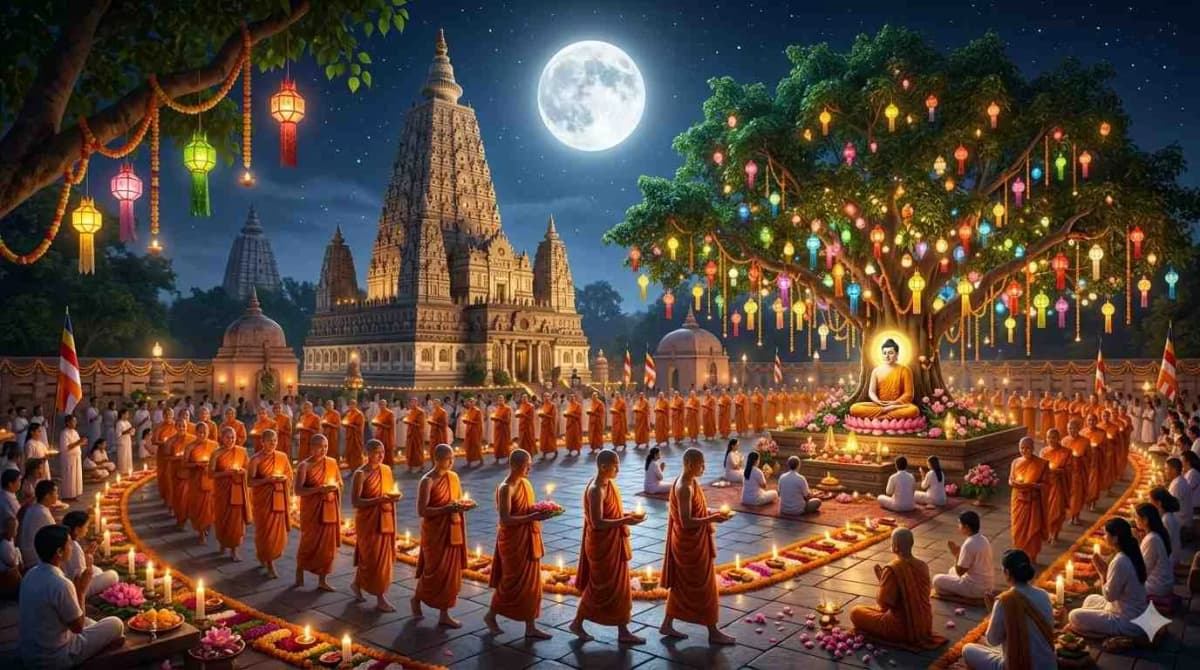
Buddha Purnima 2026 – Significance, History, Rituals & Message of Peace
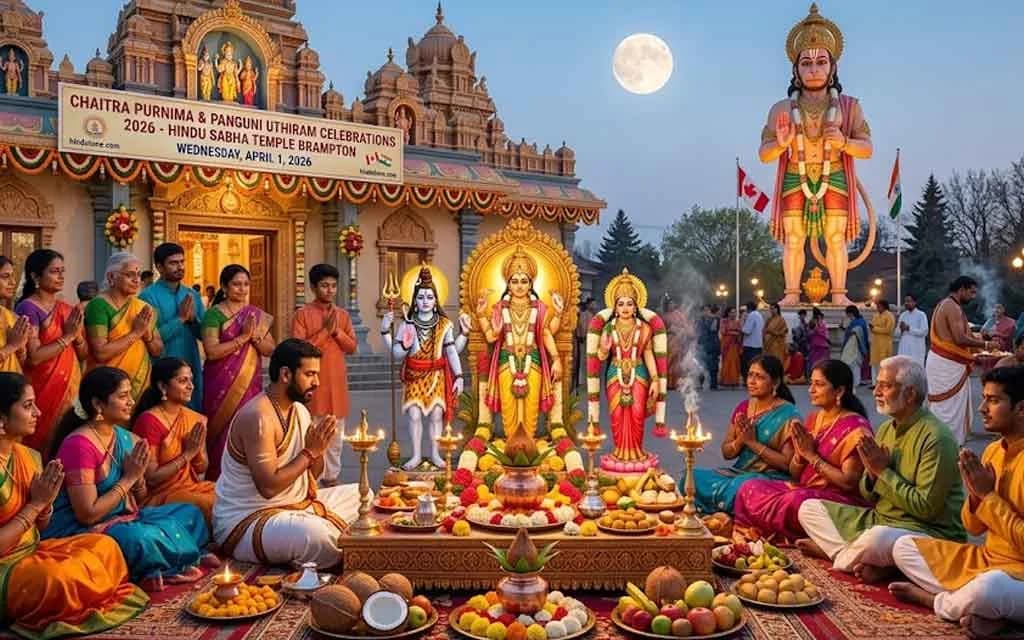
Chaitra Purnima 2026 in Canada: Date, Timings, Significance, Rituals, Panguni Uthiram & Temple Celebrations