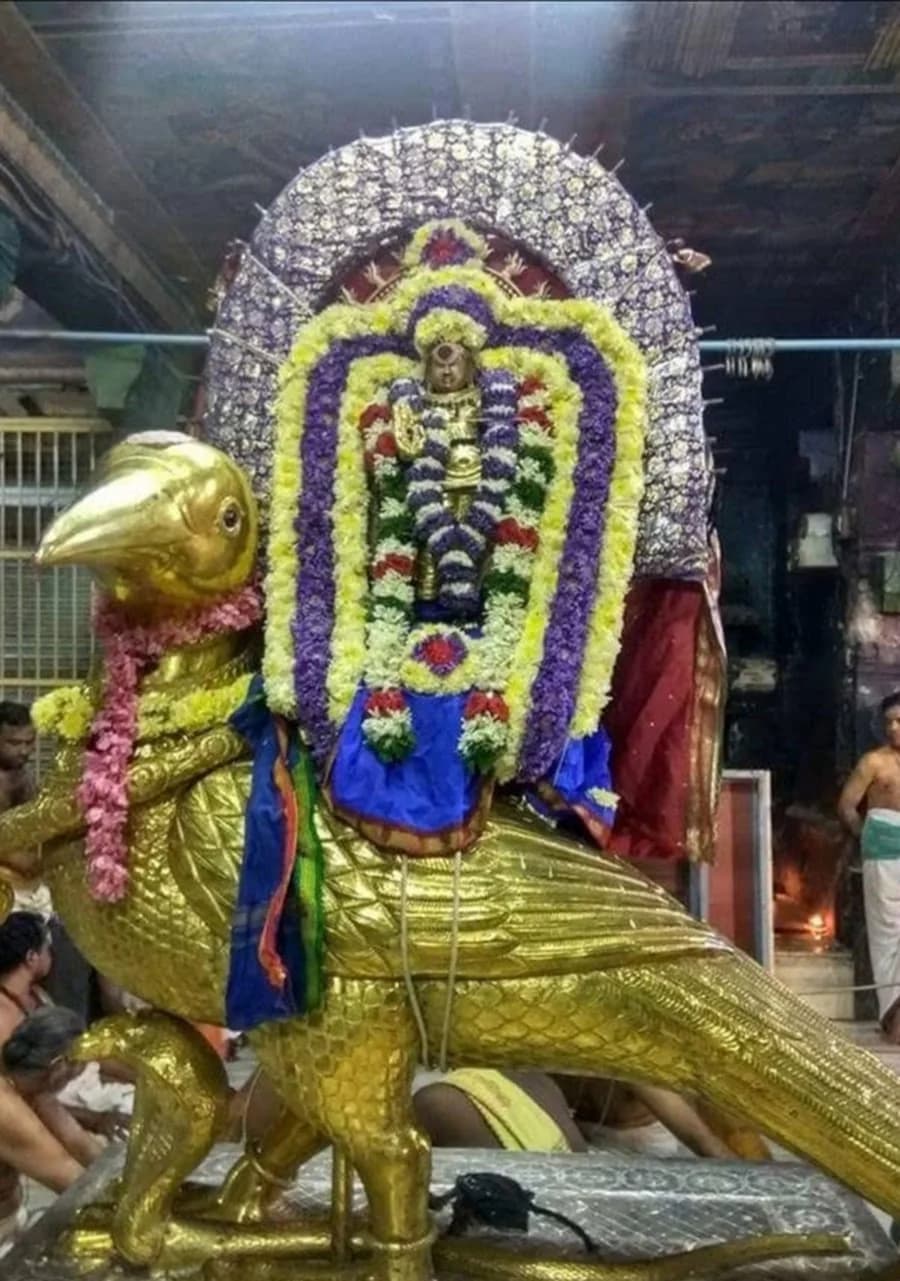
Top Temples to Visit in West Bengal, Tamil Nadu, Assam, Kerala & Puducherry — Complete 2026 Pilgrim’s Guide
The complete 2026 pilgrim guide to the most important Hindu temples across West Bengal, Tamil Nadu, Assam, Kerala and Puducherry — Kalighat, Dakshineswar, Tarapith, Meenakshi Amman, Ramanathaswamy, Brihadeeswara, Srirangam, Chidambaram, Maa Kamakhya, Umananda, Hajo, Sabarimala, Guruvayur, Padmanabhaswamy, Vadakkunnathan, Manakula Vinayagar and more — with darshan timings, dress code, festivals, suggested itineraries, and NRI booking notes.
The complete 2026 pilgrim guide to the most important Hindu temples across West Bengal, Tamil Nadu, Assam, Kerala and Puducherry — Kalighat, Dakshineswar, Tarapith, Meenakshi Amman, Ramanathaswamy, Brihadeeswara, Srirangam, Chidambaram, Maa Kamakhya, Umananda, Hajo, Sabarimala, Guruvayur, Padmanabhaswamy, Vadakkunnathan, Manakula Vinayagar and more — with darshan timings, dress code, festivals, suggested itineraries, and NRI booking notes.
“Tirthani hridaye santi — yatra sraddha tatra Bhagwan” — All sacred places already exist within the heart; wherever there is faith, there is the Lord.
Five sacred geographies in one pilgrimage
From the Bay of Bengal mouth of the Ganga to the granite Pallava–Chola–Pandyan temple country of Tamil Nadu, from the Brahmaputra Shakti shrines of Assam to the Western Ghats Vaishnava–Ayyappa kshetras of Kerala, and the unique French-quarter sanctity of Puducherry — these five Indian states between them hold dozens of the most spiritually charged temples in the Sanatan world.
Many of them are Shakti Peethas. Several are Pancha Bhoota Sthalas — the five element-temples of Lord Shiva. Two are Char Dham destinations. Three are UNESCO World Heritage. And nearly all of them have woven into the daily devotional life of millions of households for over a thousand years.
This 2026 pilgrim’s guide gives you the temple-by-temple essentials — darshan timings, dress code, sacred days, festival calendar, how to reach, prasadam, and an itinerary block — for fifteen of the most important temples across these five states. Bookmark this page; share it with the family WhatsApp before your next yatra.
Read alongside our Char Dham Yatra guide and 108 Shakti Peethas — divine geography of the Goddess.
At-a-glance — the five states & their signature temples
West Bengal: Kalighat (Shakti Peetha), Dakshineswar Kali, Tarapith, Bishnupur Madan Mohan, Tarakeswar Shiva.
AdvertisementTamil Nadu: Meenakshi Amman Madurai, Ramanathaswamy Rameswaram, Brihadeeswara Thanjavur, Chidambaram Nataraja, Srirangam Ranganathaswamy, Kanchipuram Kamakshi & Ekambareswarar.
Assam: Kamakhya Devi (Shakti Peetha), Umananda (Brahmaputra island Shiva), Hajo Hayagriva-Madhava, Sukreswar.
Kerala: Sabarimala Sri Ayyappa, Guruvayur Sri Krishna, Sree Padmanabhaswamy Thiruvananthapuram, Vadakkunnathan Thrissur, Chottanikkara Bhagavathy.
Puducherry: Manakula Vinayagar, Sri Aurobindo Ashram & Matrimandir Auroville (related sacred space), Varadaraja Perumal Villianur.
WEST BENGAL — the land of the Mother
Bengal’s spiritual life is woven around the Mother Goddess. Two of the 51 Maha Shakti Peethas are in this state, and the Bengali devotional imagination has shaped Sri Ramakrishna, Holy Mother Sarada Devi, Swami Vivekananda, and the entire modern bhakti renaissance.
1. Kalighat Kali Temple — Kolkata (Shakti Peetha)
Deity: Goddess Kali / Dakshina Kalika.
AdvertisementSacred significance: one of the 51 Shakti Peethas — where the right toes of Sati Devi fell during Vishnu’s chakra dismemberment.
Darshan timings: 5 AM – 2 PM and 5 PM – 10:30 PM (verify locally; festival hours differ).
Best days: Tuesday and Saturday; Kali Puja (October–November); Mahalaya Amavasya.
Prasadam: hibiscus garlands, khichuri bhog, payesh.
Dress code: traditional preferred; women — saree or salwar; men — dhoti or trousers, no shorts.
How to reach: Kalighat metro station (5 min walk); 8 km from Kolkata airport.
Advertisement
2. Dakshineswar Kali Temple — North Kolkata
Deity: Bhavatarini (Mother Kali, in the form Sri Ramakrishna worshipped).
Sacred significance: the temple where Sri Ramakrishna Paramahamsa lived, served as priest, and had his great realisations.
Darshan timings: 6 AM – 12:30 PM and 3 PM – 8:30 PM.
Highlights: Bhavatarini sanctum, Ramakrishna’s room, twelve Shiva temples on the Ganga ghat, Radha-Krishna shrine.
Best days: Tuesday and Saturday; Snan Yatra; Kali Puja.
Combine with: Belur Math (Ramakrishna Mission HQ) directly across the Hooghly by ferry.
3. Tarapith — Birbhum (Tantric Shakti Peetha)
Deity: Maa Tara — fierce, blue-hued, sword in hand.
AdvertisementSacred significance: the seat of the great Tantric saint Bamakhepa; intense sadhana ground.
Special: the cremation ghat (Mahasmashan) adjoining the temple is itself a tirtha for serious sadhakas.
Best days: Tuesday; Kaushiki Amavasya in late August; full moon nights.
How to reach: train to Rampurhat (~9 km), road from Kolkata ~225 km.
4. Bishnupur Terracotta Temples — Bankura district
Special: Malla-dynasty Vaishnava terracotta temples — Madan Mohan, Jor Bangla, Rasmancha — featuring Ramayana, Krishna Lila and Dasavatara panels in baked clay.
Best time: Bishnupur Mela (December); Rasa Yatra of Madan Mohan.
See our Kali Puja 2026 — West Bengal’s magnificent Diwali celebration and Famous temples celebrating Karthika Pournami in West Bengal for festival deep-dives.
TAMIL NADU — temple country of the Cholas, Pandyas & Pallavas
No state in India has a greater density of living, ritually active, scripturally rooted temples than Tamil Nadu. Temples here are not monuments — they are operational spiritual institutions where agama rituals have been performed continuously for over a thousand years.
5. Sri Meenakshi Amman Temple — Madurai
Deities: Sri Meenakshi (Parvati) and Sri Sundareswarar (Shiva) — the cosmic divine couple.
Sacred significance: among the most ancient temples in continuous worship; one of the great divya-desams of South India.
Highlights: 14 spectacular gopurams, Hall of Thousand Pillars, Golden Lotus Tank, daily Putthu Vasal procession.
Darshan timings: 5 AM – 12:30 PM and 4 PM – 9:30 PM.
Festival: Meenakshi Tirukalyanam in April–May (Chithirai Tiruvizha) — one of India’s grandest temple weddings.
Dress code: strictly traditional — men: dhoti or pants & shirt; women: saree, salwar, or full-length attire.
Read our deep dive: The Divine Love Story of Meenakshi Amman Temple, Madurai.
6. Sri Ramanathaswamy Temple — Rameswaram
Deity: Sri Ramanathaswamy (Shiva) — installed by Lord Rama himself before crossing to Lanka.
Sacred significance: one of the 12 Jyotirlingas; one of the four Char Dham; gateway to Setu darshan.
Special: the world’s longest temple corridor — 22 sacred theerthams (sacred wells) for ritual bathing before darshan.
Festival: Maha Shivaratri; Aadi Amavasya; Rameswaram Float festival.
See: The Eternal Bridge of Faith — Ramanathaswamy Temple, Rameshwaram.
7. Brihadeeswara Temple — Thanjavur (UNESCO World Heritage)
Deity: Sri Brihadeeswarar — a 12-foot Shiva Linga.
Built: 1010 CE by Rajaraja Chola I — over 1,000 years old.
Special: 80-tonne shikhara stone, monolithic Nandi (16 ft long), exquisite Chola frescoes.
Best time: Maha Shivaratri; Sadayam Vizha (Rajaraja Chola’s birth star).
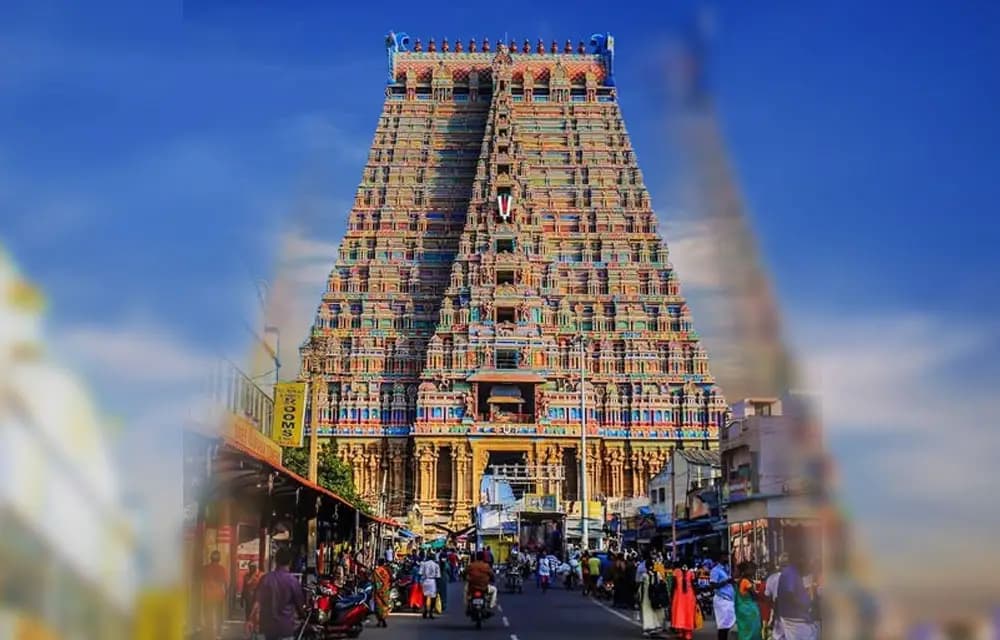
8. Sri Ranganathaswamy Temple — Srirangam, Tiruchirapalli
Deity: Sri Ranganatha — Vishnu in cosmic yogic repose on Adi Shesha.
Sacred significance: largest functioning temple complex in the world (~155 acres); first of the 108 Divya Desams; site of Sri Ramanujacharya’s teaching.
Festivals: Vaikuntha Ekadashi (December–January) — over a million devotees pass through the Paramapada Vasal.
See: Vaikuntha Ekadashi in Tamil Nadu — Srirangam, Tiruvallikeni & Kanchipuram.
9. Sri Nataraja Temple — Chidambaram (Akasha Lingam)
Deity: Lord Nataraja — Shiva as Cosmic Dancer.
Special: one of the Pancha Bhoota Sthalas — the Akasha (ether) element shrine; the famous Chidambara Rahasya.
Festival: Maha Shivaratri Arudra Darshanam — see Chidambaram Nataraja Temple Maha Shivaratri 2026.
10. Kanchipuram — the city of a thousand temples
Sri Kamakshi Amman: Shakti Peetha equivalent; the third great Devi after Madurai Meenakshi and Kashi Vishalakshi.
Sri Ekambareswarar: Pancha Bhoota Sthala — Prithvi (earth) element; ancient mango tree under which Parvati performed tapas.
Sri Varadaraja Perumal: one of the 108 Divya Desams.
Sri Kailasanathar: 8th-century Pallava sandstone temple with exquisite carvings.
ASSAM — Shakti, Brahmaputra & the Tantric north-east
11. Maa Kamakhya Devi Temple — Guwahati (Shakti Peetha)
Deity: Maa Kamakhya — the Goddess in her most powerful, bleeding-creator form.
Sacred significance: one of the 51 Shakti Peethas — where Sati Devi’s yoni fell. There is no idol — only a natural stone yoni-shaped fissure with flowing spring water.
Special: the Ambubachi Mela in June — when the Goddess is believed to menstruate, the temple closes for three days, then reopens with mass darshan.
Darshan timings: 5:30 AM – 1 PM and 2:30 PM – 5:30 PM (varies by season).
How to reach: Nilachal Hill, ~7 km from Guwahati city; ropeway available.
Combine with: Bhuvaneshwari, Tara, and Dasamahavidya temples on the same hill.
12. Umananda Temple — Peacock Island, Brahmaputra
Deity: Lord Shiva (Umananda — "the joy of Uma").
Special: the world’s smallest inhabited river island, mid-Brahmaputra; reached by ferry from Guwahati Kachari Ghat.
Best time: Maha Shivaratri; full-moon nights; pre-monsoon when the Brahmaputra is calm.
13. Hayagriva Madhava Temple — Hajo
Deity: Lord Vishnu as Hayagriva — the horse-faced Lord of knowledge.
Sacred significance: a major Vaishnava centre revered by Hindus, with pilgrim flow also from Bhutan and Nepal.
Special: hill-top setting with stone-carved tortoise pond and ancient murti.
14. Sukreswar Temple — Guwahati (Brahmaputra ghat)
Deity: Lord Shiva — one of the largest Shiva Lingas in eastern India.
Best time: Maha Shivaratri Brahmaputra Aarti.
Pair this Assam circuit with our Rongali Bihu 2026 — Assamese New Year guide for cultural context.
KERALA — Vaishnava, Shaiva & the secret Padmanabha
15. Sabarimala Sri Ayyappa Temple — Pathanamthitta
Deity: Lord Ayyappa — Hari-Hara-suta, son of Vishnu (in Mohini form) and Shiva.
Pilgrimage: one of the largest annual pilgrimages in the world (~30–50 million devotees in the Mandala-Makaravilakku season).
Vrata: 41-day strict mala-dharana before pilgrimage; black/blue dhoti, no shaving, no luxuries, sattvic food.
Highlights: Pamba snanam, climbing 18 sacred steps with Irumudi-kettu, Makara Jyothi darshan in January.
Read our complete Sabarimala Temple 2026 — everything NRIs need to know and Makara Jyothi 2026 darshan date and time.
16. Sri Krishna Temple — Guruvayur (Bhuloka Vaikuntha)
Deity: Bal Krishna ("Guruvayurappan") — believed installed by Brihaspati and Vayu.
Special: strict tradition — only Hindus permitted; men remove shirt before darshan; women wear saree or set-mundu.
Festivals: Ekadashi vilakku, Krishna Jayanti, Ulsavam (10 days in February–March).
See: Vaikuntha Ekadashi in Kerala — Guruvayur, Padmanabhaswamy & other key temples.
17. Sree Padmanabhaswamy Temple — Thiruvananthapuram
Deity: Lord Vishnu in Anantha-shayanam — reclining on the divine serpent.
Special: one of the 108 Divya Desams; the murti is so vast that darshan is taken through three doors revealing different parts.
Dress code: men — mundu only (no shirt); women — saree or set-mundu (no salwar or pants).
18. Vadakkunnathan Temple — Thrissur
Deity: Lord Shiva as Vadakkunnathan; ancient Kerala-style temple architecture; UNESCO recognised heritage.
Special: the famous Thrissur Pooram — Kerala’s grandest temple festival in April–May with caparisoned elephants and pancha-vadyam.
19. Sri Bhagavathy Temple — Chottanikkara
Deity: Maa Lakshmi-Saraswati-Durga — three forms morning, noon and evening.
Special: Makam Thozhal in February-March; healing for mental afflictions and possession is a centuries-old tradition here.
PUDUCHERRY — French streets, ancient gopurams
20. Manakula Vinayagar Temple — White Town
Deity: Bhuvaneshwarar Ganapati — believed to predate French settlement.
Special: the temple elephant Lakshmi blesses devotees at the gate; daily Sankashti puja.
Festival: Vinayaka Chaturthi grand procession in August–September.
21. Sri Aurobindo Ashram & Matrimandir, Auroville
Not a temple in the conventional sense — but the Aurobindo Ashram (1926) and Auroville’s Matrimandir constitute one of the modern Sanatan tradition’s most significant integral yoga centres. The Samadhi of Sri Aurobindo and the Mother is open to silent darshan; Matrimandir’s inner chamber is a place of profound concentrated meditation.
22. Sri Varadaraja Perumal Temple — Villianur
Deity: Lord Vishnu as Varadaraja.
Festival: the spectacular 18-day Brahmotsavam in May with chariot procession.
Suggested 2026 pilgrim itineraries
Itinerary A — Bengal Shakti Trail (4 days)
Day 1 (Kolkata): Kalighat morning, Dakshineswar afternoon, Belur Math evening Aarti.
Day 2 (Birbhum): drive to Tarapith, evening Maha Aarti at the smashan.
Day 3 (Bishnupur): terracotta temples — Madan Mohan, Jor Bangla, Rasmancha.
Day 4: Tarakeswar Mahadev / return.
Itinerary B — Tamil Nadu Big-5 (7 days)
Day 1 (Chennai): Kapaleeshwarar; Parthasarathy Triplicane.
Day 2 (Kanchipuram): Kamakshi, Ekambareswarar, Varadaraja Perumal, Kailasanathar.
Day 3 (Tiruvannamalai): Annamalai Shiva, Ramana Maharshi Ashram.
Day 4 (Chidambaram + Thillai): Nataraja darshan.
Day 5 (Thanjavur): Brihadeeswara.
Day 6 (Srirangam + Madurai): Ranganatha morning; overnight to Madurai.
Day 7 (Madurai → Rameswaram): Meenakshi darshan, drive to Rameswaram, Setu sandhya.
Itinerary C — Assam Shakti Yatra (3 days)
Day 1: arrive Guwahati; Sukreswar evening aarti, Brahmaputra ghat.
Day 2: Maa Kamakhya morning (best before 9 AM); Bhuvaneshwari, Tara, Dasamahavidya on Nilachal hill.
Day 3: Umananda Peacock Island morning; Hayagriva Madhava Hajo afternoon.
Itinerary D — Kerala Sacred Circle (5 days)
Day 1 (Thiruvananthapuram): Padmanabhaswamy.
Day 2 (Pamba/Sabarimala): 41-day vrata pilgrims only; otherwise Erumeli darshan.
Day 3 (Guruvayur): Bal Krishna darshan, Punnatturkotta elephant sanctuary.
Day 4 (Thrissur): Vadakkunnathan, Paramekkavu, Thiruvambadi.
Day 5 (Chottanikkara → Kochi): Bhagavathy darshan; return via Ernakulam.
For NRI pilgrims — planning from abroad
Booking & access
Sabarimala: online virtual queue (sabarimalaonline.org); irumudi only; no children below 1 year or extreme elderly.
Padmanabhaswamy: strict dress code; only Hindus admitted; bring photo ID.
Guruvayur: online wedding booking opens months in advance; Vivaha Mandapam reservations are competitive.
Brihadeeswara/Madurai: no advance booking required; ASI charges separate from temple darshan.
Cultural etiquette
Photography is restricted in inner sanctums of all major temples.
Leather (belts, wallets, footwear) must be removed before entering Padmanabhaswamy and Sabarimala.
In Bengal Kali temples, alcohol offerings are part of certain Tantric rites — but not for the casual visitor; do not improvise.
In Assam, Ambubachi Mela closes Kamakhya for three days — plan around this if you specifically want darshan.
Diaspora satsangs
Devotees in the USA, UK, Canada, Australia, GCC and Singapore can join virtual darshan via the temple’s official YouTube channels (Padmanabhaswamy, Guruvayur, Tirumala, Srirangam all live-stream the Suprabhatam and main pujas).
Practical tips for first-time temple yatra
Health: hill temples (Sabarimala, Tirumala, Kamakhya, Tarakeswar) involve significant climbing — train your stamina.
Water: drink only from temple theerthams, sealed bottles, or trusted lodges.
Footwear: temple lockers exist but limited at festival times — bring a thin cloth bag for shoes.
Respect queues: VIP darshan is offered at most major temples — but a long queue is itself part of the tapas.
Donate consciously: use the official hundi / online donation portals; refuse middlemen and ID-card touts.
Children: keep them hand-held in crowded sanctums; explain the deity story before entering — it transforms the experience.
Frequently asked questions — temples in West Bengal, Tamil Nadu, Assam, Kerala & Puducherry
Which is the most famous temple in West Bengal?
Kalighat Kali Temple in Kolkata — one of the 51 Shakti Peethas, where the right toes of Sati Devi fell. Dakshineswar Kali Temple, where Sri Ramakrishna lived, is equally revered.
Which is the largest temple in Tamil Nadu?
Sri Ranganathaswamy Temple at Srirangam, Tiruchirapalli — the largest functioning Hindu temple complex in the world at approximately 155 acres, with seven concentric prakaras.
When does Maa Kamakhya temple close for Ambubachi?
Ambubachi Mela typically falls in mid-to-late June. The temple closes for three days during which the Goddess is believed to menstruate, and reopens on the fourth day for mass darshan and the great mela.
Can non-Hindus visit Padmanabhaswamy and Guruvayur?
No — both temples follow the traditional Hindu-only rule. Visitors must declare faith and follow strict dress code (mundu for men without shirt; saree or set-mundu for women).
How long is the Sabarimala 41-day vrata?
Forty-one days of strict observance — wearing the black/blue mala-cloth, sattvic food, no haircut/shave, no leather, sleeping on the floor, daily puja, before undertaking the pilgrimage with the Irumudi-kettu.
Which Tamil Nadu temple is best for Maha Shivaratri?
Chidambaram Nataraja Temple (the Akasha element of Pancha Bhoota Sthalas) is unparalleled for Maha Shivaratri Arudra Darshanam. Brihadeeswara at Thanjavur and Annamalai at Tiruvannamalai are also exceptional.
What is the dress code for Indian temples?
Traditional preferred. Men: dhoti/mundu or trousers with shirt — no shorts or sleeveless. Women: saree, salwar-kameez, or full-length dress — no shorts/skirts above the knee. Padmanabhaswamy and Guruvayur are stricter — saree or set-mundu only for women, mundu without shirt for men.
Are these temples safe for solo women travellers?
Yes — all the temples listed are well-policed pilgrimage sites with active community presence. Standard travel precautions apply: travel in daylight hours, keep ID and emergency contacts on you, prefer official temple guides.
When is the best time of year to visit South Indian temples?
November to March — pleasant weather, major festivals (Vaikuntha Ekadashi, Pongal, Maha Shivaratri, Brahmotsavam at many temples). Avoid April–June (peak summer) for hill temples.
How can NRIs participate in pujas at these temples remotely?
Most major temples — Tirumala (TTD), Padmanabhaswamy, Guruvayur, Kalighat — accept online sponsorship of Archana, Abhishekam, Annadanam, Vasthrams. Several temples (Srirangam, Tiruvannamalai, Padmanabhaswamy) live-stream Suprabhatam and Maha Aarti on official YouTube channels.
A pilgrimage is a sankalpa, not a checklist
A temple yatra in 2026 is more than a holiday. Each of these temples is a living chaitanya kshetra — a place where consciousness has been concentrated by centuries of bhakti, mantra, abhishekam, and footfall. To stand before Maa Kamakhya at dawn, before Nataraja at the Arudra hour, before Padmanabhaswamy reclining on Adi Shesha, or before the still spring water at Kalighat — is to step into a current that has been flowing without break for a thousand years.
Plan your yatra with a sankalpa, not just an itinerary. Take a fast for at least one day before. Read the temple’s sthala-purana (sacred history) before you go. And when you return, bring your prasadam to your home altar — so the kshetra travels home with you.
🌺 Jai Maa Kali · Jai Maa Kamakhya · Jai Sri Ranganatha · Jai Sri Ayyappa · Jai Sri Padmanabha · Om Namah Shivaya 🙏
Explore more in our Temples library and our Pilgrimage / Char Dham archives.
Disclaimer: Darshan timings, dress codes, and festival dates are subject to change by temple administrations. Always confirm with the official temple website or a trusted local contact close to your travel date.
You might also like
Ramanathaswamy: Divine Mysteries & Soul-Stirring Miracles of the Rameswaram Jyotirlinga
Janmashtami 2026 in India: Date, Rituals & Top Temples to Visit
Kamakhya: Divine Mysteries & Soul-Stirring Miracles of the Tantric Goddess of Assam