Kali Puja 2026 — West Bengal's Magnificent Diwali Celebration
Introduction: Bengal's Fierce Celebration of the Divine Mother on the Darkest Night Kali Puja, also known as Shyama Puja or Dipannita Kali Puja, stands as one…
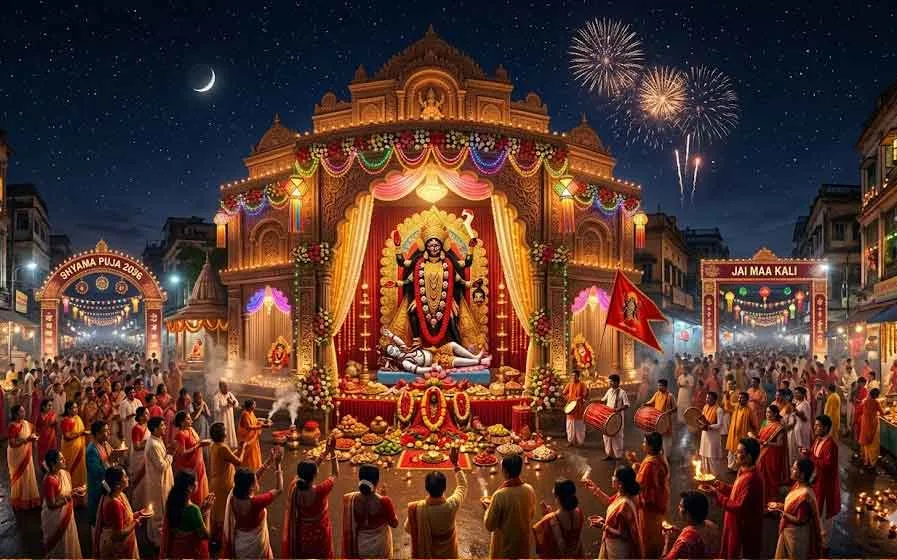
Introduction: Bengal's Fierce Celebration of the Divine Mother on the Darkest Night
Kali Puja, also known as Shyama Puja or Dipannita Kali Puja, stands as one of the most vibrant and spiritually intense festivals in West Bengal, Odisha, Assam, and among Bengali communities worldwide. Celebrated on the Amavasya (new moon) of the Kartik month, it coincides with Diwali but takes a distinct Shakta path. While much of India worships Goddess Lakshmi for wealth and prosperity with lamps and sweets, Bengalis invoke Maa Kali — the fierce, dark-skinned manifestation of Shakti — seeking protection, fearlessness, and the destruction of inner and outer evil forces.
In 2026, Kali Puja falls on Sunday, November 8, 2026. The most auspicious Nishita Kaal (midnight window) for the principal worship spans approximately 11:39 PM to 12:31 AM (crossing into November 9), with slight variations depending on location and panchang. Amavasya tithi begins around midday on November 8 and ends the next day. This midnight timing aligns with Kali's association with the tamasic (dark) energies and the transformative power of the night.
For Bengalis, Kali is not merely a destroyer but a compassionate Mother who liberates her devotees from ego, ignorance, and suffering. Her terrifying form — with a garland of skulls, protruding tongue, and weapons — symbolizes the annihilation of demons like Raktabeeja, while her gentle maternal aspect comforts devotees. The festival transforms the darkest night into a luminous celebration of lights, pandals, bhajans, and profound devotion.
This comprehensive guide for www.hindutone.com explores the complete mythology, historical evolution, detailed rituals, regional traditions, and practical adaptations — especially for the Bengali Hindu diaspora in the USA, UK, Canada, and Australia. It highlights how communities abroad preserve this magnificent tradition amid modern life, blending ancient fervor with contemporary expressions.
The Complete Mythological Story: Birth and Glory of Maa Kali
The core legend of Kali Puja draws from the Devi Mahatmya (Chandi Path) and Tantric texts. After Goddess Durga slays the buffalo demon Mahishasura during Navratri, two powerful demons — Shumbha and Nishumbha — rise with their armies, including the notorious Raktabeeja. Raktabeeja possesses a boon: every drop of his blood that touches the ground spawns a new clone of himself, making him seemingly invincible.
The devas, overwhelmed, appeal to Durga. In her wrath, a terrifying form emerges from her forehead or eyebrow — Kali (or Chamunda/Kalratri). With skin dark as the night, wild disheveled hair, and eyes blazing like fire, she charges into battle. Kali devours the demon armies, but Raktabeeja's blood-multiplication threatens chaos. In a brilliant and ferocious strategy, Kali spreads her tongue across the battlefield, lapping up every drop of blood before it can spawn clones. She then slays Raktabeeja, Shumbha, Nishumbha, and their forces, restoring cosmic order.
Another popular narrative links Kali's manifestation to the battle against Chanda and Munda, earning her the name Chamunda. In some Tantric traditions, Kali appears to sages or devotees in visions, instructing specific forms of worship on Amavasya night.
A unique Bengali legend credits the 16th-century Tantric scholar Krishnananda Agamavagisha with formalizing the worship after receiving a divine vision from Kali herself. She appeared and guided him on the rituals, leading to the spread of structured Kali Puja.
Philosophically, Kali represents Kala (time) and the cycle of creation-destruction. She stands on the prostrate body of Shiva, symbolizing that even the supreme consciousness (Shiva) submits to dynamic energy (Shakti). Her four arms hold a sword (discernment), severed head (ego), and gestures of fearlessness (abhaya) and boon-giving (varada). The garland of 51 skulls represents the Sanskrit alphabet or conquered vices; her skirt of arms signifies action transcended.
Devotees see her as Kal Bhoi Nashini (destroyer of the fear of time/death). Worshipping her on the new moon night invokes protection from black magic, enemies, and personal demons while granting spiritual liberation (moksha).
Parallel stories include Rama worshipping Kali before his battle with Ravana (in some regional retellings) and Tantric tales of dacoits (historical bandits) seeking her blessings for success, which later evolved into mainstream devotion.
Historical Evolution in West Bengal
Kali worship in Bengal has ancient Tantric roots, but organized public Kali Puja gained massive popularity in the 18th century under the patronage of King Krishnachandra of Nadia (Navadvipa). He encouraged zamindars (landowners) to sponsor grand pujas, turning private household rituals into community spectacles.
In the 19th century, the ecstatic devotion of Sri Ramakrishna Paramahansa — the great Kali devotee at Dakshineswar Temple — elevated the goddess in Bengali consciousness. His disciple Swami Vivekananda further globalized Shakta spirituality. Affluent families and neighborhoods began erecting elaborate pandals (temporary structures) with artistic idols, mirroring the scale of Durga Puja.
Today, Kolkata and surrounding areas like Barasat, Naihati, Basirhat, Tamluk, and Barrackpore host some of the most magnificent Kali Puja celebrations. Barasat's Kali Puja is often compared in grandeur to Kolkata's Durga Puja. Pandals feature theme-based designs — from mythological scenes to social messages — with towering, intricately crafted idols of Kali standing on Shiva, accompanied by attendants like Chamunda or other forms.
Distinct Features: How Kali Puja Differs from Pan-Indian Diwali
- Deity Focus: Lakshmi Puja (wealth) vs. Kali Puja (power, protection, and transformation).
- Timing and Atmosphere: Diwali emphasizes evening lamps and fireworks; Kali Puja peaks at midnight (Nishita Puja) with intense rituals, often in cremation grounds or temples for Tantric practitioners.
- Offerings: Vegetarian sweets and lamps in many Diwali traditions vs. red hibiscus flowers, fish, meat (in some households), liquor (in certain Tantric paths, though moderated in public pujas), and blood-red symbolism in Bengal.
- Duration: Diwali spans multiple days (Dhanteras to Bhai Dooj); Kali Puja is concentrated on one night, though preparations begin earlier.
- Rituals: Animal sacrifice (symbolic or traditional in some places, now often replaced by vegetarian offerings or pumpkin/cucumber cuts) vs. strict Vaishnava vegetarianism elsewhere.
- Symbolism: Lights for prosperity vs. lights dispelling inner darkness on the darkest night.
Many Bengali families perform both Lakshmi Puja (earlier or alongside) and Kali Puja, reflecting the harmonious blend of Vaishnava and Shakta traditions.
Detailed Rituals and Puja Vidhi for Kali Puja 2026
Preparations:
- Clean the home or pandal thoroughly.
- Install a beautiful idol or picture of Maa Kali (often with Shiva beneath her feet).
- Set up an altar with red cloth, red hibiscus (jaba) flowers, incense, lamps (diyas or candles), and offerings.
- Many observe fasting or partial fast until the puja.
Key Rituals:
- Sandhya Aarti and Evening Lighting: Homes and pandals glow with thousands of earthen lamps and electric lights, creating a spectacular visual symphony against the new moon sky.
- Nishita Puja (Midnight Worship): The core ritual during the auspicious Nishita Kaal. Priests or householders perform elaborate arati, chant Kali mantras, and offer items like sweets (especially rosogolla, sandesh), fruits, rice, fish (in many Bengali homes), and red flowers.
- Mantras and Chants:
- Primary Beej Mantra: Om Kreem Kalikayai Namah (chant 108 or 1008 times).
- Mahakali Dhyanam and Stotras from Chandi Path or Karpuradi Stotra.
- Popular bhajans: "Kali Ma, Kali Ma", "Bande Mataram" variants, or Ramakrishna-inspired songs.
- Homa (Fire Ritual): Offerings into the sacred fire for purification.
- Bali (Sacrifice): Traditionally goats or buffaloes in some public or Tantric contexts; modern adaptations use symbolic offerings like ash gourd, sugarcane, or vegetarian substitutes. Many temples avoid it entirely.
- Prasad Distribution: After puja, devotees share blessed food — often including non-vegetarian items in traditional setups.
- Visarjan: On the following day or as per schedule, idols are immersed in rivers or water bodies with emotional processions, music, and chants of "Jai Maa Kali!"
Daily/Community Practices:
- Visit famous temples like Kalighat Kali Temple in Kolkata (one of the 51 Shakti Peethas) or Dakshineswar.
- Pandal hopping to admire artistic idols and themes.
- Cultural programs: Dance, music, and theatrical performances depicting Kali's stories.
Special Offerings: Red hibiscus, sindoor, sweets, liquor (in specific Tantric traditions), and items representing the five elements.
For Home Worship (Simplified Vidhi):
- Light a lamp and incense.
- Offer flowers while chanting the mantra.
- Recite the 108 names of Kali or listen to recorded Chandi Path.
- Conclude with aarti and prasad.
Kali Puja in the Diaspora: Celebrations by Hindus in USA, UK, Canada, and Australia
Bengali communities abroad have successfully transplanted Kali Puja, turning it into a vital cultural and spiritual anchor. In the USA, temples like the New York Kali Temple or community halls in New Jersey, California, and Texas organize grand events. Pandals may be smaller but feature authentic idols crafted in Kolkata or locally. Midnight pujas adapt to local time zones (often shifted for convenience), with live streams connecting families across continents. Vegetarian adaptations are common due to local sensitivities, though traditional Bengali fish curries appear on prasadam menus.
In the UK, London and Leicester host vibrant celebrations through Bengali associations. Indoor halls transform into pandals with lights and music. Events include cultural nights blending Rabindra Sangeet, modern fusion dances, and children's programs teaching Kali's symbolism. Weather challenges (November chill) lead to fully indoor setups with virtual elements for distant participants.
Canada (Toronto, Vancouver) sees enthusiastic gatherings at community centers and temples. Families emphasize teaching the next generation — born in the West — about Shakti's power through storytelling sessions and simplified home pujas. Fusion elements like Canadian maple motifs or eco-friendly materials appear occasionally.
Australia (Sydney, Melbourne) organizes beachside or park events when weather permits, or hall-based pujas. Sustainability is a focus: biodegradable idols and reduced fireworks. Diaspora groups often collaborate with Indian consulates or Hindu councils for larger-scale events, including food festivals featuring Bengali delicacies.
Challenges and Innovations:
- Timing: Midnight pujas may shift to evening for working professionals and families.
- Sourcing: Idols and items ordered from India or made locally; online Bengali stores help.
- Inclusivity: More emphasis on symbolic, non-violent offerings; youth programs explain Tantric philosophy in modern terms (e.g., conquering personal "demons" like stress or addiction).
- Community Bonding: These events combat cultural dilution, foster networking, and provide emotional support in multicultural societies.
Many diaspora pujas incorporate Zoom aartis for global family participation and charitable activities — donating to women's empowerment or education causes, embodying Kali's protective energy.
Significance and Spiritual Lessons
Kali Puja teaches acceptance of life's dualities: light and darkness, creation and destruction. By facing the "terrifying" Mother, devotees confront their fears and emerge empowered. It promotes inner strength over material wealth alone, making it deeply relevant in today's uncertain world.
For diaspora Hindus, it reinforces identity and resilience. Parents share stories of Raktabeeja to teach children about overcoming seemingly insurmountable challenges through focused energy and devotion.
Practical Tips for 2026 Celebrations
- Check local panchang apps (adjusted for your city) for exact muhurat.
- Temples and associations announce schedules months ahead — follow pages of Kalighat, Dakshineswar, or diaspora groups.
- Eco-friendly practices: Use clay diyas, minimize plastic, opt for symbolic bali.
- Health Note: Balance intense fasting/devotion with rest; consult professionals if needed.
- Charity: Offer donations to orphanages or animal shelters as modern expressions of sacrifice.
Conclusion: Embracing Maa Kali's Transformative Grace
On November 8, 2026, as the new moon blankets the sky, millions will light lamps, chant mantras, and surrender to Maa Kali. Whether in the bustling pandals of Kolkata, the serene temples of diaspora cities, or quiet home altars, her energy awakens courage and compassion.
Jai Maa Kali! May the fierce Mother protect and liberate all her children, dispelling darkness and igniting inner light. This festival reminds us that true victory lies in transforming fear into fearless devotion.
Share the Diwali 2026 blessing
On the darkest night of Kartik, Bengal turns to Maa Kali, the fierce yet tender Mother who destroys fear and ego, while lamps glow for Maa Lakshmi across the land. Every diya lit tonight is a reminder that the inner light can conquer any darkness within us. May the Divine Mother's protection and Lakshmi's gentle grace bless every home. Share one of these Kali Puja and Diwali blessings with your family and loved ones.
Deepa shloka: the lamp prayer
शुभं करोति कल्याणम् आरोग्यं धनसम्पदा। शत्रुबुद्धिविनाशाय दीपज्योतिर्नमोऽस्तु ते॥
Shubham karoti kalyanam arogyam dhana-sampada, shatru-buddhi-vinashaya deepa-jyotir namostu te.
Meaning: I bow to the light of the lamp, which brings what is auspicious and good, health and prosperity, and destroys ill-will. Many families recite it as they light the evening diya.
Lakshmi mantra for Diwali
ॐ श्रीं महालक्ष्म्यै नमः॥
Om Shreem Mahalakshmyai Namah.
Meaning: Salutations to Mahalakshmi. Shreem is the seed syllable traditionally associated with Lakshmi.
Diwali 2026 messages to share
🪔 Shubho Kali Puja and Happy Diwali to our whole family! May Maa Kali protect us from every fear, and may our home glow with love and harmony. ✨ Share on WhatsApp
🙏 Dear Ma and Baba, on this Shyama Puja may the Divine Mother bless you with good health, peaceful days and the joy of family around you. 🌸🪔 Share on WhatsApp
✨ Shubho Deepanwita, my friend! May the lamps of this holy night drive away every shadow in your life and fill your heart with courage and hope. 🪔 Share on WhatsApp
🪔 Warm Kali Puja and Diwali wishes to you and your team. May this season bring fresh energy, honest success and strong teamwork in the year ahead. 🙏 Share on WhatsApp
🌸 Jai Maa Lakshmi! While Bengal worships Maa Kali tonight, may the Mother of grace also step into every home and bless it with peace and contentment. 🪔✨ Share on WhatsApp
🙏 Just as Ayodhya lit its lamps to welcome Lord Rama home, may the light of Diwali 2026 welcome courage, goodness and joy into your life. Jai Shri Ram! 🪔 Share on WhatsApp
A short Diwali prayer
Maa Lakshmi and Lord Ganesha, on this sacred new moon night I bow before you, and before the Divine Mother in all her forms. Take away my fear, my ego and my anger. Grant my family good health and harmony. Remove the obstacles that stand in the way of goodness, and give me the courage to make right effort each day. Let your light shine in my heart, and keep me forever grateful.
Use the share buttons on this page to send these blessings to your family and friends.
Frequently Asked Questions
When is Kali Puja 2026?
Kali Puja falls on Sunday, November 8, 2026, on the Amavasya of the Kartik month. The Nishita Kaal midnight window is approximately 11:39 PM to 12:31 AM, crossing into November 9, and varies slightly with location and panchang.
How is Kali Puja different from Lakshmi Puja on Diwali?
Lakshmi Puja seeks wealth and prosperity with evening lamps, while Kali Puja seeks power, protection and transformation and peaks at midnight with Nishita Puja. Many Bengali families perform both.
What is the main mantra for Kali Puja?
The primary beej mantra is Om Kreem Kalikayai Namah, chanted 108 or 1008 times. Devotees also recite the Mahakali Dhyanam and stotras from the Chandi Path, such as the Karpuradi Stotra.
What offerings are made to Maa Kali?
Red hibiscus (jaba) flowers, sindoor, incense, lamps, sweets like rosogolla and sandesh, fruits and rice are offered. Some Bengali households also offer fish, and in certain Tantric traditions liquor is used.
How do Bengali families in the USA, UK, Canada and Australia celebrate Kali Puja?
Diaspora communities preserve the tradition by installing a Kali idol or picture with red cloth and hibiscus, performing Nishita Puja at midnight, and chanting mantras and aarti. A simplified home vidhi works: light a lamp, offer flowers with the mantra, recite Kali's 108 names and conclude with aarti and prasad.
Why is Kali worshipped on the new moon night, as commonly told?
As commonly told, Kali emerged from Durga in wrath to slay Raktabeeja, Shumbha and Nishumbha. Devotees worship her on the Amavasya night for protection, fearlessness and liberation from ego and ignorance.
Share this with family and friends
Send it on WhatsApp, post it, or copy the link.
More from Festivals
- Vasant Panchami 2027 (Saraswati Puja, Basant Panchami, Sri Panchami): Date, Panchami Tithi, Puja Muhurat by City, Vidhi and Story
- Holi 2027: Date, Holika Dahan Muhurat City-Wise, Bhadra Timings, Puja Vidhi and Holi Abroad
- Makar Sankranti 2027: Date, Punya Kaal Timings City-Wise, Bhogi, Pongal, Kanuma, Lohri and Uttarayan
- Dev Deepawali 2026 Varanasi: Date, Purnima Time, Ganga Aarti, Story, Puja Vidhi and Deep Daan
- Kartik Purnima 2026: Date, Purnima Time, Snan, Deep Daan, Puja Vidhi and Significance
You might also like
AI Image Prompts for Diwali 2026 — Best Gemini, ChatGPT, Midjourney & Stable Diffusion Templates for Hindu Festival Visuals
Hindu Festival Calendar 2026 — Complete Guide for NRIs (Dates, Tithis, Puja)

Sacred Hindu Festivals & Temple News: Divine Week — May 2026