

Rongali Bihu 2026: Assamese New Year Date, Bohag Bihu Rituals, Significance, Pitha Recipes & Bihu Wishes
Published Date: Category: Festivals • Hindu New Year • Regional Festivals Rongali Bihu 2026 Date and Muhurat Rongali Bihu, also lovingly called Bohag Bihu,…
Published Date: Category: Festivals • Hindu New Year • Regional Festivals Rongali Bihu 2026 Date and Muhurat Rongali Bihu, also lovingly called Bohag Bihu,…
Published Date: Category: Festivals • Hindu New Year • Regional Festivals
Rongali Bihu 2026 Date and Muhurat
Rongali Bihu, also lovingly called Bohag Bihu, marks the beginning of the Assamese New Year and is one of the most joyous festivals of Assam.
Rongali Bihu 2026 Date: April 14, 2026 – Tuesday (Goru Bihu – the main first day of celebrations)
Key Panchangam Details (2026):
- Mesha Sankranti (entry of Sun into Aries): April 14, 2026 (morning)
- Month: Chaitra / Bohag (Assamese calendar)
- Most important day: Goru Bihu – April 14, 2026
The three-day celebration usually includes:
- Goru Bihu – April 14 (cattle worship day)
- Manuh Bihu / Kati Bihu – April 15 (human-centered celebration, main cultural day)
- Bihu Din / Rongali Bihu – April 16 (final day of festivity)
The festival usually continues with music, dance and community gatherings for several days.
Devotional Significance of Assamese New Year
Rongali Bihu is not just a harvest and spring festival — it is deeply spiritual and devotional in nature.
In Assamese tradition, the arrival of Bohag month is considered the true beginning of the year according to the Assamese solar calendar. It coincides with the Sun entering Mesha Rashi (Aries), symbolizing:
- Renewal of life
- Fresh agricultural cycle
- Rebirth of nature after winter
- Gratitude to Mother Earth and cattle (who are the backbone of rural life)
Devotees begin the festival with prayers to:
- Lord Krishna (especially in his Govinda form)
- Kamakhya Devi (the powerful Shakti peetham goddess of Assam)
- Mother Nature and Cows (considered sacred and life-giving)
The festival carries a beautiful message:
“Just as nature renews itself every spring, let us also cleanse our hearts, forgive past mistakes, and begin anew with devotion, love, and gratitude.”
Rongali Bihu beautifully blends Vaishnava bhakti, Shakti worship, and deep respect for nature — making it one of the most harmonious and devotional festivals in India.
Step-by-Step Bohag Bihu Rituals at Home
Here’s how traditional Assamese families prepare and celebrate Rongali Bihu devotionally:
1. Goru Bihu – The First Day (April 14, 2026)
- Wake up very early (Brahma Muhurta preferred)
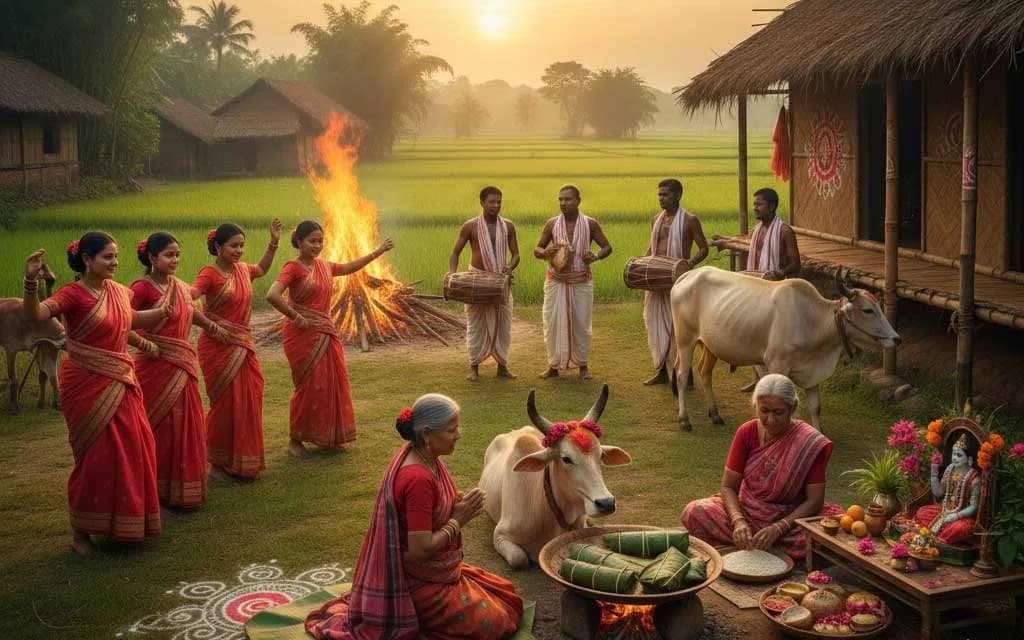
- Bathe the cattle (cows, buffaloes) with turmeric, black gram paste and herbs
- Offer prayers to the cattle with folded hands
- Decorate their horns with garlands and apply vermilion (sindoor)
- Feed them special mixtures of rice, lentils, jaggery, and banana leaves
- Seek blessings from cows for prosperity and protection
2. Cleaning & Purification of Home
- Thoroughly clean the entire house
- Throw away old and broken items
- Apply fresh cow dung and cow dung water on the floor (traditional disinfectant and purifier)
- Draw beautiful alpana (rangoli) designs with rice paste at the entrance
3. Meji (Sacred Bonfire)
- On the evening of Goru Bihu, families light a bonfire called Meji
- Offer black gram, rice, betel nut, and paddy
- Pray for good health, wealth, and protection from evil
- Circumambulate the fire and seek divine blessings
4. Manuh Bihu – Main Celebration Day (April 15)
- Wear new traditional clothes (preferably Mekhela Chador for women, Gamosa & Dhoti-Kurta for men)
- Visit relatives and elders to seek Bihu blessings
- Offer Bihuwan (gifts of Gamosa, betel nut, bananas, etc.)
- Participate in Bihu dance and Husori singing groups
- Prepare and share Bihu special food
5. Temple Visits & Puja
- Visit Kamakhya Temple, Navagraha Temple, Umananda Temple or local Krishna temples
- Offer prayers for the well-being of family and community
- Many families also perform simple Krishna puja at home
Traditional Bihu Recipes & Symbolism
Food plays a central role in Rongali Bihu celebrations. Here are two of the most loved devotional preparations:
1. Til Pitha (Sesame Rice Cake)
Ingredients:
- 2 cups sticky rice flour (Bora Saul)
- 1 cup black sesame seeds (roasted and crushed)
- ¾ cup jaggery (grated)
- ½ cup coconut (grated)
- Water as needed
- Banana leaves
Method:
- Mix roasted sesame, jaggery and coconut to make filling
- Prepare soft dough with sticky rice flour and water
- Take small balls of dough, flatten, add filling, fold and seal
- Wrap in banana leaf and steam or roast on tawa
- Offer to Lord Krishna or family deity before serving
Symbolism: Sesame = protection from evil, Jaggery = sweetness of life
2. Sunga Pitha (Bamboo Tube Rice Cake)
Ingredients:
- 1 cup sticky rice (soaked overnight)
- ½ cup jaggery
- Coconut pieces
- Bamboo tubes (young bamboo)
Method:
- Mix soaked rice with jaggery and coconut
- Stuff mixture into bamboo tubes
- Seal ends with banana leaf
- Roast over open flame or in oven
- Peel bamboo and serve warm
Symbolism: Bamboo = strength and flexibility, offering to nature and deities
Heartfelt Bihu Wishes & Blessings
Here are some traditional and devotional Bihu wishes you can share:
- Bohag Bihur Shubhechha! May this Rongali Bihu bring joy, peace and endless devotion to your life.
- Bihu geet, Bihu nach, aru Bihu bhoj — may your home be filled with music, dance and love this year.
- May Lord Krishna and Maa Kamakhya shower their choicest blessings on you and your family.
- Aapunar Bohag Bihu shubh kamona kori — wishing you a very happy Assamese New Year!
- Let the spirit of Rongali Bihu fill your heart with gratitude, your home with happiness, and your life with divine grace.
Final Prayer for Rongali Bihu
“O Lord Krishna, O Mother Kamakhya, Bless us with the purity of spring, The strength of cattle, The sweetness of Pitha, And the joy of Bihu songs. May this New Year bring devotion, prosperity, and unbreakable unity to every Assamese home.”
Joi Aai Kamakhya! Bohag Bihur Shubhechha!
Frequently Asked Questions
When is Rongali Bihu 2026?
Rongali Bihu 2026 falls on April 14, 2026.
What is the significance of Rongali Bihu?
Published Date: Category: Festivals • Hindu New Year • Regional Festivals Rongali Bihu 2026 Date and Muhurat Rongali Bihu, also lovingly called Bohag Bihu , marks the beginning of the Assamese New Year and is one of the most joyous festivals of Assam. Rongali Bihu 2026 Date: April 14, 2026 – Tuesday (Goru Bihu – the main first day of celebrations) Key Pancha
How is Rongali Bihu celebrated?
Devotees observe it with puja, fasting or special offerings, visiting temples, chanting mantras, and gathering with family. Customs vary by region and tradition.
What should devotees do on Rongali Bihu?
Take a sacred bath, perform the day's puja and charity (dana), observe any prescribed fast, and chant mantras with sincere devotion.
You might also like

June 2026 Hindu Festival Calendar — Complete Dates, Vrat & Puja Guide for NRIs

Shani Deva Temples Worldwide & Must-Performed Rituals — Complete Devotee's Guide

Gayatri Jayanti 2026: Date, Gayatri Mantra, Puja Vidhi & Significance
