Lord Ganesha: 108 Names, Significance & Mantras — The Complete Spiritual Guide
Introduction: Why Lord Ganesha Has 108 Names Lord Ganesha — the elephant-headed deity of wisdom, beginnings, and obstacle removal — is one of the most beloved…
Introduction: Why Lord Ganesha Has 108 Names Lord Ganesha — the elephant-headed deity of wisdom, beginnings, and obstacle removal — is one of the most beloved…
Introduction: Why Lord Ganesha Has 108 Names
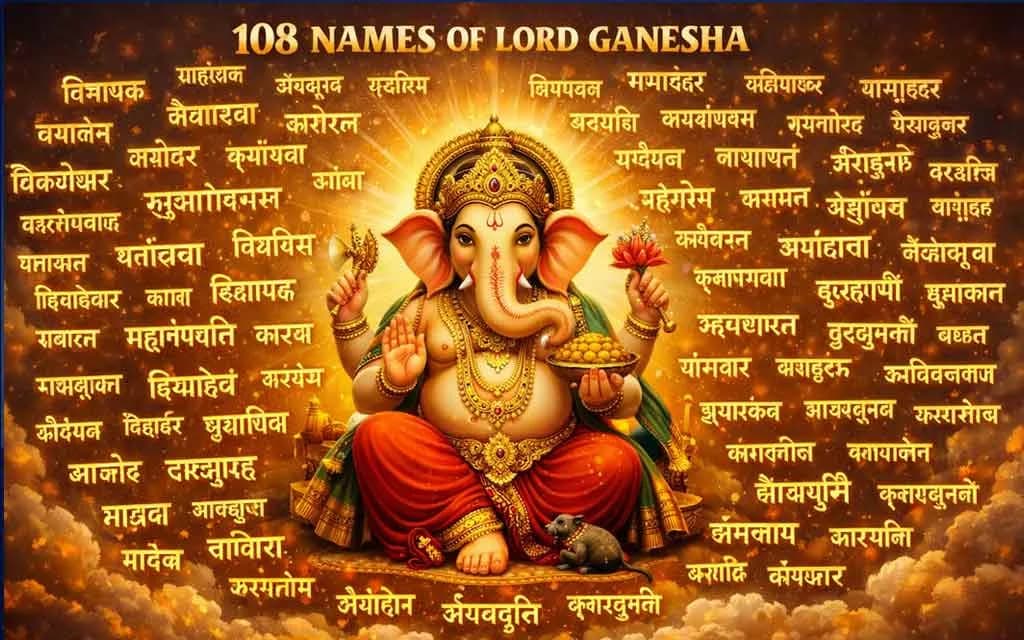
Lord Ganesha — the elephant-headed deity of wisdom, beginnings, and obstacle removal — is one of the most beloved and widely worshipped gods in Hinduism. Known by countless names across India and Southeast Asia, Ganesha's 108 sacred names (known as Ashtottara Shatanamavali) are not mere titles. Each name encapsulates a divine quality, a cosmic function, or a philosophical truth about this revered deity.
The number 108 itself holds deep spiritual significance in Hinduism:
- There are 108 Upanishads in Vedic literature
- The Sun's diameter is approximately 108 times that of Earth
- There are 108 beads on a traditional Japamala (prayer rosary)
- The human body has 108 sacred pressure points in Ayurveda
Chanting or meditating upon these 108 names is believed to invoke divine grace, remove obstacles, awaken inner wisdom, and bring success in all endeavors.
Who Is Lord Ganesha? A Brief Overview
Lord Ganesha is the son of Shiva (the destroyer) and Parvati (the goddess of power and devotion). He is depicted with:
- An elephant head — symbolizing wisdom, memory, and discernment
- Four arms — representing the four aspects of the human inner world: mind, intellect, ego, and consciousness
- A broken tusk — symbolizing sacrifice of ego for the greater good
- A large belly — representing the ability to digest all of life's experiences
- A mouse (Mooshika) as his vehicle — symbolizing the mastery over desire and restlessness
Ganesha is worshipped first before any Hindu ritual, prayer, or new undertaking. He is the Vighneshwara — the Lord of Obstacles — who both places and removes hurdles on the path of devotees.
The Spiritual Significance of Chanting Ganesha's 108 Names
Reciting the 108 names of Ganesha is a form of devotional practice (Bhakti) and meditation (Dhyana). The benefits, according to Hindu scriptures, include:
- Removal of obstacles in personal and professional life
- Awakening of intelligence and academic excellence
- Protection from negative energies and misfortune
- Success in new ventures, business, and relationships
- Inner peace and spiritual clarity
- Karmic purification through the power of sacred sound (Nada)
The practice is especially recommended on Ganesh Chaturthi, Sankashti Chaturthi (the fourth day of each lunar month), Tuesdays, and Wednesdays.
All 108 Names of Lord Ganesha (Ashtottara Shatanamavali)
Below are all 108 sacred names of Lord Ganesha with their transliteration, meaning, and significance.
Names 1–20: The Foundation Names
Names 21–40: Names of Power and Cosmic Role
Names 41–60: Names of Wisdom, Nature, and Abundance
Names 61–80: Cosmic and Philosophical Names
Names 81–108: Transcendent and Liberating Names
5 Powerful Ganesha Mantras and Their Significance
1. The Vakratunda Maha-Kaya Mantra (Most Popular Shloka)
वक्रतुण्ड महाकाय सूर्यकोटि समप्रभ।
निर्विघ्नं कुरु मे देव सर्वकार्येषु सर्वदा॥
Vakratunda Maha-Kaya Surya Koti Sama-Prabha Nirvighnam Kuru Me Deva Sarva-Karyeshu Sarvada
Meaning: O Lord Ganesha, with a curved trunk and a massive body, radiant like ten million suns — please make all my works free of obstacles, always and forever.
When to chant: Before beginning any new task, prayer, exam, or journey. Traditionally chanted in the morning.
2. The Ganesha Moola Mantra
ॐ श्रीं ह्रीं क्लीं ग्लौं गं गणपतये वर वरद सर्वजनं मे वशमानय स्वाहा
Om Shreem Hreem Kleem Glaum Gam Ganapataye Vara Varada Sarvajanam Me Vashamaya Svaha
Meaning: Om — I invoke the blessings of Lord Ganesha, who is filled with divine grace and grants all boons. May he bring all people under my positive influence.
Significance: This is the seed (Bija) mantra of Ganesha. The syllable Gam is the core Bija sound that directly awakens the Ganesha principle within the devotee.
Benefit: Said to attract success, love, and prosperity when chanted 108 times daily.
3. Ganesh Gayatri Mantra
ॐ एकदन्ताय विद्महे, वक्रतुण्डाय धीमहि।
तन्नो दंती प्रचोदयात्॥
Om Ekadantaya Vidmahe, Vakratundaya Dhimahi Tanno Danti Prachodayat
Meaning: We meditate upon the one-tusked Ganesha with a curved trunk. May he, who holds the broken tusk, illuminate our minds and inspire us.
Benefit: Enhances intellect, concentration, and spiritual insight. Highly recommended for students and scholars.
4. Ganesha Ashtakshara Mantra (8-Syllable)
ॐ गं गणपतये नमः
Om Gam Ganapataye Namah
Meaning: I bow in reverence to Lord Ganesha.
Significance: This is the simplest and most accessible of all Ganesha mantras. The sound Gam is the Bija (seed syllable) of Ganesha, resonating with his divine frequency.
Benefit: Can be chanted anytime, anywhere. Recommended for daily practice with 108 repetitions using a Japamala.
5. Sankat Nashan Ganesha Stotra (For Removing Suffering)
प्रणम्य शिरसा देवं गौरीपुत्रं विनायकम्।
भक्तावासं स्मरेन्नित्यम् आयुष्कामार्थसिद्धये॥
Pranamya Shirasa Devam Gauri Putram Vinayakam Bhaktavasam Smarennityam Ayushkamarthasiddhaye
Meaning: Bowing my head before Vinayaka, the son of Gauri — let the devotee meditate on him daily for long life, fulfillment of desires, and spiritual success.
Benefit: Said to remove deep-seated suffering, illness, and misfortune when chanted regularly.
How to Chant the 108 Names: A Step-by-Step Guide
Chanting the Ashtottara Shatanamavali with devotion and correct procedure amplifies its spiritual effect.
Best Time and Days
- Time: Brahma Muhurta (4–6 AM) or at sunset
- Days: Wednesday (Budhvar) and Tuesday (Mangalvar) are most auspicious
- Occasions: Ganesh Chaturthi, Sankashti Chaturthi, or during any Ganesha vrata (vow)
Preparation
- Take a bath or wash hands, feet, and face
- Wear clean clothes (preferably white, yellow, or red)
- Light a lamp (Deepam) using ghee or sesame oil
- Offer fresh flowers — red flowers, durva grass, and modak (sweet dumplings)
- Burn natural incense (sandalwood or jasmine)
- Sit facing east or north on a clean mat
The Practice
- Begin with the Ganesha Dhyana (meditation) — visualize Lord Ganesha in his glorious form
- Recite the Ganesh Moola Mantra 3 times to invoke his presence
- Chant each of the 108 names in sequence, using one bead of the Japamala per name
- After completing all 108, offer a final prayer (Phala Stuti)
- Close with Ganesha Aarti
Key Groupings of Ganesha's Names by Theme
Understanding Ganesha's names by their thematic groupings deepens appreciation of his divine nature.
Names Related to Wisdom and Knowledge
- Buddhipriya — Lover of intelligence
- Vidyavaridhi — Ocean of knowledge
- Jnanine — The supremely wise
- Jnanasvarupine — Embodiment of pure knowledge
Names Related to Prosperity and Abundance
- Nidhishvara — Lord of treasures
- Mahaphala — Bestower of great rewards
- Shripati — Lord of prosperity
Names Related to Obstacle Removal
- Vighneshvara — Lord of obstacles
- Vighnaharta — Remover of obstacles
- Vighnakarta — Creator of obstacles (for wrongdoers)
- Mahavighnara — Great remover of all hurdles
Names Related to Cosmic and Divine Form
- Mahakaya — The one with a colossal cosmic form
- Virat — The universal form
- Sarva — The all-pervading one
- Purana Purusha — The ancient cosmic being
Ganesha in Different Hindu Traditions
Ganesha's 108 names also reflect his presence across different Hindu traditions:
- Shaiva tradition: Ganesha as the son of Shiva — emphasized in names like Harasruta, Rudrapriya, Shivapriya
- Shakta tradition: Ganesha as son of Parvati — names like Umaputra, Parvatinandana, Bhavat maja
- Vedanta tradition: Ganesha as Brahman — names like Brahmacharini, Brahmarupa, Para
- Tantra tradition: Ganesha as wielder of divine Shakti — names like Shakthi Ganapati, Icchhashakti Ganesha
Frequently Asked Questions (FAQs)
Q1. What is the best mantra to remove obstacles?
The most powerful and widely used mantra for removing obstacles is "Om Gam Ganapataye Namah". Chanting it 108 times with devotion on a Wednesday morning is said to clear all hindrances.
Q2. How many names does Lord Ganesha have?
Lord Ganesha has countless names in Hindu tradition. The most celebrated set is the 108 names (Ashtottara Shatanamavali), but other texts list 1,000 names (Sahasranama) and even more.
Q3. Which day is most auspicious for Ganesha worship?
Wednesday (Budhvar) is the primary day dedicated to Ganesha. Sankashti Chaturthi (the fourth day of the waning moon each month) is also highly sacred.
Q4. Can non-Hindus chant Ganesha mantras?
Yes. Ganesha is worshipped widely across the world by people of all backgrounds. The vibrations of his sacred names carry universal spiritual benefits regardless of religious identity.
Q5. Why does Ganesha have a mouse as his vehicle?
The mouse (Mooshika) represents desire, which if unchecked, creates chaos. Ganesha's mastery over the mouse symbolizes his ability to control and guide the restless mind and desires of devotees.
Q6. What is the significance of Ganesha's broken tusk?
The broken tusk represents the sacrifice of ego and the willingness to break personal limitations for a greater purpose. Ganesha used his broken tusk to write the Mahabharata as dictated by sage Vyasa, symbolizing how divine service transcends personal pain.
Conclusion: The Power of Knowing Ganesha's 108 Names
The 108 names of Lord Ganesha are more than a ritual chant — they are a complete portrait of the divine. Each name is a window into a different aspect of Ganesha's nature: his wisdom, his compassion, his cosmic power, and his intimate connection with every devotee.
Whether you are:
- A student seeking clarity and focus
- An entrepreneur beginning a new venture
- A devotee seeking inner peace
- A spiritual seeker walking the path to liberation
…invoking Lord Ganesha through his sacred names opens a channel of divine grace that supports, guides, and protects.
Begin with just one name. Sit in stillness. Breathe. And let the ancient sound of Om Gam Ganapataye Namah resonate through your being.
Ganapati Bappa Morya!
Related Articles You May Also Like
- Ganesh Chaturthi: History, Rituals & Celebration Guide
- Lord Shiva: 108 Names and Significance
- Goddess Lakshmi: 108 Names and Mantras
- Hanuman Chalisa: Complete Text, Meaning & Benefits
- Sacred Hindu Numbers: The Significance of 108
Published by: Category: Hindu Spirituality | Mantras & Prayers | Lord Ganesha Tags: Ganesha names, 108 names of Ganesha, Ashtottara Shatanamavali, Ganesha mantras, Ganesh Chaturthi, Hindu gods, Vighneshwara, Ganesha significance, Ganapati mantra
Disclaimer: This article is intended for educational and devotional purposes. Mantra chanting traditions may vary by regional and family lineage. Please consult a qualified spiritual teacher for personalized guidance.
You might also like
Ganapati Atharvashirsha: Meaning, Benefits & Full Text — Complete Guide
Surya Jayanti 2026: The Festival of the Sun God — Complete Guide to Significance, Rituals & Mantras
108 Names of Lord Kubera — Ashtottara Shatanamavali with Meanings