Hindu Beliefs on Karma – Meaning, Types & Spiritual Significance | HinduTone
Introduction: What Is Karma in Hinduism? Karma is one of the most profound and widely discussed concepts in Hindu philosophy.
Introduction: What Is Karma in Hinduism? Karma is one of the most profound and widely discussed concepts in Hindu philosophy.
Introduction: What Is Karma in Hinduism?
Karma is one of the most profound and widely discussed concepts in Hindu philosophy. Derived from the Sanskrit root kri (कृ), meaning "to do" or "to act," karma literally translates to "action." But in Hindu belief, karma is far more than just action — it is the universal spiritual law of cause and effect that governs every soul's journey across lifetimes.
In Hinduism, the belief is simple yet deeply transformative: every thought, word, and deed creates an impression (samskara) that shapes your present and future experiences. As the ancient scripture the Brihadaranyaka Upanishad teaches, "You are what your deep, driving desire is. As your desire is, so is your will. As your will is, so is your deed. As your deed is, so is your destiny."
Understanding Hindu beliefs on karma is essential to understanding the broader worldview of Sanatana Dharma — the eternal path.
The Origin of Karma in Hindu Scripture
The concept of karma is woven throughout the oldest texts of human civilization:
The Vedas first introduce karma in the context of ritual action (yajna), teaching that correct actions yield positive fruits (phala).
The Upanishads elevate karma to a philosophical and metaphysical principle, linking it to the soul's cycle of birth and death (samsara).
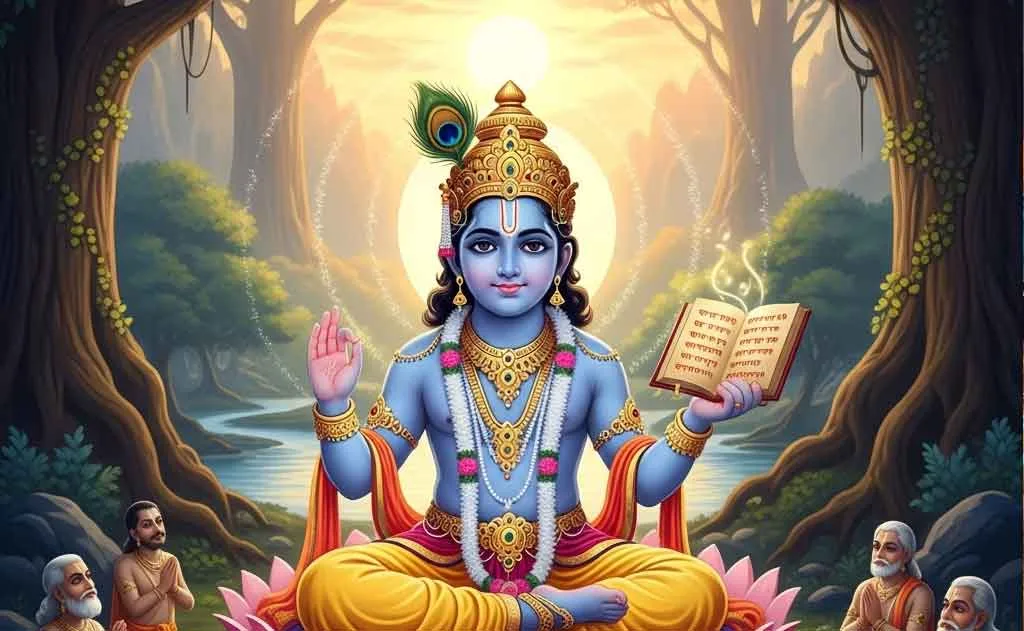
The Bhagavad Gita, perhaps the most beloved Hindu scripture, dedicates an entire strand of its teaching to karma through the concept of Nishkama Karma — selfless action performed without attachment to results. Lord Krishna tells Arjuna in Chapter 2, Verse 47: "You have the right to perform your actions, but you are not entitled to the fruits of those actions." This single verse encapsulates the highest teaching of karma yoga.
The Puranas and Dharmashastra texts elaborate further, giving detailed accounts of how karma influences one's caste, birth circumstances, physical health, and relationships.
The Three Types of Karma in Hinduism
Hindu philosophy classifies karma into three distinct categories, each playing a specific role in the soul's spiritual evolution:
1. Sanchita Karma (संचित कर्म) — Accumulated Karma
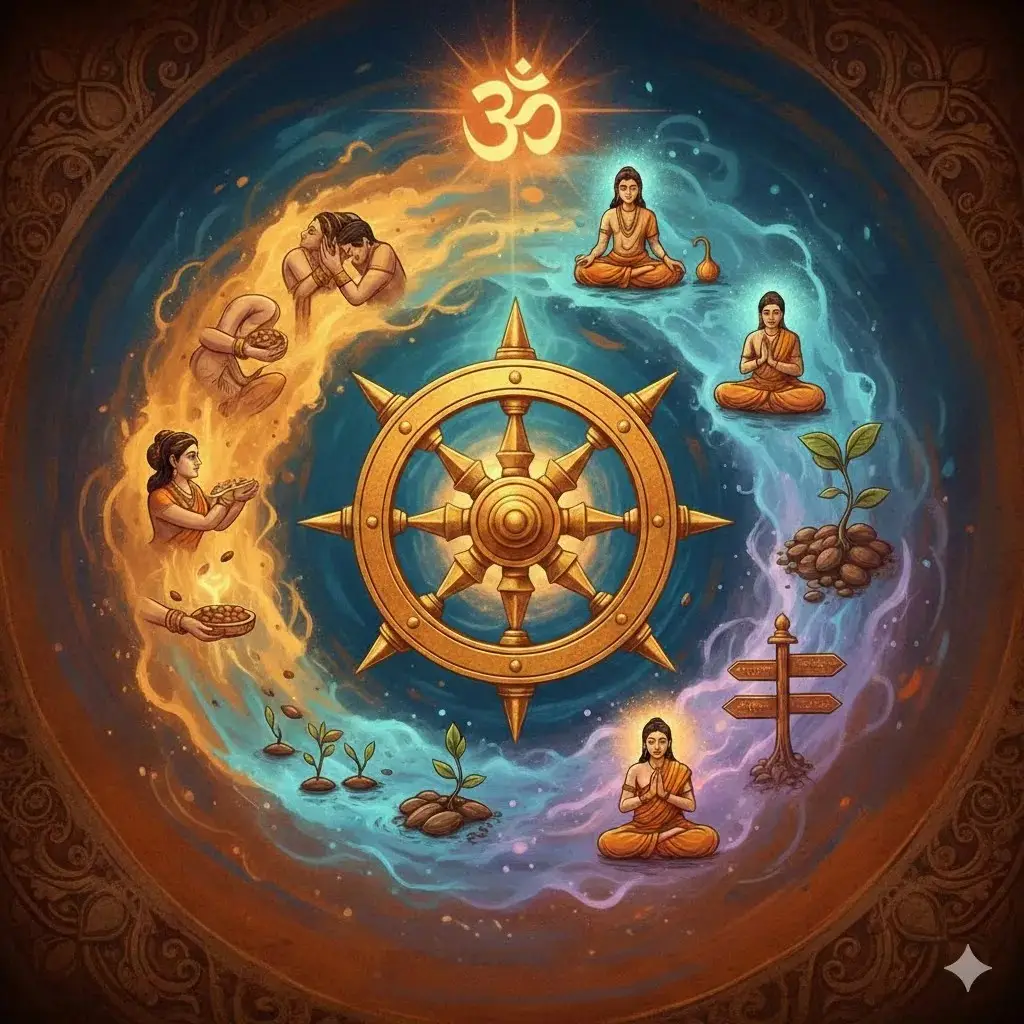
Sanchita karma is the entire reservoir of karmic impressions accumulated over all past lifetimes. It is like a vast cosmic storehouse of seeds — both positive and negative — that have not yet yielded their fruit. Most of this karma remains dormant and does not affect the current life directly, but it forms the backdrop of the soul's overall spiritual journey.
2. Prarabdha Karma (प्रारब्ध कर्म) — Destiny Karma
Prarabdha karma is the specific portion of sanchita karma that has been "activated" and is responsible for shaping your current life. This includes the circumstances of your birth — your family, country, physical body, and initial life conditions. Prarabdha karma is often compared to an arrow already released from a bow — it cannot be recalled and must play out. This is the Hindu explanation for why people are born into vastly different circumstances.
3. Agami Karma (आगामी कर्म) — Future Karma
Agami karma, also called kriyamana karma, is the karma you are creating right now through your present thoughts, words, and actions. This is the most empowering aspect of karmic belief in Hinduism — it means you are not a passive victim of fate. Every conscious choice you make today is planting seeds for future experiences, in this life or the next.
Karma and Reincarnation (Punarjanma)
In Hindu belief, karma and reincarnation (punarjanma) are inseparably linked. The soul (atman) is eternal and does not die with the physical body. Instead, propelled by the weight of unresolved karma, it takes on a new body to continue its evolutionary journey.
The quality of one's next birth — whether as a human, animal, or in higher spiritual realms — is determined by the overall balance and nature of one's karma. A life lived in righteousness (dharma), devotion (bhakti), and selfless service (seva) accumulates positive karma and moves the soul closer to liberation (moksha). Conversely, actions driven by ego, greed, and ignorance deepen the entanglement in the cycle of birth and death (samsara).
This belief is not meant to be fatalistic — rather, it is deeply hopeful. Every soul, no matter how burdened by past karma, has the capacity to transform its destiny through conscious, dharmic action.
Karma and Dharma: Two Sides of the Same Coin
You cannot truly understand karma without understanding dharma. While karma is the law of action and consequence, dharma is the righteous order — the moral and ethical duties that guide right action.
In Hindu belief, living in alignment with one's dharma creates positive karma. Violating dharma — through dishonesty, harm to others, or neglect of one's sacred duties — creates negative karma that must eventually be balanced.
The Mahabharata summarizes this beautifully: "Dharma protects those who protect it." When you uphold righteousness in your actions, your karma naturally inclines toward liberation.
Does Karma Mean Fatalism? Common Misconceptions
One of the most widespread misunderstandings about Hindu karma is that it promotes passive fatalism — the idea that everything is predetermined and effort is pointless. This is a significant misreading of Hindu philosophy.
While prarabdha karma (destiny karma) does set certain conditions of life, Hinduism strongly emphasizes purushartha — the four aims of human life (dharma, artha, kama, and moksha) — and the importance of personal effort (purushakara). The Yoga Vasishtha, a revered philosophical text, states that effort and destiny are equally important, like two wings of a bird.
Karma empowers, not imprisons. You are the author of your future karma, and through wisdom, devotion, and righteous action, you can transcend even deeply ingrained karmic patterns.
How to Create Good Karma: Practical Hindu Teachings
Hindu tradition offers several timeless pathways to accumulate positive karma and purify negative karma:
Karma Yoga — the path of selfless action. Perform all duties with full effort but without attachment to outcomes, dedicating all results to the Divine.
Bhakti (Devotion) — sincere love and worship of God purifies the heart and dissolves karmic residues. Daily prayer, temple visits, and chanting of divine names are powerful karmic cleansers.
Seva (Selfless Service) — serving others, especially the poor and suffering, is considered one of the fastest karmic purifiers. Serving humanity is serving God (Manava seva is Madhava seva).
Ahimsa (Non-violence) — causing no harm in thought, word, or deed to any living being creates deeply positive karmic merit.
Dana (Charity) — giving generously of your time, money, and resources without expectation generates abundant positive karma.
Tapas (Austerity) — self-discipline, fasting, and spiritual practice help burn away accumulated negative karma.
Satsang (Holy Company) — spending time in the company of spiritually elevated persons and wisdom teachings helps realign thoughts and actions with dharma.
Karma in Daily Hindu Life
For hundreds of millions of practicing Hindus, karma is not an abstract philosophical concept — it is a living reality that shapes daily decisions. From the food they eat (sattvic diet to create peaceful karma) to the way they conduct business (honesty and fairness as karmic practice), Hindu believers navigate life with a profound awareness that every action matters.
Morning prayers (sandhya vandanam), offerings (puja), and the recitation of sacred texts are all understood as karmic practices that elevate the soul and contribute to positive samskara.
The cultural Hindu greeting Namaste — "I bow to the divine in you" — reflects the karmic understanding that every soul is equally sacred and deserving of respect.
Karma and Moksha: The Ultimate Goal
The ultimate aim of Hindu spiritual life is not the accumulation of good karma, but the transcendence of karma altogether. This state of liberation is called moksha — freedom from the cycle of samsara.
In the state of moksha, the soul realizes its true identity as Brahman — pure consciousness, beyond action and consequence. As Lord Krishna teaches in the Bhagavad Gita, the liberated soul acts in the world but is untouched by karma, like a lotus leaf that floats on water without being wetted.
Karma, then, is not the destination — it is the path. And the ultimate destination is the recognition that you are already, at your deepest essence, free.
Conclusion: Karma as a Path to Spiritual Freedom
Hindu beliefs on karma offer one of the most sophisticated, compassionate, and empowering explanations of human life ever articulated. Karma teaches accountability without victimhood, justice without cruelty, and purpose without rigidity.
Whether you are new to Hindu philosophy or deepening a lifetime of practice, understanding karma gives you a powerful lens through which to view your experiences — not as random events, but as meaningful opportunities for growth, healing, and awakening.
As you walk your path, remember: every act of kindness, every moment of honesty, every prayer offered in sincerity — all of this is karma. And it all matters.
Explore more articles on Hindu philosophy, spirituality, and sacred traditions at HinduTone.com.
Frequently Asked Questions
What does karma mean in Hinduism?
Karma comes from the Sanskrit root kri, meaning "to do" or "to act". In Hindu belief it is the universal law of cause and effect, where every thought, word and deed creates an impression (samskara) shaping present and future experiences.
What are the three types of karma?
Sanchita karma is the accumulated reservoir from all past lifetimes. Prarabdha karma is the portion activated to shape the current life, and agami (kriyamana) karma is what you create now through present actions.
Does karma mean everything is fated?
No. Prarabdha karma sets certain conditions of life, but Hinduism stresses purushartha and personal effort. The Yoga Vasishtha compares effort and destiny to two wings of a bird.
How are karma and reincarnation connected?
The eternal soul (atman) takes a new body, propelled by unresolved karma, to continue its journey. Righteous, devotional and selfless living moves the soul toward moksha, while ego and greed deepen the cycle of samsara.
How can a person create good karma?
Hindu teachings point to karma yoga, bhakti, seva, ahimsa, dana, tapas and satsang. Acting selflessly and dedicating the results to the Divine is the central idea of karma yoga.
What does the Bhagavad Gita say about karma?
In Chapter 2, Verse 47, Krishna tells Arjuna that he has the right to perform actions but not to their fruits. This teaching of nishkama karma, selfless action without attachment to results, is the heart of karma yoga.
You might also like
What Hindus and the World Must Learn from Adi Shankaracharya — Timeless Wisdom for the Modern Age
What Is Moksha? The Four Paths to Liberation in Hinduism — A Complete Devotional Guide
Sanatan Dharma for Young NRIs: A Complete, Honest Guide for Hindus Growing Up in USA, UK, Canada, Australia & UAE