Hindu Beliefs on Fasting: Spiritual Significance, Types, Rules & Benefits
From ancient Vedic texts to modern devotional practice, fasting is one of Hinduism's most sacred and widely observed traditions.

From ancient Vedic texts to modern devotional practice, fasting is one of Hinduism's most sacred and widely observed traditions.
From ancient Vedic texts to modern devotional practice, fasting is one of Hinduism's most sacred and widely observed traditions. Discover why Hindus fast, how they fast, and what profound benefits — spiritual and physical — this practice brings.
Introduction: What Does Fasting Mean in Hinduism?
Fasting in Hinduism is not merely about abstaining from food. It is a sacred act of devotion, self-discipline, and spiritual purification known as Upavasa (उपवास) — a Sanskrit word meaning "to stay near (God)."
The word itself reveals everything: Upa means "near" and Vasa means "to stay or dwell." When a Hindu fasts, the intention is not just physical restraint but a conscious drawing closer to the Divine — a withdrawal from material pleasures to nurture the inner spiritual flame.
Across India and among Hindu communities worldwide, fasting is observed with deep faith on specific tithis (lunar days), days of the week, festivals, and auspicious occasions. It is one of the most universally practiced forms of Hindu devotion, cutting across regional, caste, and generational lines.
This comprehensive guide explores everything you need to know about Hindu beliefs on fasting — its scriptural basis, spiritual purpose, types, rules, benefits, and major fasting traditions.
Scriptural Basis of Fasting in Hinduism
Hindu fasting is not a cultural invention — it is deeply rooted in sacred scripture.
The Vedas and Upanishads
The earliest references to fasting appear in the Vedas, where fasting (Upavasa) is prescribed as a form of tapas (austerity) — a spiritual practice that generates inner heat and purifies the practitioner. The Chandogya Upanishad states that when one fasts, the mind becomes clear and one can hear the voice of the Self more distinctly.
The Bhagavad Gita
Lord Krishna addresses the importance of disciplined eating in the Bhagavad Gita:
"He who is temperate in his habits of eating, sleeping, working and recreation can mitigate all material pains by practicing the yoga system." — Bhagavad Gita 6.17
The Gita emphasizes Mitahara — moderate and mindful eating — as essential to spiritual progress.
The Manusmriti and Dharmashastra
The Manusmriti and various Dharmashastras prescribe fasting as a means of prayaschitta (atonement) and purification, as well as a regular observance on sacred lunar days.
The Puranas
The Vishnu Purana, Shiva Purana, Devi Bhagavata Purana, and others contain detailed instructions on fasting — which days to fast, which deity to honor, what foods are permitted, and what prayers to recite. The Puranas are the primary scriptural source for most popular Hindu fasting traditions practiced today.
The Spiritual Purpose of Fasting in Hinduism
Hindu fasting serves multiple profound spiritual purposes:
1. Drawing Closer to God (Upavasa)
As the etymology of Upavasa suggests, the primary purpose of fasting is proximity to the Divine. By voluntarily withdrawing from physical pleasures, the devotee signals their devotion and willingness to prioritize spiritual over material life.
2. Purification of Body and Mind (Shuddhi)
Hindu philosophy teaches that the body and mind are deeply interconnected. Heavy foods — especially meat, onion, garlic, and processed foods — are believed to generate Tamasic (dull, heavy) energy that clouds the mind and weakens spiritual awareness. Fasting purifies the body, reduces Tamas, and cultivates Sattva (clarity, lightness, and spiritual sensitivity).
3. Practicing Self-Discipline (Tapas)
Fasting is a form of Tapas — voluntary austerity that strengthens willpower and self-control. The Yoga Sutras of Patanjali list Tapas as one of the Niyamas (personal observances) essential for spiritual development. When one can master hunger — one of the body's most primal drives — they develop the inner strength to master other desires and distractions.
4. Expressing Devotion (Bhakti)
For millions of Hindus, fasting is an act of love and surrender to their chosen deity (Ishta Devata). It is a way of saying: "I offer even my physical sustenance to you." This selfless offering deepens the devotee's emotional and spiritual bond with God.
5. Earning Spiritual Merit (Punya)
Hindu texts promise that sincere fasting on auspicious days earns Punya — spiritual merit that purifies karma, removes obstacles, and advances the soul on its journey toward liberation (Moksha).
6. Atoning for Sins (Prayaschitta)
Fasting is also prescribed as Prayaschitta — a means of atoning for past mistakes, transgressions, or ritual impurities. It is an act of humility and sincere repentance before God.
Types of Fasting in Hinduism
Hindu fasting is remarkably flexible, recognizing that different individuals have different physical capacities and devotional contexts. There are several types:
1. Nirjala Vrat (Complete Fast)
The strictest form of fasting — no food and no water are consumed throughout the day. This is observed on the most sacred occasions, most famously on Nirjala Ekadashi — considered the most powerful of all Ekadashi fasts. Devotees believe that one Nirjala Ekadashi fast equals the merit of all 24 Ekadashi fasts of the year.
2. Phalahar Vrat (Fruit Fast)
The most commonly observed form — devotees abstain from grains, pulses, and cooked meals but consume fruits, milk, nuts, and certain root vegetables (like potatoes and sweet potatoes). Permitted foods are called Vrat ka khana (fasting foods).
3. Ekabhukta (One Meal Fast)
Devotees consume only one simple meal during the day — typically at noon or in the evening — foregoing all other meals and snacks. This is a moderate form of fasting that balances spiritual discipline with physical sustenance.
4. Nakta Vrat (Night Meal Fast)
Food is consumed only after sunset — the single meal is taken at night after prayer. This form is particularly associated with certain lunar day observances.
5. Upavasa with Puja (Devotional Fast)
Many Hindus combine fasting with elaborate puja (worship), mantra chanting, scripture reading, and temple visits. The physical fast is accompanied by an equally important spiritual fast — withdrawal from negative thoughts, idle talk, entertainment, and worldly distractions.
Major Hindu Fasting Days and Traditions
Ekadashi (11th Lunar Day) — The King of Fasts
Ekadashi occurs twice every lunar month — on the 11th day of the waxing and waning moon — totaling 24 Ekadashis per year, each with its own name and significance. Fasting on Ekadashi is one of the most universally observed Hindu fasting traditions.
Why Ekadashi? Hindu scripture teaches that on Ekadashi, the moon's gravitational influence affects the water content in human bodies and the flow of cosmic energy. Fasting on this day is believed to cleanse the digestive system, purify the mind, and bring one into alignment with cosmic rhythms.
Ekadashi is particularly sacred to devotees of Lord Vishnu, and fasting on this day is said to please Vishnu immensely, granting both worldly blessings and spiritual liberation.
Monday Fast (Somvar Vrat) — For Lord Shiva
Mondays are sacred to Lord Shiva, and the Somvar Vrat (Monday fast) is one of the most popular weekly fasts, especially among women praying for a devoted husband or marital harmony. Devotees visit Shiva temples, offer Bilva leaves, and abstain from food until evening.
The Somvar Vrat Katha (story of the Monday fast) is recited during the fast to invoke Shiva's blessings for health, prosperity, and spiritual liberation.
Tuesday Fast (Mangalvar Vrat) — For Lord Hanuman & Goddess Durga
Tuesdays are associated with Lord Hanuman and Goddess Durga (Mangala). Devotees fast on this day for protection from enemies, courage, and removal of obstacles. Red-colored offerings, Hanuman Chalisa recitation, and visits to Hanuman temples are common observances.
Thursday Fast (Brihaspativar Vrat) — For Lord Vishnu & Guru
Thursday fasting is associated with Lord Vishnu and Brihaspati (Jupiter) — the planet of wisdom, prosperity, and good fortune. Devotees wear yellow, offer yellow flowers and turmeric to Vishnu, and pray for wisdom, wealth, and family well-being.
Saturday Fast (Shanivar Vrat) — For Lord Shani
Saturdays are associated with Lord Shani (Saturn), the deity of karma and justice. Fasting on Saturday is believed to mitigate the effects of a malefic Saturn in one's birth chart and bring relief from hardship, delay, and suffering.
Navratri Fasting — Nine Nights of the Goddess
Navratri ("Nine Nights") is observed twice a year — in spring (Chaitra Navratri) and autumn (Sharad Navratri) — and is one of the most widely observed fasting periods in Hinduism. For nine consecutive days, devotees fast in honor of Goddess Durga in her nine divine manifestations (Navadurga).
Navratri fasting typically permits fruits, milk, rock salt (sendha namak), and specific foods like sabudana (tapioca) and kuttu (buckwheat). The fast culminates on Navami (the ninth day) with the Kanya Puja — worship of young girls as manifestations of the Goddess.
Mahashivaratri Fast — The Great Night of Shiva
Mahashivaratri — the Great Night of Shiva — falls on the 14th night of the dark fortnight in the month of Phalguna (February–March). Devotees observe a full-day and all-night fast, staying awake through the night in prayer, chanting "Om Namah Shivaya", and performing Abhisheka (ritual bathing of the Shiva Lingam) four times through the night.
This is considered the most powerful Shiva fast of the year — believed to bestow liberation from the cycle of rebirth for sincere devotees.
Pradosh Vrat — Twilight Fast for Shiva
Pradosh Vrat is observed on the 13th day (Trayodashi) of both the waxing and waning moon. Fasting during the twilight period (Pradosh Kaal) on this day is said to be exceptionally powerful for receiving Lord Shiva's blessings, removing sins, and attaining Moksha.
Purnima Fast — Full Moon Fasting
The full moon day (Purnima) is considered highly auspicious in Hinduism. Fasting on Purnima is associated with Lord Vishnu and Goddess Lakshmi and is believed to bring prosperity, peace, and fulfillment of desires. The Satyanarayan Puja — a beloved household ritual — is commonly performed on Purnima days.
Amavasya Fast — New Moon Fasting
Amavasya (new moon day) is associated with the ancestors (Pitrs). Fasting and performing Tarpan (water offerings) to ancestors on Amavasya is a sacred duty in Hinduism, believed to bring peace to departed souls and blessings to living descendants.
Shravan Month Fasting — The Holiest Month
The lunar month of Shravan (July–August) is considered the most sacred month of the Hindu calendar. Entire Mondays of Shravan (Shravan Somvar) are fasted in honor of Lord Shiva. In some traditions, devotees fast every single day of the month. This is a period of heightened spiritual energy — ideal for fasting, prayer, and pilgrimage.
Foods Permitted and Avoided During Hindu Fasting
Permitted Fasting Foods (Vrat ka Khana)
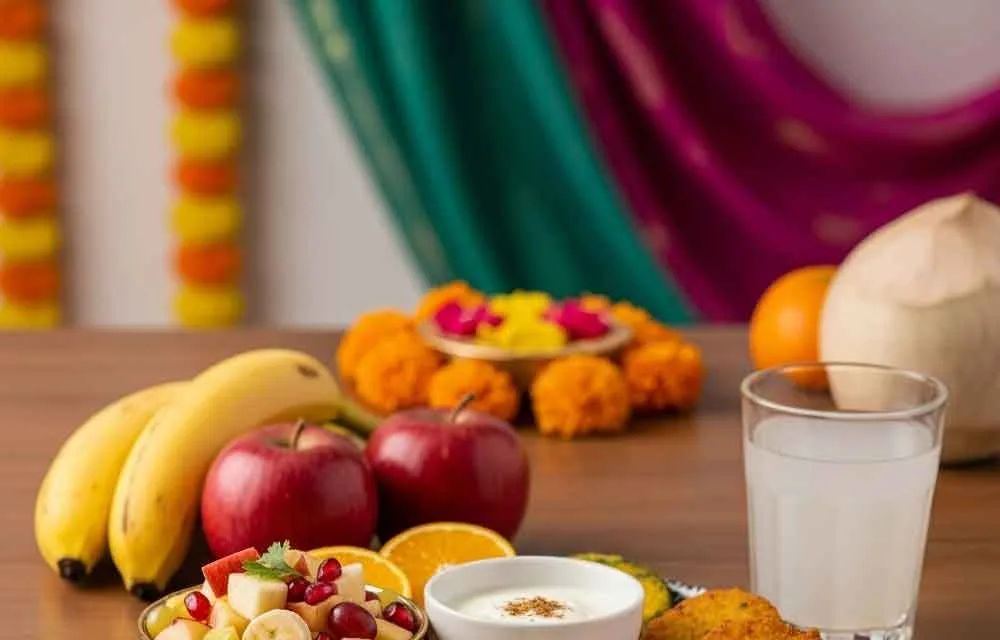
- Fruits: Bananas, apples, mangoes, pomegranates, coconut, papaya
- Dairy: Milk, curd (yogurt), ghee, paneer (cottage cheese)
- Roots and tubers: Potatoes, sweet potatoes, arbi (taro root), singhara (water chestnut)
- Grains (for mild fasts): Sabudana (tapioca pearls), kuttu (buckwheat flour), singhara flour, rajgira (amaranth)
- Nuts and dried fruits: Almonds, cashews, raisins, dates, peanuts
- Sweeteners: Rock sugar (mishri), honey
- Spices: Rock salt (sendha namak), cumin, black pepper, cardamom, ginger
Foods Avoided During Fasting
- All regular grains: wheat, rice, maida (refined flour), corn, oats
- All pulses and legumes: dal, beans, lentils
- Regular table salt (replaced with rock salt)
- Meat, fish, and eggs
- Onion and garlic (considered Tamasic)
- Alcohol and intoxicants
- Processed and packaged foods
Fasting Rules and Observance Etiquette
For a fast to be spiritually effective, Hindu tradition prescribes certain rules and conduct (Vrat Niyamas):
- Sankalpa (Sacred Vow): Begin the fast with a formal intention — declaring to God the purpose and duration of the fast
- Brahmacharya: Observe celibacy during the fasting period
- Truthfulness: Speak only truth; avoid gossip, harsh words, and argument
- Purity: Bathe early in the morning, wear clean clothes, preferably in the color associated with the deity
- Prayer and Puja: Dedicate the day to worship, scripture reading, mantra chanting, or temple visits
- Avoid negative media: Refrain from entertainment, social media, and activities that distract from spiritual focus
- Break the fast correctly: End the fast with a simple prayer, offering food first to God (Naivedya) before eating
- Charity (Dana): Offer food, clothing, or money to the needy as part of the fasting observance
Health Benefits of Hindu Fasting
Modern science increasingly validates what Hindu tradition has always known: periodic fasting is profoundly beneficial for the body.
Digestive Reset
Fasting gives the digestive system a much-needed rest, allowing it to repair and regenerate. It reduces bloating, improves gut flora, and enhances nutrient absorption.
Intermittent Fasting and Metabolic Health
The Hindu practice of eating only one meal or eating only after sunset closely mirrors modern intermittent fasting protocols, which research shows can improve insulin sensitivity, reduce inflammation, and support healthy weight management.
Detoxification
Fasting stimulates autophagy — the body's cellular self-cleaning process — whereby damaged cells are broken down and removed. This reduces the risk of chronic diseases including cancer, Alzheimer's, and cardiovascular disease.
Mental Clarity
Many practitioners report significantly enhanced mental clarity, concentration, and emotional calm during fasting. With less energy directed toward digestion, the brain functions with greater focus — a fact that aligns with the Hindu belief that fasting sharpens spiritual perception.
Reduced Inflammation
Diets permitted during Hindu fasts — fruits, dairy, nuts, and light carbohydrates — are naturally anti-inflammatory, contributing to reduced joint pain, better skin health, and improved immunity.
Common Questions About Hindu Fasting
Is fasting compulsory in Hinduism?
No. Fasting in Hinduism is a voluntary act of devotion, not a religious obligation. It is guided by personal faith, physical capacity, and devotional intention. Children, the elderly, pregnant women, and the sick are typically exempt.
Can you drink water while fasting?
It depends on the type of fast. Most Hindu fasts permit water. The Nirjala fast (observed especially on Nirjala Ekadashi) is the exception — no food or water is consumed. For most regular fasts, water, coconut water, and milk are permitted.
Can diabetics or those with health conditions observe Hindu fasts?
Hinduism is compassionate and practical. Anyone with a medical condition is advised to consult their doctor and adjust their fast accordingly. Permitted fasting foods like fruits, nuts, and dairy can often be consumed safely. God, Hindu tradition teaches, looks upon the sincerity of devotion — not the strictness of physical observance.
What is the difference between Vrat and Upavasa?
Vrat refers broadly to a religious vow or observance — which may include fasting but also encompasses prayer, ritual, and behavioral commitments. Upavasa specifically refers to the fasting component. All Upavasa is a form of Vrat, but not all Vrats require complete fasting.
Does fasting have to be on specific days?
Most Hindu fasting traditions are tied to specific tithis (lunar days), weekdays, or festivals. However, one can also fast on personally significant days or as a spontaneous act of devotion. The key is intention and sincerity.
Conclusion: Fasting as a Bridge Between the Human and the Divine
Hindu fasting is one of the world's oldest and most holistic spiritual practices. It is simultaneously a physical discipline, a devotional offering, a mental purification, and a cosmic alignment. When undertaken with sincere faith and proper observance, it transforms not just the body but the entire being.
In a world of constant consumption and distraction, the Hindu practice of fasting offers something radical and healing: the power of sacred restraint. It reminds us that the deepest nourishment is not found in what we consume — but in the Divine presence we draw closer to when we choose, even briefly, to let go.
Whether you are beginning your first Ekadashi fast or deepening a lifelong practice of Navratri Vrat, may your fasting bring you clarity, devotion, and the grace of the Divine.
Om Shanti. Shanti. Shanti.
Summary: Key Hindu Fasts at a Glance
Published on HinduTone — Your trusted guide to Hindu culture, spirituality, and traditions. Explore more articles at www.hindutone.com
Tags: #HinduFasting #Upavasa #Vrat #Ekadashi #Navratri #Mahashivaratri #HinduTraditions #SanatanaDharma #HinduToneko
Frequently Asked Questions
What does Upavasa mean in Hinduism?
Upavasa means "to stay near (God)", from Upa meaning near and Vasa meaning to dwell. Fasting is meant as drawing closer to the Divine, not just abstaining from food.
What are the main types of Hindu fasting?
The main types are Nirjala (no food or water), Phalahar (fruits, milk and nuts), Ekabhukta (one meal a day), Nakta (a single meal after sunset) and a devotional fast combined with puja and mantra chanting.
Why is Nirjala Ekadashi considered so powerful?
Nirjala Ekadashi is a complete fast with no food or water. Devotees believe one such fast equals the merit of all 24 Ekadashi fasts of the year.
Which deities are linked to the weekday fasts?
Monday is for Lord Shiva, Tuesday for Hanuman and Goddess Durga, Thursday for Lord Vishnu and Brihaspati, and Saturday for Lord Shani. Each has its own offerings and observances.
What foods are allowed during Navratri fasting?
Navratri fasting typically permits fruits, milk, rock salt (sendha namak), sabudana (tapioca) and kuttu (buckwheat). It is observed for nine days in honor of Goddess Durga.
How often does Ekadashi occur and why do Hindus fast on it?
Ekadashi falls on the 11th lunar day of both the waxing and waning moon, giving 24 Ekadashis a year. It is especially sacred to Lord Vishnu, and fasting is said to please him and purify the mind.