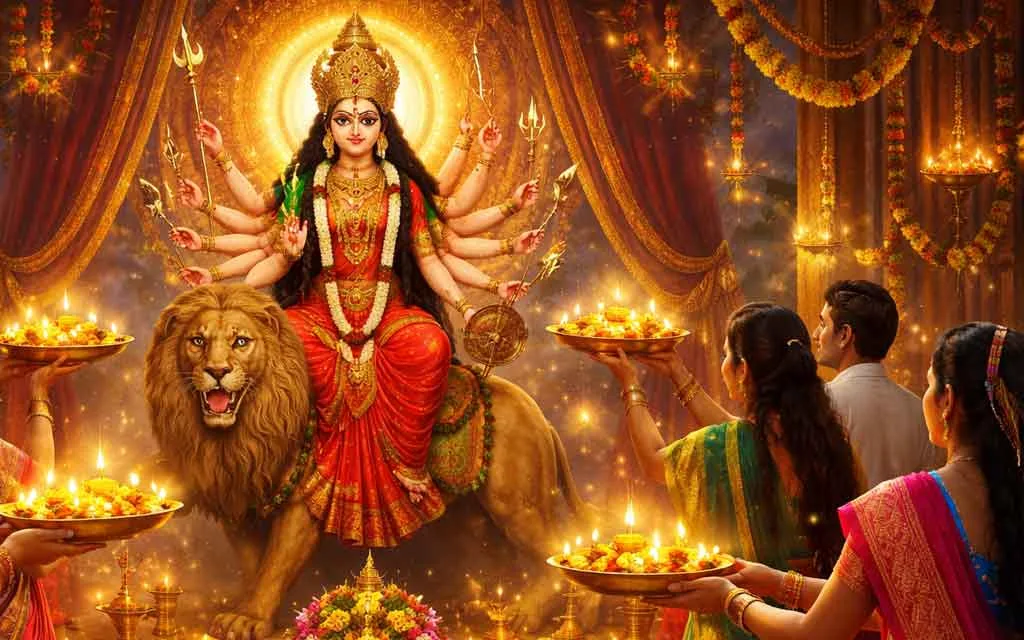
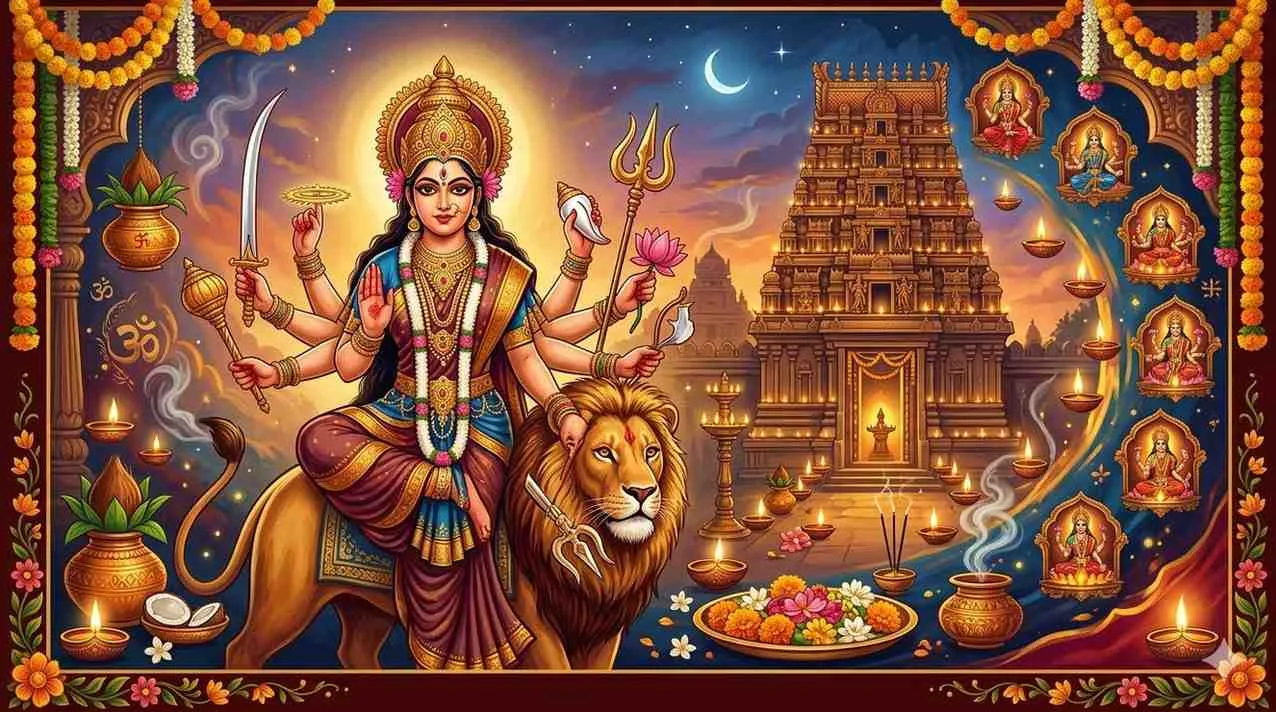
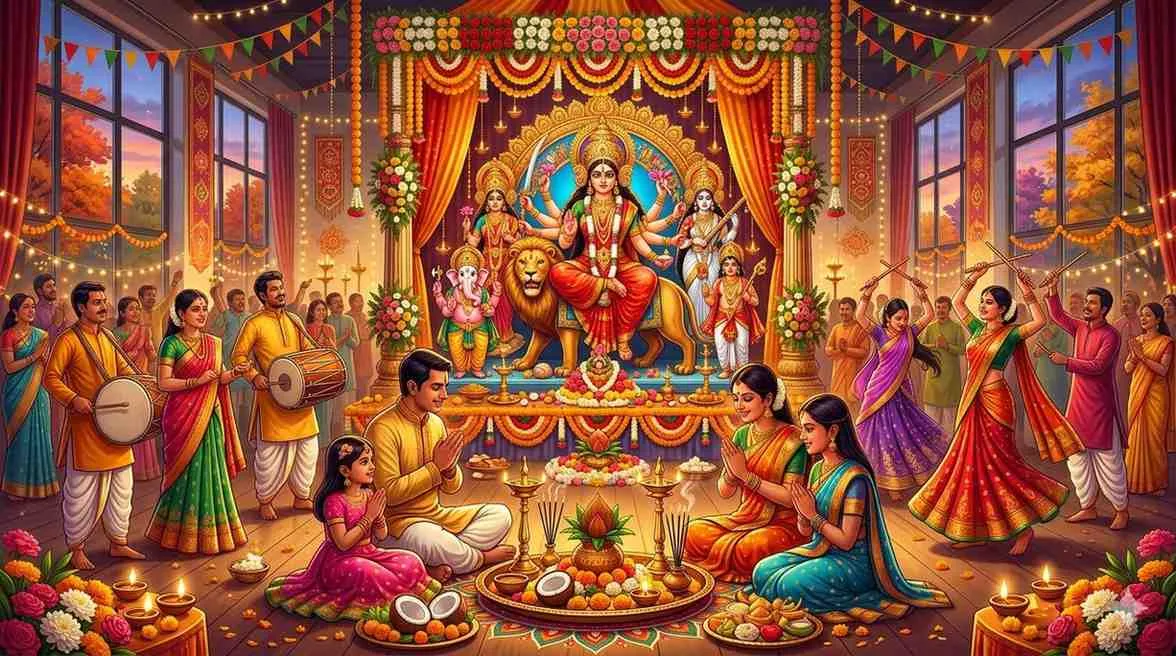
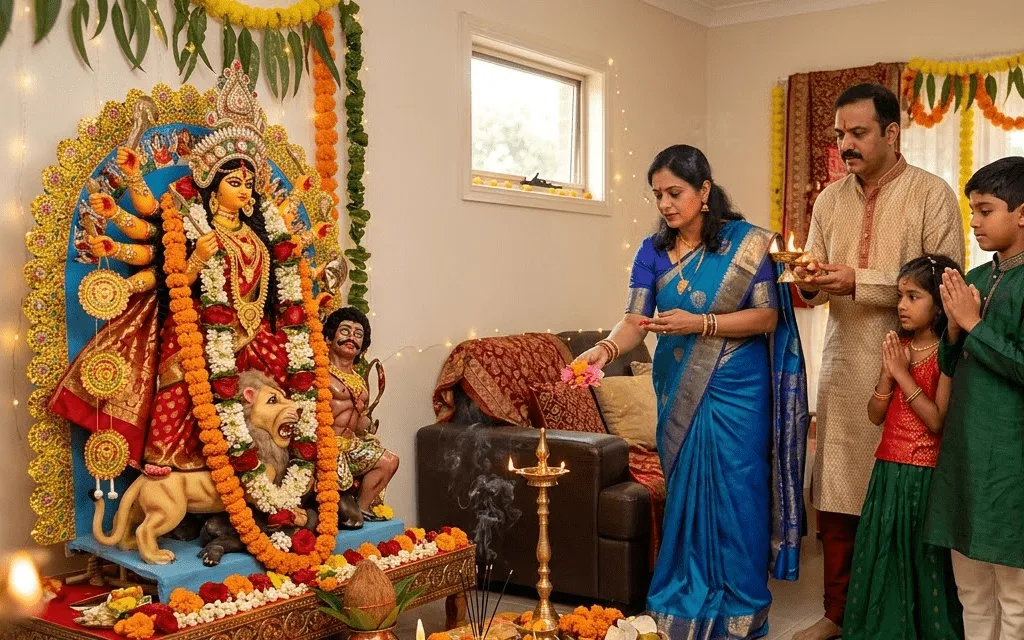
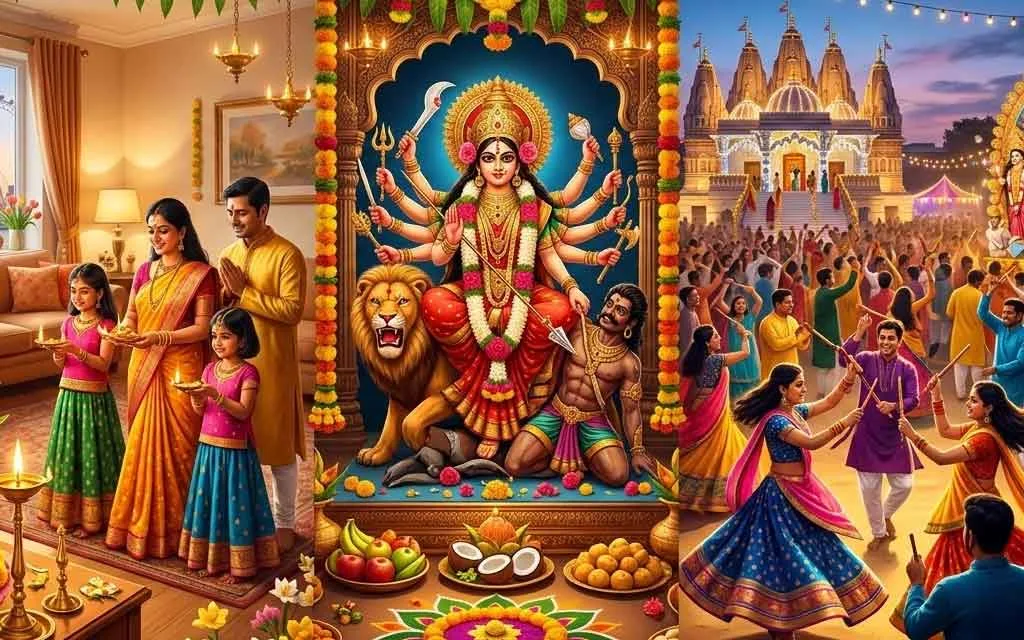
Durga — also Devi, Shakti, Bhavani, Chandi, Adi Parashakti — is the fierce protector form of the Supreme Goddess. Created from the combined tejas (radiance) of all the Devas to defeat the buffalo-demon Mahishasura (whom no male god could conquer), she rides a lion or tiger and wields the weapons of all the gods — Vishnu's chakra, Shiva's trishul, Indra's vajra. In Shaktism, one of Hinduism's four major sampradayas, Durga is the Supreme Reality itself — Brahman expressed as the active feminine principle that creates, sustains AND dissolves the cosmos. HinduTone's Durga hub covers her full story and practice: the Devi Mahatmya (also called Durga Saptashati or Chandi Path — 700 verses across 13 chapters narrating the three episodes of Madhu-Kaitabha, Mahishasura and Shumbha-Nishumbha); the nine Navadurga forms (Shailaputri, Brahmacharini, Chandraghanta, Kushmanda, Skandamata, Katyayani, Kalaratri, Mahagauri, Siddhidatri) worshipped on the nine nights of Navaratri; the 51 Shakti Peethas — pilgrimage sites marking the falling places of Sati's body; the connection to Kali, Bhuvaneshwari, Tripura Sundari and the Dasamahavidyas. Mantras include Om Aim Hrim Klim Chamundayai Vichche, the Durga Suktam, and the Argala Stotra. We also cover her festival calendar: Sharad Navaratri (typically October — 9 nights of Devi worship), Chaitra Navaratri (March/April), Durga Puja in Bengal/Odisha/Assam (the public pandal celebration culminating in Vijayadashami immersion), and the monthly Ashtami vrata. Famous temple kshetras: Vaishno Devi (J&K), Kanyakumari, Kamakhya (Assam), Kalighat (Kolkata), Bhadrakali (Kerala) and the Naina Devi/Chintpurni Shakti Peethas of Himachal.
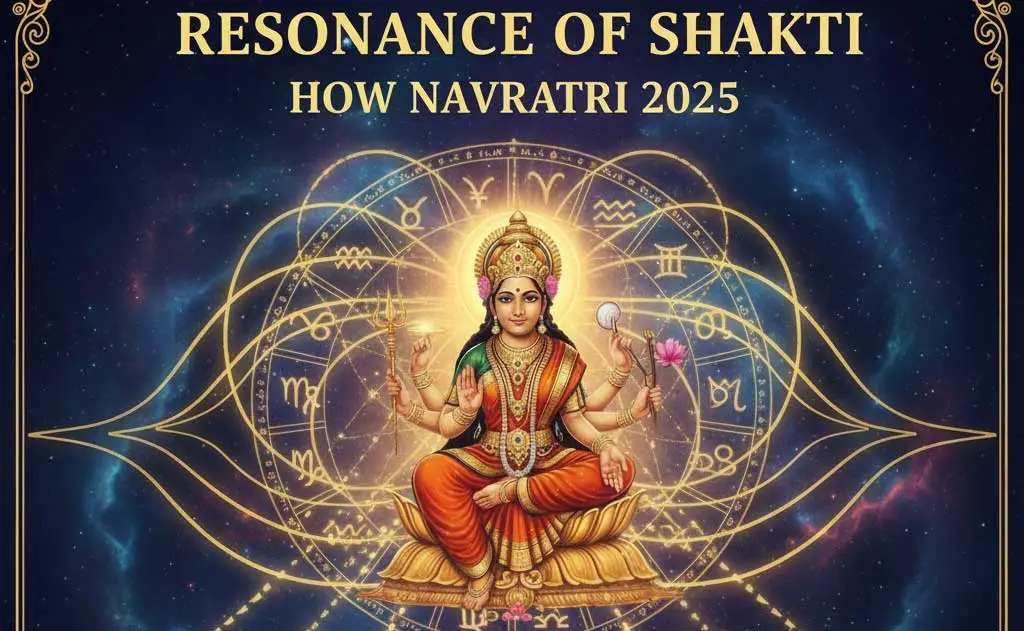
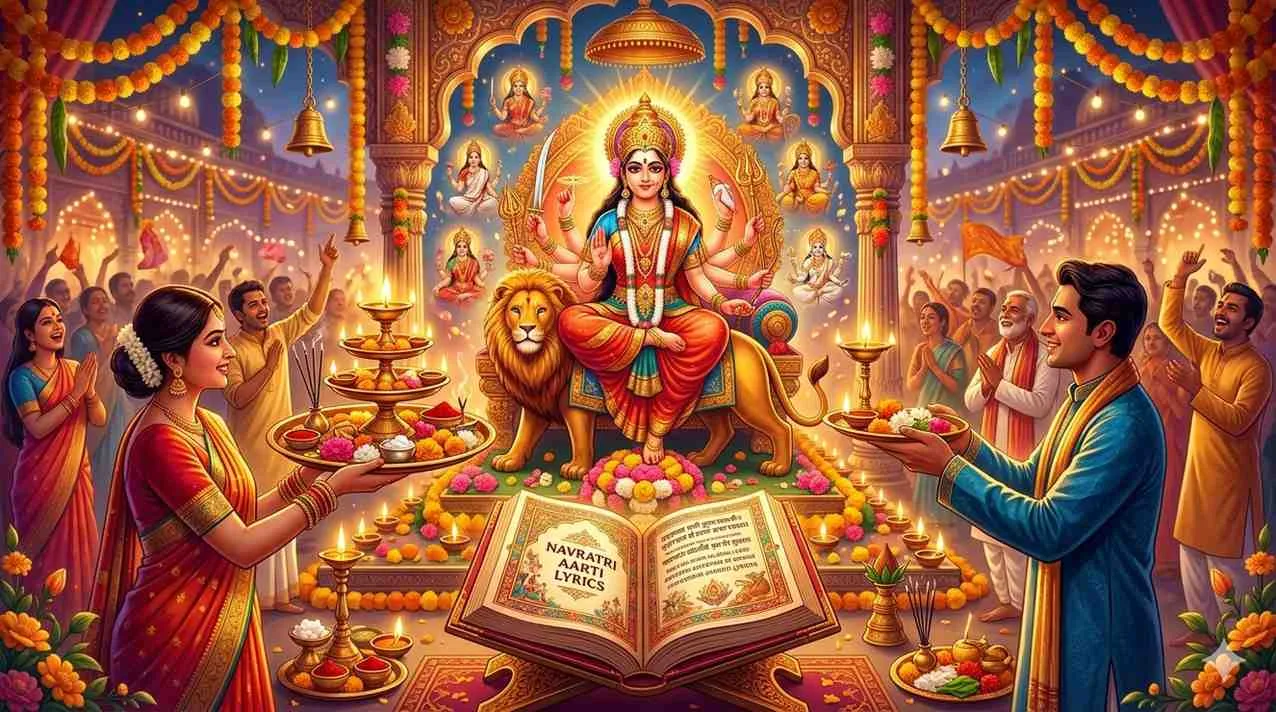

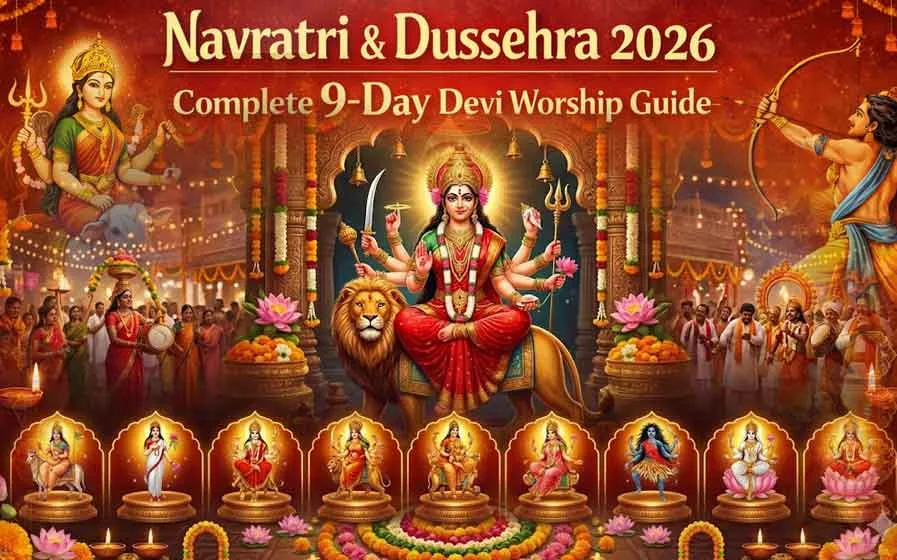
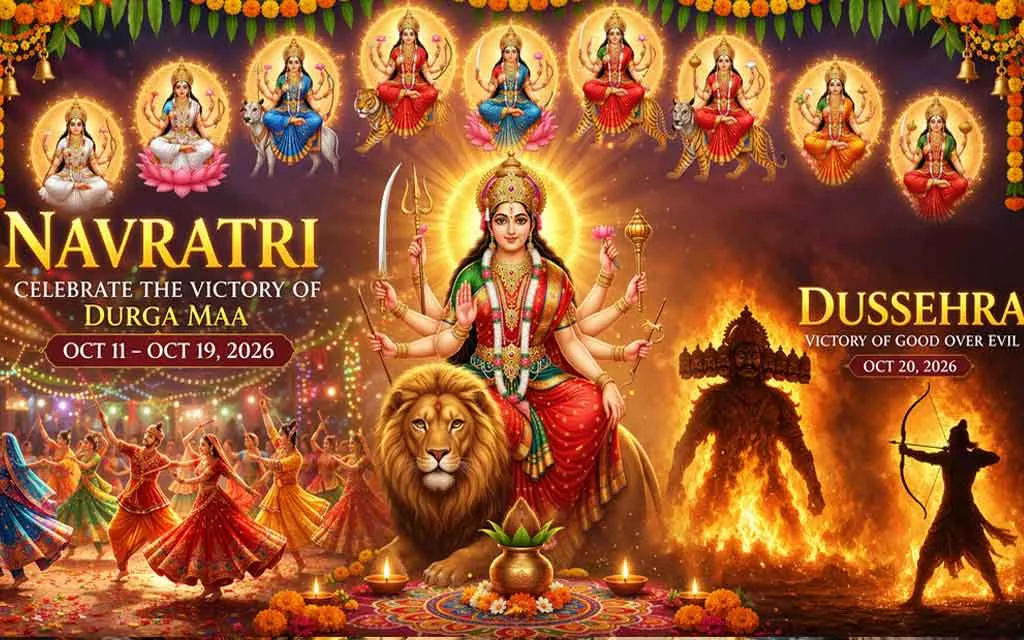
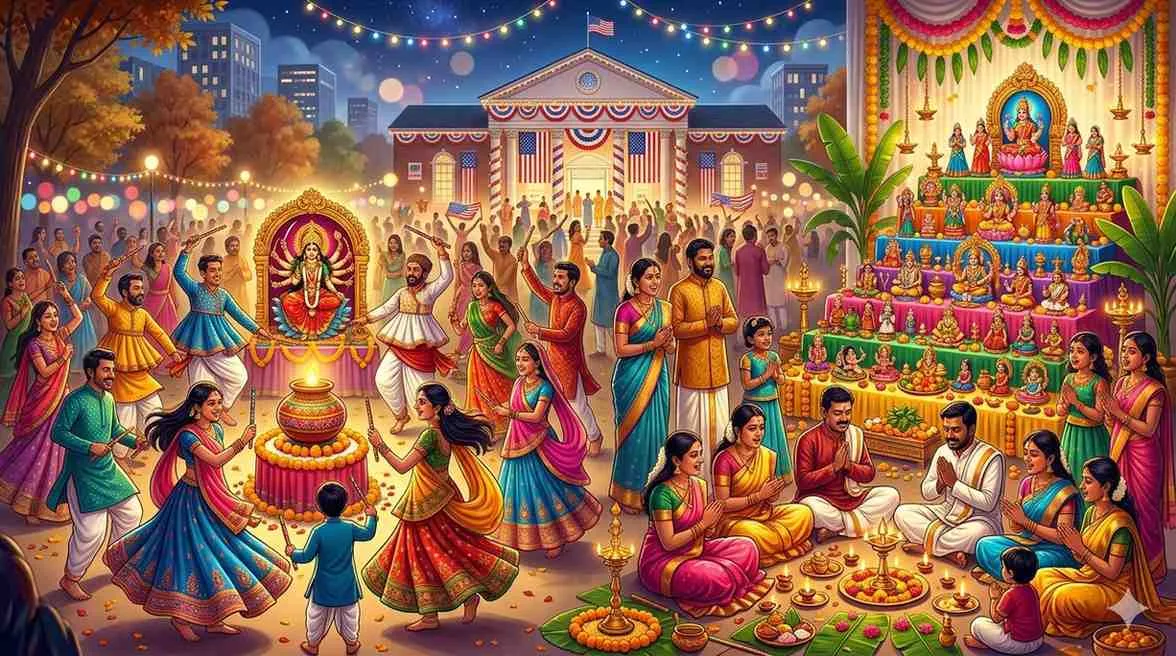
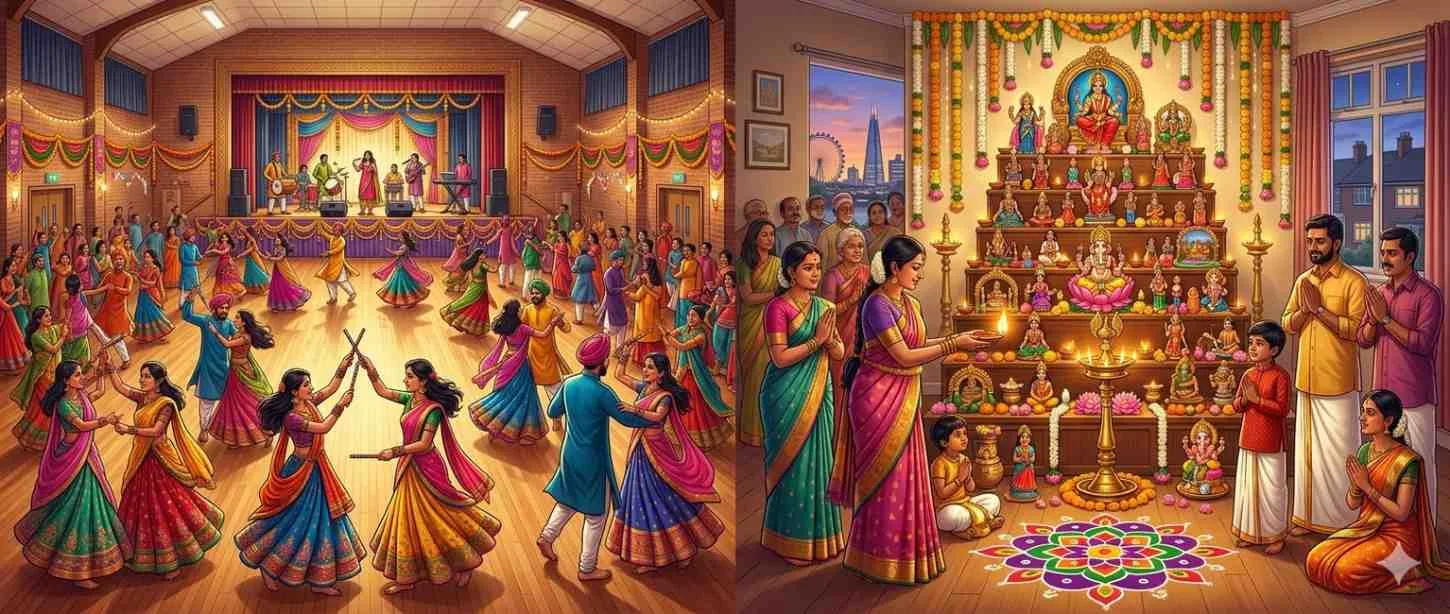
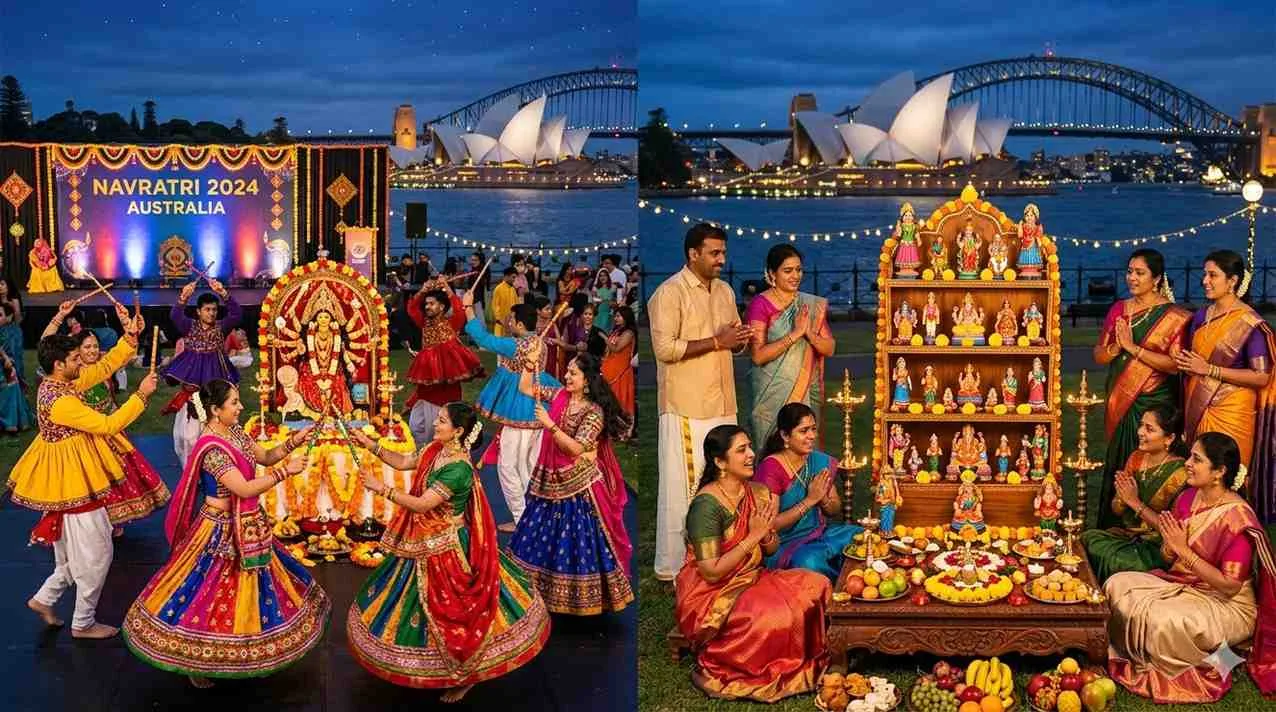
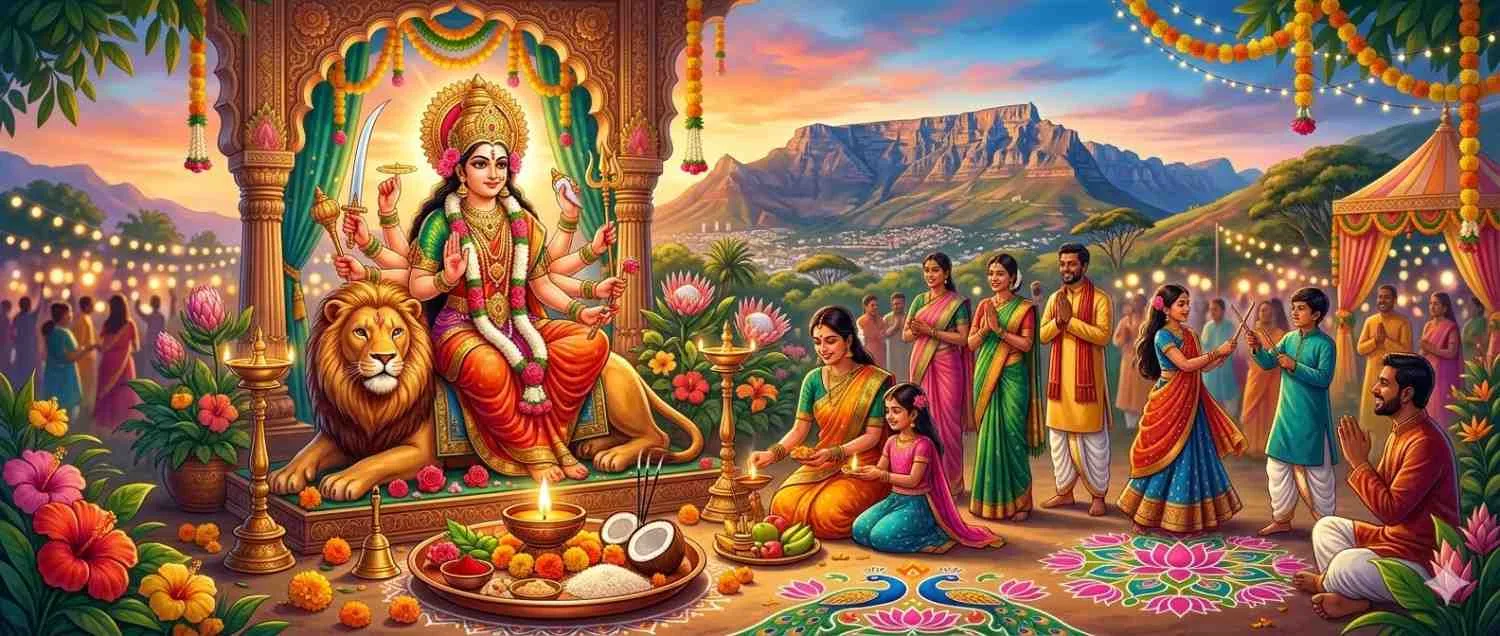
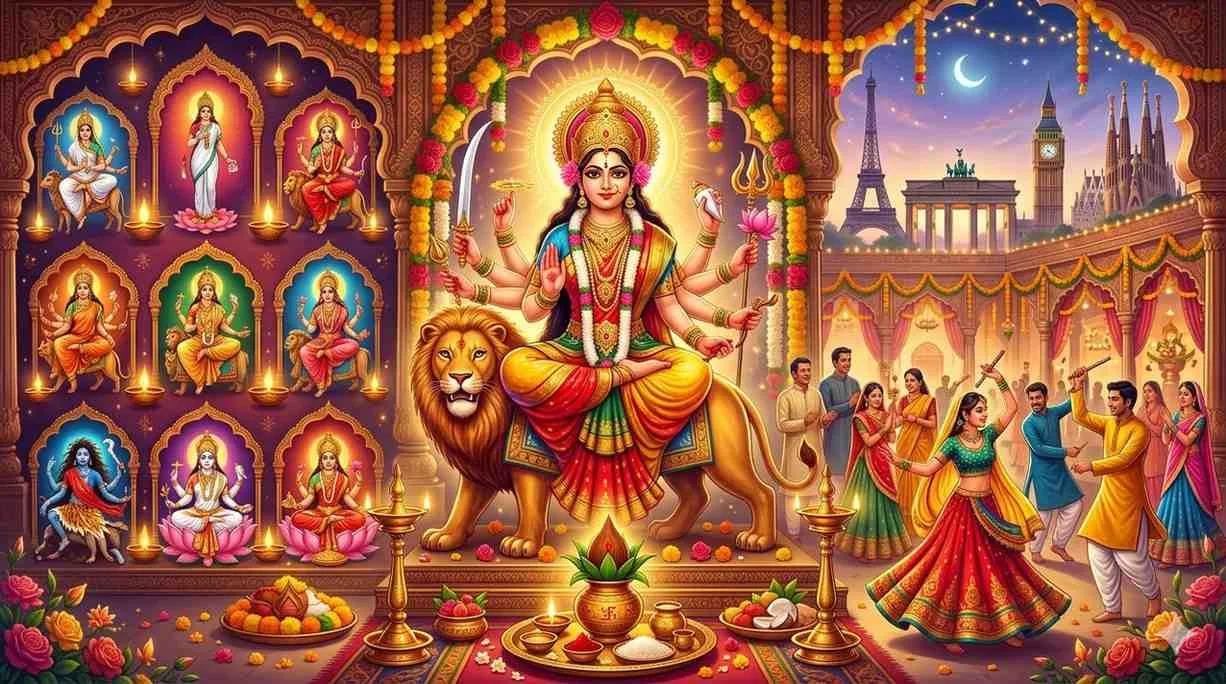
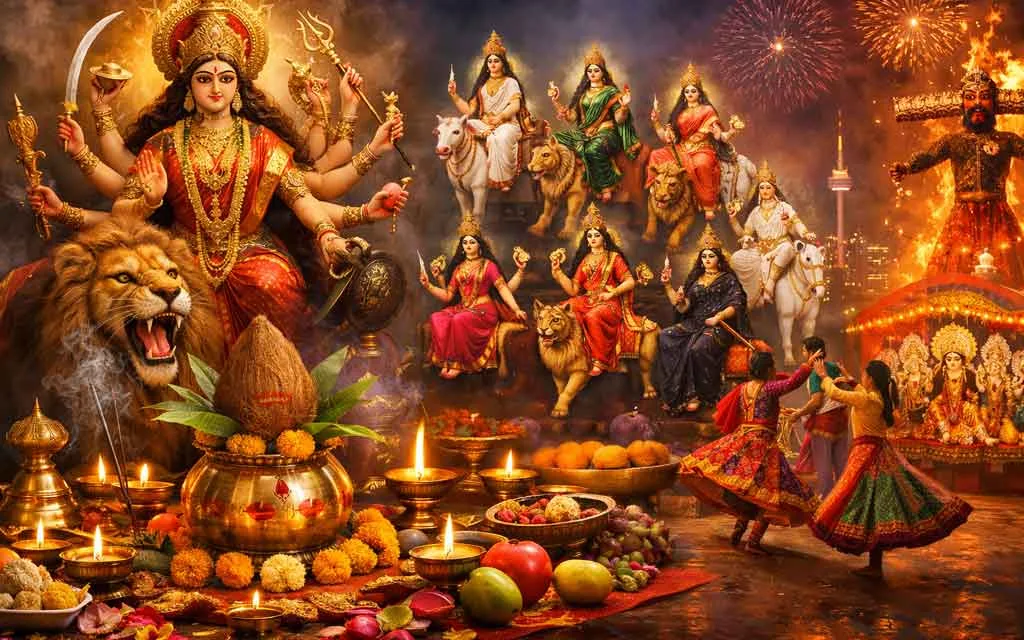

Day 1: Shailaputri (mountain daughter). Day 2: Brahmacharini (celibate yogini). Day 3: Chandraghanta (with the bell-moon). Day 4: Kushmanda (creator of the cosmic egg). Day 5: Skandamata (Kartikeya's mother). Day 6: Katyayani (warrior form). Day 7: Kalaratri (the dark night). Day 8: Mahagauri (the white-radiant). Day 9: Siddhidatri (giver of siddhis).
The Durga Saptashati (also called Devi Mahatmya or Chandi Path) is the 700-verse sacred text from the Markandeya Purana that narrates Durga's three major battles — against Madhu-Kaitabha (for Vishnu), Mahishasura (for the Devas) and Shumbha-Nishumbha (for the world). It is the foundational scripture of Shaktism, chanted in full during Navaratri and at Devi temples.
Sharad Navaratri 2026 runs from Saturday 10 October (Ghatasthapana) through Sunday 18 October (Mahanavami). Vijayadashami / Dussehra falls on Monday, 19 October. Chaitra Navaratri 2026 ran from 19–27 March.
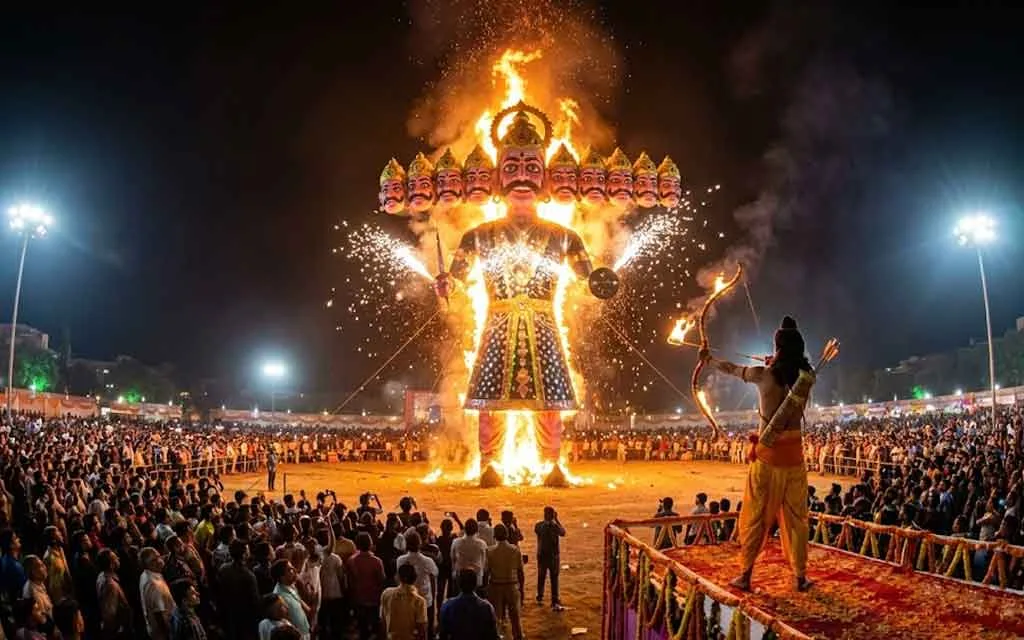
When the buffalo-demon Mahishasura became invincible to all male beings, the Devas pooled their tejas (radiance) to create Durga. She battled Mahishasura for nine days; on the tenth day (Vijayadashami) she severed his head while he was transforming between buffalo and man-form — a moment outside both forms, when his boon-immunity didn't apply. This victory is the heart of the Navaratri-Dussehra celebration.
The 51 (some traditions count 52 or 108) sacred sites across the Indian subcontinent where parts of Sati's body fell when Vishnu cut it with his Sudarshana Chakra to release Shiva's grief. Each peetha is a Devi temple of supreme power. The most famous: Kamakhya (Assam, where her yoni fell), Vaishno Devi (J&K), Kanyakumari, Kalighat, Hinglaj (now in Pakistan).
