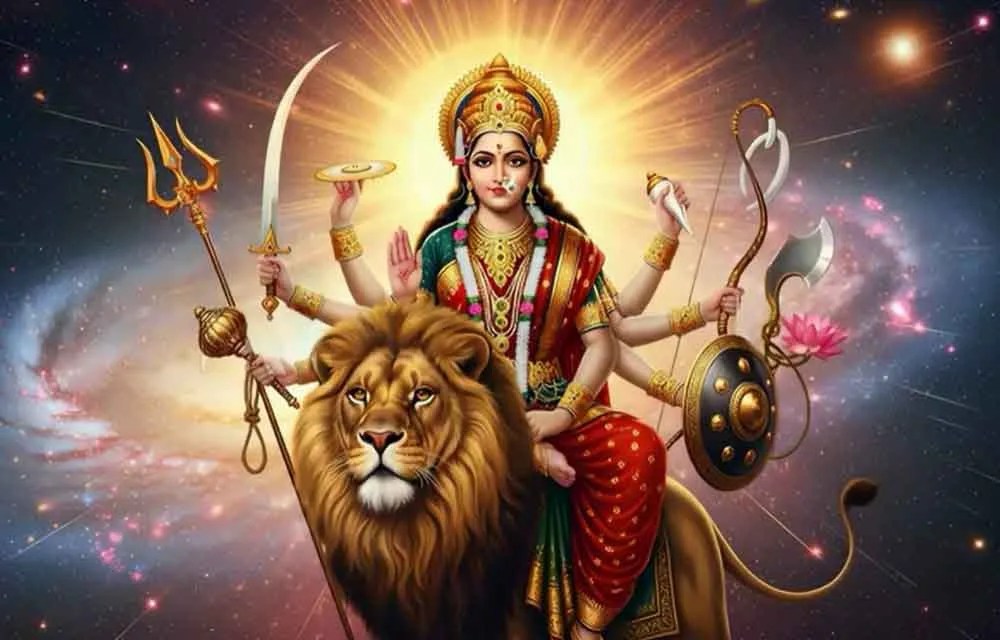
Ravan Dahan 2026: Date, Time, City-Wise Events and Vijay Muhurat for Dussehra
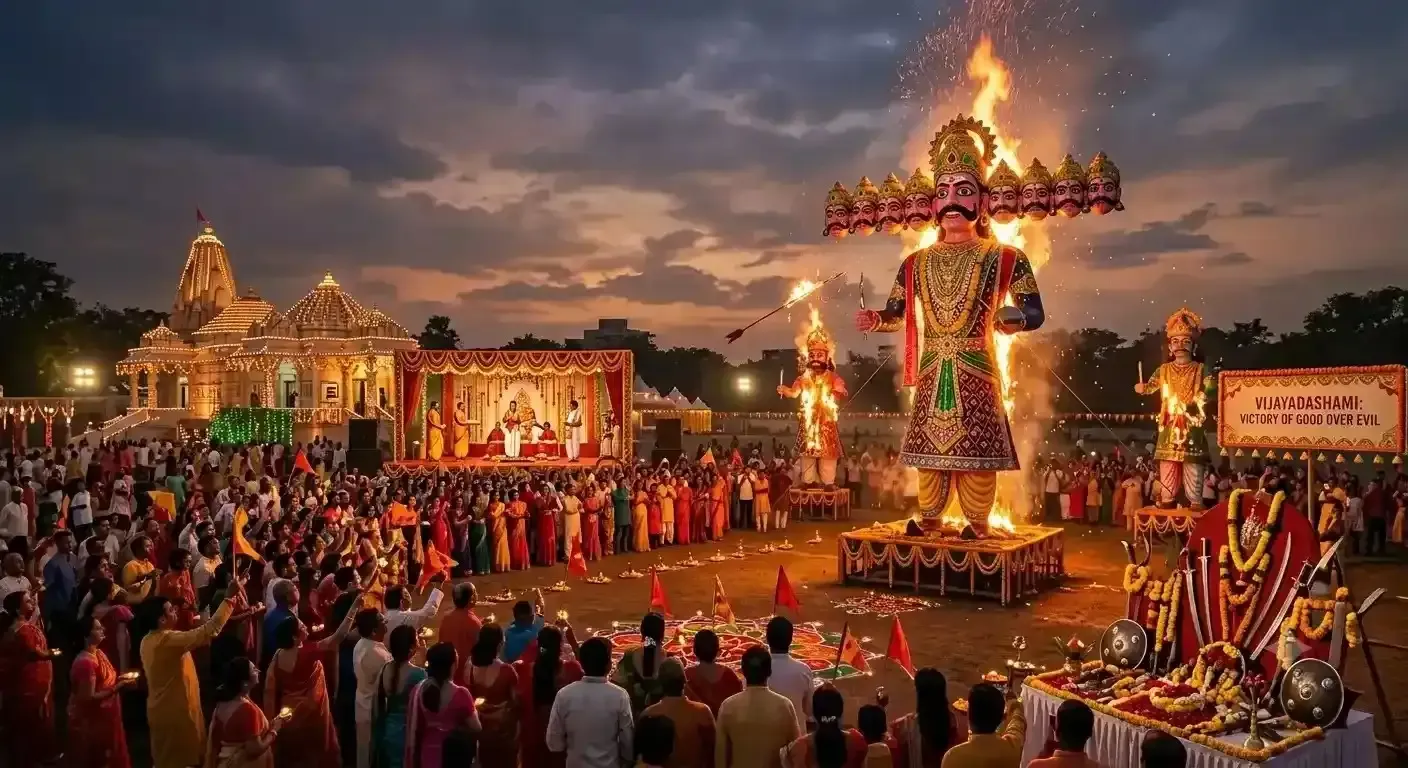
Ravan Dahan 2026 takes place on Dussehra, Tuesday 20 October 2026. Dashami tithi runs from 12:50 PM IST on 20 October to 2:11 PM IST on 21 October. See Vijay Muhurat for 16 major Indian cities, why effigies are burnt after sunset, famous Ramlila traditions and safety tips.
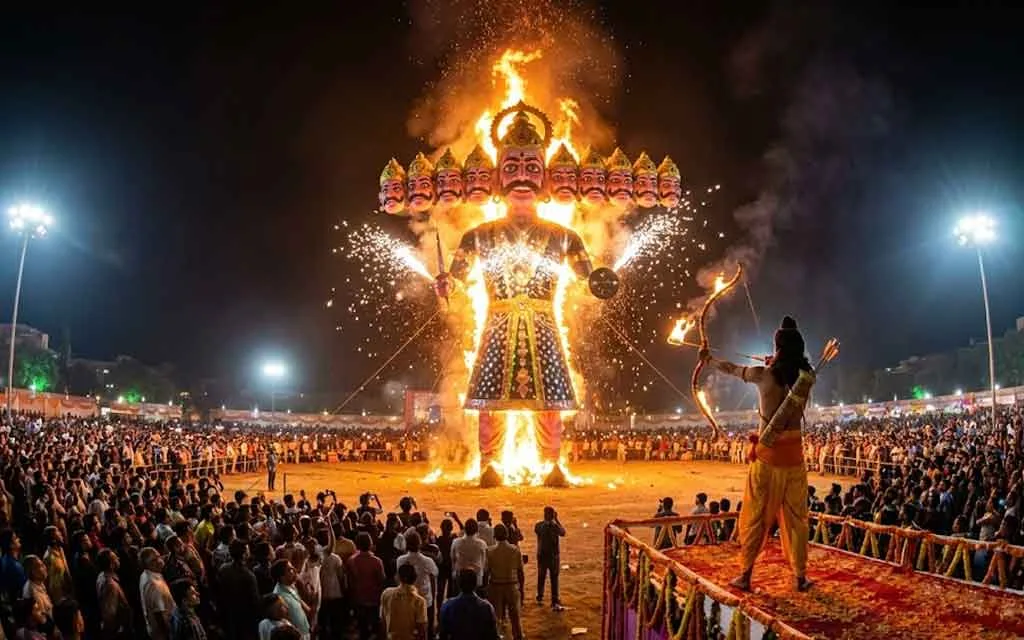
Quick answer: Ravan Dahan 2026 takes place on Dussehra, Tuesday 20 October 2026, traditionally in the evening after sunset. Dashami tithi runs from 12:50 PM IST on 20 October to 2:11 PM IST on 21 October 2026 (Drik Panchang). There is no fixed all-India Ravan Dahan time: each local Ramlila or Dussehra committee sets its own, so check the organisers in your area. The afternoon Vijay Muhurat varies by city, for example 1:59–2:45 PM in New Delhi.
This guide has been restored at its original hindutone.com address. It gives the 2026 date and tithi, a city-wise Vijay Muhurat table, the meaning of Ravan Dahan, famous traditions across India, and tips for celebrating safely.
Ravan Dahan 2026 date and Dashami tithi
| Observance | Date / time (India) |
|---|---|
| Sharad Navratri begins | Sun 11 Oct 2026 |
| Durga Ashtami & Maha Navami | Mon 19 Oct 2026 |
| Dussehra / Vijayadashami | Tue 20 Oct 2026 |
| Dashami tithi | 12:50 PM IST 20 Oct – 2:11 PM IST 21 Oct |
| Ravan Dahan | Evening of Tue 20 Oct, after sunset (time set by local committees) |
Source: Drik Panchang. These are India dates and times. Bengal's Bijoya Dashami and Durga visarjan fall on Wednesday 21 October 2026 per the Drik Panchang Kolkata calendar, but the all-India Dussehra, and Ravan Dahan, is on Tuesday 20 October.
Ravan Dahan 2026 time: why there is no single clock time
Unlike the Vijay Muhurat, Ravan Dahan is not tied to a calculated muhurat in the panchang. By long custom it is done in the evening, after sunset, around the pradosh period, as the climax of the Ramlila that has been staged through Navratri. The organising committee decides the exact moment based on the programme, the crowd, police permissions and safety arrangements.
So the practical answer to 'what time is Ravan Dahan 2026?' is: on the evening of Tuesday 20 October, at the time announced by the Ramlila or Dussehra committee near you. Arrive early, because the best viewing spots fill quickly.
Vijay Muhurat 2026: city-wise table
Vijay Muhurat is the auspicious afternoon window on Vijayadashami used for Shami Puja, Aparajita Puja, Shastra Puja, Seemollanghan and beginning new work. Here are the 2026 timings for 16 major cities (Drik Panchang, Tuesday 20 October 2026, local Indian time):
| City | State / UT | Vijay Muhurat (20 Oct 2026) |
|---|---|---|
| New Delhi | Delhi | 1:59–2:45 PM |
| Mumbai | Maharashtra | 2:19–3:06 PM |
| Kolkata | West Bengal | 1:16–2:02 PM |
| Chennai | Tamil Nadu | 1:51–2:38 PM |
| Bengaluru | Karnataka | 2:02–2:49 PM |
| Hyderabad | Telangana | 1:57–2:44 PM |
| Ahmedabad | Gujarat | 2:19–3:05 PM |
| Pune | Maharashtra | 2:15–3:02 PM |
| Jaipur | Rajasthan | 2:05–2:51 PM |
| Kota | Rajasthan | 2:06–2:52 PM |
| Lucknow | Uttar Pradesh | 1:45–2:30 PM |
| Varanasi | Uttar Pradesh | 1:37–2:23 PM |
| Patna | Bihar | 1:28–2:14 PM |
| Bhopal | Madhya Pradesh | 2:00–2:46 PM |
| Chandigarh | Chandigarh | 2:00–2:45 PM |
| Mysuru | Karnataka | 2:06–2:53 PM |
For cities not listed, check Drik Panchang for your city or see our state-wise guides, such as Dussehra 2026 in Delhi, Uttar Pradesh, Rajasthan and Maharashtra.
Ravan Dahan 2026 city by city: what has been announced
Last checked: 15 October 2026. For 69 cities, here is what organisers, local authorities and 2026 news reports have announced about Ramlila finales, Ravan Dahan grounds and Dussehra melas, with up to three items per city. Each item carries a label: officially confirmed (an organiser or official page with date and venue), reported in 2026 news, completed, awaiting a 2026 announcement or historical venue (where the event is traditionally held, not a 2026 confirmation). A city with nothing listed still celebrates; most committees announce their final timings in the last few days, so check locally before you go.
Not every Dussehra is a Ravan Dahan. Mysuru's Vijayadashami is the Jamboo Savari procession on Wednesday 21 October, Kullu's Dussehra runs from 21 to 27 October and ends with Lanka Dahan, and Bengal's Bijoya Dashami is about Durga's immersion. Some committees also keep different local dates, which we record as each source states them.
Ravan Dahan 2026 in Delhi NCR
- Delhi: Shahdara district police security plan for 29 Ramlilas: CCTV, drones and patrols through Ravan Dahan — 29 Ramlila venues in Shahdara district (east Delhi). When: Ramlilas 11-21 Oct 2026; Ravan Dahan Tue 20 Oct. Status: officially confirmed (ETV Bharat).
- Delhi: Luv Kush Ramlila with Ravan, Kumbhakarna and Meghnad effigy dahan — Red Fort grounds (Lal Qila Maidan). When: Ramlila 11-21 Oct 2026; effigies burnt on Vijayadashami, Tue 20 Oct. Status: reported in 2026 news (ETV Bharat).
- Delhi: Nav Shri Dharmik Leela Committee Ramlila and Dussehra samaroh — Lal Qila Maidan. When: Ramlila from Sun 11 Oct (opening bhajan clubbing); Dussehra samaroh Tue 20 Oct 2026. Status: reported in 2026 news (Dainik Jagran).
- Noida: Ramlila and Vijayadashami Mahotsav with Ravan (80 ft), Kumbhakarna (75 ft) and Meghnad (65 ft) effigy dahan — Noida Stadium, Sector 21A. When: Ramlila 11-21 Oct 2026 (opens 7 pm, 11 Oct); effigies burnt Tue 20 Oct; Ram Barat 15 Oct, 3 pm from Shri Sanatan Dharm Mandir, Sector 19. Status: reported in 2026 news (Amar Ujala).
- Noida: Shri Ramlila Mahotsav with eco-friendly-firecracker Ravan Dahan — Ramlila Maidan, Sector 62. When: Ramlila 11-21 Oct 2026; Ravan Dahan on Dussehra. Status: reported in 2026 news (Amar Ujala).
- Noida: Lav-Kush Dharmik Ramlila with Ravan Dahan — Agrasen Inter College campus, Railway Road, Dadri. When: 8-21 Oct 2026; Ravan Dahan on Dussehra. Status: reported in 2026 news (Amar Ujala).
- Greater Noida: Shri Ramlila Committee Ramlila and mela with Ravan, Meghnad and Kumbhakarna effigy dahan and fireworks — Ramlila Maidan, Site-4, Greater Noida. When: Ramlila 12-21 Oct 2026; effigy dahan Tue 20 Oct. Status: officially confirmed (Raftar Today).
- Greater Noida: Ramlila and Dussehra Mahotsav with 65-ft Ravana effigy dahan — Sector Pi-1 ground, Achchhar. When: Sun 11 - Tue 20 Oct 2026; effigy burnt on Dussehra. Status: reported in 2026 news (Amar Ujala).
- Greater Noida: Shri Dharmik Ramlila and Dussehra Mahotsav 2026 concluding with Ravan Dahan. When: 11-20 Oct 2026; Ravan Dahan Tue 20 Oct; Daily staging from 7 pm. Status: reported in 2026 news (Raftar Today).
- Ghaziabad: Trans-Hindon police 14-point safety advisory for Ramlila and Durga Puja committees: limit effigy heights, fire safety, swing checks — Ramlila grounds in the Trans-Hindon police zone. When: Festival period through Dussehra, 20 Oct 2026. Status: officially confirmed (Live Hindustan).
- Ghaziabad: Other Ramlila committees tighten effigy safety: no explosive material on grounds before Dussehra — Ghaziabad / Sahibabad Ramlila grounds. When: From 6 Oct 2026. Status: reported in 2026 news (Amar Ujala).
- Ghaziabad: Lajpat Nagar: Ravan Dahan dropped, then the whole 2026 Ramlila cancelled — Lajpat Nagar Ramlila Maidan, Sahibabad. When: 2026 season. Status: reported in 2026 news (Amar Ujala).
- Gurugram: City Ramlilas with Ravan Dahan on Dussehra — Jacobpura, Siddheshwar, Gurgaon village and other stages. When: Jacobpura from 9 Oct, Siddheshwar from 10 Oct, Gurgaon village from 11 Oct; Ravan Dahan Tue 20 Oct 2026. Status: reported in 2026 news (Live Hindustan).
- Gurugram: Pataudi and Haili Mandi Ramlilas ending with Meghnad and Ravan vadh, effigy dahan and fireworks — Pataudi town (four Ramlilas) and Haili Mandi (Baba Hardeva Ramlila Committee, Jatauli Mandi; Shri Ram Lila Club, Shiv Mandir Anaj Mandi). When: 11-21 Oct 2026; effigy dahan Tue 20 Oct; Raj Tilak 21 Oct. Status: reported in 2026 news (Amar Ujala).
- Gurugram: Nine more city Ramlilas begin, ending on Dussehra — New Colony, Gurgaon village, Bhim Nagar, Old Jail Complex, Sadar Bazar, Wazirabad village, Jharsa village and others. When: Navratri to Dussehra (20 Oct 2026). Status: reported in 2026 news (Live Hindustan).
- Faridabad: Municipal Ramlila, Dussehra mela and Ravan Dahan (Ravana, Meghnad, Kumbhakarna effigies tendered) — NIT area. When: Dussehra 2026 (20 Oct). Status: reported in 2026 news (Amar Ujala).
- Faridabad: Dussehra shobha yatra and Lanka dahan (planning meeting) — Siddhpeeth Shri Hanuman Mandir, Market No. 1, NIT. When: Dussehra 2026. Status: reported in 2026 news (Live Hindustan).
- Faridabad: Shri Dharmik Leela Committee Ramlila — Faridabad. When: From 9 Oct 2026 (Ram Janm). Status: reported in 2026 news (Live Hindustan).
Ravan Dahan 2026 in Uttar Pradesh
- Ayodhya: Pratap Nagar Ramlila Mahotsav with Ravan Dahan — Pratap Nagar (Haiderganj), Ayodhya. When: Ramlila from 10 Oct; Ravan Dahan Tue 20 Oct; Lav-Kush lila to 21 Oct; Bharat Milap procession 22 Oct; Rajyabhishek 24 Oct 2026. Status: reported in 2026 news (Dainik Bhaskar).
- Ayodhya: Baba Ka Purwa Ramlila: Ravan Vadh on 20 Oct — Baba Ka Purwa, Ayodhya. When: Lanka Dahan 16 Oct; Kumbhkaran Vadh 18 Oct; Ravan Vadh Tue 20 Oct; Ram Barat and Bharat Milap 21 Oct; Raj Gaddi 22 Oct 2026. Status: reported in 2026 news (Dainik Bhaskar).
- Ayodhya: Divisional review: traffic diversion, crowd management and safety rules at Ravan Dahan sites — Police Lines hall, Ayodhya. When: Meeting Wed 14 Oct 2026. Status: reported in 2026 news (Dainik Bhaskar).
- Varanasi: Ravan Dahan at BLW (Bareka) ground with one-headed Ravan for the first time — BLW (Banaras Locomotive Works) ground. When: Dussehra 2026. Status: reported in 2026 news (News18 Hindi).
- Varanasi: Gangapur Dashami Maidan: Ravan Dahan and Dussehra mela at risk from encroachment — Dashami Maidan, Gangapur. When: Vijayadashami 2026. Status: reported in 2026 news (Dainik Bhaskar).
- Varanasi: Shivpur Ramlila: Vijayadashami Ravan Vadh and mela — Chhatripur premises, Tarna ward 21, Shivpur. When: Fri 23 Oct 2026 (local date as stated); At sunset. Status: reported in 2026 news (Dainik Bhaskar).
- Lucknow: Aishbagh Ramlila (Ramotsav 2026): 70-ft moving Ravan effigy to be burnt on Dussehra — Aishbagh Ramlila ground, Lucknow. When: Ramotsav 11-22 Oct 2026; AI-based Ramayan presentations 17-20 Oct; Ravan Dahan Tue 20 Oct; closing procession 22 Oct. Status: officially confirmed (The Times of India).
- Lucknow: Mahona Dussehra Mela — Mahona (Itaunja). When: Dussehra 2026. Status: reported in 2026 news (Dainik Bhaskar).
- Lucknow: Police check of Durga Puja, Ramlila and Ravan Dahan sites — Chinhat. When: Thu 8 Oct 2026. Status: reported in 2026 news (Dainik Bhaskar).
- Kanpur: Parade Ramlila (150th foundation year), Mukut Pujan procession to Ravan Vadh — Kanpur. When: Mukut Pujan and procession 10 Oct; Lanka Dahan 17 Oct; Kumbhkaran Vadh 18 Oct; Meghnad Vadh 19 Oct; Vijayadashami Ravan Vadh with fireworks and laser show Tue 20 Oct 2026; closing programme 25 Oct. Status: officially confirmed (Live Hindustan).
- Kanpur: Ramlila and Dussehra Mela, Adarsh Ramlila Committee — Kanpur (Kidwai Nagar, Babupurwa Colony). When: 11-21 Oct 2026. Status: officially confirmed (Dainik Bhaskar).
- Kanpur: 43rd Dussehra Mela with Ravan, Meghnad and Lanka dahan — Kanpur (Lajpat Nagar). When: Dussehra, Tue 20 Oct 2026. Status: reported in 2026 news (Dainik Bhaskar).
- Prayagraj: Shri Katra Ramlila: Ravan procession — Prayagraj (Katra). When: Tue 6 Oct 2026. Status: reported in 2026 news (Dainik Bhaskar).
- Prayagraj: Pajawa Ramlila Committee Dussehra festival — Prayagraj (Rani Mandi). When: Ramlila from 11 Oct 2026; Ram Dal on Navami and Dashami, Bharat Milap and Rajgaddi. Status: reported in 2026 news (Live Hindustan).
- Prayagraj: Allapur Dussehra — Prayagraj (Allapur, Ward 38). When: 15 Oct 2026. Status: reported in 2026 news (Dainik Bhaskar).
- Agra: Shri Ramlila Mahotsav (149th year) - Ravan procession — Agra. When: Ravan shobhayatra Tue 29 Sep 2026; stage lilas at Ramlila Maidan in early Oct. Status: reported in 2026 news (Dainik Bhaskar).
- Agra: Ramlila Mahotsav and Dussehra mela, North Central Railway Institute — Agra Cantt. When: Lilas 11-19 Oct 2026; Dussehra mela Tue 20 Oct 2026. Status: reported in 2026 news (Amar Ujala).
- Agra: 400-year-old Dussehra shobhayatra ending with Ravan Dahan at St John's crossing — Starts at Shri Ramchandra Ji Maharaj temple, Khatipada (Jatpura); ends at St John's College crossing, MG Road. When: Tue 20 Oct 2026; Procession starts 6 pm. Status: reported in 2026 news (Dainik Bhaskar).
- Mathura: Ravan Dahan: effigy being built — Mahavidya Maidan, Mathura. When: Dussehra 2026. Status: reported in 2026 news (Dainik Bhaskar).
- Mathura: Dussehra Maidan effigies: 70-ft Ravan and 60-ft Ahiravan — Dussehra Maidan, Mathura. When: Dussehra 2026. Status: reported in 2026 news (Dainik Bhaskar).
- Mathura: Peace committee: route inspections, traffic and loudspeaker rules for Ram Barat, Ramlila processions and Ravan Dahan — Govind Nagar police station, Mathura. When: Meeting Fri 9 Oct 2026. Status: reported in 2026 news (Dainik Bhaskar).
- Gorakhpur: Aryanagar Ramlila Vijayadashami schedule: Ram Rajtilak at 4 pm on 20 Oct; Ravan Vadh with fireworks 21 Oct — Ramlila Maidan, Mansarovar, Gorakhpur. When: Tue 20 Oct 2026 (Rajtilak; Kumbhkaran and Meghnad Vadh); Wed 21 Oct (Ahiravan and Ravan Vadh, fireworks); Bharat Milap procession night of 22 Oct; Rajtilak 4 pm and lila 7 pm on 20 Oct; Ravan Vadh 7 pm on 21 Oct. Status: officially confirmed (Amar Ujala).
- Gorakhpur: Durga Puja and Dussehra police guidelines (peace committee meetings) — Harpur Budhat and GIDA police stations. When: Meetings Mon 5 Oct 2026. Status: reported in 2026 news (Dainik Jagran).
- Gorakhpur: Birdghat Ramlila (164th year) — Gorakhpur. When: From Wed 7 Oct 2026; Ram Barat Sat 10 Oct; Ravan vadh and Raghav Shakti Milan Wed 21 Oct; Ram-Bharat Milap procession Sun 25 Oct; Rajyabhishek Mon 26 Oct. Status: reported in 2026 news (Amar Ujala).
- Meerut: 67th Ramlila Mahotsav, Sadar (Shiv Barat, Leela and Ravan Dahan) — Sadar, Meerut. When: Shiv Barat Fri 9 Oct; stage Leela from 10 Oct; Ravan Dahan Tue 20 Oct 2026. Status: officially confirmed (Dainik Bhaskar).
- Meerut: Ramlila and Dussehra, Rajban Bazar — Rajban Bazar, Meerut Cantt. When: Ramlila from 9 Oct; Dussehra effigy dahan Tue 20 Oct 2026. Status: reported in 2026 news (Live Hindustan).
- Meerut: Ravan Dahan, Delhi Road Ramlila Maidan — Delhi Road, Meerut. When: Tue 20 Oct 2026. Status: reported in 2026 news (Dainik Bhaskar).
- Bareilly: Central Peace Committee: barricading at Ravan Dahan sites, CCTV, no unapproved swings — Bareilly. When: Meeting reported 7 Oct 2026. Status: reported in 2026 news (Live Hindustan).
- Bareilly: Nawabganj 22-day Dussehra mela with Ravan Vadh — Ramlila ground, Nawabganj. When: 6-27 Oct 2026; Lanka Dahan 17 Oct; Kumbhkaran Vadh 20 Oct; Meghnad Vadh 22 Oct; Ravan Vadh and effigy dahan 25 Oct; Rajyabhishek 27 Oct. Status: reported in 2026 news (Dainik Bhaskar).
- Bareilly: Ramlila and Dussehra mela with Ravan, Meghnad and Kumbhkaran effigy dahan — Bareilly (Shastri Nagar area report). When: Ramlila 14-21 Oct; Dussehra mela and dahan Tue 20 Oct 2026. Status: reported in 2026 news (Dainik Bhaskar).
- Moradabad: Ramlila Mela and Dussehra Mahotsav, Kanshiram Nagar — Kanshiram Nagar, Moradabad. When: Bhoomi pujan 18 Oct; Ramlila from 19 Oct 2026. Status: reported in 2026 news (Dainik Bhaskar).
- Moradabad: One-day Dussehra Mela and Ravan Dahan, Kanth — Kanth. When: Vijayadashami 2026. Status: reported in 2026 news (Amar Ujala).
- Moradabad: Kanshiram Nagar Ramlila mela: 95-ft Ravan — Ramlila Maidan near Sonakpur flyover, Kanshiram Nagar, Moradabad. When: Bhoomi pujan 18 Oct; Ramlila from 19 Oct 2026. Status: reported in 2026 news (Dainik Bhaskar).
Ravan Dahan 2026 in Rajasthan
- Jaipur: Ramlila Mahotsav with Ram Barat and Ravan Dahan (51 ft effigy) — Ramlila Maidan, New Gate. When: Ramlila 11-20 Oct 2026; Ram Barat 14 Oct; Ravan Dahan 20 Oct; Daily 7-10 pm. Status: reported in 2026 news (ETV Bharat).
- Jaipur: Jaipur Dussehra Mela 2026 with Ravan, Kumbhakaran and Meghnad dahan (121 ft Ravan effigy) — Vidyadhar Nagar Stadium. When: Mela 9-20 Oct 2026; special programmes 19 Oct; effigy dahan Vijayadashami 20 Oct. Status: reported in 2026 news (Dainik Bhaskar).
- Jaipur: 3rd Ramlila Mahotsav with Ravan Dahan (51 ft) — Ramlila Maidan, Murlipura Scheme circle, Murlipura. When: 11-20 Oct 2026; Ram Barat 14 Oct; Ravan Dahan 20 Oct. Status: reported in 2026 news (Dainik Bhaskar).
- Kota: Dussehra Fair 2026 (state tourism calendar) — Kota. When: 20 Oct-6 Nov 2026. Status: officially confirmed (Rajasthan Tourism (Govt of Rajasthan)).
- Kota: 133rd National Dussehra Mela: Lakshminarayan ji procession and Ravan Dahan — Dussehra Maidan (Shri Ram Rangmanch, Vijayshree Rangmanch); procession from Garh Palace. When: Mela 11 Oct-5 Nov 2026; Ravan Dahan Tue 20 Oct; Bharat Milap procession and Rajyabhishek 21 Oct; 20 Oct: procession from Garh Palace 5 pm, Ravan Dahan and fireworks on arrival as per muhurat; 21 Oct: Bharat Milap procession from Kishorepura 5 pm. Status: reported in 2026 news (ETV Bharat).
- Kota: Ravan effigy over 105 ft (Kumbhakaran and Meghnad about 70 ft each) with moving head, sword and eyes — Dussehra Maidan. When: Dussehra, 20 Oct 2026. Status: reported in 2026 news (Aaj Tak).
- Jodhpur: Nagar Nigam Dussehra Mela: Ram rath procession to Ramlila Maidan (preparation meeting) — Ram rath from Mehrangarh Fort via Fatehpol, Navchokiya, Ada Bazar, Khanda Falsa and Jalori Gate to Ramlila Maidan. When: Dussehra 2026 (meeting 6 Oct). Status: reported in 2026 news (Dainik Bhaskar).
- Jodhpur: Nagar Palika Ravan Dahan and Dussehra (Ravan Mahotsav) — Near the fire station office, Sopda Road, Bhopalgarh (Jodhpur district). When: 20 Oct 2026. Status: reported in 2026 news (Dainik Bhaskar).
- Jodhpur: Dussehra Mahotsav: Ravan effigy 45 ft, Meghnad and Kumbhakaran 35 ft each, with fireworks and Ram Darbar tableau — Dussehra Maidan, Tinwari (Jodhpur district). When: 2026-10-20; After 7 pm, at the auspicious muhurat. Status: reported in 2026 news (Dainik Bhaskar).
- Udaipur: 10-day Ramlila and Ravan Dahan — Ramlila: Nimbark College ground, outside Surajpol; Ravan Dahan: Kallaji Bavji crossing, Sector 14. When: Ramlila 9-18 Oct 2026; Ravan Dahan 20 Oct; Ramlila daily 7-10 pm. Status: reported in 2026 news (Dainik Bhaskar).
- Ajmer: Nagar Nigam Dussehra Mahotsav, Ramlila staging and Ramlila barat: organising committees formed — Ajmer. When: Dussehra 2026. Status: reported in 2026 news (Dainik Bhaskar).
- Ajmer: Ramlila Mahotsav (58th year) with Ravan Dahan — Varah Ghat Chowk, Pushkar (Ajmer district). When: 9-21 Oct 2026; Ravan Dahan 20 Oct; Rajyabhishek 21 Oct; Ramlila nightly 9 pm-12 am till 19 Oct. Status: reported in 2026 news (Dainik Bhaskar).
- Ajmer: Ramlila and Dussehra Mela with Ravan Dahan — Ramlila Rangmanch near bus stand; Patel Maidan (mela and dahan), Srinagar (Ajmer district). When: Ramlila from 11 Oct 2026 (10 days); Dussehra mela and Ravan Dahan 20 Oct. Status: reported in 2026 news (Dainik Bhaskar).
- Bikaner: Dharnidhar Dussehra Mahotsav with Ravan Dahan — Dharnidhar campus. When: Ravan Dahan 20 Oct 2026. Status: reported in 2026 news (Dainik Bhaskar).
- Bikaner: 11-day Ramlila — Park opposite Lalgarh railway station. When: From 11 Oct 2026 (11 days). Status: reported in 2026 news (Dainik Bhaskar).
Ravan Dahan 2026 in Punjab, Haryana and Chandigarh
- Chandigarh: Fifth Ramlila and Dussehra Mahotsav 2026 with Ravan, Kumbhkaran and Meghnad effigies — Sabzi Mandi Ground, Sector 49. When: 10-20 Oct 2026. Status: reported in 2026 news (Amar Ujala).
- Chandigarh: 46th Ramlila with 221-ft Ravana effigy (tricity, Panchkula) — Shalimar Ground, Sector 5, Panchkula. When: 9-20 Oct 2026; staging on three stages. Status: reported in 2026 news (Amar Ujala).
- Chandigarh: Shree Ramleela Committee Ramleela at Sector 17, culminating in Dussehra on 20 Oct — Sector 17 Parade Ground. When: Ramleela from Mon 12 Oct 2026; Dussehra Tue 20 Oct; Nightly. Status: reported in 2026 news (The Indian Express).
- Ludhiana: Dussehra Mela and Ravan Dahan, Daresi Ground — Daresi Maidan (Shri Ramlila Ground), Daresi Road. When: Mela 1-21 Oct 2026; Ramlila from 11 Oct; Vijayadashami 20 Oct; Bharat Milap 21 Oct. Status: reported in 2026 news (Dainik Bhaskar).
- Ludhiana: 121-ft Ravana effigy under construction for Dussehra — Daresi Ground. When: Dussehra, 20 Oct 2026. Status: reported in 2026 news (ETV Bharat).
- Ludhiana: Dussehra Utsav and Ravan Dahan, Shri Govind Godham — Shri Govind Godham temple complex, Hambran Road. When: 20 Oct 2026, from 3 pm. Status: reported in 2026 news (Dainik Bhaskar).
- Amritsar: Dussehra at Panchratna Shri Krishna Mandir with Ravan (75 ft), Meghnad (70 ft) and Kumbhakarna (65 ft) effigies — Panchratna Shri Krishna Mandir, Narayangarh. When: Tue 20 Oct 2026. Status: officially confirmed (Dainik Bhaskar).
- Amritsar: Ramlila and Dussehra Mahotsav, New Shiv Shankar Dramatic Club — Ramlila Ground, Shiv Mandir Ajnala. When: 11-20 Oct 2026. Status: reported in 2026 news (Ajit).
- Amritsar: Fewer Ravan Dahan sites in the city this year — Discontinued sites named: Khandwala, Ranjit Avenue, Trillium Mall, Joda Phatak; Durgiana Dussehra ground down to one event from three. When: Dussehra 2026. Status: reported in 2026 news (Dainik Bhaskar).
- Jalandhar: 148th Dussehra (Shri Ramlila Committee Nauhrian Bazar, Burlton Park) — Open ground in Industrial Area opposite Division No. 1 (shifted from Burlton Park). When: 20 Oct 2026; flag shobha yatra 13 Oct, 4 pm. Status: reported in 2026 news (Punjab Kesari).
- Jalandhar: Burlton Park Dussehra venue shifted after 147 years — Industrial Area (instead of Burlton Park). When: Dussehra 2026. Status: reported in 2026 news (Punjabi Jagran).
- Jalandhar: 37th Vijayadashami Utsav, Shri Mahakali Mandir Dussehra Committee — Dussehra Ground (committee ground); meetings at Prachin Lahoria Mandir, Mithha Bazar. When: Vijayadashami 2026. Status: reported in 2026 news (Punjabi Jagran).
- Patiala: Dussehra mela and Ravan Dahan, Sri Kedarnath Mandir — Prachin Mandir Sri Kedarnath Ji. When: Dussehra day (20 Oct 2026): Ramayan screening 5.30-7.30 pm, then effigy burning; Ramayan screening 5.30-7.30 pm, effigy burning after. Status: reported in 2026 news (Punjabi Jagran).
- Patiala: 19th Dussehra Mela, Rashtriya Jyoti Kala Manch — SST Nagar Dussehra Ground. When: Dussehra 2026. Status: reported in 2026 news (Punjabi Jagran).
- Patiala: Ramlila, Jodian Bhattian Chowk — Jodian Bhattian Chowk. When: 11-20 Oct 2026; Ravan effigy burning 20 Oct. Status: reported in 2026 news (The Tribune).
- Karnal: Nising Ramlila with LCD-screen relay — Shri Sanatan Dharma Shiv Mandir, Nising (Karnal district). When: From 11 Oct 2026 to Dussehra. Status: reported in 2026 news (Amar Ujala).
- Karnal: Gharaunda Ramlila: Ram Barat procession through town (Shri Ramlila Committee) — Gharaunda town (Karnal district). When: 13 Oct 2026. Status: completed (Amar Ujala).
- Panipat: Three-day Dussehra mela on Sanauli Road with laser show on 19 Oct — Sanauli Road, Panipat. When: 18-20 Oct 2026; Laser show evening of 19 Oct. Status: officially confirmed (Amar Ujala).
- Panipat: Two-day Dussehra Mahotsav with 90-ft Ravana effigy — Dussehra Ground, Sector 24, Panipat Sector 24. When: 19-20 Oct 2026; effigies burnt 20 Oct evening. Status: reported in 2026 news (Amar Ujala).
- Panipat: First Ram Vijay Rath shobhayatra on Dussehra — Starts from Shri Ganesh Mandir, Bhatia Colony, Assandh Road. When: Dussehra, Tue 20 Oct 2026. Status: reported in 2026 news (Amar Ujala).
Ravan Dahan 2026 in Himachal Pradesh and Uttarakhand
- Kullu: International Kullu Dussehra — Dhalpur Maidan. When: 21-27 Oct 2026. Status: reported in 2026 news (Amar Ujala).
- Kullu: Dussehra at Thakur Murlidhar Chaturbhuj temple with rath yatra and Lanka dahan — Thakur Murlidhar Chaturbhuj temple, Naggar (Thawa). When: Wed 21 Oct 2026; Kullvi dham 1-3 pm, Lanka dahan in the evening. Status: reported in 2026 news (Amar Ujala).
- Kullu: Deity Kuikanda Nag Tandi departs for Kullu Dussehra on foot — Nither (Outer Seraj) to Dhalpur. When: Departs 18 Oct, reaches Dhalpur 21 Oct 2026. Status: reported in 2026 news (Amar Ujala).
- Shimla: Junga Dussehra fair (Kyonthal) — Junga school playground (subject to High Court permission). When: 20-22 Oct 2026. Status: reported in 2026 news (Amar Ujala).
- Shimla: District-level Sarahan Dussehra fair — Nalati playground, Sarahan, Sarahan (Rampur Bushahr). When: 20-23 Oct 2026; opens 20 Oct with Lord Raghunath ji's rath yatra. Status: reported in 2026 news (Amar Ujala).
- Shimla: Sarahan Dussehra fair preparatory meeting — Sarahan (Rampur Bushahr). When: 20-23 Oct 2026. Status: reported in 2026 news (Dainik Bhaskar).
- Mandi: no 2026 announcement found in the sources we checked on 15 October. Check the local Ramlila or Dussehra committee and the district administration.
- Dehradun: 181-ft Ravana effigy being built for Dehradun — Not stated in report (Parade Ground is the traditional main venue). When: Dussehra, 20 Oct 2026. Status: reported in 2026 news (Dainik Jagran).
- Dehradun: 79th Dussehra Mahotsav: Ravan (181 ft), Kumbhkaran and Meghnad effigies burnt by remote control — Parade Ground. When: Tue 20 Oct 2026. Status: reported in 2026 news (Jagran; Dainik Bhaskar).
- Dehradun: 31st Dussehra Mela with Ravana and Meghnad effigies — Mela ground, Rajiv Nagar, Doiwala (Rajiv Nagar). When: Tue 20 Oct 2026. Status: reported in 2026 news (Hindustan).
- Haridwar: Badi Ramlila, 103rd annual festival — Badi Ramlila premises. When: Under way from 6 Oct 2026. Status: reported in 2026 news (Hindustan).
- Haridwar: Lakkadharan Ramlila, 120th annual festival — Jwalapur. When: Under way (Ram Janm staged 5 Oct 2026). Status: reported in 2026 news (Hindustan).
- Haridwar: Stone pelting during Bahadrabad Ramlila; case registered — Bahadrabad. When: Incident 9-10 Oct 2026; case registered 11 Oct. Status: reported in 2026 news (Hindustan).
- Rishikesh: Ravan Dahan by Nav Yuvak Dussehra Samiti — Doon Ghati ground, Premnagar Bazaar. When: Tue 20 Oct 2026; 8 pm. Status: reported in 2026 news (Live Hindustan).
- Rishikesh: Ma Ganga Ramlila (fifth year) ends on Dussehra with Ram Rajtilak, Ram Darbar and school performances — Ramlila Maidan, 14 Bigha, Muni Ki Reti. When: Ramlila 11-20 Oct 2026; finale Tue 20 Oct; Ramlila from 8 pm. Status: reported in 2026 news (Amar Ujala).
- Rishikesh: Subhash Bankhandi Ramlila (66th) — Bankhandi Ramlila ground, Rishikesh. When: 7-21 Oct 2026. Status: reported in 2026 news (Amar Ujala).
Ravan Dahan 2026 in Madhya Pradesh and Gujarat
- Bhopal: 48th Dussehra Mahotsav with Ravan Dahan (Ravan 53 ft; Meghnad and Kumbhakaran 51 ft) — Bittan Market Dussehra Maidan. When: Dussehra, 20 Oct 2026. Status: reported in 2026 news (Dainik Bhaskar).
- Bhopal: Police leave cancelled statewide for Durga Utsav and Dussehra — Madhya Pradesh (statewide). When: 11-25 Oct 2026. Status: reported in 2026 news (Dainik Bhaskar).
- Bhopal: Power maintenance done first on about 40 feeders serving Ravan Dahan, Dussehra and immersion sites — Bhopal. When: Early Oct 2026; 4-hour area shutdowns. Status: reported in 2026 news (Dainik Bhaskar).
- Indore: Ravan and Lanka dahan with fireworks (Ravan effigy 111 ft, Lanka 250 ft) — Dussehra Maidan. When: 2026-10-20; 7 pm. Status: reported in 2026 news (Dainik Bhaskar).
- Jabalpur: Prohibitory order: no loudspeakers/DJ 10 pm-6 am during festivals including Dussehra; outside-district DJs barred; permission mandatory for all events — Jabalpur district. When: Navratri, Dussehra, Diwali and Chhath 2026; 10 pm-6 am. Status: reported in 2026 news (Nai Dunia).
- Jabalpur: Vijayadashami visarjan chal samaroh of Durga and Mahakali committees — City procession route (passes Malviya Chowk). When: 2026-10-20; Evening; a felicitation stage at Malviya Chowk runs from 6 pm. Status: reported in 2026 news (Yash Bharat).
- Gwalior: 22nd Dussehra Samaroh with Ravan, Kumbhakaran and Meghnad dahan — Navin Dussehra Maidan, Shatabdipuram. When: 20 Oct 2026. Status: reported in 2026 news (Sandhyadesh).
- Gwalior: Ravan Dahan at several grounds: Ravan 60 ft with Kumbhakaran and Meghnad 55 ft each at Phoolbagh; 65 ft Ravan at DD Nagar and at Navin Dussehra Maidan, Shatabdipuram; also Thatipur Maidan and Jiwaji Club — Shri Ramlila Maidan, Phoolbagh; DD Nagar; Navin Dussehra Maidan, Shatabdipuram; Thatipur Maidan; Jiwaji Club. When: 2026-10-20. Status: reported in 2026 news (Nai Dunia).
- Gwalior: Vijayadashami Mahotsav and Ramlila (80th year), ending with a city shobhayatra — Phoolbagh Maidan. When: 10-21 Oct 2026; shobhayatra 21 Oct; Evenings; opening Sundarkand 10 Oct, 6 pm. Status: reported in 2026 news (Dainik Bhaskar).
- Ujjain: Mahakal Dussehra sawari to Dussehra Maidan with Shami pujan — Dussehra Maidan, Freeganj. When: Vijayadashami, 20 Oct 2026. Status: reported in 2026 news (Amar Ujala).
- Ujjain: Shastri Nagar Dussehra: Ravan Dahan of about 121-ft effigy with fireworks — Shastri Nagar, Ujjain. When: Wed 21 Oct 2026 (as stated by the organisers). Status: reported in 2026 news (Dainik Jagran MP-CG).
- Ahmedabad: Heavy-vehicle entry ban extended to 2 am for Navratri-Dussehra — Ahmedabad city. When: 11-21 Oct 2026; 8 am-2 am daily. Status: reported in 2026 news (Times of India).
- Ahmedabad: Ramlila staged during Navratri (tradition since 1962), with artists from Bhopal, Agra and Uttar Pradesh — Railway Colony, Ahmedabad. Status: reported in 2026 news (ETV Bharat Gujarati).
- Vadodara: Traditional venue: Ram Leela and Ravan Dahan at Polo Ground — Polo Ground. When: Annual, on Dussehra. Status: historical venue, not a 2026 confirmation (Times of India).
- Surat: Ramlila Mahotsav and Ravan Dahan (65 ft Ravan effigy, with Kumbhakaran and Meghnad) — Ramlila: SMC Ramlila Maidan, Vesu (opp. Reliance Market); Ravan Dahan: SMC bus depot plot, VIP Road. When: Ramlila 11-24 Oct 2026; Ram Barat 14 Oct; Ravan Dahan 20 Oct; Rajyabhishek 21 Oct; Ramlila 8-11 pm; Ram Barat 4 pm; Ravan Dahan 6 pm. Status: reported in 2026 news (Loktej).
- Surat: Police festival plan: Ravan Dahan permission applications for two places under scrutiny — Surat city. When: Navratri-Dussehra 2026. Status: reported in 2026 news (Divya Bhaskar).
- Rajkot: no 2026 announcement found in the sources we checked on 15 October. Check the local Ramlila or Dussehra committee and the district administration.
Ravan Dahan 2026 in Maharashtra
- Mumbai: Ramlila (60th year) with Ram Barat tableau and Dussehra mela — Chhatrapati Shivaji Maharaj Maidan, Parksite, Vikhroli. When: Navratri-Dussehra 2026. Status: reported in 2026 news (eSakal).
- Mumbai: Adarsh Ramleela Mahotsav (since 1964), 10 days — Girgaum Chowpatty. When: 11-20 Oct 2026. Status: reported in 2026 news (NewsX (press release)).
- Mumbai: Ramlila (12th year) — Acharya Atre Maidan, Ghatkopar East. When: Navratri 2026 (bhoomi pujan 5 Oct). Status: reported in 2026 news (eSakal).
- Pune: no 2026 announcement found in the sources we checked on 15 October. Check the local Ramlila or Dussehra committee and the district administration.
- Nagpur: Kasturchand Park Ravan Dahan, 75th year: Ravan, Kumbhkaran and Meghnad effigies burnt after four days of programmes — Kasturchand Park. When: Programmes 16-19 Oct; Ravan Dahan Tue 20 Oct 2026. Status: reported in 2026 news (Nagpur Today).
- Nagpur: Police security plan for Navratri, Vijayadashami and Dhammachakra Pravartan Din — City-wide. When: Navratri to Vijayadashami (20 Oct) 2026. Status: reported in 2026 news (Navbharat).
- Nashik: Ravan Dahan on the Godavari banks (Ramkund, Panchavati) and at Gandhinagar ground (traditional) — Ramkund area, Panchavati; Gandhinagar press quarters club ground, Pune Road. Status: historical venue, not a 2026 confirmation (Times of India).
- Thane: no 2026 announcement found in the sources we checked on 15 October. Check the local Ramlila or Dussehra committee and the district administration.
Ravan Dahan 2026 in Bihar, Jharkhand, Bengal, Odisha and Assam
- Patna: 71st Shri Ramlila Mahotsav and Ravan Vadh (Ravan, Meghnath, Kumbhkaran effigies) with fireworks — Gandhi Maidan. When: Ramlila 11-21 Oct 2026; effigy burning Tue 20 Oct; Bharat Milap 21 Oct; 20 Oct from 4 pm; Ramlila 11-14 Oct from 4 pm, 15-19 Oct from 6 pm; Bharat Milap 21 Oct 6 pm. Status: officially confirmed (Prabhat Khabar).
- Patna: Traffic police Durga Puja-Dussehra plan: goods and passenger heavy vehicles barred in the municipal area, no-entry and one-way stretches from Bailey Road to Ashok Rajpath — Patna municipal area. When: 17 Oct 3 pm to 20 Oct 10 pm 2026 (or until traffic normalises). Status: officially confirmed (Jagran).
- Patna: District administration orders special security at Ravan Dahan venues; no loudspeakers after 10 pm; licence needed for every procession — Ravan Dahan venues and puja pandals, Patna. When: Durga Puja and Dussehra 2026; Loudspeakers off by 10 pm. Status: officially confirmed (Times of India).
- Gaya: Durga Puja-Dussehra traffic plan for Gaya and Bodh Gaya: heavy vehicles barred, GB Road and Ramna Road closed to all vehicles, drop gates at entry points — Gaya city and Bodh Gaya. When: Sat 17 Oct to Wed 21 Oct 2026; Heavy vehicles barred 6 am to 3 am daily; Bodh Gaya entry curbs 1 pm to 3 am. Status: officially confirmed (Times of India).
- Gaya: Ravan Vadh with shobha yatra and fireworks — Gandhi Maidan, Gaya. When: Dussehra 2026 (date not stated in report). Status: reported in 2026 news (Prabhat Khabar).
- Gaya: Lanka Dahan with Ravan (55 ft) and Kumbhkaran (50 ft) effigies — Rasalpur Khel Maidan, Manpur. When: Dussehra 2026 (date not stated). Status: reported in 2026 news (Prabhat Khabar).
- Ranchi: Durga Puja-Dussehra traffic plan in force: large vehicles barred, city-centre curbs, 23 parking areas — Ranchi city. When: 14-21 Oct 2026; Large vehicles barred 8 am to 4 am; city curbs 3.30 pm to 3 am. Status: officially confirmed (Times of India).
- Ranchi: Ravan Dahan with Ram Darbar tableaux, pyro fireworks and laser show — Morabadi (Morhabadi) Maidan. When: Tue 20 Oct 2026. Status: reported in 2026 news (Live Hindustan).
- Ranchi: Ravan Dahan at Argora and Morabadi; organisers invite the chief guest — Morabadi Maidan; Argora Manda Maidan. When: Tue 20 Oct 2026. Status: reported in 2026 news (Hindusthan Samachar).
- Jamshedpur: 32nd Sarvajanik Ravan Dahan Mahotsav: bhoomi pujan held, preparations begin — Bagunhatu football ground. When: Bhoomi pujan Sat 26 Sep 2026; Dahan on Dussehra (date not stated). Status: reported in 2026 news (Live Hindustan).
- Jamshedpur: Ravan Dahan with 51-ft effigy and fireworks team from Cuttack — Shri Shri Veer Kunwar Singh Maidan, Chhota Govindpur. When: Wed 21 Oct 2026 (as reported). Status: reported in 2026 news (Live Hindustan).
- Jamshedpur: Ramlila: bhoomi pujan held at Ramlila Maidan — Ramlila Maidan, Jamshedpur. When: Bhoomi pujan reported 26 Sep 2026; staging dates not stated. Status: reported in 2026 news (Live Hindustan).
- Dhanbad: Ravan Dahan with 65-ft effigy and fireworks — Shaharpura Shiv Mandir campus, Sindri. When: Vijayadashami 2026. Status: reported in 2026 news (Live Hindustan).
- Kolkata: Dussehra celebration and Ravan Dahan 2026 (60-ft effigy, drone show) with Durga Puja, theme 'Ram Er Ayodhya - Ram Ki Ayodhya' — Central Park, Salt Lake. When: Inauguration Thu 15 Oct; Ravan Dahan Tue 20 Oct 2026. Status: reported in 2026 news (Filmibeat (press release)).
- Kolkata: Kolkata Police traffic restrictions for Puja days and immersion — City roads and routes to Hooghly ghats. When: Puja 13-19 Oct; Durga immersion 20-24 Oct 2026. Status: officially confirmed (Millennium Post).
- Kolkata: Seven-day Ramlila — BF Park Ramlila Ground, Salt Lake. When: 12-18 Oct 2026. Status: reported in 2026 news (Sanmarg).
- Siliguri: no 2026 announcement found in the sources we checked on 15 October. Check the local Ramlila or Dussehra committee and the district administration.
- Bhubaneswar: Ground rent waived for puja, Ravan Podi and immersion events in BMC area — BMC area. When: 17 Oct to 18 Nov 2026. Status: officially confirmed (The New Indian Express).
- Bhubaneswar: Commissionerate Police traffic advisory for Durga Puja and Dussehra, with special diversions for the Ravan Podi at Nayapalli — City-wide; Nayapalli Ravan Podi ground. When: 16-21 Oct 2026; Heavy vehicles and buses barred 2 pm to 2 am daily. Status: officially confirmed (Times of India; Odisha TV).
- Bhubaneswar: Commissionerate Police Durga Puja-Dussehra security and traffic plan; eight Ravan Podi sites identified — City-wide; control rooms near seven major medhas. When: Festival 16-21 Oct 2026 (Sasthi to Bhasani). Status: reported in 2026 news (The New Indian Express).
- Cuttack: Dussehra immersion procession (Bhasani), live-streamed for the first time — Procession route to Devi Gada on the Kathajodi bank. When: Dussehra 21 Oct; procession 22 Oct 2026 (as stated). Status: reported in 2026 news (Times of India).
- Cuttack: Dussehra preparatory meeting: welcome arches, toilets, civic works — Netaji Sanskruti Bhawan (meeting). When: 24 Sep 2026. Status: completed (Prameya News).
- Guwahati: no 2026 announcement found in the sources we checked on 15 October. Check the local Ramlila or Dussehra committee and the district administration.
Ravan Dahan 2026 in South India
- Hyderabad: 54th Ramayan Mela with Dussehra mela and Ravan, Meghnad and Kumbhakarna effigy dahan — Numaish Maidan (Exhibition Grounds, Nampally). When: Mela 11-20 Oct 2026; Dussehra mela and effigy dahan Tue 20 Oct; Opening (ghat sthapana) 11 Oct, 6 pm; dahan time not stated. Status: reported in 2026 news (Hindi Milap).
- Hyderabad: 54th Ramayan Mela announced (Ravan Dahan included) — Exhibition Grounds (Pradarshani Maidan). When: 11-20 Oct 2026. Status: reported in 2026 news (Hindi Milap).
- Secunderabad: no 2026 announcement found in the sources we checked on 15 October. Check the local Ramlila or Dussehra committee and the district administration.
- Warangal: Ursu Dasara celebrations: officials inspect arrangements — Rangaleela Maidan, Ursu. When: Dasara Tue 20 Oct 2026 (inspection Tue 6 Oct). Status: reported in 2026 news (Deccan Chronicle).
- Warangal: GWMC Dasara arrangements at festival venues incl. Ursu Gutta — Ursu Gutta, Rangasaipet, Thota Maidan, Shivnagar and other venues. When: Dasara 20 Oct 2026. Status: reported in 2026 news (The Hindu).
- Karimnagar: no 2026 announcement found in the sources we checked on 15 October. Check the local Ramlila or Dussehra committee and the district administration.
- Bengaluru: no 2026 announcement found in the sources we checked on 15 October. Check the local Ramlila or Dussehra committee and the district administration.
- Mysuru: Vijayadashami Jamboo Savari (Mysuru has no Ravan Dahan) — Amba Vilas Palace to Bannimantap. When: Wed 21 Oct 2026; Nandi Dhwaja puja 1:36-1:56 pm; Pushparchane 4:10-4:35 pm; procession leaves after 4:35 pm. Status: officially confirmed (Mysuru Dasara official site).
- Mysuru: Mysuru City Police Dasara visitor portal (road closures, parking, helplines) — https://mysurupolicedasaraportal.com. When: Dasara 2026. Status: officially confirmed (Star of Mysore).
- Mysuru: Two-phase Dasara security plan; helium balloon sale banned. When: Phase 1: 11-18 Oct; Phase 2: 19-21 Oct 2026 (Jamboo Savari). Status: officially confirmed (Star of Mysore).
- Chennai: no 2026 announcement found in the sources we checked on 15 October. Check the local Ramlila or Dussehra committee and the district administration.
- Vijayawada: Vijaya Dasami Nagarotsavam and Teppotsavam on the Krishna (Dasara finale; not a Ravan Dahan) — Indrakeeladri and Krishna river. When: Tue 20 Oct 2026; Nagarotsavam 3:30 pm; Teppotsavam 6 pm. Status: reported in 2026 news (The Hindu).
- Vijayawada: Dasara traffic and parking plan (40 parking places, QR codes, heavy-vehicle diversions) — City-wide; parking incl. Basava Punnaiah Stadium, Gollapudi, Bhavanipuram, Krishna Lanka. When: 11-20 Oct 2026. Status: reported in 2026 news (The New Indian Express).
- Visakhapatnam: Ravana Dahan at ISKCON temple, Sagarnagar beach road (past observance) — ISKCON temple premises, Sagarnagar beach road. Status: historical venue, not a 2026 confirmation (Times of India (video)).
District-by-district Dussehra guides for 20 states
For smaller towns and every district, including Ramlila committees, melas, temple programmes and police traffic plans, see the state guides:
- Dussehra 2026 in Delhi, district by district
- Dussehra 2026 in Haryana, district by district
- Dussehra 2026 in Punjab, district by district
- Dussehra 2026 in Rajasthan, district by district
- Dussehra 2026 in Uttar Pradesh, district by district
- Dussehra 2026 in Uttarakhand, district by district
- Dussehra 2026 in Himachal Pradesh, district by district
- Dussehra 2026 in Madhya Pradesh, district by district
- Dussehra 2026 in Chhattisgarh, district by district
- Dussehra 2026 in Gujarat, district by district
- Dussehra 2026 in Maharashtra, district by district
- Dussehra 2026 in Bihar, district by district
- Dussehra 2026 in Jharkhand, district by district
- Dussehra 2026 in West Bengal, district by district
- Dussehra 2026 in Odisha, district by district
- Dussehra 2026 in Assam, district by district
- Dussehra 2026 in Andhra Pradesh, district by district
- Dussehra 2026 in Tamil Nadu, district by district
- Dussehra 2026 in Kerala, district by district
- Dussehra 2026 in Karnataka, district by district
City guides: Delhi Ramlila 2026: Red Fort, Ramlila Maidan and Ravan Dahan; Patna Dussehra 2026: Ravan Vadh at Gandhi Maidan; Ramnagar Ramlila, Varanasi 2026; Bastar Dussehra 2026; Navratri and Dussehra 2026 temple schedules.
What Ravan Dahan means
Dussehra celebrates Lord Rama's victory over Ravana, the ten-headed king of Lanka who abducted Sita. In the Ramayana tradition, Rama worshipped the Goddess before the final battle and, with her blessing, slew Ravana on Dashami. Burning Ravana's effigy re-enacts that victory as the triumph of dharma over adharma.
Ravana's ten heads are often read as ten inner faults, such as lust, anger, greed, attachment, pride and jealousy. Watching the effigy burn is a reminder to conquer these within ourselves. For a deeper look, read Ravana Dahan: why we burn Ravana and what it really means.
Ravana, Kumbhakarna and Meghnad: the three effigies
- Ravana: The tallest effigy, with ten heads, at the centre.
- Kumbhakarna: Ravana's giant brother, famed for his long sleep, who fought for Lanka out of loyalty.
- Meghnad (Indrajit): Ravana's son, the warrior who once defeated Indra, slain by Lakshmana.
The effigies are built over weeks from bamboo, paper and cloth, and are usually packed with firecrackers. At the climax, an actor playing Rama shoots a flaming arrow, and the figures go up in flames to cheers and chants of 'Jai Shri Ram'.
Famous Ravan Dahan and Ramlila traditions
- Ramnagar Ramlila, Varanasi: One of the oldest and most celebrated Ramlilas, staged over about a month under the patronage of the former royal family of Banaras, with scenes performed at different locations across Ramnagar.
- Delhi's Ramlilas: The capital hosts many large Ramlilas through Navratri, ending with the burning of giant effigies on Dussehra evening.
- Kota Dussehra Mela, Rajasthan: A long-running Dussehra fair in Kota, known for its towering effigies and festivities around Vijayadashami.
- Ramlila across India: The Ramlila tradition is recognised by UNESCO as Intangible Cultural Heritage, and countless towns and neighbourhoods stage their own. See Ramlila: a vibrant retelling of Ramayana.
Not every region celebrates with Ravan Dahan. Mysuru marks Dasara with the royal Jamboo Savari procession, Bengal immerses Durga, and Kullu's week-long Dussehra begins on Vijayadashami. For dates and schedules of any specific event, check the organisers' official announcements.
Safety and eco-friendly tips
- Keep your distance: Stay behind barricades. Burning effigies throw sparks and debris, and firecrackers can misfire.
- Watch children: Hold small children's hands in crowds and agree on a meeting point if anyone gets separated.
- Protect ears and lungs: Carry ear protection for young children, and a mask if you are sensitive to smoke.
- Follow police directions: Use designated entry and exit routes, and avoid pushing towards the effigy after it falls.
- Choose greener celebrations: Support committees that use eco-friendly materials, fewer firecrackers and proper clean-up afterwards.
- Home version: Many families instead make a small paper Ravana with children and discuss the story, without fire.
Ravan Dahan for NRIs
Outside India, temples and community organisations often hold Dussehra programmes, Ramlila performances or symbolic Ravan Dahan on a convenient weekend, subject to local fire regulations. Do not convert India's times to your time zone; local events set their own schedules. For the USA, see Dussehra 2026 USA: Vijayadashami muhurat and Ravana Dahan timings, and for Canada see Dussehra 2026 Canada, province by province.
Also read: Hindu temple safety tips for devotees and families.
Frequently asked questions
What is the Ravan Dahan 2026 time?
Ravan Dahan 2026 takes place on the evening of Dussehra, Tuesday 20 October 2026. There is no single all-India time: effigies are traditionally burnt after sunset by local Ramlila and Dussehra committees, each of which announces its own schedule. Dashami tithi runs from 12:50 PM IST on 20 October to 2:11 PM IST on 21 October 2026.
When is Dussehra 2026?
Dussehra / Vijayadashami 2026 is on Tuesday 20 October 2026 in India, per Drik Panchang. Sharad Navratri runs from Sunday 11 October, with Durga Ashtami and Maha Navami both on Monday 19 October.
Is Vijay Muhurat the same as Ravan Dahan time?
No. Vijay Muhurat is an auspicious afternoon window on Vijayadashami, used for Shami Puja, Aparajita Puja, Shastra Puja and starting new ventures. In New Delhi it is 1:59–2:45 PM on 20 October 2026. Ravan Dahan happens later, in the evening after sunset.
What is the Vijay Muhurat in my city on Dussehra 2026?
The table in this guide gives Vijay Muhurat for 16 major cities, for example Mumbai 2:19–3:06 PM, Kolkata 1:16–2:02 PM, Chennai 1:51–2:38 PM and Bengaluru 2:02–2:49 PM. For other places, check Drik Panchang for your city or see our state-wise Dussehra 2026 guides.
Whose effigies are burnt on Dussehra?
Traditionally three: Ravana, his brother Kumbhakarna and his son Meghnad (Indrajit). The effigies are often filled with firecrackers, and an actor playing Lord Rama shoots a flaming arrow to set them alight.
When is Ravan Dahan in the USA?
Temples and community groups in the USA usually hold Dussehra programmes on dates and times that suit local schedules, often on a weekend. See our Dussehra 2026 USA guide and check your temple's official website.
Editor's note
Change log: 15 October 2026: re-checked all 69 cities and added the final-week announcements: Dehradun Parade Ground, Shimla Jakhu, Nagpur Kasturchand Park and Indore Dussehra Maidan grounds, effigy details, Patna, Ranchi and Bhubaneswar traffic plans, and cancellations (Lucknow Jhulelal Vatika, Ranchi HEC). 11 October 2026: added the city-by-city section for 69 cities with verification labels, and links to the 20 state district guides. 6 October 2026: guide restored at its original address.
Editor's note (6 October 2026, updated 15 October): This guide has been restored at its original address after the earlier version was lost. The Dussehra date, Dashami tithi and city-wise Vijay Muhurat timings are from Drik Panchang for 20 October 2026, in local Indian time. Ravan Dahan has no fixed panchang time; it is set by local committees, so please follow the official announcements of the Ramlila or Dussehra committee near you.
Related guides
Share this with family and friends
Send it on WhatsApp, post it, or copy the link.
More from Navratri
- Every Day Vijayadashami: The Real Invitation of Navaratri and How to Live Its Victory Daily
- How to Wish Happy Vijayadashami 2026 on WhatsApp, Instagram, Facebook and Telegram: A Complete Guide for NRIs in the USA, UK, Australia and New Zealand
- How to Wish Happy Vijaya Dasami on WhatsApp, Telegram, Instagram and Facebook in 2026
- Happy Dussehra 2026: Heartfelt Vijayadashami Wishes to Hindus Around the World
- Must-Perform Rituals on Vijayadashami 2026: Complete State-Wise Guide for Devotees Across India
You might also like
Dussehra 2026 Ravan Dahan Events in the USA: Edison NJ on 10 October, Pleasanton on 17 October, Dallas Temple on 20 October
Delhi Ramlila 2026: Red Fort Grounds, Ramlila Maidan, Ravan Dahan and Vijay Muhurat for New Delhi
Patna Dussehra 2026: Ravan Vadh at Gandhi Maidan, Durga Puja Pandals and Vijay Muhurat