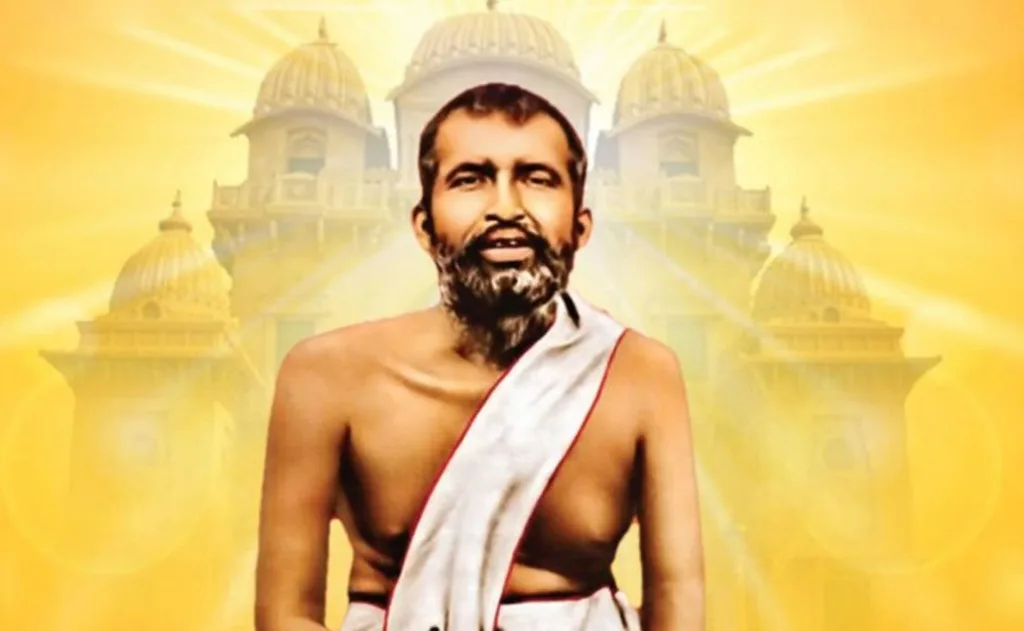
Sri Ramakrishna Paramahamsa — Life, Teachings & Wisdom for the Modern Hindu in 2026
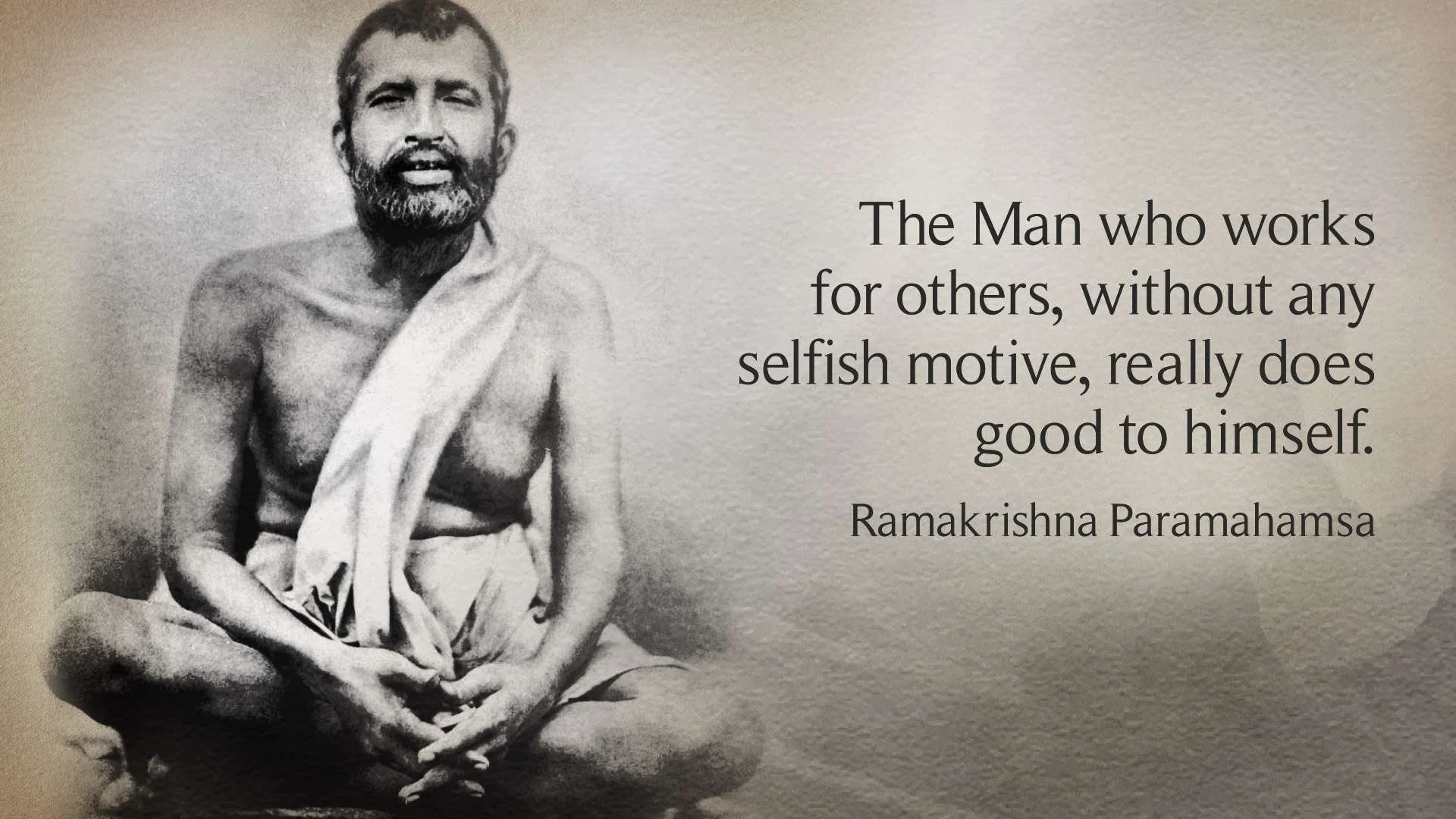
Sri Ramakrishna Paramahamsa — 19th-century Dakshineswar Kali devotee, guru of Vivekananda, teacher of 'all religions are true', whose wisdom shapes modern Hinduism worldwide.
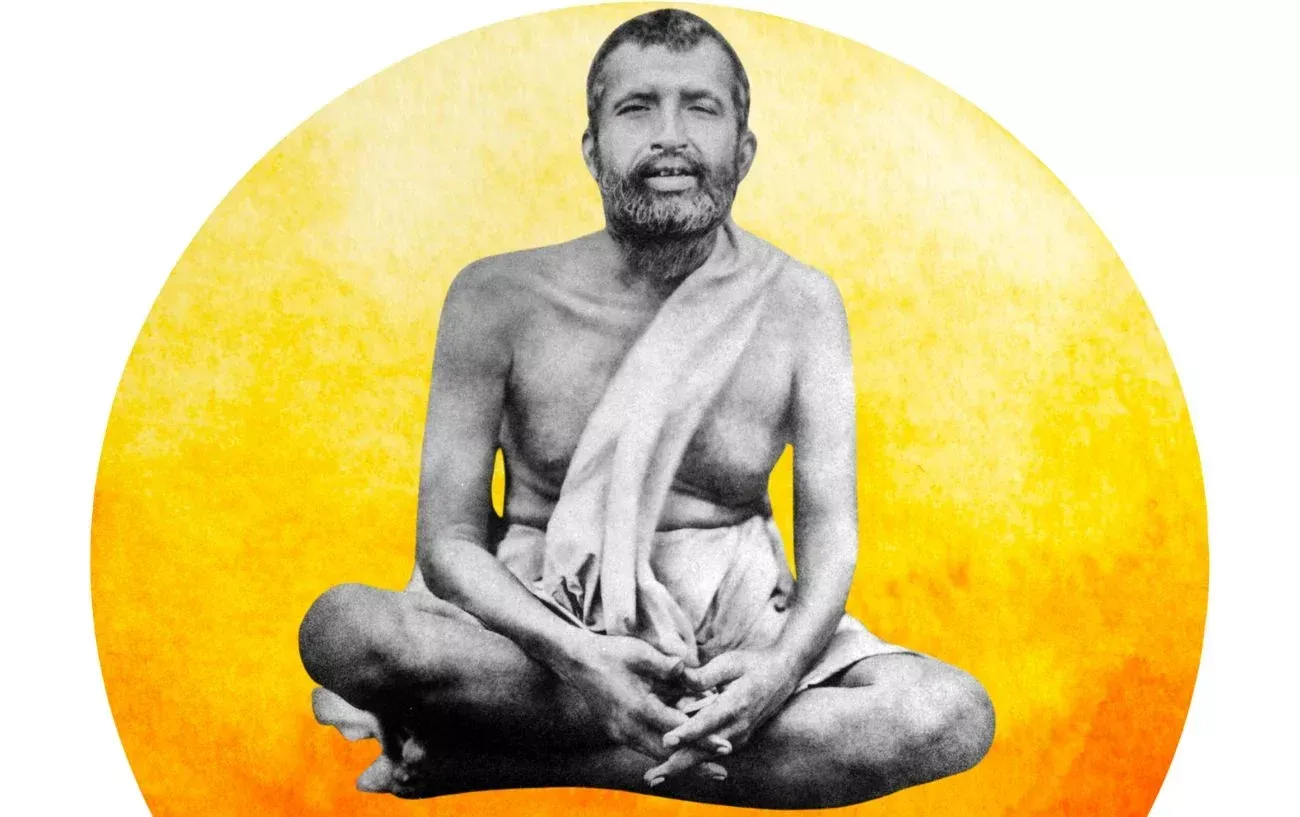
Sri Ramakrishna Paramahamsa — 19th-century Dakshineswar Kali devotee, guru of Vivekananda, teacher of 'all religions are true', whose wisdom shapes modern Hinduism worldwide.
Quick Answer: Sri Ramakrishna Paramahamsa (1836-1886) was the 19th-century Bengali mystic and priest of the Dakshineswar Kali Temple in Calcutta who realised the divine in every form he sincerely worshipped — Kali, Krishna, Rama, Christ, Allah — and articulated the foundational teaching: *Yato Mat Tato Path* — as many opinions, so many paths to the Divine. His chief disciple, Swami Vivekananda, carried his realisation worldwide. Ramakrishna's recorded conversations, compiled as *The Gospel of Sri Ramakrishna* (*Sri Sri Ramakrishna Kathamrita*), remain one of the most-read spiritual texts of modern Hinduism. For the NRI Hindu of 2026 — navigating interfaith marriages, secular workplaces, multicultural neighbourhoods — Ramakrishna's lived demonstration that all sincere paths lead to the same Divine is the most relevant Hindu teaching of the modern era.
1. Early Life — Gadadhar of Kamarpukur
Born on February 18, 1836 in the small Bengali village of Kamarpukur (Hooghly district), the child was named Gadadhar Chattopadhyay — Gadadhar being one of the 1,000 names of Vishnu. His parents Khudiram and Chandramani were poor but deeply devout brahmins. The child was prone to spontaneous spiritual experiences (samadhi-like states) from a young age.
By his teens, Gadadhar refused formal education. His older brother Ramkumar brought him to Calcutta. When Ramkumar took up priest duties at the newly built Dakshineswar Kali Temple in 1855, Gadadhar joined as assistant priest. Upon Ramkumar's death soon after, the priesthood passed to Gadadhar — now in his early 20s. The young priest was placed in front of the formidable black-stone image of Maa Kali.
2. The Dakshineswar Kali Temple Years
What followed at Dakshineswar — Calcutta's grand riverside Kali temple built by Rani Rashmoni — was one of the most documented spiritual journeys in human history.
Gadadhar's worship of Kali was not formal ritual. He spoke to her, demanded her presence, wept when she did not appear. The intensity of his longing — vyakulata — eventually erupted in his first profound vision of the Divine Mother in 1856.
From that point until his death thirty years later, his life was a continuous sequence of mystical experiences across every major Hindu (and several non-Hindu) traditions, each one undertaken not theoretically but lived fully until the realisation occurred.
The villagers and temple administrators thought him mad. Doctors were consulted. His mother arranged his marriage to a 5-year-old girl, Sarada, in 1859, hoping it would calm him. (He returned to his temple ascetic life afterwards; their marriage was unconsummated and spiritually centred.)
By 1865, when the wandering monk Tota Puri arrived at Dakshineswar, Ramakrishna had completed his initial Tantric and Shakti sadhanas. Tota Puri initiated him into Advaita Vedanta, the path of non-dual realisation. Within three days, Ramakrishna entered nirvikalpa samadhi — the highest state of formless consciousness — and remained there for six months without external awareness.
3. The Sadhanas — Every Path Tried, Every Form Realised
Across his Dakshineswar years, Ramakrishna systematically practised every major Hindu sampradaya:
- Shakta sadhana — Tantra under his initial guru Bhairavi Brahmani
- Advaita Vedanta — under Tota Puri
- Vaishnava bhakti — as Hanuman, then as Radha, then as Krishna's lover; he literally entered the bhava of each role and lived it
- Shaiva — as Shiva worshipper
- Christian — through Christian friends; he had visions of Jesus, who he saw as an avatar of God
- Islamic — he lived as a Muslim for a period under a Muslim Sufi guide; he received the vision of Allah/Muhammad
The conclusion he drew from these complete experiments — not theoretical comparative religion but lived sadhana — became the cornerstone of his teaching:
"Yato mat, tato path" — As many opinions, so many paths. Every religion, sincerely followed, leads to the same Divine Reality.
This was not modern relativism. It was the experiential testimony of one of the most thoroughly tested mystics in recorded history.
4. Sarada Devi and the Holy Mother
In 1872, when Sarada Devi was 18, Ramakrishna performed the Shodashi Puja — worshipping his teenage wife as the Divine Mother Kali herself. The full puja, including offering all his accumulated spiritual merit at her feet, was performed in private.
This relationship — celibate, spiritually intense, mutually revered — became the model for the Ramakrishna tradition. Sarada Devi (1853-1920), known as Sri Sarada Devi or Holy Mother, continued the spiritual lineage after Ramakrishna's death and remains a central figure of the Mission.
Together, the three-headed lineage — Sri Ramakrishna, Sri Sarada Devi, Swami Vivekananda — is honoured as the founding trinity of the modern Ramakrishna movement.
5. Disciples — Formation of the Ramakrishna Sangha
In Ramakrishna's last years, a remarkable group of young men gathered around him at Dakshineswar:
- Narendranath Datta (later Swami Vivekananda) — destined for the global mission
- Rakhal (Brahmananda) — first president of the Ramakrishna Order
- Sarada Prasanna (Trigunatitananda) — Vedanta Society San Francisco
- Latu (Adbhutananda) — illiterate but deeply realised
- Niranjan (Niranjanananda)
- Yogen (Yogananda — not the Self-Realization Fellowship founder)
- Tarak (Shivananda)
- Sashi (Ramakrishnananda)
- Sarat (Saradananda) — author of Lilaprasanga, the standard Ramakrishna biography
- Hari (Turiyananda)
- Kali (Abhedananda) — Vedanta Society New York
- Subodh (Subodhananda)
- Mahindra (Mahapurushji)
- Akhandananda — first to systematise relief work
- Vijnanananda — engineer-turned-monk
This sangha became the founding membership of the Ramakrishna Math (monastic) and Ramakrishna Mission (service) wings established by Vivekananda after Ramakrishna's death.
6. The Teaching of Universal Religion
Ramakrishna's central teachings, distilled from thousands of recorded conversations:
"Yato Mat Tato Path" — As many opinions, so many paths
The most-quoted line of his teaching. Not a claim that all religions are equally developed in every respect, but a claim that every sincere path can reach the same Divine destination. Lived testimony from one who had walked many paths.
"Jato Jiva, Tato Shiva" — Wherever there is a living being, there is Shiva
The doctrine of universal divinity — every being is a manifestation of the Divine. This became Vivekananda's foundation for "Daridra Narayana" (service to the Divine in the poor).
"Mother is, even though I do not see her"
A teaching of faith under unverified darkness — the spiritual practitioner does not require constant confirming experience to maintain devotion.
"Don't reason too much about God"
A repeated warning against intellectual hyper-rationalism. Ramakrishna's path was experiential. The mind's clever reasoning, he taught, becomes a barrier when it replaces direct experience.
Parables — the teaching method
Ramakrishna taught primarily through stories. The frog in the well. The chameleon. The salt doll measuring the ocean. The blind men and the elephant. These parables — collected in the Kathamrita — convey complex metaphysics in accessible imagery.
"The mother's love is intuitive"
Devotional love (bhakti) is not learned by study. It is recognized when it arises and cultivated when it appears.
Money is "matti" (clay)
Ramakrishna would visibly recoil from money even in his hands. His teaching was not against wealth per se but against the grasping relationship with money. The detached use of wealth in service was acceptable; the identification with money as identity was not.
7. The Kathamrita and the Gospel
Mahendranath Gupta (called "M" in the texts) was a school headmaster who visited Ramakrishna at Dakshineswar for the last four years of the master's life. M kept meticulous diaries of every conversation, every gesture, every visitor. After Ramakrishna's death, these became the Sri Sri Ramakrishna Kathamrita — five Bengali volumes published 1902-1932.
The English translation by Swami Nikhilananda, published 1942 as *The Gospel of Sri Ramakrishna*, is among the most-read modern Hindu spiritual texts. Aldous Huxley wrote the foreword. The text contains, in M's words: "the words of God which I had the privilege to hear."
The Kathamrita is unique among world spiritual texts in being a verbatim record (largely) of a saint's daily speech — including jokes, irritations, songs, ecstasies, ordinary human moments — over years.
8. Mahasamadhi and Legacy
Ramakrishna was diagnosed with throat cancer in 1885. The years 1885-1886 at the Cossipore Garden House (where he was moved for medical care) saw the consolidation of his teaching for his disciples.
On August 16, 1886, at Cossipore, he entered final mahasamadhi. He was 50 years old.
Within a year, Vivekananda began the work that became the Ramakrishna Mission. Within seven years, Vivekananda was in Chicago. Within a generation, Ramakrishna's vision had reached every continent.
The Belur Math, established 1898, became the global headquarters of the movement.
9. Lessons for the NRI Hindu in 2026
Lesson 1: Experience over theory
Ramakrishna's authority comes not from books but from lived experience. The NRI Hindu who claims to "know" Hinduism through reading alone may benefit from this corrective — actual practice (japa, meditation, festival observance, scripture engagement over years) is the qualifying condition.
Lesson 2: Universal-religion is not a modern Western idea
"All religions are paths to the same Divine" — articulated by Ramakrishna in 19th-century Calcutta, before contemporary multiculturalism. The NRI Hindu can claim this teaching not as Western interfaith borrowing but as deep Hindu tradition.
Lesson 3: Devotion to the Mother
Ramakrishna's relationship with Kali — childlike, demanding, weeping, ecstatic — provides a model of intimate devotional life. The NRI Hindu raised on intellectual religion can recover bhakti as the most accessible path.
Lesson 4: Marriage as spiritual partnership
The Ramakrishna-Sarada Devi relationship — celibate but spiritually central — extends the model of Hindu marriage beyond reproduction or social arrangement. NRI couples can find in their relationship the model of mutual spiritual companionship.
Lesson 5: Build a sangha around a guru
Ramakrishna's disciples became a sangha. Modern NRI Hindus often lack this. Connecting to a Vedanta Society, a Chinmaya centre, a BAPS satsang, or any sustained guru-shishya-sangha creates the spiritual infrastructure that occasional temple visits cannot.
Lesson 6: Service as worship
Ramakrishna's teaching "Shiva jnane jiva seva" — serve the living being knowing it as Shiva — became the foundation of Ramakrishna Mission's hospitals, schools, disaster relief. NRI service to community (volunteering at temples, food banks, immigrant aid, hospice work) carries spiritual weight.
10. FAQs
Q: When is Ramakrishna Jayanti?
A: Phalguna Shukla Dwitiya — typically February or early March. In 2026: Sunday, February 22 (Phalguna Shukla Dwitiya).
Q: Where is Ramakrishna's tomb / samadhi?
A: Belur Math, West Bengal — his samadhi is the principal pilgrimage site of the Ramakrishna movement. Cossipore Udyanbati (where he died) is also a sacred site.
Q: Should I read the Kathamrita in Bengali or English?
A: The Bengali original by M is the most authoritative. The English Gospel of Sri Ramakrishna by Nikhilananda is excellent for non-Bengali readers. Both are widely available.
Q: Was Ramakrishna an avatar?
A: Vivekananda and the Ramakrishna Order regard him as a divine incarnation (avatar) for the modern age. Other Hindu traditions accept him as a great saint but not necessarily as a formal avatar. The question is theological; the empirical record of his life is unmistakable.
Q: What is the connection between Ramakrishna and Hindu universalism?
A: His lived experience of multiple religious paths reaching the same Divine is the foundational modern Hindu basis for the "many paths" doctrine that shapes interfaith dialogue.
Q: Can I visit Dakshineswar Temple today?
A: Yes — Dakshineswar Kali Temple in Calcutta is fully functional. The Ramakrishna room at the temple, where he lived for 30 years, is a major pilgrimage site.
Q: Was Ramakrishna educated?
A: He had no formal education beyond elementary level. His knowledge of scripture, philosophy, and multiple religions came through direct sadhana — not academic study. This is part of his significance.
Q: How does Ramakrishna relate to Vivekananda?
A: Ramakrishna was Vivekananda's guru. Vivekananda was Ramakrishna's chief disciple. The two are inseparable in modern Hindu memory — the saint and the saint's saint-disciple who carried the message globally.
Final Words
Sri Ramakrishna Paramahamsa was the saint whose life answered, in flesh and devotional ecstasy, the question every modern Hindu eventually asks: Can the ancient gods still be encountered? His thirty years of practice at Dakshineswar say: yes. The Divine still appears to the sincere seeker. The Mother still responds to the cry from the heart. The traditions still work.
For NRI Hindus in 2026 — in tech-driven San Francisco, in trader-driven Wembley, in immigrant-driven Brampton — the Ramakrishna lineage extends through Vivekananda, through the Ramakrishna Mission centres in their cities, through the Belur Math whose daily prayers go out for the welfare of all beings.
Yato mat, tato path.
As many opinions, so many paths.
The 21st-century Hindu American in an interfaith marriage, the British Hindu in a multicultural workplace, the Indo-Canadian in a Christian-majority school — all carry, often without knowing, the Ramakrishna teaching that lets a Hindu remain a Hindu while honouring every other path that leads to the same Lord.
Jai Sri Ramakrishna! Jai Ma Sarada Devi! Jai Swami Vivekananda!
HinduTone Editorial Team · Tags: Ramakrishna Paramahamsa, Sarada Devi, Vivekananda Guru, Kathamrita, Gospel of Sri Ramakrishna, Dakshineswar Kali, Yato Mat Tato Path, Belur Math, Ramakrishna Mission
Frequently Asked Questions
What is Sri Ramakrishna Paramahamsa?
Sri Ramakrishna Paramahamsa (1836-1886) was the 19th-century Bengali mystic and priest of the Dakshineswar Kali Temple in Calcutta who realised the divine in every form he sincerely worshipped — Kali, Krishna, Rama, Christ, Allah — and articulated the foundational teaching: *Yato Mat Tato Path * — as many opinions, so many paths to the Divine. His chief disc
What are the key points about Sri Ramakrishna Paramahamsa?
Ramakrishna's recorded conversations, compiled as *The Gospel of Sri Ramakrishna * (*Sri Sri Ramakrishna Kathamrita*), remain one of the most-read spiritual texts of modern Hinduism. For the NRI Hindu of 2026 — navigating interfaith marriages, secular workplaces, multicultural neighbourhoods — Ramakrishna's lived demonstration that all si
Why does Sri Ramakrishna Paramahamsa matter in Hinduism?
It deepens a devotee's connection with Lord Krishna and with the values of Sanatana Dharma — clarity, devotion and dharmic living.
How can devotees apply Sri Ramakrishna Paramahamsa in daily life?
By reflecting on its teaching, incorporating the related practices or observances into daily routine, and approaching it with sincere devotion and understanding.
You might also like
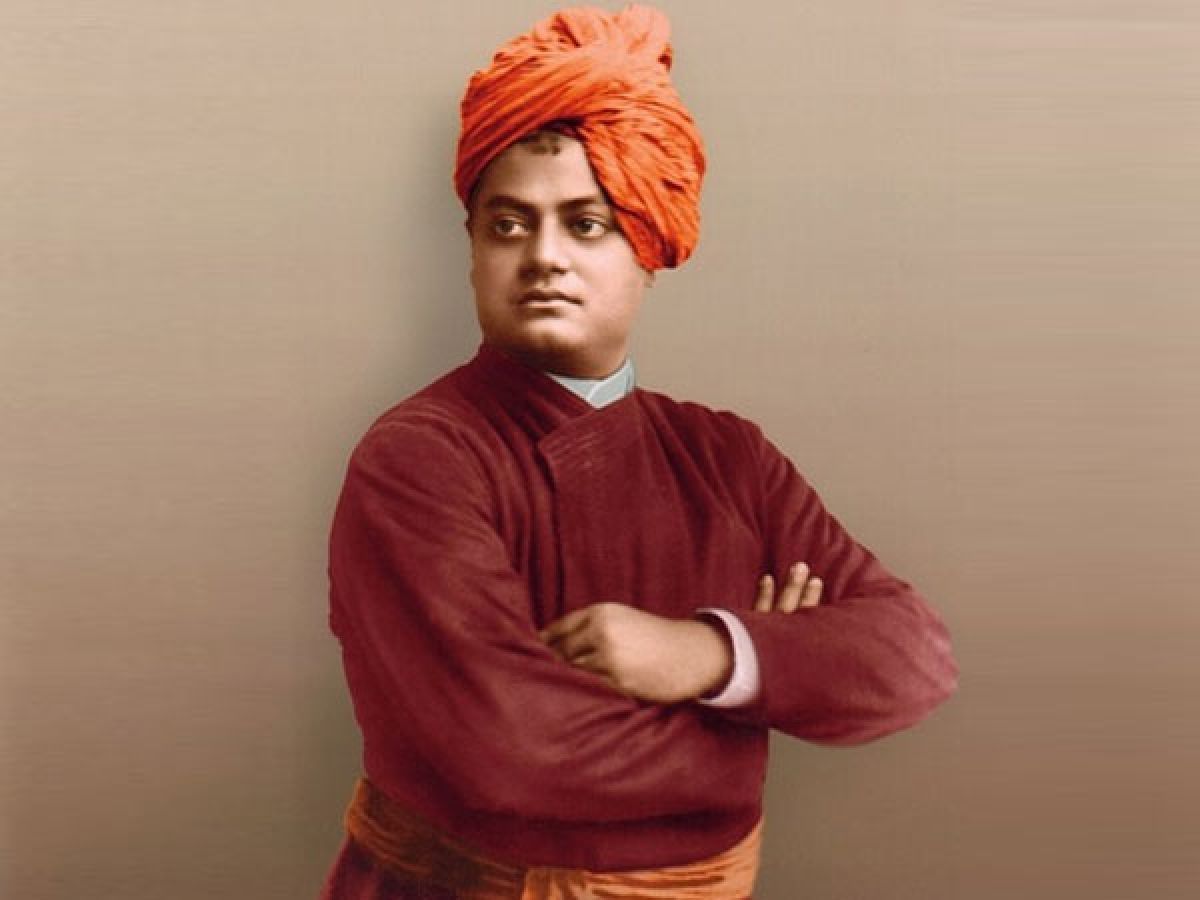
Swami Vivekananda Biography: Life & Teachings
Top Temples to Visit in West Bengal, Tamil Nadu, Assam, Kerala & Puducherry — Complete 2026 Pilgrim’s Guide
Ramakrishna Paramahamsa