Swami Vivekananda — Life, Teachings & Lessons for NRI Hindus in 2026: The Saint Who Brought Vedanta to the West
Swami Vivekananda's life, Chicago 1893 speech, four yogas, and timeless lessons for NRI Hindus in 2026 — the saint who awakened the West to Vedanta.
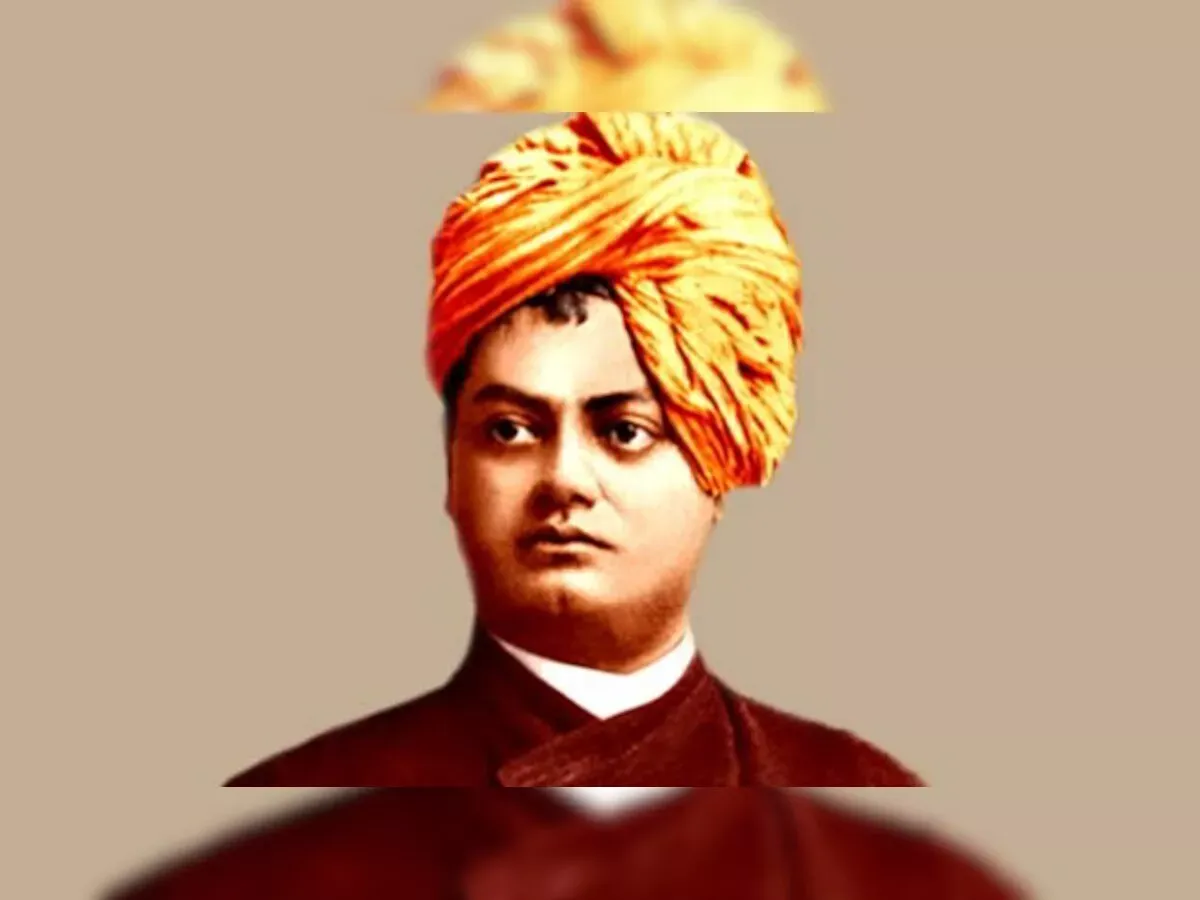
Swami Vivekananda's life, Chicago 1893 speech, four yogas, and timeless lessons for NRI Hindus in 2026 — the saint who awakened the West to Vedanta.
Quick Answer: Swami Vivekananda (1863-1902) was the foremost disciple of Sri Ramakrishna Paramahamsa and the saint who brought Vedanta to the Western world. His historic address at the Parliament of the World's Religions in Chicago on September 11, 1893 — beginning with the words "Sisters and Brothers of America" — received a two-minute standing ovation and is the founding moment of Hindu visibility in modern America. Through the Ramakrishna Mission (founded 1897) and his teaching of the four yogas (Karma, Bhakti, Raja, Jnana), Vivekananda articulated a vision of Hinduism that was simultaneously ancient and globally relevant. For NRI Hindus in 2026, his life remains the supreme guide for carrying Sanatana Dharma into the modern world.
January 12 is celebrated annually as National Youth Day in India — Swami Vivekananda's birthday. For Hindu Americans, British Hindus, Indo-Canadians, and the global diaspora, Vivekananda represents the model of a Hindu who can hold deepest tradition and broadest engagement with the modern world in the same heart.
1. The Early Life — Narendranath Datta
Born on January 12, 1863 in Calcutta to Vishwanath Datta (a successful lawyer) and Bhuvaneshwari Devi (a devout Shakta mother), Narendranath was the third child in a Kayastha family. His childhood combined Western education at Scottish Church College (philosophy, history, Western literature) with deep maternal exposure to the Ramayana, Mahabharata, and devotional poetry.
By his teens, Narendra was a rationalist seeker, dissatisfied with the philosophical answers of both Western thinkers (Mill, Spencer, Hume, Hegel) and the Brahmo Samaj's reformed Hinduism. The young man's question — "Have you seen God?" — was the searching of an intellect that refused to settle for inherited belief.
In 1881, when Narendra was 18, he met the question's answer.
2. The Meeting with Sri Ramakrishna
Sri Ramakrishna Paramahamsa (1836-1886) was the priest at the Dakshineshwar Kali Temple outside Calcutta. To the young Narendra's question — "Have you seen God?" — Ramakrishna responded simply, "Yes. I see Him as I see you, only more intensely."
What followed was five years of the most intimate guru-shishya relationship in modern Hindu history. Ramakrishna saw in Narendra the cosmic energy of Vivekananda yet to emerge. Narendra at first resisted, then surrendered, then absorbed. When Ramakrishna left his body in 1886, he had transferred his entire spiritual realisation to Vivekananda.
The other Ramakrishna disciples — Brahmananda, Premananda, Saradananda, Niranjananda, Akhandananda, Trigunatitananda, Subodhananda, Abhedananda, Adbhutananda, Yogananda, Turiyananda, Vijnanananda, Shivananda — became the founding sangha of the Ramakrishna Order.
3. The Wandering Monk Years (1888-1893)
After Ramakrishna's mahasamadhi, Vivekananda — still Swami Vivekananda only since his vows of 1886 — set out to wander across India as a parivrajaka (mendicant monk). For five years he walked from Himalayan caves to Kanyakumari's southern tip, sleeping in temples, in dharmashalas, in the homes of rich merchants and poor villagers alike.
In Rajasthan, he stayed with the Maharaja of Khetri (his lifelong patron and friend). In Madras, the citizens themselves raised funds to send him to America when he expressed interest in the Parliament of Religions. In Kanyakumari (December 1892), he meditated on a rock — now the Vivekananda Rock Memorial — for three days and three nights, receiving the cosmic vision of India's spiritual mission to the world.
By the time he reached Chicago in 1893, Vivekananda was a 30-year-old monk who had walked the breadth of India, internalised every major Hindu tradition, lived the spiritual realisation of his guru, and carried a mission no one yet understood.
4. Chicago 1893 — The Address That Changed History
The World's Parliament of Religions convened in Chicago on September 11, 1893, as part of the World's Columbian Exposition. Religious leaders from around the world were invited; Hinduism was given one delegate — Swami Vivekananda.
He had been on the road for months, briefly homeless in America, supported by Harvard professor John Henry Wright who paid for his train ticket. Wright wrote on Vivekananda's recommendation letter: "To ask Vivekananda for his credentials is like asking the Sun about its right to shine."
When Vivekananda rose to speak, his opening words — "Sisters and Brothers of America" — broke the formal "Ladies and Gentlemen" convention of the Parliament. The 7,000-strong audience rose in a two-minute standing ovation before he had said a second sentence.
The substance of his addresses across the following two weeks established three central claims:
- Hinduism is universalist, not parochial. "We accept all religions as true."
- Hinduism is a science of the inner life, not a competing dogma. "Each soul is potentially divine. The goal is to manifest this divinity within."
- Hinduism's gift to the world is the practical method (yoga) for direct realisation. Karma yoga, bhakti yoga, raja yoga, jnana yoga.
These three claims, articulated to American audiences in 1893, are the founding charter of Hindu engagement with the modern West. They underlie every American Hindu temple built since, every Bhagavad Gita study group, every yoga studio that traces back to authentic tradition rather than commodified asana.
5. The Four Yogas — Vivekananda's Teaching Framework
After Chicago, Vivekananda lectured in America and England for nearly four years (1893-1897). He distilled the vast Hindu tradition into four practical paths:
Karma Yoga — The Yoga of Action
Selfless work performed as worship. The Bhagavad Gita's teaching of nishkama karma — action without attachment to results. For the modern professional, this is the most accessible yoga: work performed with full engagement and zero attachment to outcome is yoga.
Bhakti Yoga — The Yoga of Devotion
Cultivating sustained devotion to a chosen deity (Ishta Devata) until the boundary between self and divine dissolves. For most practitioners, the most natural yoga. Vivekananda described it as the easiest yoga, accessible to all without intellectual prerequisites.
Raja Yoga — The Yoga of Meditation
Patanjali's eight-limbed system: yama, niyama, asana, pranayama, pratyahara, dharana, dhyana, samadhi. Vivekananda's book Raja Yoga (1896) introduced this systematic meditation framework to English-speaking audiences and remains a primary modern source.
Jnana Yoga — The Yoga of Knowledge
Direct inquiry into the nature of the self until the recognition arises: Aham Brahmasmi. I am Brahman. Highest of the yogas but most demanding; requires significant prior purification.
Vivekananda's framework — that these four are not competing paths but four faces of one realisation — has become the standard modern teaching of Hindu yoga.
6. Ramakrishna Mission — Institution and Legacy
In 1897, Vivekananda founded the Ramakrishna Mission at Belur Math near Calcutta. The Mission combined:
- Monastic spiritual life
- Social service (hospitals, schools, disaster relief)
- Publication and teaching
- Inter-religious dialogue
Today, the Ramakrishna Mission operates worldwide:
- In India: ~250 centres including hospitals, colleges, schools, dispensaries, ashrams
- Internationally: Vedanta Society centres in San Francisco, New York, Boston, Chicago, Los Angeles, Washington DC, Houston, Seattle, London, Tokyo, Paris, Singapore, Sydney, Buenos Aires, and ~70 other cities
The Mission's daily prayer, recited at all centres worldwide, ends with: "To the divine essence of all beings — namaskaar."
Vivekananda died on July 4, 1902, at Belur Math, aged 39. The Belur Math is now a major pilgrimage site for global Hindus.
7. Lessons for NRI Hindus in 2026
Vivekananda's life provides specific guidance for the modern NRI Hindu:
Lesson 1: Be a Hindu globally, not parochially
Vivekananda represented Hinduism on the world stage at age 30 — articulate, intellectually formidable, deeply rooted in tradition. His example: a Hindu American engineer, a British Hindu doctor, a Canadian Hindu professor — each can carry the tradition with confidence and competence, neither hiding it nor flaunting it.
Lesson 2: Hold tradition and modernity together
Vivekananda quoted both the Upanishads and Herbert Spencer. He admired Western science while criticising Western materialism. The NRI Hindu in 2026 — bilingual, bicultural, often binational — has the same opportunity and responsibility.
Lesson 3: Serve the divine in human form
"Daridra Narayana" — "the Divine in the form of the poor." Vivekananda transformed Hindu charity from religious obligation to service-as-worship. For NRIs with disposable income, the practice is direct: regular contribution to causes that serve the marginalised, performed not as obligation but as worship.
Lesson 4: Spiritual practice is non-negotiable
Despite his global travel and immense workload, Vivekananda's personal spiritual practice — meditation, japa, scripture study — remained central. The modern Hindu American's productivity systems can incorporate daily sadhana without competing with professional demands.
Lesson 5: Stand for your tradition with dignity, not defensiveness
Vivekananda in Chicago neither apologised for Hindu beliefs nor attacked other traditions. He represented Hinduism with such inherent dignity that the Parliament had to acknowledge it on Hindu terms. For NRI Hindus facing media misrepresentation or social-pressure assimilation, this is the practical example.
Lesson 6: Build institutions, not just personal practice
Vivekananda did not stop at being a personal saint. He built the Ramakrishna Mission — an institution that has now served four generations. The NRI Hindu's contribution is incomplete without contributing to temples, schools, advocacy organisations, and cultural institutions in the diaspora.
8. Key Quotations Every Modern Hindu Should Know
"Arise! Awake! And stop not till the goal is reached."* — Vivekananda's most famous exhortation, drawn from the Katha Upanishad.
"Each soul is potentially divine. The goal is to manifest this divinity within."* — Vivekananda's compression of Hindu philosophy into a single sentence.
"Strength is life; weakness is death. Expansion is life; contraction is death. Love is life; hatred is death."
"Take up one idea. Make that one idea your life — think of it, dream of it, live on that idea. Let the brain, muscles, nerves, every part of your body, be full of that idea, and just leave every other idea alone."
"The greatest religion is to be true to your own nature. Have faith in yourselves."
"Sisters and Brothers of America..."* (Chicago, September 11, 1893) — perhaps the most consequential opening in modern Hindu speech.
"If money helps a man to do good to others, it is of some value; but if not, it is simply a mass of evil, and the sooner it is got rid of, the better."
9. Vivekananda Institutions Worldwide (2026)
In India
- Belur Math (West Bengal) — global headquarters
- Ramakrishna Mission Vivekananda University (Belur)
- Ramakrishna Mission Sevashrama hospitals (multiple cities)
- Vivekananda Rock Memorial (Kanyakumari)
- Vivekananda House (Chicago Bhawan, Kolkata)
USA
- Vedanta Society of Southern California (Hollywood, LA)
- Vedanta Society of New York
- Vedanta Society of San Francisco
- Vedanta Society of Boston, Chicago, Washington DC, Seattle, Portland
UK
- Ramakrishna Vedanta Centre (Bourne End, Buckinghamshire) — UK headquarters
Europe
- Centre Vedantique Ramakrichna (France)
- Centro Vedanta (multiple Italian cities)
Other
- Vedanta Society Tokyo
- Vedanta Society Singapore
- Vedanta Society Sydney
For the NRI Hindu, the local Vedanta Society is the most direct way to engage with Vivekananda's living tradition.
10. FAQs
Q: When is Swami Vivekananda Jayanti?
A: January 12 — also celebrated as India's National Youth Day. In 2026: Monday, January 12, 2026.
Q: Where can I read Vivekananda's complete works?
A: The 9-volume Complete Works of Swami Vivekananda, published by Advaita Ashrama, is the canonical edition. Available in English; condensed editions also published in Hindi, Tamil, Telugu, Bengali, German, French, Spanish.
Q: Can non-Hindus join the Ramakrishna Mission?
A: Yes — the Mission has always emphasised universality. Non-Hindus participate in Vedanta Society programmes worldwide.
Q: What is the connection between Vivekananda and modern yoga?
A: Vivekananda's Raja Yoga (1896) is one of the most important sources for modern yoga's spread to the West. Modern yoga as a global phenomenon traces back, in significant part, to his teaching.
Q: How can NRI Hindus best honour Vivekananda?
A: 1) Read his works; 2) Begin daily spiritual practice; 3) Engage in service; 4) Support an institution he founded; 5) Live as a Hindu with dignity in your professional context.
Q: What is Vivekananda's relationship to modern science?
A: He admired Western science deeply and articulated the view (later echoed by Capra's Tao of Physics) that modern physics' descriptions of reality converge with Vedanta's. Many of his lectures explicitly engaged scientific findings of his era.
Q: What did Vivekananda think about caste?
A: He critiqued the rigidified caste system as a perversion of the original varna principle. He emphasised universal divinity and the right of all to spiritual realisation — including women, "lower" castes, and non-Hindus.
Final Words
Swami Vivekananda's brief 39 years contained a life larger than most multiplied across centuries. From the rationalist student in Calcutta to the wandering monk across India, from the unknown delegate stepping onto the Chicago stage to the founder of a global Mission that endures into 2026 — his trajectory is the modern Hindu's foundational story.
For NRI Hindus in San Francisco, in Edison NJ, in Wembley UK, in Brampton Ontario, in Frankfurt, in Dubai — Vivekananda's example is that of the Hindu who walked into the global century with full pride, full preparation, and full service. The diaspora's existence in 2026 is, in a real sense, the harvest of seeds Vivekananda planted in 1893.
Uttistha! Jagrita! Praapya varan nibodhata!
Arise! Awake! And stop not till the goal is reached.* — Katha Upanishad / Vivekananda's life-motto.
Jai Swami Vivekananda! Jai Sri Ramakrishna! Jai Ma Sarada Devi!
HinduTone Editorial Team · Tags: Swami Vivekananda, Chicago 1893, Ramakrishna Mission, Vedanta Society, Four Yogas, Hindu Pride, NRI Spirituality
Frequently Asked Questions
What is Swami Vivekananda?
Swami Vivekananda (1863-1902) was the foremost disciple of Sri Ramakrishna Paramahamsa and the saint who brought Vedanta to the Western world. His historic address at the Parliament of the World's Religions in Chicago on September 11, 1893 — beginning with the words "Sisters and Brothers of America" — received a two-minute standing ovation and is the foundin
What are the key points about Swami Vivekananda?
Through the Ramakrishna Mission (founded 1897) and his teaching of the four yogas (Karma, Bhakti, Raja, Jnana), Vivekananda articulated a vision of Hinduism that was simultaneously ancient and globally relevant. For NRI Hindus in 2026, his life remains the supreme guide for carrying Sanatana Dharma into the modern world.
Why does Swami Vivekananda matter in Hinduism?
It reflects core values of Sanatana Dharma and offers practical and spiritual guidance that remains relevant across generations.
How can devotees apply Swami Vivekananda in daily life?
By reflecting on its teaching, incorporating the related practices or observances into daily routine, and approaching it with sincere devotion and understanding.
You might also like
Sanatan Dharma for Young NRIs: A Complete, Honest Guide for Hindus Growing Up in USA, UK, Canada, Australia & UAE
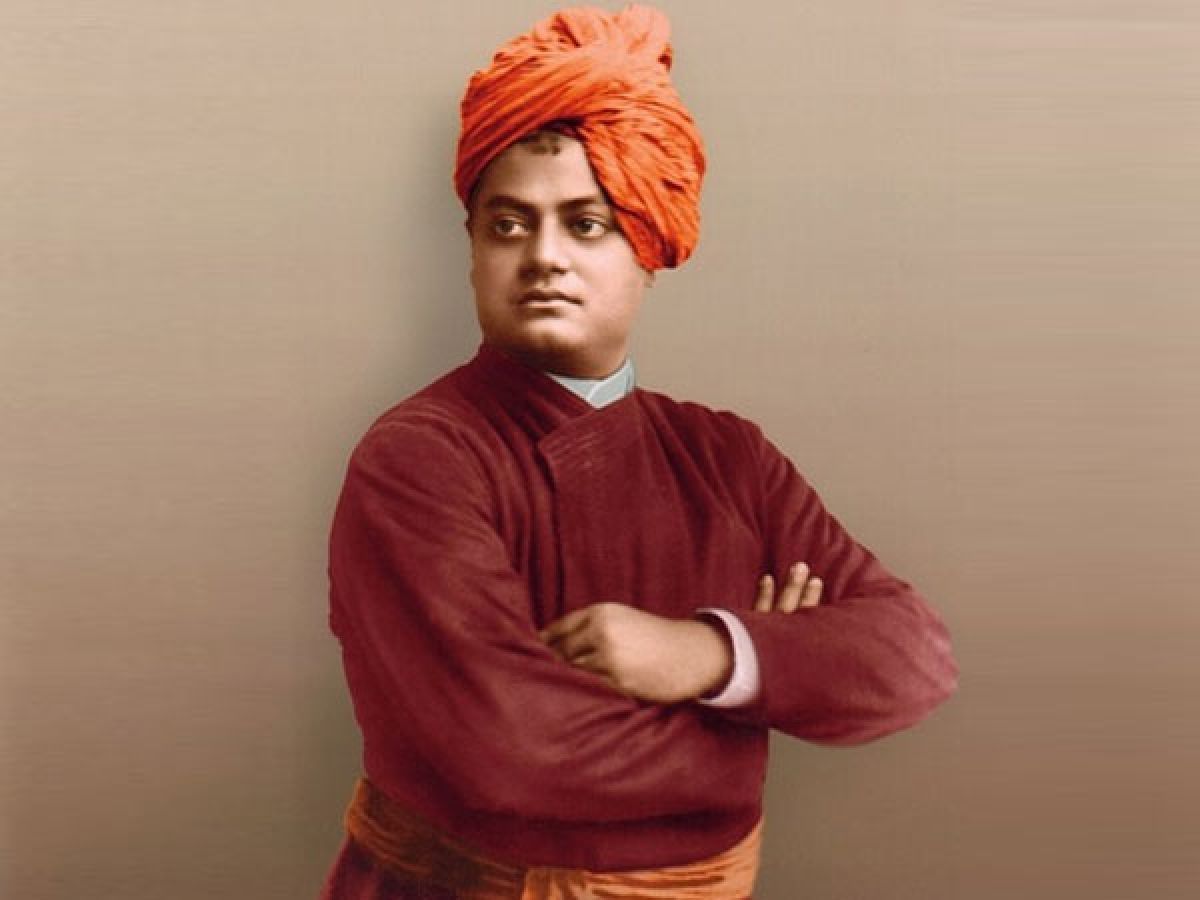
Swami Vivekananda Biography: Life & Teachings
Bhagavad Gita Chapter 12 — Bhakti Yoga Complete Commentary: All 20 Verses, Devotee Qualities, 30-Day NRI Practice Guide for 2026