Hindus in Malaysia 2026 — Complete Country Guide: Batu Caves, Sri Mahamariamman Temple, Tamil Community & 175-Year Hindu Heritage
Hindus in Malaysia 2026 — 1.8 million Tamil-Hindu community, Batu Caves Thaipusam, Sri Mahamariamman KL, 175-year heritage from indentured labour, Hindu Sangam advocacy.
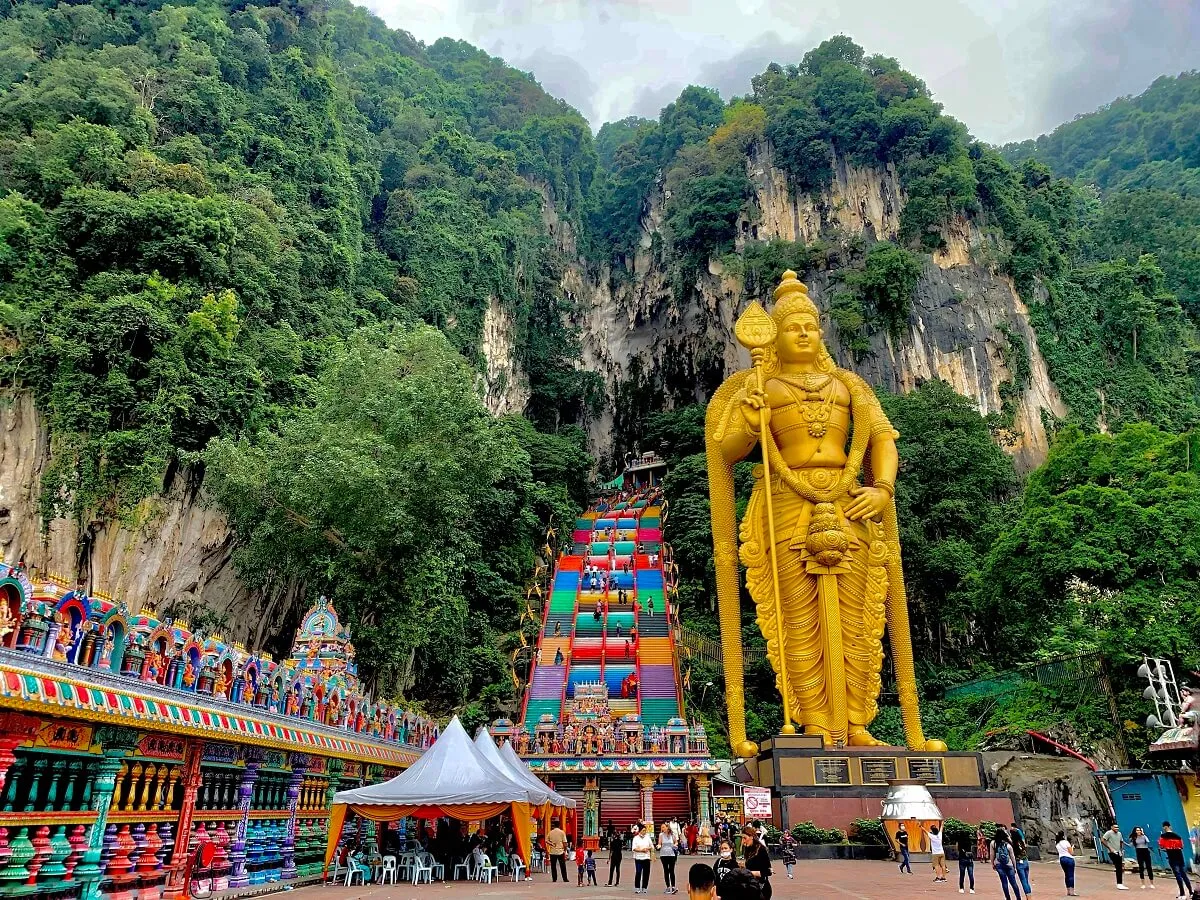
Hindus in Malaysia 2026 — 1.8 million Tamil-Hindu community, Batu Caves Thaipusam, Sri Mahamariamman KL, 175-year heritage from indentured labour, Hindu Sangam advocacy.
Quick Answer: As of 2026, an estimated 1.8 million Hindus live in Malaysia — making Hinduism Malaysia's fourth-largest religion (after Islam, Buddhism, Christianity) and Tamil Hindus the dominant Indian community in the country. The community traces its roots to indentured Tamil labour brought from South India between 1860-1930 by the British colonial administration to work rubber plantations and railways. Major institutions include the Batu Caves Sri Subramania Swamy Temple (with the 140-foot Lord Murugan statue), Sri Mahamariamman Temple Kuala Lumpur (1873; KL's oldest Hindu temple), Sri Mahamariamman Temple Penang (1833; Malaysia's oldest), and the politically active Malaysian Hindu Sangam. The annual Thaipusam at Batu Caves draws over 1.5 million devotees and tourists — among the largest single religious gatherings in Southeast Asia.
1. The 2026 Hindu Malaysian Population
Estimated total: ~1.8 million Hindus (~5.8% of Malaysian population)
Growth rate: ~0.5-1% annually (largely demographic; limited new migration)
Median age: 37 (mature multi-generational community)
Ethnic identification: ~85% Tamil; smaller Telugu, Malayali, Punjabi, North Indian communities
Median household income: Mixed — long economic tail; substantial middle and upper-middle class
Citizenship: ~98% Malaysian citizens (multi-generational community)
Distribution by state
- Selangor (Klang Valley) — ~600,000
- Perak — ~250,000
- Penang — ~200,000
- Johor — ~180,000
- Negeri Sembilan — ~120,000
- Kuala Lumpur Federal Territory — ~100,000
- Pahang, Kedah, Melaka — ~250,000 combined
- Other states — ~100,000
2. Top Hindu Temples in Malaysia
Tier 1 — Cultural landmarks
- Batu Caves Sri Subramania Swamy Temple, Selangor — limestone cave temple with the iconic 140-foot golden Lord Murugan statue (world's tallest Murugan statue). Site of the annual Thaipusam pilgrimage.
- Sri Mahamariamman Temple, Kuala Lumpur — 1873; KL's oldest functioning Hindu temple
- Sri Mahamariamman Temple, Penang — 1833; Malaysia's oldest Hindu temple (and possibly the oldest in Southeast Asia outside India)
- Sri Sundararaja Perumal Temple, Klang — major Vishnu temple
Tier 2 — Major community temples
- Sri Kandaswamy Temple, Brickfields KL
- Sri Maha Mariamman Temple, Ipoh
- Sri Marathandavar Temple, Pulai (Johor)
- Sri Murugan Temple, Sungai Petani (Kedah)
- Sri Krishna Temple, Brickfields KL
- ISKCON Malaysia (multiple branches)
Tier 3 — Regional temples
- Sri Subramaniyar Temple, Gombak
- Hindu temples across Petaling Jaya, Subang Jaya
- Old plantation-era temples across rural Perak, Pahang
- Sri Mariamman temples in Melaka, Johor Bahru
Total Hindu temples in Malaysia 2026: ~17,000+ (largest count of Hindu temples in any country outside India and Nepal — many are small estate-era temples).
3. The 175-Year History — From Rubber Estates to Citizenship
1850s-1930s — The indenture and free-migration period
British colonial administration brought Tamil labour to work tin mines, rubber plantations, and railways. Estimated 1.5-2 million Tamils migrated between 1850 and 1930. Most came from drought-affected Tamil Nadu districts. Conditions on plantations were harsh; mortality significant.
1930s-1957 — Pre-independence period
Indian community established itself across Malaya. Education, civil service, professional classes emerged. The Indian Independence League and Indian National Army Malaya were significant during WWII.
1957 — Malaysian independence
Indians (predominantly Hindu) became Malaysian citizens. MIC (Malaysian Indian Congress) became the formal political party representing the community within the ruling Barisan Nasional coalition.
1969-2008 — Ethnic political framework
The New Economic Policy (post-1969 race riots) prioritised Malay (Bumiputera) economic advancement, creating disadvantages for Indian Hindus in education, employment, and civic life. Many Hindu plantation workers became displaced as rubber plantations were converted to housing developments.
2007 — HINDRAF protests
Hindu Rights Action Force (HINDRAF) organised massive protests against perceived discrimination, temple demolitions, and economic marginalisation. The protests marked a generational political shift — Indian Hindus began voting against the BN coalition.
2018-2026 — Political reconfiguration
With the fall of UMNO/BN in 2018 and subsequent political instability, Hindu community advocacy has continued through Hindu Sangam, the People's Justice Party (PKR), DAP, and other formations. Issues of temple preservation, Tamil schools, plantation-worker descendants' economic standing remain active.
4. Batu Caves and Thaipusam Pilgrimage
Batu Caves is a limestone hill 13 km north of Kuala Lumpur featuring caves used for Hindu shrines since 1891. The 140-foot golden statue of Lord Murugan (Karthikeya), unveiled in 2006, is the world's tallest Murugan statue and a Malaysian national landmark.
Thaipusam pilgrimage:
- Held annually in January-February
- 2026 Thaipusam date: February 1, 2026 (Sunday)
- Procession from Sri Mahamariamman Temple KL to Batu Caves (a 15-km route)
- Devotees carry kavadis (decorated wooden structures) in fulfilment of vows; some pierce skin with hooks and skewers
- Estimated 1.5+ million attendees at Batu Caves over the festival days
- Among Southeast Asia's largest single religious gatherings
For 2026 pilgrim planning:
- Arrive at Batu Caves before dawn
- 272 stairs to the main cave temple (now coloured rainbow — touristically famous since 2018)
- Climb is steep; bring water, comfortable footwear
- Avoid Thaipusam day (Feb 1) if you can't handle massive crowds; pre-Thaipusam week visits offer fuller temple experience with less crowd pressure
5. City-by-City Hindu Community Guide
🏛 Kuala Lumpur / Klang Valley
The political and economic centre of Malaysian Hindu life. Brickfields ("Little India" of KL) is the cultural and commercial heart, with Sri Kandaswamy Temple, Sri Krishna Temple, and many businesses. Sri Mahamariamman Temple KL is the historic anchor.
🏛 Penang (George Town and Bayan Lepas)
Penang's Hindu community traces to early colonial era. Sri Mahamariamman Temple Penang (1833) is Malaysia's oldest. Strong Tamil cultural infrastructure; Tamil schools, language societies, temples across the island.
🏛 Ipoh (Perak)
Historic mining-era Tamil community. Sri Maha Mariamman Temple Ipoh anchors the community. Substantial Indian population from tin-mining and railway-construction heritage.
🏛 Klang and surrounds (Selangor)
Sri Sundararaja Perumal Temple Klang is a major Vishnu temple. Strong Tamil community.
🏛 Johor Bahru, Melaka, Kuantan, other states
Smaller but established communities; each with multiple temples and active Tamil cultural organisations.
🏛 Petaling Jaya, Subang Jaya, Shah Alam
Modern suburbs with newer middle-class Hindu populations; emerging community organisations.
6. Festival Calendar 2026 (With Public Holiday!)
Deepavali (Nov 8, 2026) — National Public Holiday
Malaysia recognises Deepavali as a federal public holiday. Celebrations include:
- Open houses (a uniquely Malaysian tradition where Hindu families host all visitors regardless of religion)
- Government-organised national Deepavali celebrations
- Temples conduct special pujas
- Brickfields KL, Penang Little India host major light-ups and cultural programmes
Thaipusam (Feb 1, 2026):
- Batu Caves Thaipusam — the world-famous procession and pilgrimage
- Penang Thaipusam — also significant; Sri Mahamariamman Temple Penang procession
- Public holiday in some states (Selangor, Penang, Kuala Lumpur, others)
Other major:
- Pongal / Thai Pongal (mid-January)
- Tamil New Year (mid-April)
- Navratri / Navarathri (Oct 11–19)
- Ganesh Chaturthi (Sep 14)
- Janmashtami (Sep 4)
- Holi (March)
- Mariamman temple festivals (various)
7. Political Reality 2026 — MIC, Hindu Sangam, Current Pressures
Malaysian Indian Congress (MIC):
- Founded 1946; the historic Indian community political party
- Lost dominance after 2008-2018 political shifts
- Continues as a coalition partner in shifting Malaysian political configurations
Hindu Sangam:
- Cross-political Hindu community advocacy organisation
- Active on temple preservation, Tamil schools, religious freedom issues
Ongoing issues 2026:
- Temple demolitions: Some plantation-era temples face demolition as land use changes
- Tamil-medium schools: Funding and support issues
- Bumiputera economic policy: Continues to create economic disadvantages for non-Bumiputera communities
- Conversion issues: Cases of Hindus converting to Islam (sometimes coerced) remain a community concern
- Crime and economic marginalisation: Some plantation-descendant communities face systemic disadvantages
The Hindu Malaysian community continues to navigate political and economic challenges through electoral participation, civil society organisations, and Tamil-language press.
8. The Future — Hindus in Malaysia 2026-2030
Projected growth: Hindu Malaysian population to remain stable around 1.8-1.9 million by 2030 (limited new immigration; slight emigration; demographic replacement).
Key trends:
- Emigration to Australia, NZ, UK, Canada: Continuing trend; many professional Hindu Malaysians emigrate
- Tamil heritage preservation: Strong language and cultural transmission; Tamil schools continue
- Temple modernisation: Major temples adopting online services, digital donations
- Political reconfiguration: Hindu vote increasingly diversified across parties; less monolithic than past
- Generational education gain: G3-G4 Hindu Malaysians achieving high university completion
- Cultural pride resurgence: Younger generation actively engaging Tamil culture, classical arts, Hindu philosophy
- Inter-ethnic marriages: Increasing within Malaysia (Indian-Chinese, Indian-Malay subject to conversion complications)
- Religious freedom advocacy: Continued work on temple preservation, conversion-coercion cases
Final Words
Hindus in Malaysia 2026 represent one of the world's oldest and largest continuous Hindu diasporas — 175 years of Tamil-Hindu institutional continuity through colonial labour, independence, ethnic political marginalisation, and the ongoing project of full equal citizenship. The Batu Caves Thaipusam pilgrimage, the Sri Mahamariamman Penang temple's 200-year continuous worship, the 17,000+ temples across the country, the open-house Deepavali tradition that crosses all Malaysian communities — these are the distinctive contributions of Malaysian Hindus to world Hindu civilisation.
For Tamil Malaysians whose great-great-grandparents stepped off ships from Madras in the 1870s, Sanatana Dharma is not an immigrant practice — it is ancestral Malaysian soil. The temples their forefathers built in jungle clearings near rubber estates have stood for five generations. The Tamil language they speak is Malaysian Tamil — a dialect with its own colours and resonances. Their identity is, fully and inalienably, both Hindu and Malaysian.
Sarve Bhavantu Sukhinah. Sarve Santu Niramayah.
Vanakkam Malaysia! Jai Sanatan Dharma! Hindu Heritage Strong!
HinduTone Editorial Team · Tags: Hindus in Malaysia 2026, Batu Caves Thaipusam, Sri Mahamariamman KL, Sri Mahamariamman Penang, Tamil Malaysia, Hindu Sangam, MIC Malaysia, Brickfields KL
Frequently Asked Questions
Where is Hindus in Malaysia located?
As of 2026, an estimated 1.8 million Hindus live in Malaysia — making Hinduism Malaysia's fourth-largest religion (after Islam, Buddhism, Christianity) and Tamil Hindus the dominant Indian community in the country. The community traces its roots to indentured Tamil labour brought from South India between 1860-1930 by the British colonial administration to wo
Who is the presiding deity of Hindus in Malaysia?
The presiding deity is Goddess Durga.
What are the timings and how do I reach Hindus in Malaysia?
Temples typically open early morning and evening; confirm current darshan timings before visiting. The nearest airport, railway station and road routes are covered in the guide above.
What is the best time to visit Hindus in Malaysia?
Major festival days and the cooler months are popular, though weekday mornings offer a calmer darshan. Plan around the temple's key festivals for the most vibrant experience.
You might also like
Hindus in New Zealand 2026 — Complete Country Guide: Auckland, Wellington, Christchurch Communities, Temples, Festivals & Indo-Kiwi State of the Nation
Hindus in Singapore 2026 — Complete Country Guide: Little India, Sri Mariamman Temple, EP & PR Reality, Festivals & Tamil Heritage
Hindus in South Africa 2026 — Complete Country Guide: Durban, Johannesburg, Cape Town Communities, 165-Year Heritage, Temples & Festivals